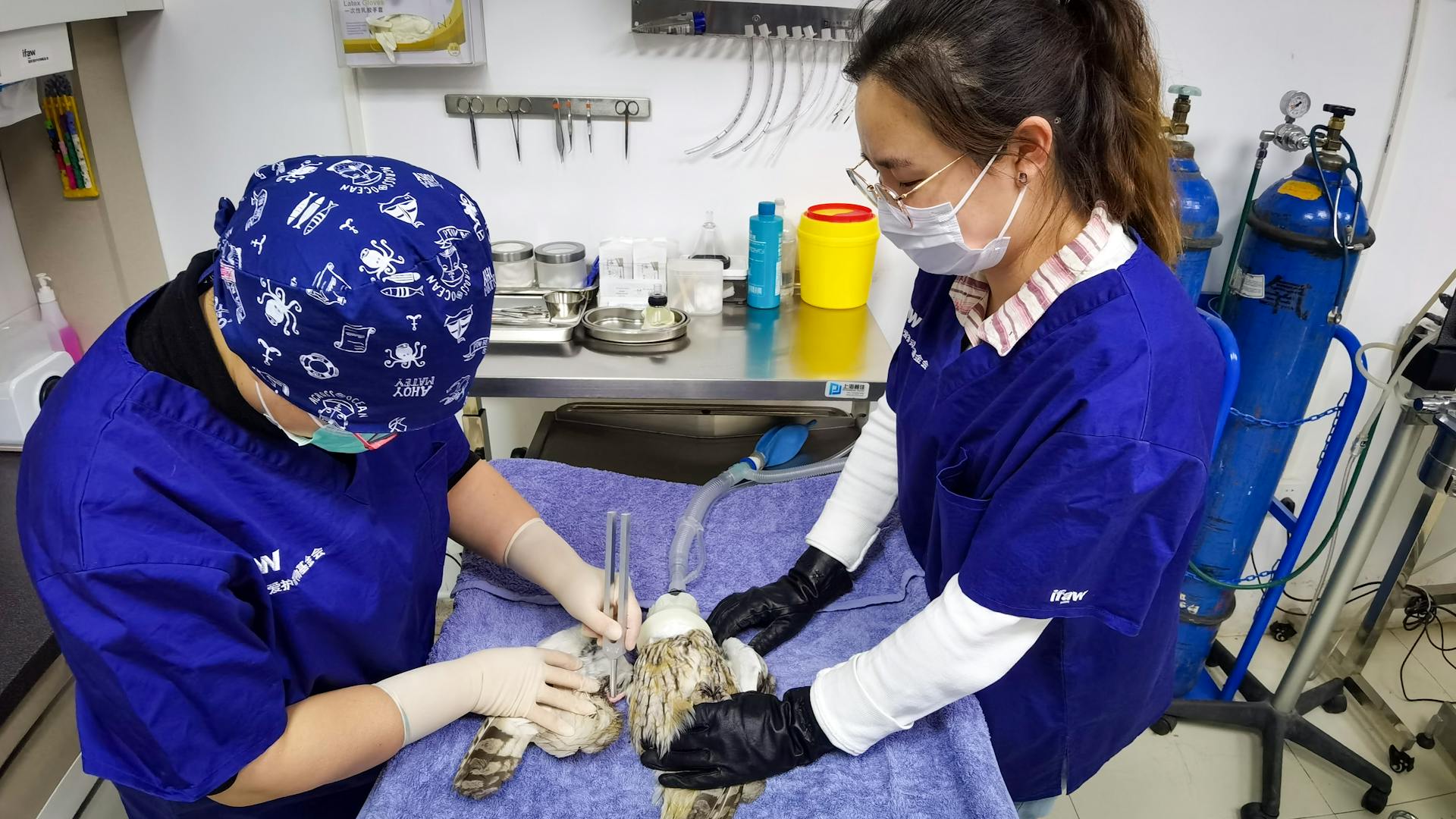
Veterinary toxicology is a critical field that deals with the adverse effects of substances on animals.
Toxic substances can be found in various forms, including chemicals, medications, and natural products.
Pesticides, for example, can be highly toxic to animals, especially if ingested or inhaled.
Risk assessment is a crucial step in veterinary toxicology, as it helps identify potential hazards and develop strategies to mitigate them.
Take a look at this: Toxic Thanksgiving Food for Dogs
Importance and Career
Becoming a veterinary toxicologist is a rewarding career path that allows you to make meaningful contributions to veterinary medicine, public health, and the environment. This field is crucial for identifying and studying the effects of harmful substances, ultimately preventing and mitigating adverse outcomes related to chemical exposure.
A typical DVM program lasts four years, but some schools, like Ross University School of Veterinary Medicine, offer an accelerated option that can earn you a DVM in as little as 3.25 years. During this time, you'll need to prepare for licensure by taking the North American Veterinary Licensing Examination (NAVLE).
To specialize in veterinary toxicology, you'll need to pass the American Board of Veterinary Toxicology (ABVT) certification exam, which requires meeting specific training and experience requirements. These requirements can be met through various routes, including graduating from an American Veterinary Medical Association (AVMA)-accredited program or having an accreditation certificate from the Educational Commission of Foreign Veterinary Graduates of the AVMA.
For more insights, see: Veterinary Technician Job Requirements
Protect Animal and Public Health as a Vet Toxicologist
As a veterinary toxicologist, you'll play a crucial role in protecting animal and public health. By identifying and studying the effects of harmful substances, you'll be at the forefront of preventing and mitigating adverse outcomes related to chemical exposure.
You'll have the opportunity to make meaningful and lasting contributions to veterinary medicine, public health, and even the environment. This fulfilling career path allows you to improve health outcomes in various species and engage in groundbreaking research.
In this role, you'll study the efficacy and adverse effects of chemicals not just on humans but also on all living organisms, including natural toxins, animals, fungi, and insects. You'll aid in the application, interpretation, and circumstantial evaluation of laws, rules, and regulations.
Some of your key responsibilities will include:
- Identifying the source(s) of the toxicant
- Identifying factors contributing to morbidity or mortality
- Assessing the level of contamination
- Assessing possible interventions
- Assessing any risk to the food chain
By following a systematic approach to toxicological investigation, you'll be able to provide recommendations for testing, treatment, and next steps to ensure the health and safety of animals and humans alike.
Becoming a Toxicologist
To become a veterinary toxicologist, you'll need to earn a Doctor of Veterinary Medicine (DVM) degree, which typically takes four years to complete. This is a great starting point, but it's not enough to qualify you to sit for the American Board of Veterinary Toxicology (ABVT) certification exam.
Admission requirements for veterinary school vary by institution, so be sure to review them carefully before applying. You may also need to gain hours of experience or research, such as the 150 hours required by Ross University School of Veterinary Medicine.
A typical DVM program lasts four years, but Ross Vet offers an accelerated option that can be completed in as little as 3.25 years. During this time, you'll need to prepare to apply for licensure by taking the North American Veterinary Licensing Examination (NAVLE).
To qualify for the ABVT certification exam, you'll need to meet one of the following requirements: graduate from an American Veterinary Medical Association (AVMA)-accredited program, have an accreditation certificate from the Educational Commission of Foreign Veterinary Graduates of the AVMA, or be legally qualified to practice veterinary medicine in the United States, Canada, or another country.
Here are the four ways to qualify for the ABVT certification exam:
Once you've completed the required training and experience, you'll be eligible to sit for the ABVT certification exam and become a diplomate, qualified to practice as a veterinary toxicologist.
Toxicology Fundamentals
Pharmacokinetics (PK) is the study of how drugs are absorbed, distributed, metabolized, and excreted (ADME) in the body. This involves understanding the time course and extent of drug exposure in individuals and populations.
PK is defined as the mathematical description of temporal changes in concentration of drugs within the body, providing the experimental basis for drug dosage regimens in various animal species. Bioequivalence is a clinical term referring to formulations of a drug with rates and extents of absorption that are sufficiently similar.
You might enjoy: Veterinary Drugs List
Toxicokinetics (TK) relies on the same principles as PK, but with a focus on the movement and disposition of toxicants in the organism. TK characterizes the kinetics linking exposure with dose, taking into account factors such as the intensity and duration of exposure, rate and amount of absorption, distribution, biotransformation, and excretion.
Toxicology
Toxicology is a crucial field that helps us understand and address the impact of toxic substances on living organisms.
The primary goal of a toxicology investigation is to identify the source(s) of the toxicant, which can be a critical step in preventing further harm.
Toxicologists review all cases of evident or suspected toxicosis and work with submitters to determine the best course of action, including testing, treatment, and next steps.
A key part of toxicology is assessing the level of contamination, which helps us understand the severity of the issue and develop effective solutions.
The toxicology investigation also considers factors contributing to morbidity or mortality, which can inform treatment and prevention strategies.
In addition to investigating the effects of toxic substances on living organisms, toxicology also looks at the potential risks to the food chain, which is an important consideration for public health.
Here are the main goals of a toxicology investigation:
- Identify the source(s) of the toxicant
- Identify factors contributing to morbidity or mortality
- Assess the level of contamination
- Assess possible interventions
- Assess any risk to the food chain
Toxicity Tests
Veterinary toxicologists try to find out what the toxic effects of chemicals are, where toxic effects occur, how a chemical causes its toxic effects, and what length of exposure causes a toxic effect.
They often collect data from laboratory experiments on animals to find out about the effects of chemicals, and use their skills to predict what is likely to occur if humans come into contact with the same chemical.
In laboratory studies, animals are often exposed to much higher levels of a chemical than would normally be experienced by humans from normal use of that chemical. This is done to develop ways of predicting the likely effects at lower exposure levels.
Toxicologists have developed a number of ways of predicting the likely effects at lower exposure levels, such as by studying the absorption, distribution, metabolism, and excretion (ADME) of drugs.
Pharmacokinetics (PK) is the study of the characteristics of the time course and extent of drug exposure in individuals and populations. PK provides the experimental basis for drug dosage regimens in various animal species.
Toxicokinetics (TK) relies on the same principles as PK, but there are differences in data availability and aims. TK is used to describe the movement and disposition of the toxicant in the organism.
A complete description of the toxicokinetics of a toxicant will take into account the intensity and duration of the exposure, the rate and amount of absorption of the toxicant from the site of entry, the distribution of the toxicant within the body, potential biotransformation to less, equal, or more toxic form, and the rate of excretion by route.
By identifying and studying the effects of harmful substances, veterinary toxicologists stand at the forefront of preventing and mitigating adverse outcomes related to chemical exposure.
Toxic Substances
Toxic substances can be found in various forms, including human foods and veterinary products. Xylitol, a sugar substitute commonly used in sugarless gums and baked goods, is highly toxic to dogs and can cause low blood sugar, seizures, and liver failure.
Other human foods that are toxic to pets include grapes and raisins, which can cause kidney failure, and onions and garlic, which can cause gastrointestinal irritation and red blood cell damage. Cats are particularly susceptible to onion and garlic toxicity.
Some veterinary products, such as chewable medications, can also be hazardous if not handled properly. These medications can be easily ingested by pets if they gain access to them, leading to overdose and toxicity.
Take a look at this: Grape Toxicity in Dogs
Toxicants Causing Goiter
Professor of Veterinary, Wildlife, and Ecological ToxicologyDVM PhD Dipl ABVT from PennState notes that certain toxicants can cause goiter.
Some common toxicants that cause goiter include those that interfere with thyroid hormone production.
The Department of Veterinary and Biomedical Sciences at PennState is a leading institution in studying the effects of toxicants on animal health.
Certain toxicants can disrupt the normal functioning of the thyroid gland, leading to an enlargement of the gland, known as goiter.
Insecticides
Insecticides have become safer for mammals in recent years, but it's still crucial to use them correctly. Eleven percent of calls to the APCC were due to insecticide exposure.
If you're using insecticides, always read the label and follow the directions carefully. This may seem obvious, but it's essential to avoid accidents.
Products labeled for dogs only should never be used on cats, as it can cause serious problems like tremors and seizures. Permethrin products, in particular, can be toxic to cats.
Cats are more prone to insecticide-related issues due to their grooming habits. When a cat grooms itself after being sprayed or treated with a product, it can ingest the insecticide and experience a taste reaction.
These taste reactions, also known as hypersalivation, can be alarming, but they're not poisonings. Cats may foam at the mouth, but offering them food, such as milk or canned food, can help remove the bad taste and alleviate the symptoms.
Animal Feed Contamination
Animal feed contamination is a serious issue that can have far-reaching consequences for animal and human health. Veterinary toxicologists play a crucial role in identifying and studying the effects of toxicants in animal feed.
Professor of Veterinary, Wildlife, and Ecological Toxicology at PennState, emphasizes the importance of studying toxicants that cause goiter, a condition that can be caused by certain substances in animal feed.
Animal feed contamination can occur through various means, including the use of contaminated ingredients or improper handling and storage of feed. Veterinary toxicologists must be vigilant in monitoring feed sources to prevent exposure to toxic substances.
Becoming a veterinary toxicologist is an excellent way to make a meaningful impact in preventing and mitigating adverse outcomes related to chemical exposure in animal feed.
Rodenticides
Rodenticides can be deadly for pets and birds, with the APCC handling approximately 6965 cases of rodenticide ingestion in 2012. Anticoagulants are still the primary type of rodenticide used, but bromethalin and cholecalciferol are gaining market share.
Be very careful when setting out rodent bait - pets, especially dogs, can be attracted to grain-based baits. Keep all rodenticide labels, as many baits look identical but cause very different clinical signs.
Rodenticide labels are crucial in minimizing the risk to pets, so it's essential to read and follow them carefully.
Human Foods (Other Than Chocolate)
Human Foods (Other Than Chocolate) can be a major danger to your furry friends. Xylitol, a sugar substitute commonly found in sugarless gums, candies, mints, and baked goods, is one of the most common toxic substances that can cause low blood sugar, seizures, and liver failure in dogs.
Some owners may not be aware of the risks associated with xylitol, so it's essential to keep it out of reach. Grapes and raisins are also a concern, as they can cause kidney failure in dogs, with symptoms often appearing more dramatically in animals with concurrent illnesses.
Onions and garlic can cause gastrointestinal irritation and potentially lead to red blood cell damage, especially in cats. However, dogs that consume large amounts of these vegetables/herbs are also at risk. Avocados, while not typically toxic to dogs and cats, can cause gastrointestinal upset and may pose a choking hazard if the pit is ingested.
Here's a quick rundown of the potential risks associated with these human foods:
- Grapes and raisins: kidney failure
- Onions and garlic: gastrointestinal irritation, red blood cell damage
- Avocados: gastrointestinal upset, choking hazard (pit)
It's always better to err on the side of caution and keep these foods out of reach of your pets. If you suspect your pet has ingested any of these substances, contact your veterinarian or a pet poison hotline immediately.
Products
Chewable medications can be a problem for pets, as they're easy to ingest and can lead to accidental overdosing. Examples include veterinary NSAIDs, phenylpropanolamine, joint care supplements, and heartworm medications.
These tasty medications are often sold in chewable formulations, making them appealing to pets. Owners need to be aware of the risks and take steps to prevent accidental ingestion.
Avermectin toxicity is a concern in collie-type breeds, but the dose of avermectin in canine heartworm preventatives is safe for them. However, toxicity can occur if owners use ivermectin horse dewormers for their dogs, which have a much higher concentration of avermectin.
To prevent this, owners should keep pet medications out of their pets' reach. Remind owners to store medications safely and securely.
Here are some tips to help prevent accidental ingestion:
- Keep pet medications out of their pets’ reach.
- Recommend that pets be separated during pill administration, if there are multiple pets in the household.
Investigation and Testing
In a veterinary toxicology investigation, identifying the source of the toxicant is crucial. This involves tracing back the origin of the toxic substance to determine its cause.
The toxicologist reviews all cases of evident or suspected toxicosis to identify contributing factors to morbidity or mortality. These factors can greatly impact the treatment and outcome of the case.
The level of contamination is assessed to determine the severity of the toxicosis. This helps in determining the best course of action for treatment and recovery.
Possible interventions are assessed to determine the most effective treatment options. This may involve administering antidotes, supportive care, or other treatments as needed.
Any risk to the food chain is assessed to determine the potential impact on the environment and other animals. This helps in taking preventive measures to minimize the risk.
The lab will contact submitters directly to discuss recommendations for testing, treatment, and next steps. This ensures that the submitter is informed and involved in the process.
Here are the main goals of a toxicology investigation:
Identify the source(s) of the toxicant
Identify factors contributing to morbidity or mortality
Assess the level of contamination
Assess possible interventions
Assess any risk to the food chain
Risk and Exposure
Most animal exposures to toxic agents result in no or mild clinical signs, which can be attributed to a small exposure dose of the toxicant or decontamination by the owner and/or veterinarian.
The likelihood of exposure can vary depending on the pet's environment, time of year, and geographical location. For instance, exposure to toxicants can be higher in areas with changing seasons, such as the fall when rodents are more likely to be driven inside due to crop harvesting and cold weather.
Pet owners should be aware that exposure to toxicants can be influenced by their pet's environment, time of year, and geographical location. This is why it's essential to take preventative measures and be vigilant about potential hazards in your pet's surroundings.
Check this out: How Is a Veterinary Technician Work Environment
Medicines and Environmental Risk
The presence of pharmaceuticals in waterways poses a significant environmental risk.
Pharmaceuticals have been detected in waterways worldwide, with concentrations ranging from 1-1000 nanograms per liter.
These contaminants can harm aquatic life, alter ecosystems, and even affect human health.
The presence of pharmaceuticals in waterways is often linked to wastewater treatment plants, which struggle to remove these substances.
In fact, a study found that only 20-40% of pharmaceuticals are removed during wastewater treatment.
The impact of pharmaceuticals on aquatic life is still being studied, but it's clear that they can cause changes in behavior, reproduction, and even death.
For example, a study found that exposure to the antibiotic tetracycline caused changes in the behavior of a certain species of fish.
If this caught your attention, see: Veterinary Behavior Specialist
Exposure Variants
Exposure to toxicants can vary greatly depending on several factors.
The pet's environment plays a significant role in determining the level of exposure to toxicants. For example, if your pet spends most of its time outdoors, it's more likely to encounter toxic substances like pesticides or rodenticides.
The time of year can also impact exposure to toxicants. As the article mentions, the American Pet Poison Control Center (APCC) sees an increase in rodenticide poisoning in the northern U.S. in the fall, likely due to crop harvesting and cold weather driving rodents inside.
Geographical location is another important factor to consider. Different regions have unique environmental hazards that can affect your pet's exposure to toxicants.
Client Education and Guidelines
Educating clients about potential toxins in their homes and yards is a vital part of veterinary care, as it's easier to prevent poisonings than to treat them.
Placing information in puppy/kitten packs, on your website, and in other communication with clients is a good way to start educating owners.
Seasonal topics, such as Easter lilies and chocolate, can be included in newsletters and on websites, Facebook, and other social media outlets.
To provide clients with additional resources, you can give them the link to the ASPCA's website, aspca.org/home/pet-care/poison-control, which offers information on pets and poison prevention concerns.
Providing this link is a thoughtful way to support clients in keeping their pets safe.
Intriguing read: Aspca Grape Toxicity
Client Education
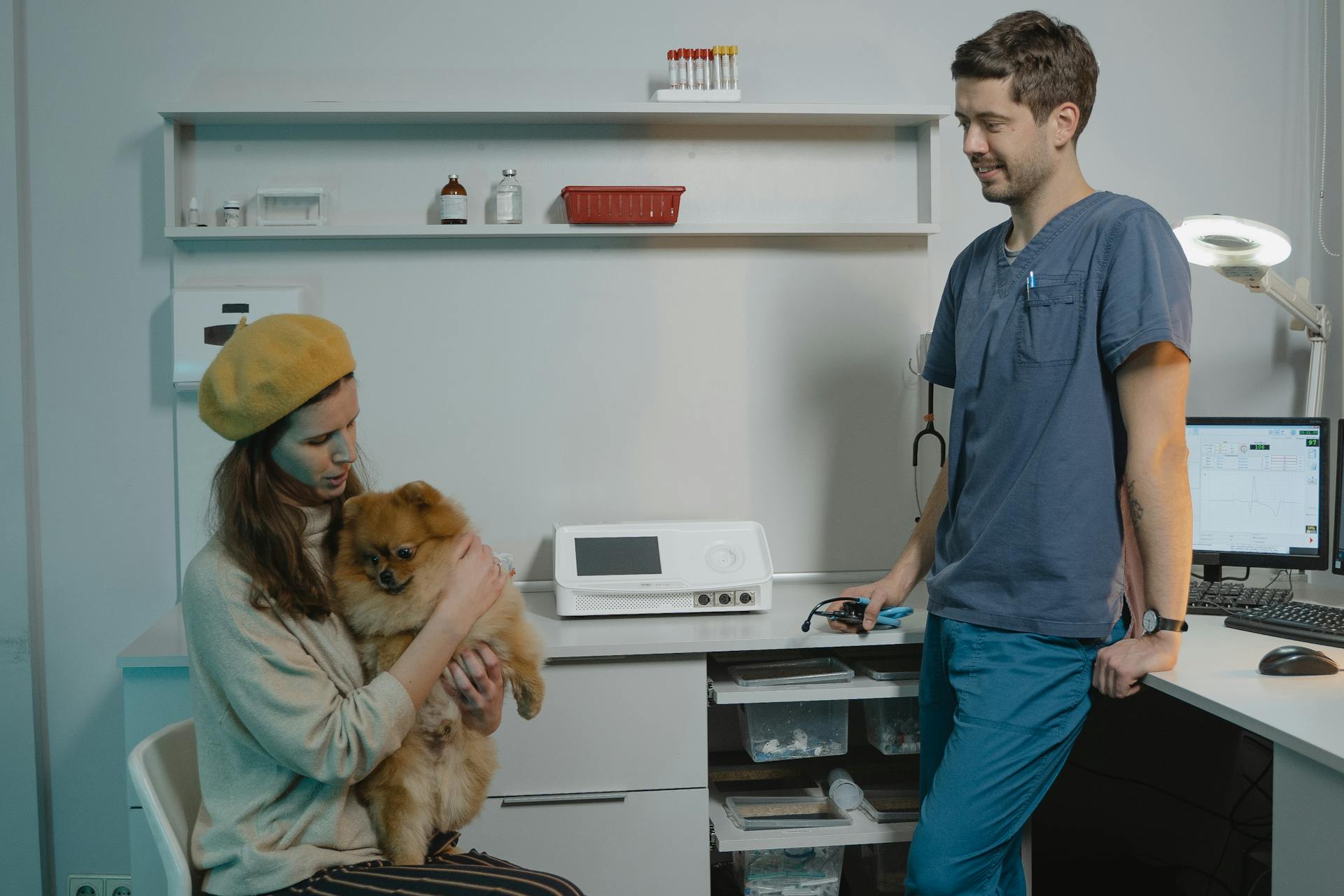
Educating your clients about potential toxins in their homes and yards is a crucial part of veterinary care. It's much easier to prevent poisonings than to try to treat them.
Placing information in puppy/kitten packs, on your website, and in other communication with clients is a great way to start educating owners. This can include information about common household toxins and how to keep their pets safe.
Seasonal topics, such as Easter lilies and chocolate, can be included in newsletters and on social media outlets to keep owners informed. For example, you can remind them about the dangers of chocolate during the holidays.
Providing the ASPCA's website link to clients is also a good idea. This allows them to access additional information on pets and poison prevention concerns, such as the ASPCA Animal Poison Control Center's website.
Here are some ways to educate your clients about potential toxins:
- Placing information in puppy/kitten packs
- On your website
- In newsletters and on social media outlets
- Providing the ASPCA's website link
Sample Collection Guidelines
To collect samples safely and effectively, it's essential to wear personal protective equipment, such as gloves, to prevent cross-contamination and exposure to potentially hazardous substances.
When collecting samples, always change your gloves between samples to reduce the risk of contamination. This simple step can make a big difference in assessing differences in toxin concentrations and determining the route of exposure.
Ideally, collect samples in unbreakable containers like zipper storage bags or plastic cups. However, if a specific toxin is suspected, it's best to consult with the lab for further guidance on the most suitable container.
Make sure to collect sufficient quantities of tissue and environmental material for toxicology analysis. A good rule of thumb is to collect fist-sized pieces of tissue and gallon bags or more of environmental material or feed when possible.
To ensure accurate and reliable results, separate the collected material into individual containers and label them accordingly. This includes labeling the tissue type and animal ID.
When collecting samples, start with the least contaminated areas and work your way up to the most contaminated areas. This will help prevent further contamination and ensure a more accurate assessment of the situation.
Here are some key questions to consider when collecting environmental or feed samples:
- Is feed stored properly to prevent spoilage?
- Is there visible mold or contamination in feedstuffs, or does it smell odd?
- Are feed, pesticides, or household chemicals stored and labeled properly?
- Who has access to the animal or premises?
- What are potential environmental risks, and have there been any recent changes to the environment, feed, or medication source or supplier?
- Do animals have access to trash, outbuildings, building materials, medications, toxic plants, or substances provided by non-caretakers?
Featured Images: pexels.com