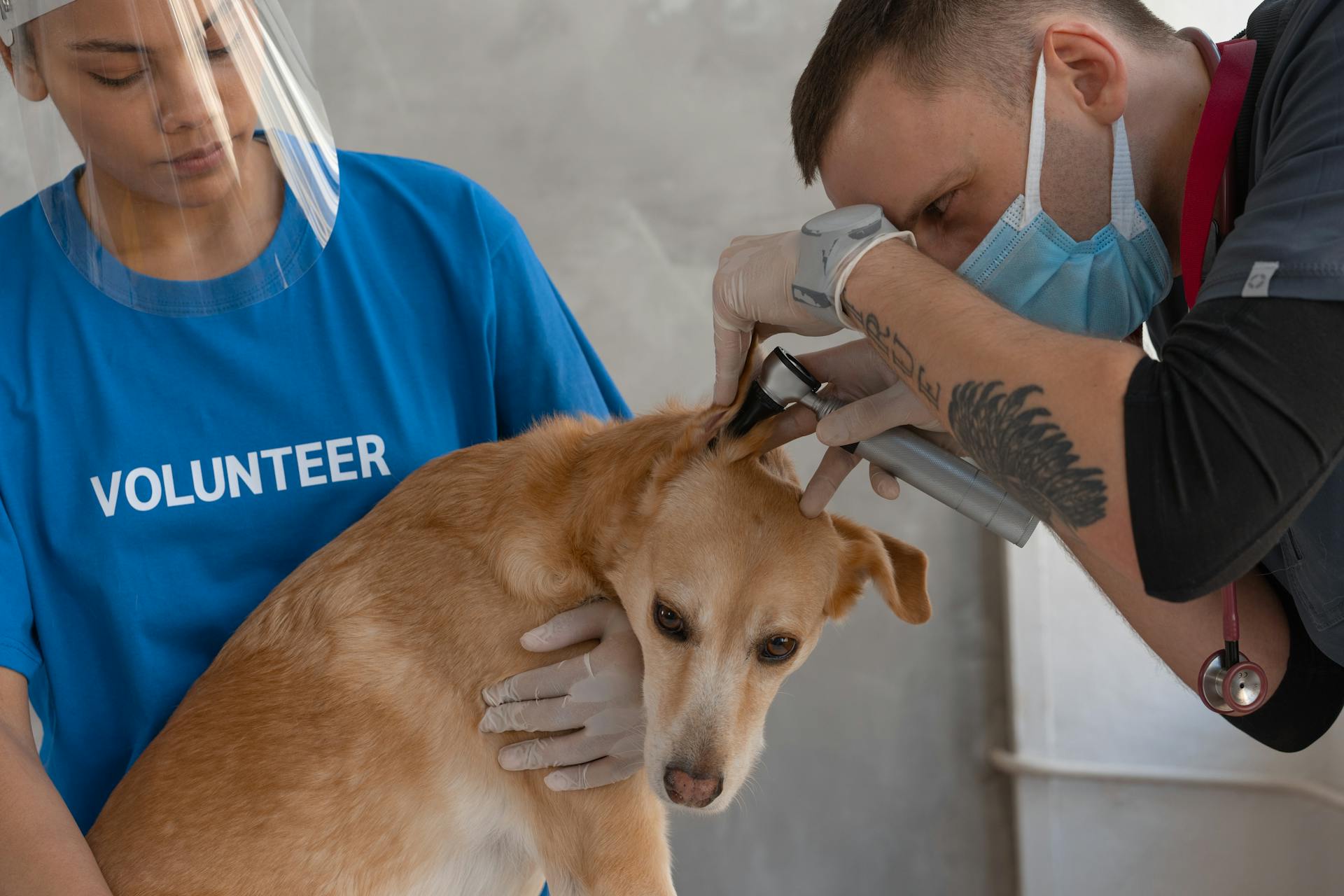
A veterinary behavior specialist can be a game-changer for your pet's mental and emotional well-being. They work with veterinarians to address behavioral issues that affect your pet's quality of life.
A veterinary behavior specialist can help with a range of issues including anxiety, fear-based behaviors, and aggression. They can also provide guidance on how to manage common behavioral problems such as barking, chewing, and digging.
With their expertise, you can learn how to create a more peaceful and predictable environment for your pet. This can be especially helpful if you've tried other solutions without success.
For your interest: Cockapoo Behavior Issues
What is a Veterinary Behavior Specialist?
A Veterinary Behavior Specialist is a veterinarian with training in behavior.
Their expertise is crucial in helping pets with behavior disorders, which are the number one cause of euthanasia in dogs and the main cause of relinquishment to shelters.
These specialists are trained to identify and address underlying medical conditions such as pain and endocrine imbalances that can cause aggression.
Early identification of these problems is vital for faster results and the safety of both people and animals.
Behavior medicine, which is the field a Veterinary Behavior Specialist works in, is not a new modality in veterinary medicine, but it is often underutilized due to a lack of trained professionals in this field.
Their main priority is to reconcile the human-animal bond by helping pets and their owners.
Understanding Pet Behavior
Veterinary behaviorists are veterinarians who can assess whether a pet's behavior issues might have an underlying medical cause. They can collaborate with other specialists to address any health-related issues influencing behavior and prescribe medication if necessary.
Serious behavior issues like aggression, severe anxiety, or compulsive behaviors often require a more specialized approach. Veterinary behaviorists are often sought for these cases, which may go beyond basic training techniques.
Certified veterinary behaviorists have extensive education and training in both veterinary medicine and animal behavior. This dual expertise allows them to provide a comprehensive assessment and treatment plan for complex behavioral problems.
Here are some common behaviors that veterinary behaviorists treat:
- Aggression and reactivity
- Anxieties, fears, and phobias
- Compulsive disorders and repetitive behaviors
- Nocturnal/nighttime behaviors, such as vocalizing overnight and sleeplessness
- Destructive behaviors
- Excessive grooming and self-injurious behaviors
Difference Between Training and Therapy
Training is focused on teaching specific commands and behaviors, but it doesn't address deeper behavioral issues.
Behavior therapy, on the other hand, addresses emotional or psychological factors that drive behavioral problems, aiming to change the underlying emotional perceptions causing emotional distress.
Training and behavior therapy can be used together to create a more well-behaved and emotionally stable pet.
In some cases, behavior therapy may be enough to resolve deeper behavioral issues, but training is still necessary to teach basic commands and behaviors.
By understanding the difference between training and behavior therapy, you can develop a more effective plan to address your pet's behavioral needs.
Recommended read: Veterinary Technician Training Program
Difference Between Veterinary Behaviorist and Trainer
A veterinary behaviorist's primary goal is to understand why a pet misbehaves in order to create a personalized, comprehensive treatment plan to address the underlying cause of the behavior problem.
Veterinary behavior treatment goes far beyond basic obedience training, which typically focuses on teaching manners and cues like "sit" or "stay".
Trainers often aim to get a pet to act a certain way, whereas a veterinary behaviorist seeks to address the fundamental reason for misbehavior.
Addressing the root cause of a behavior problem leads to longer-lasting results, unlike attempting to "train away" the problem.
Many non-professionals claim to be "animal behaviorists" but lack the education, scientific knowledge, experience, and training of a veterinary behaviorist.
No governing body regulates who may call themselves an "animal behaviorist" or "trainer", which means it's essential to verify a professional's credentials before seeking help.
A veterinary behaviorist is best able to determine whether your pet may benefit from behavior-modifying medication or if a medical problem may be a contributing factor.
By consulting and working with a veterinary behaviorist, your pet will be receiving the highest standard of care from a certified professional.
For another approach, see: Animal with Shortest Memory Goldfish
Physical Exam
A physical exam is a crucial part of understanding pet behavior, and it's often the first step in identifying underlying issues.
During a physical exam, your veterinarian will check your pet's overall health, looking for any signs of illness or injury. They'll examine your pet's body, checking for any changes in appearance, posture, or movement.
Your pet's posture and body language can reveal a lot about their emotional state. For example, a tucked tail or lowered head may indicate fear or anxiety.
A veterinarian will also check your pet's vital signs, including their temperature, heart rate, and breathing rate. These can be indicators of underlying health issues.
Changes in appetite, water intake, or elimination habits can also be a sign of a larger problem, such as gastrointestinal issues or kidney disease.
Your pet's weight and body condition can also be an indicator of their overall health. A veterinarian may use body condition scoring to assess your pet's weight and muscle mass.
A physical exam is a quick and non-invasive process that can provide valuable insights into your pet's behavior and overall health.
Recommended read: Veterinary Assistant Exam
Why Choose a Pet Behavior Specialist?
Choosing a veterinary behaviorist for your pet's behavior problems is a great idea because they have the authority to prescribe medication if necessary, which can be crucial for cases where a pet's behavior is influenced by medical conditions.
Veterinary behaviorists have a deep understanding of both the medical and behavioral aspects of animals, allowing them to provide a more comprehensive assessment and treatment plan for complex behavioral problems.
For serious behavior issues like aggression, severe anxiety, or compulsive behaviors, a veterinary behaviorist is often the best choice because they can provide a more specialized and in-depth approach.
Certification from organizations like the American College of Veterinary Behaviorists is a sign of a veterinary behaviorist's high level of expertise, giving you peace of mind that your pet is in good hands.
Our team of veterinary behaviorists is passionate about the emotional and physical well-being of animals, and we are dedicated to providing pets and their families with the highest quality of care.
You might like: Pack Hunting Animals
Success Stories and Support
As a veterinary behavior specialist, I've had the privilege of working with numerous dogs and their owners to address behavioral issues and improve their lives.
My approach is centered around understanding the individual needs of each dog and family, and tailoring my support to meet those needs.
I've seen firsthand the transformative power of behavioral support, as evidenced by the success stories of dogs like Maggie, who was able to sleep through the night and stop lunging at people and dogs after working with me.
With the right combination of behavioral support and medication, even severe anxiety issues can be managed, as Fritz's owner reported after starting treatment with me.
One of the key principles of my approach is that behavioral support can be provided without increasing the animal's fear or anxiety, as I did with Fritz.
My goal is to empower owners with the knowledge and tools they need to manage their dog's behavior and improve their relationship with their pet, as evident in the story of Ceilidh, who earned her CKC Novice title and is now enjoying agility.
Ceilidh's owner credited me with giving her the joy of working with her dog, and I'm proud to have played a role in their success.
Curious to learn more? Check out: Do Doberman Pinschers Turn on Their Owners
Common Pet Behavior Issues
Pet behavior issues can be a real challenge for pet owners. Veterinary behaviorists are trained to help with these problems.
Some common behavior issues in pets include aggression, severe anxiety, or compulsive behaviors. These cases often require a more specialized approach than basic training techniques.
Pets can experience distress when separated from their owners, known as separation anxiety. They may also develop intense fears of noises, objects, or situations.
Repetitive behaviors like excessive licking, eating, drinking, tail chasing, or pacing are also common issues. In cats and dogs, this can include inappropriate elimination.
Destructive behaviors like chewing, scratching, digging, or other forms of property damage are a problem for many pet owners. Excessive barking, howling, meowing, or other vocal expressions can be a nuisance too.
Age-related decline in cognitive function, similar to dementia in humans, can lead to disorientation or altered sleep patterns in pets. This can be a challenging issue for owners to address.
You might like: Do Labradors Attack Their Owners
Here are some common pet behavior issues that veterinary behaviorists can help with:
Behavior Medicine and Treatment
Veterinary behaviorists are trained professionals who can help your pet overcome behavior problems. They have a deep understanding of both the medical and behavioral aspects of animals, making them the best professionals to address complex behavioral issues.
Behavior disorders are the number one cause of euthanasia in dogs and the main cause of relinquishment to shelters. Early identification of these problems is crucial for faster results.
A veterinarian with training in behavior is the best professional to help pets with behavior disorders. They can provide a comprehensive assessment and treatment plan for complex behavioral problems.
Veterinary behaviorists use scientifically sound techniques such as behavior modification, counter-conditioning, desensitization, environmental modification, and proper positive reinforcement techniques. They also recommend appropriate medications, pheromones, or nutraceuticals as adjunctive treatment.
The Behavioral Medicine Department is available Monday-Saturday by appointment only. Initial appointments may be up to 2 hours in duration, and follow-up appointments are scheduled every 1 to 3 months as needed.
Here are some common problems treated by veterinary behaviorists:
- Aggression and reactivity
- Anxieties, fears, and phobias
- Compulsive disorders and repetitive behaviors
- Nocturnal/nighttime behaviors
- Destructive behaviors
- Excessive grooming and self-injurious behaviors
A customized behavior plan is created after the initial consultation, which may include training strategies, changes to the pet's environment, and medication if necessary. Lasting behavior change takes time, and most pets benefit from 3-6 months of structured support, with follow-up appointments every 1-2 weeks.
Consultation and Planning
As you work with a veterinary behavior specialist, you can expect a comprehensive approach to addressing your pet's behavior issues.
The first step is the initial consultation, which must take place in person, but can be followed by a virtual consultation if your pet is anxious or fearful.
Your behavior specialist will ask for detailed information about your pet's behavior, including your observations, past medical records, and any recorded videos. This will help them get a complete picture of your pet's situation.
A customized behavior plan will be created after the consultation, which may include training strategies, changes to your pet's environment, and medication if necessary.
This plan will be tailored to your pet's unique needs and your budget. You can expect ongoing support and follow-up appointments to help your pet make lasting behavior changes.
Here's a breakdown of what you can expect during the consultation and planning process:
- Initial consultation: in-person or virtual, depending on your pet's needs
- Customized behavior plan: tailored to your pet's unique needs and your budget
- Ongoing support: follow-up appointments every 1-2 weeks for 3-6 months
Behavior specialists understand that lasting behavior change takes time, and they'll be with you every step of the way to adjust the plan as needed.
Featured Images: pexels.com