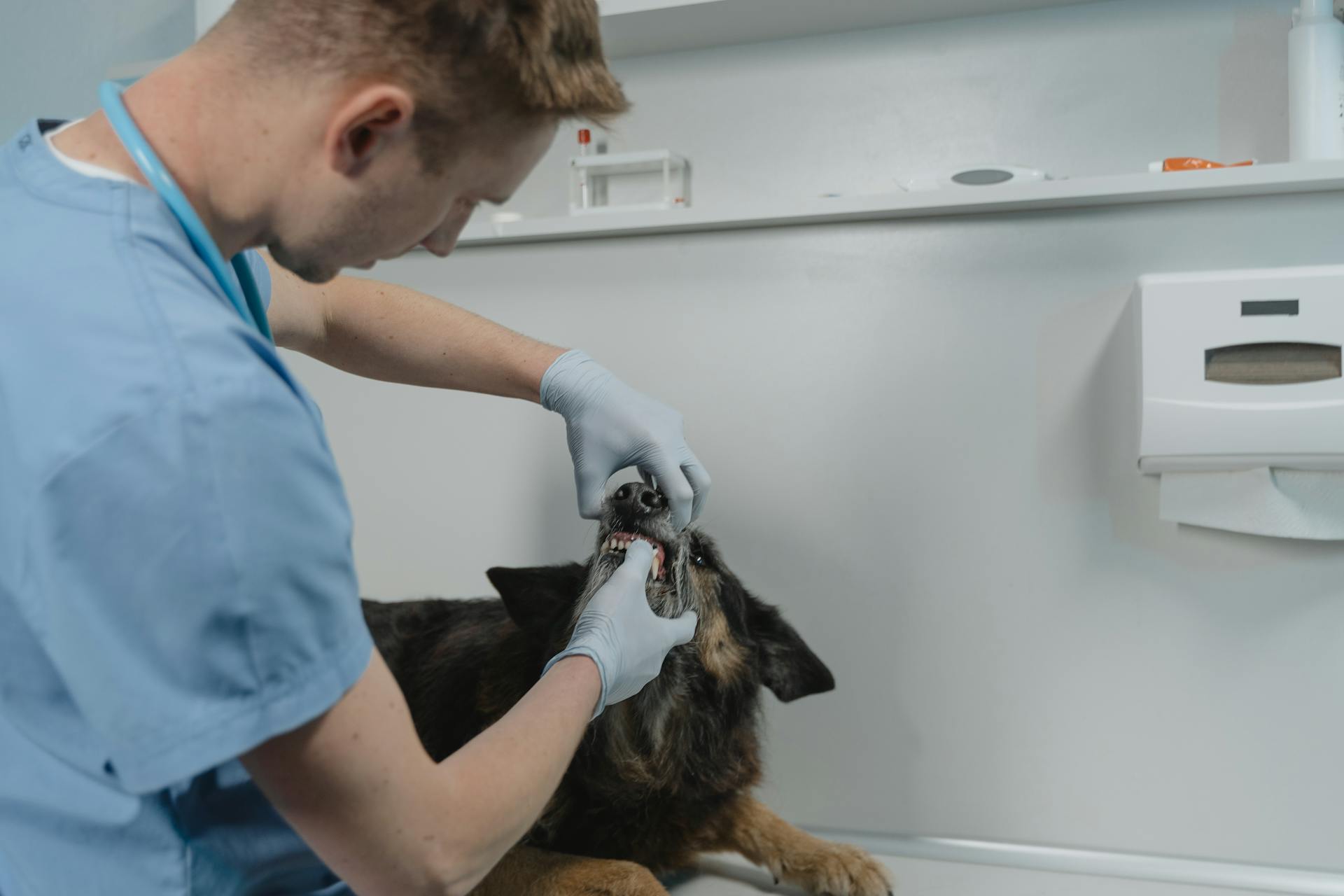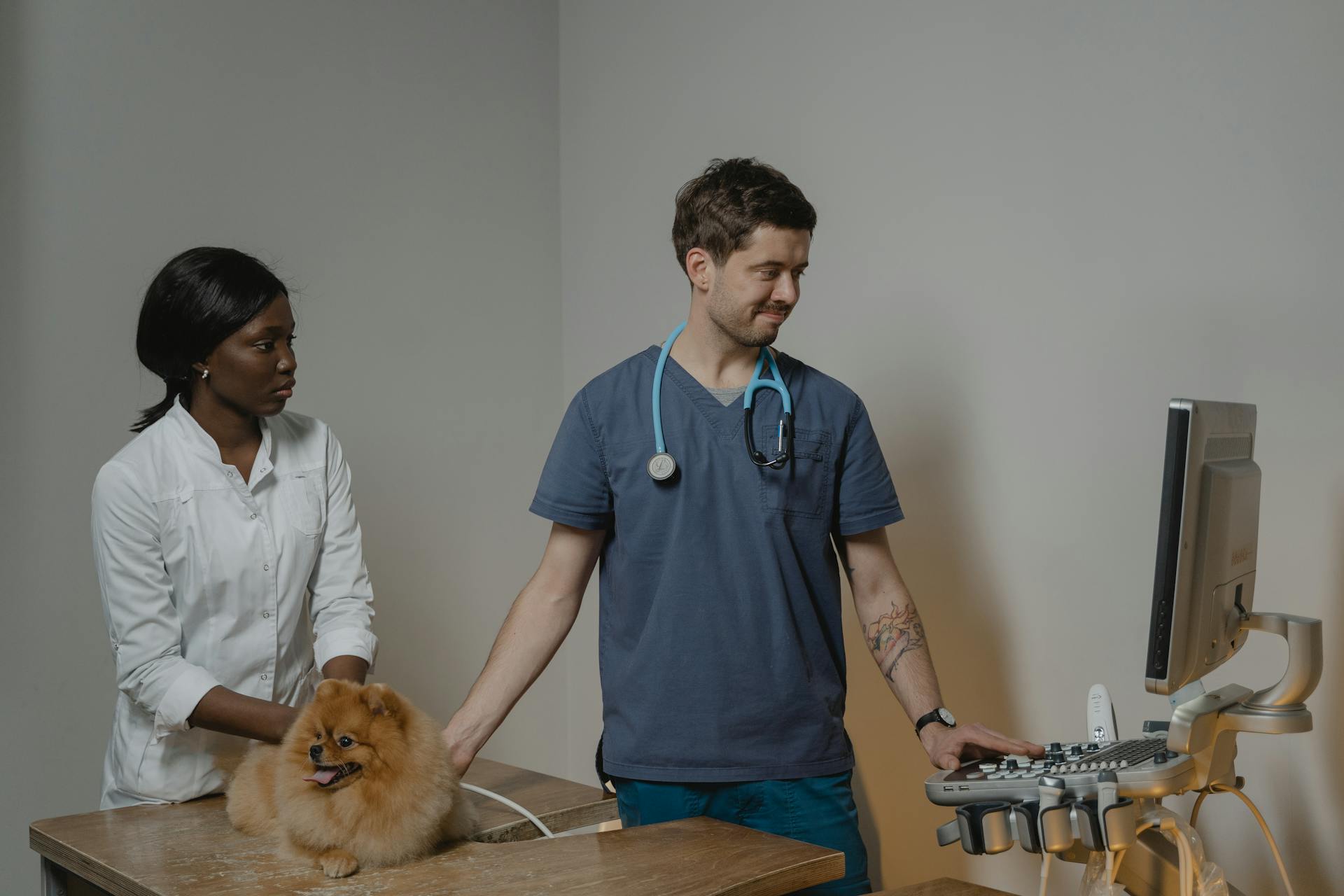
Becoming a veterinarian requires a significant amount of education and training. You'll need to earn a Doctor of Veterinary Medicine (DVM) degree from an accredited veterinary program, which typically takes four years to complete.
These programs are highly competitive, with many applicants vying for a limited number of spots. To increase your chances, focus on taking challenging courses in sciences such as biology, chemistry, and physics.
In addition to a strong academic record, you'll also need to gain hands-on experience through internships or volunteer work at veterinary clinics or shelters. This will not only give you valuable practical skills but also help you build connections in the industry.
Most veterinary programs require applicants to take the Graduate Record Examination (GRE) and provide letters of recommendation from academic or professional mentors.
History and Development
The history of veterinary medicine is a fascinating story that spans centuries and continents. The first veterinary school was founded in Lyon, France in 1762 by Claude Bourgelat, who was driven by the devastating impact of cattle plague on French herds.
In the 18th century, veterinary education received funding in Sweden, and the school was officially started in 1775. Peter Hernquist, a renowned educator, was at the helm and is considered the father of veterinary medicine in Sweden.
The Odiham Agricultural Society was founded in England in 1783 to promote agriculture and industry, and played a significant role in the development of the veterinary profession in Britain. This society was instrumental in promoting the humane treatment of sick animals.
Veterinary colleges were finally established in Britain in 1790, thanks to the efforts of Granville Penn and Frenchman Benoit Vial de St. Bel. The Royal College of Veterinary Surgeons was established by royal charter in 1844.
The late 19th century saw significant contributions to veterinary science, particularly from Sir John McFadyean, who is credited with being the founder of modern veterinary research.
A fresh viewpoint: Royal Veterinary College
Professionals and Education
The profession of veterinary medicine has a rich history, dating back to the establishment of the first veterinary school in Lyon, France in 1762 by Claude Bourgelat. This marked the beginning of formal education for veterinarians.
Veterinary education has evolved significantly over the centuries, with the Swedish veterinary education receiving funding in 1774 and officially starting in 1775. The Odiham Agricultural Society in England played a crucial role in promoting the profession in Britain, with a founding member, Thomas Burgess, advocating for animal welfare and the humane treatment of sick animals.
In the United States, the first schools of veterinary medicine were established in the early 19th century in Boston, New York City, and Philadelphia. The Iowa Agricultural College became the first land-grant college to establish a school of veterinary medicine in 1879.
Allied Professions
There are many professions that exist within the scope of veterinary medicine, but may not necessarily be performed by vets or veterinary nurses. These include osteopaths, chiropractors, and physiotherapists who deal with musculoskeletal disorders.
Some roles are specific to animals, such as animal grooming and animal massage. These roles have parallels in human society, but are tailored to meet the unique needs of animals.
Farriers, for example, are professionals who specialize in the shoeing of horses. They play a crucial role in ensuring the medical fitness of horses.
Veterinary nurses, veterinary technicians, and veterinary assistants are also part of the allied professions in veterinary medicine. They may assist vets in their work or work within their own scope of practice, depending on their skills and qualifications.
These paraveterinary workers may perform minor surgery, among other tasks. Their qualifications and skill mix vary widely depending on the country and region.
On a similar theme: How Does Dog Flea and Tick Medicine Work
Dvm-Phd Program
The DVM-PhD program is a highly competitive formal curriculum that allows students to complete both their professional degree requirements and additional graduate study and bench research. This program is available at institutions like the one mentioned in Example 2.
Through this program, students can pursue a dual degree by being accepted into the DVM program first, and then being considered for the PhD program. They have two options for completing a dual degree: the concurrent dual-degree option, where they pursue the PhD in the middle of their veterinary studies, or the sequential dual-degree option, where they complete the DVM degree before starting PhD studies.
Readers also liked: Pima Veterinary Technician Program
Financial support is available for students in the DVM-PhD program, which can be a huge relief for those who want to pursue this rigorous and rewarding education path. The program is designed to help students become experts in their field and make meaningful contributions to the scientific community.
The DVM-PhD program is not limited to students who want to pursue research in veterinary medicine. As mentioned in Example 3, students who want to pursue a Master's or PhD in other fields can also apply to the program, as long as they have a research interest in a relevant area.
Recommended read: Abc Veterinary Assistant Program
Research and Clinical Work
Research and clinical work in veterinary medicine is a rapidly evolving field. Veterinary research includes the study of diseases in animals and their potential impact on human health.
One of the key challenges in veterinary research is the lack of randomized controlled trials, which are fundamental in establishing the effectiveness of treatments. Clinical veterinary research is far behind human medical research, with fewer high-quality trials focused on research animals.
The FDA plays a crucial role in regulating animal drugs and food, with separate approval processes for human and veterinary use. The FDA's "Green Book" lists drugs approved specifically for veterinary medicine, with about half also approved for use in humans.
The Center for Veterinary Medicine (CVM) aims to protect human and animal health by ensuring animal drugs are safe and effective. The CVM's mission is to ensure that animal drugs are properly made, labeled, and packaged, and that food made from treated animals is safe for human consumption.
Suggestion: Veterinary Drugs List
DVM in Public Health
The DVM in Public Health program is a unique opportunity for veterinary students to earn a master's degree in public health while completing their DVM. This program is offered in collaboration with the School of Public Health, and students can earn both degrees in as little as four years.
Students in this program gain the credentials to work in government or industry on issues related to food safety, emerging infectious diseases, biosecurity, and public health. They also complete a veterinary and human public health field experience.
The program requires students to complete a "culminating experience" project under the guidance of a faculty adviser. This project is a key component of the MPH degree.
Tuition costs for the MPH degree are separate from those of the College of Veterinary Medicine.
Clinical Research
Clinical research in veterinary medicine is crucial for advancing our understanding of animal health and developing effective treatments. However, it lags behind human medical research, with fewer randomized controlled trials and lower quality research.
The FDA approves drugs for use in humans, but maintains a separate "Green Book" for veterinary medicine, which lists drugs approved specifically for animals. About half of these drugs are also approved for use in humans.
Randomized controlled trials are essential for establishing the effectiveness of treatments in veterinary medicine. Unfortunately, these trials are often focused on research animals and lack representation from private veterinary practices.
The creation of networks to include private veterinary practices in randomized controlled trials could significantly improve the quality and relevance of clinical veterinary research. This would allow for more diverse and representative data to inform treatment decisions.
Regenerative stem-cell therapy has shown promise in treating lesions in animals, as seen in the case of a maned wolf treated in Brazil in 2011. This therapy has the potential to revolutionize the field of veterinary medicine.
Here are some key statistics on the FDA's Center for Veterinary Medicine (CVM):
Ophthalmology, and Pharmacology
In veterinary ophthalmology, a crucial aspect of veterinary medicine, experts like Gelatt, Kirk N. (2000) have written extensively on the subject in "Essentials of Veterinary Ophthalmology". This book provides a comprehensive guide for veterinary professionals to diagnose and treat eye problems in animals.
Veterinary pharmacology is another vital area of research and clinical work. Riviere, Jim E. and Papich, Mark G. (2009) have written a detailed book on "Veterinary Pharmacology and Therapeutics" that covers the latest developments in the field.
Veterinary nursing and pharmacology are closely related, and understanding the interactions between medications and animal physiology is essential for effective treatment. Bryant, Susan (2010) has written "Anesthesia for Veterinary Technicians" which provides valuable insights into the use of anesthesia in veterinary medicine.
Cannon, Marthaxcx and Hijfte, Myra Forster-van (2006) have also written "Feline Medicine: A Practical Guide for Veterinary Nurses and Technicians", which includes information on pharmacology and its application in feline medicine.
You might enjoy: What Does a Veterinary Technician Do
Here is a list of some key veterinary pharmacology and ophthalmology references:
- Gelatt, Kirk N. (2000), Essentials of veterinary ophthalmology, Wiley-Blackwell, ISBN978-0-683-30077-2
- Riviere, Jim E.; Papich, Mark G. (2009), Veterinary pharmacology and therapeutics, John Wiley and Sons, ISBN978-0-8138-2061-3
- Bryant, Susan (2010), Anesthesia for Veterinary Technicians, John Wiley and Sons, ISBN978-0-8138-0586-3
- Cannon, Marthaxcx; Hijfte, Myra Forster-van (2006), Feline medicine: a practical guide for veterinary nurses and technicians, Elsevier Health Sciences, ISBN978-0-7506-8827-7
Specializations and Services
In veterinary medicine, there are several specializations and services that cater to the unique needs of animals. Veterinary pathophysiology is a key area of study that helps veterinarians understand the underlying mechanisms of disease.
Veterinary pathophysiology is a complex field that requires a deep understanding of animal physiology and disease processes. This knowledge is essential for veterinarians to diagnose and treat a wide range of conditions.
Veterinarians may specialize in various areas, including veterinary parasitology, which involves the study and treatment of parasites that affect animals. Veterinary parasitology is a crucial service that helps prevent the spread of diseases and protects animal health.
The American Association of Veterinary Parasitologists has published a comprehensive reference manual on veterinary parasitology, which provides veterinarians with the latest information on parasite identification, diagnosis, and treatment.
Veterinarians may also specialize in veterinary toxicology, which involves the study of the effects of toxins on animal health. Veterinary toxicology is a critical service that helps veterinarians diagnose and treat poisoning cases in animals.
Take a look at this: Veterinary Toxicology
Some veterinarians may choose to specialize in veterinary virology, which involves the study of viruses that affect animals. Veterinary virology is a complex field that requires a deep understanding of viral biology and disease processes.
Veterinary virology is essential for the development of effective vaccines and treatments for viral diseases in animals.
Here are some examples of veterinary specializations and services:
- Pathophysiology: study of disease mechanisms
- Parasitology: study and treatment of parasites
- Toxicology: study of toxin effects on animal health
- Virology: study of viruses that affect animals
These specializations and services are critical for maintaining animal health and preventing the spread of diseases.
Regulations and Accreditation
The University of Minnesota College of Veterinary Medicine has been granted full accreditation status by the American Veterinary Medical Association (AVMA) Council on Education.
The AVMA is the accrediting agency that oversees colleges of veterinary medicine in the United States, Canada, and some international schools. This ensures that the college meets the highest standards of education in veterinary medicine.
The college submits an annual interim report and participates in a full self-study and site visit every seven years, focusing on the assessment of the 11 standards of accreditation.
These standards include areas such as finances, physical facilities and equipment, clinical resources, admissions, outcomes, and more.
The DVM degree from the UMN CVM qualifies graduates to take the licensing exam in every state provided they pass the national exam and meet the state non-academic guidelines.
DVM students must pass both state and national board licensing exams in order to practice veterinary medicine.
The national exam is called the North American Veterinary Licensing Examination and is offered in the fall and the spring.
All D.V.M. students from AVMA accredited schools must pass the North American Veterinary Licensing Examination (NAVLE) in order to be fully licensed to practice veterinary medicine in the United States.
The NAVLE pass rate for University of Minnesota students in 2024 was 94%.
Those wishing to practice in Minnesota must also take the Minnesota Board of Veterinary Medicine licensing exam.
Additional licensing requirements may vary from state to state.
The Minnesota Board of Veterinary Medicine requires criminal background checks as part of its licensing process for both new and existing veterinarians.
For more insights, see: Veterinary Assistant Test
Programs and Events
The LSU School of Veterinary Medicine offers prestigious endowed professorships that provide faculty members with the resources to pursue groundbreaking research and innovative teaching. These positions are five-year appointments that can lead to better diagnostics, treatments, and public health outcomes.
These professorships fuel discoveries that often translate directly into improved care for animals and people. They are a testament to the school's commitment to advancing veterinary medicine.
The endowed professorships are a key part of the school's mission to improve animal and human health through education, research, and service.
WesternU Pet Health Center Opens State-of-the-Art Rehabilitation Center
WesternU's Pet Health Center has just opened a state-of-the-art rehabilitation center. This new facility is designed to provide top-notch care for pets in need of physical therapy.
The rehabilitation center features advanced equipment, including underwater treadmills and a swimming pool, which allows therapists to tailor treatment plans to each pet's specific needs.
This center is a game-changer for pets recovering from injuries or surgery, and for those with chronic conditions that require ongoing care.
See what others are reading: Revolution Pet Medicine
LSU Vet Med Events
The LSU School of Veterinary Medicine has named the newest recipients of its prestigious endowed professorships, five-year appointments that fuel groundbreaking research, innovative teaching, and improved care for animals and people.
These positions provide faculty members with the resources to pursue discoveries that often translate directly into better diagnostics, treatments, and public health outcomes.
The LSU School of Veterinary Medicine is dedicated to advancing the health and well-being of animals and people through its research, teaching, and service programs.
LSU Vet Med is committed to providing top-notch education and training to the next generation of veterinarians, who will go on to make a positive impact in their communities.
Broaden your view: Veterinary Teaching Hospitals
Career and News
Veterinarians are in high demand, with the Bureau of Labor Statistics predicting a 19% growth in employment opportunities by 2028. This growth is driven by an increasing need for animal care and a growing human population.
Many veterinarians choose to specialize in a particular area, such as surgery, dentistry, or zoological medicine. Some even pursue advanced degrees in veterinary medicine.
Veterinarians must stay up-to-date with the latest developments in their field, attending conferences and workshops to stay current on new techniques and treatments.
Explore further: African American Veterinarians
Career Opportunities at the College of Medicine
The College of Medicine offers a range of career opportunities for students and alumni.
With a strong focus on research, the College of Medicine provides students with hands-on experience in state-of-the-art facilities, including the Advanced Medical Imaging Center.
Students can pursue a variety of career paths in medicine, including clinical research, public health, and medical education.
The College of Medicine has a strong reputation for producing well-rounded physicians, with 95% of graduates passing the USMLE Step 1 exam on their first attempt.
Students can also participate in the College's global health program, which provides opportunities for clinical rotations and research in countries around the world.
Graduates of the College of Medicine have gone on to pursue successful careers in top-ranked hospitals and research institutions.
Cvm Recent News
In recent news, a new study revealed that 75% of professionals are considering a career change within the next year. This trend is driven by a desire for better work-life balance and more fulfilling careers.
The rise of remote work has led to a significant shift in the job market, with 62% of companies now offering flexible work arrangements. This change has opened up new opportunities for people to work from anywhere and have more control over their schedules.
Many professionals are now prioritizing their mental health and well-being, with 85% of respondents citing stress and burnout as major concerns. Employers are taking notice, with 45% of companies offering mental health resources and support to their employees.
The future of work is looking bright, with 80% of professionals expecting to see significant advancements in technology and automation in the next five years. This will likely lead to new job opportunities and industries emerging.
See what others are reading: Veterinary Drug Companies
Mission and Location
Our mission in veterinary medicine is to improve and protect the lives of animals and people through superior education, transformational research, and compassionate care.
This mission-driven approach is what sets us apart, and it's reflected in our commitment to providing the best possible care for our patients.
By prioritizing education, research, and compassion, we're able to make a real difference in the lives of animals and people alike.
Curious to learn more? Check out: Veterinary Education
Mission
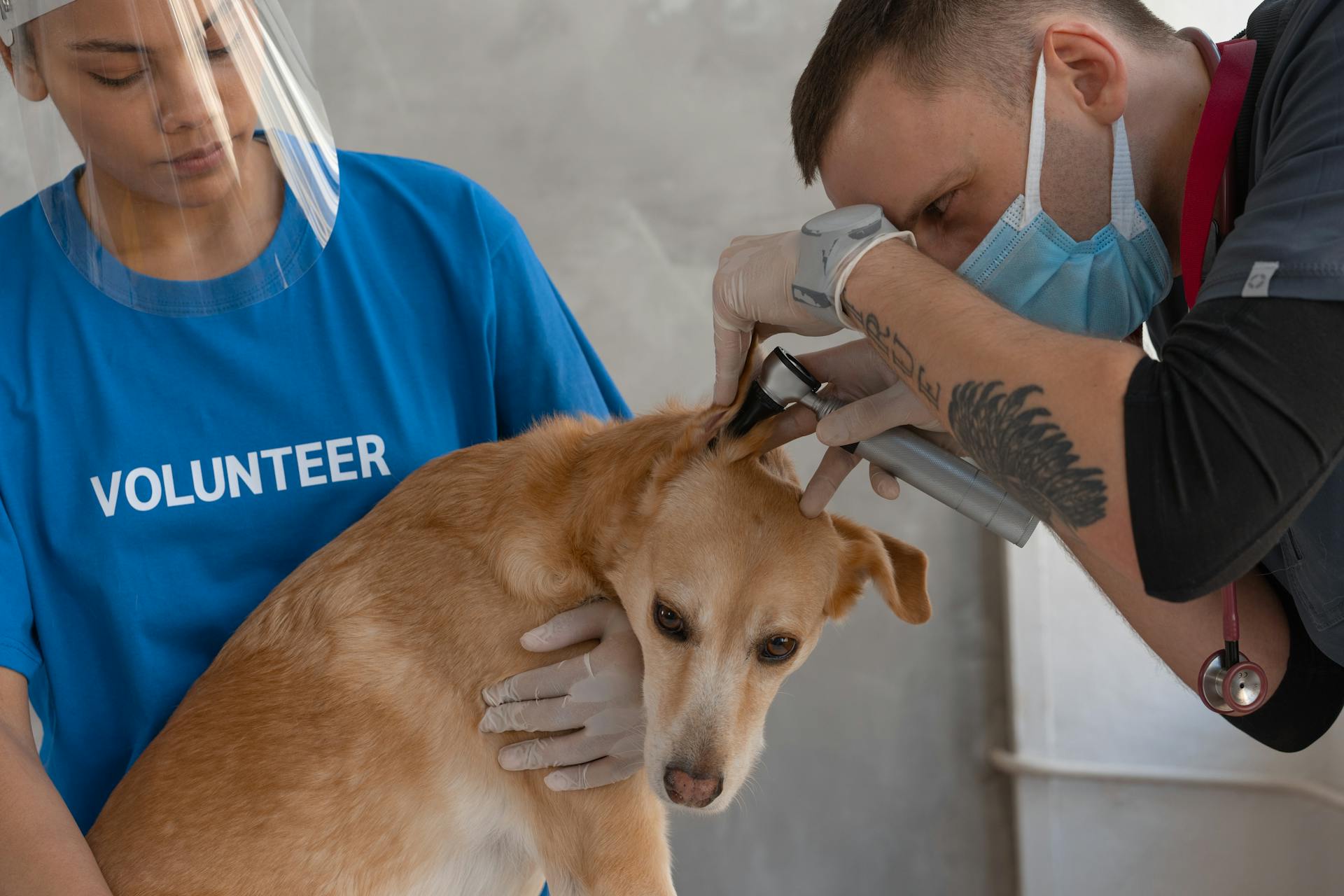
Our mission is to improve and protect the lives of animals and people. This is achieved through education, research, and compassionate care.
We're dedicated to providing superior education, which helps us learn and grow. This education is a key part of our mission.
Transformational research is another crucial aspect of our mission. It allows us to find new and innovative ways to protect and improve lives.
Compassionate care is at the heart of everything we do. It's about treating all living beings with kindness and respect.
Why Minnesota?
Minnesota is a fantastic location for students, with the Twin Cities Metro Area offering a unique blend of urban and rural settings. The state is also home to the University of Minnesota's Veterinary Medical Center (VMC), which provides hands-on experience for students.
One of the key benefits of studying in Minnesota is access to specialized knowledge. The University of Minnesota is a leading institution in the field of veterinary medicine, and students have the opportunity to learn from top experts in the field.
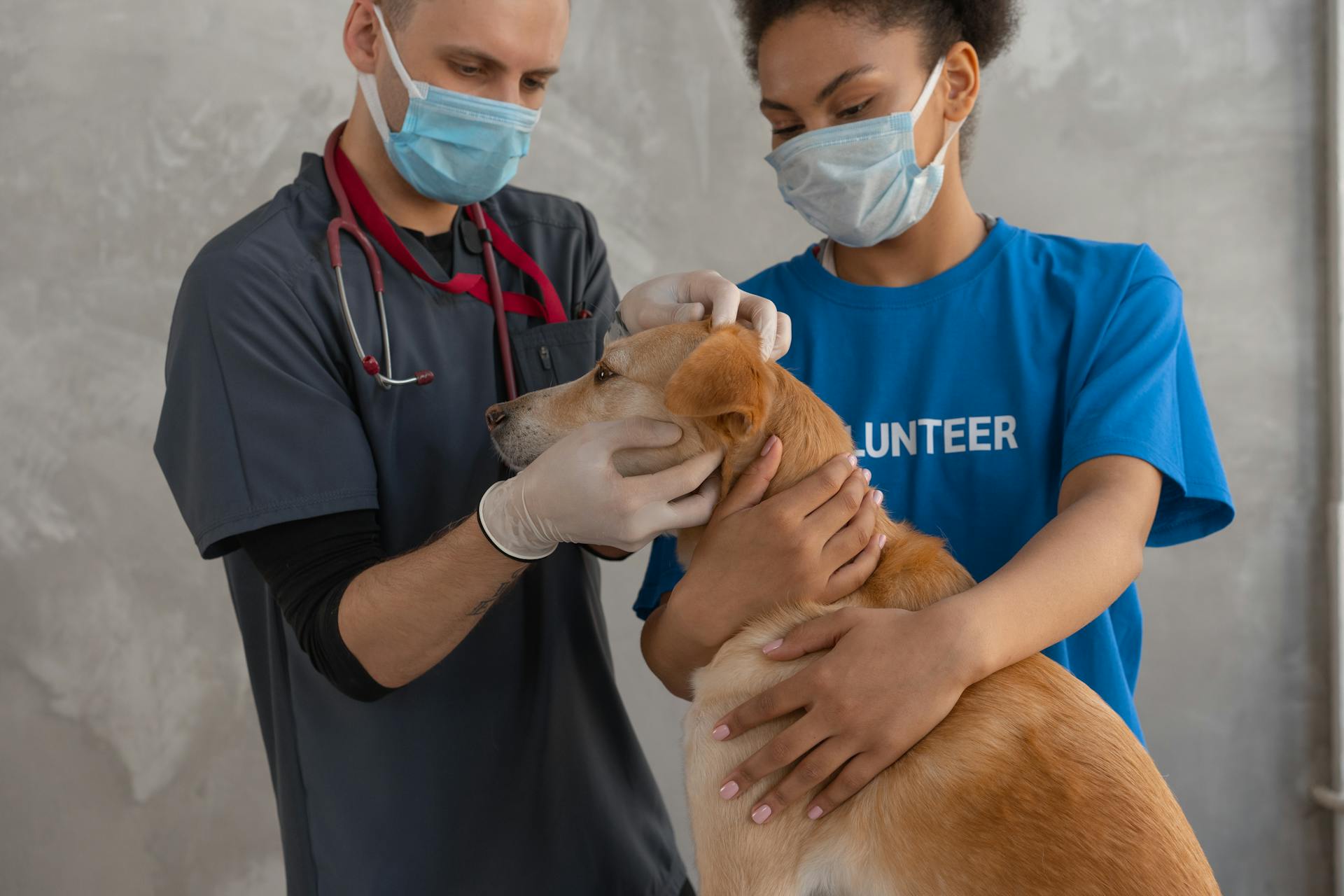
The culture of collaboration at the University of Minnesota is another major draw. Students work closely with faculty and peers to develop their skills and knowledge, creating a supportive and inclusive environment.
Minnesota is also a great place to practice community medicine, with many opportunities to work with local animals and communities. This hands-on experience is invaluable for students looking to make a difference in the world.
The University of Minnesota is a Tracking School, which means that students can pursue a Doctor of Veterinary Medicine (DVM) degree with a focus on tracking and other specialized areas.
Featured Images: pexels.com