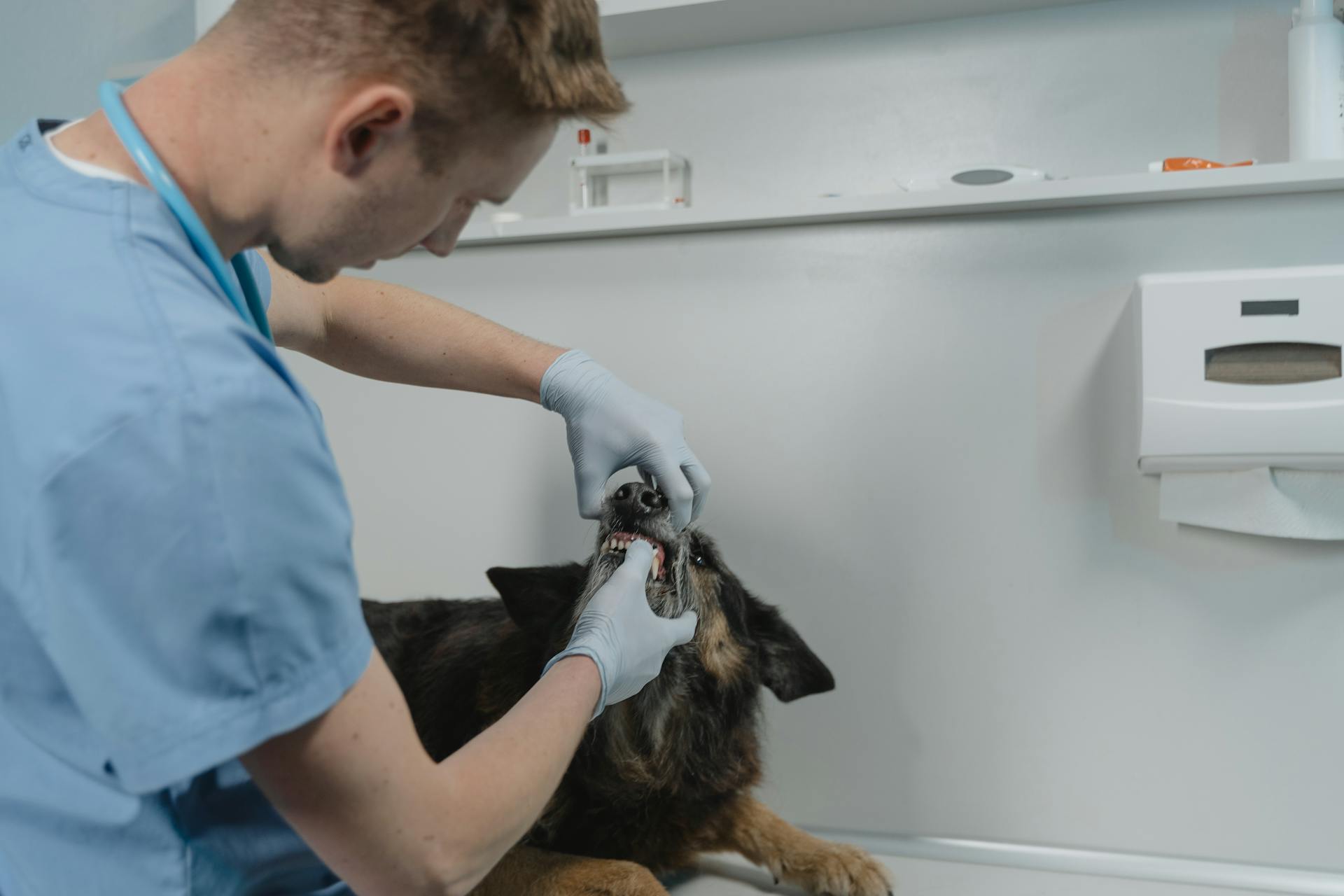
Becoming a veterinarian in Canada requires a strong foundation in science and a passion for animal care. The typical pathway to becoming a veterinarian involves earning a Doctor of Veterinary Medicine (DVM) degree from a recognized university.
To get into a DVM program, you'll need to meet the minimum admission requirements, which typically include a bachelor's degree in a relevant field such as biology, chemistry, or animal science. A minimum GPA of 3.0 is usually required, and some programs may have additional requirements such as prerequisite courses or work experience.
In Canada, the DVM program typically takes four years to complete and includes both classroom and clinical training. The program covers a wide range of topics, from anatomy and physiology to pharmacology and surgery.
For your interest: Veterinary Technician Job Requirements
Becoming a Veterinarian in Canada
Becoming a Veterinarian in Canada is a bit of a journey, but it's definitely achievable. Here are the basic steps to get you started:
Everyone's path to becoming a vet will be unique, but there are eight key steps that encompass the process. You'll need to complete these steps to become a licensed veterinarian in Canada.
Applicants often come from a background as veterinary technicians, having earned a two-year associate degree. They may still need to log some additional coursework to fill in gaps in their education.
A four-year science degree is likely to provide the necessary understanding of key components like organic chemistry, genetics, and statistics. Dr. Alec Martin suggests that a three-year degree could also be sufficient.
Attending a fully accredited veterinary program is crucial, as it will make you eligible to seek licensure in Canada or the US after passing the North American Veterinary Licensing Examination (NAVLE).
Education and Training
To pursue a career in veterinary medicine in Canada, you'll need a strong foundation in sciences and diverse electives, which can be achieved through pre-veterinary medicine programs.
You'll gain a solid understanding of biology, chemistry, calculus, and English, essential for applying to DVM programs in Canada. These courses provide a strong foundation for advanced studies in veterinary medicine.
To specialize in a particular area of veterinary medicine, you may need to complete additional training through internships or residency programs. This can be researched through the Veterinary Internship & Residency Matching Program.
Dr. Cusmariu emphasizes the importance of having a drive to learn and being able to study on your own, as learning never stops after graduating. After a first job in one type of veterinary medicine, you may decide to switch to a specialty, so an always-learning mindset will serve you well.
Hands-on learning experiences are also essential in veterinary medicine. For example, students at St. Matthew’s University School of Veterinary Medicine can learn with Canadian-based 4th-year veterinary students while benefiting from direct contact with patients of a variety of species.
Career Path
Pursuing a career in veterinary medicine in Canada can be a rewarding and challenging experience. The average salary of a veterinarian in Canada depends on the specialty and location.
You'll want to research your career options thoroughly, considering factors like geographic location and salary. The current shortage of veterinarians in Canada presents a huge opportunity for those entering the field.
In Canada, veterinarians are in high demand, especially in certain specialties. You can start by reaching out to your network, including peers, instructors, and other veterinarians you've worked with.
Broaden your view: African American Veterinarians
Working in Canada
You can practice veterinary medicine in Canada even if you're not from Canada, but you'll need to meet some extra requirements. In most cases, DVM graduates of AVMA-accredited vet schools can practice in Canada after passing the NAVLE.
To work in Canada, you'll need to obtain a visa to live and work in the country. Internationally educated veterinarians, like Ross Vet grads, can petition for a Certificate of Qualification from the National Examining Board of the Canadian Veterinary Medical Association.
If you're not from an English-speaking nation, you'll also need to prove your language proficiency. You can't just rely on your practical skills as a veterinary technician, you'll also need to log some additional coursework in subjects like organic chemistry, genetics, and statistics.
Attending a fully accredited veterinary program, such as the School of Veterinary Medicine at St. George’s University, will make you eligible to seek licensure in Canada or the US after passing the NAVLE. Qualified vets may be eligible for permanent residency through the Federal Skilled Worker Program.
A four-year science degree is more likely to ensure the necessary understanding of key components, but a three-year degree would also suffice.
Specialization and Advancement
You can pursue additional specialization training through residency programs, which can be researched through the Veterinary Internship & Residency Matching Program.
To specialize in a particular area of veterinary medicine, you'll need to complete a residency in that field. This can be a great way to gain expertise and open up new career opportunities.
Certain residency programs require you to meet specific prerequisites, such as already being licensed in that area. You'll want to have a solid understanding of all province-specific licensure requirements before pursuing specialty training.
Depending on your area of interest, you may need to complete a preliminary internship before starting a residency program. This can help you gain the necessary experience and skills to succeed in your chosen specialty.
Dr. Cusmariu advises having a drive to learn and being able to study on your own, as learning never stops in veterinary medicine.
General Information
Veterinary medicine in Canada is a highly regulated field with a strong focus on animal welfare.
The Canadian Veterinary Medical Association (CVMA) is the primary governing body for veterinarians in Canada, responsible for setting standards and guidelines for the profession.
Veterinary medicine programs in Canada are typically four years in length, following a minimum of two years of undergraduate study.
Many veterinary students in Canada choose to pursue a Doctor of Veterinary Medicine (DVM) degree, which is the most common degree awarded in the field.
The CVMA requires veterinarians to complete a certain number of continuing education hours each year to maintain their licensure.
Start Your Journey
Becoming a veterinarian in Canada requires a long and winding process through applications, education, and residency. It's an invaluable experience for those passionate about caring for animals.
Thoroughly vetting your options is a key element of applying to veterinary school. You should evaluate criteria such as the ones mentioned in the article "6 Things the Top Veterinary Schools Have in Common."
Researching your career options is essential before starting your journey. Consider your preferred geographic location and the average salary of a veterinarian in Canada, which depends on your specialty and where you practice.
There is a severe shortage of veterinarians in Canada, representing a huge opportunity. A growing demand for specialists also exists, so do your research to find where veterinarians are most in demand.
Reaching out to your network is a great way to get started. Contact your peers, instructors, and other vets you worked with while gaining school experience to build connections and learn from their experiences.
Frequently Asked Questions
How many years is veterinary medicine in Canada?
In Canada, veterinary medicine typically takes 4 years to complete after pre-veterinary study. However, in Quebec, it requires an additional year, totaling 5 years of study.
Can a US veterinarian work in Canada?
Yes, a US-licensed veterinarian can work in Canada, as they are considered equivalent to Canadian-licensed veterinarians. However, they may need to meet additional requirements to practice in Canada.
How much does a vet get paid in Canada?
According to recent data, the average annual salary for a veterinarian in Canada is $129,217. This figure is based on 759 salaries from job postings on Indeed.
Featured Images: pexels.com