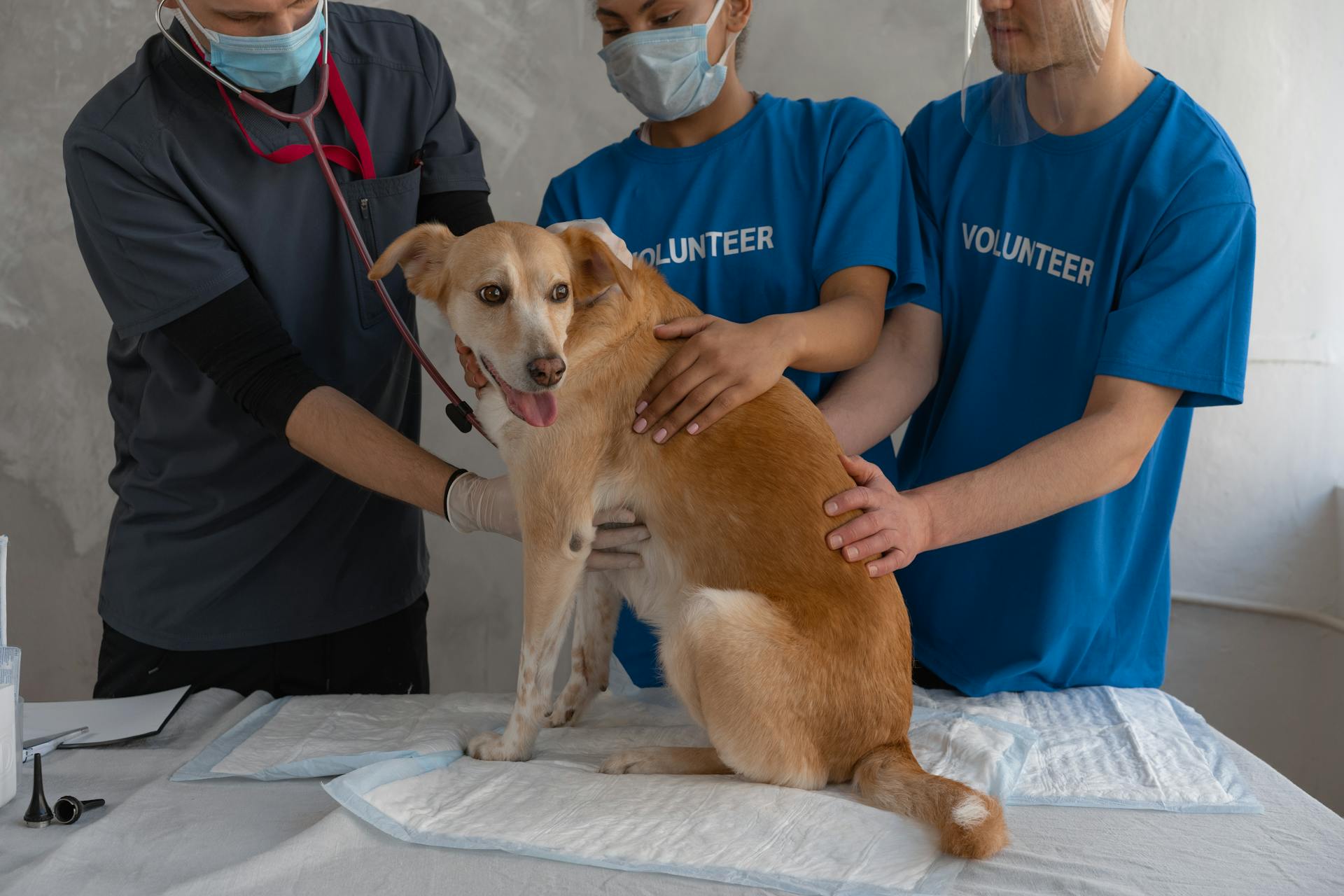
A veterinary technician's work environment can be quite varied, but generally, they work in a clinical setting, such as a veterinary clinic, hospital, or research facility.
Veterinary technicians often work long hours, including evenings and weekends, and may be on call to respond to emergencies.
They spend most of their time in a lab or examination room, where they perform tasks such as taking x-rays, drawing blood, and conducting lab tests.
Veterinary technicians work closely with veterinarians, assisting with surgeries, administering medications, and monitoring patients' conditions.
What is a Veterinary Technician?
A veterinary technician is a vital part of a veterinary team, working under the supervision of a licensed veterinarian to aid in various tasks such as administering medications, preparing animals for surgery, and conducting laboratory tests.
They play a significant role in communicating with pet owners about their pet's health, explaining medical conditions, and discussing treatment options. This requires a unique combination of skills, including technical knowledge, empathy, communication, patience, physical stamina, and bravery.
Vet techs work in various settings, including veterinary clinics, animal hospitals, animal shelters, and zoos. Their duties may include conducting medical laboratory tests, setting up and maintaining medical equipment, and collecting and preparing specimens for testing.
Broaden your view: Laboratory Procedures for Veterinary Technicians
Definition of a Vet Tech
A veterinary technician, also known as a vet tech or vet nurse, is a vital part of any veterinary team. They assist veterinarians in providing care for animals in various settings, including animal hospitals, clinics, and research facilities.
Vet techs are educated professionals who handle responsibilities similar to those of registered nurses in human medicine. They are involved in patient care, medical procedures, and laboratory and diagnostic work.
Vet techs work closely with veterinarians to provide care for animals, making them a crucial part of the veterinary team.
Overview of Veterinary Technician Profession
The veterinary technician profession is a unique blend of science, math, and communication skills, requiring a deep love for animals and a strong technical foundation. Vet techs work under the supervision of a licensed veterinarian, aiding in tasks such as administering medications and preparing animals for surgery.
To succeed in this role, you'll need a combination of technical knowledge, empathy, communication, patience, physical stamina, and even bravery. Dealing with distressed or aggressive patients can be part of the job, but for those who enjoy working with animals, the rewards are well worth it.
Vet techs play a significant role in communicating with pet owners, explaining medical conditions and discussing treatment options. They also provide a comforting presence in difficult times, making them an essential part of the veterinary team.
Depending on their level of expertise and education, vet techs may specialize in areas like dentistry, anesthesiology, or emergency and critical care. For example, they might work in veterinary clinics, animal hospitals, or zoos, or even in animal research laboratories or pharmaceutical companies.
If you're considering a career as a vet tech, you'll need to enjoy working with animals and be able to follow direction and conduct medical tests. You should also be process-oriented, detail-oriented, and have good computer skills.
Broaden your view: Pima Medical Institute Veterinary Technician
Daily Life as a Vet Tech
As a vet tech, you'll have the opportunity to work in a variety of settings, including veterinary clinics, animal hospitals, and research facilities.
You can expect to spend most of your day on your feet, moving around the clinic or hospital to care for animals, take samples, and perform various tasks.
The pros of becoming a vet tech include a wonderfully fulfilling career field, as mentioned earlier.
You'll work closely with veterinarians, other vet techs, and animal care staff to provide the best possible care for animals.
Typically, you'll work a standard 40-hour week, with some overtime possible during busy periods or in emergency situations.
The work environment can be fast-paced and unpredictable, but it's also incredibly rewarding to see animals recover and thrive under your care.
Work Environment and Conditions
As a veterinary technician, you'll spend most of your time indoors, but you may also work outdoors while exercising animals. You'll often be within inches of coworkers and animals, which can be physically demanding.
Working hours can vary, but most veterinary technicians work 40 hours a week, with a set schedule each week. Some labs and animal hospitals are open 24 hours, so you may work days, evenings, weekends, or holidays.
You'll be exposed to diseases and infections daily, as well as contaminants like animal waste. You may also be exposed to hazardous situations that can lead to bites or scratches. To mitigate these risks, you'll often wear specialized protective attire, such as radiation protection suits, masks, rubber gloves, and uniforms or lab jackets.
Related reading: Veterinary Technician Week Ideas
Here are some common physical work conditions you may encounter:
- Exposed to diseases or infections on a daily basis.
- Exposed to contaminants like animal waste daily.
- Exposed to hazardous situations that can produce bites or scratches on a daily basis.
- Exposed to radiation when working near diagnostic equipment.
- Exposed to sounds and noise levels that are distracting and uncomfortable.
Role of Vet Techs in Veterinary Medicine
Vet techs are the backbone of veterinary medicine, playing a vital role in supporting veterinarians, animals, and their owners.
Their wide range of responsibilities allows veterinarians to focus on diagnosing disease, prognosing disease outcome, performing surgery, and prescribing medication and treatment protocols.
Vet techs often have more direct contact with animals and their owners, providing a comforting presence and excellent client service.
In research settings, vet techs ensure that animals are cared for according to ethical guidelines, contribute to data collection, and may assist in developing new treatments or medications.
They develop enrichment opportunities for the animals in their care.
Vet techs start their careers in entry-level positions at veterinary clinics, animal hospitals, or research facilities, assisting veterinarians in routine tasks such as collecting samples and conducting basic lab tests.
Their levels of responsibility can vary from one place of employment to another and can increase over time as they gain experience and knowledge.
Working Conditions
Working conditions for veterinary technicians and animal health technologists can be physically demanding and emotionally challenging. They often work indoors, but may also work outdoors while exercising animals.
One of the biggest risks is exposure to diseases and infections on a daily basis, as well as contaminants like animal waste. This can be mitigated with proper protective attire, such as masks, rubber gloves, and uniforms or lab jackets.
Veterinary technicians and animal health technologists often work very near animals and coworkers, which can be distracting and uncomfortable due to noise levels. They may also be exposed to radiation when working near diagnostic equipment.
Their work schedule can vary, but most work 40 hours a week, with some research labs and animal hospitals operating 24 hours a day. This can include working days, evenings, weekends, or holidays.
Here are some common physical challenges associated with the job:
- Lifting, holding, or restraining animals, risking bites or scratches.
- Cleaning cages, which can be physically demanding.
- Working in cramped work places that require getting into awkward positions.
- Long hours on their feet.
Challenges and Risks
Working as a veterinary technician can be physically demanding. Animals in distress can be unpredictable and may scratch, bite, or kick, leading to potential injuries.
Long hours on their feet are a common occurrence for vet techs, which can cause strain or discomfort if not managed properly.
Burnout
Burnout is a significant risk for veterinary technicians, particularly due to the emotional demands of the job. Emotional stress, compassion fatigue, and euthanasia can take a toll on their mental health.
Long hours, shift work, weekend or holiday duties, and on-call schedules can contribute to burnout over time. This can lead to neglect of their own self-care and emotional health.
Veterinary technicians often manage difficult and emotional situations with clients, leaving them little time for stress management and self-care. Practicing emotional and physical wellbeing is essential to prevent burnout.
The job can be rewarding, but it's crucial to understand both its rewards and challenges. Many vet techs find the job fulfilling due to their love for animals and the satisfaction of contributing to their patient's health and welfare.
Veterinary technicians who neglect their own self-care basics are more likely to experience burnout. Practicing stress management and prioritizing emotional health can help them stay focused in the workplace.
Consider reading: Wildlife Rehabilitator Job Work Environment
Physical Challenges: Risks & Injuries

Working as a vet tech can be physically demanding. You'll often be on your feet for long hours, which can be tiring.
Animals, especially those in distress, can be unpredictable, leading to potential injuries from scratches, bites, or kicks. This is a reality that vet techs face daily.
Lifting or restraining animals can cause strain or injury if not done properly. It's essential to follow proper lifting techniques to avoid accidents.
Vet techs are also exposed to diseases or infections on a daily basis, which can be a significant risk. This is due to the nature of their work, often working with animals that may be sick or injured.
Here are some of the physical challenges vet techs face:
- Exposure to diseases or infections
- Exposure to contaminants, such as animal waste
- Exposure to hazardous situations and conditions that can produce bites or scratches
- Exposure to radiation when working near diagnostic equipment
- Exposure to sounds and noise levels that are distracting and uncomfortable
- Wearing specialized protective attire, such as radiation protection suits
- Working in cramped spaces that require getting into awkward positions
Skills and Qualifications
To succeed in a veterinary technician work environment, you'll need a strong foundation of skills and qualifications.
Strong interpersonal skills are crucial for dealing with pet owners and collaborating with a veterinary team. This means being able to communicate effectively, empathize with clients, and work well under pressure.
A unique perspective: Veterinary Technician Skills
Good technical skills are essential for performing various procedures and using specialized equipment. This includes being proficient in lab procedures, radiology, and anesthesia.
Problem-solving skills, attention to detail, and the ability to work under pressure are also vital. You'll need to be able to think critically and make sound decisions quickly, often in high-stress situations.
Here are some of the key skills and attributes you'll need to succeed as a veterinary technician:
- Strong interpersonal skills
- Good technical skills
- Problem-solving skills, attention to detail, and the ability to work under pressure
Career Advantages and Disadvantages
As a veterinary technician, you'll have the opportunity to work with a variety of animals and develop a range of skills.
One of the biggest advantages of being a veterinary technician is the potential for job security and stability, with the Bureau of Labor Statistics predicting a 18% growth in employment opportunities from 2020 to 2030.
Veterinary technicians can expect to work long hours, including evenings, weekends, and holidays, often for 40 hours or more per week.
However, the fast-paced and dynamic work environment of a veterinary clinic can be very rewarding, with the opportunity to make a real difference in the lives of animals and their owners.
Take a look at this: Veterinary Technician Hours
Cons of Being a Vet Tech
Being a vet tech can be a tough job, both physically and emotionally. Long hours, shift work, and on-call schedules can contribute to burnout over time. Many vet techs work long hours, often with little rest in between, which can be exhausting.
Emergency care settings require working hours that may be different from your family and friends, making it hard to maintain a work-life balance. This can lead to neglect for themselves and their own emotional health. Burnout is a real concern for many vet techs.
Vet techs often have to manage difficult and emotional situations with clients, which can be draining. They may neglect their own self-care basics, such as stress management and emotional wellbeing, without realizing the impact it has on their overall health. This can lead to burnout and decreased job satisfaction.
It's essential for prospective vet techs to understand the challenges they may face, including the risk of burnout and the need to maintain healthy boundaries. By being aware of these potential pitfalls, they can take steps to prevent burnout and stay focused in the workplace.
Pros of Becoming a Vet Tech
As a veterinary technician, you'll have the opportunity to work in a variety of settings, including veterinary clinics, animal hospitals, and animal research laboratories.
Animal health technologists and veterinary technicians work in a hands-on environment, caring for animals and assisting in the diagnosis and treatment of animal health disorders.
You'll have the chance to make a difference in the lives of animals and their owners every shift, helping them give their beloved pets a healthier and happier life.
Some of the specific tasks you'll perform include conducting medical laboratory tests, setting up and maintaining medical laboratory equipment, and collecting and preparing specimens for testing.
You'll also get to work with a variety of animals, from pets to livestock, and even in zoos and animal shelters.
To succeed in this role, you'll need to be process-oriented, understand the importance of following procedures, and be detail-oriented.
You'll also need to have good computer skills, which will come in handy when working with electronic medical records and laboratory equipment.
Here are some of the key benefits of becoming a veterinary technician:
- Hands-on work environment
- Opportunity to make a difference in the lives of animals and their owners
- Variety of work settings, including veterinary clinics, animal hospitals, and animal research laboratories
- Chance to work with a variety of animals
- Good computer skills required
- Must be process-oriented and detail-oriented
Technological and Professional Developments
As technology advances, vet techs are facing a new reality in the workplace.
Technological advancements are reshaping the veterinary profession, with improvements in diagnostic imaging and medical record systems.
These advancements increase efficiency and improve the quality of animal care.
Vet techs will need to adapt and learn to harness these new tools effectively.
Advancements in telemedicine are also changing the way vet techs work, allowing for remote consultations and monitoring.
The integration of technology is not only changing the way vet techs work but also enhancing the way animals are cared for.
For another approach, see: New York Veterinary Technician License
Frequently Asked Questions
What is the work environment like for a veterinary assistant?
Working as a veterinary assistant can be physically demanding and hazardous, with a high risk of injuries from animals. The work environment requires careful handling and restraint of animals, posing a risk of bites, scratches, and kicks
How many hours does a vet tech usually work?
Vet techs typically work 40 hours per week, but may need to put in extra time for evening shifts, weekends, and emergencies. Their schedules can be unpredictable, but they often work standard full-time hours.
Featured Images: pexels.com