
Grapes and raisins are a common snack for many of us, but did you know they can be toxic to dogs? The ASPCA warns that even small amounts can cause kidney failure in canines.
The exact mechanism of grape toxicity is still unknown, but the ASPCA notes that it's a serious issue that requires immediate attention. If your dog ingests grapes or raisins, it's essential to act quickly.
The severity of grape toxicity can vary depending on the amount and type of fruit consumed. According to the ASPCA, even a small amount of grapes can cause significant harm to a dog.
See what others are reading: Dogs Eating Grapes
What to Do
If your dog eats grapes, it's absolutely critical to take immediate action. Contact your veterinarian right away, who may suggest inducing vomiting as soon as possible.
However, don't induce vomiting if your dog is unconscious, having trouble breathing, or showing signs of distress. You should also avoid inducing vomiting if you're not sure what your dog has eaten.
A unique perspective: Dog Reverse Sneezing and Vomiting White Foam
Grapes and raisins are potentially poisonous to dogs, and it's impossible to know which dogs will react and which won't. To err on the side of caution, it's best to avoid giving your dog any grapes or grape-containing products.
If your dog eats grapes or raisins, contact the ASPCA Animal Poison Control Center at (888) 426-4435 or Pet Poison Helpline at (855) 764-7661 ASAP. There is a fee for the service, but it's well worth it.
The veterinary toxicologists will let you know if your dog needs emergency care or if you can monitor your dog at home. They'll also provide you with a case number and discuss a comprehensive treatment plan with your veterinarian.
Here are some signs of grape or raisin toxicity in dogs:
- Vomiting
- Diarrhea (which may contain grape or raisin pieces)
- Being a lethargic dog
- Increased thirst in dogs
- Dog not eating (loss of appetite)
- Dry nose and mouth (or other signs of dehydration)
- Breath that smells like ammonia
- Abdominal pain
- Increased urine production initially, which can progress to decreased urine production or a dog who is not producing urine
- Death (in severe cases)
If you see these signs, make an emergency vet visit right away. Keep in mind that by the time your dog is symptomatic, their kidneys have already started to fail.
Grape Toxicity in Dogs
Grape toxicity in dogs is a serious issue that can lead to acute kidney failure. Consuming even one grape or raisin can be fatal, and the toxic component is still a mystery.
Symptoms of grape toxicity include vomiting, diarrhea, lethargy, increased thirst, and abdominal pain. If you see these signs, make an emergency vet visit right away.
Grapes and raisins attack the kidneys and can lead to acute kidney failure in dogs. The toxic component may be tartaric acid, but this is still a theory.
Some dogs may react to grapes at a lower dose than expected, so it's best to consult with a veterinary toxicologist rather than relying on online calculators. The ASPCA Animal Poison Control Center and Pet Poison Helpline are great resources for guidance.
Treatment for grape toxicity involves inducing vomiting, monitoring kidney values, administering intravenous fluids, and sometimes giving activated charcoal. The sooner you intervene, the better the prognosis.
Here are the common symptoms of grape toxicity:
- Vomiting
- Diarrhea
- Lethargy
- Increased thirst
- Loss of appetite
- Dry nose and mouth
- Breath that smells like ammonia
- Abdominal pain
- Increased urine production initially, followed by decreased urine production or a dog who is not producing urine
- Death (in severe cases)
Clinical Information
Vomiting occurs in almost all dogs that ingest grapes or raisins, and it typically starts within the first few hours of ingestion.
The clinical signs of grape toxicity in dogs can range from acute gastrointestinal signs to acute renal failure, with death reported in severe cases.
Dogs that ingest grapes or raisins may exhibit vomiting, anorexia, lethargy, diarrhea, or abdominal pain within 24 hours.
A serum chemistry profile, especially blood urea nitrogen (BUN) and creatinine concentrations, should be evaluated daily for at least three days after grape or raisin ingestion.
Abnormalities in BUN concentrations (23 to 209 mg/dl) and serum creatinine concentrations (4.3 to 18 mg/dl) can become evident anywhere from 24 hours to several days after dogs ingest grapes or raisins.
Hypercalcemia (serum calcium concentration = 12.3 to 26 mg/dl) and hyperphosphatemia (serum phosphorus concentration = 6.4 to 22 mg/dl) can also develop 24 hours to seven days after ingestion.
For more insights, see: Grape Stems Poisonous
If your dog is exhibiting any of the following signs, make an emergency vet visit right away:
- Vomiting
- Diarrhea (which may contain grape or raisin pieces)
- Being a lethargic dog
- Increased thirst in dogs
- Dog not eating (loss of appetite)
- Dry nose and mouth (or other signs of dehydration)
- Breath that smells like ammonia
- Abdominal pain
- Increased urine production initially, which can progress to decreased urine production or a dog who is not producing urine
- Death (in severe cases)
Prevention and Education
The ASPCA warns that even small amounts of grapes can be toxic to dogs, so it's crucial to keep them out of reach.
Grapes and raisins should be stored in a safe location, such as a high cabinet or pantry, to prevent accidental ingestion.
Dogs are naturally curious, and they may view grapes as a tasty snack, so vigilance is key.
The ASPCA recommends keeping an eye on your dog at all times when they're in the same room as grapes or raisins.
If you have multiple pets in the household, make sure to educate all family members on the dangers of grape toxicity.
Grapes and raisins should be disposed of properly, such as in a sealed trash bag or recycling bin.
Broaden your view: Can Chinchillas Eat Grapes
Mechanism and Treatment
Inducing vomiting within 4 to 6 hours of consuming grapes or raisins is crucial to prevent kidney damage.
Emetics can be used to induce vomiting, but only if the dog is stable and able to protect its airway.
The various emetics used in veterinary medicine are listed in Table 1, which includes apomorphine, xylazine, and yohimbine.
Activated charcoal can be administered after vomiting is induced to help bind any remaining toxin in the stomach and intestines.
A dose of 1 to 4 g/kg of activated charcoal suspended in liquid is recommended, and it's best administered through a stomach tube.
Maintaining renal perfusion is essential to prevent the decline in glomerular filtration rate and onset of renal failure, so hospitalization and intravenous fluids are necessary.
A balanced electrolyte solution should be administered at a maintenance rate for at least 48 hours to support kidney function.
Monitoring kidney values every 24 hours is also crucial to ensure they are not increasing.
Dogs with anuric or oliguric renal failure should receive aggressive fluid therapy to help restore renal perfusion and electrolyte and acid base balance.
- Inducing vomiting within 4 to 6 hours of consuming grapes or raisins
- Monitoring kidney values every 24 hours
- Administering intravenous fluids to flush the toxin from the body and support kidney function
- Sometimes giving activated charcoal to help bind any remaining toxin in the stomach and intestines
Treatment
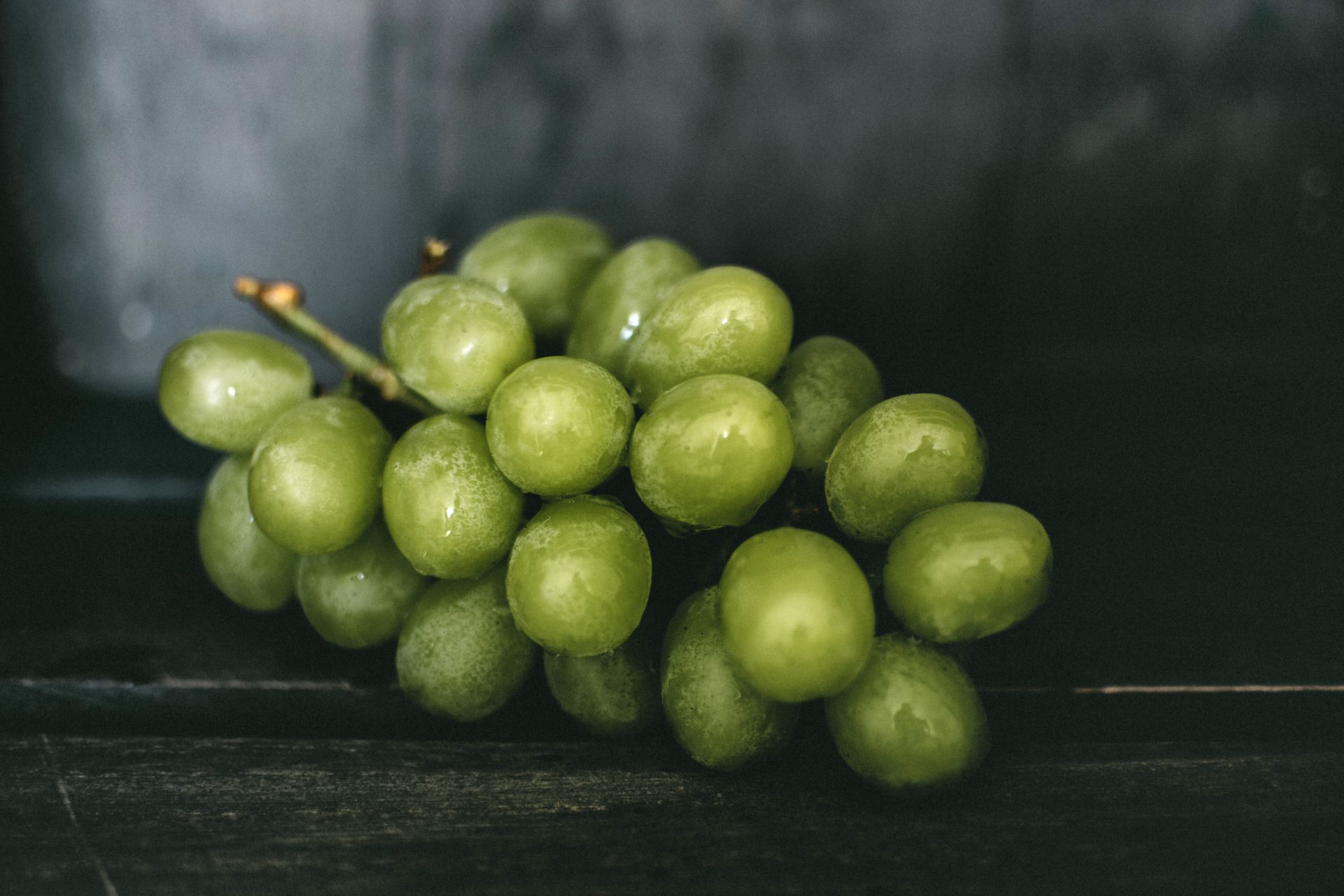
If your dog has ingested grapes or raisins, it's essential to act quickly to prevent kidney damage.
Administering emetics, such as those listed in Table 1.8, can help decontaminate the gastrointestinal tract. However, only use emetics if your dog is stable and able to protect its airway.
Activated charcoal is also crucial in managing toxicoses, and can be administered in various preparations, including a dry powder, granules, and a liquid suspension. The dose of activated charcoal is 1 to 4 g/kg suspended in liquid.
Maintaining renal perfusion is vital in preventing the progressive decline in glomerular filtration rate and onset of renal failure. Hospitalize your dog and give them a balanced electrolyte solution intravenously at a maintenance rate for at least 48 hours.
Monitoring your dog's renal function, including BUN and creatinine concentrations and urine output, is crucial over 72 hours after grape or raisin ingestion. This will help detect any signs of kidney damage.
Discover more: Just Food for Dogs Renal Support

Here are the steps to follow when treating grape toxicity:
- Induce vomiting within 4 to 6 hours of consuming grapes or raisins
- Monitor kidney values the first day, then every 24 hours to ensure they are not increasing
- Administer intravenous fluids to flush the toxin from the body and support kidney function
- Sometimes give activated charcoal to help bind any remaining toxin in the stomach and intestines
In some cases, hospitalization may be necessary for 24 to 72 hours, depending on when your dog consumed grapes and if the grapes were able to be removed by inducing vomiting.
A fresh viewpoint: Symptoms of Dogs Eating Grapes
Mechanism of Action
The mechanism of action for grape and raisin toxicosis in dogs is still unknown. Despite ongoing studies, it's unclear whether cumulative doses or single ingestions are more likely to cause renal toxicosis.
Several possible mechanisms have been suggested, but none have been proven. These include a nephrotoxin in the grapes and raisins, fungicide, herbicide, or pesticide contamination, heavy metal contamination, high concentrations of vitamin D, and fungus or mold contamination.
No known reports of grape toxicosis exist in other species. This suggests that the toxic effects may be specific to dogs.
Theories have been proposed, including a nephrotoxin or an idiosyncratic reaction leading to hypovolemic shock and renal ischemia. However, this mechanism has not been proven to be the cause of renal failure.
Histologic findings in affected dogs have included renal tubular necrosis, metastatic mineralization of numerous tissues, and evidence of renal tubular epithelial regeneration. These findings support the need for prompt treatment in cases of suspected toxicosis.
Take a look at this: Can Prong Collars Cause Tracheal Collapse
Featured Images: pexels.com