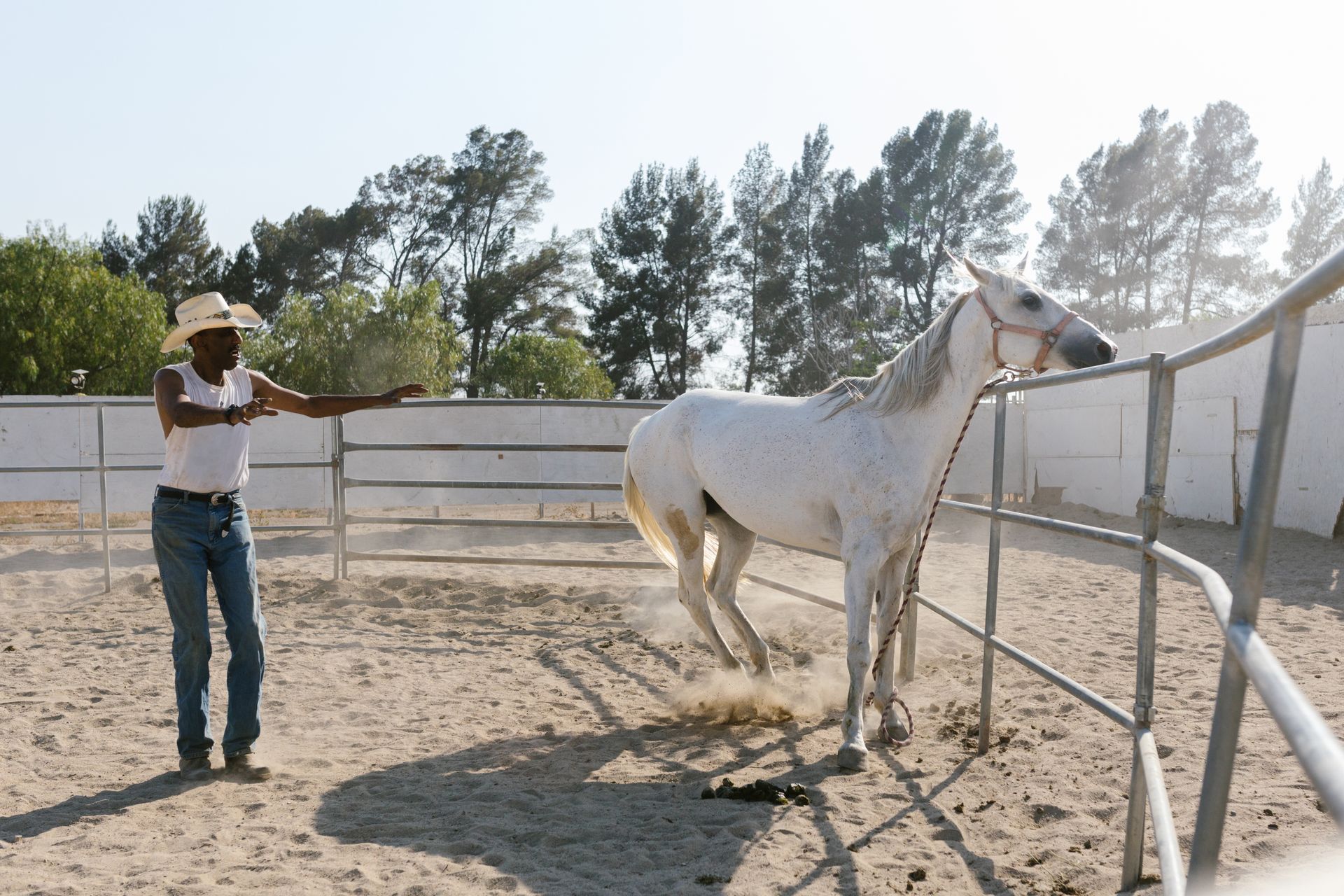
Working horses have been an essential part of human history, providing power and transportation for centuries. Their strength, intelligence, and versatility make them an invaluable asset for various tasks.
The Percheron breed, for example, is known for its impressive size and gentle temperament, making them well-suited for draft work and heavy hauling. They originated in France and were bred for their strength and endurance.
With proper care and training, working horses can live up to 25-30 years, providing a long and productive working life. This is evident in the case of the Belgian draft horse, which has been used for centuries in agriculture and transportation.
The versatility of working horses is also reflected in their ability to work in a variety of environments, from the rugged terrain of the Andes to the hot deserts of North Africa.
Farm Breeds
The Morgan is the smallest draft horse breed, while the Shire is the largest.
Farmers often preferred smaller draft horses for smaller properties with hilly and rocky terrain.
The American Cream Draft and the Percheron are roughly the same size, but the American Cream is considered a medium draft breed.
Historically, farmers used heavy draft breeds like the Percheron and the Shire for larger properties and the timber industry.
Light and medium draft horses, such as the Morgan and the American Cream, were suitable for smaller properties with challenging terrain.
A unique perspective: Saddlebreds
Heavy Breeds
The largest of the draft horse breeds, the Shire, can weigh between 1,700 to 2,000-plus pounds and stand 17.1 hands tall.
These massive horses were originally bred to work in teams to plow the massive fields of the old English shires, hence the breed's name.
Shire horses boast exceptional pulling strength and were used for farm work, road haulage, and pulling barges.
They were also used to pull carts to deliver beer from breweries, a tradition that still continues today in the UK.
On a similar theme: What Are Appaloosa Horses Used for
Clydesdales, another heavy breed, weigh between 1,700 and 2,200 pounds and stand 16.2 to 18.2 hands tall.
Despite their size, Clydesdales are known for being gentle and responsive, but they do require a significant amount of property to care for.
The largest horse ever recorded, a gelded Shire named Samson, weighed an impressive amount, and his name was later changed to Mammoth as he attained his famously gigantic proportions.
Suffolk Punch
The Suffolk Punch is an English breed that originated in the county of Suffolk, hence the name. It's a bit shorter and stockier than breeds like the Shire, typically measuring 16.2-17.2 hands high.
This breed was bred for farm work and is known for being hard-working and having a good temperament. It's also relatively low-maintenance when it comes to feed, making it a more convenient and economical animal to keep.
The Suffolk Punch is always a chestnut color, and within the breed sphere, the color is spelled "chesnut". This breed has a rich history, with all of today's Suffolk Punch horses descending from the breed's foundation stallion, Thomas Crisp's Horse of Ufford, dating back to the 1700s.
There are relatively few Suffolk Punch horses in existence, with an estimated 150 in England, the breed's homeland, and approximately 800 to 1,200 in the United States.
Expand your knowledge: Chestnut Horse Color
Irish Draught
The Irish Draught is a versatile workhorse that stands at around 5.2-16.3 hands (158-170cm, 62-67in).
It's a breed that's been around for centuries, with a long history of breeding that's included crossing with other breeds like Anglo-Norman war horses, Iberian breeds, Clydesdales, and Connemara Ponies.
The Irish Draught is known for its docile temperament, making it a great choice for hard work.
It's often crossed with Thoroughbreds or warmbloods to produce sports horses, but this practice has put the breed at risk by neglecting to allow mares to produce purebred horses and continue the line.
Russian Heavy
The Russian Heavy Draft is a surprisingly strong horse that was created in Russia in the latter part of the 19th century. It was originally bred as a working horse for use in farming.
This breed is relatively small, yet its strength is impressive. Russian Heavy Drafts are now also kept for milk, as mares are able to produce high quantities during each lactation period. Mare’s milk is an important element of the diet of various peoples across Central Asia.
It's worth noting that the Russian Heavy Draft is a versatile breed, suitable for various purposes.
Percheron
The Percheron is one of the most famous draft horse breeds, originating in the Huisne river valley in France. They were originally war horses, but after the addition of Arabian blood, they became a draft horse breed.
Percherons are known for their intelligence and good-natured temperament. They're also very energetic, so they're not the best choice for a novice driver.
Percherons stand between 15.1 and 18.1 hands tall and weigh around 1,500 pounds. They're usually gray or black in color.
The Percheron has been used for a variety of tasks, including pulling stumps and logs, turning stones in grist mills, and plowing. They're still used extensively as workhorses in France and are also popular in competitions.
Here are some interesting facts about Percherons:
- Percherons contain Arabian influence, which is noticeable in their movement and attractive head.
- Percherons that pulled heavy stage coaches were called diligence horses.
- Percherons can trot at 7 to 10 mph for long periods of time.
- Light-colored Percherons were preferred for nighttime drives.
Jutland
The Jutland Horse is a relatively short and stocky breed, standing at around 15-16.1 hands high.
They originated in the Jutland Peninsula of Denmark, where they were used by Viking raiders in the 9th century.
The breed has undergone crossbreeding with other horses and has existed in its current form since the late 19th century.
Jutland Horses are usually chestnut in color and have a calm and willing temperament.
They are often found in horse shows and are still used by the Carlsberg Brewery in Copenhagen to transport beer around the city.
Only around 1000 purebred Jutland Horses remain, making them a rare and special breed.
Clydesdale
The Clydesdale breed originates in Clydesdale, the old name for what is mostly now the county of Lanarkshire in Scotland.
Clydesdales are tall and powerful, standing at 16-18 hands tall. They are usually bay in color with marked feathering around the legs, although other colors are possible.
To qualify as a Budweiser Clydesdale, each horse must be a gelding and stand at least 18 hands tall. This is part of what makes them so iconic in Super Bowl commercials.
Clydesdales weigh between 1,700 and 2,200 pounds, making them large horses that require a lot of space to roam. Unless you have a great deal of property to care for, Clydesdales probably aren’t for you.
Here are some key facts about Clydesdales at a glance:
Light Breeds
Light Breeds are perfect for working smaller properties.
Small draft horse breeds, like those mentioned, are ideal for smaller areas because they are more compact and require less space.
Their smaller size makes them a great option for farmers or horse owners with limited land.
They're also perfect for working in tight spaces, like small farms or homesteads.
Their gentle nature and strength make them a great choice for tasks that require careful handling.
Their smaller size means they require less food and care, making them a more economical option.
They're often used for tasks like plowing small fields and hauling small loads.
Their strength and endurance make them a valuable asset for any small-scale farm or homestead.
Specific Breeds
The American Cream Draft is one of North America's most critically threatened draft horse breeds, weighing between 1,800 and 2,000 pounds and standing between 15.1 and 16.3 hands tall. They're perfect for small farms and novice drivers due to their calm, docile, intelligent, and adaptable nature.
These horses are incredibly versatile, capable of pulling stumps, plowing fields, hauling logs, and even riding. Their unique coloring is due to the champagne gene, not the cream gene that produces palomino horses.
Here are some key characteristics of the American Cream Draft:
- Only about 200 American Cream Drafts exist.
- Must exhibit amber eyes, pink skin, and a cream-colored coat.
- Foundation mare was "Old Granny", purchased in 1911 at a horse auction in Iowa.
- Genetic testing has shown the American Cream Draft is its own distinct breed.
The North Swedish Horse is a small but strong and robust horse, originally developed for forestry and agricultural work. They're well-known for their good character and compliancy, and are surprisingly powerful animals despite their diminutive size.
American Cream
The American Cream is a unique and fascinating draft horse breed. Developed in the US, it's the only draft breed in its genetically pure form.
This breed is known for its distinctive cream color and amber eyes. Originally intended for farming, the American Cream's numbers have dwindled due to mechanization.
One of the most striking features of the American Cream is its size, weighing between 1,800 and 2,000 pounds and standing between 15.1 and 16.3 hands tall. This makes it perfect for pulling stumps, plowing fields, and hauling logs.
A fresh viewpoint: American Indian Horse
The American Cream is also renowned for its calm, docile, intelligent, adaptable, and love of work. This makes it an ideal breed for small farms and novice drivers.
Here are some key facts about the American Cream:
- There are currently only about 200 American Cream Drafts.
- The American Cream Draft must exhibit amber eyes, pink skin and a cream-colored coat.
- The foundation mare of the American Cream Draft breed was “Old Granny,” a mare that was purchased in 1911 at a horse auction in Iowa.
- Genetic testing has shown that the American Cream Draft’s unique coloring is not the result of the cream gene, but rather the champagne gene.
- Genetic testing has also shown that the American Cream Draft is its own distinct breed.
Mustang
The Mustang is a remarkable breed that's steeped in history and has a special place in American culture. They're descended from horses brought to the New World by the Spanish in the 1500s.
These horses are known for being "hot" - they love to run - and have a strong instinct to roam free. Their intelligence and intuition made them notoriously difficult to catch and tame.
Once domesticated, Mustangs became strong, loyal, reliable, and sturdy mounts and draft animals, performing all sorts of tasks in the American West. In 1900, approximately 2 million Mustangs roamed 17 western states.
By 1970, thanks to an extermination program, fewer than 17,000 remained. The Wild Free-Roaming Horse and Burro Act of 1971 protects the animals now.
Today, herds of Mustangs thrive on open rangeland in several western states, including Nevada, Arizona, New Mexico, Montana, and Wyoming. Without natural predators, herds can double in four years.
The Bureau of Land Management periodically conducts roundups and places the detainees up for adoption. Those not adopted are re-released.
Consider reading: Free Rein
North Swedish
The North Swedish Horse is a small but surprisingly powerful animal despite its diminutive size for a draft horse.
They are well known for their good character and compliancy, making them a joy to work with.
Originally developed for forestry and agricultural work, they are still valued for their good health, which helps them live long lives in the often-harsh climate of northern Europe.
In the modern world, there is less need for North Swedish Horses for agricultural work, but they are still commonly used for recreation.
One of the unique qualities of the North Swedish Horse is that they are one of the only coldblood horse breeds used for harness racing.
Check this out: North Swedish Horse
Fjord
The Fjord Horse is a Norwegian breed from the western region of the country.
It's a versatile animal that can be used for a range of purposes such as ploughing, pulling, driving, and riding.
The Fjord Horse stands at around 13.1-14.3 hands high, which is relatively modest compared to other breeds.
Despite its small stature, the Fjord Horse is not lacking in strength.
It's also generally willing to work and has a mild and amenable character.
Most Fjord Horses are brown dun in color, but four other colors are officially recognized.
The Fjord Horse is naturally equipped with a long mane, although it's often cut short for easier grooming and to accentuate the musculature of the neck.
This breed is among the world's oldest and is thought to be closely related to Przewalski's Horse, a native of Central Asia.
Belgian
The Belgian breed is a popular choice for those who need a powerful and hardworking horse. They weigh in between 1,400 and 1,500 pounds.
Their size is quite impressive, standing 16 to 17 hands tall.
Clydesdales
Clydesdales are a majestic breed of horse originating from Scotland, specifically from the River Clyde valley. They were originally bred for heavy field work, plowing the steep, rocky hills of the Highlands and pulling freight wagons.
These horses are easily distinguishable by their high head and trademark feathering of their feet. They weigh between 1,700 and 2,200 pounds and stand 16.2 to 18.2 hands tall.
Clydesdales are known for their gentle and responsive nature, but they do require a significant amount of property to care for. Unless you have a large estate, they may not be the best fit for you.
The breed has a rich history, with Flemish stallions being bred with local mares to increase their stature. Shire blood was also introduced in the 19th century to further enhance the breed.
Clydesdales are typically bay in color with marked feathering around the legs, although other colors are possible. They stand at 16-18 hands tall, although they were shorter in the past.
Here are some key facts about Clydesdales:
- The Clydesdale is most popularly associated with Super Bowl commercials.
- The basin of the River Clyde is located in Lanarkshire, Scotland, the birthplace of the Clydesdale horse.
- Clydesdales are used by the Anheuser-Busch brewery in the United States for publicity purposes.
American Quarter
The American Quarter Horse is a truly American breed that excelled on the frontier due to its hardiness, intelligence, and versatility.
A different take: American Belgian Draft
They were used for a variety of tasks, including working cattle, breaking sod, and racing.
Steel Dust, the first recognized Quarter Horse, was foaled in Kentucky from stock developed in the Colonies by crossing English stock with animals left behind by the Spanish conquistadors.
American Quarter Horses were known for their "cow sense", calm disposition, and short-coupled bodies that made them maneuverable in different terrain.
They were found in every remuda and pasture from the southern tip of Texas to Canada and from the East Coast to California.
Their racing ability earned them the enduring breed name, as they could outrun any other horse on a straight, quarter-mile track.
In fact, they outran Thoroughbreds, including some of the fastest horses in the world.
Their popularity among Texas ranchers led to the breed's widespread adoption across the country.
Today, American Quarter Horses are still used for a variety of tasks, from working cattle to racing.
Broaden your view: Australian Stock Horses
Appaloosa
The Appaloosa is a breed that originated among the Nez-Perce Indians of the Pacific Northwest.
These skilled horse breeders produced equines that were practical, hardy, and versatile, with traits like tractability and good sense.
The Nez-Perce selected the best animals from wild herds to create horses suited for war and hunting.
The Appaloosa's distinctive color pattern ultimately led to the downfall of their creators, who were forced to flee and were pursued relentlessly by the U.S. government.
The Nez-Perce were eventually forced to surrender near the Canadian border, where their horses were confiscated and sold to local settlers.
Today, the annual Chief Joseph ride is held to commemorate the Nez-Perce trail and the battles that took place nearly 140 years ago, and it's only open to Appaloosas.
Suggestion: Nez Perce Appaloosa Horses
Rocky Mountain
The Rocky Mountain horse is a breed that originated in the foothills of the Appalachian Mountains of Kentucky.
They were largely unknown outside of that area until around 1880, but within that time, they gained popularity for their surefootedness and versatility.
These horses were favored by postmen, doctors, and traveling preachers in the Old West for their ease of gait and reliability.
Their strength and toughness made them suitable for plowing fields, herding cattle, and pulling buggies and wagons.
The Rocky Mountain horse's easy-gaited nature made them a practical choice for various tasks, showcasing their adaptability and usefulness.
Tennessee Walking
The Tennessee Walking Horse is a breed known for its unique "running walk" gait and flashy movement.
Developed in the American South, the breed's ancestors include Narrgansett Pacers, Canadian Pacers, and Spanish Mustangs from Texas.
The breed arose in the late 1800s after interbreeding with Morgan stock, giving it a distinct character.
Originally used on plantations for various tasks, the Tennessee Walking Horse was a practical choice for its time.
A few Tennessee Walkers were even employed by Old West doctors and others who needed a gentle mount for lengthy trips.
Expand your knowledge: Tennessee Walking Horses
Canadian
The Canadian Horse is a rare breed that originated in Canada, specifically in the late 1600s when draft and riding horses were imported from Europe.
Its ancestors were used in the American Northeast during the late 1700s for various purposes, making it a versatile breed.
The Canadian Horse nearly became extinct in the mid-19th Century due to massive exportation to the U.S. and Caribbean, as well as its extensive service during the American Civil War.
In the mid-20th Century, a group of dedicated breeders began a repopulation program to save the breed, but it remains relatively rare to this day.
Friesian
The Friesian is a Dutch breed known for its black coat, although chestnut and bay specimens also exist. They typically stand between 14.2 and 17 hands high, with an average height of 15.3 hands.
Friesians are versatile horses used in both harness and under saddle, particularly in dressage. This breed's relatively slight frame makes it less suitable for arduous work like farming.
Ancestors of the Friesian were used in the armies of Ancient Rome, and their descendants continued to be used as war horses through the ages. They were used both as mounts and to pull artillery.
Friesians are relatively short and stocky, with heavy musculature, and stallions stand around 16 hands high.
For another approach, see: Friesian Sporthorse
Pros and Cons
Owning a working horse can be a rewarding experience, but it's essential to consider the pros and cons.
One of the biggest advantages of using draft horses is that they don't burn gasoline, making them an eco-friendly option.
Horses are also easier on the land, with minimal impact on the environment, unlike mechanized equipment which can leave lasting scars.
In fact, an area logged using draft oxen and horses showed no signs of disturbance after just a year, compared to the lasting impact of mechanized equipment.
However, finding farriers who can work on draft horses, especially Shires with their large feet, can be a challenge.
The cost of buying and maintaining equipment, such as harnesses and bits, is another consideration.
Hay and feed costs, including vet bills, can add up quickly, especially for larger draft horses that eat more than other breeds.
But, putting these costs into perspective, farriers' bills are comparable to replacing tires on a tractor or other equipment.
And, just like machinery, a horse that's hurt or sick needs to be fixed or it won't be able to work.
The Famous Work
The Percheron breed is known for its strength and endurance, making it a popular choice for heavy draft work. They can weigh up to 2,600 pounds and pull loads of up to 25,000 pounds.
Percherons have been used in agriculture and transportation for centuries, with records of their use dating back to the 17th century. This breed has been a staple in many working horse teams.
Their calm and gentle nature makes them a favorite among farmers and traders.
Featured Images: pexels.com