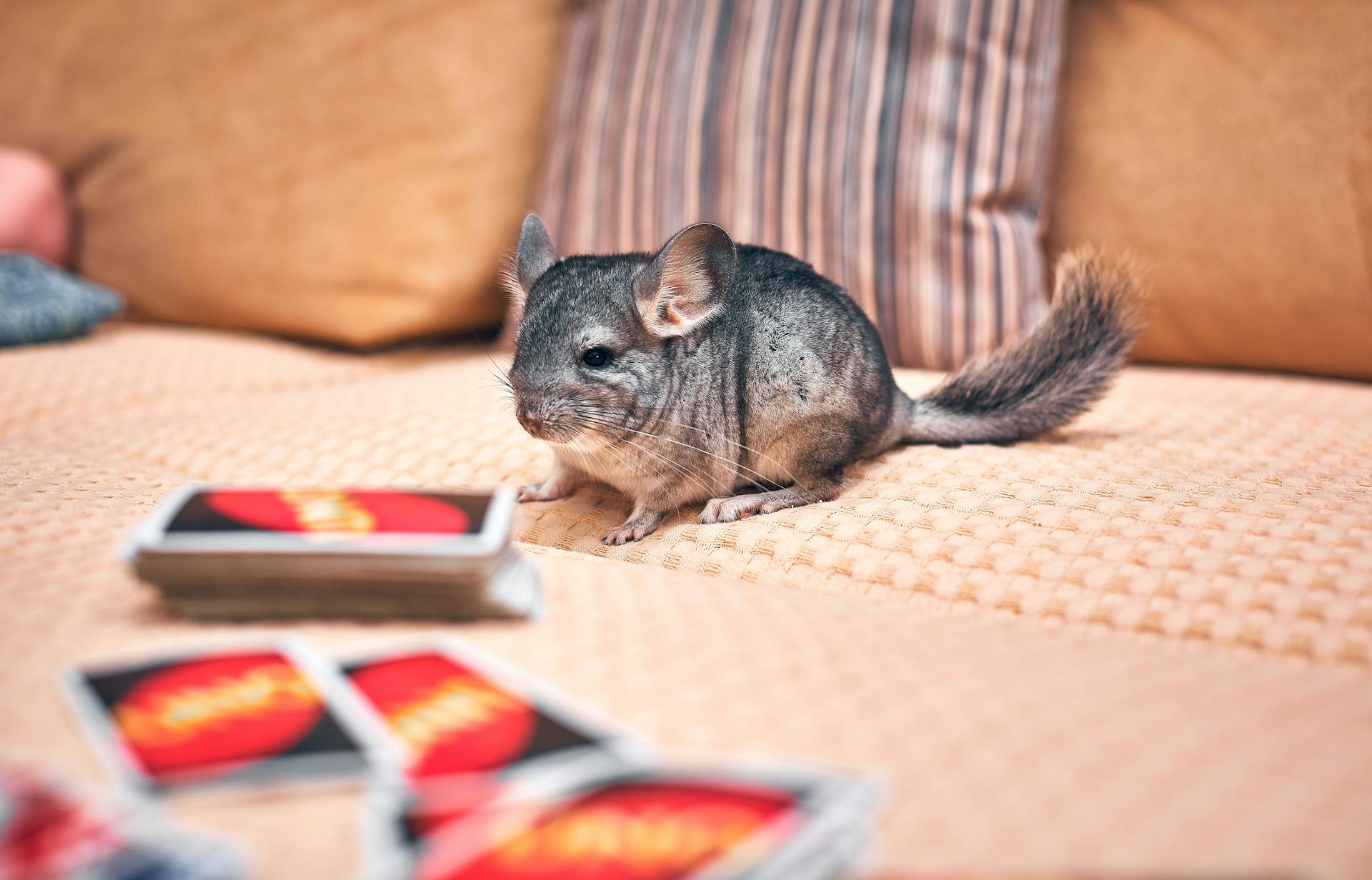
Breeding chinchillas requires a solid understanding of their behavior, habitat, and reproductive needs. Chinchillas are crepuscular, meaning they're most active at dawn and dusk, so it's essential to plan breeding sessions accordingly.
Chinchillas are social animals and thrive in pairs, so introducing a male and female chinchilla is the first step in breeding. In the wild, chinchillas breed between March and May, but domestic chinchillas can breed year-round.
To encourage breeding, provide a spacious cage with hiding places, toys, and a varied diet. Chinchillas are herbivores, so offer high-quality hay, pellets, and fresh veggies daily.
Chinchillas are induced ovulators, which means they ovulate after mating. A gestation period of approximately 128-130 days is typical for chinchillas, and females usually give birth to 1-4 kits.
Preparation
Before you start breeding chinchillas, it's essential to prepare their living spaces. You'll need to set up separate cages for the parents and the kits, with the father's cage being a crucial consideration.
You can use your normal cage for housing the mother and kits, but make sure the gaps between the cage wires are small enough, ideally no larger than 1/2 an inch. This will prevent the kits from escaping. Remove any platforms during pregnancy and after birth to ensure the mother and kits are safe.
To prepare for breeding, you'll need at least one more cage, as well as cages for any male you need to separate from a female. This can add up quickly, especially if you're using high-end cages. Fortunately, there are more affordable options available, such as the LoveMyChinchilla basic cages, which feature strong and secure wiring, removable trays, and enough room for a chinchilla to feel comfortable.
A table summarizing the number of cages needed is below:
When To Begin
Most female chinchillas reach sexual maturity at around 7 months of age and can be introduced to breeding at this time.

Males, on the other hand, should be at least 7-8 months old before they are placed into breeding.
To optimize reproductive health, chinchillas should be introduced to breeding before reaching 2 years of age.
This is a critical window for breeding success, and it's essential to introduce them to each other slowly to prevent aggression.
By following these guidelines, you'll be well on your way to preparing your chinchillas for breeding.
Finding Suitable Chinchillas
You'll want to start by selecting a pair of chinchillas, one male and one female, as they are the opposite sex and will be needed for breeding.
To ensure the health of the female and the kits, confirm the weight and appearance of the chinchillas. They should be at the proper weight and appearance for breeding.
Only breed chinchillas that come from good quality stock, with a healthy medical history. This means they don't have a history of medical issues or temperament problems.
Chinchillas should be at least nine to ten months old before breeding, as this allows them to be sexually mature and fully developed.
Here are some key characteristics to look for in a suitable chinchilla pair:
Remember to avoid breeding related chinchillas, as this can cause genetic abnormalities in the offspring.
Setting Up
Before you start breeding chinchillas, it's essential to prepare the necessary cages. You'll need a cage for the mother and kits, a separate cage for the father, and possibly additional cages for older kits or for pairs to mate in.
The mother and kits can share a cage, but the gaps between the wires should be no larger than 1/2 an inch to prevent the kits from escaping. Platforms should also be removed during pregnancy and after birth for safety.
A separate cage for the father is necessary to prevent him from immediately trying to mate with the mother once the kits are born. This cage should be outfitted with the usual amenities, including a water bottle, hay rack, and substrate.
Setting Up the Environment
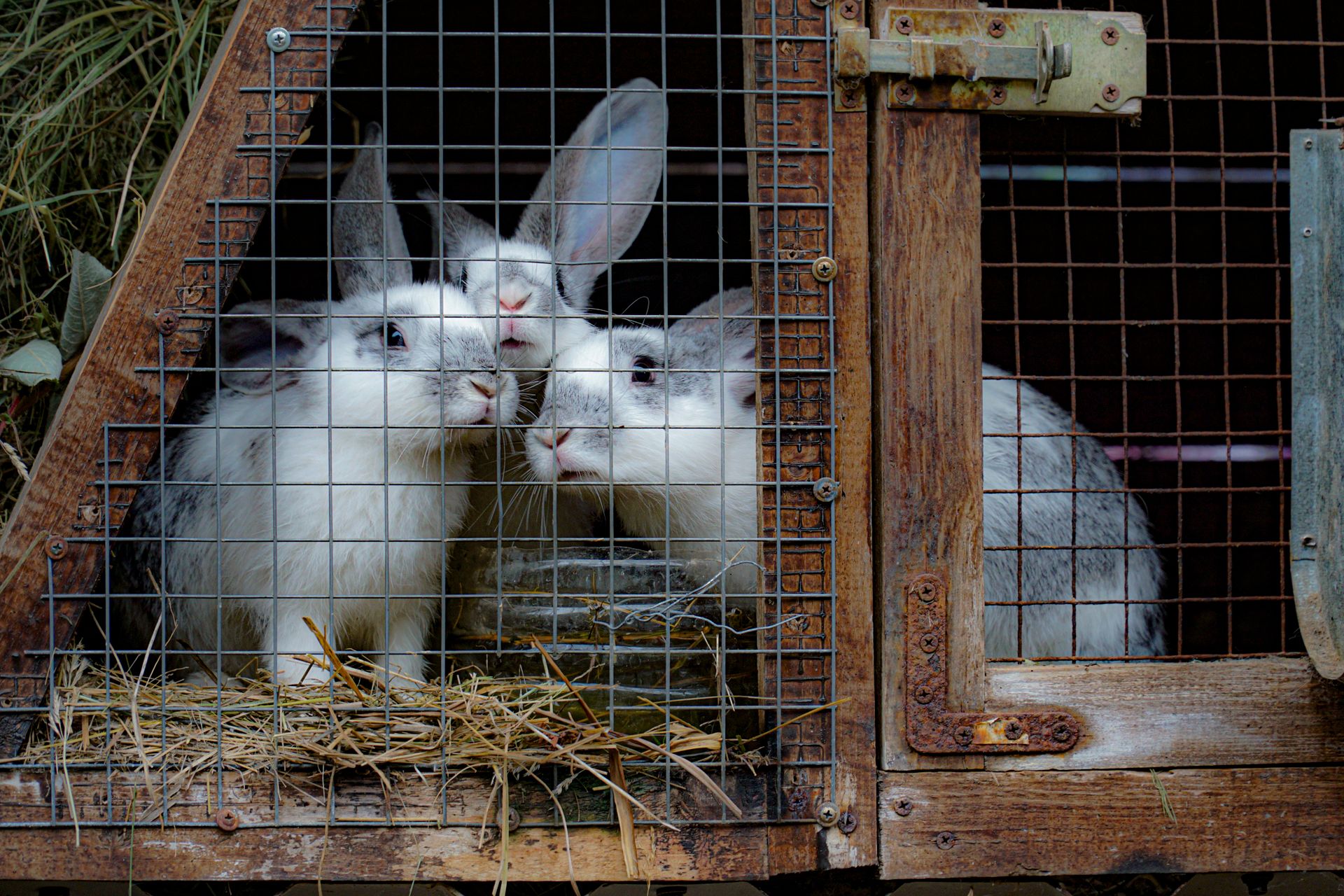
To create a suitable environment for your chinchillas, you'll need to set up separate wire cages for each chinchilla, as well as a quiet and isolated area for breeding.
The cages should be made of wire and no higher than 18 inches, with very small mesh to prevent escape. You'll also need a cage for the kits, which should be no higher than 18 inches and have a mesh size of 1 inch x 1/2 inch or smaller.
Choose a quiet area for the breeding cage, away from traffic and noise. Chinchillas are sensitive to loud noises and strong smells, so it's essential to create a peaceful environment for them to breed successfully.
You'll need to prepare multiple cages, including one for the mother and kits, a separate cage for the father, and additional cages for any older kits or pairs to mate in.
To ensure the kits' safety, remove any platforms from the cage during pregnancy and after birth, and use a cage with small enough gaps between wires to prevent escape.
A unique perspective: Do Chinchillas Need to Be in Pairs
The Happy Couple
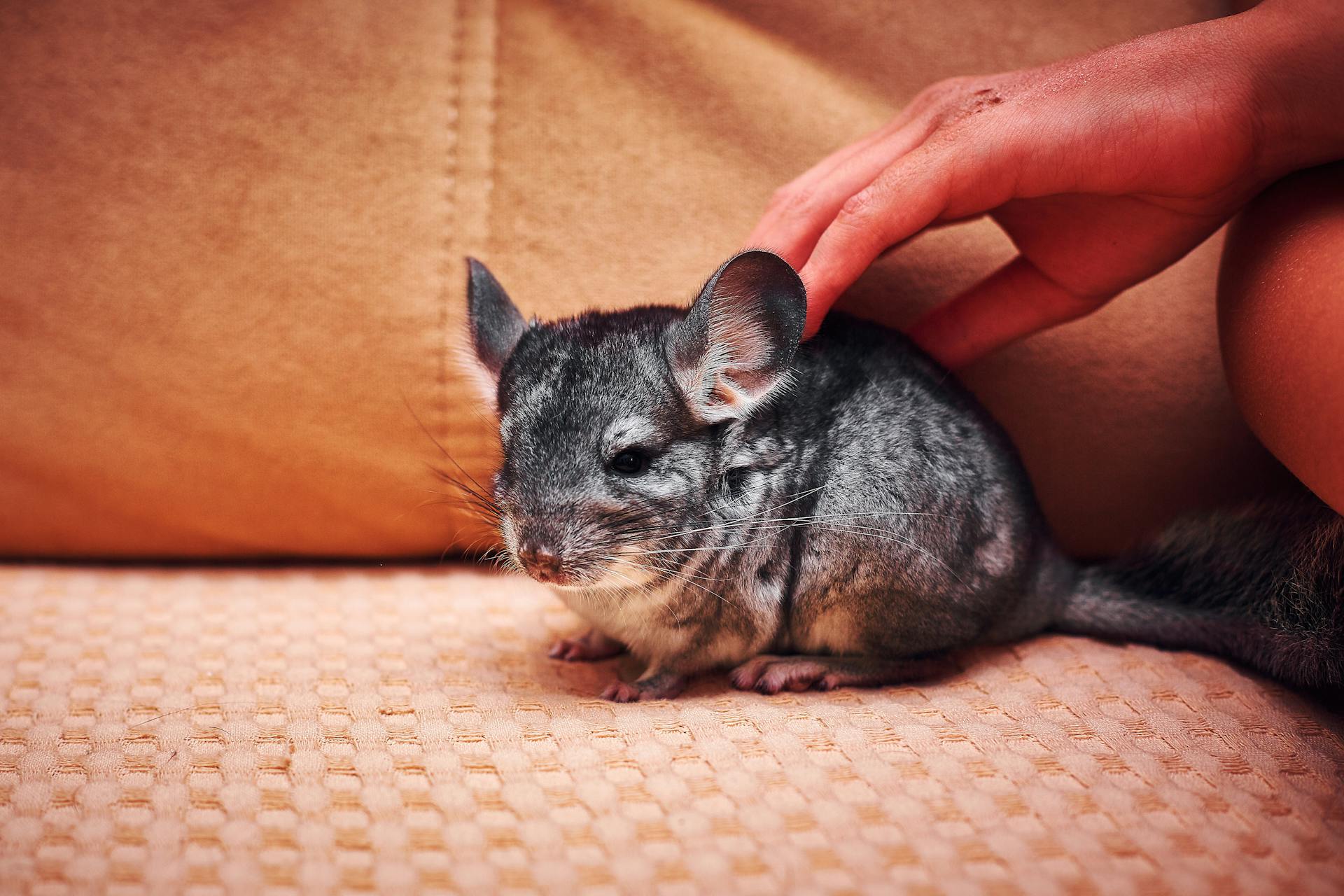
Introducing male and female chinchillas is reasonably simple, but it's essential to provide extra nesting boxes in the cage for the male to hide if necessary.
The female chinchillas' oestrus cycle is around 28 days in length, and she'll be on heat for just 2 of those days.
It's not like some other animals where you can introduce them and separate them a few days later - with chinchillas, it's often necessary to leave the happy couple together for weeks on end.
Female chinchillas are known to be quite fussy about their choice of mate, and it may be necessary to be patient, as some females can take months to fully accept their potential mate.
In some cases, females may never accept your chosen partner, and it's not unusual to try two or three males before she finds a suitable partner.
Mating and Gestation
Chinchillas have a long oestrus cycle, making it difficult to confirm pregnancy without observing mating. A female chinchilla may produce a "mating plug" - a small dry white object emitted after successful reproduction - which is a positive sign of pregnancy.
The gestation period for chinchillas is 111 days, and females can conceive again within 72 hours after giving birth. This means monitoring and managing their breeding schedule is essential to prevent overbreeding.
Female chinchillas typically give birth to 1-2 kits per litter, though rare cases of four kits have been documented. The kits are born fully-furred and ready for the world, and the mother will provide milk to the youngsters.
To confirm pregnancy, look for signs such as a visibly larger female, visible movement of the kits inside her, or a discarded copulatory plug. However, it's essential to note that a female chinchilla may not become visibly pregnant until the last few weeks of pregnancy.
A female's pelvic area should be checked for adequate size before breeding, as a small pelvic area can lead to complications during birth.
Here's a list of signs to look out for to confirm pregnancy:
- Visible movement of the kits inside the female
- Discarded copulatory plug
- Visibly larger female
If a second litter is desired, it's best to give the female some time off to recover before trying the pair again, as carrying young is physically demanding for a chinchilla.
Caring for Chinchillas
To keep your chinchillas safe and healthy, it's essential to provide a suitable environment. Chinchillas need a lot of space to move around, so a large cage or enclosure is a must.
You should also ensure that your chinchillas have access to fresh water and a balanced diet. A good quality chinchilla food should be their main staple, supplemented with fresh vegetables and fruits.
When introducing a new chinchilla to your existing ones, do it slowly and under close supervision to prevent any conflicts. This will help prevent stress and injuries.
It's also crucial to keep an eye out for any signs of illness or disease, such as runny eyes, sneezing, or lethargy. Regular veterinary check-ups will help identify any health issues early on.
Here are some tips for keeping your chinchillas healthy:
- Provide a safe and healthy environment
- Ensure access to fresh water and a balanced diet
- Introduce new chinchillas slowly and under close supervision
- Keep an eye out for any signs of illness or disease
Breeding Process
Breeding chinchillas can be a rewarding experience, but it's essential to understand the process to ensure the health and well-being of your animals.
Female chinchillas can mate up to three times per year, typically giving birth to 1-2 kits per litter, though rare cases of four kits have been documented. To prevent injuries to the male, keep an eye on interactions, as the female is often more dominant and can be aggressive.
Before breeding, ensure the female is mature enough, with standard grey females needing to be at least a year old, while other color variations may require more time. A female's pelvic area should be checked for adequate size to prevent complications during birth.
Post-mating, the male should be inspected for hair rings around the penis, which can cause severe health issues. If present, gently lubricate with petroleum jelly and carefully remove the hair ring with fine scissors.
Here's a quick checklist to keep in mind:
- Introduce the chinchillas to each other slowly.
- Wait for the female to be ready to mate, which can take 30-40 days.
- Supervise the mating process, as it can be aggressive.
- Check the male for a hair ring after mating.
- Confirm the female is pregnant, which can be difficult due to the long gestation period of 110 days.
Pick Your Chinchillas
To start the breeding process, you need to pick your chinchillas carefully. This means choosing two healthy chinchillas that meet certain criteria.
First, decide what quality you want to breed for. This could be dense fur, large size, or a blocky shape. Expert breeders will tell you that you have to breed 'for' something, so choose a specific trait you want to pass on to your offspring.
You'll need a male and a female chinchilla. Make sure they're at least nine to ten months old, as breeding them at this age will put less stress on the female during pregnancy and birth.
It's also essential to check the weight and appearance of your chinchillas. They should be at the proper weight and appearance for breeding, which will ensure a healthy pregnancy and birth.
Here are some key factors to consider when picking your chinchillas:
Remember, you should only breed chinchillas that come from good quality stock with a healthy medical history. This will ensure your offspring are healthy and have a calm temperament.
Mating Process
Female chinchillas can mate up to three times per year, typically giving birth to 1-2 kits per litter, though rare cases of four kits have been documented.
To ensure a healthy mating process, the female chinchilla should be at least a year old, while other color variations may require more time. The female is often more dominant and can be aggressive, so keep an eye on interactions to prevent injuries to the male.
A female's pelvic area should be checked for adequate size, as a small pelvic area can lead to complications during birth.
After mating, the male should be inspected for hair rings around the penis, which can cause severe health issues. If present, gently lubricate with petroleum jelly and carefully remove the hair ring with fine scissors.
For optimal breeding health, consider supplementing their diet with Chinchilla Booster (Multivitamin) to support fertility and overall vitality.
Here are some key signs to look out for during the mating process:
- The male will show interest by rubbing his chin on the floor and wagging his tail.
- The female will eject a plug in her vagina, known as the Oestrus Plug, before she can come into season or mate.
- The male will pull at the female's fur during intercourse, which can cause small clumps of fur to be left behind.
- The female may leave behind a discarded copulatory plug after mating, which will disintegrate over time.
By being aware of these signs and taking steps to ensure the health and well-being of your chinchillas, you can help ensure a successful breeding process.
Tips and Considerations
To breed chinchillas, you'll need a male and female of the same breed, both at least 10 months old.
Separate cages are a must, with the cages next to each other so the chinchillas can interact without the female attacking the male.
To confirm successful breeding, look for the female to excrete a waxy plug from her vagina.
Tips
To breed chinchillas, make sure you have a male and female chinchilla that are the same breed, and are at least 10 months old. This age requirement is crucial for a successful breeding process.
Keep the chinchillas in separate cages that are next to each other so they can interact without the female attacking the male. This allows them to get used to each other's presence without the risk of injury.
When the female is ready to mate, put the chinchillas together in a cage, and separate them if the female becomes aggressive. This is a crucial step to prevent any harm to the male.
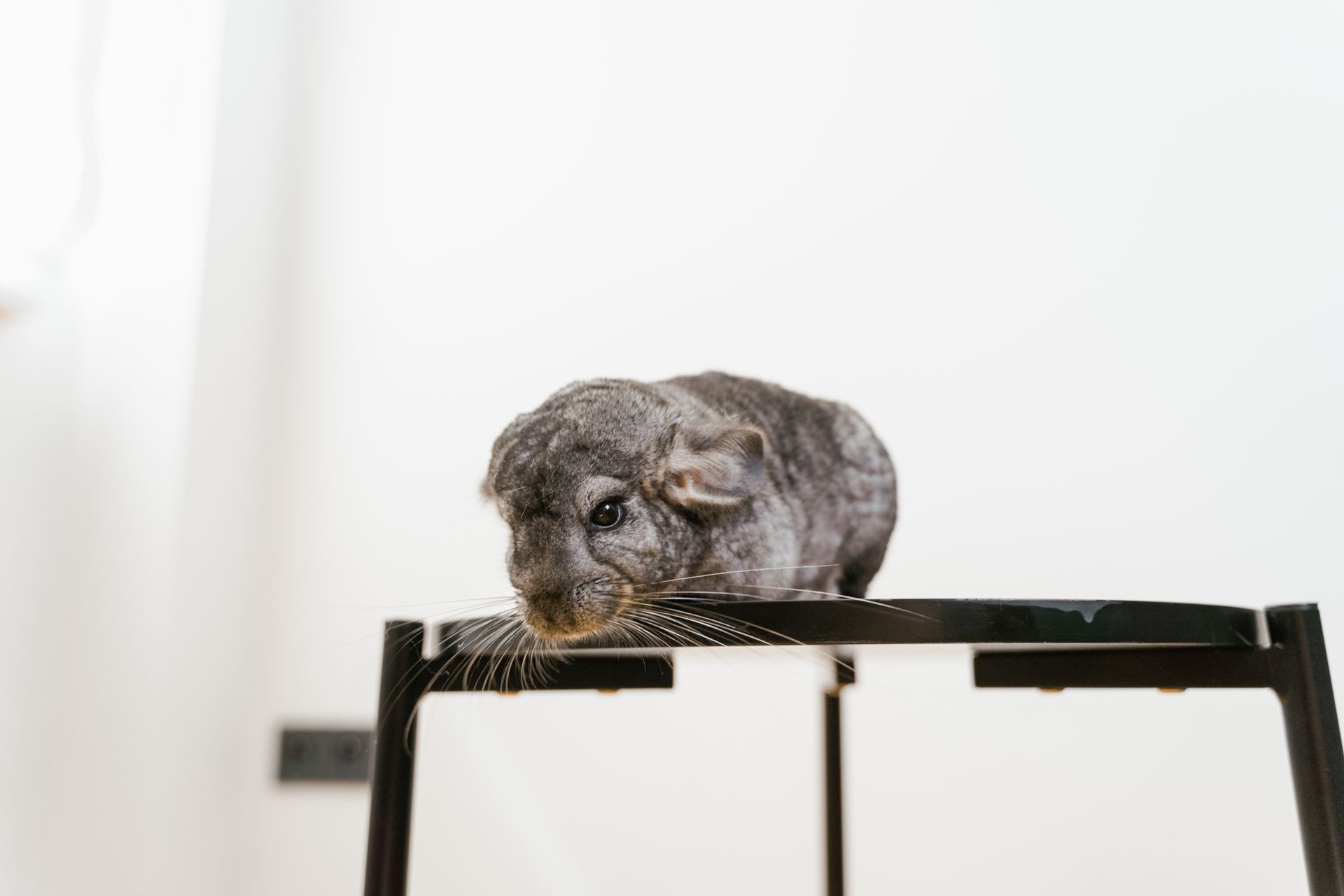
To confirm that the breeding was successful, look for the female to excrete a waxy plug from her vagina. This is a clear sign that mating has occurred.
To breed for specific qualities, start by identifying what you want to select for. This could be anything from dense fur to large size or blocky shape.
Some common qualities breeders aim for include dense fur, large size, and blocky shape. These are often desirable traits in show chinchillas.
Here are some specific qualities you can breed for:
- Dense fur: Chinchillas have lots of hairs per follicle, and you can breed them to have even denser fur.
- Large size: Larger chinchillas are generally healthier than smaller ones.
- Blocky shape: A blocky build and full neck are signs of a healthy chinchilla.
Reader Success Stories
Male chins make fantastic fathers and take great care of their kits. I've had male chins who weren't first-time fathers even take care of other males' babies when paired up before their birth.
Females are able to become pregnant within 48 hours to 2 weeks after giving birth, depending on the mother's health and whether it's her first or second time being a mom.
Take a look at this: Hairless Guinea Pig Care
It's best to give a mother a break after having babies, but I've had cases where taking the dad out has led to the mom and baby becoming depressed.
Here are some key takeaways from reader success stories:
- Male chins can be great fathers.
- Females can become pregnant soon after giving birth.
- Mothers need time to recover after having babies.
Frequently Asked Questions
How many babies can chinchillas have?
Chinchillas typically have 2-6 babies per litter, with an average of 2.
Featured Images: pexels.com