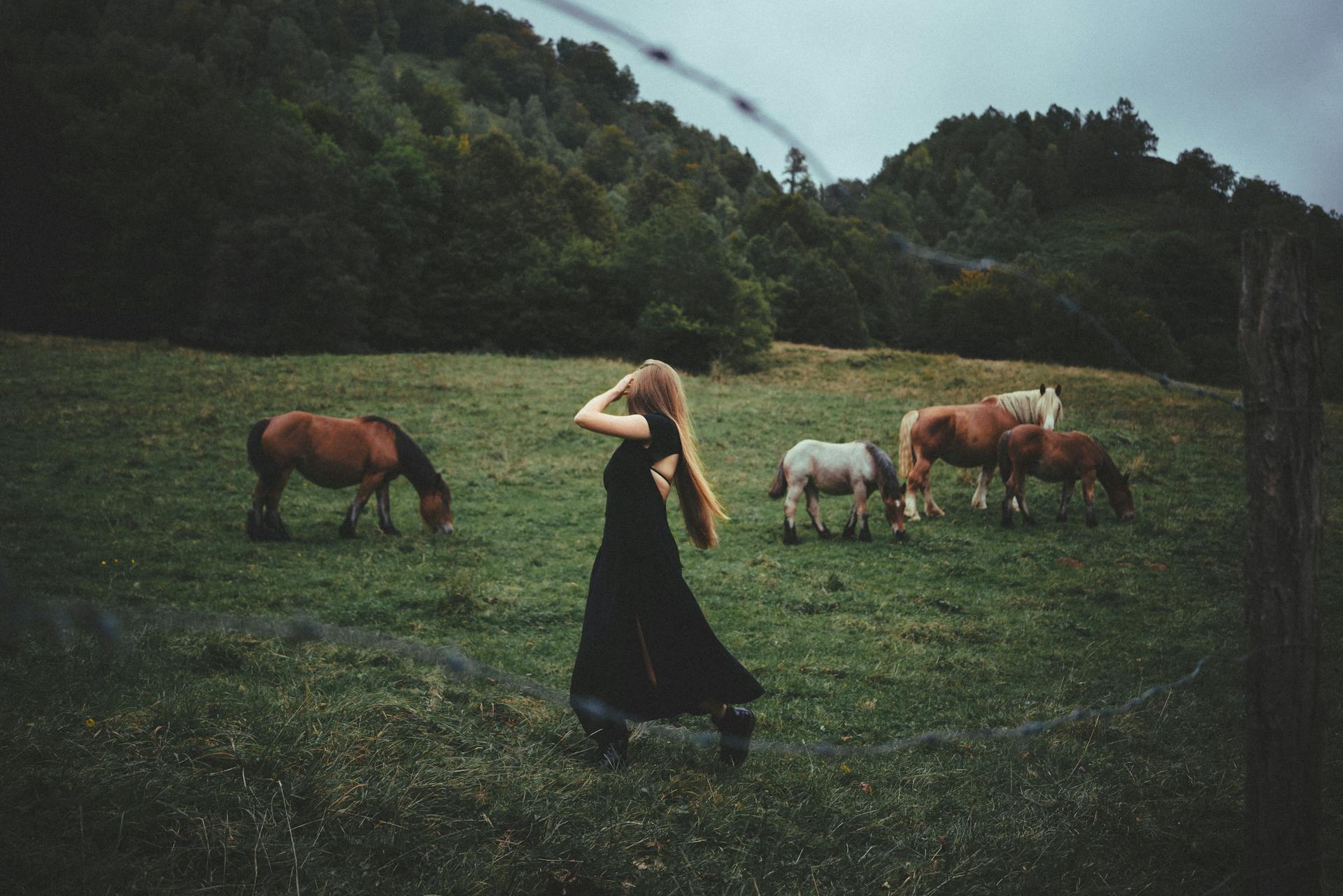
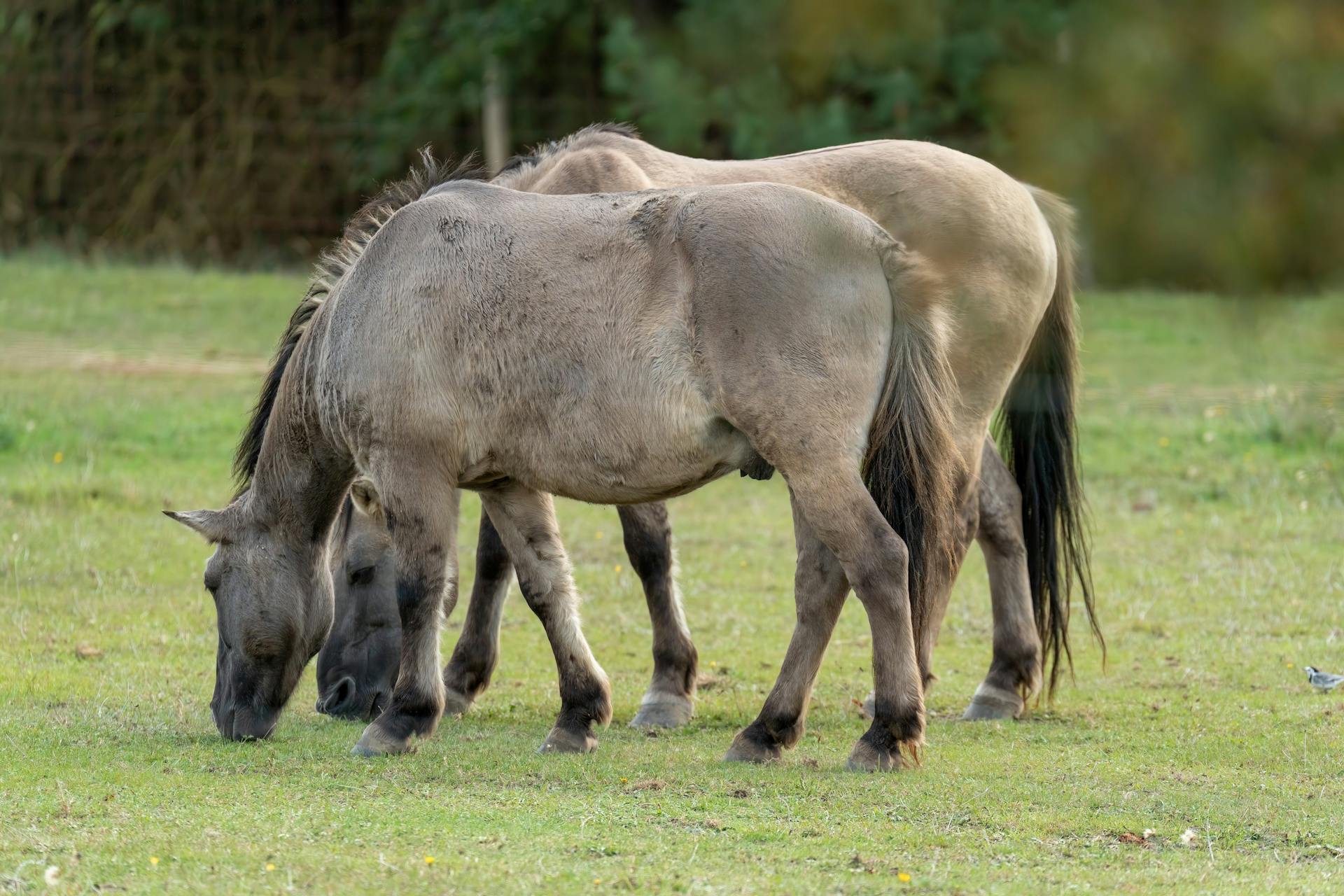
The Tennessee Walking Horse is a breed that's perfect for riders of all skill levels. They're known for their calm and gentle nature, making them an excellent choice for families or beginners.
Their average height is between 14.2 and 17 hands high, with a weight range of 900 to 1,200 pounds. This breed is also known for its distinctive gait, which is a four-beat lateral gait.
One of the most notable characteristics of the Tennessee Walking Horse is its smooth, comfortable ride. This is due in part to its unique gait, which is designed to reduce the impact on the rider's body.
Breed Characteristics
The Tennessee Walking Horse is a tall horse, typically standing between 14.3 and 17 hands high, with a long neck and well-defined head. Its small, well-placed ears add to its elegant appearance.
The breed comes in a variety of solid colors, as well as pinto patterns like overo, sabino, and tobiano. You can also find colors caused by dilution genes such as dun, champagne, cream, and silver dapple.
Tennessee Walking Horses are known for their calm disposition and smooth riding gait, making them popular for trail and pleasure riding. They're also famous for their flashy movement, which is a key part of their appeal.
Common Characteristics
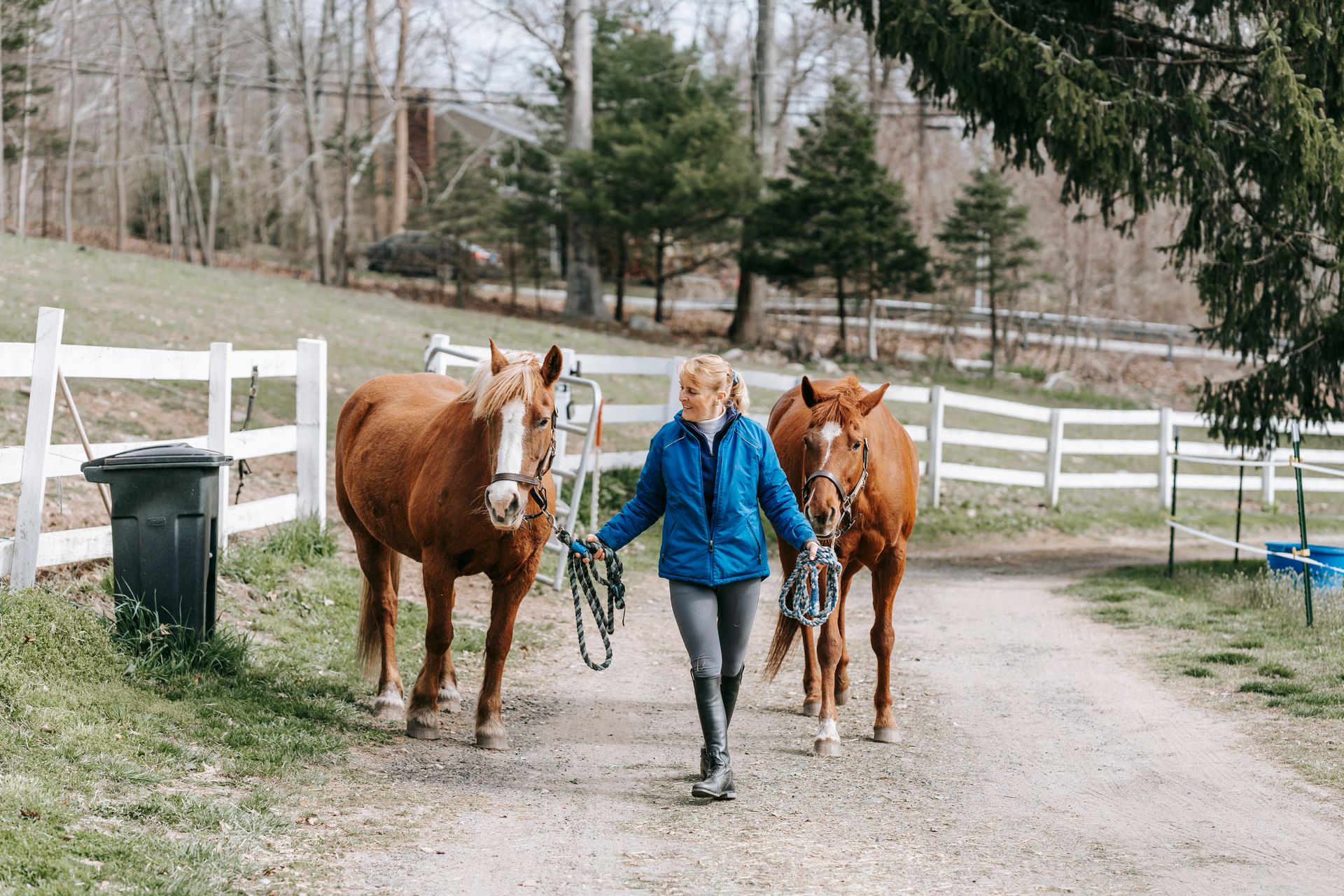
Tennessee Walking Horses typically stand between 14.3 and 17 hands in height.
Their long, sloping, well-muscled shoulders and hips enable animated movements. This helps them perform their unique gaits with ease.
These horses have a short back and a longer bottom line, which encourages a longer stride. This is particularly noticeable during their flat-foot walk and running walk.
A distinctive feature of Tennessee Walking Horses is their ability to overstride and bob their head while walking. This is a natural gait that sets them apart from other breeds.
Their powerful hindquarters and legs enable them to reach speeds of 10 to 20 miles per hour during a running walk. This makes them a popular choice for trail riders and pleasure riders.
The Tennessee Walking Horse's eye-catching gaits are its most unique characteristics, with three natural gaits that carry the rider forward smoothly.
Expand your knowledge: Horse Gaits
Conformation
The Tennessee Walking Horse is a tall breed, typically standing between 14.3 and 17 hands high, with some horses reaching up to 68 inches or 173 cm in height.
Their long, upright necks make them appear even taller, which is quite impressive when you see them in person.
The breed's long, sloping shoulders and hips enable them to move with animated ease, making them a joy to watch and ride.
A short back and a longer bottom line are key features that encourage a longer stride in Tennessee Walking Horses.
It's worth noting that their hindlegs can be slightly cow-hocked, sickle-hocked, or over-angulated, which is actually acceptable in this breed.
This unique conformation allows for more impulsion and flexion in their ambling gaits, making them a pleasure to ride.
The average weight of a Tennessee Walking Horse is between 900 to 1,200 pounds, which is quite substantial.
Their muscular build and athletic ability make them well-suited for trail and pleasure riding, as well as show.
Recommended read: Horse Breed
History
The Tennessee Walking Horse breed has a rich history that dates back to the late 18th century.
In 1790, Narragansett Pacers and Canadian Pacers were brought to Tennessee from Kentucky, and were bred with Spanish Mustangs from Texas. These horses were known as "Tennessee Pacers" and were used as all-purpose horses on local farms and plantations.
Their smooth gaits made them comfortable rides for long days, and their sure-footedness helped them work over the rocky terrain.
Black Allan, born in 1886, is recognized as the foundation sire for the breed. He was a black stallion that failed as a trotting horse but produced offspring able to perform several ambling gaits.
Expand your knowledge: Tennessee Walking Horse Gaits
The Origin
The Tennessee Walking Horse's origin is central to its unique characteristics and popularity. The breed's foundation sire was Black Allan, a black stallion produced by crossing a Hambletonian Trotter and a Morgan mare.
Black Allan was a failure as a trotting horse, but he went on to become the foundation sire of the Tennessee Walking Horse breed. His offspring were able to perform several ambling gaits, making them a valuable asset to horse breeders.
In the late 18th century, Narragansett Pacers, Canadian Pacers, and Spanish Mustangs were brought to Tennessee, where they were bred with other horses to create the Tennessee Walking Horse. The resulting horses were known for their smooth gaits and sure-footedness on rocky terrain.
For more insights, see: Foundation Appaloosa Horses
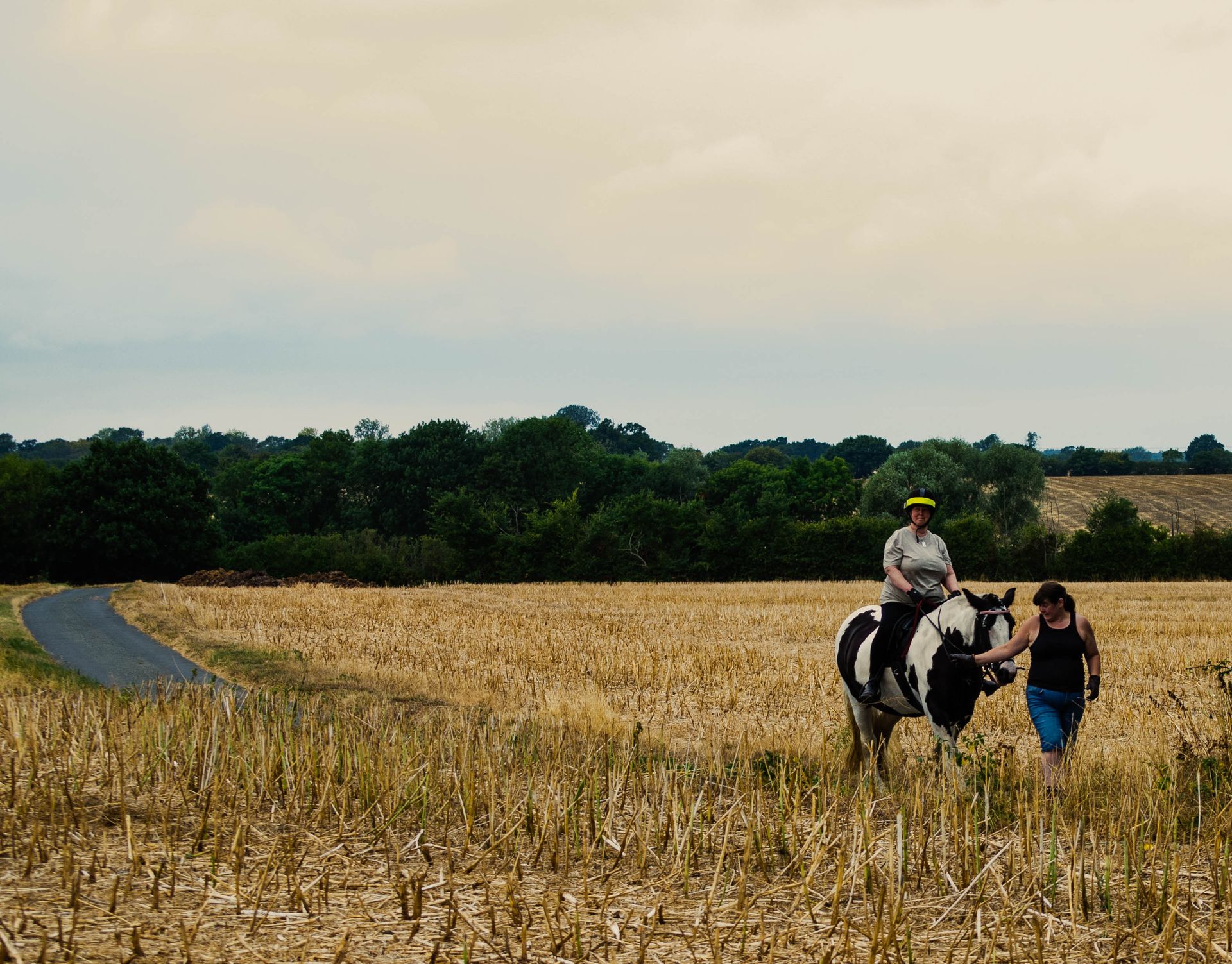
The Tennessee Walking Horse was originally used as an all-purpose horse on farms and plantations, where its smooth gaits made it a comfortable ride for long days. Its sure-footedness also made it a valuable asset for working on rugged terrain.
In 1886, Black Allan was born, and his influence on the breed cannot be overstated. He went on to sire many successful horses, including Roan Allen, a show horse born in 1904.
Historic Use
The Tennessee Walking Horse has a rich history that's rooted in its practical use on farms and plantations.
Historic records show that the breed's ancestors were primarily used for working farms or trotting races.
Tennessee Walking Horses were known for their smooth gaits, making them comfortable rides for long days.
Their sure-footedness helped them work over the rocky terrain, which was common in the region.
The breed's ancestors were crossed with other horses to refine their characteristics, including the Morgan, Thoroughbred, Standardbred, and Saddlebred.
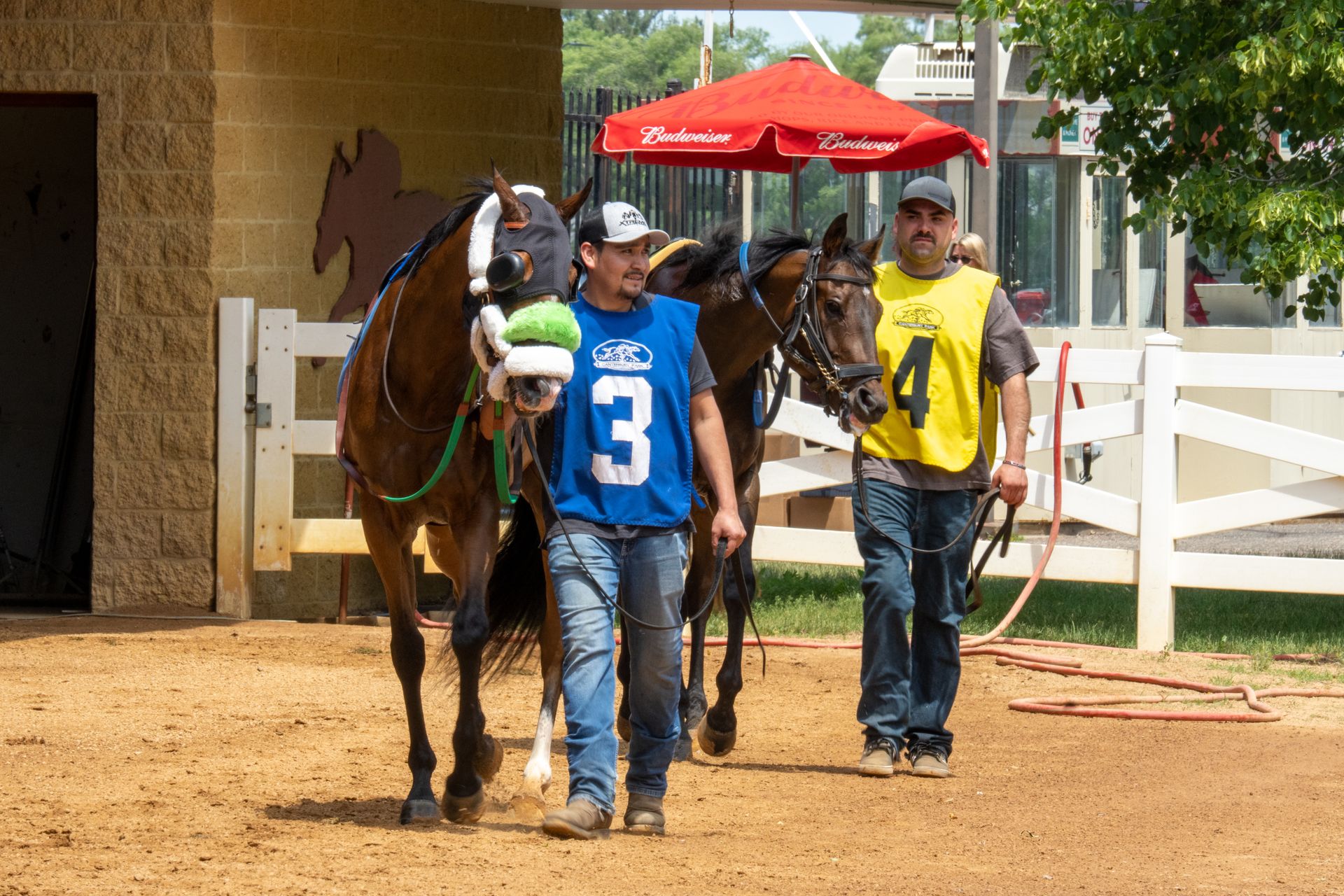
Black Allen, a black stallion born in 1886, is recognized as the foundation sire for the breed.
He failed as a trotting horse but produced offspring that could perform several ambling gaits.
His progeny included Roan Allen, a successful show horse born in 1904.
The Tennessee Walking Horse gained recognition under its name in the early 20th century, with its unique ambling gaits and signature running walk being showcased at exhibitions.
The breed's popularity led to the establishment of the Tennessee Walking Horse National Celebration in 1939, which was founded by Henry Davis.
Uses
The Tennessee Walking Horse is a versatile breed with many uses.
They excel in horse show events, particularly in saddle seat-style English riding equipment.
Their unique ambling gaits and signature running walk make them a standout in the show arena.
The breed is also popular for trail riding and some are even used for endurance riding.
To promote this use, the TWHBEA maintains an awards program in conjunction with the American Endurance Ride Conference.
The Tennessee Walking Horse has also been featured in television, movies, and other performing events.
The Lone Ranger's horse "Silver" was at times played by a Tennessee Walker.
Tennessee Walkers have been used in various roles, including as the mascot of the University of Southern California Trojans.
The breed's athleticism and biddability allow it to excel in many disciplines, making it a popular choice for many riders.
Shows and Regulations
The two basic categories of Tennessee Walking Horse show competition are flat-shod and performance. Flat-shod horses compete in various disciplines under both western and English tack.
In flat-shod shows, horses are judged on brilliance, show presence, and manners, with "park pleasure" being the most animated division. They wear ordinary horseshoes, and their hooves may be trimmed to a slightly lower angle.
Tennessee Walking Horses are typically shown with a long mane and tail, but artificially set tails are allowed in performance classes and some harness classes. The customary style for rider attire and tack is saddle seat.
Shows
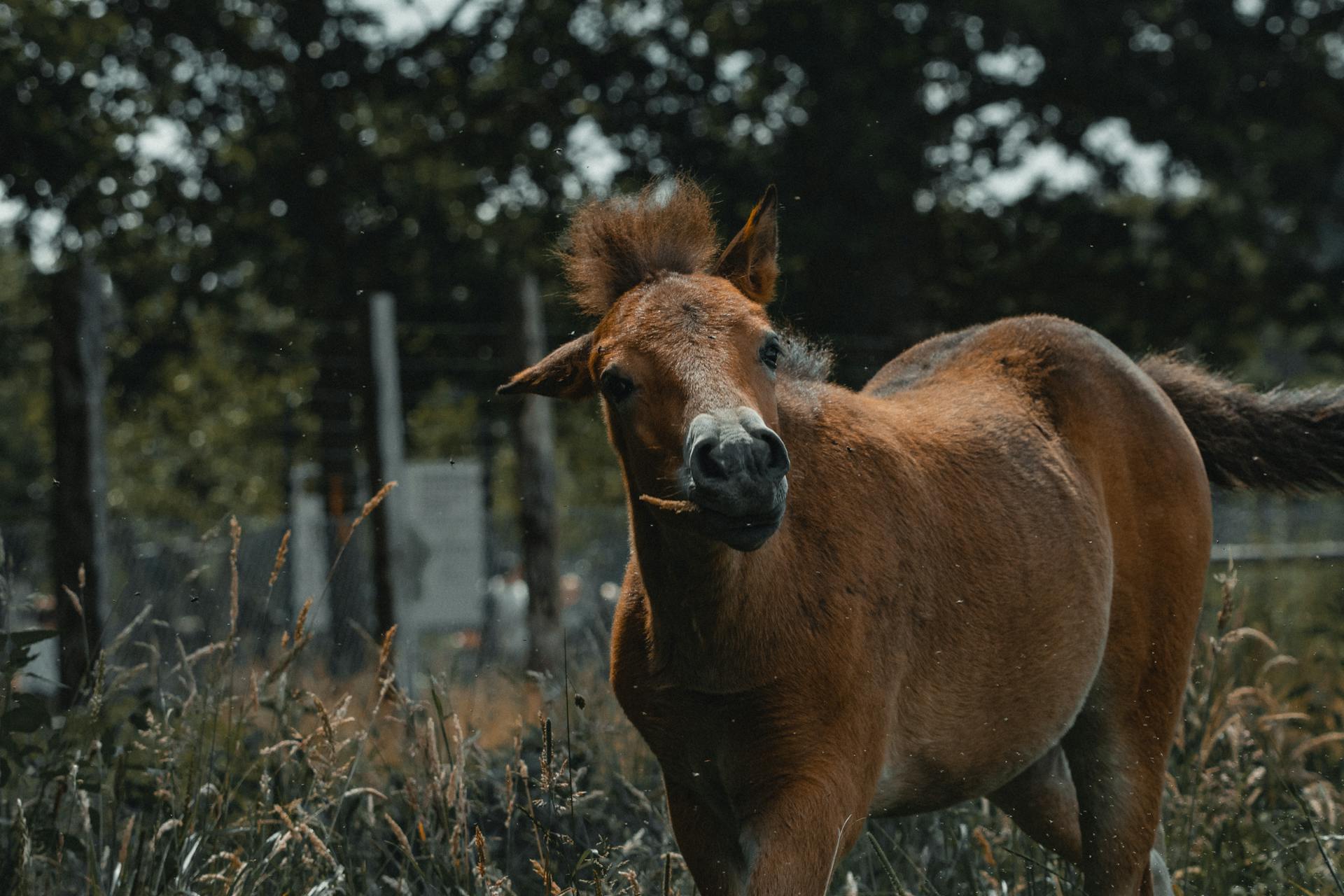
Tennessee Walking Horses can be shown in two basic categories: flat-shod and performance. Flat-shod horses compete in various disciplines under both western and English tack.
Flat-shod horses are judged on brilliance, show presence, and manners, and are shown in ordinary horseshoes. They are not allowed to use pads or action devices, although their hooves may be trimmed to a slightly lower angle.
Horses in flat-shod classes are often shown with a long mane and tail, and are typically ridden in English tack. Artificially set tails are not allowed in these classes.
Performance horses, on the other hand, exhibit flashy gaits and are often shod in double and triple-nailed pads. This form of shoeing is now prohibited at shows governed by the National Walking Horse Association (NWHA) and the United States Equestrian Federation (USEF).
The NWHA sanctions horse shows and licenses judges, and is an authorized HIO. It promotes only naturally gaited horses in its sanctioned horse shows.
There are also organizations that promote the exhibition of flat-shod horses, such as the National Walking Horse Association (NWHA) and Friends of Sound Horses (FOSH).
Protection Act

The Protection Act is a crucial regulation that affects the entertainment industry in various ways. It's designed to safeguard the rights of artists, performers, and other stakeholders involved in shows and events.
In the US, the Protection Act is enforced by the Federal Trade Commission (FTC), which ensures that producers and organizers comply with its provisions. The FTC has the authority to investigate and take action against violators.
The Protection Act requires producers to obtain necessary permits and licenses before staging a show, and to provide a safe working environment for performers and crew members.
Under the Protection Act, producers are also responsible for ensuring that their shows comply with local noise regulations and do not disturb the peace.
Gaits and Movement
The Tennessee Walking Horse is known for its smooth and elegant gaits, which are a result of its unique genetic makeup. Specifically, genetic studies have identified specific gene variations linked to the running walk in Tennessee Walkers, which are found in regions of the genome that play roles in biological regulation and developmental processes.
One of the breed's iconic gaits is the running walk, which is a four-beat gait that has the same footfall order as a flat walk but is significantly faster. In this gait, the rear feet overstep the front hoof prints by 6 to 18 inches, and the horse's head nods with the rhythm.
The Tennessee Walking Horse's ability to perform the running walk is not just a matter of speed, but also of style and elegance. A true Tennessee Walking Horse will continue to nod its head rhythmically while performing the running walk, a characteristic that enhances the smooth, flowing experience.
The breed's gaits are naturally occurring, but can be improved through consistent and ethical training methods. Ethical training focuses on reinforcing the horse's natural abilities rather than artificially altering their movement, and involves groundwork, proper conditioning, and exercises encouraging the horse to engage its muscles correctly.
You might like: Training Cutting Horses
The Signature Gaits
The Tennessee Walking Horse is known for its unique gaits, which are a key part of its charm. The breed's iconic gait is the running walk, a four-beat gait that's smooth and has a distinctive head nodding motion.
A different take: Rocky Mountain Horse Gait
This gait is significantly faster than a flat walk but has the same footfall order. The rear feet overstep the front hoof prints by 6 to 18 inches, and the horse's head nods with the rhythm.
Genetic studies have identified specific gene variations linked to the running walk in Tennessee Walkers. These variations have been identified in regions of the genome that play roles in biological regulation and developmental processes.
The running walk is not the only gait of the Tennessee Walking Horse, but it's the one for which the breed is most renowned. While Tennessee Walking horses can canter, few can trot.
The flat walk is a brisk, long-reaching gait that allows the Tennessee Walking Horse to cover ground efficiently at speeds of 4 to 8 miles per hour. This four-beat gait is characterized by each of the horse's feet hitting the ground separately and at regular intervals, creating a smooth, rhythmic motion.
A true Tennessee Walking Horse will nod its head rhythmically while performing the running walk or the flat walk, a characteristic that enhances the smooth, flowing experience.
The Canter
The canter of a horse is a three-beat gait that's performed in a relaxed and rhythmic manner. It's often called the "rocking-chair" gait, and it's a signature move of the Tennessee Walking Horse.
The sequence of footfalls for the canter is quite specific. On the right lead, the horse moves in the order of left hind, right hind, and left fore together, then right fore. On the left lead, the sequence is reversed, with right hind, left hind, and right fore together, then left fore.
This smooth, flowing motion makes the canter a delightful and easy gait for both horse and rider. It provides a sensation of effortless lifting and falling with each stride.
Health and Care
Tennessee Walking Horses are generally a healthy breed, with an average lifespan of 28 to 33 years. They can live a long and healthy life with proper care.
To ensure your Tennessee Walking Horse stays healthy, it's essential to prioritize equine welfare over competition goals in your management program. This means providing safe housing, regular grooming, and adequate turnout.
Mental stimulation and social contact with other horses are also critical for your horse's physical and emotional health. Regular veterinary check-ups, vaccinations, deworming, and dental exams can also help prevent health issues.
Here are some recommended supplements for Tennessee Walking Horses:
- W-3 Oil: an omega-3 fatty acid supplement that provides high levels of DHA and natural Vitamin E, supporting skin health, joint health, immune function, and metabolism.
- Methylsulfonylmethane (MSM): a proven antioxidant that supports the normal homeostatic regulation of inflammation and promotes bone and joint health.
- Visceral+: a veterinarian-recommended gut supplement that helps maintain stomach and hindgut health and supports the immune system.
- Natural E/Organic Se: a source of antioxidant nutrients, Vitamin E and selenium, particularly important for maintaining muscle function in Tennessee Walking Horses with muscle disorders.
- Performance XL: Electrolytes: a scientifically formulated electrolyte supplement designed to replenish the electrolytes lost in sweat, especially when exercising in hot weather.
Colors of Walking Horses
Colors of Walking Horses are quite diverse, with the Tennessee Walking Horse Breeders’ & Exhibitors’ Association (TWHBEA) accepting many different coat colors and markings.
The most common colors are bay, black, champagne, chestnut, and sorrel, making up a significant portion of the breed.
Bay Tennessee Walking Horses have a light- to dark-brown body with black legs, mane, and tail, giving them a striking appearance.
Chestnut Walking Horses have a light gold to dark brown coat with reddish hues, which can vary in intensity depending on the individual horse.
Classic champagne horses have a chocolate brown body with a darker mane, and their eyes are blue at birth but turn to brown or hazel with age.
Recommended read: Chestnut Horse Color
Some Walking Horses have a more unique appearance, such as the cremello, which has a cream body with a white mane and tail.
The following colors are recognized by the TWHBEA:
- Bay: A light- to dark-brown body with black legs, mane, and tail
- Chestnut: A light gold to dark brown coat with reddish hues
- Classic champagne: A chocolate brown body with a darker mane; tail and eyes are blue at birth but turn to brown or hazel
- Cremello: A cream body with a white mane and tail
- Gold Cream Champagne: A pale to dark golden body that lightens with age and a flaxen mane and tail
- Palomino: A pale to rich gold body with a white mane and tail
- Roan: A dark body mixed with white hairs
- Sorrel: A chestnut body with a paler mane and tail
- Tobiano: A solid-colored body with white legs and vertical white spots
Care and Management
Tennessee Walking Horses need the same quality basic horse care as any other breed. Management programs should prioritize equine welfare over competition goals.
Safe housing is critical for your horse's physical and emotional health. Regular grooming and adequate turnout are also essential.
Adequate turnout is crucial for your horse's physical and emotional health. Providing your horse with free-choice access to forage is ideal to support natural grazing behaviours, digestive health and overall well-being.
A typical 1,000 lb Tennessee Walker should consume at least 20 pounds of hay per day. Providing your horse with free-choice access to forage is ideal to support natural grazing behaviours, digestive health and overall well-being.
Mental stimulation and social contact with other horses are all critical for your horse's physical and emotional health. This can be achieved through activities such as turn-out with other horses or providing puzzle toys.
A different take: Grazing Muzzle for Pony
A preventative wellness program including vaccinations, deworming, and dental exams is vital for maintaining your horse's health. Working with your veterinarian to develop a program tailored to your horse's needs is essential.
Proper farrier care by a professional experienced with the breed is vital for maintaining soundness. Trimming the foot for long toes and low heels may make the gaits more animated, but this hoof balance can also increase tendon strain in the lower limb.
The following supplements may be suitable options for your Tennessee Walker:
- W-3 Oil: an omega-3 fatty acid supplement that provides high levels of DHA and natural Vitamin E.
- MSM: a proven antioxidant which supports the normal homeostatic regulation of inflammation and promotes bone and joint health.
- Visceral+: a veterinarian-recommended gut supplement that helps to maintain stomach and hindgut health and supports the immune system.
- Natural E/Organic Se: a source of the antioxidant nutrients, Vitamin E and selenium, which are particularly important for maintaining muscle function in Tennessee Walking Horses with muscle disorders.
- Performance XL: Electrolytes: a scientifically formulated electrolyte supplement designed to replenish the electrolytes lost in sweat, especially when exercising in hot weather.
Regular dental exams are essential for maintaining your horse's oral health. This can help prevent issues such as tooth wear and gum disease.
Weight Maintenance
Tennessee Walking Horses are easy keepers, meaning they can maintain their weight on a balanced diet with ease.
They can easily become overweight if fed a high-energy diet, so it's essential to keep a close eye on their food intake.
Metabolic problems are prevalent in the breed, so maintaining a moderate body condition is crucial.
Explore further: Why Was the Horse so Happy?
Excess calories in the diet should be minimized to prevent weight gain and related health issues.
If your Tennessee Walker unexpectedly loses weight, contact your veterinarian to investigate an underlying health issue.
Working with an equine nutritionist can help you formulate a balanced diet tailored to your horse's specific needs.
You can even submit your horse's diet online for a free evaluation to identify what's missing from your feeding plan.
Suggestion: Horse Health
Temperament and Behavior
Tennessee Walking Horses are characterized as a docile breed, with a calm disposition and a general eagerness to please.
Most Tennessee Walking Horses are polite and easy to control in a show ring with light handling.
The breed is also very easy to train and often doesn’t need a professional trainer.
Individual personalities can vary, and certain genes may contribute to rare undesirable behaviors in individual horses.
Many equestrians favor the Tennessee Walking Horse for its gentle and obedient temperament, making it a great fit for riders of all levels, including beginning riders, children, older equestrians, and people who aren’t confident in their riding abilities.
Riding and Disciplines
The Tennessee Walking Horse is a versatile breed that excels in various riding activities, from pleasure riding to competitive events.
Their smooth gaits allow them to handle diverse terrains, such as rocky trails and sandy beaches, providing a comfortable experience for riders of all skill levels.
Whether you're a beginner or an experienced rider, the Tennessee Walking Horse's ability to transition between the flat walk, running walk, and canter offers a tailored and enjoyable ride every time.
Saddle-seat style competitions at breed shows are the most popular use for Tennessee Walker show horses, where they're judged on the quality of their gaits against the breed standard.
These horses are also a beloved trail horse and pleasure mount for English and Western riders, thanks to their smooth gaits and calm temperaments.
To fully appreciate the unique gaits of the Tennessee Walking Horse, riders should focus on maintaining a relaxed posture and staying in tune with the horse's movements.
Tennessee Walking Horses have also recently gained popularity in endurance riding, making them a great choice for riders who enjoy long-distance riding.
Registry and Standards
The Tennessee Walking Horse Breeders and Exhibitor’s Association (TWHBEA) manages the official breed registry for Tennessee Walking Horses. They founded the organization as the Tennessee Walking Horse Breeder’s Association in 1935 and changed the name to TWHBEA in 1974.
TWHBEA is dedicated to promoting, preserving, and advancing the Tennessee Walker breed. They support various activities related to the breed, including organizing shows, trail rides, and educational programs.
The TWHBEA closed the studbook in 1947 and stopped accepting new registrations for horses that did not already have a documented pedigree within the association. Since then, only offspring of registered Tennessee Walking Horse sires and dams have been eligible for registration.
Tennessee Walking Horses are refined and elegant, yet solidly built, with a tall stature averaging 14.3 to 17 hands high.
Frequently Asked Questions
How much do Tennessee walking horses cost?
Tennessee Walking horses typically cost between $1,500 and $15,000+, depending on factors like age, training, and pedigree. The price range varies significantly, making it a good idea to research and compare prices to find the best fit for your needs.
What is the most famous Tennessee Walking Horse?
The most famous Tennessee Walking Horse is the stallion Prides Generator, known for siring champions for seven consecutive years. He is considered one of the breed's greatest contributors.
Featured Images: pexels.com