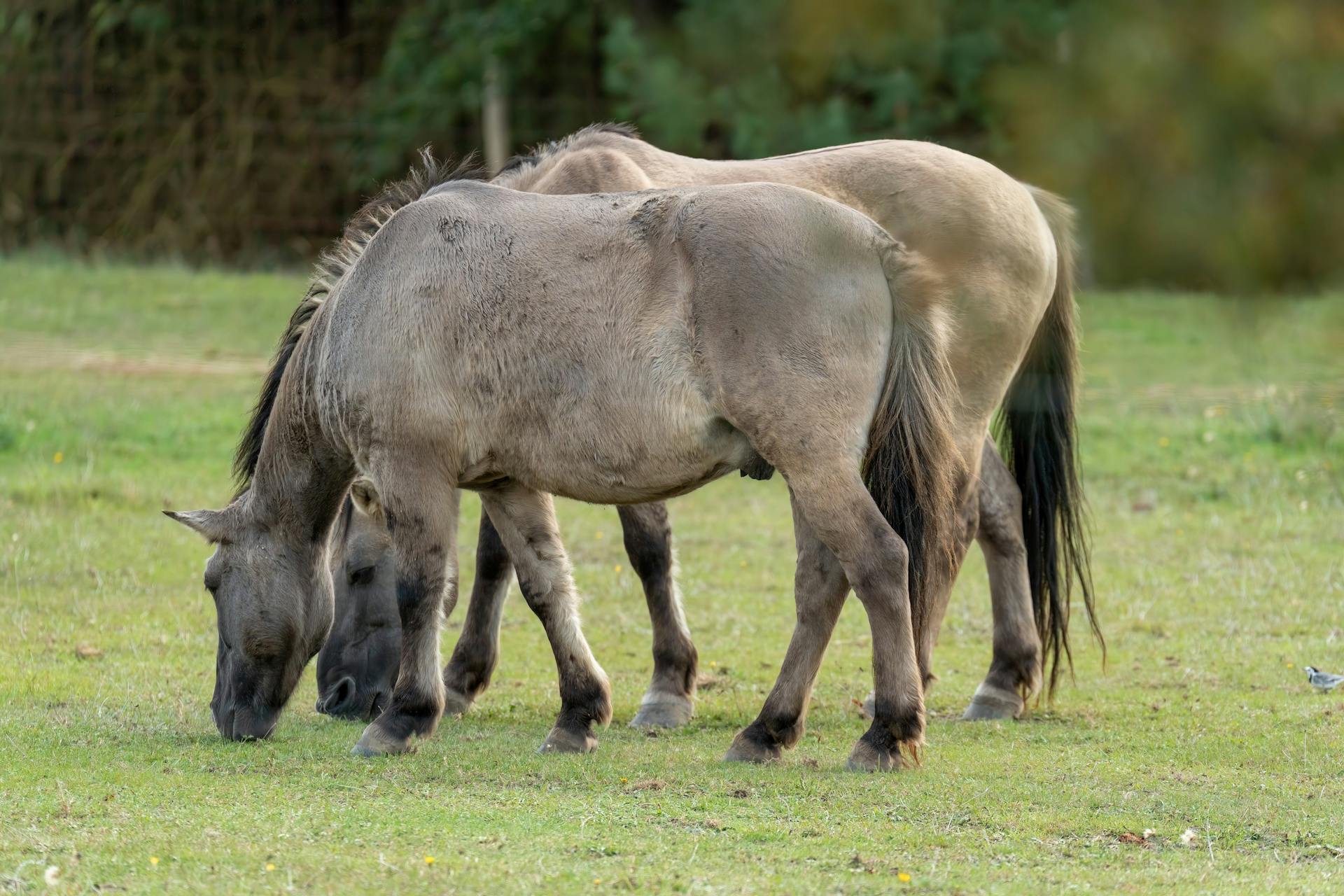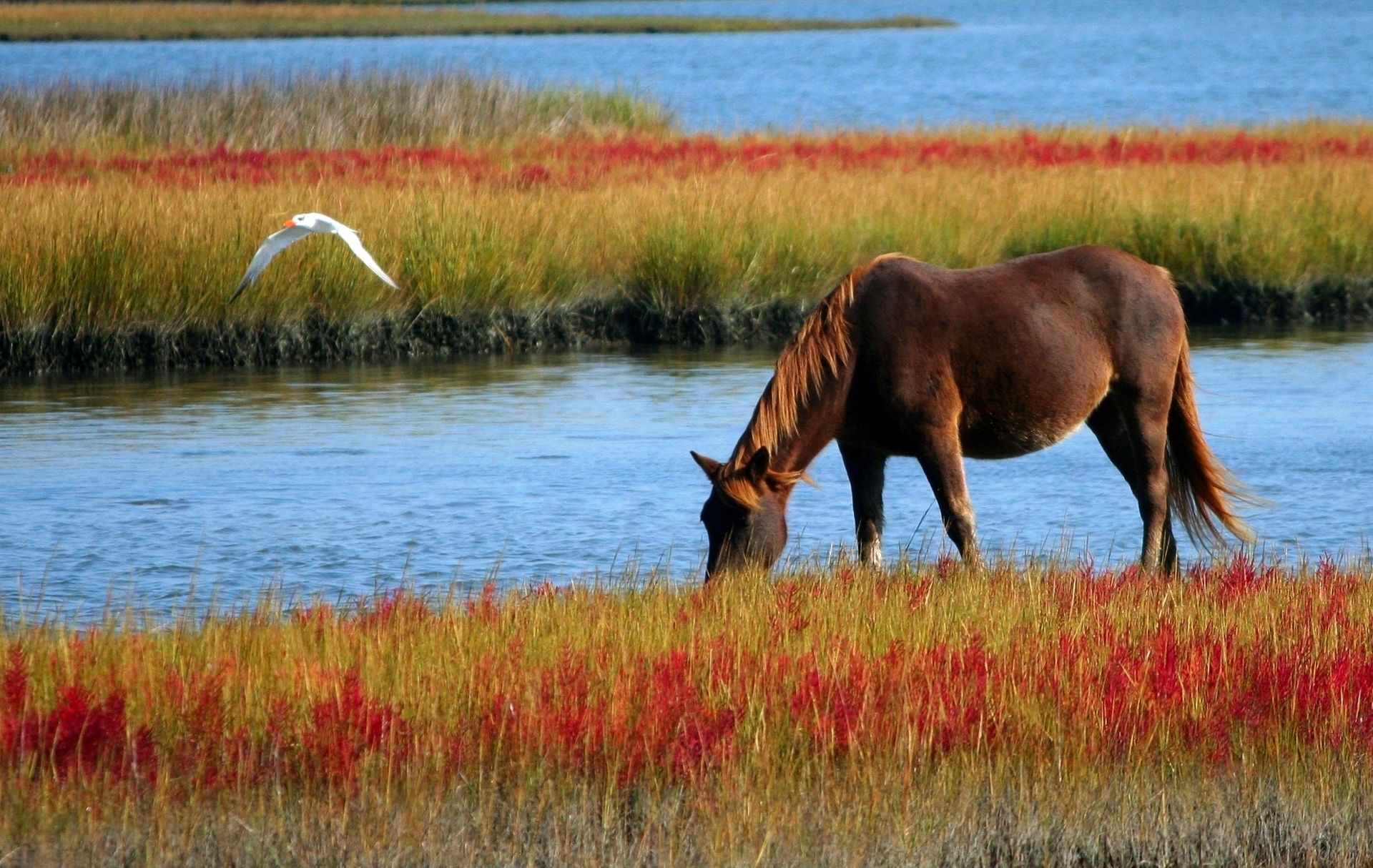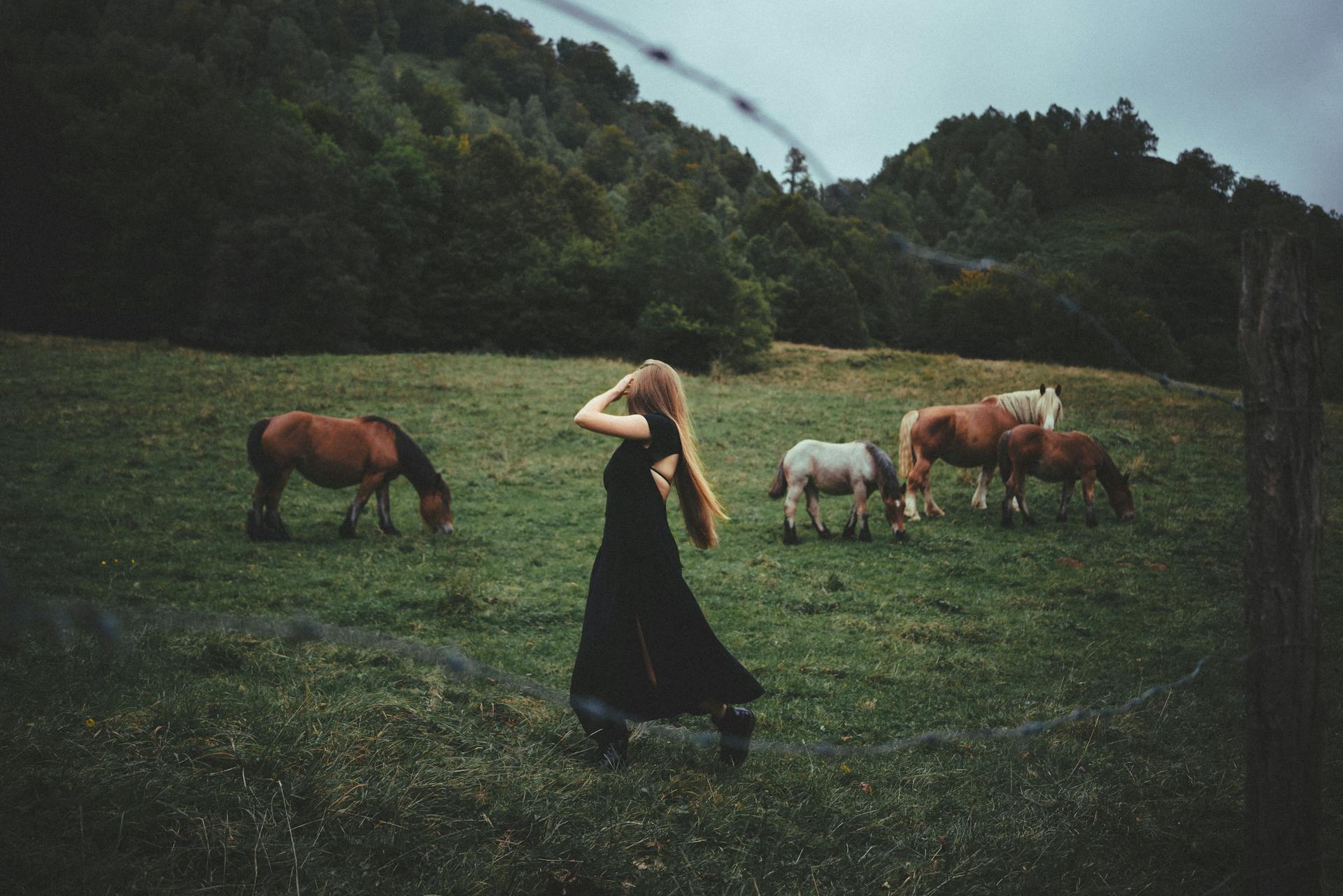
Horses have been a vital part of human history for thousands of years, with evidence of horse domestication dating back to around 4000 BC in Central Asia.
The earliest known horses were small, with adults reaching a height of about 12 hands at the withers.
Horses were initially used for transportation and as a food source, but their versatility soon led to their use in warfare and other activities.
The ancient Greeks and Romans prized horses for their speed and strength, using them for chariot racing and other forms of entertainment.
Equine Therapy
Equine therapy is a powerful tool for healing and growth. It's a type of therapy that uses horses as a catalyst for emotional and psychological healing.
Stories of healing from equine therapy are both heart-tugging and hopeful. A returning soldier with severe PTSD found his heart again through equine therapy.
The soldier's journey is a testament to the transformative power of equine therapy. He attended ten one-hour sessions and never said a word, but the horses' presence helped him heal.
Readers also liked: Equine Protozoal Myeloencephalitis Symptoms
Tina, a Norwegian Fjord, played a special role in the soldier's healing process. She allowed him to cry for an hour without moving, and even touched him on the shoulder occasionally.
Equine therapy can be a game-changer for people struggling with PTSD, anxiety, and other emotional challenges. It's not just about riding horses, but about connecting with them on a deeper level.
The soldier's wife was amazed at the change in him after equine therapy. She said she had her "sweet husband" back, and that the horses had helped him find his heart again.
Equine therapy is a gentle and non-invasive approach to healing. It's a reminder that sometimes, all we need is a gentle touch and a listening ear to find our way back to ourselves.
Understanding Horses
Horses are intelligent animals that can quickly lose trust if we make certain mistakes.
It's not easy to get a horse to trust you, but it is easy to lose it, as Julie Goodnight warns.
Building trust with a horse requires patience and consistency.
Losing a horse's trust can be detrimental to your relationship with them, and it's not worth the risk.
You should avoid making sudden movements around horses, as this can startle them and cause them to lose trust.
Human-Horse Relationship
Horses have a unique ability to connect with humans on a deep emotional level. They have a way of sensing human emotions and can even read body language.
Research shows that horses are most relaxed around humans they recognize, which is why building trust is essential in forming a strong bond with your horse. Grooming, training, and care are all ways to establish a foundation of trust.
Horses require patience and gentle treatment to feel comfortable around humans, which is why it's essential to greet your horse with confidence when you approach them. This helps them feel more at ease when you mount them for horseback riding.
Having a "heart horse" is not just about size; it's about possessing a heart that's in sync with yours. Horses with large hearts, like Secretariat and Man o' War, have a special connection with humans that makes them stand out.
The human-horse relationship is built on mutual respect and understanding. By working with horses as partners, rather than objects, we can develop a deeper connection and a more meaningful bond.
Additional reading: Human Muscle Protein Differ
History and Science
Horses have been on this planet for at least 50 million years, with the first known horse relative being about the size of a dog.
Horses weren't fully domesticated until about 7,000 years ago, with humans and horses first bonding in the Eurasian Steppe.
It's believed that humans didn't start controlling and riding horses until about 4200 BC, marking a significant shift in the bond between humans and horses.
A unique perspective: Human Years
What Horse DNA Reveals
Horse DNA reveals some fascinating facts about the evolution of horses. It suggests that not all horses evolved from the same ancient horse creatures.
The Botai population is thought to be the first domesticated equids, but horses today don't share the same DNA as those animals. This is surprising, given the significance of the Botai horses in history.
The horses most closely related to the Botai horses are the Przewalski's horses. This is a significant discovery, as it shows that the evolution of horses was not a single, linear process.
The bond between humans and horses varied greatly depending on the location and culture. For example, Botai horses were mostly used for meat and milk, and they were only ridden for herd management.
The art from ancient cultures is a good indication of how people interacted with horses. Some cultures created art showcasing facial expressions and body language on the horses to indicate that they were viewed similarly to humans.
Over time, all regions learned to coexist with horses rather than slaughtering them for meat. This shift in human-horse relationships is a testament to the power of learning and adaptation.
Suggestion: Horses in Art
When Did Domestication Occur?
Horses weren't fully domesticated until about 7,000 years ago. This is a relatively recent development, considering horses have been on the planet for at least 50 million years.
Horses and humans first bonded in the Eurasian Steppe, a region that includes modern-day Ukraine and West Kazakhstan. This is where the domestication process began.
Humans started controlling, bonding with, and riding horses around 4200 BC. This marked a significant shift in the relationship between humans and horses, as they were no longer just used for meat but also for transportation and other tasks.
Usage History
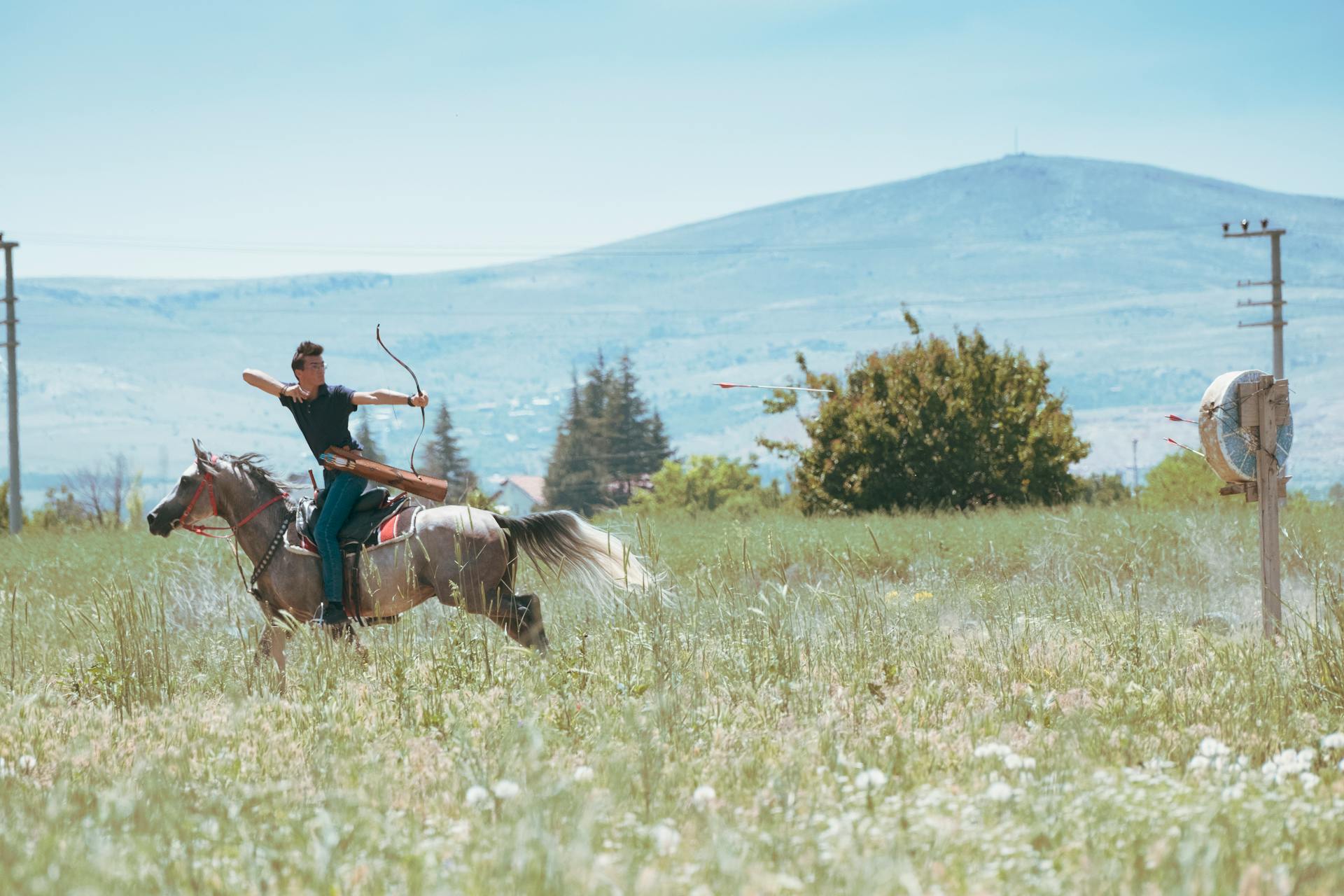
Horses have been used for milk and meat in the past, but this is no longer a common practice today.
At first, humans didn't know the best uses for horses, so they had many purposes over the years.
Before modern modes of transportation were invented, horses were a common way to get from one place to another.
Horses were essential for pulling heavy weapons and transporting injured people to hospitals during wars.
Their strength likely saved many people on the battlefield.
New equipment eventually removed the need for horses in war and everyday transportation.
Today, most horses are used for leisure horseback riding or ranch work.
Many horses are kept as pets to provide companionship and entertainment to their handlers.
See what others are reading: What Is Used to Control a Horse?
Travel and Leisure
If you're looking for a unique vacation experience, consider a horseback riding trip. Tsylos Park Lodge & Adventures in British Columbia offers week-long horseback riding adventures with trail guides to ensure a safe and breathtaking experience.
Here's an interesting read: When Did Humans Start Riding Horses
You'll get to ride miles of trails through incredible mountain landscapes. The lodge also offers shorter horseback riding tours for guests who want a shorter experience.
The week-long trip includes camping in beautiful areas near the resort, with guides helping to ensure you have everything you need. You'll also experience the horse and human bond firsthand.
Tsylos Park Lodge & Adventures is located at Chilko Lake, BC, Canada, and can be contacted at 1-800-385-6614 or [email protected] A 50% deposit per person is due at time of reservation, and the final balance is due 60 days prior to arrival.
Travel insurance is highly recommended, as deposits and balances are non-refundable once paid, regardless of cancellation reasons.
Featured Images: pexels.com