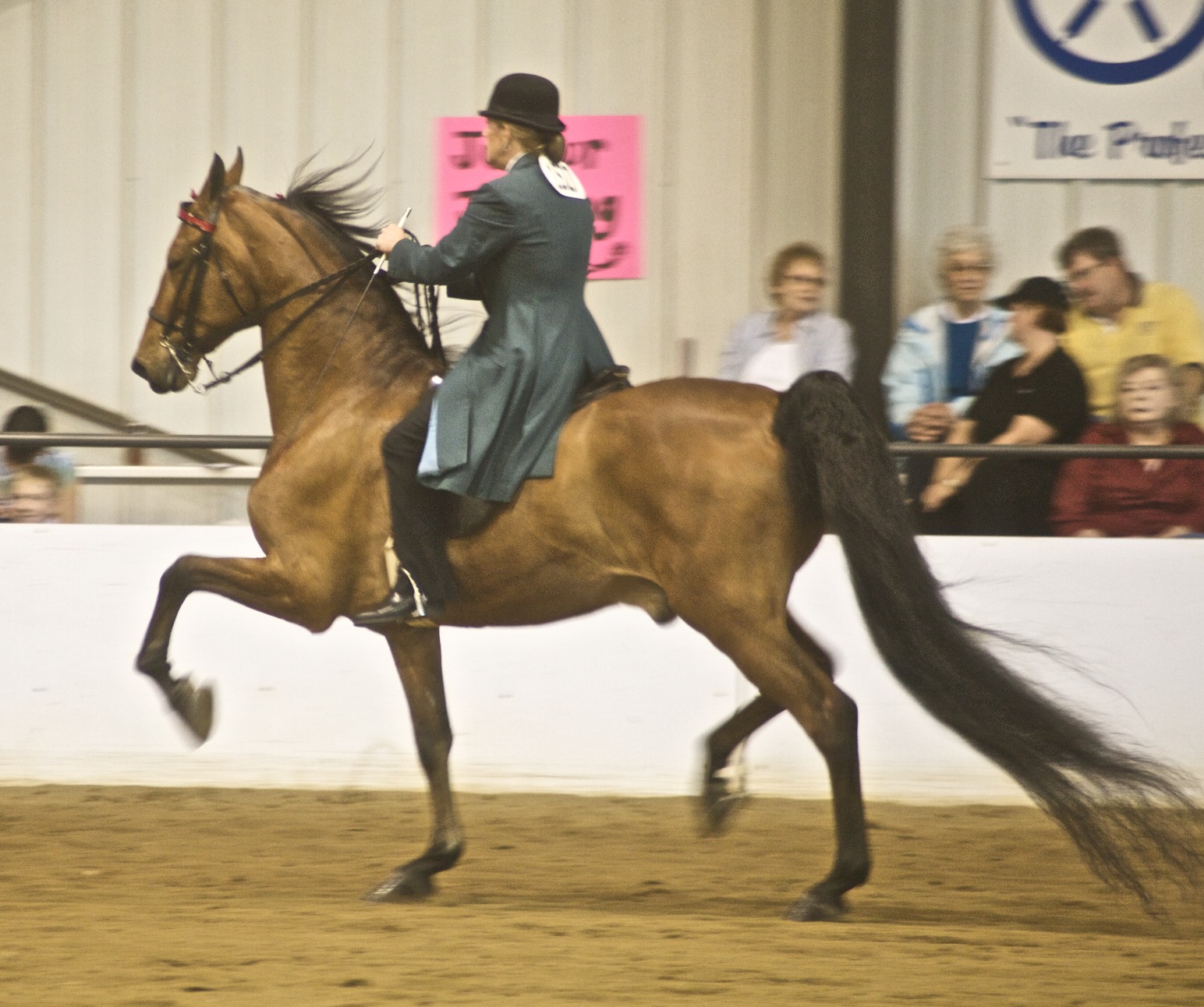
The American Saddlebred is a breed of horse known for its elegant appearance and athletic ability.
They originated in the United States in the late 18th century, specifically in the region of Kentucky.
This breed is characterized by its high head carriage, long neck, and muscular body.
The American Saddlebred is often used for show jumping, driving, and other equestrian activities.
Readers also liked: American Boxer Breed
Breed Characteristics
American Saddlebreds stand 15 to 17 hands high, averaging 15 to 16 hands, and weigh between 1,000 and 1,200 pounds.
Their well-shaped heads have a straight profile, and they have long, slim, arched necks, well-defined withers, and sloping shoulders.
Correct leg conformation and strong level backs with well-sprung ribs are also characteristic of the breed.
The croup is level with a high-carried tail, and they have a spirited yet gentle nature.
Any color is acceptable, but most common are chestnut, bay, brown, and black, with some horses being gray, roan, palomino, or pinto.
The first-known pinto Saddlebred was a stallion foaled in 1882, and the breed has been called the "world's most beautiful horse" by admirers.
They are known for their animated movement and willingness to perform, making them a versatile equine partner.
In the show ring, they are judged on their ability to perform the three regular gaits, as well as the slow gait and the rack, which are four-beat ambling gaits.
The slow gait is typically performed as a stepping pace, where the lateral pairs of legs leave the ground together but strike the ground at different times.
The rack is a lateral four-beat gait performed with speed and action, appearing unrestrained.
Explore further: Tennessee Walker Horse Gaits
History and Origins
The American Saddlebred has a rich history that dates back to the early days of the American Revolution. The breed originated in Kentucky, where it was first exhibited in 1816.
The American Saddlebred has a fascinating ancestry, descending from the Narragansett Pacer, Canadian Pacer, Thoroughbred, Morgan, and Standardbred. This mix of bloodlines helped shape the breed into what it is today.
As early as 1816, Saddlebreds were being exhibited in Kentucky, and by 1856, they were a prominent part of the first national horse show in the United States. This marked the beginning of the breed's show history.
In 1891, the American Saddlebred Horse Association was formed to promote and maintain the breed's registry. This was a significant step in establishing the breed's identity.
The breed's show history paralleled major historical developments, including the growth of single-breed shows in the 1970s and 1980s due to gas shortages. This shift led to the development of more specialized shows.
Today, the Saddlebred is exhibited in multiple divisions, including assorted in-hand classes and ridden classes for three- and five-gaited horses.
For another approach, see: History of the American Bulldog
Health and Nutrition
American Saddlebreds require a well-balanced diet of high-quality hay, grains, grass, and occasional supplements. They may need additional energy-rich feeds due to their active nature and athletic build.
Their digestive system is sensitive, and they can easily develop gastric ulcers, especially when exposed to stress and grain-based diets. In fact, one study found that the prevalence of gastric ulcers increased from 17.4% to 56.5% after participating in a single competition event.
To prevent digestive problems, it's essential to provide a comprehensive vitamin and mineral supplement, such as Omneity, which can help fill the gaps in essential nutrients found in hay. This supplement is designed to address hoof health, energy metabolism, and immune function.
A mature American Saddlebred in light work with normal body condition requires a diet that includes mid-quality hay, salt, and Omneity Pellets. Here's a sample diet analysis:
Forage should be the foundation of every horse's diet, and American Saddlebreds generally do best on average-quality hay. However, show horses may need higher-quality forage to meet additional energy and protein requirements.
Health Problems
American Saddlebreds are generally a healthy breed, but they can be prone to certain health issues. These issues can arise from genetic conditions, selective breeding, and the demands of training and showing.
Lordosis, also known as swayback, is a hereditary condition that causes a dipped back. This condition doesn't necessarily affect overall health, but it can lead to physical damage to the vertebrae, ligaments, and tendons of the back.

Regular veterinary care and proper conditioning can help maintain the health and performance of American Saddlebreds. This includes monitoring for respiratory issues, which can be caused by the high head carriage of the breed.
Joint stress is another common issue in American Saddlebreds, resulting from their high-stepping action. This can lead to joint wear over time, especially in older horses.
Digestive problems and lameness concerns are significant health concerns for Saddlebred show horses. These issues can be caused by factors such as stalling, altered schedules, transportation, and intense exercise.
Here are some common health issues affecting American Saddlebreds:
- Laminitis: a condition that can be precipitated by grain feeding and pasture access
- Equine metabolic syndrome: a condition that can occur in Saddlebreds when they are in light or no work
- Gastric ulcers: a condition that can be caused by stress, grain-based diets, and altered schedules
- Musculoskeletal injuries: a common issue in Saddlebred show horses, especially those that participate in competitions
- Degenerative joint conditions: a condition that can be caused by the high-head carriage and high limb action of the breed
Maintaining a healthy gut microbiota is crucial for optimal health and performance in American Saddlebreds. This can be achieved by providing a balanced diet and minimizing stress.
Nutrition
American Saddlebreds require a well-balanced diet of high-quality hay, grains, grass, and occasional supplements. They need additional energy-rich feeds due to their active nature and athletic build.

A good feeding program for your Saddlebred depends on their lifestyle and workload. Saddlebred show horses need adequate energy to support performance, but excess calories can cause over-conditioning.
Horses that are overweight are at higher risk of joint problems and other health issues. Easy weight gain may be a sign of metabolic syndrome, which puts the horse at risk of laminitis.
To keep your Saddlebred healthy, provide free-choice mid-quality hay (10% crude protein) and salt (30g or 2 tbsps). For a mature Saddlebred in light work with normal body condition, you can also add 200g (2 scoops) of Omneity Pellets.
Hay is often deficient in essential nutrients, including amino acids, vitamins, and minerals. A comprehensive vitamin and mineral supplement like Omneity can help fill these gaps to ensure your Saddlebred is meeting their nutritional requirements.
The foundation of every horse's diet should be forage, which should make up about 22 pounds (10 kg) of their daily intake. Providing high-quality free-choice forage is the best way to support your horse's digestive function and behavioral needs.
Saddlebreds generally do best on average-quality hay, but show horses may need higher-quality forage like mixed legume hay to meet additional energy and protein requirements.
For more insights, see: What Is the Best Breed of Horse
Care and Management
American Saddlebreds require regular exercise to thrive, so owners should work with a qualified trainer to develop a training and competition schedule that provides adequate time for recovery.
Daily brushing is essential for maintaining the coat's health and shine of an American Saddlebred. Regular hoof cleaning and trimming are also necessary to prevent lameness and injuries.
A preventative wellness program that includes vaccinations, deworming, and routine dental care is crucial for the physical and mental well-being of an American Saddlebred.
Breed Registry
The American Saddlebred Horse Association began in 1891 as the National Saddle Horse Breeders Association.
Originally, the association maintained a registry of almost 250,000 American Saddlebreds.
Care and Management
Daily brushing is essential for maintaining an American Saddlebred's coat health and shine.
Regular hoof cleaning and trimming are necessary to prevent lameness and injuries in these horses.
To prevent minor problems from becoming more significant, schedule regular lameness exams for your competitive Saddlebred with your veterinarian.

Your veterinarian may recommend joint injections for your horse's maintenance program.
Saddlebreds are athletic horses that thrive with regular exercise, so work with a qualified trainer to develop a training and competition schedule that allows for adequate recovery time.
Regular turnout can significantly benefit Saddlebreds, with one study finding that two hours of daily group turnout decreased stress-related behaviors in stalled competition horses.
Proper nutrition and feeding programs are critical for maintaining digestive function in show horses, which can be prone to gastric ulceration risk if management minimizes stress.
Appropriate farrier care that maintains optimal hoof balance can help limit the risk of distal limb injuries in show horses, and shoeing should prioritize soundness over artificially enhancing animated movement.
Show and Disciplines
The American Saddlebred is a versatile breed, exceling in various disciplines. Saddle seat is the most popular discipline, with recognized breed competitions offering pleasure, three-gaited, five-gaited, and fine harness divisions.
Pleasure divisions prioritize rideability and require a flat walk, trot, and canter. In these classes, Saddlebreds can compete in show pleasure, country pleasure, hunter, and western classes.
Three-gaited and five-gaited divisions evaluate horses on conformation, presentation, and gaits, with the added requirement of performing the slow gait and rack for five-gaited horses.
Show Ring History

Saddlebreds have a rich show history, with their first exhibition in Kentucky dating back to 1816. They were a prominent part of the first national horse show in the United States, held at the St. Louis Fair in 1856.
The breed's show history also paralleled major historical developments. Heavyweight boxing champion Joe Louis organized the first "All-Negro" horse show in Utica, Michigan, allowing greater opportunities for African-American people to exhibit horses.
Saddlebreds were exhibited in Kentucky as early as 1816, and were a prominent part of the first national horse show in the United States, held at the St. Louis Fair in 1856. The Kentucky State Fair began running a World Championship show in 1917.
The American Horse Shows Association, now the United States Equestrian Federation, formed and began to standardize show formats and rules in 1917. This led to the creation of the American Saddlebred Pleasure Horse Association in 1957 to regulate English pleasure classes.
The American Royal horse show is one of the prestigious awards in the breed industry, along with the Lexington Junior League Horse Show and the Kentucky State Fair World's Championship Horse Show.
Additional reading: American Akita History
Disciplines
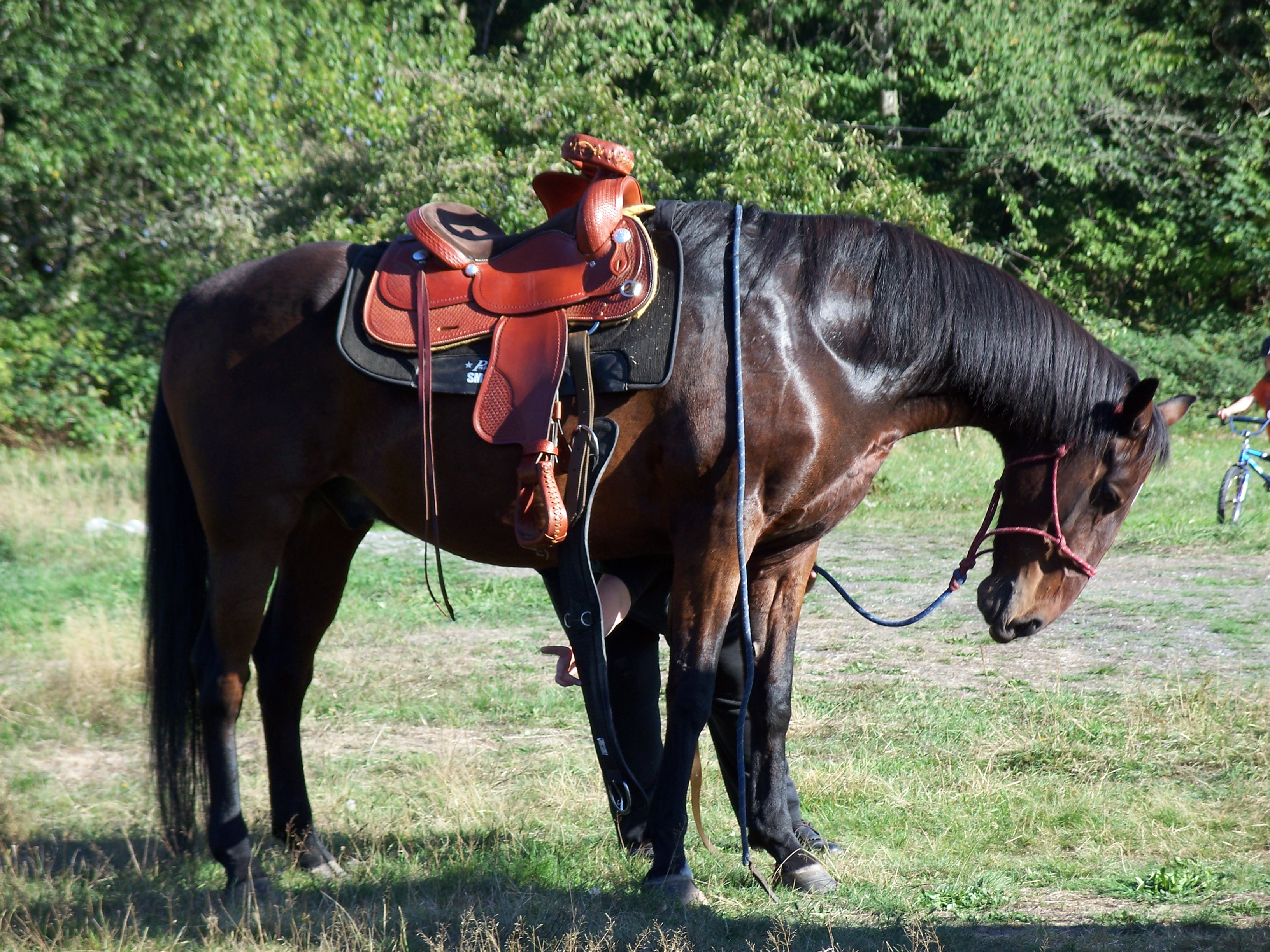
The American Saddlebred is a versatile breed that excels in various disciplines, making it a popular choice for riders of all experience levels. Whether you're a seasoned competitor or a casual pleasure rider, there's a Saddlebred discipline that's right for you.
Saddle seat is the most popular discipline for American Saddlebred horses, and it's easy to see why. The breed's elegant conformation, high-stepping gait, and animated movement make it a natural fit for this type of competition.
In pleasure divisions, Saddlebreds are judged on their rideability and ability to perform a flat walk, trot, and canter. This makes it an excellent choice for riders who want to focus on developing their riding skills.
Three-gaited and five-gaited divisions, on the other hand, require horses to perform additional gaits, including the slow gait and rack. These gaits are a hallmark of the American Saddlebred breed and are sure to thrill spectators.
Fine harness Saddlebreds pull a four-wheeled cart during competition and perform a trot and animated walk. This discipline requires a high level of training and coordination between horse and handler.
Here are some of the main disciplines for American Saddlebred horses:
- Saddle seat
- Pleasure divisions (show pleasure, country pleasure, hunter, and western classes)
- Three-gaited divisions (animated walk, trot, and canter)
- Five-gaited divisions (slow gait and rack)
- Fine harness (trot and animated walk)
- Other disciplines (western, hunter/jumper, dressage, eventing, and driving)
Frequently Asked Questions
How much does an American Saddlebred horse cost?
American Saddlebred horses typically cost between $10,000 and $100,000, depending on their performance level and breeding. Prices for these horses can vary significantly, so it's essential to research and understand the factors that affect their value.
Why are American Saddlebred horses more likely to be low backed?
American Saddlebred horses are more likely to be low backed due to selective breeding that favors the dominant trait, increasing the chances of offspring inheriting the recessive lordosis gene. This genetic predisposition has led to a higher incidence of lordosis in the breed.
How can you tell if a horse is a Saddlebred?
To identify a Saddlebred horse, look for a well-shaped head, long neck, and strong back with well-sprung ribs. A Saddlebred's distinctive features also include a level croup and a high-carried tail.
Is a Saddlebred a good horse?
Yes, Saddlebreds are known for their gentle, intelligent, and affectionate nature, making them a great choice for many horse owners. Their friendly and adaptable temperament has earned them a loyal following among horse enthusiasts.
Featured Images: pexels.com