The American Bulldog has a rich history that spans thousands of years. The breed's ancestors date back to ancient civilizations, with evidence of bulldog-like dogs appearing in ancient Egypt, Greece, and Rome.
These early bulldogs were known for their strength, courage, and loyalty, traits that would become hallmarks of the American Bulldog breed. They were often used for guarding, fighting, and hunting.
The modern American Bulldog is a direct descendant of the English Bulldog, which was brought to the United States by early settlers in the 18th century.
Early History
The American Bulldog's early history is a fascinating story. The breed originated in the 17th century when English working-class settlers brought their English Bulldogs to America.
These settlers needed a dog that could handle tough tasks like herding cattle and protecting the homestead. The English Bulldog fit the bill perfectly.
There are three theories about the American Bulldog's origin. Let's take a look at each one:
- The first theory suggests that the American Bulldog was brought over by colonists, who used them as gathering dogs, guard dogs, and pack hunters.
- The second theory proposes that the American Bulldog is a "made up" breed, created by breeding different dogs.
- The third theory combines the first two, suggesting that the American Bulldog is an original English Bulldog that changed over time due to its environment.
The third theory is the most stable one, as it's based on the fact that many breeds of bulldogs came from the original English Bulldog. This breed was highly valued by farmers in America and was often crossed with other breeds.
Post-War Revival
The American Bulldog's revival after World War II is a remarkable story. Following the war, the breed was nearly non-existent, except for some in the southern part of America.
John D. Johnson, a returning war veteran, took it upon himself to revive the breed. He went to great lengths to capture several breeding specimens of the American Bulldog in densely wooded areas of the South.
Johnson's efforts were soon joined by another fan of the breed, Alan Scott. Scott took some top American Bulldogs from farmers in the South and infused their genetics into Johnson's dogs' bloodlines.
The result of their combined efforts was the preservation of the American Bulldog breed.
On a similar theme: Bulldog Johnson Breed
Two Prevailing Bloodlines Established
The Johnson-type of American Bulldog was one of the best-known lines, characterized by a bulky body, heavy bones, and a large head. This line became popular due to its robust physical traits.
The Scott-type was another well-known line that gained popularity for its more moderate and athletic build. This line was also favored for its versatility.
Johnson and Scott's hard work helped resurrect the American Bulldog from near extinction. They established the foundation for the breed's revival.
The modern American Bulldog is considered a hybrid of the Johnson and Scott variants. This blend of bloodlines has resulted in a robust and versatile breed.
See what others are reading: American Bulldog Johnson Breed Puppies
American Bulldog Overview
The American Bulldog is a breed that originated from the English Bulldog, which was brought to America by English working-class settlers in the 17th century.
These early settlers needed a dog that could handle tough tasks, such as herding cattle and protecting the homestead, and the English Bulldog fit the bill perfectly.
The harsh living conditions in the southern part of America demanded a sturdy and hard-working dog, and the English Bulldog seemed to be the perfect solution.
As time went on, people started calling this hard-working English Bulldog the American Bulldog, even though there were no official national dog clubs to set breed standards at that time.
By the end of World War II, the breed was almost extinct, but a few devoted breeders, including John D. Johnson and Alan Scott, worked to revive the American Bulldog.
They carefully bred the dogs, keeping records of their health and working abilities, and two different lines of Bulldogs emerged during this period.
Most American Bulldogs today are a cross between these two lines, known as a hybrid.
Readers also liked: Do American Bulldogs Have a High Prey Drive
Physical Characteristics
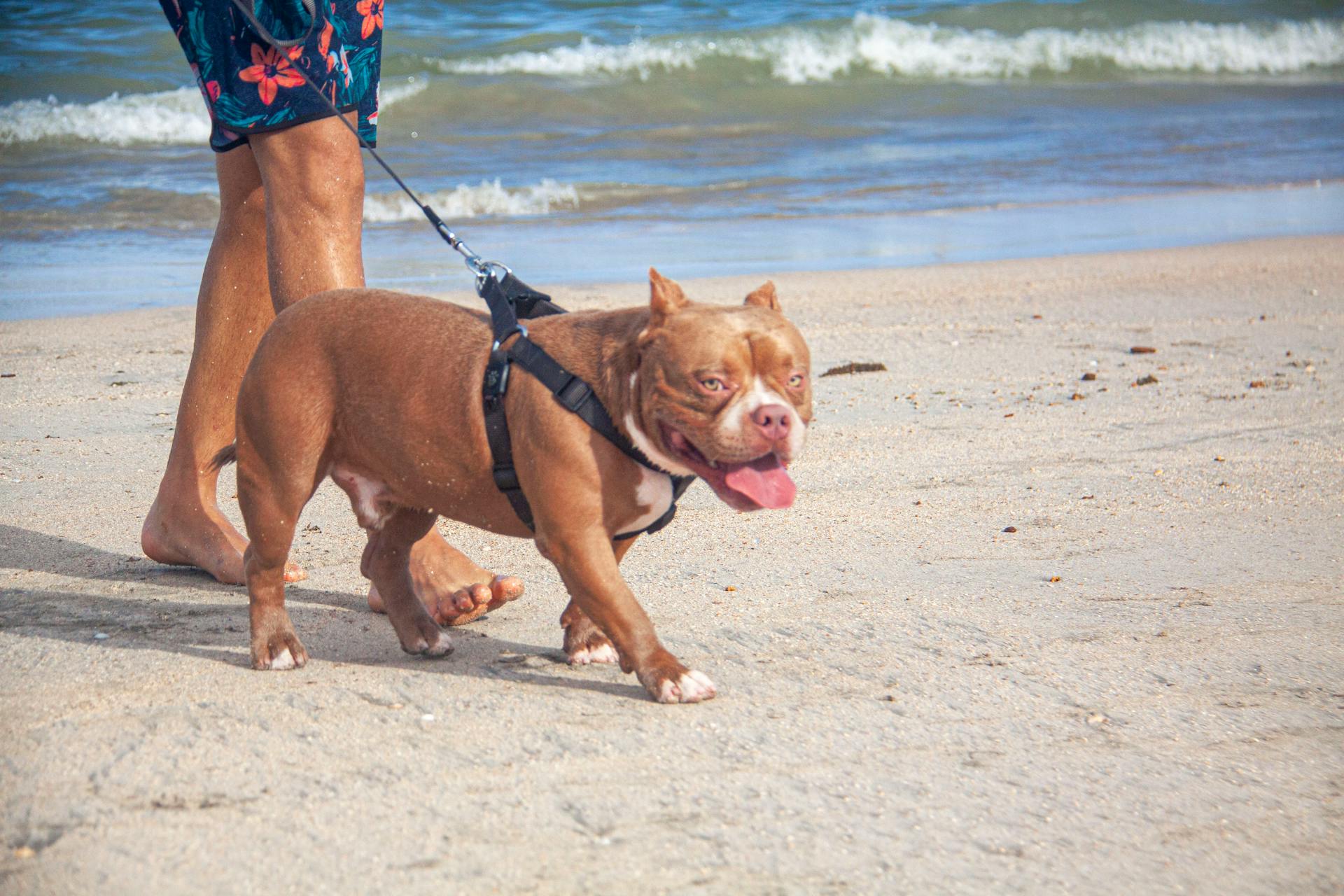
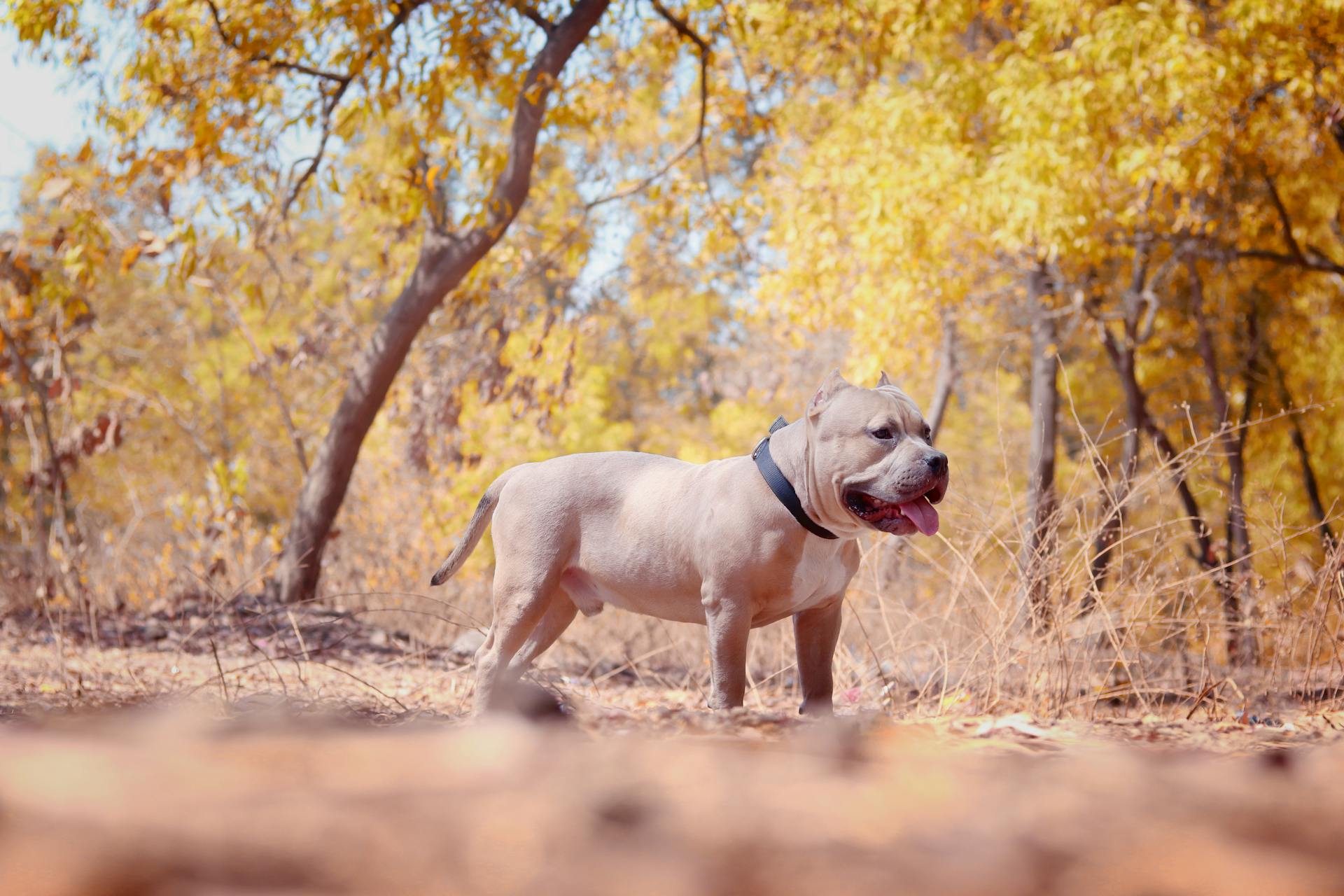
The American Bulldog has a very sturdy and muscular build, weighing anywhere from 60 to 120 pounds at a height of 20 to 28 inches.
Their large head is a defining feature, with strong jaws that are capable of handling a wide range of tasks.
The ears of an American Bulldog can be cropped, semi-prick, rose, or drop, giving them a unique appearance.
Their short and soft coat comes in a wide variety of colors, although some colors like solid black, blue, merle, and tri-color may not be recognized by certain kennel clubs and associations.
Frequently Asked Questions
What is special about American Bulldogs?
American Bulldogs are known for their unique combination of bravery, loyalty, and affectionate nature, making them excellent family pets and watchdogs. Their gentle and protective temperament sets them apart from other breeds.
Featured Images: pexels.com