Costa Rica's rainforests are teeming with an incredible array of wildlife, including monkeys, sloths, and toucans. The country's unique geography and climate create a perfect haven for these animals to thrive.
The resplendent quetzal, a bird considered sacred by the indigenous people of Costa Rica, is a prized sighting for birdwatchers. These birds are known for their vibrant plumage and long, flowing tails.
In the rainforests of Costa Rica, you can find over 200 species of birds, including the iconic scarlet macaw, which is known for its bright red, blue, and yellow feathers. These birds are a sight to behold, and their calls are a common sound in the rainforest.
The rainforests of Costa Rica are also home to a wide variety of mammals, including jaguars, pumas, and ocelots.
Discover more: Birds of the Amazon Rainforest
Mammals
The Baird's Tapir, one of the rarest mammals in Costa Rica, is the largest land mammal in the country, reaching up to two meters in length and weighing up to 400 kilograms.
These gentle giants are found all over Costa Rica and are very docile, not bothering anyone. Their young ones are born with white stripes down the sides, which serve as camouflage to protect them from predators.
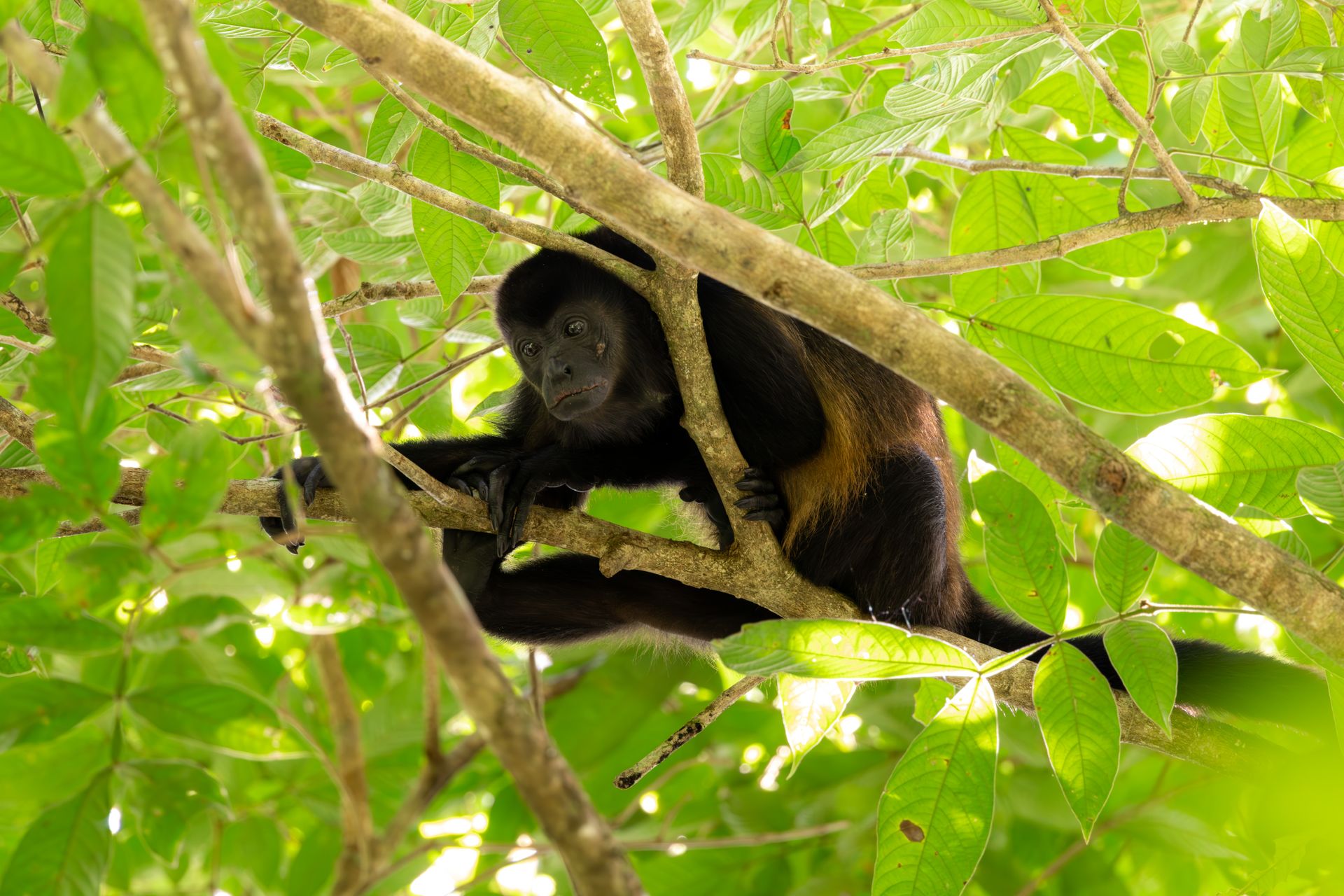
Costa Rica is also home to four iconic species of monkey: the golden-mantled howler monkey, Central American squirrel monkey, Geoffroy's spider monkey, and the white-faced capuchin monkey. You'll often hear the howler monkey's guttural call echoing through the jungle, while the squirrel monkey is the smallest of the four species.
In the rainforests of Costa Rica, you'll find a variety of mammals, including the two-toed sloth and the three-toed sloth, which are famous for their slow movements and can be spotted hanging from the treetops. The three-toed sloth's ancestors were once the size of elephants, but today they're about the size of a house cat.
Coatis, a bit of a mashup of a critter, are highly intelligent and can be easily found on the Osa Peninsula, particularly in cleared areas. They're known for their playful behavior, wrestling with each other like dogs, and their long feline tail.
Worth a look: World Wildlife Foundation Endangered Species List
Sloths
Sloths are perhaps the most famous Costa Rican rainforest animals, and Costa Rica may be the best place in the world to find them hanging sleepily from the treetops.
There are two species of sloths in Costa Rica: the two-toed sloth and the three-toed sloth. The three-toed sloth is about the size of a house cat, but their ancestors were once the size of elephants.
Sloths can be very difficult to spot in the rainforest, but nature guides are exceptionally good at finding them. One common method is to look for Cecropia trees, a conspicuous genre of tree that is favored by sloths.
These remarkably slow-moving creatures are undeniably cute, and can be found in various parts of Costa Rica, including Puerto Viejo, Monteverde Cloud Forest, and the Osa Peninsula.
If you have an eye for spotting things, look to the trees, as sloths are often found taking naps or slowly making their way to the tasty leaves they prefer.
You can expect fruitful sloth-spotting experiences in destinations like Manuel Antonio, Tortuguero, Corcovado, Monteverde, and on the Caribbean side near Puerto Viejo, particularly in La Amistad.
To spot these elusive creatures, it's best to keep an eye on treetops for their distinctive, slow-moving silhouettes and their unique "smiling" faces.
Related reading: Best Place to See Wildlife in Costa Rica
Monkeys
Costa Rica is home to four iconic species of monkey: the golden-mantled howler monkey, Central American squirrel monkey, Geoffroy’s spider monkey, and the white-faced capuchin monkey.
The golden-mantled howler monkey's guttural call can be heard three miles away and is unmistakable above the jungle drone.
These charismatic and playful animals tend to travel in troops of 20-75 individuals, and are often seen by the dozens moving through the rainforest.
In fact, the howler monkey is the loudest of the four species, with a deep-throated call that can be heard at 5 in the morning.
The squirrel monkey is the smallest of the four species, only slightly larger than an actual squirrel.
Geoffroy’s spider monkeys are famous for their spindly limbs and long, muscular tails which can easily grasp branches, allowing them to swing through the forest with grace.
The white-faced capuchin monkey is the most common of the four species in Costa Rica and can be readily seen on the Osa Peninsula.
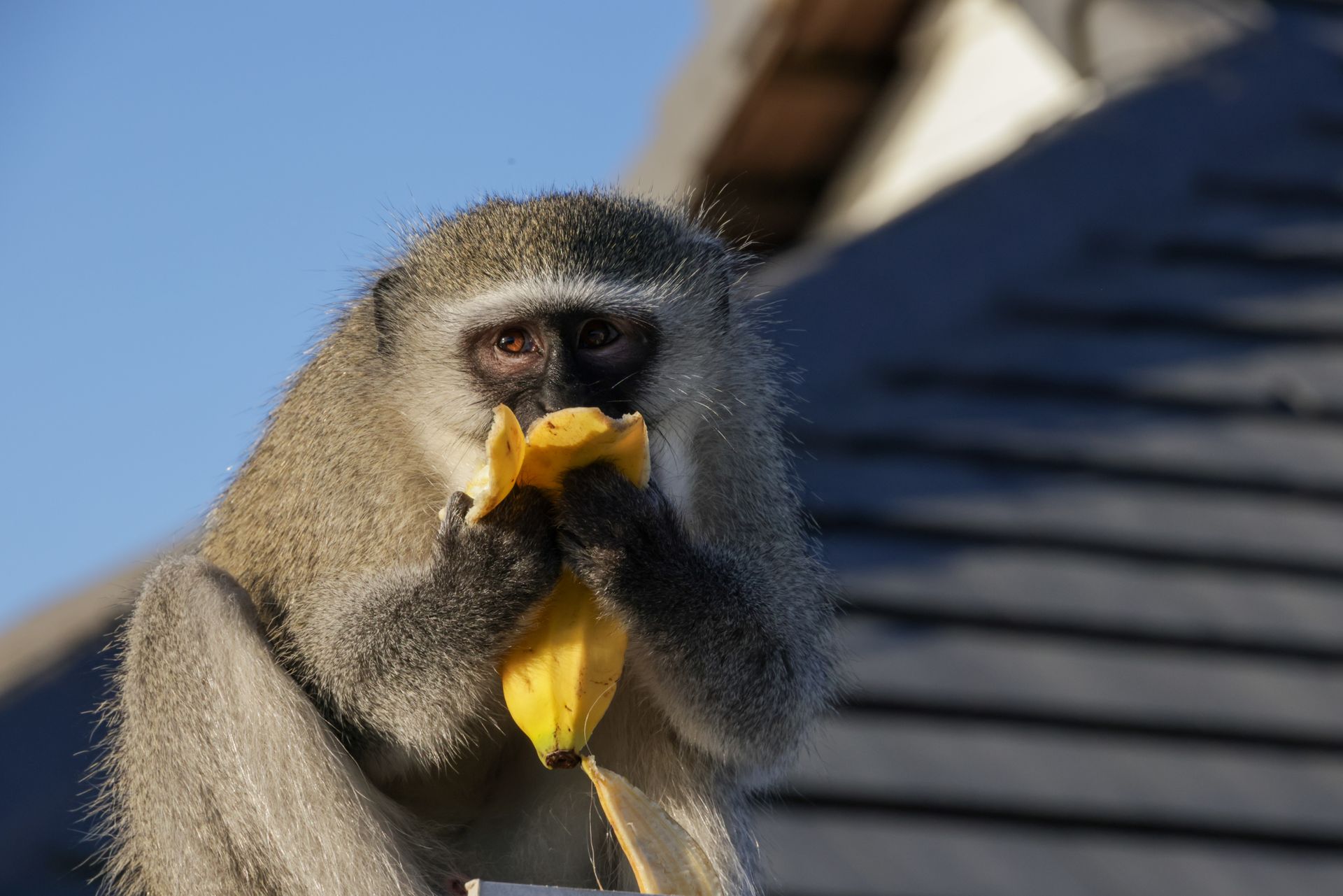
They are famously curious, but infamous for stealing unsuspecting tourists' food - a habit that's both entertaining and concerning.
Feeding them can harm their health, disrupt their natural diet, and cloud their survival instincts, so it's essential to keep a safe distance and observe them from afar.
You can find these incredible creatures in various national parks and wildlife areas throughout Costa Rica, including Manuel Antonio, Osa Peninsula, Monteverde, and Corcovado.
Jaguars and Wildcats
Jaguars are Costa Rica's largest cats, and they're notoriously hard to spot.
Their numbers have drastically diminished over the years, making them an even more elusive sight.
Costa Rica's Corcovado National Park is one of the protected areas where jaguars can be found.
Birds
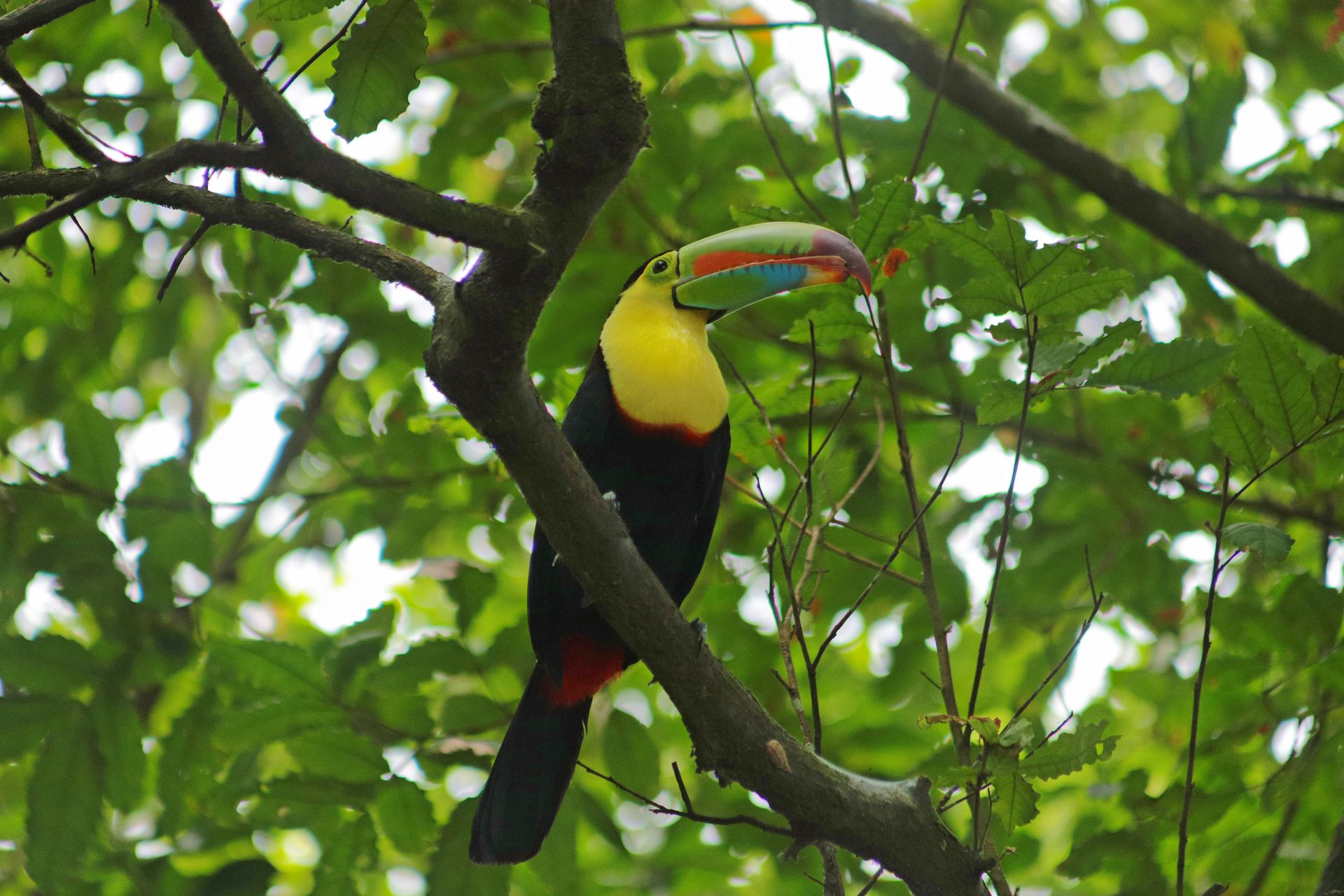
Costa Rica is a birdwatcher's paradise, with thousands of fascinating birds to see, including the Scarlet Macaw, Keel-billed Toucan, and Resplendent Quetzal.
These birds can be spotted in most of Costa Rica's national parks, where you'll also find approximately 50 different kinds of Hummingbirds, which are known for their incredible appetite and ability to hover in mid-air.
Take a look at this: Endangered Birds in the Amazon Rainforest
The Scarlet Macaw is one of the most famous birds in Costa Rica, and is known to live up to 35-50 years in the wild. They're also very intelligent and can be spotted in the Osa Peninsula, which is home to nearly 500 species of birds.
You can also spot the Resplendent Quetzal in the Cloud Forests of Costa Rica, particularly in Monteverde, where they're known to be shy and quiet, but more vocal during their breeding season between March and June.
The Keel-billed Toucan is another iconic bird in Costa Rica, known for its bright yellow and dark red bill, and is often seen in humid rainforests and cooler mountain terrains. They're also known to be mischievous and have been spotted raiding nests for eggs.
Costa Rica is also home to six different Toucan species, including the Chestnut-Mandibled Toucan, which is known for its bright yellow and maroon bills and gentle caws.
The Monteverde Cloud Forest Reserve and Los Quetzales National Park are two great places to see the Resplendent Quetzal, which is known for its long tail feathers and vibrant green plumage.
If you're interested in spotting Hummingbirds, you can visit Monteverde's Cafe Colibri, where you can see over ten species of Hummingbirds frequenting the feeders.
Reptiles and Amphibians
Costa Rica's rainforest is home to a diverse array of reptiles and amphibians, many of which are found nowhere else on the planet. The country's unique geography and climate create a perfect habitat for these creatures.
You can spot brightly colored frogs, including the Arrow Frog, which comes in 8 different species, and the Red-Eyed Tree Frog, known for its vibrant red eyes and neon green body. These frogs are not poisonous, but their skin contains toxins that can be fatal if ingested.
In the rainforest, you might also catch a glimpse of sea turtles, which come ashore to nest on both the Caribbean and Pacific coasts. The Olive Ridley, leatherback, green, and hawksbill turtles are all found in Costa Rica, and can be spotted in protected areas like Las Baulas National Marine Park and Ostional Wildlife Refuge.
The Osa Peninsula is a great place to see poison dart frogs, which are found in a variety of colors and patterns, and have toxins on their skin that warn predators to stay away. These frogs are just one of the many species of amphibians that can be found in Costa Rica, which is home to over 150 species.
Turtles
Turtles are a beloved sight in Costa Rica, with four species frequently visiting both coasts at various times of the year. You can spot them in protected sanctuaries like Tortuguero National Park and Las Baulas National Marine Park.
The Green Sea Turtle is one of the most iconic species, with the largest nesting location in the western hemisphere found in Tortuguero National Park. From July to October, you can see these massive turtles, with adults weighing up to 500 pounds.
The Hawksbill turtle, on the other hand, is critically endangered and rarely seen, but can be spotted between March to July on the Caribbean coast or from July to October on the Pacific side. Unfortunately, their beautiful shells have made them a target for hunters.
If you're lucky, you might catch a glimpse of hundreds of turtles nesting and baby turtles making their way to the ocean in the morning at Las Baulas National Marine Park and Ostional Wildlife Refuge.
Readers also liked: Fish and Wildlife Western Pond Turtle
Amphibians
Costa Rica's amphibians are a sight to behold, with their vibrant colors and diverse species. You can find over 150 species of frogs in Costa Rica, including brightly colored poison dart frogs.
The Osa Peninsula is a great place to spot these frogs, along with other iconic amphibians like the red-eyed tree frog and glass frog. Poison dart frogs have neon patterns that warn predators to stay away, as their toxins can be fatal to consume.
You can spot red-eyed tree frogs in Monteverde Cloud Forest Reserve and Manuel Antonio National Park, where they'll wake up in the evening and make loud, distinct calls. Their bright red eyes and neon green bodies make them hard to miss.
Some species of frogs, like the glass frog, are a bit harder to spot due to their translucent qualities. Booking an expert guide can help you track them down.
Unfortunately, some frog species, like the Lemur Leaf Frog, are declining in population due to a fungus that causes infectious diseases. Measures are being taken to conserve them, but it's essential to be aware of this issue.
Costa Rica is home to the Harlequin Toad, a small and brightly colored amphibian that's been badly affected by amphibian declines. Some species of Harlequin Toad are even endangered or extinct.
It's essential to be respectful of these creatures and their habitats, especially when it comes to handling or touching them. While their poison isn't potent enough to penetrate through unbroken skin, an unknown cut could cause trouble.
Insects
In Costa Rica, you'll find an incredible variety of insects, including Spiders, Scorpions, Butterflies, and Mosquitoes. They're everywhere, and in great numbers.
The size of these insects is quite impressive, with everything seeming just a little bit bigger than elsewhere. This is likely due to the thriving nature of the environment.
Beetles are one of the largest insects here, and the Hercules beetle is a massive example. It's not only huge, but it can also fly, making it a fascinating sight.
Be on the lookout for Scorpions, especially the smaller ones. They may be less common, but they carry the most potent venom.
The Morpho Butterfly is a stunning sight, growing up to 15 centimeters in width. It's found deep in the rainforest and loves to bask in the sunlight.
Conservation and Biodiversity
Costa Rica is one of the most biologically intense countries in the world, hosting 5% of the world's biodiversity. This is due to its extensive conservation efforts, which have led to the growth of several rainforest animal populations.
Sport hunting is prohibited in Costa Rica, providing an added layer of protection for these species. A whopping 34% of the country's territory is dedicated to conservation, including 28 national parks and 8 biological reserves.
These conservation efforts have made Costa Rica one of the best places in the world for wildlife observation. The tourism industry has grown rapidly, making it a top spot for ecotourism and conservation of endangered species.
Some of the best places to spot rainforest animals in Costa Rica include Arenal Volcano National Park, Cano Negro Wildlife Refuge, La Paz Waterfall Gardens Costa Rica, Corcovado National Park, and Cahuita National Park.
A fresh viewpoint: Wildlife Conservation Society
Must-See Animals
Costa Rica is home to over 500,000 species of wild animals, many of which are rare, endangered, and endemic.
You can spot sea turtles coming ashore to lay their eggs in Tortuguero National Park.
The country's diverse wildlife includes vibrant birds, with over 918 species of tropical birds to discover.
White-faced capuchin monkeys are known to try and steal snacks from tourists in Manuel Antonio.
The sound of howler monkeys can be heard in the mornings in Guanacaste and the Nicoya Peninsula.
Lazy sloths can be spotted taking a nap in Puerto Viejo by the Caribbean Coast.
Humpback whales can be seen in Drake Bay, Osa Peninsula.
It's essential to remember that both native and endangered species in Costa Rica need protection, so it's crucial to keep a safe distance.
The country has launched a campaign urging tourists to stop taking selfies with animals.
You can still experience the thrill of observing these creatures in their natural environment without disturbing them.
Some of Costa Rica's most famous inhabitants include jaguars, sloths, monkeys, and turtles.
These incredible animals can be seen in their natural habitat with the help of knowledgeable guides.
Expand your knowledge: Costa Rican Monkeys
Frequently Asked Questions
What are the predators in the Costa Rica rainforest?
In the Costa Rica rainforest, you may encounter venomous snakes, large predators like American Crocodiles, and big cats such as pumas and jaguars. Be aware of these potential dangers when exploring the rainforest.
What is the largest animal in Costa Rica?
The largest animal in Costa Rica is the endangered tapir, which requires large territories to thrive. Learn more about these fascinating creatures and their habitats.
What is the best rainforest in Costa Rica for wildlife?
For spotting the most elusive and endangered wildlife in Costa Rica, Corcovado National Park is the top destination, home to diverse rainforest dwellers like tapirs, scarlet macaws, and harpy eagles. This park offers a unique opportunity to observe a wide range of Costa Rica's incredible wildlife.
Featured Images: pexels.com