The Western Pond Turtle is a unique and fascinating creature. They can live up to 47 years in the wild, which is impressive for a turtle of their size.
One of the most interesting things about Western Pond Turtles is their habitat. They can be found in freshwater habitats, including ponds, lakes, and slow-moving streams.
These turtles are well adapted to their environment, with webbed feet that help them swim efficiently. They can also withdraw their head and limbs into their shell for protection.
Western Pond Turtles are omnivores, which means they eat both plants and animals. Their diet includes aquatic plants, insects, and even small fish.
Conservation Status
The Western Pond Turtle is listed as a species of special concern by the US Fish and Wildlife Service.
Its population has declined due to habitat loss and degradation, primarily caused by the introduction of non-native aquatic plants and animals.
The Western Pond Turtle is also threatened by the collection of its eggs and hatchlings for the pet trade.
In some areas, its habitat is being destroyed for agricultural purposes.
The species is protected under the Endangered Species Act, which prohibits the harm or harassment of listed species.
Conservation efforts are underway to protect the Western Pond Turtle and its habitat, including habitat restoration and education programs.
Discover more: Common Snapping Turtle Species
Life Cycle
The life cycle of a Western Pond Turtle is a remarkable process. They typically live between 20 to 40 years in the wild.
From egg to hatchling, the incubation period of Western Pond Turtles is around 70 to 80 days. This is a crucial time for the young turtles, as they must develop enough to survive on their own.
After hatching, the young turtles will make their way to the water's edge and begin their aquatic life. They will feed on small aquatic animals and plants, growing rapidly in the first year of their lives.
Turtle Habitats
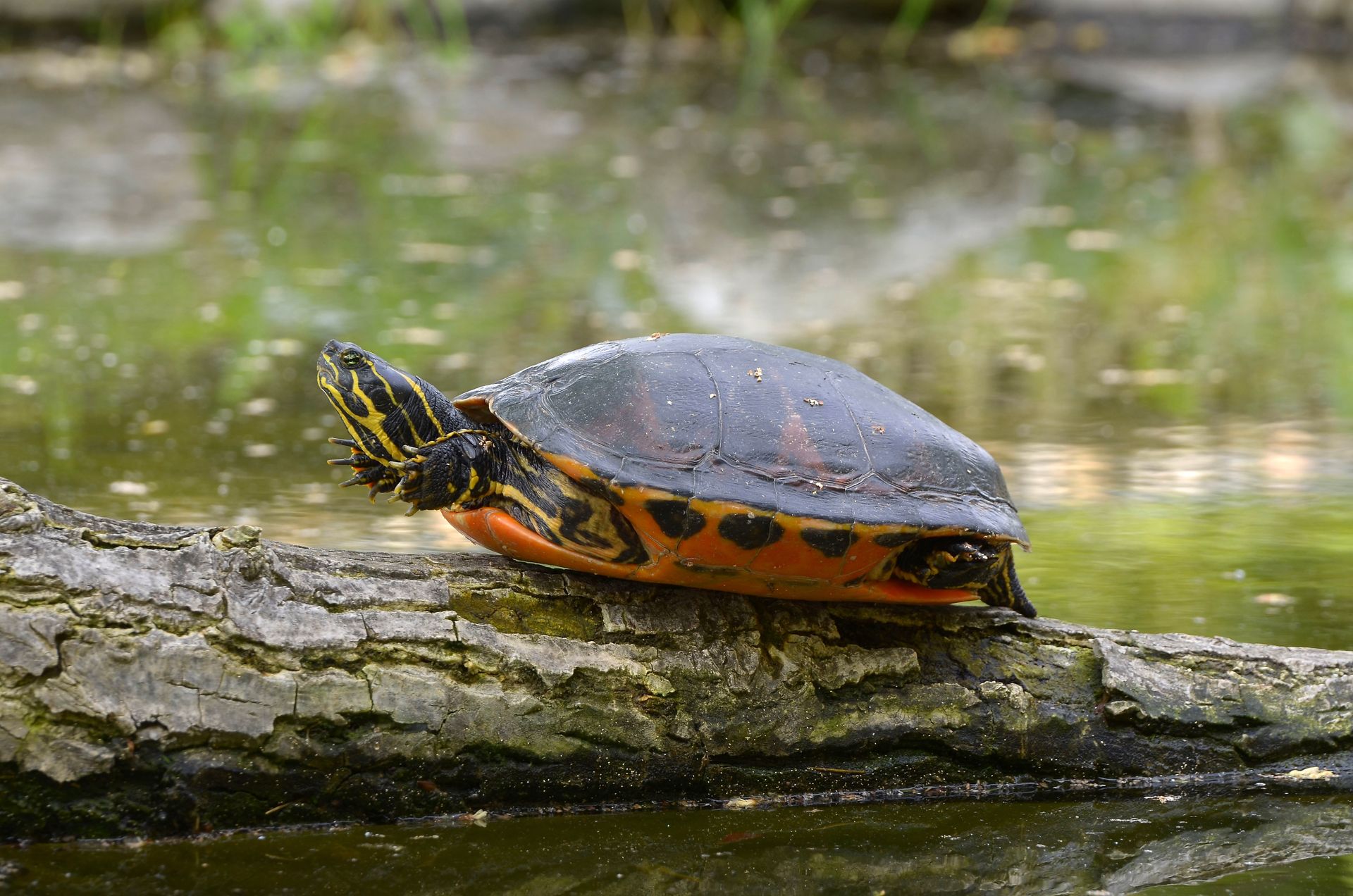
Western pond turtles can be found in a variety of habitats, including ponds, marshes, and streams.
They often bask on logs and mud banks, soaking up the sun's warmth.
Their range spans from Southwestern British Columbia to northwestern Baja California.
In these aquatic environments, turtles have adapted to thrive in both freshwater and sometimes brackish conditions.
They can be seen swimming in ponds and marshes, but also often rest on the muddy banks, taking in the surrounding sights and sounds.
Ponds, marshes, and streams provide the perfect blend of water and land for these turtles to live and grow.
Their ability to adapt to different habitats has allowed them to flourish in a wide range of ecosystems.
October: Hatching
October is a critical month for Western pond turtles, as it's the time of hatching.
The hatchlings are only about the size of a quarter when they emerge from their eggs.
It's nighttime, which is perfect for evading predators.
These tiny turtles use their caruncle or egg tooth to start a crack in their egg and push their way out.
Being small, this is hard work, and they often pull their arm or foot back into the egg due to the chill outside.
Their nest is covered with vegetation and soil to keep them warm and protected from predators.
Turtle Lifespan
Pond turtles can live a surprisingly long time, especially when cared for in captivity. In the wild, they can live up to 40 years.
Their lifespan in captivity is significantly longer, with some living up to 70 years.
You might enjoy: Leah Fish Live
Turtle Care
Western pond turtles are omnivores, which means they eat both plants and animals. They consume a variety of foods in the wild, including pods of yellow lily and water plants.
In captivity, such as at CuriOdyssey, they are served a diet that includes smelt, aquatic plants, and algae. This shows that turtles can thrive on a diet that includes a mix of protein and vegetation.
Turtles also eat worms, which are a good source of protein and can be easily obtained in the wild or in captivity.
If this caught your attention, see: What Do Goldfish Eat in the Pond
Turtle Diet
Western pond turtles are opportunistic omnivores, which means they eat both plants and animals. They consume a wide variety of food sources.
Their diet includes pods of yellow lily, water plants, and aquatic algae. They also eat insects, fish, worms, crustaceans, and carrion. At a zoo, they are served smelt, aquatic plants, and worms.
Turtle pellets are also a common food source for these turtles.
A unique perspective: Fish Food for Pond Goldfish
Beat the Heat
As turtles, we have a unique way of dealing with extreme heat. We aestivate!
Aestivation is a state of dormancy similar to hibernation or brumation. It's a way for us to cool down and conserve energy.
We like to aestivate either buried under cool mud in our pond or by traveling upland and hiding in a cool, green, and shady spot.
In fact, as turtles in Oregon, we often spend a significant portion of our time in our upland, terrestrial homes, rather than in our pond habitat.
This is especially true in areas where we get extreme heat in the summer and snow in the winter. Our pond is more like a summer vacation home, where we go to relax and have some fun.
So, if you're a turtle looking to beat the heat, remember to find a cool spot to hide and conserve your energy.
Tips and Fun
As you explore the world of Western pond turtles, you'll discover some fascinating facts about these creatures. Western pond turtles, also known as Pacific pond turtles, in northern regions of their range, appear to hibernate on the bottom of ponds in winter months.
In southern regions, they remain active year-round, which is a stark contrast to their northern counterparts.
If you're lucky enough to spot a Western pond turtle in the wild, you might notice that they have a unique habit of basking in the sun on logs or rocks.
They're also quite skilled at hiding and can retreat into their shells for protection, making them a bit challenging to spot.
Western pond turtles are known to live in freshwater habitats, such as ponds, lakes, and slow-moving streams, where they can be found swimming and foraging for food.
Their diet consists mainly of aquatic plants, insects, and small crustaceans, which they catch using their sharp beaks and powerful jaws.
It's worth noting that Western pond turtles can live up to 40 years or more in the wild, which is quite impressive for a turtle of their size.
Frequently Asked Questions
What to do if you find a western pond turtle?
If you find a western pond turtle, leave it undisturbed and walk away with loud voices and heavy footsteps to avoid stressing it and potentially disrupting its nesting attempt.
Do Western Pond Turtles make good pets?
Western Pond Turtles are highly protected and require a special permit to keep as pets, making them a challenging and potentially regulated pet choice.
Are Western Pond Turtles invasive?
No, Western Pond Turtles are native to California, not invasive. However, they face threats from invasive species that compete with them for resources.
Featured Images: pexels.com