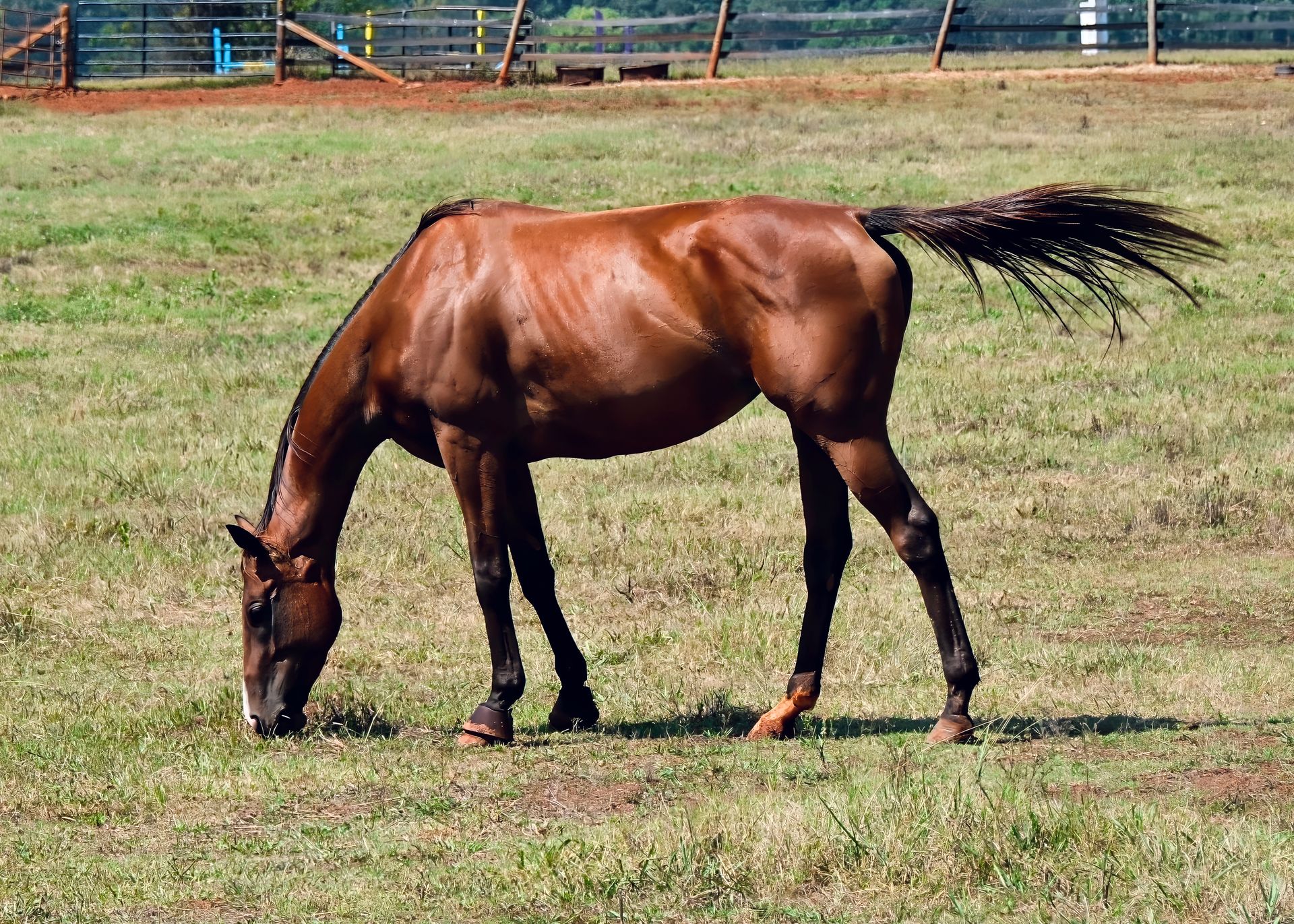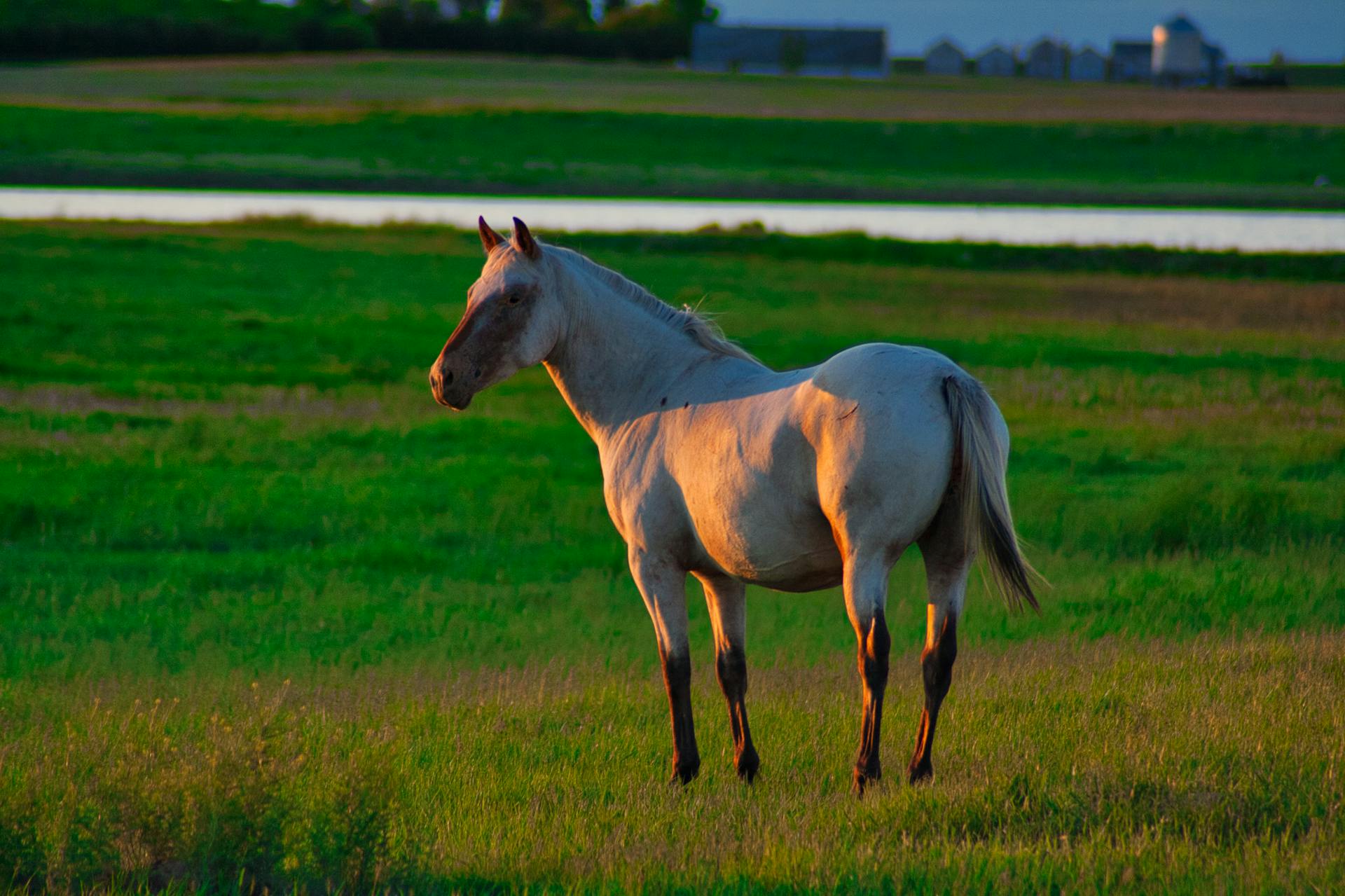
Quarter Horses are known for their impressive traits, but like all breeds, they're not immune to health issues. Some common health problems include navicular syndrome, which affects the horse's hoof and can lead to lameness.
Quarter Horses are also prone to obesity, which can cause a range of health issues, including insulin resistance and diabetes. This is often due to overfeeding and lack of exercise.
Quarter Horses are generally a hardy breed, but they can be susceptible to certain genetic disorders, such as dwarfism and hydrocephalus. These conditions can have a significant impact on a horse's quality of life.
One of the most impressive traits of Quarter Horses is their intelligence and trainability. They're often used for a variety of disciplines, including rodeos and working cattle.
You might enjoy: Horse Health
What is Hypp in Horses?
HYPP is a genetic disease that affects Quarter Horses, American Paint Horses, and Appaloosas from the Impressive bloodline. It causes a dysfunction in how the electrolytes sodium and potassium move in and out of muscle cells.
Horses with HYPP can experience muscle tremors, weakness, or collapse, especially during episodes. These episodes can only be seen during an imbalance in the blood levels of sodium and potassium.
Horses related to the Impressive sire that demonstrate these signs should be tested for HYPP. This involves a DNA test of mane or tail hair, which is a mandatory requirement for registering a horse with the American Association of Quarter Horses (AQHA).
Horse Registration Testing
If you're planning to register your Quarter Horse with the American Association of Quarter Horses (AQHA), you'll need to undergo mandatory DNA testing. Since 1998, this testing has been a requirement for registration.
The test is specifically designed to identify the mutation associated with HYPP, which is a genetic disorder. Animals that are double mutant (M/M) are not allowed to be registered.
In contrast, carrier animals (M/N) are allowed to be registered, which means they can still be part of the AQHA registry.
Hyperkalemic Periodic Paralysis
Hyperkalemic Periodic Paralysis (HYPP) is a genetic disease affecting Quarter Horses, American Paint Horses, and Appaloosas from the Impressive bloodline.
Horses with HYPP should be on a balanced, low-potassium diet, with no more than 33g of potassium per meal. This means avoiding feeds like alfalfa due to its high potassium concentration.
Limiting potassium intake is crucial in managing HYPP. Horses should not be fed molasses, kelp, bananas as treats, and electrolyte supplements.
Conducting periodic feed, hay, and pasture analysis to assess potassium levels is essential for managing HYPP. This will help identify potential sources of potassium in the diet.
The following feeds are suitable for horses with HYPP: those with beet pulp or oat-based, complete feeds. These feeds are designed to provide a balanced diet without excessive potassium.
Genetic testing for HYPP is recommended in breeding horses to prevent the disease from being passed on to future generations.
Here are some additional tips for managing HYPP:
- Administering acetazolamide, a medication that increases potassium excretion by the kidneys, may be necessary in some cases.
- Providing supportive care, such as IV fluids, may be required during episodes of HYPP.
- Regular veterinary check-ups are essential to monitor the horse's condition and adjust management strategies as needed.
Note: The following table summarizes the therapies and management strategies for HYPP:
Causes and Diagnosis
A genetic imbalance in the blood levels of sodium and potassium can cause muscle tremors, weakness, or collapse in horses related to the Impressive sire.
This imbalance is a hallmark of HYPP, a condition that can only be seen during an episode.
Horses that demonstrate muscle tremors, weakness, or collapse should be tested for HYPP, especially if they have Impressive in their pedigree.
A DNA test of mane or tail hair is a simple and non-invasive way to determine if a horse has HYPP.
This test can provide a definitive answer, giving owners and breeders valuable information about a horse's health and genetic makeup.
Quarter Horse Health Issues
Quarter Horse Health Issues can be a concern for many owners. Most Quarter Horses are bred for a sturdy conformation that promotes long-term soundness.
Some Quarter Horse bloodlines carry equine genetic diseases. These diseases don't have a cure, but testing and management can help limit adverse effects.
Proper management is essential for keeping your Quarter Horse happy and healthy.
Frequently Asked Questions
What disease did Impressive have?
Impressive, a popular Quarter horse sire, was associated with Hyperkalemic Periodic Paralysis. This rare genetic disorder affects potassium levels in the blood.
Featured Images: pexels.com