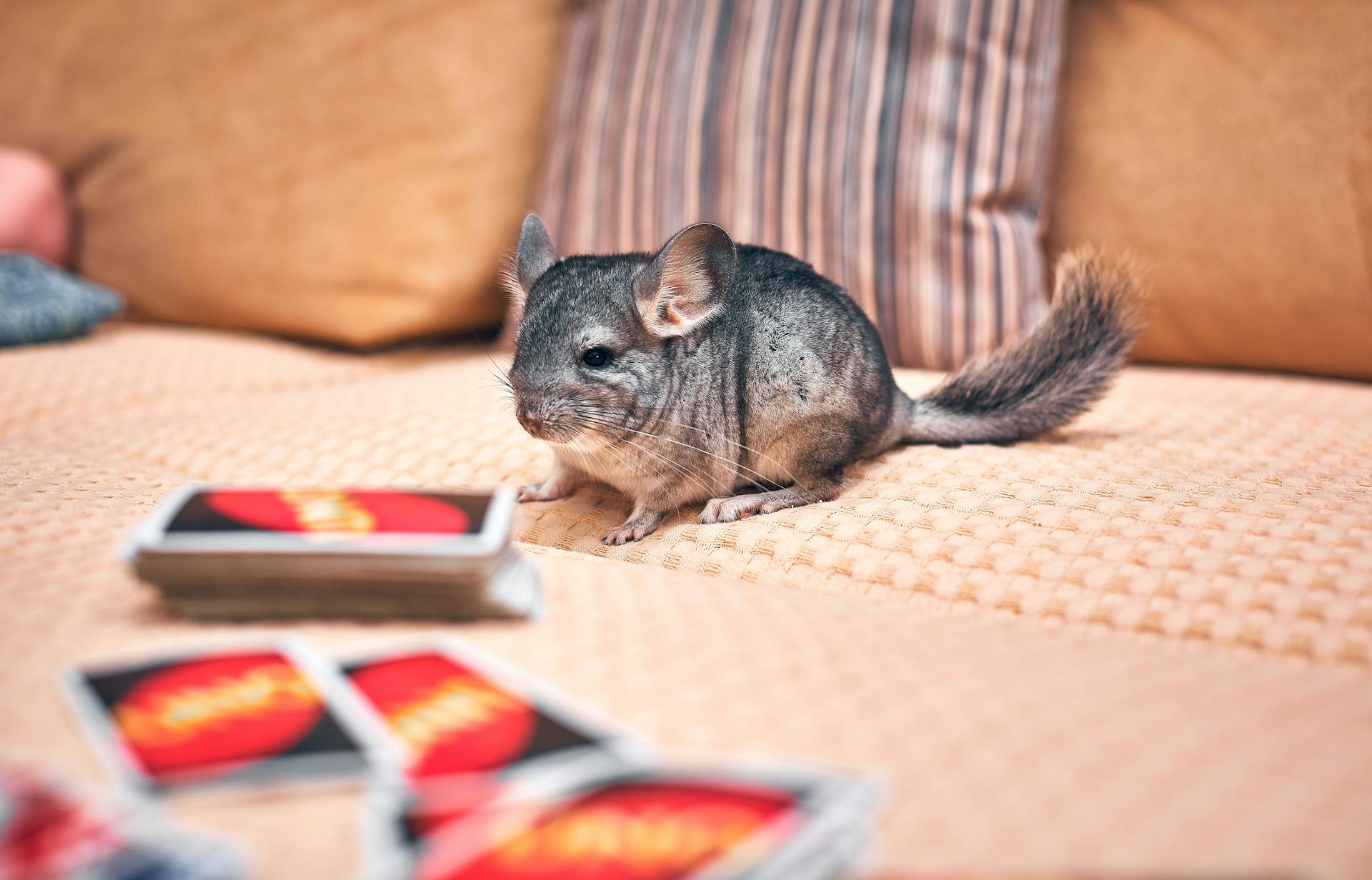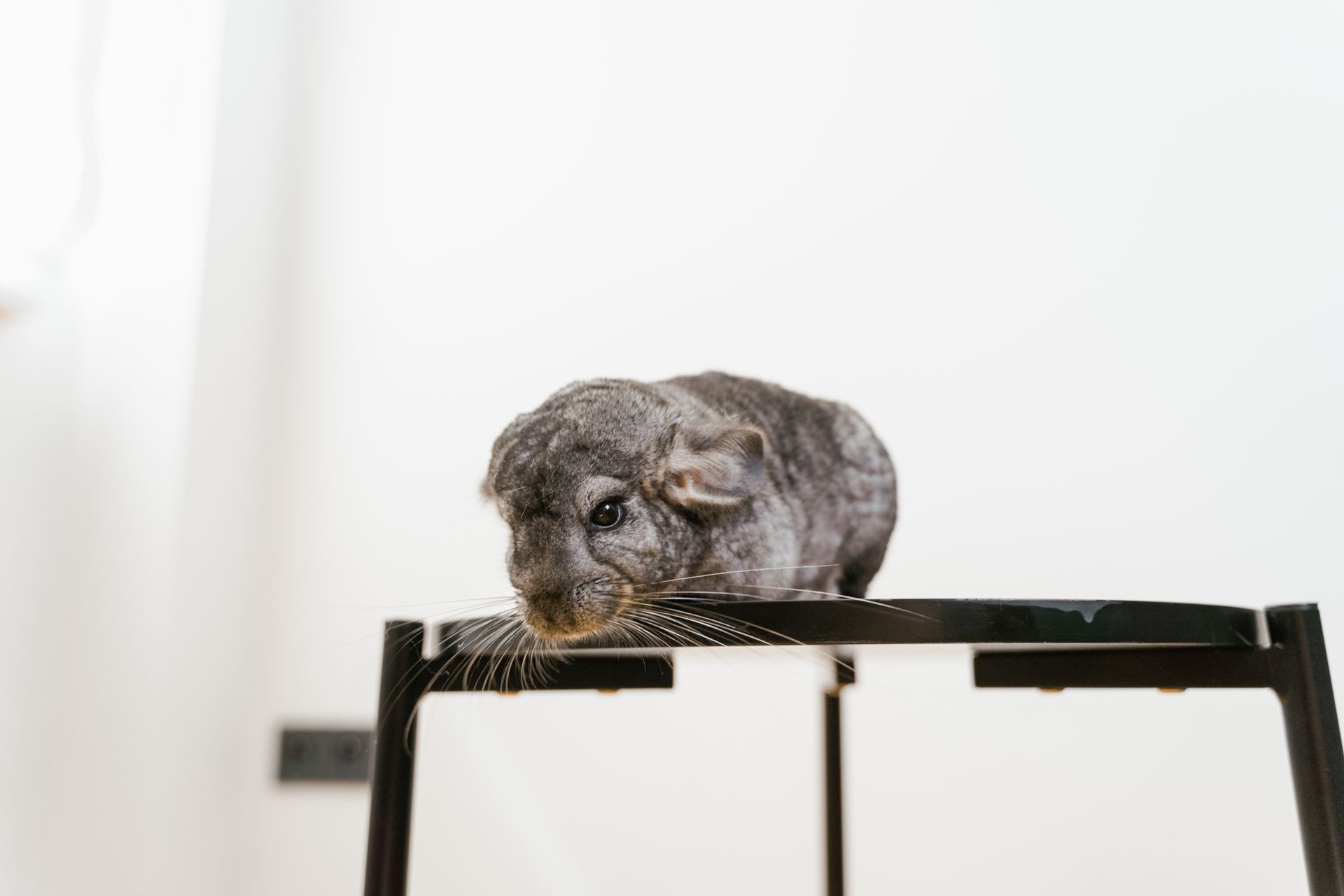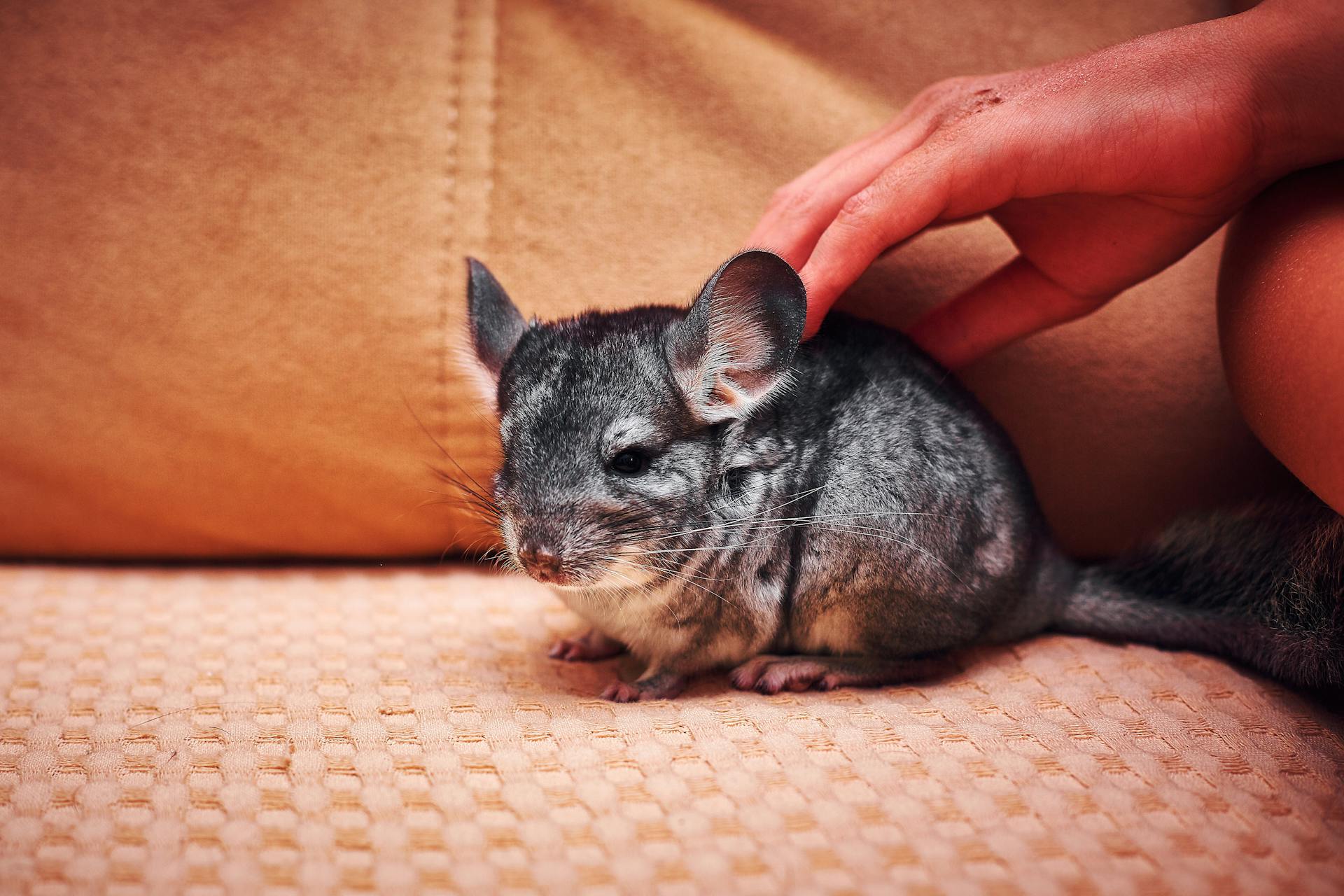
Chinchillas are social animals that thrive in the company of their own kind, so it's essential to provide them with a companion if you're considering getting one as a pet.
They are crepuscular, meaning they are most active at twilight and in the early morning hours, so be prepared for a lot of activity during these times.
Chinchillas are meticulous about their grooming, spending up to 4 hours a day cleaning themselves to keep their thick fur in top condition.
Their sensitive respiratory system makes them prone to respiratory problems, such as heat stress and respiratory infections, so it's crucial to provide a cool and well-ventilated environment.
Chinchillas
Chinchillas are a popular exotic pet option.
They are legal to own in this country, but they must be cared for properly.
You'll need to find a vet that can treat them, as they have specific needs.
Be prepared for constant requests from friends, family, and acquaintances to see and pet them, as owning a chinchilla can make you very popular.
Caring for Chinchillas
Chinchillas are crepuscular and nocturnal creatures, meaning they're most active at dawn and dusk, and they spend their days sleeping. They're native to the Andes Mountains in South America, where the high elevations produce consistently cold weather.
To create a suitable enclosure for your chinchilla, you'll want to make it as big as possible, with a minimum size of 16" x 20" x 16" for one chinchilla. The enclosure should also be chew-proof.
Here are some essential supplies you'll need for your chinchilla's habitat:
- Bedding: pelleted or shredded paper
- Food and water: hay rack, food bowl or feeder, and a stoppered water bottle
- Exercise: exercise wheel with a solid floor, hide areas and tunnels
- Grooming: dust bin and dusting powder
- Toys: untreated wood (needed to wear down their ever-growing teeth)
Remember, chinchillas are very active and social creatures, so they require plenty of space to move around and interact with each other.
Degus
Degus are rodents that are also known as brush-tailed rats, and they're about the same size as a sugar glider.
They're diurnal, meaning they're most active during the day and sleep at night, which is a plus if you're a light sleeper.
Degus are very social animals that thrive in large communities, so it's no surprise that they do well with other degus in the same cage.
In fact, it's recommended to get more than one degu if you're thinking of bringing one home, as they can become tame and friendly with proper socialization.
Degus can live for about six to eight years, making them a great long-term companion for families.
They need a large wire cage with a solid bottom, and cages with multiple levels give them plenty of space to play, exercise, and hide.
Wire surfaces can cause foot problems in degus, so make sure all the platforms are solid.
A cozy box in the cage is a must for your degu to sleep in, and paper-based bedding material is a good choice.
Degus are avid chewers, so you'll need to provide them with plenty of chewable items like wooden blocks, branches, thick cotton ropes, chew toys, and mineral blocks.
Intriguing read: How Often Do Chinchillas Need a Dust Bath
Caring for
Caring for chinchillas is a big responsibility, but with the right knowledge and setup, it's a joy to care for these adorable creatures. Chinchillas are native to the Andes Mountains in South America, where they're accustomed to cold weather, so they're most active at dawn and dusk, sleeping during the day.
Their natural habitats are rock crevices and underground burrows, so it's essential to replicate this environment in their enclosure. The enclosure should be chew-proof and as big as possible, with a minimum size of 16” x 20” x 16” for one chinchilla.
To keep your chinchilla happy and healthy, you'll need to provide the right supplies. Here are some essentials to get you started:
- Bedding: pelleted or shredded paper
- Food and water: hay rack, food bowl or feeder, and a stoppered water bottle
- Exercise: exercise wheel with a solid floor, hide areas, and tunnels
- Grooming: dust bin and dusting powder
- Toys: untreated wood (needed to wear down their ever-growing teeth)
It's also crucial to understand that chinchillas have a unique grooming habit – they love to take dust baths a couple of times a week to keep their coat lustrous and clean. You can create a dust bath area using a container with a cover to make clean-up easier, but be sure to use dust specifically formulated for chinchillas to avoid overdrying their skin.
Intriguing read: Why Do Chinchillas Dust Bath
Chinchilla Behavior and Health
Chinchillas are prey animals, so they have a natural instinct to freeze or cower when they feel threatened. This can lead to them trying to wedge themselves into tight spaces for protection.
Their behavior can be influenced by their age, personality, and past experiences. If your chinchilla's behavior changes or shows signs of stress or fear, such as making noises, hiding, or chewing fur, it's essential to seek advice from a vet or clinical animal behaviourist.
Some common signs of stress or fear in chinchillas include making noises, hiding, chewing fur, patches of fur coming away when handling them, changes to feeding or toileting habits, over-drinking or playing with the water bottle, reluctance to move, and repetitive movements like racing back and forth on the bottom of the cage.
Here are some common health concerns for chinchillas:
- Teeth: Chinchillas' teeth grow continuously, and overgrown or uneven teeth can cause painful growth into the soft tissue of the mouth.
- Ear Infections: Ear infections are common in chinchillas and must be treated by a veterinarian.
- Heatstroke: Chinchillas can quickly overheat in hot weather, which can be life-threatening.
It's crucial to provide a healthy diet, a clean habitat, and regular wellness exams to prevent or detect these health issues early on.
Health and Illness
Chinchillas are prone to health problems due to their frailness and long lifespan.
A healthy diet and clean habitat can prevent most health issues.
Their teeth grow continuously, so providing plenty of hay and safe chew toys is crucial for dental health.
Ear infections are common in chinchillas and can be treated by a veterinarian. Symptoms include head tilt and loss of balance.
Chinchillas can quickly overheat in hot weather, so it's essential to keep their environment at a temperature below 80 degrees.
If you notice symptoms of heatstroke, such as rapid breathing and drooling, submerge your chinchilla in cool water and towel dry them once they've recovered.
Annual wellness exams are recommended for chinchillas due to their frailness.
Monitor Your Behavior
Monitoring your chinchilla's behavior is crucial to ensure their health and happiness. Chinchillas' behavior can be influenced by their age, personality, and past experiences, so it's essential to keep an eye out for any changes.
If your chinchilla's behavior changes, or you notice signs of stress or fear, consult a vet or clinical animal behaviourist. They could be distressed, bored, or injured.
Check this out: Pet Chinchilla
Chinchillas may exhibit unusual behaviors when they're frightened or in pain, such as making noises, hiding, or chewing fur.
Some common signs of stress or fear in chinchillas include making noises, hiding, chewing fur, patches of fur coming away when handling them, changes to feeding or toileting habits, over-drinking or playing with the water bottle, reluctance to move, and repetitive movements.
Here are some specific signs to look out for:
- Making noises, such as barking or whistling
- Hiding
- Chewing fur - either their own or another chinchilla's
- Patches of fur coming away when handling them
- Changes to feeding or toileting habits
- Over-drinking or playing with the water bottle
- Reluctance to move
- Repetitive movements such as racing back and forth on the bottom of the cage
If you notice any of these signs, it's essential to get expert advice to ensure your chinchilla's well-being.
Communicate
Chinchillas are generally quiet animals, but they do communicate with each other.
They produce a variety of soft high-pitched grunting noises, which act as social messages.
Chinchillas make hiccupping noises, chirps, squeals, and barks to convey their emotions and needs.
These vocalizations help them establish social bonds and relationships within their group.
In the wild, chinchillas use these sounds to warn each other of potential threats or predators.
Explore further: What Noises Do Chinchillas Make
Hear Like Us
Chinchillas hear like us. Their large ears and sensitive hearing allow them to pick up on sounds with ease.
Their hearing range is similar to that of humans, making them easily startled by sudden loud or unfamiliar sounds.
Smart, Inquisitive
Chinchillas are highly social animals and live in colonies of over 100 individuals in the wild. This social nature means they thrive in the company of others and must not be kept singly as pets.
Their intelligence shines through in their curious and inquisitive behavior. Chinchillas are known to be smart and can be a great pet for the right family.
In the wild, chinchillas have a natural response to perceived threats, where they freeze or cower and dart for cover. This behavior is also observed in captivity, where they may try to wedge themselves into tight spaces for protection.
Chinchillas require gentle and careful handling due to their skittish nature. They are fast-moving and typically do not like to be held for long periods of time.
Their fur is dense and very soft, ranging in color from gray white, black, sapphire, and violet, as well as variations of these colors.
Discover more: Chinchillas in the Wild
Chinchilla Diet and Nutrition
Chinchillas need a high-fibre diet to keep their teeth trimmed, so they should have access to plenty of hay and grasses.
Hay-based pellets should be the main staple of their diet, with loose timothy hay provided in addition.
It's essential to avoid giving alfalfa hay, as it can cause liver failure.
Treats like nuts, seeds, and fruit should be given sparingly, as they can cause digestive upset and even diabetes.
Fresh water should be supplied daily, and you can add supplements like a salt block and vitamin C to round out their diet.
Chinchillas eat by sitting on their haunches, holding the food in their forepaws, so make sure they have enough space to do so comfortably.
They should have access to food 24 hours a day, with two main meals in the early morning and late evening.
Chinchilla Exercise and Activity
Chinchillas are naturally athletic animals that require regular exercise to stay happy and healthy. They have long, strong hind limbs adapted for leaping, and a tail that makes up about one-third of their body length.
In the wild, chinchillas can jump over six feet (1.8m) in height, which is impressive for such a small animal. Their agility and jumping ability make them a joy to watch.
Pet chinchillas have been reported to jump onto the top of refrigerators, so it's essential to provide them with plenty of space to move around and exercise.
Chinchilla Adoption and Care Basics
Chinchillas are social creatures that live in colonies numbering in the hundreds in their natural habitats.
Their enclosure should be chew proof and as big as you can accommodate, with a minimum size of 16” x 20” x 16” for one chinchilla.
Chinchillas are most active at dawn and dusk, sleeping during the day, and they need a lot of space to move around.
A cleaner and calmer pet is just the beginning of the advantages of proper care.
To keep your chinchilla happy and healthy, you'll need to provide a suitable environment, which includes a large enclosure with plenty of room to exercise.
A unique perspective: Do Chinchillas Need a Friend
Here's a list of basic supplies you'll need:
- Bedding: pelleted or shredded paper
- Food and water: hay rack, food bowl or feeder, and a stoppered water bottle
- Exercise: exercise wheel with a solid floor, hide areas and tunnels
- Grooming: dust bin and dusting powder
- Toys: untreated wood (needed to wear down their ever-growing teeth)
Chinchillas have only been kept as pets since relatively recently, and experts are still learning about how best to care for them.
If you're interested in adopting a chinchilla, consider contacting the RSPCA for information on rehoming chinchillas.
Chinchilla Characteristics and Traits
Chinchillas are social animals and can be quite challenging to care for, requiring a lot of attention and interaction.
They are crepuscular, meaning they are most active at dawn and dusk, so be prepared for a lively evening and morning routine.
Keeping pet chinchillas can be a fun and rewarding experience, but it's essential to consider their specific needs.
Chinchillas are known for their soft, thick fur, which they spend a lot of time grooming to keep clean and healthy.
They are also very sensitive to temperature and humidity, so a well-ventilated enclosure with a controlled temperature range is crucial for their comfort.
For more insights, see: Temperature for Chinchillas
Chinchillas have a natural instinct to hide and seek, so providing plenty of hiding places and toys can help keep them entertained and stimulated.
Their diet should consist mainly of high-quality hay, supplemented with limited amounts of pellets and fresh veggies to ensure they get all the nutrients they need.
Chinchillas can live up to 15-20 years with proper care, so be prepared for a long-term commitment to their happiness and well-being.
Frequently Asked Questions
What animal is similar to a chinchilla?
The Patagonian Cavy is closely related to chinchillas, sharing a common rodent ancestry.
Featured Images: pexels.com