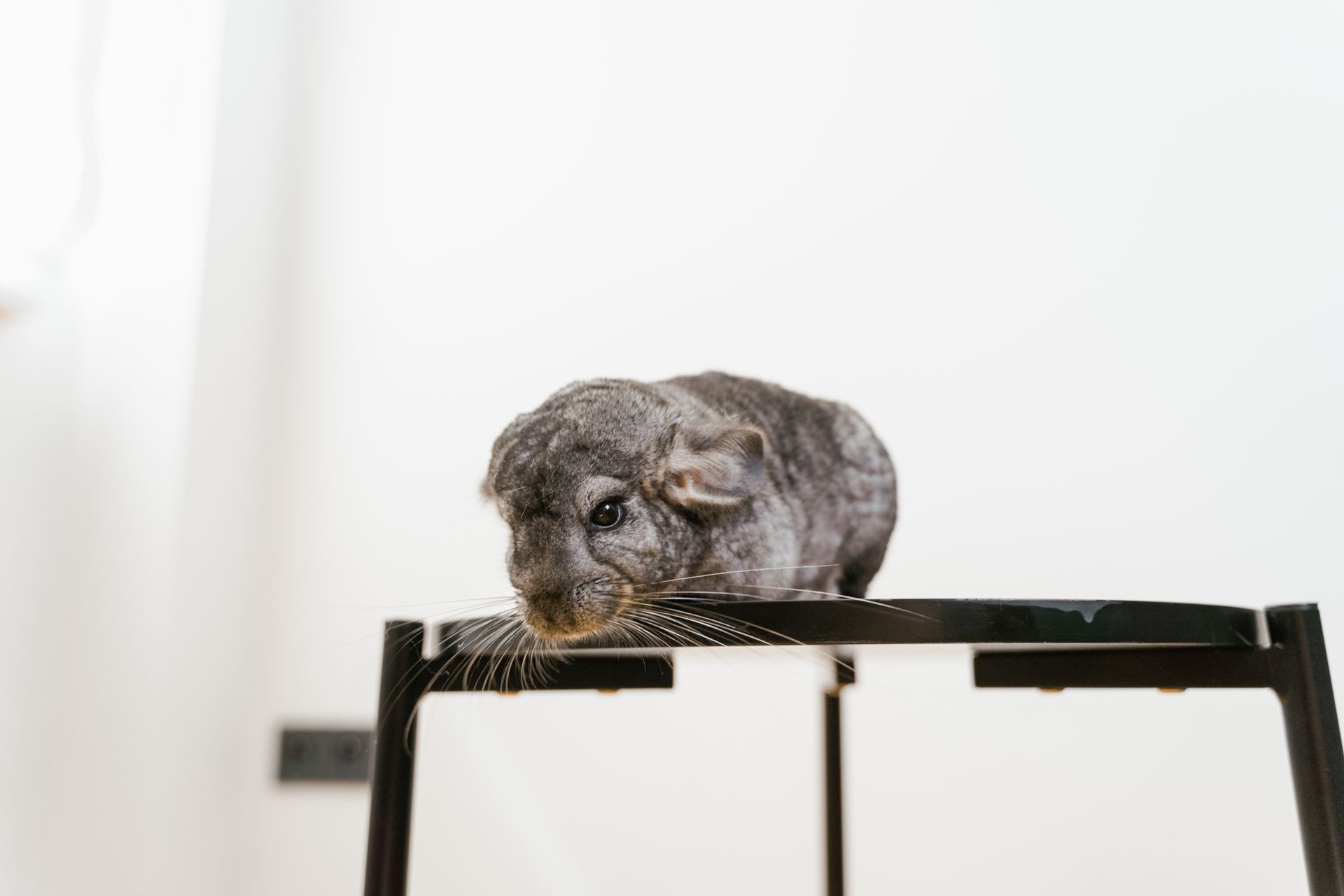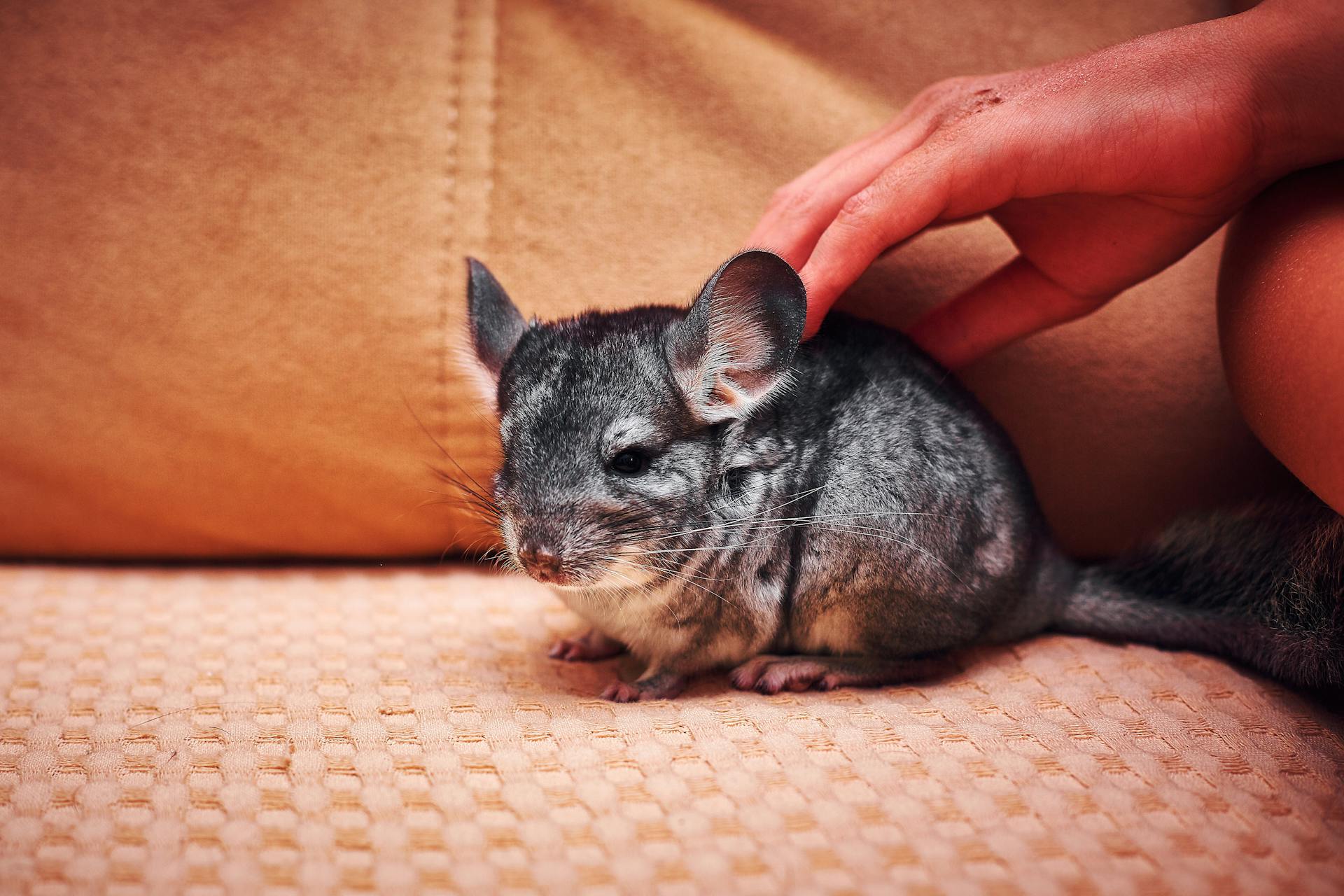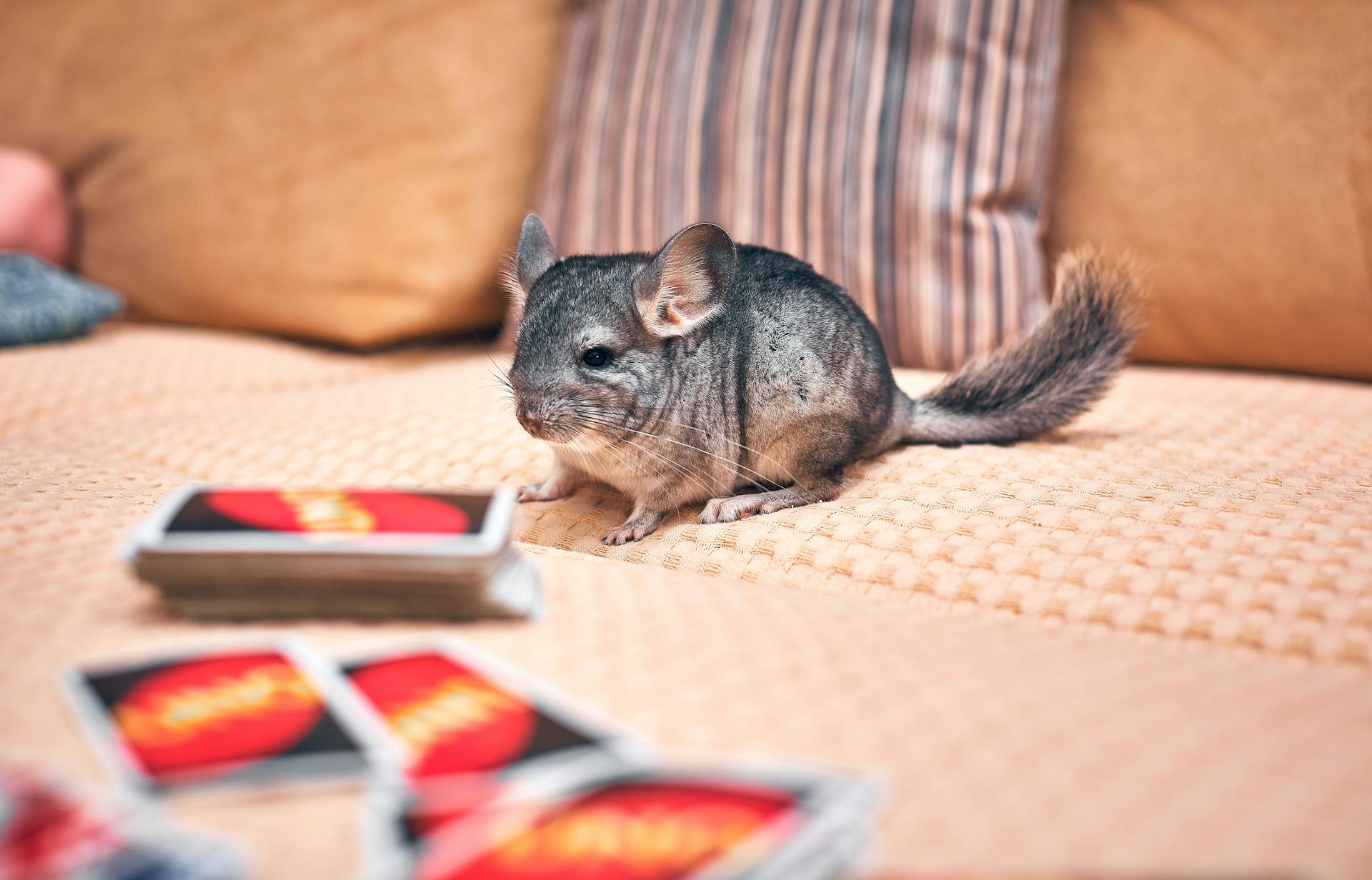
Chinchillas are adorable and social animals that make great pets. They are native to the Andes mountains in South America.
Chinchillas are small, fluffy creatures that can weigh anywhere from 1 to 3 pounds. They have a thick, soft coat that requires regular grooming to prevent matting.
Chinchillas are herbivores and their diet consists mainly of hay, grass, and plant-based foods. They have a sensitive digestive system and require a high-quality diet to stay healthy.
Chinchillas are crepuscular, meaning they are most active at dawn and dusk.
What is a Chinchilla?
A chinchilla's soft, dense fur is its defining characteristic. Each hair follicle has between 60 and 80 hairs growing from it.
Chinchillas have large dark eyes, rounded ears, and long whiskers. Their fur is so thick that most of their size comes from it.
Their back legs are more than twice as long as their front legs, making them agile jumpers. This unique feature allows them to leap with ease.
Wild chinchillas have mottled yellowish gray fur, while domestic animals come in a variety of colors such as black, white, beige, and charcoal.
Chinchilla Needs
Chinchillas are herbivores and need a diet rich in fiber and low in lignin. They eat seeds, grasses, and fruit in the wild.
Domestic chinchillas should be fed grass and kibble specifically formulated for their needs. Chinchillas eat much like squirrels, holding food in their fore paws while sitting upright on their hind limbs.
In the wild, chinchillas live in rocky or sandy areas with sparse cover of thorny shrubs and few herbs. They hole up in rock crevices or dig burrows at the base of rocks.
Chinchillas are selective eaters and choose plants with high fiber and low lignin content. Their diet changes seasonally, with Chilean needlegrass being a common food source.
To keep your domestic chinchilla happy and healthy, provide a diet that mirrors their natural diet as closely as possible.
Related reading: Chinchillas Eat Rabbit Food
Behavior and Life Cycle
Chinchillas are social creatures that live in groups called herds, which can consist of up to 100 individuals.
They are mostly nocturnal, so they're most active at night when it's cooler. This helps them avoid the hot daytime temperatures.
To stay clean and dry, chinchillas take dust baths regularly.
Behavior
Chinchillas live in social groups called herds that consist of 14 to 100 individuals.
These herds are a crucial part of a chinchilla's life, providing them with companionship and protection. They are largely nocturnal, so they can avoid hot daytime temperatures.
Chinchillas take dust baths to keep their fur dry and clean. This unique behavior helps them stay healthy and happy.
When threatened, a chinchilla may bite, shed fur, or eject a spray of urine. These defense mechanisms are a natural part of a chinchilla's behavior.
Chinchillas communicate using a wide variety of sounds, which include grunts, barks, squeals, and chirps.
Reproduction and Offspring
Chinchillas can mate at any time of the year, making them a relatively flexible species when it comes to breeding.
Gestation is unusually long for a rodent and lasts 111 days, which is a significant amount of time for such a small animal.
The female chinchilla may give birth to a litter of up to 6 kits, but usually, one or two offspring are born.
Kits are fully furred and can open their eyes when they are born, which is a remarkable sight to behold.
Kits are weaned between 6 and 8 weeks of age and reach sexual maturity at 8 months, which means they can start breeding on their own.
Domestic chinchillas can live over 20 years, which is significantly longer than their wild counterparts that may live up to 10 years.
Conservation and Status
Chinchillas are classified as "endangered" by the International Union for Conservation of Nature (IUCN). Their population is decreasing, with only 5,350 mature long-tailed chinchillas remaining in the wild as of 2015.
Illegal hunting and trapping, habitat loss, mining, and firewood extraction are significant threats to chinchillas. Conservation measures were implemented in 1929, but laws weren't seriously enforced until the establishment of the Reserva Nacional Las Chinchillas in 1983.
The short-tailed chinchilla population has declined by about 90 percent in the past, with only two small populations remaining in the Antofagasta and Atacama regions of northern Chile.
Habitat and Distribution
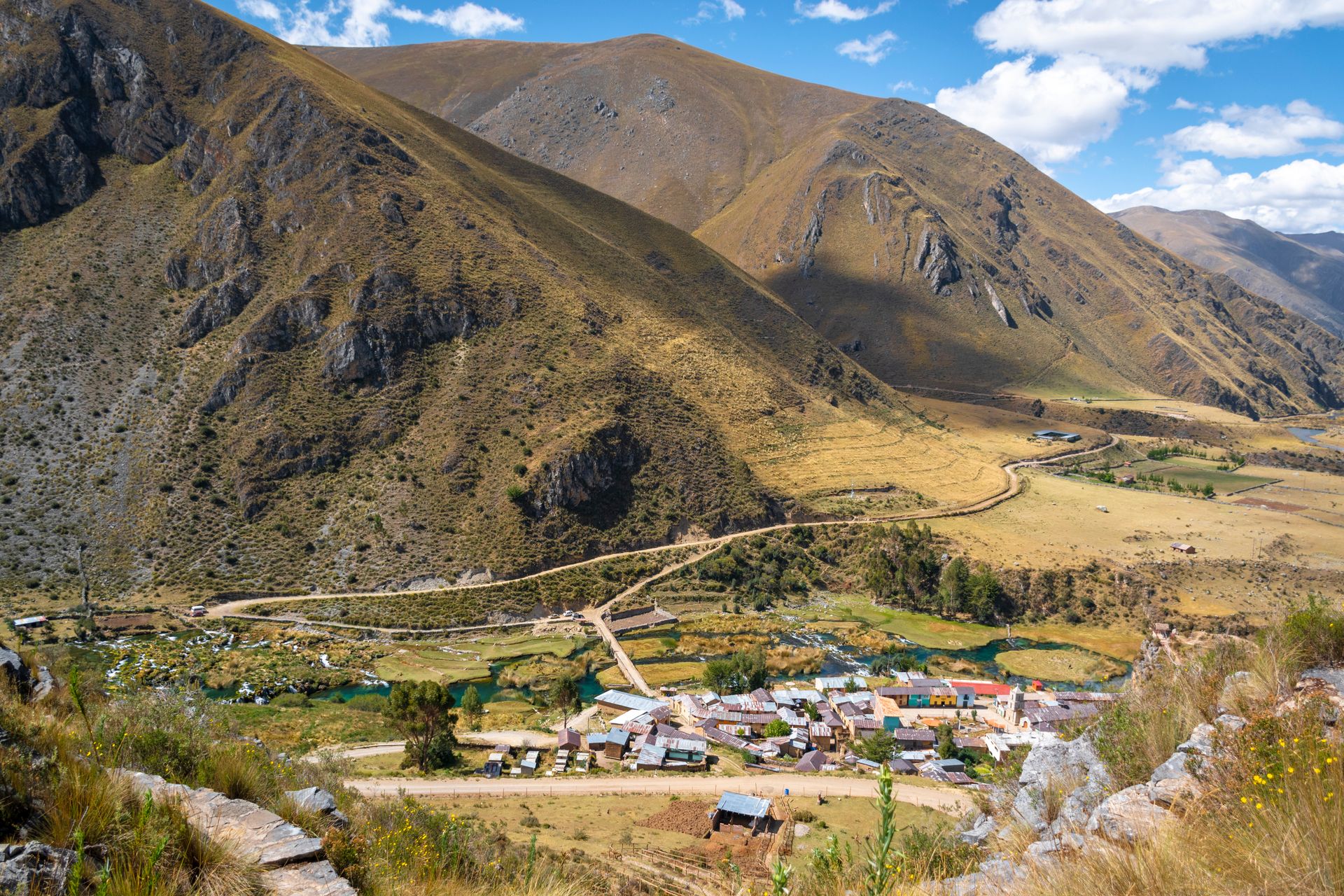
Chinchillas can be found in the wild only in Chile, specifically in the Andes mountains and along the coast. They inhabit areas with cold, dry climates at elevations between 9,800 and 16,400 feet.
Their habitat is characterized by rocky or sandy terrain with sparse vegetation, including thorny shrubs, cactuses, and succulent bromeliads.
Conservation Status
Chinchillas are classified as endangered by the International Union for Conservation of Nature (IUCN).
As of 2015, researchers estimated that only 5,350 mature long-tailed chinchillas remained in the wild, and their population was decreasing.
Two small populations of short-tailed chinchillas remained in the Antofagasta and Atacama regions of northern Chile, but those populations were also decreasing in size.
Laws were implemented to protect the long-tailed Chilean chinchilla in 1929, but they weren't seriously enforced until the establishment of the Reserva Nacional Las Chinchillas in 1983.
The IUCN reports that populations inside the reserve are in decline, while those outside, in restored habitats, are increasing.
Mining operations are a significant threat to the long-tailed chinchilla, which was once a widespread rodent.
The short-tailed chinchilla population has declined by about 90 percent in the past due to illegal hunting and trapping.
Chinchillas are threatened by various factors, including illegal hunting, habitat loss from grazing by cattle and goats, mining, and firewood extraction.
It's now illegal to trap or hunt chinchillas throughout their range, but enforcement is notoriously difficult in the remote areas where chinchillas live.
Fun Facts and Taxonomy
Chinchillas are known to live up to 20 years in managed care, making them one of the longest-lived rodents.
Their fur is incredibly soft, with 50 to 75 hairs growing from a single hair follicle - humans, on the other hand, have only 2 to 3 hairs per follicle.
Chinchillas can overheat if it's humid and above 80 degrees Fahrenheit, so they prefer cooler temperatures.
Here's a quick rundown of the chinchilla's taxonomy:
Taxonomy
The taxonomy of chinchillas is a fascinating topic. Chinchillas belong to the kingdom Animalia.
Let's break down their classification: they are classified as mammals within the class Mammalia. Within this class, they are part of the order Rodentia.
Here's a summary of their taxonomy in a simplified list:
- Kingdom: Animalia
- Class: Mammalia
- Order: Rodentia
The family Chinchillidae is specific to chinchillas, and within this family, they are part of the genus Chinchilla. The species within the genus are further divided into two main types: the short-tailed chinchilla and the long-tailed chinchilla.
For another approach, see: What Family Are Chinchillas in
Fun Facts
Chinchillas can live up to 20 years in managed care, which is impressive for a rodent.
Their fur is incredibly soft and dense, with 50 to 75 hairs growing from a single hair follicle.
Chinchillas can easily overheat if the temperature rises above 80 degrees Fahrenheit, especially in humid environments.
If a chinchilla feels threatened, it may release clumps of fur, a defense mechanism called a "fur slip", leaving a potential predator empty handed.
Frequently Asked Questions
How much should a chinchilla cost?
The cost of a chinchilla can range from $150 for a standard gray chinchilla to more for colored varieties. Prices may vary depending on your location and source, so be prepared for a range of costs.
Featured Images: pexels.com