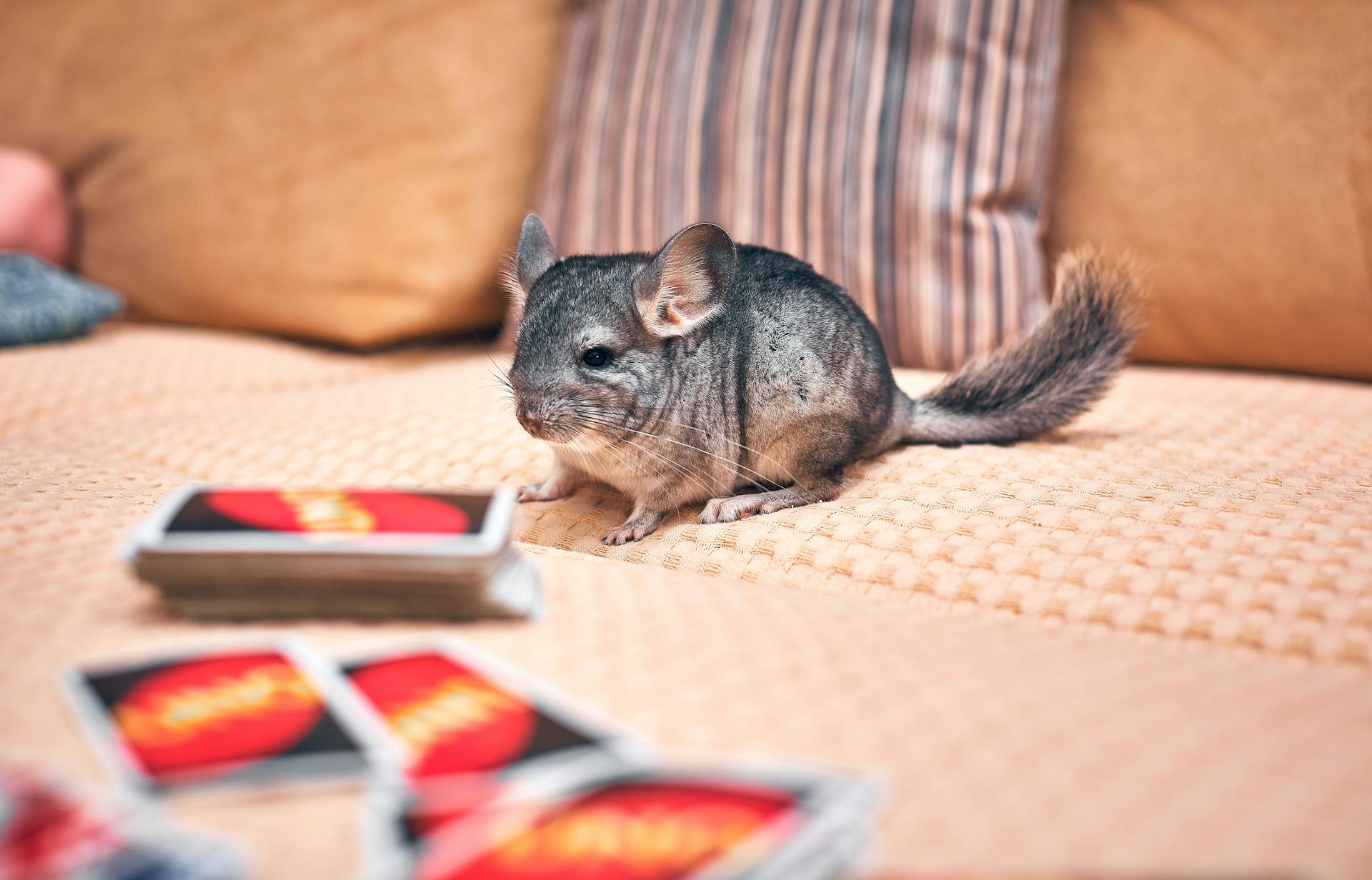
Chinchillas are social animals and need regular interaction with their owners to stay happy and healthy. They thrive on attention and can become stressed if left alone for long periods.
To create a suitable environment, provide a spacious cage with a solid bottom, as wire mesh can harm their sensitive feet. Chinchillas are also very clean animals and need regular dust baths to keep their fur clean and healthy.
Chinchillas are herbivores and require a diet rich in hay, grass, and limited amounts of pellets. They have a high metabolism and need to eat frequently throughout the day.
A temperature range of 60-75°F (15-24°C) is ideal for chinchillas, with a humidity level of around 50-60%.
Expand your knowledge: Animals Similar to Chinchillas
Behavior
Chinchillas are complex and unique individuals, just like people, and relating to them isn't always easy.
They can be stressed or afraid, leading to anti-social behavior, but this doesn't mean they're "bad" or dislike their owner. It's essential to be patient and understanding.
Chinchillas think and behave a lot like small children, requiring mental and physical stimulation to prevent boredom and stress. A large cage with plenty of space to run and play is a must.
They need a variety of chew toys, at least one hideaway per chinchilla, and a cage wheel to decrease stress and boredom. TV can provide environmental stimulation when they're not actively engaged.
Chinchillas are typically reluctant or suspicious of change, so it's essential to give them time to adjust and become familiar with new things. Their initial reaction shouldn't be taken as their final opinion.
Regularly socialized chinchillas can be very friendly, but they're also very active and fast, making them less suitable for young children.
Care and Maintenance
Chinchillas require daily care and time out of their cage to run, play, and socialize, with a recommended 1-2 hours per day.
To keep their fur healthy, chinchillas need regular dust baths, ideally 3-4 times a week, and should be brushed gently with a soft-bristled brush in the direction of their fur.
A dust bath should last at least 30 minutes outside of their enclosure, and it's essential to use chinchilla-safe dust to keep their coat clean and oil-free.
For your interest: Chinchilla Dense Fur
Habitat and Enclosure
Chinchillas are social animals and love to be around their pet parents, so it's best to house them in an area where you spend a lot of time, like your living room.
Avoid placing their enclosure in direct sunlight or a drafty area, as this can make them uncomfortable.
The ideal temperature for chinchillas is between 55–70 F, and it should never reach higher than 80 F.
A minimum enclosure size of 2 feet by 2 feet by 4 feet is required for a single chinchilla.
The enclosure should have wire sides no more than 1 inch apart to prevent escape and injury.
A smooth, flat bottom, such as a plastic tray, is necessary to prevent pressure sores on their feet.
Provide 1–2 inches of high-quality paper bedding or crumbled paper to keep the enclosure clean and comfortable for your chinchilla.
Bedding
Chinchillas need a safe and comfortable place to rest, so it's essential to choose the right bedding. Wood shavings are not a good option because they can be ingested and may cause an intestinal blockage.
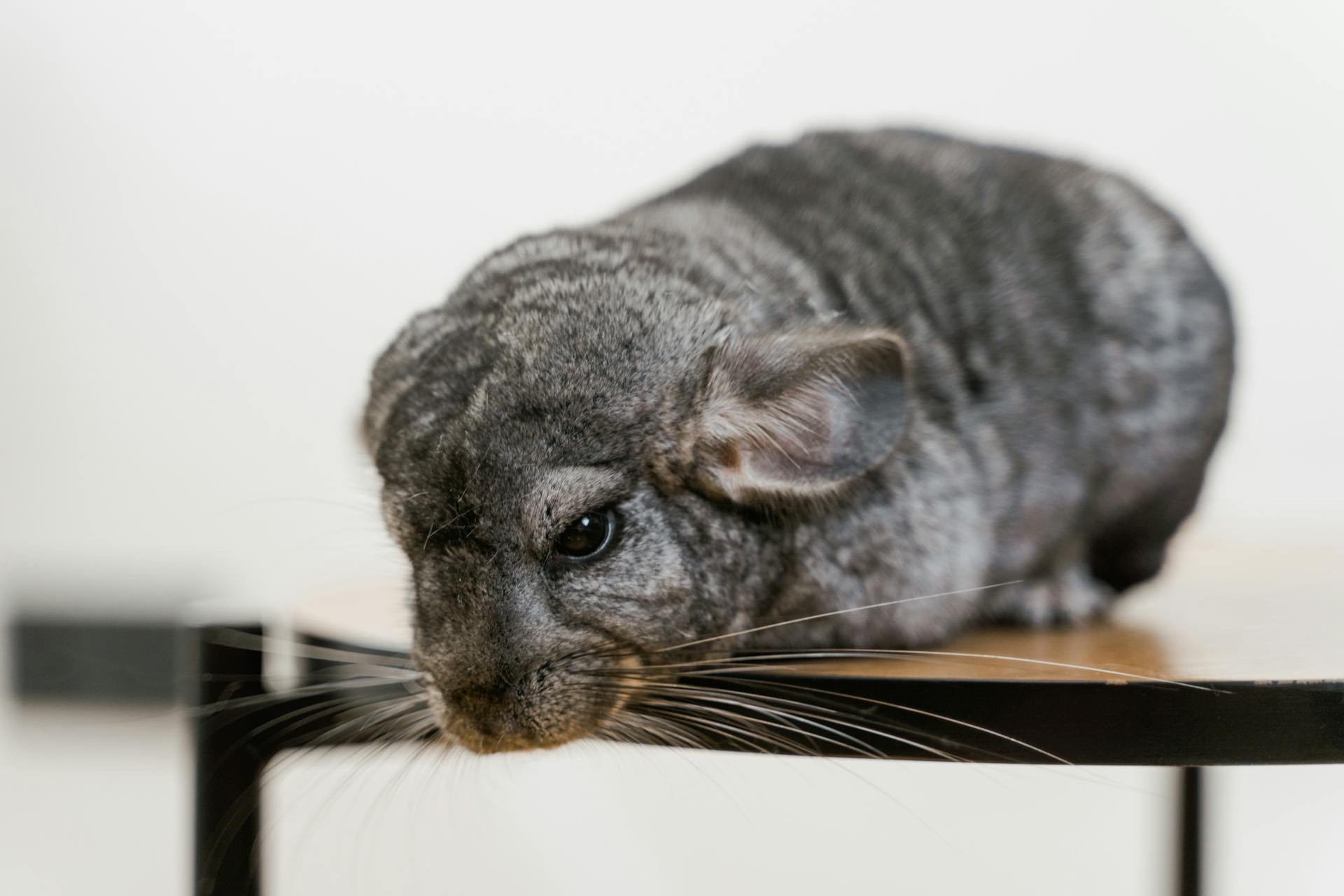
You'll want to opt for a bedding material that's dust-free and won't cause any respiratory issues. Chinchillas are prone to respiratory problems, so it's crucial to keep their environment clean and healthy.
Avoid using pine or cedar shavings, as they can be toxic to chinchillas. Stick to safe and natural options like hay or grass-based bedding.
A deep layer of bedding is also important, as it allows your chinchilla to dig and burrow comfortably. A minimum depth of 1-2 inches is recommended.
Recommended read: Do Chinchillas Need Bedding
Diet and Nutrition
When caring for your chinchilla, it's essential to provide the right diet and nutrition. Alfalfa should only be provided to young chinchillas or nursing mothers because the high calcium can cause bladder stones.
Chinchillas are sensitive to heat, so it's crucial to keep their food fresh and dry.
Chinchillas need access to fresh water at all times.
A good quality chinchilla pellet should be the main staple of their diet, supplemented with fresh veggies and limited amounts of hay.
On a similar theme: Domesticated Hedgehog Diet

Chinchillas have a unique digestive system, so it's best to stick to a high-fiber diet to prevent digestive issues.
In the wild, chinchillas eat a diet rich in fiber, so it's best to replicate this in their diet at home.
A balanced diet is crucial for your chinchilla's overall health and well-being.
Consider reading: What Bedding Is Best for Chinchillas
Grooming
Grooming is an essential part of chinchilla care.
Chinchillas require dust baths at least a few times a week.
They also need to be brushed with a soft-bristled brush in the direction of their fur.
Don't bathe your chinchilla or get them wet because their fur takes a while to dry, and the skin can become inflamed.
A dust box should be about 6 inches by 6 inches by 9 inches with 1–2 inches of dust.
Allow your chinchilla to have a dust bath for at least 30 minutes outside of their enclosure.
For your interest: Chinchilla Fur Slip
Annual Care
Annual checkups with your exotic veterinarian are crucial to ensure your chinchilla's health and thriving in your care. This should be done at least once a year.
A healthy diet is essential for your chinchilla, and a balanced mix of hay, pellets, and fresh veggies will keep them happy and energetic.
Chinchillas are sensitive to temperature extremes, so it's vital to keep their environment between 60-75°F (15-24°C) to prevent heat stress.
If You Leave
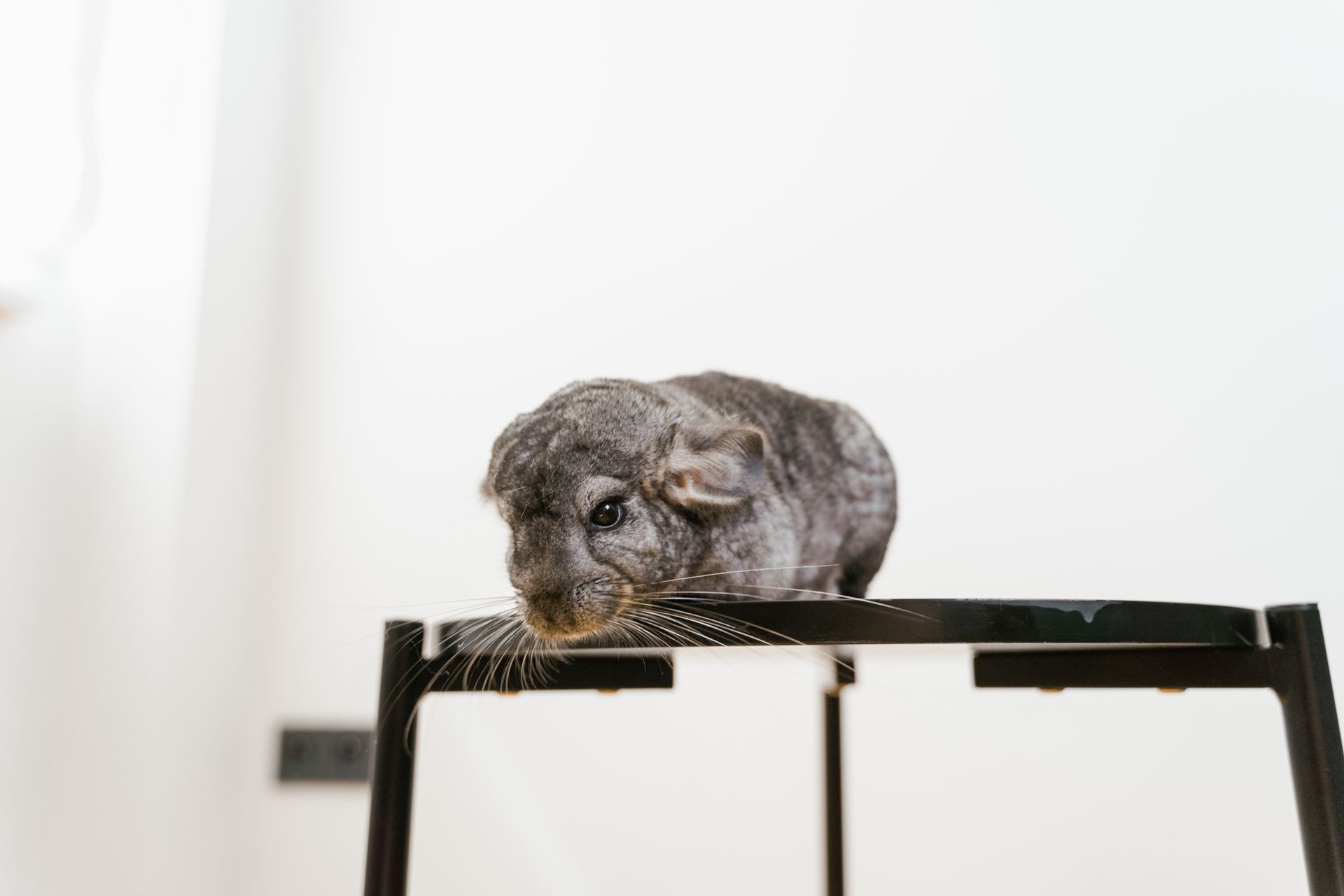
If you leave your home, make sure you have a reliable plan in place for your chinchillas' care.
If you're off on holiday, enlist the help of someone you trust to look after your chinchillas in their familiar home.
Their cage should be cleaned regularly, so make sure your caretaker knows how to do this properly.
If you need to move your chinchillas, make sure they're safe and comfortable while you're on the move.
Low Maintenance
Chinchillas are often thought to be low maintenance pets, but they do require some daily attention.
Daily care and time out of their cage is a must for chinchillas. They need to run, play, and socialize to stay happy and healthy.
A chinchilla will likely require one to two hours per day to have their needs met adequately.
Care Guide
Annual checkups with your exotic veterinarian are crucial to ensure your chinchilla's health and thriving in your care. This is a yearly commitment to keep your pet happy and healthy.
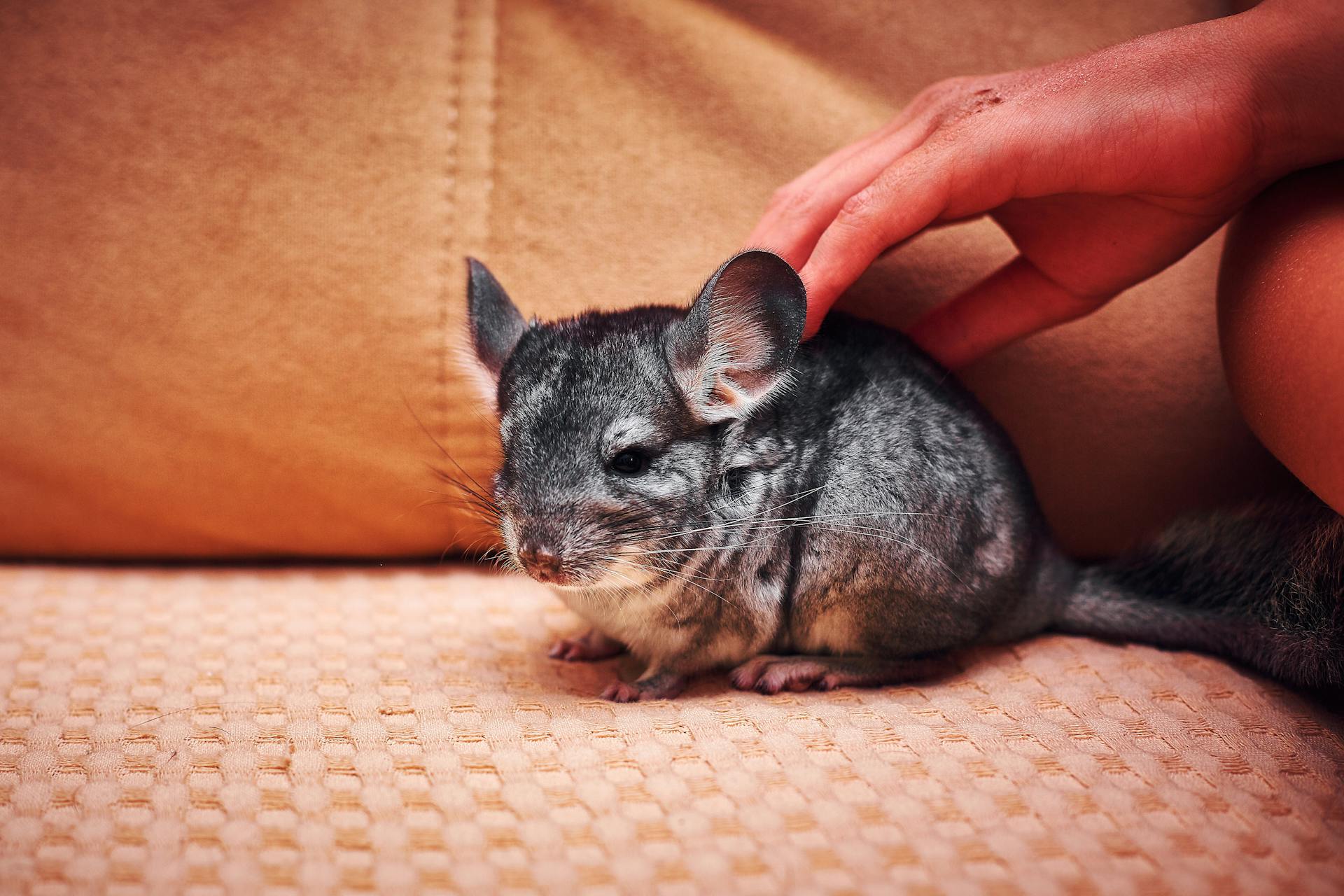
Chinchillas require daily care and time out of their cage to run, play, and socialize. Give your chinchilla at least one to two hours of attention and interaction each day.
Chinchillas are social animals and love to be around their owners. Housing their enclosure in a living area where you spend time is a great idea.
The ideal temperature for chinchillas is between 55-70 F, and it's essential to keep it below 80 F. Avoid placing their enclosure in direct sunlight or a drafty area.
Alfalfa should only be provided to young chinchillas or nursing mothers due to the high calcium content, which can cause bladder stones. Stick to a balanced diet for your adult chinchilla.
Veterinary Care
Veterinary care is a crucial aspect of chinchilla domestication. Chinchillas require annual checkups with your exotic veterinarian to ensure they are healthy and thriving in your care.
Regular checkups can help identify potential health issues early on, making it easier to address them before they become serious problems. Your veterinarian will be able to assess your chinchilla's overall health and provide guidance on the best course of care.
Additional reading: How to Look after Chinchillas
Signs of a healthy chinchilla include eating and drinking well, healthy fur, bright eyes, walking and climbing without limping, breathing comfortably without nasal discharge, and acting active and playful.
On the other hand, signs of illness or health issues may include soft/loose stool, not eating or drinking well, fur loss, breathing difficulties, lethargy, eye or nose discharge, drooling, limping, weight loss, and overall decreased activity.
Here are some key signs to look out for:
- Soft/loose stool
- Not eating or drinking well
- Fur loss
- Breathing difficulties
- Lethargy
- Eye or nose discharge
- Drooling
- Limping
- Weight loss
- Overall decreased activity
If you notice any of these symptoms, it's essential to schedule an appointment with your veterinarian right away.
Comfort and Socialization
Chinchillas are social animals that thrive on interaction. They enjoy daily interactions with their family, which provides both exercise and helps them bond with you.
Chinchillas can be housed in pairs of the same sex or opposite sex, but they should not be housed with other animals, especially not rabbits. Rabbits can carry a bacteria called Pasteurella, which can be fatal to chinchillas.
Chinchillas are delicate animals that don't like to be restrained or held for extended periods. If you do pick them up, cradle their body in your arms, supporting their rear end and preventing them from kicking out with their hind legs.
Curious to learn more? Check out: Do Chinchillas Get along with Rabbits
Handling and Socialization

Handling and socialization are crucial aspects of caring for a chinchilla. Many chinchillas prefer not to be restrained or held, so it's essential to be gentle and respectful of their boundaries.
If you do pick up your chinchilla, cradle their body in your arms, supporting their rear end and preventing them from kicking out with their hind legs. Wrapping them in a towel can also help.
Chinchillas have a delicate skeleton, so never grab them by the tail or limbs, and be careful not to hold them too tightly. This can cause injury and stress.
As social animals, chinchillas require daily care and attention. They enjoy daily interactions with their family, which provides exercise and helps them bond with you.
Chinchillas can be housed in pairs of the same sex or opposite sex, but they should not be housed with other animals, especially rabbits. Rabbits can carry a bacteria called Pasteurella, which can be fatal to chinchillas if they are exposed.
It's best to supervise children when they interact with chinchillas, as they can be delicate and fast, and their signs of illness can be subtle and easily missed.
You might like: Are Chinchillas Social
Home Comfort
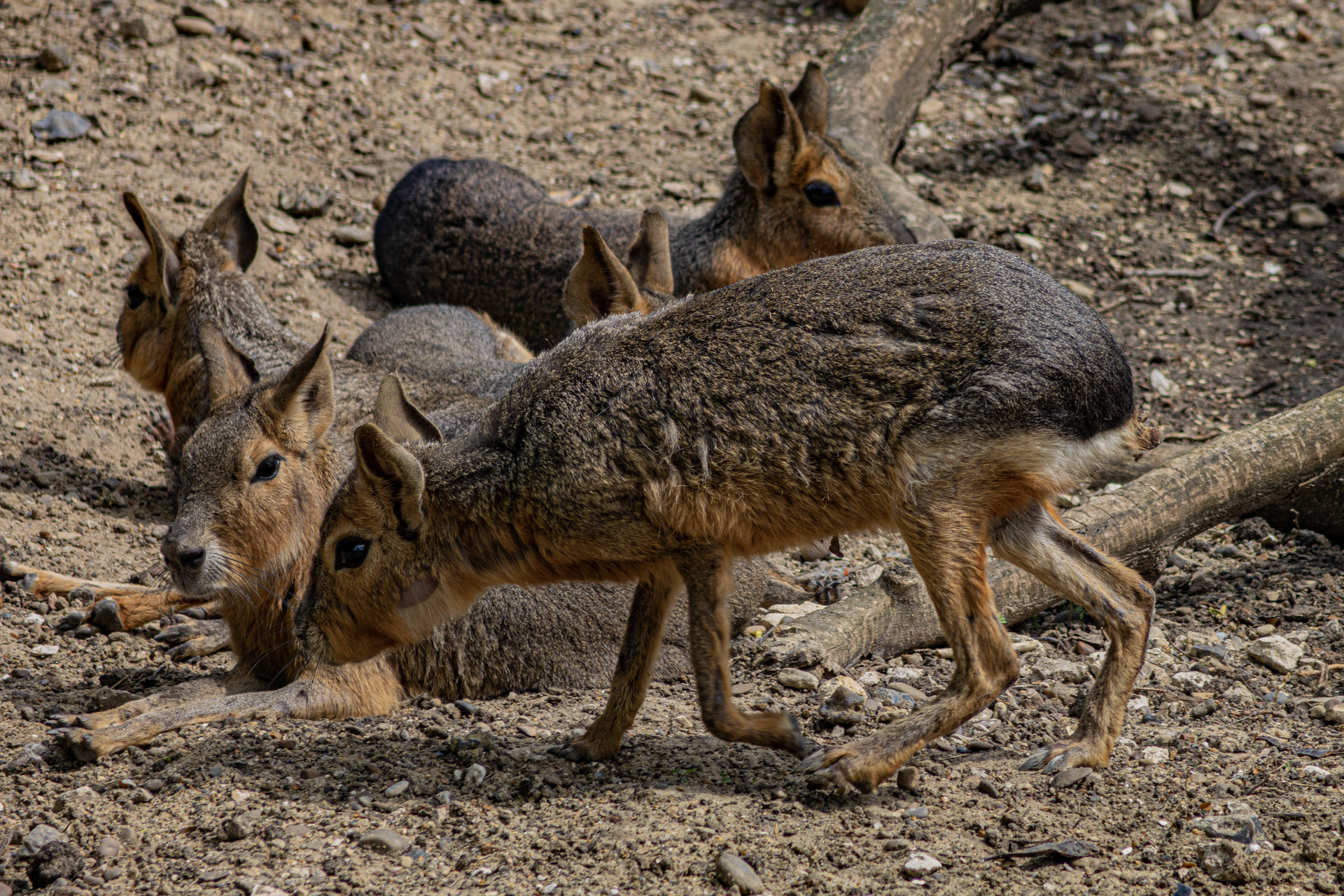
Creating a comfortable home for your chinchillas is crucial for their well-being. They need to be kept indoors in well-ventilated, dry and draught-free housing, ideally at 10-18ºC.
Chinchillas are prey species, so they need to be kept in quiet and calm areas away from dogs, cats, ferrets and other pets. This is because they're easily stressed if their home is near noise or activity.
Chinchillas are inquisitive and love to explore using their mouths, so their home needs to be safe, secure and hazard-free. This means no electrical cables or other hazards that might hurt them.
Keeping their cage clean is essential, with regular cleaning to prevent urine and droppings from accumulating. Many chinchilla cages have trays underneath a mesh floor to make it easy to collect waste.
Here are some key things to remember when creating a comfortable home for your chinchillas:
- Temperature: 10-18ºC
- Quiet and calm environment
- Safe, secure and hazard-free
- Regular cage cleaning
General Information
Chinchillas are social animals and live in large colonies in the wild. They are native to the Andes mountains in South America.
Chinchillas have a thick, soft coat that can be up to 2 inches long, which they use to keep warm in cold temperatures. They are also excellent jumpers and can leap up to 6 feet in a single bound.
Chinchillas are herbivores and their diet consists mainly of plants, hay, and grass. They require a high-fiber diet to stay healthy.
Adoption Source, Background, and Expectation
If you're considering adopting a chinchilla as a pet, you'll want to know where to find one. You can adopt a chinchilla from a reputable breeder or rescue organization.
Chinchillas are social animals and thrive on interaction, so it's essential to treat them as members of the family. They can be wonderful pets.
Daily handling is crucial to help chinchillas become tame and trusting. This can take time and patience, but the reward is a lifelong bond.
Chinchillas are unusually long-lived for small animals, with some living up to 15-20 years in captivity.
Media in Category
In the world of media, there are several categories that people often get confused about.
The term "media" refers to any platform or channel used to convey information or entertainment to the public.
From a historical perspective, the first media platforms were print-based, such as newspapers and books.
Radio was introduced in the early 20th century, revolutionizing the way people consumed information and entertainment.
The advent of television in the mid-20th century further transformed the media landscape.
Today, we have a vast array of digital media platforms, including social media, online news websites, and streaming services.
These platforms have made it easier for people to access information and entertainment from anywhere in the world.
However, the sheer amount of information available can be overwhelming, making it difficult to discern what's accurate and what's not.
In the next section, we'll explore some tips for evaluating the credibility of online sources.
Frequently Asked Questions
Are chinchillas pet friendly?
Chinchillas can be friendly pets if socialized regularly, but may not be suitable for young children due to their high energy level
Featured Images: pexels.com