Box turtles are a fascinating species found in North America, with a unique shell that resembles a box. They have a distinctive dome-shaped shell that helps protect them from predators.
Box turtles are relatively small, typically growing to about 4-6 inches in length. There are three main species of box turtles found in North America: the Eastern Box Turtle, the Western Box Turtle, and the Gulf Coast Box Turtle.
Box turtles are primarily herbivores, feeding on plants, fruits, and vegetation.
Related reading: Western Pond Turtle Shell
Taxonomy and Genetics
Box turtles have a fascinating taxonomy and genetics. The genus name Terrapene was coined by Blasius Merrem in 1820, describing species with a unique sternum separation.
The genus Terrapene was initially thought to include several Asian box turtles, but they have since been reclassified. Terrapene boscii, for example, is now known as Kinosternon subrubrum subrubrum.
There are currently seven species classified within the genus Terrapene. These include the Common box turtle, Three-toed box turtle, Coahuilan box turtle, Mexican box turtle, Spotted box turtle, Western box turtle, and Yucatán box turtle.
Additional reading: Bird Species in North Carolina
Here are the seven species classified within the genus Terrapene:
- Common box turtle, Terrapene carolina
- Three-toed box turtle, Terrapene triunguis
- Coahuilan box turtle, Terrapene coahuila
- Mexican box turtle, Terrapene mexicana
- Spotted box turtle, Terrapene nelsoni
- Western box turtle, Terrapene ornata
- Yucatán box turtle, Terrapene yucatana
Box turtles have a specific number of chromosomes, with diploid somatic cells containing 50 chromosomes.
Physical Characteristics
Box turtles have a distinctive shell that allows them to close it almost completely. This is due to their bridgeless, bilobed, hinged plastron.
Their carapace, or dorsal part of the shell, is steep margined, keeled, and high-domed, with variable markings. Concentric growth furrows can be seen on the carapace, although they may become difficult to see in older individuals.
Males are slightly larger than females, and have a concave posterior lobe on their plastron. They also have thicker and longer tails.
Females' rear claws are longer, straighter, and more slender than those of males. Males' claws are short, thick, and curved.
Box turtles have a slightly hooked upper jaw and only slightly webbed toes. They are ectothermic, meaning they regulate their body temperature using external sources, and have bilateral symmetry.
See what others are reading: Common Snapping Turtle Shell
Here's a summary of the different subspecies of box turtles:
Box turtles can grow up to 18 cm in length, and some individuals have been reported to live over 100 years.
Habitat and Distribution
Box turtles are found in a wide variety of habitats across North America. They occupy different types of habitats on a day-to-day and season-to-season basis, as well as species-to-species.
Some box turtles are found in mesic woodlands, while others inhabit grasslands or semideserts. The Coahuilan box turtle, for example, is only found in a specific region of Mexico characterized by marshes and permanent water.
Box turtles tend to move into the woods before hibernation, where they dig a chamber for overwintering. The depth of these chambers varies by species, with some as shallow as 10 centimeters and others up to 50 centimeters deep.
In more southern locations, turtles are active year-round, while in higher temperatures, they may be more active or only active during the wet seasons. The location for overwintering can be up to 0.5 km from the summer habitat and is often in close proximity to that of the previous year.
Here are some specific habitats where box turtles are found:
- Mesic woodlands
- Grasslands
- Semideserts
- Marshes
- Open woodlands
- Pastures
- Marshy meadows
Box turtles are found in temperate regions, including savannas or grasslands, forests, and riparian areas. They are also found near streams and ponds.
Behavior and Ecology
Box turtles are creatures of habit, with a home range that typically spans 250 yards or less. They're not wanderers, but rather creatures that like to stick to what they know.
Terrapene carolina are diurnal, meaning they're active during the day and rest at night. They scoop out a shallow indentation to spend the night, often in a cozy spot.
In the heat of summer, box turtles prefer to stay cool by hiding under decaying logs and leaves, crawling into mammal burrows, or soaking in shady pools and puddles. They're not fans of extreme temperatures.
Here are some key behaviors of box turtles:
- Terrestrial (terricolous)
- Fossorial (they dig and burrow)
- Diurnal (active during the day)
- Motile (they move around)
- Sedentary (they like to stay in one place)
- Hibernation (they sleep through the winter)
Behavior
Box turtles are creatures of habit, and their behavior is largely determined by the temperature of their surroundings. They prefer a body temperature between 29 and 38 degrees Celsius.
In the heat of summer, they're most active in the morning or after a rain shower. They'll often hide under decaying logs and leaves, crawl into mammal burrows, or burrow into mud to escape the heat.
As the seasons change, their activity levels adjust accordingly. In the spring and fall, they may be out foraging during all daylight hours, and they sometimes bask in the sun to get warm.
One of the key behaviors of box turtles is their ability to hibernate. In the northern regions, they go into hibernation in October or November, but further south, they remain active later in the year.
They burrow as much as two feet deep into loose earth, mud, stream bottoms, old stump holes, or mammal burrows to hibernate. They may return to the same place to hibernate in successive years and sometimes more than one turtle hibernates in the same hibernacula.
If frightened, box turtles will quickly retreat into their shell, retracting their head, tail, and limbs into their protective shell and clamping it shut. This defense technique is effective against most predators, making it a vital survival strategy for these remarkable creatures.
Here are some key behaviors of box turtles:
- Terriculous (living on land)
- Fossorial (burrowing into the ground)
- Diurnal (active during the day)
- Motile (able to move)
- Sedentary (settled in one place)
- Hibernation (a state of inactivity during winter)
Home Range
Terrapene carolina typically have a home range with a diameter of 250 yards or less, which they normally stay within. This home range can vary, but it's a general guideline.
Occasionally, they'll journey out from their preferred area, but biologists who study this species don't know why.
Home ranges of different individuals often overlap, regardless of age or sex. This means you might find multiple turtles in the same area.
The turtles are often found together and show no aggression towards each other. They seem to coexist peacefully.
Here's a breakdown of the key behaviors associated with Terrapene carolina's home range:
- Home range diameter: 250 yards or less
- Home range overlap: frequent, regardless of age or sex
- Aggression: no aggression towards each other
Ecosystem Roles
Box turtles play a significant role in their ecosystems. They eat a wide variety of animals, which can impact the populations of their prey.
One way box turtles contribute to their ecosystems is by dispersing seeds. As they eat berries of different kinds of plants, they deposit the seeds in new areas, helping to spread plant life.
Here are some ways box turtles affect their ecosystems:
- Disperses seeds
Life Cycle and Predation
Box turtles can live a long life, with an average lifespan of 50 years and some living over 100 years. Their growth is directly affected by food, water, and other factors, making it hard to estimate their age by counting growth rings.
A female box turtle can lay between 1-7 eggs at a time, and in some cases, they can have more than one clutch per year in captivity or in the southern part of their range.
While box turtles can defend themselves by hiding, closing their shell, and biting, they are still vulnerable to surprise attacks and persistent gnawing or pecking, especially when they are small. Common predators include mammals like minks and raccoons, birds like crows, and snakes like cottonmouths.
Life Cycle and Predation
Box turtles can live up to 50 years on average, and a significant portion of them live over 100 years.
Their growth is directly affected by various factors, including food, water, and illness, making it difficult to estimate their age by counting growth rings.
Here's an interesting read: Where Are the Leatherback Sea Turtles Found
Box turtle eggs are flexible and oblong, typically 2-4 cm long and weighing 5-11 grams.
A normal clutch size is 1-7 eggs, but box turtles in captivity or in the southern part of their range can have more than one clutch per year.
In more northern populations, the average clutch size is larger.
Delayed fertility has been observed in female turtles, where they can hold onto the male's sperm for months or even years before fertilizing and laying a clutch of eggs.
Turtles can defend themselves from predation by hiding, closing their shell, and biting.
The risk of death is greatest in small animals due to their size and weaker carapace and plastron.
Adult box turtles are vulnerable to surprise attacks and persistent gnawing or pecking, despite their shell being seldom fractured.
Common predators of box turtles include mammals like minks, skunks, raccoons, dogs, and rodents, as well as birds like crows and ravens, and snakes like racers and cottonmouths.
How They Grow
Box turtles are unique in their growth patterns, and it all starts from a very young age. They hatch as males or females depending on the temperature of their nest, with males developing in nests between 22-27 degrees C and females in those above 28 degrees.
As they grow, box turtles develop quickly, reaching a growth rate of about 1.5 cm per year during their first five years. This rapid growth period is a critical time for their development, and by the end of it, they are mature adults.
One of the fascinating aspects of box turtle growth is that it's indeterminate, meaning it continues for a long time. In fact, some Terrapene carolina have been reported to live over 100 years, with growth slowing down considerably after the first five years but still continuing for at least 20 years.
Here's a quick breakdown of their growth stages:
- Development: Box turtles are well-developed at birth.
- Temperature sex determination: Nests are sexed based on temperature.
- Indeterminate growth: Growth continues for a long time, slowing down after the first five years.
How Long Do They Live?
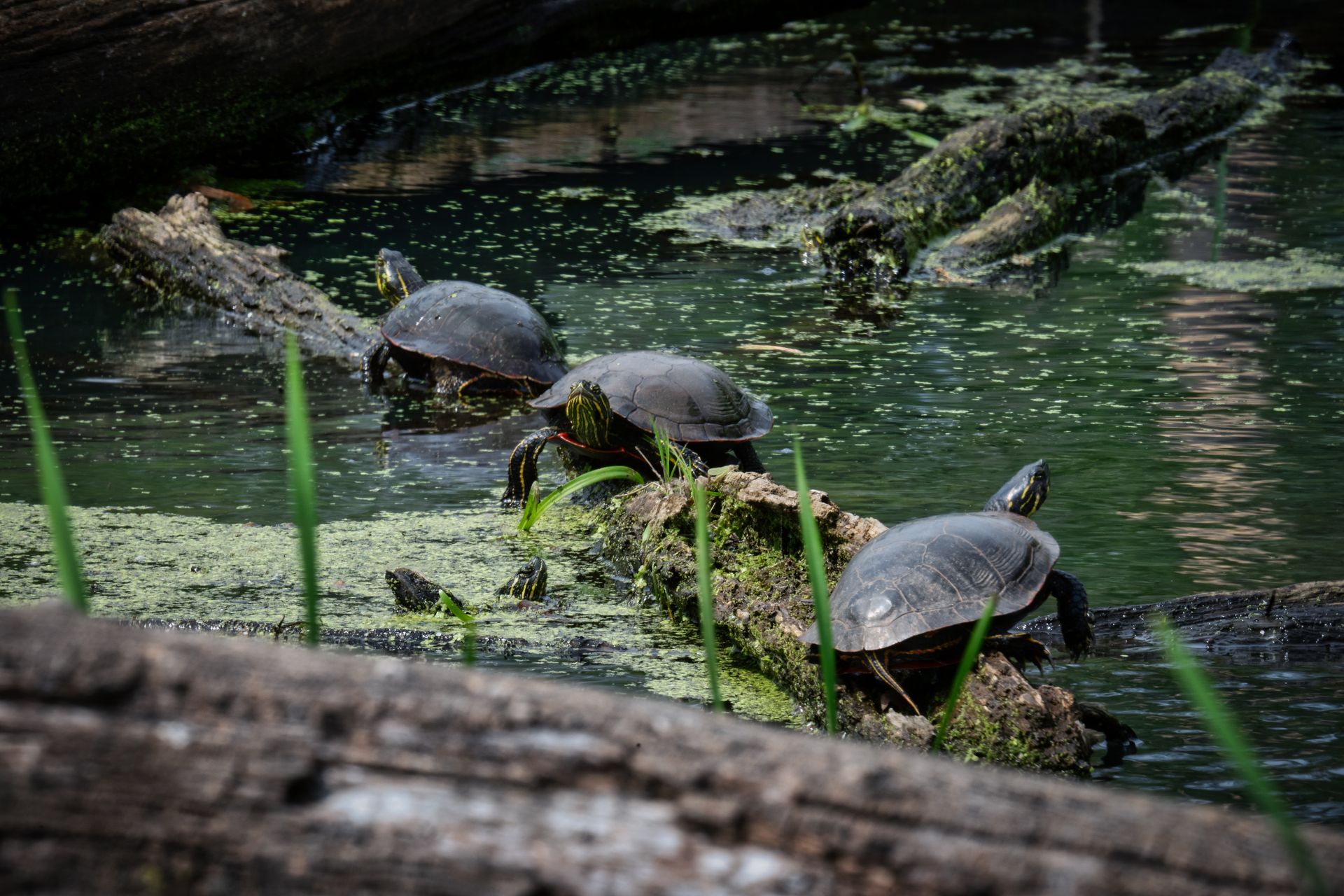
Terrapene carolina, also known as the box turtle, can live for a remarkably long time. They can live over 100 years in the wild.
In fact, the typical lifespan of a wild box turtle is estimated to be around 100 years. However, some individuals have been known to live up to 138 years, which is an incredible feat for a turtle of its size.
Box turtles in captivity, on the other hand, have a shorter average lifespan of around 40 years. This is likely due to various factors such as diet, habitat, and health conditions.
Here's a breakdown of the typical and range lifespan of box turtles in the wild and captivity:
- Typical lifespan (wild): 100 years
- Range lifespan (wild): 138 years
- Typical lifespan (captivity): 40 years
Diet and Predators
Box turtles of North America are omnivores with a varied diet, eating just about anything they can catch. Invertebrates like insects, earthworms, and millipedes make up a big part of their diet, but they also eat a lot of vegetation.
Suggestion: African Sideneck Turtle Diet
Their diet includes fruits like apples and berries, as well as gastropods like snails and slugs. They've even been known to eat carrion and dead animals, and their preference for food changes with the season.
Young box turtles mainly eat animal material while they're growing, but older adults tend to eat more plant material. They have a wide range of food sources, including snails, insects, berries, fungi, slugs, worms, roots, flowers, fish, frogs, salamanders, snakes, birds, and eggs.
Broaden your view: What Leatherback Sea Turtles Eat
Diet
Box turtles are opportunistic eaters, which means they'll chomp on just about anything they can catch. Their diet consists mainly of invertebrates like insects, earthworms, and millipedes, but they also munch on vegetation, fruits, and gastropods.
Reports suggest that vegetation makes up a significant portion of their diet, ranging from 30 to 90%. They've even been known to eat fruits like apples and berries from cacti. It's worth noting that while some sources claim young turtles are primarily carnivorous and adults are mostly herbivorous, there's no scientific basis for this difference.
Here's an interesting read: Florida Softshell Turtle Diet
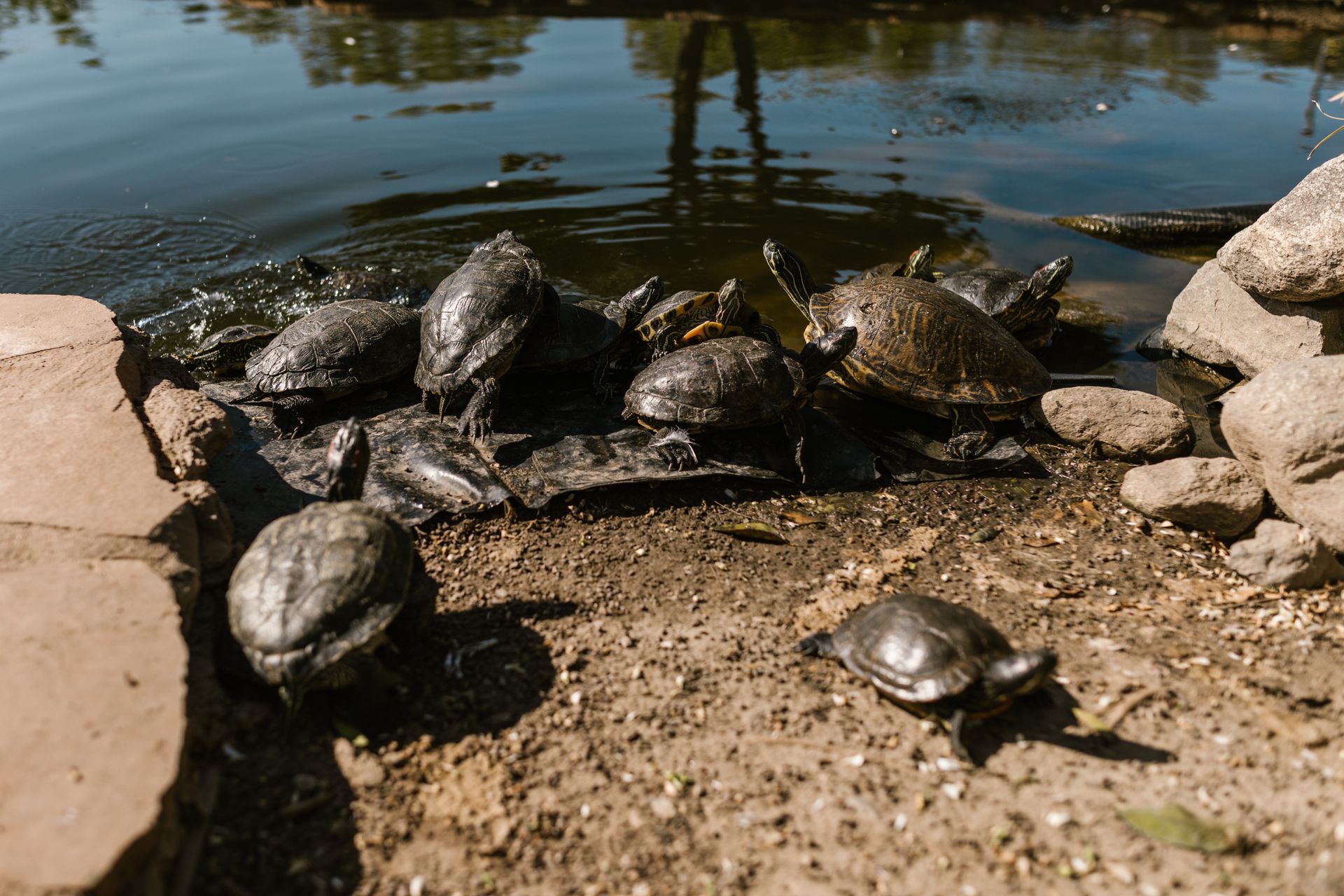
Box turtles have a varied diet, and they'll eat whatever is available. They've been observed eating snails, slugs, and worms, as well as roots, flowers, and fungi. They're also known to eat carrion, including dead ducks and assorted small mammals.
Here's a breakdown of their diet:
- Animal Foods: birds, amphibians, reptiles, fish, eggs, carrion, insects, mollusks, terrestrial worms
- Plant Foods: fruit
Their diet varies by season, but one thing is clear: young turtles tend to eat more animal material while they're growing, while older adults eat mainly plant material.
What Eats Them and How They Avoid It?
Box turtles have a unique defense mechanism that helps them avoid being eaten. They can close their shells to protect themselves from predators.
In the wild, box turtles face a variety of predators, including mammals like minks, skunks, raccoons, dogs, and rodents. These predators often target small box turtles due to their size and weaker carapace and plastron.
Adult box turtles, however, are less vulnerable to predation due to their ability to close their shells. This defense mechanism makes it difficult for predators to access their internal organs.
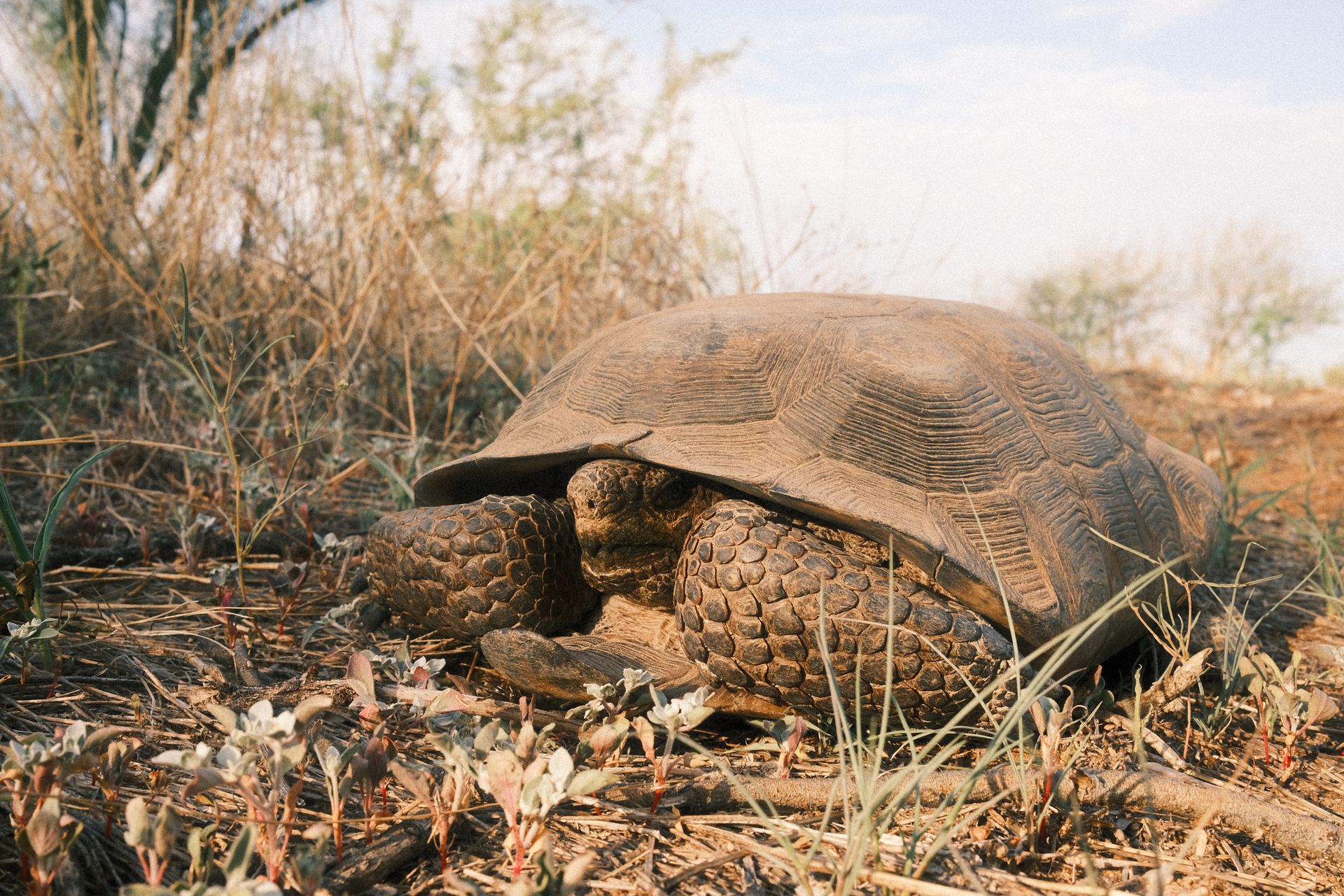
Despite their defense mechanism, adult box turtles can still be vulnerable to surprise attacks and persistent gnawing or pecking. This is why it's essential for them to remain vigilant and prepared to defend themselves at all times.
Birds like crows and ravens, as well as snakes like racers and cottonmouths, are also known to prey on box turtles.
Conservation and Status
The conservation status of box turtles in North America varies depending on the species. Terrapene coahuila, found only in Coahuila, is classified as endangered due to a 40% reduction in its geographic range and a decline in population from over 10,000 to 2,500 in 2002.
Some species of box turtles are more resilient, like Terrapene carolina, which is listed as vulnerable. However, its Eastern box turtle subspecies has been declining due to disease and anthropogenic factors. In Illinois, over 50 box turtles were found dead due to a polymicrobial necrotizing bacterial infection.
Here's a breakdown of the conservation status of Terrapene carolina:
- IUCN Red List: Lower Risk - Near Threatened
- US Federal List: No special status
- CITES: Appendix II
- State of Michigan List: Special Concern
- State of Maine List: Endangered
Conservation Status
The conservation status of box turtles varies depending on the species and location. Terrapene coahuila, a species endemic to Coahuila, is classified as endangered due to a 40% reduction in its geographic range and a significant decline in population.
The Eastern box turtle, Terrapene carolina carolina, has been declining due to anthropogenic factors and disease, such as polymicrobial necrotizing bacterial infection and ranavirus. In Illinois, over 50 box turtles were found dead due to this infection.
Some species of box turtles are listed as vulnerable or near threatened, while others are not considered endangered at the national level in the United States, Canada, or Mexico. However, several U.S. states list Terrapene carolina as a species of special concern.
Terrapene carolina are listed as lower risk by the IUCN and are in CITES appendix II, indicating a level of conservation concern. They are also listed as special concern in the state of Michigan.
Here is a summary of the conservation status of some box turtle species:
It's worth noting that habitat loss, road mortality, and collection for the pet trade are contributing to the decline of some box turtle populations.
State Reptiles
Box turtles have made a significant impact on the reptile world, with five U.S. states naming them as official state reptiles. North Carolina and Tennessee honor the eastern box turtle, while Missouri names the three-toed box turtle.
Kansas and Nebraska have also recognized the ornate box turtle as their official state reptile. This is a notable achievement for these species, as it brings attention to their unique characteristics and importance in their ecosystems.
In Pennsylvania, the eastern box turtle was once considered for official state reptile status, but it ultimately failed to pass in 2009. Similarly, in Virginia, bills to honor the eastern box turtle were introduced in 1999 and 2009, but they failed to gain traction.
The failure of these bills may have been due to factors like the creature's tendency to retreat into its shell when frightened, as one legislator pointed out. However, the close link between Virginia and neighboring North Carolina may have also played a role in the decision.
Here's a list of the U.S. states that have officially recognized box turtles as their state reptiles:
Care and Management
Box turtles require special care, especially if you're a small child. Most turtle and tortoise societies recommend against keeping them as pets for kids.
Box turtles are easily stressed by over-handling, so be gentle with them. Three-toed box turtles are often considered the best ones to keep as pets since they are hardy and seem to suffer less from being moved into a new environment.
To keep your box turtle healthy, you'll need to provide an outdoor enclosure, consistent exposure to light, and a varied diet. Without these, a turtle's growth can be stunted and its immune system weakened.
Box turtles can be injured by dogs and cats, so you'll need to protect them from household pets. Special care is needed to keep them safe.
It's recommended to buy captive-bred box turtles (in areas where this is allowed) to reduce the pressure put on wild populations. Collecting box turtles from the wild can damage their populations, as these turtles have a low reproduction rate.
Recommended read: Wild Dogs in North Carolina
Specific Species
Box turtles of North America come in three specific species: the Eastern box turtle, the Western box turtle, and the Gulf Coast box turtle.
The Eastern box turtle is the most common species, found in the eastern and central United States. They have a distinctive dome-shaped shell.
The Western box turtle is the largest of the three species, found in the southwestern United States and northern Mexico.
A fresh viewpoint: Common Snapping Turtle Species
Species and Subspecies
The common box turtle has four recognized races in the U.S., and various "intergrades" occur in regions where the sub-species overlap.
These "intergrades" show characteristics of two or more of the sub-species, and their appearance can be quite variable.
The Eastern box turtle is one of the most attractive and widely known of all turtles, and its appearance is very variable, with a basic color of light brown to black and brightly marked with yellows and oranges.
Eastern box turtles are protected from collection in most states in which they occur, and it's quite right that they are.
On a similar theme: Variable Bush Viper
The Gulf Coast box turtle is the largest of the common box turtle group, with a uniform deep black or brown color, broken only by white on the chin and lower jaw.
Males have longer tails than females and a definite plastral concavity, but commonly lack the red eye color found in other male box turtles.
Three-toed box turtles are small turtles, usually with plain brown or olive carapaces and a drab-colored plastron.
They usually have three toes on their hind feet, but not always, and sexing them can be difficult.
Males have relatively short tails and flat plastrons, but can be seen to have a larger tail with the vent opening located past the edge of the carapace if a pair is available.
For your interest: Dodo Raphus Cucullatus
Florida Turtle
Florida turtles have a distinctive appearance, with white or yellow radiating lines on their carapace.
They typically have two narrow stripes on their head, a narrower and more elongate body shape, and a very domed carapace.
The dorsal keel or ridge running along the carapace above the spine is a common feature among box turtles.
Florida box turtles have only three toes on their hind feet, like triunguis.
Their rear marginal scutes are often flared, similar to major.
Young box turtles tend to have more carnivorous habits, which may explain the preference for meat in some cases.
Featured Images: pexels.com