North Carolina is a haven for bird enthusiasts, with over 400 species documented in the state. The region's diverse landscape, ranging from coastal wetlands to mountainous forests, supports an incredible array of avian life.
The state's coastal plain is home to a variety of waterbirds, including the American Oystercatcher, which can be found on sandy beaches and mudflats. These birds are known for their distinctive calls and striking black-and-white plumage.
The Appalachian Mountains in western North Carolina are a haven for songbirds, with species like the Black-and-white Warbler and the Wood Thrush calling the region home. These birds can be found in the state's many hardwood forests.
From the coast to the mountains, North Carolina's bird species are as varied as they are fascinating, and with this guide, you'll be well on your way to exploring the state's incredible avifauna.
If this caught your attention, see: Bird Identification by Photo
Common Birds in North Carolina
The northern bobwhite is a medium-sized bird that's native to Canada, extending as far south as Mexico and Cuba. It's a ground-dwelling species that thrives in early successional habitats, like agricultural fields and grasslands.
These birds are experts at hiding, and their highly camouflaged nature allows them to freeze in place when feeling threatened, blending seamlessly into their environment. They're generally solitary, but may form groups, known as coveys, with up to twenty individuals by the end of summer.
One of the most distinctive features of the northern bobwhite is its distinctive "bobwhite" whistle. They also have a varied diet that includes grassland and ground-dwelling insects like ticks, grasshoppers, crickets, and spiders.
In North Carolina, the northern bobwhite is a common sight, particularly in areas with early successional habitats. However, their populations are threatened by habitat loss, fragmentation, and the invasion of exotic plant and insect species.
On the other hand, the northern cardinal is a bright red beauty that's abundant across North Carolina, particularly in residential areas. Its clear song is usually a string of two-parted whistles and a slow trill – like "cheer, cheer, cheer."
Intriguing read: Northern Mocking Bird
Bird Identification
The Brown Thrasher is a year-round resident in North Carolina, known for its distinctive song that sounds like a medley of sounds.
One of the key features to identify the Brown Thrasher is its brown back and wings, which are a deep brown color.
The Northern Cardinal is a common sight in North Carolina's backyards, with its vibrant red plumage and distinctive crest.
To identify the Northern Cardinal, look for its bright red color, which is most noticeable on its head, breast, and wings.
The American Goldfinch is a small bird with a bright yellow color, but in the winter, it turns a duller grayish color.
In North Carolina, the American Goldfinch can be identified by its distinctive song, which sounds like a series of musical phrases.
The Blue Jay is a bold and colorful bird, recognized by its bright blue and white feathers and distinctive crest.
To identify the Blue Jay, look for its distinctive blue and white feathers, as well as its black necklace-like stripe around its neck.
Check this out: South Carolina Bird Sounds Identification
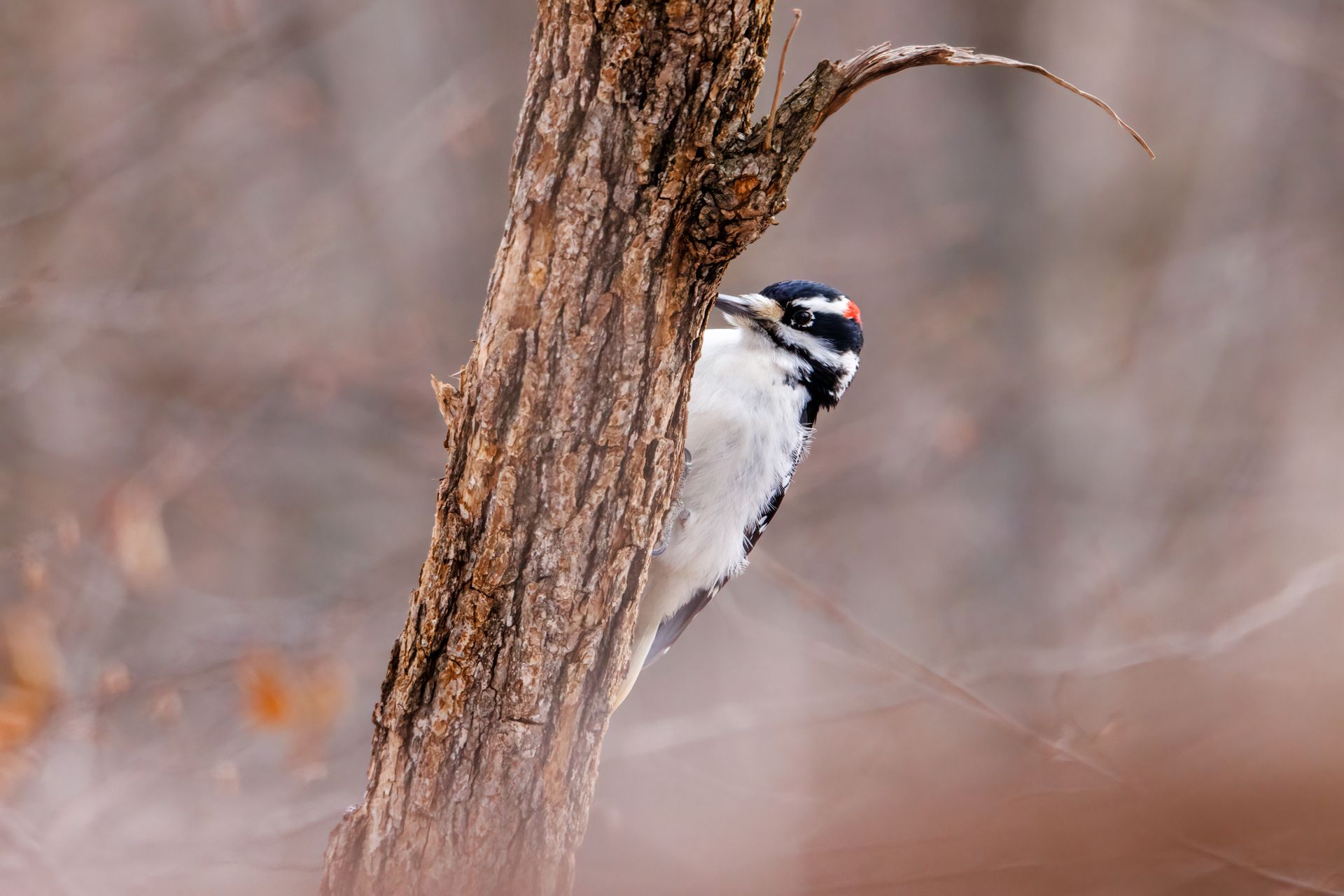
The Carolina Chickadee is a small bird with a black cap and white cheeks, and is known for its friendly and curious nature.
One of the key features to identify the Carolina Chickadee is its black cap, which covers its head and neck.
The Tufted Titmouse is a small bird with a distinctive tuft of feathers on its head, and is known for its friendly and social nature.
In North Carolina, the Tufted Titmouse can be identified by its gray and white feathers, as well as its distinctive tuft of feathers on its head.
The Red-winged Blackbird is a common sight in North Carolina's wetlands, with its distinctive red and black plumage.
To identify the Red-winged Blackbird, look for its distinctive red and black feathers, as well as its loud and melodic song.
Additional reading: Black Birds
Bird Species List
The official list of bird species in North Carolina includes 11 species as of the 2022 annual report.
These species are accepted by the North Carolina Bird Records Committee and are categorized into different orders and families.
Some of the bird species listed include the Garganey, Clark's Grebe, and Groove-billed Ani, which are all classified as "Full" in the NC review status.
Here is a breakdown of the bird species listed:
Alamance County
Alamance County is a great place to spot some amazing bird species. Located in North Carolina, this county is home to over 200 species of birds.
The American Goldfinch is a common sight in Alamance County, known for its bright yellow plumage and distinctive song. It can be seen flitting between the county's many fields and meadows.
The county's diverse landscape also makes it a haven for waterbirds, with species like the Great Blue Heron and the Great Egret often spotted near the county's many lakes and rivers.
The Northern Cardinal is another bird species that can be seen in Alamance County, recognized by its vibrant red plumage and distinctive song. It's a year-round resident in the county, and can often be seen visiting backyard bird feeders.
Carolina Wren
The Carolina Wren is a common bird species found in wooded areas and neighborhoods, often moving low to the ground and flitting between backyard brush piles. It's a friendly-looking bird with a round body and long tail of reddish-brown color.
To spot a Carolina Wren, look for it scooting up and down trees, cocking its tail up while foraging for food, and cocking its tail down when singing. Its constant singing is a giveaway, as it uses this behavior to defend its territory from other birds.
One of the most distinctive features of the Carolina Wren is its aggressive singing, which it uses to warn off potential intruders. This pugnacious song is a scratchy, repetitive tune that's hard to miss.
If you're lucky enough to spot a Carolina Wren, take note of its chunky body and long tail, which are characteristic of this species. With its bold behavior and striking appearance, the Carolina Wren is a bird you won't soon forget.
On a similar theme: What Is a Bird's Body Covering?
Here are some common behaviors to look out for when spotting a Carolina Wren:
- Scooting up and down trees
- Cocking tail up while foraging for food
- Cocking tail down when singing
- Constant singing to defend territory
If you're new to birdwatching, keep an eye out for these behaviors to help you identify a Carolina Wren in the wild. With a little practice, you'll be spotting these birds in no time!
Tufted Titmouse
The Tufted Titmouse is a delightful bird species that can be found in various locations, including forests, bird feeders, backyards, parks, and orchards. They're quite assertive over smaller birds and have a fluttery but level flight.
These little birds can be found year-round in most hardwood forests and often in residential areas. They're known for their distinctive scratchy call, which sounds similar to a Chickadee.
One of the most notable features of the Tufted Titmouse is its ability to fly bouncy and call during flight. They're also known to travel in large numbers and cling to weeds.
Their diet consists of seeds, nuts, and insects, and they're often seen visiting bird feeders in search of food.
If this caught your attention, see: How Many Species of Birds Can Be Found in Uruguay?
European Starling
European Starlings are quite the common sight in towns and fields, often feeding on lawns and perched on telephone wires and houses. They're not picky eaters, poking grass for food to sustain themselves.
In fact, you might catch them making constant sounds while perched up high, a trait they share with other birds. However, their constant chirping can sometimes be a nuisance to those nearby.
Rock Pigeon
The Rock Pigeon is a bird that's quite common in many parts of the world.
They can be found in fields, farmland, and even towns, often gathering in large flocks.
Their behavior when startled is quite distinctive - they'll fly into the air, circle around, and then fly back down to their original spot.
North Carolina Official List
The official list of birds in North Carolina is maintained by the North Carolina Bird Records Committee. The list is updated annually and is based on the AOS Check-list of North American Birds through the 64th Supplement (2023).
The list includes 11 species of birds, ranging from waterfowl to songbirds. These species are accepted based on various criteria, including documentation by voucher specimens, photographs, or voice recordings.
The North Carolina Bird Records Committee uses a set of categories to determine the status of each species. These categories include "Full" for native species with voucher specimens, and "Probable" for species with possible contenders at the genus level.
Here is a breakdown of the categories:
The committee also considers species that have been accepted by fewer than three separate reports or by any number of reports made by three separate observers to be "Questionable".
Red-Cockaded Woodpecker
The Red-Cockaded Woodpecker is a unique bird species that can be found in North Carolina, with over 2,600 eBird sightings in the state.
These birds are cooperative breeders, meaning several family members assist in raising young, and they're the only woodpecker that creates cavities in live trees.
Their preferred habitat is Longleaf Pine forest, which is more abundant in the southern Piedmont and Coastal Plains.
You'll have a better chance of spotting Red-Cockaded Woodpeckers in open woodlands and large old pines with very little understory growth.
Unfortunately, they're a rare species due to population declines, with an 86% loss between 1966 and 2014.
To spot Red-Cockaded Woodpeckers in North Carolina, consider visiting a national wildlife refuge or national forest, such as the All American Trail, Bay Tree Lake State Park, or Croatan National Forest.
Here are some specific locations where you might spot the Red-Cockaded Woodpecker:
- All American Trail
- Bay Tree Lake State Park
- Boiling Spring Lakes Preserve
- Calloway Forest
- Carvers Creek State Park
- Croatan National Forest
- Dismal Swamp State Park
- Green Swamp Preserve
- Holly Shelter Game Land
- Jones Lake State Park
- Palmetto-Peartree Preserve
- Patsy Pond Nature Trail
- Pettigrew State Park
- Sandhills Game Land
- Singletary Lake State Park
- Turnbull Creek Educational State Forest
- Weymouth Woods
Featured Birds
The bird species in North Carolina are incredibly diverse and fascinating. One of the most iconic birds in the state is the American Goldfinch, which is known for its bright yellow color and distinctive song.
The American Goldfinch is a common sight in North Carolina's fields and meadows, where it feeds on seeds and insects. It's a year-round resident in the state, but its population is highest during the summer months.
Expand your knowledge: North Carolina State Bird and Flower
The Brown Thrasher is another bird species found in North Carolina, recognized by its brown back and wings, and white underside. This bird is known for its complex song, which can include up to 1,000 different notes.
The Brown Thrasher is a year-round resident in North Carolina, and can be found in a variety of habitats, including woodlands and backyards with bird feeders. It's a bird that's often heard, but not always seen, due to its shy nature.
The Northern Cardinal is a year-round resident in North Carolina, and is known for its vibrant red plumage and distinctive song. This bird is common in woodlands and backyards with bird feeders, where it feeds on seeds and insects.
The Northern Cardinal is a monogamous bird, with pairs forming during the breeding season and staying together for several years.
Birding Trails and Sites
If you're interested in spotting the Painted Bunting in North Carolina, you might want to check out Airlie Gardens.
The Painted Bunting is a beautiful bird species, and Airlie Gardens is one of the many locations along the NC Birding Trail where you can catch a glimpse of it.
If you're looking for other places to spot the Painted Bunting, some other options include Bald Head Island, Brunswick Town/Fort Anderson State Historic Site, Carolina Beach State Park, Cedar Point Tideland Trail, Fort Fisher State Historic Site, Fort Macon State Park, Hammocks Beach State Park, and Masonboro Island Reserve.
For spotting the Piping Plover, you're in luck if you're visiting Bald Head Island, Cape Hatteras National Seashore, Cape Lookout Point, Currituck National Wildlife Refuge, or Fort Macon State Park.
Some other great locations for Piping Plover sightings include Hammocks Beach State Park, Masonboro Island Reserve, Pea Island National Wildlife Refuge, and Rachel Carson Reserve.
Here are some of the top locations for spotting these two bird species, grouped by location:
Birds of Prey
If you're interested in spotting birds of prey in North Carolina, keep an eye out for Bald Eagles, which can be found in the state.
Bald Eagles are known for their impressive wingspans, which can reach up to 7.5 feet. They're also skilled hunters, feeding on fish and other small prey.
Bald Eagle
Bald Eagles are birds you might see in your backyard, especially if you have a bird feeder that attracts other birds, like hummingbirds. If you're lucky, you might even spot one soaring overhead.
If you're trying to identify a bird of prey, the Bald Eagle is a good candidate. It's often seen in areas with water, like lakes or rivers.
Here are some key behaviors to look out for:
- Soaring overhead
- Scavenging in fields or on roadsides
Barn Owls (Tyto Alba)
Barn Owls (Tyto alba) are among the smaller owl species in North Carolina.
Their distinctive appearance features a white face and belly complemented by golden brown anterior feathers.
Barn owls produce a sharp, screeching sound, unlike the familiar hoot of many owls.
They primarily target small rodents for their meals, operating as nocturnal birds of prey.
Barn owls prefer flying and hunting near the ground, often hovering above agricultural fields and small clearings.
They frequently choose old barns and vacant buildings for nesting, contributing to their name.
When such structures are unavailable, they opt for tree cavities.
Barn owl couples typically generate one to three sets of eggs annually, ranging from 2 to 18 eggs in each clutch.
Young owls face predation from raccoons and opossums, while adults contend with threats like collisions with vehicles and power lines.
Private landowners can take action to help barn owls by installing nesting boxes on their property, a service offered by the NCWRC.
Songbirds
Songbirds are a delight to spot in North Carolina, with over 30 species calling the state home. The American Goldfinch is one of the most common songbirds in the state, with its bright yellow plumage and distinctive song.
The Eastern Bluebird is another popular songbird, known for its vibrant blue and orange feathers. These birds are cavity-nesting, meaning they make their homes in tree holes or nest boxes.
In North Carolina, songbirds can be found in a variety of habitats, from forests to backyards. The Northern Cardinal, for example, is a year-round resident in the state and can often be seen at bird feeders.
For your interest: North Carolina State Bird
Mockingbird
The Northern Mockingbird is a common sight in many backyards and parks, often perched high up in trees or hopping around on the ground.
You can spot them in open fields, too, where they're known to aggressively chase off other birds that enter their territory.
They're also quite at home in urban areas, and can be seen perched on fences, telephone wires, and even rooftops.
In fact, their adaptability is one reason why they're so successful at defending their territory from other birds.
Black-Capped Chickadee
The Black-Capped Chickadee is a petite resident songbird that's a common sight in North Carolina. They inhabit northern areas, favoring colder climates and higher elevations.
These birds are known for their distinctive songs, which typically consist of two to three notes, featuring a higher note at the outset. They're often mistaken for the Carolina Chickadee, but variations in range distribution and song provide some distinctions.
Black-Capped Chickadees primarily feed on caterpillars during spring and summer, transitioning to seeds and berries in winter. They're also known to cache seeds, storing them in specific locations and revisiting them up to 28 days later.
In terms of nesting, Black-Capped Chickadees are cavity nesters, excavating their own tree cavities or repurposing old woodpecker cavities. The female is exclusively involved in nest construction, laying a single clutch of six to eight eggs between April and June.
Song Sparrow
The Song Sparrow is a great example of a bird that has made its way into our region. The Song Sparrow first nested in the NC mountains in the 1890s.
Tree Swallows
Tree Swallows are the first spring migrants to arrive in the Blue Ridge Mountains each year.
Their acrobatic flight patterns are a sight to behold, especially when chasing down bugs.
You can often find them nesting in tree cavities.
Their song is high-pitched and split into three sounds: a chirp, whine, and gurgle.
Suggestion: What Do Birds Do When Their Tree Is Cut Down?
Waterbirds
Waterbirds are a common sight in North Carolina's wetlands and coastal areas. They can be found in shallow waters, mudflats, and salt marshes.
The American Oystercatcher, a large shorebird, breeds in North Carolina's coastal areas. It's known for its distinctive call and can often be seen walking along the beach.
The American Avocet is another waterbird species that can be found in North Carolina's wetlands. It has a unique feeding style, using its long bill to probe for food in shallow waters.
The Snowy Egret, a medium-sized heron, is a common sight in North Carolina's coastal areas. It's known for its all-white plumage and can often be seen wading in shallow waters.
Waterbirds play a crucial role in North Carolina's ecosystem, helping to control insect and small animal populations.
American Birds
The American Goldfinch is a bird species you can find in North Carolina, known for its late nesting habits, typically waiting until July or August.
In the summer months, American Goldfinches can be found in brushy habitats like old fields or thickets, but during other seasons, they prefer backyards, weedy fields, and open woods.
Their song is a unique combination of a tweet and a warble, with one call sounding like "po-ta-to-chip."
Ruffed Grouse
Ruffed grouse are incredibly adaptable birds, found in a wide range of habitats from western North Carolina to Canada and Alaska.
Their ability to blend in with their surroundings is impressive, especially on the forest floor where they can remain inconspicuous until approached.
One of their unique features is their dramatic and noisy wingbeats, which they use to defend themselves when disturbed.
Ruffed grouse are omnivores, with a diverse diet that includes insects, berries, seeds, plant buds, and even small amphibians.
They're skilled at hiding on the forest floor, often using logs and stumps as nest sites where they lay around 9-14 eggs in May.
As a result, they share common predators with Northern bobwhites, including birds of prey, coyotes, foxes, feral cats and dogs, snakes, and fire ants.
Unfortunately, habitat loss is a major threat to ruffed grouse, particularly due to forest clearing for agriculture, tree plantations, and urban development.
American Crow
American Crows are notorious for raiding garbage cans, making them a common sight in weedy fields, roadsides, and backyards.
They're also known for chasing away other birds, so if you're trying to attract a variety of bird species to your yard, you might want to think twice about putting out food.
Weedy fields, roadsides, and backyards are their go-to spots, so if you're looking to spot one, these areas are your best bet.
Frequently Asked Questions
What is North Carolina's national bird?
North Carolina does not have a national bird, but it does have an official state bird, the Northern Cardinal, designated in 1943.
What is the big bird in NC?
The osprey is a large bird found in NC, measuring 21-24 inches tall with a 6-foot wing span, and features dark brown upper feathers and white belly and legs. Learn more about these majestic birds and their habitats.
Featured Images: pexels.com