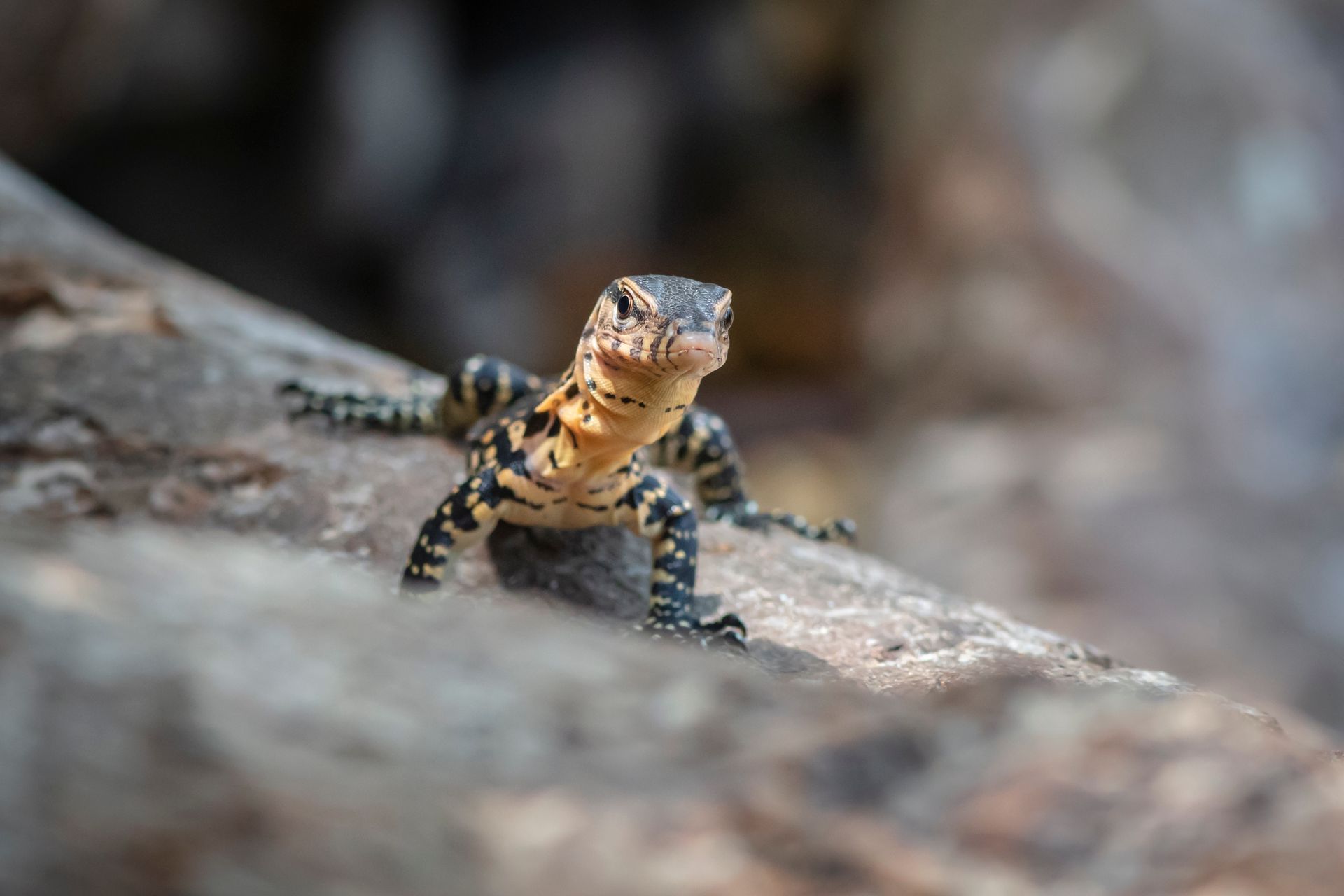
North America is home to a diverse range of lizard species, from the scorching hot deserts of the southwest to the backyards of suburban homes.
The Gila monster, a venomous lizard found in the deserts of Arizona and New Mexico, can grow up to 20 inches in length and weigh up to 4 pounds.
These lizards have adapted to survive in the harsh desert environment, where temperatures can soar to over 100 degrees Fahrenheit.
Gila Monster and Horned Lizards
The Texas Horned Lizard is a pretty cool creature, with a distinctive appearance featuring a flattened body, pointed snout, and prominent horn-like projections on its head.
They're found in the southern U.S., particularly Texas, as well as parts of Oklahoma, New Mexico, and northern Mexico, and inhabit various arid and semi-arid habitats like grasslands and deserts.
Adult Texas Horned Lizards typically measure between 3–5 inches in length, with females generally larger than males.
Gila Monster
The Gila Monster is a creature you don't want to mess with.
They live in desert and semi-arid regions of the Southwest, so if you're visiting those areas, be on the lookout.
Gila Monsters grow up to 22 inches in total length, making them hard to miss.
They're slow-moving and tend to avoid humans, but they're venomous, so keep a safe distance.
They feed on small mammals, lizards, frogs, and insects, and will even raid nests for food.
They also eat carrion, which means they'll scavenge for dead animals.
They're similar to Horned Lizards in some ways, but have a distinctive appearance.
Here's an interesting read: Gila Monster Lizard
Texas Horned Lizard
The Texas Horned Lizard is a fascinating creature that's native to the southern U.S., particularly Texas, as well as parts of Oklahoma, New Mexico, and northern Mexico.
They're renowned for their distinctive appearance, featuring a flattened body, pointed snout, and prominent horn-like projections on their head. Adults typically measure between 3–5 inches in length, with females generally larger than males.
Their diet primarily consists of ants, with harvester ants being a particularly favored food source. They're experts at finding these ants in various arid and semi-arid habitats, including grasslands, scrublands, deserts, and open woodlands.
They rely on sandy or loose soils for burrowing and thermoregulation, which is essential for their survival in these dry environments.
Behavior and Habitat
In North America, lizards are ectothermic, meaning they rely on external sources of heat to regulate their body temperature. This is why you'll often see them basking in the sun to warm up.
Most lizards are diurnal, meaning they're most active during the day. They spend their time hunting for prey, mating, and defending their territory. Some species, like anoles and geckos, may even produce sounds like chirps and hisses to communicate or mark their territory.
Lizards reproduce sexually, with males often putting on elaborate courtship displays to attract females.
Behavior
Lizards are ectothermic, meaning they rely on external sources of heat to regulate their body temperature.
Their activity level is largely determined by the time of day, with most species being diurnal and most active during the day.
Some lizards, like anoles and geckos, can produce sounds to communicate and defend their territory, including chirps, clicks, and hisses.
Lizards don't typically make vocalizations, but they do engage in a variety of behaviors to attract mates and defend their territory.
Males often perform elaborate courtship displays to attract females, which is a crucial part of the lizard's reproductive process.
In most species, females lay eggs, but a few species give birth to live young, a process known as viviparity.
You might enjoy: Bird Species in North Carolina
Discussion
Behavior and Habitat is a complex topic, and it's no wonder we have different opinions about it.
Some of us think that animals adapt to their environment, but what does that really mean? Animals can change their behavior to survive in their habitat, like migrating to find food or shelter.
For example, polar bears have a thick layer of fat and a white coat to blend in with the snow, making them expert hunters in their Arctic habitat. They also have a keen sense of smell to sniff out seals, their primary source of food.
Related reading: Western Fence Lizard Food
The way animals interact with their environment is fascinating, and it's not just about physical adaptations. Some animals have unique social behaviors that help them thrive in their habitat, like the complex communication systems of wolves.
In some cases, animals even modify their environment to suit their needs, like beavers building dams to create a safe and stable home. This shows that animals are capable of adapting in many different ways.
Featured Images: pexels.com