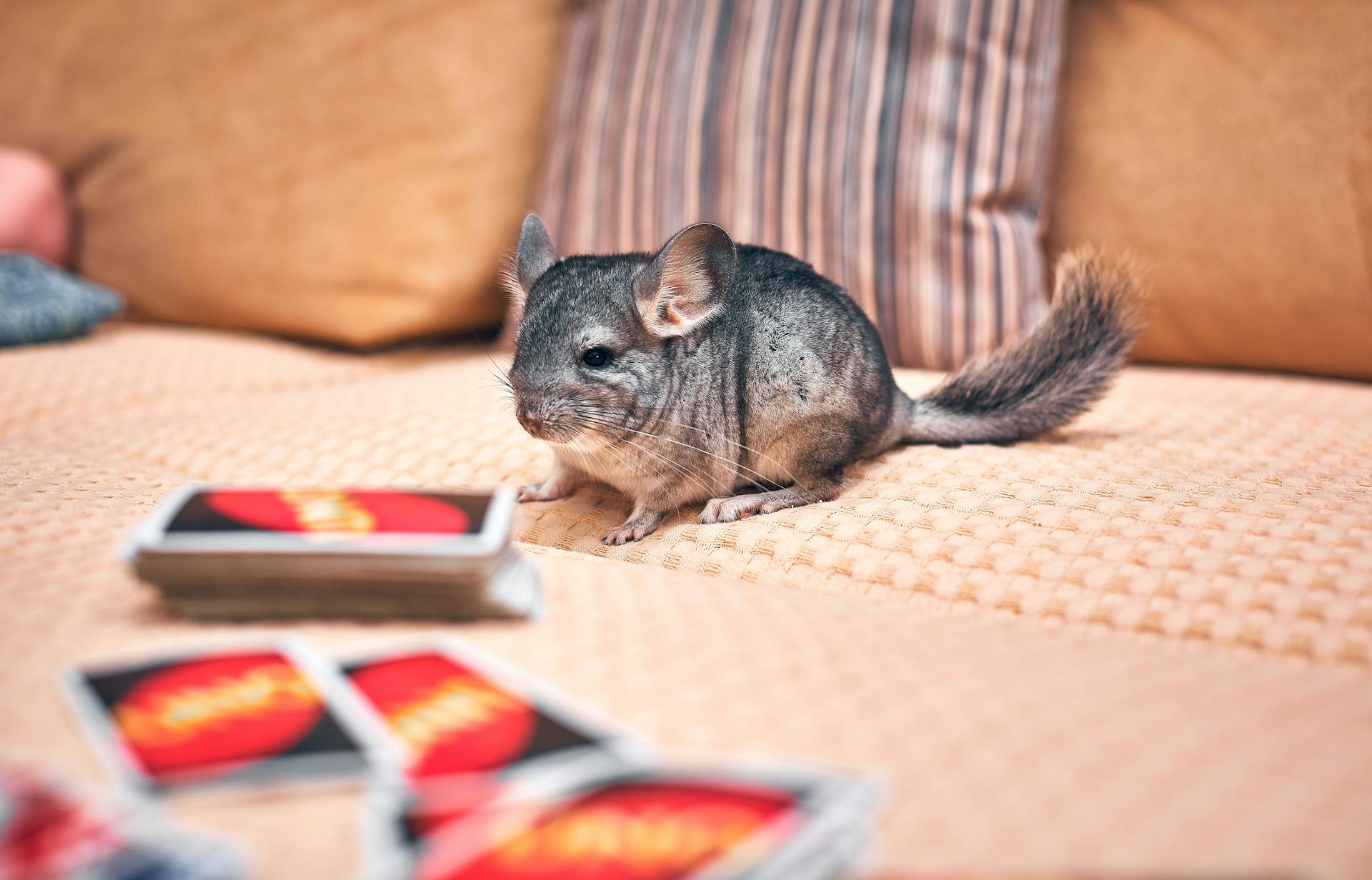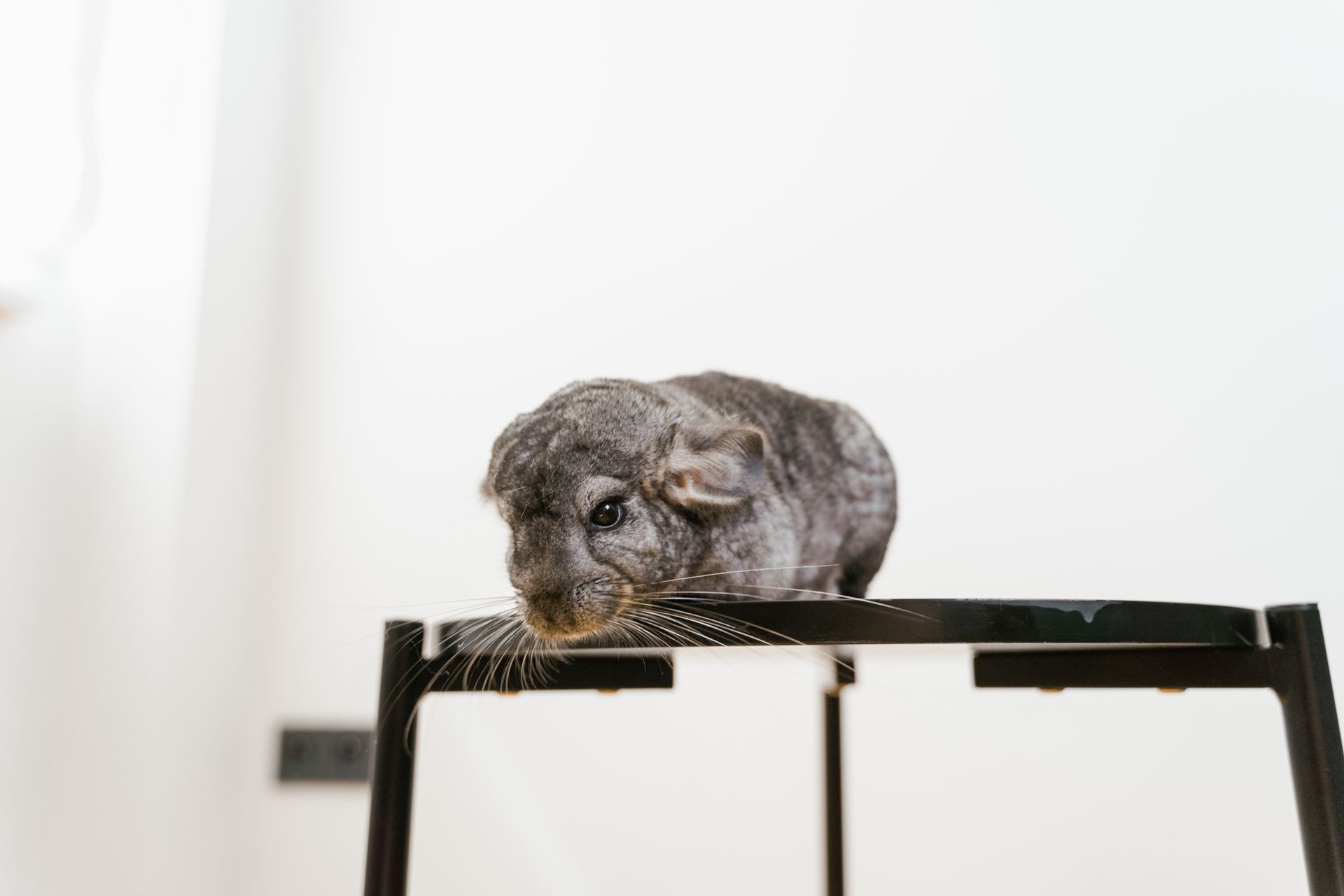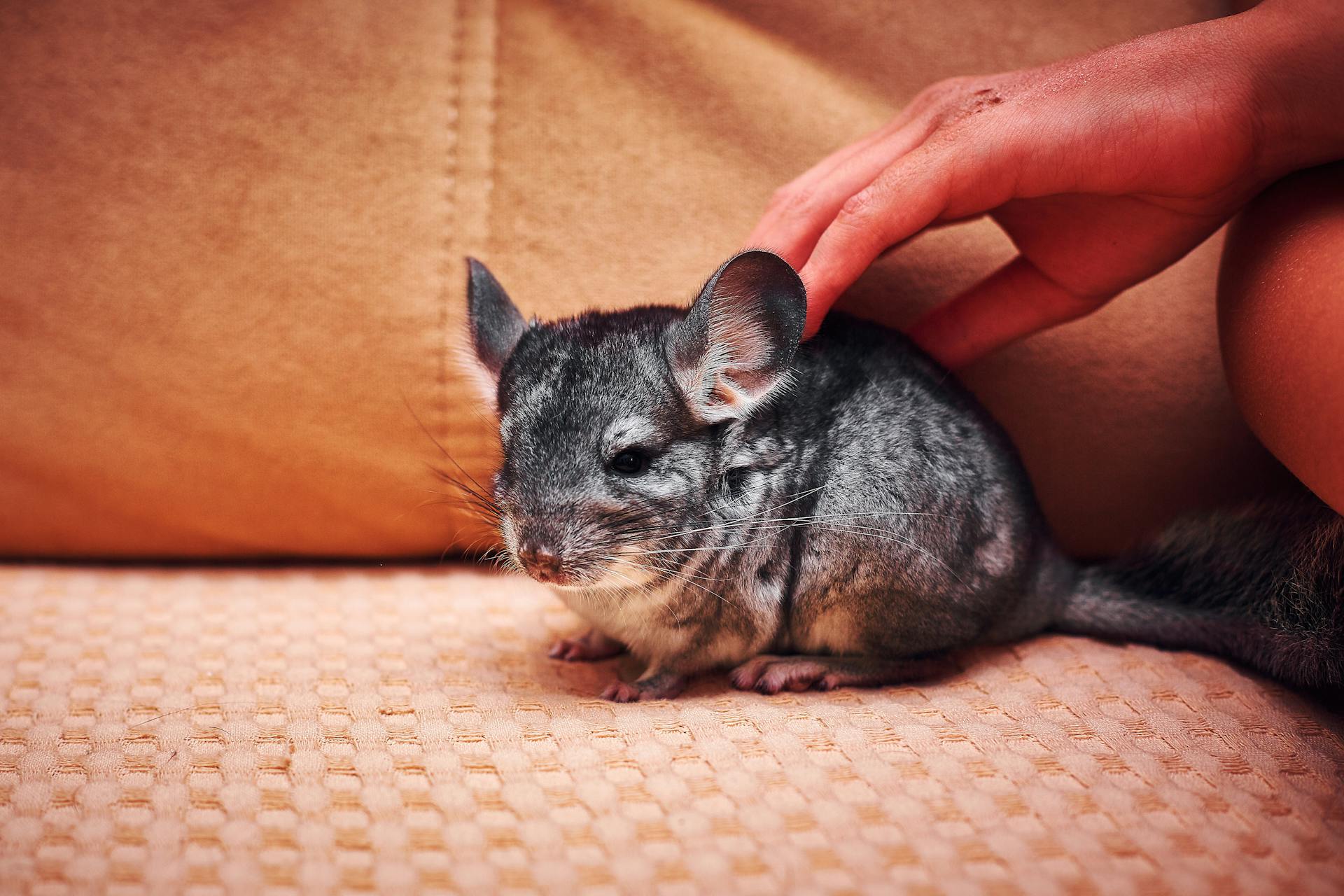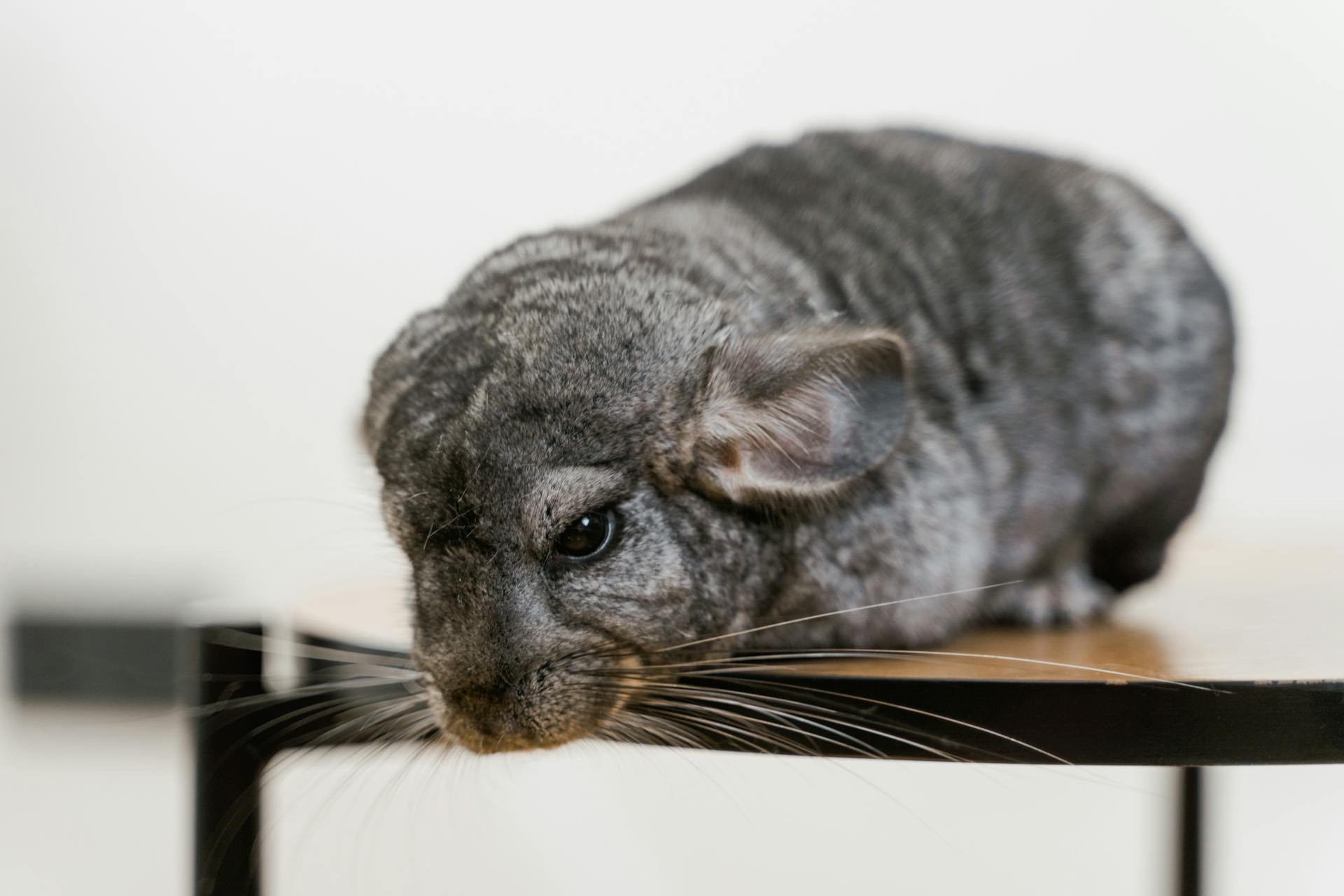
Chinchillas are crepuscular animals, meaning they're most active during twilight hours, which is the time period around dawn and dusk. This behavior is closely tied to their natural habitat in the Andes mountains.
In the wild, chinchillas have adapted to the changing light conditions of their high-altitude environment, where the sun's rays are less intense. Their nocturnal behavior is also influenced by the availability of food and water.
Chinchillas typically rest during the day, often sleeping for short periods of 30 minutes to 1 hour, and then waking up to be active for a few hours before settling down again. This pattern of sleep and activity is essential for their overall well-being.
Their sleep patterns can be affected by changes in their environment, such as temperature and humidity, which is why it's essential to provide a suitable habitat for your pet chinchilla.
Explore further: Habitat for Chinchillas
Chinchilla Sleep Habits
Chinchillas have a strong instinct to sleep in dark, enclosed spaces to feel safe and secure, just like their natural burrows or rock crevices in the wild.
To replicate this environment, provide your chinchilla with nest boxes, hammocks, or hanging hideouts that give them a sense of security and privacy.
Chinchillas prefer to have multiple sleeping options available, so they can choose their favorite spot.
Chinchillas are highly sensitive to temperature and humidity, so it's essential to keep their cage in a quiet, draught-free area with good air circulation.
Avoid placing their cage in direct sunlight or areas with extreme temperature fluctuations to prevent heatstroke.
For more insights, see: Temp for Chinchillas
Nocturnal Animals
Nocturnal animals are most active at night or after sunset. This means they do their best work or play during the evening hours.
Some rodents are classified as nocturnal, which can sometimes be confused with crepuscular animals. Chinchillas, however, are crepuscular, not nocturnal, and are active during the early morning and evening.
Here's a quick breakdown of the differences between nocturnal and crepuscular animals:
- Nocturnal: most active at night or after sunset
- Crepuscular: most active at dusk and dawn, so the early morning and evening
It's worth noting that chinchillas adjust their routine and can be excited to interact during other times of the day, even if they're crepuscular.
Crepuscular Animals
Chinchillas are crepuscular animals, meaning they're most active during twilight hours, which is the time period around dawn and dusk. They have large eyes that help them navigate in low light.
Their crepuscular nature is likely an adaptation to their natural habitat in the Andes mountains, where the sun's rays are strong during the day. This means they're most likely to be sleeping or resting during the hottest part of the day.
Chinchillas can sleep for up to 12 hours a day, with most of that time spent in short naps. They're able to get by with these short naps because of their unique circadian rhythm.
Explore further: Long Tailed vs Short Tailed Chinchilla
Types of Animals by Activity
There are four main classifications of animal activity: Nocturnal, Diurnal, Matutinal, and Crepuscular.
Nocturnal animals are most active at night or after sunset. Diurnal animals, on the other hand, are active during the day.
Matutinal animals peak in the morning, while Crepuscular animals are active at dusk and dawn.
Here's a quick rundown of the different types of animal activity:
Chinchillas, for example, are Crepuscular, meaning they're most active during the early morning and evening hours.
Chinchilla Behavior During Peak Hours
Chinchillas tend to get more active and energetic at dusk and dawn, which can be quite entertaining to watch. They love to hop around and climb inside their cage during these peak activity times.
During crepuscular peak activity times, your chinchilla may be out jumping around, enjoying the chew items and other toys you've provided. This is a normal behavior for chinchillas.
It's not a good idea to keep your chinchilla in the same room where you sleep, especially if you value your rest.
Environmental Factors
Chinchillas have a strong preference for sleeping in dark, enclosed spaces to mimic their natural burrows or rock crevices.
They thrive in environments with good air circulation, away from direct sunlight and areas with extreme temperature fluctuations. This is crucial to prevent heatstroke.
Nest boxes, hammocks, and hanging hideouts are great options for chinchillas to sleep in, providing a sense of security and privacy.
These structures should be lined with shredded paper bedding or soft hay to create a cozy and comfortable sleep surface.
Chinchillas are highly sensitive to temperature and humidity, so it's essential to keep their cage in a quiet, draught-free area.
Behavioral Patterns
Chinchillas are typically most active during dusk and dawn, so be prepared for some energetic behavior from your furry friend.
They love to hop and climb around their cage during these peak activity times, which can be quite entertaining to watch.
It's best to keep your chinchilla's cage in a room where you can observe them, but not necessarily in the same room where you sleep.
They'll be busy enjoying the chew items and toys you've provided, so make sure they're safe and secure.
Frequently Asked Questions
What are the downsides of owning a chinchilla?
Owning a chinchilla comes with some challenges, including daily cleaning and potential noise issues at night. They also require a lot of space, a specific diet, and can be destructive if not properly cared for.
Featured Images: pexels.com