Brazil is a true paradise for animal lovers and wildlife enthusiasts. With over 8,500 species of vertebrates, it's no wonder that the country is considered a biodiversity hotspot.
From the Amazon rainforest to the Pantanal wetlands, Brazil's diverse ecosystems support an incredible array of wildlife. The Amazon alone is home to over 1,500 species of birds, 3,000 species of fish, and 430 species of mammals.
Brazil's unique geography has created a haven for many iconic species, including the jaguar, the largest cat in the Americas. These majestic creatures can be found in the country's dense rainforests and grasslands, where they roam freely and undisturbed.
The Pantanal, the world's largest tropical wetland, is another hotspot for wildlife, with caimans, capybaras, and toucans calling it home. This incredible ecosystem is a must-visit destination for anyone looking to experience Brazil's incredible biodiversity.
On a similar theme: Largest Salt Water Crocodile
Biodiversity and Ecoregions
Brazil is home to an incredible array of wildlife, with a staggering 131 species of primates, the highest number of any country in the world. This diversity can be attributed to the country's vast size and varied ecosystems, including the Amazon Rainforest, Atlantic Forest, and Cerrado.
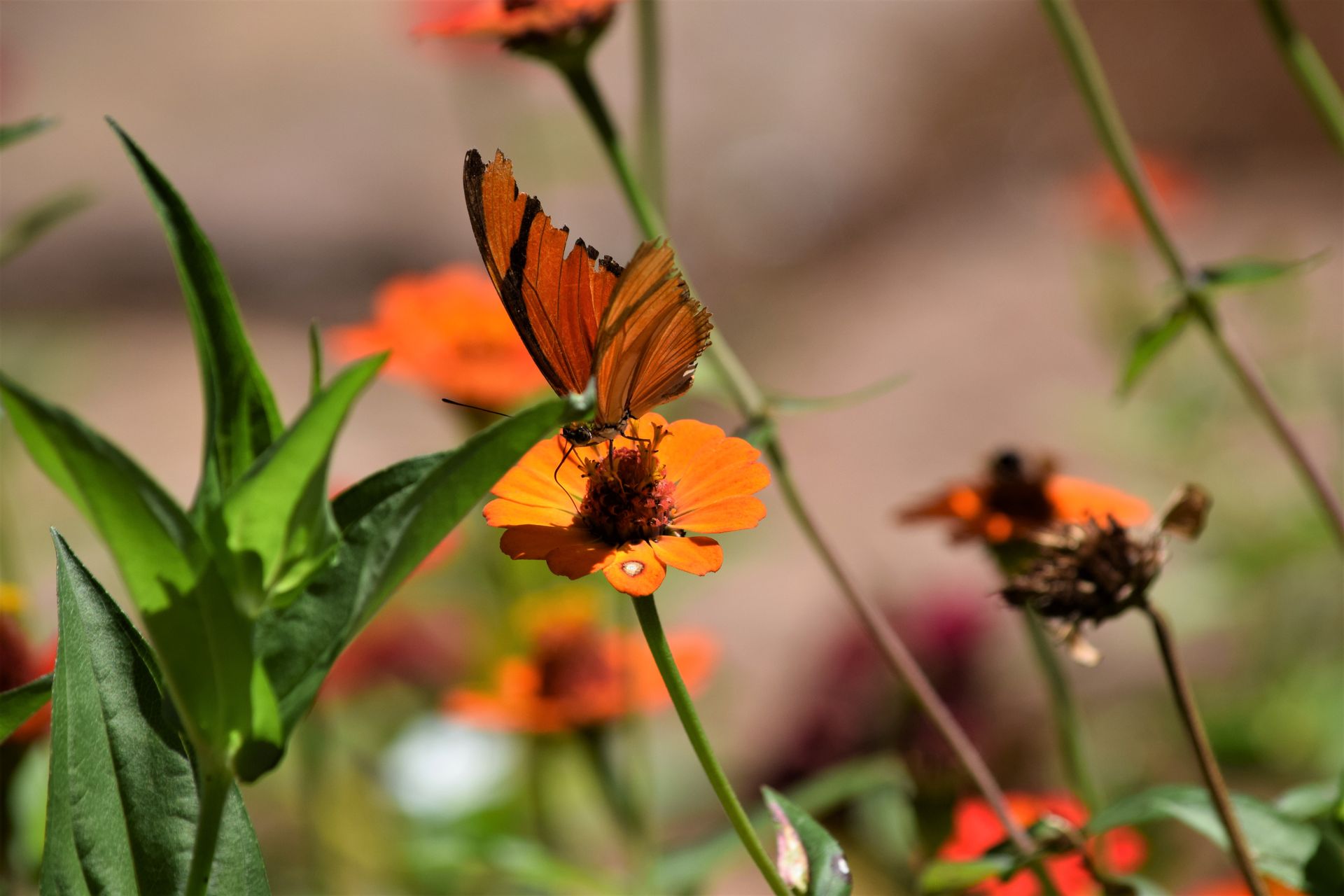
Brazil has the highest number of mammals, with 775 species, and a whopping 3,150 species of butterflies, ranking third in the world. The sheer variety of habitats in Brazil supports an equally impressive range of bird species, with over 1,982 species found in the country.
The Amazon Rainforest alone is home to a vast array of plant and animal species, many of which are still undiscovered. In fact, scientists estimate that only about 7% of the world's true diversity of fungal species has been discovered, with most of the known species having been described from temperate regions.
Brazil's ecoregions are incredibly diverse, ranging from the tropical savanna of the Cerrado to the xeric shrubland of the Caatinga. This variety of habitats supports a wide range of wildlife, from the jungles of the Amazon Rainforest to the world's largest wetland area, the Pantanal.
Brazil's immense area is subdivided into different ecoregions in several kinds of biomes, each with its unique characteristics and wildlife. The country's biodiversity is a treasure trove waiting to be explored and protected.
Expand your knowledge: Endangered Animals in Brazil Rainforest
Terrestrial Animals
Brazil is home to some incredible terrestrial animals, and I'm excited to share a few of my favorites with you. The lowland tapir, for example, is the largest mammal in Brazil, weighing up to 661 pounds.
These gentle giants are found in various regions, including the Amazon Rainforest, Atlantic Rainforest, Cerrado, and Pantanal. They're nocturnal, so they're best spotted on a night safari or early morning walk along riverbanks.
Tapirs are solitary animals, moving alone or in small groups of up to three individuals. During the day, they rest their bodies, saving energy for nighttime foraging forays, where they feed on a diverse diet of leaves, bark, and fruit.
Their unique digestive system allows them to consume up to 58 fruits from 23 different plant families, playing a vital role in seed dispersal throughout their habitats.
See what others are reading: Brazil Amazon Forest Animals
Terrestrial Mammals and Reptiles
Brazil is home to an incredible array of terrestrial mammals and reptiles. The country's diverse landscapes support a wide range of species, from the maned wolf to the giant anteater.
The lowland tapir, found in the Amazon Rainforest, Atlantic Rainforest, Cerrado, and Pantanal, is one of the largest mammals in Brazil, weighing up to 661 pounds. Tapirs are solitary animals, moving alone or in small groups of up to three individuals.
The jaguar, puma, and jaguarundi are just a few of the many feline species that call Brazil home. These big cats are formidable predators, but they're not the only natural enemies of tapirs - jaguars and pumas are also a threat.
Anacondas, frequently described as the largest snake on the planet, can grow up to 30 feet long. However, some reports from native peoples and early European explorers claim anacondas can reach lengths of up to 100 feet.
The Yacare caiman, a species of caiman found in rivers, lakes, and waters in the Pantanal and the Amazon rainforest, can live up to 40 years. This caiman species feeds on snails, fish, and snakes, as well as smaller mammals like capybaras.
Armadillos, coati, and giant river otters are just a few of the many other terrestrial mammals that can be found in Brazil. With over 131 primate species, including howler monkeys, capuchin monkeys, and squirrel monkeys, Brazil is a primate paradise.
Readers also liked: Dangerous Animals in Brazil Rainforest
Insects
Brazil is home to an incredible number of insects, with estimates ranging from 70,000 to a staggering 15 million species.
A single hectare of rainforest in Brazil can host between 50,000 and 60,000 species of insects and spiders.
You can find over 520 species of thysanoptera, a type of insect, in Brazil, spread across six families and 139 genera.
These insects are abundant, but they also have some fierce predators that can catch them off guard.
Giant anteaters, for example, can catch around 35,000 ants and termites a day using their long tongues, scraping the walls of insect burrows 150 times per minute.
Anteaters are toothless, but their tongues make up for it, allowing them to feed on these insects.
Their claws are also quite long, measuring around 3.94 inches, which they use to defend themselves when cornered.
In fact, anteaters are not aggressive, but they can stand on their hind legs and fight back with their front paws if necessary.
On a similar theme: How Long Do Galapagos Tortoises Live
What Big Cats Live in?
Brazil is home to some impressive big cats. The jaguar is the country's largest terrestrial predator and its only big cat.
Jaguars are solitary animals and can be found in various habitats, from rainforests to grasslands. They're also excellent swimmers.
Pumas, on the other hand, are technically part of the small cat family, even though they're often referred to as big cats.
Puma
The puma, also known as a cougar, is the second-largest cat in Brazil, after the jaguar.
In the country, pumas are quite rare and tend to occur at low density in most places. However, the Pantanal region is a great place to try your luck at spotting one, particularly Fazenda Barranco Alto in the southern Pantanal.
Pumas have one of the widest distribution ranges among felids, but they can be elusive. Despite their rarity, some extraordinary images of pumas have been captured in Brazil.
A camera trap in Serra dos Órgãos National Park snapped some incredible photos of a young male puma with a flawless white coat in 2013. This was the first-ever confirmed case of a wild cougar with leucism, a genetic condition characterized by partial loss of pigmentation.
Here's an interesting read: Cougar Puma Concolor
Southern Tamandua
The Southern Tamandua, also known as the Lesser Anteater, is an odd creature of the Brazilian savannah.
They're active mainly at night, which is quite different from their giant cousins.
Their days are spent in hollow tree trunks or in the burrows of other animals, like armadillos.
The Southern Tamandua has long and sharp claws on their feet, which they use to walk on the outer surfaces of their front feet to avoid puncturing their palms.
It's a unique way of walking, similar to how a human would walk on their knuckles.
The Southern Tamandua is listed as "Least Concern" on the IUCN Red List of Threatened Species, indicating a wide distribution range throughout most of South America.
Despite their wide distribution, the Southern Tamandua is shy and rarely encountered in the wild.
The best place to look for these shy Brazilian animals is Fazenda San Francisco in the Southern Pantanal in Brazil.
Broaden your view: Population Distribution Pattern of Eastern Gray Squirrel
Saki Monkey
The Saki monkey is an iconic primate of the Amazon rainforest, recognizable by the light-coloured fur on the face of male monkeys.
Female Saki monkeys have less vibrant facial markings compared to their male counterparts.
These unusual-looking primates live in small groups ranging from 4 to 12 individuals.
The Amazon jungle's thick foliage makes it more likely to hear Saki monkeys than see them.
A good place to spot Saki monkeys in the Amazon is at Pousada Rio Roosevelt Lodge, which lies deep within the forest and can only be accessed by a small plane.
You have a chance of spotting 12 different species of primates at this lodge.
Here's an interesting read: Small Animal Boarding
Tufted Capuchin
They're the original clever monkeys. Brazilian Tufted capuchins use sticks to get food out of cracks and crevices.
They're also skilled rock users, cracking open seeds with rocks and digging in hard soil for roots and fungi with sharp stones.
They've even been observed throwing rocks at predators.
These curious creatures are always on the move, making a racket as they move through the canopy.
You can spot them in the Pantanal, where they often emerge from the forest towards a watering hole.
South American Coati
The South American Coati is a unique and fascinating creature that's often seen in Brazil. They belong to the raccoon family and have a diet that's just as varied as their appearance.
These animals are commonly encountered in Brazil, mostly because they're quite comfortable around people and can often be spotted near popular tourist attractions. They've even become a bit of a problem in some areas due to their dependence on tourists for food.
Coatis spend a lot of time foraging on the forest floor, holding their long tails up as they search for food. This behavior is similar to their Central American cousins, the White-nosed coatis.
You can find Coatis in the Pantanal and at Iguazu Falls, where they've become quite a sight to see.
Additional reading: How to Become a Zoo Veterinary Technician
Armadillo
The armadillo is a unique creature with a body covered in hard and bony keratin plates, similar to the material in our hair and nails.
They have excellent digging skills, but their poor eyesight makes them rely heavily on their sense of smell to navigate their surroundings.
Armadillos are nocturnal animals, meaning they're most active at night, but they can occasionally be seen during the daylight hours when they're attracted to food sources like corn seed.
The three-banded armadillo is a notable species that can roll into a ball when threatened, using its three strong back plates for defense.
In the wild, armadillos are primarily insectivores, feeding on ants, termites, and larvae, but they also enjoy ripe fruit on occasion.
There are 21 different species of armadillos, ranging in size from the 150 centimetre-long Giant Armadillo to the 15 centimetre-long Pink fairy armadillo.
Take a look at this: How Long Do American Bald Eagles Live
Black Caiman
The black caiman is one of the largest predators in South America, growing up to 19.6 feet long.
They have dark skin with a lighter-colored head, earning them their name.
Black caimans are nocturnal, so it's best to stay away from river and lake shores in the evening hours.
They're not just slow-moving on land, but are also fast in the water, making them formidable hunters.
Their diet consists of capybaras, lizards, birds, other caimans, and mammals, which they grab and drown before eating.
Black caimans were once hunted for their beautiful leather, but now their populations are more protected.
Birds and Aquatic Animals
Brazil is home to an astonishing variety of birds, with 1622 identified species, including over 70 species of parrots alone. The country's diverse landscape supports a wide range of birdlife, from brightly colored parrots and toucans to flamingos and hummingbirds.
The largest bird found in Brazil is the rhea, a flightless ratite bird that's similar to the emu. You can spot these massive birds roaming the countryside, a true marvel of nature.
Brazil's aquatic animals are equally impressive, with over 3,000 identified species of freshwater fish and 25 species of troglobitic fish, which are found only in underground caves. The country's rivers are also home to the pink dolphin, the world's largest river dolphin, and the pirarucu, one of the largest river fish.
Recommended read: Ocellate River Stingray
Birds
Brazil is home to an incredible variety of birds, with a staggering 1622 identified species, including over 70 species of parrots alone.
The country's diverse habitats, ranging from the Amazon rainforest to the Pantanal wetlands, support a wide range of bird species, from brightly colored parrots and toucans to flamingos, ducks, and vultures.
The largest bird found in Brazil is the rhea, a flightless ratite bird, similar to the emu.
You can spot many bird species in Brazil, including parrots, toucans, and hummingbirds, which are particularly common in the Atlantic forest.
The hummingbirds in Brazil are tiny, with some species reaching lengths of only 13 cm, and their wings beat up to 80 times per second, creating a humming sound.
The Rufous-bellied thrush is a common bird in Brazil and feeds on tiny caterpillars, ants, seeds, and fruits, with its distinctive birdsong often heard during afternoons and at night.
Macaws, the world's largest flying parrots, are also found in Brazil, with some species growing up to 102 cm tall, and they feed on fruits, seeds, and nuts using their powerful beak muscles.
Toucans are another iconic bird species in Brazil, with their oversized and colorful beaks, and the Toco toucan is the largest of the toucan species, growing up to 63 cm tall with an orange-colored beak that is 19 cm long.
Intriguing read: Common Snapping Turtle Predators
Aquatic and Amphibian
Brazil is home to an incredible array of aquatic and amphibian animals, with over 3,000 identified species of freshwater fish.
The majority of these fish species are characiforms, such as tetras and catfish, but there are also many species from other groups like cyprinodontiforms and cichlids.
Troglobitic fish, which live in underground caves, are particularly interesting, with 25 species found in Brazil, accounting for 15% of the total number of troglobitic fish in the world.
One of the most well-known fish in Brazil is the piranha.
Other aquatic animals found in Brazil include the pink dolphin, the world's largest river dolphin, and the caimans, such as the black caiman.
The brightly colored poison dart frogs are also a familiar sight, with their vibrant colors serving as a warning to potential predators.
One of the largest river fish in the world is the pirarucu, found in Brazil's rivers.
Readers also liked: World Wildlife Foundation Volunteer
Giant Otter
The giant otter is one of South America's top carnivores, known as the 'river wolf' in many parts of its range. They can grow up to 1.8 meters in length, making them the largest of the otter species.
Explore further: River Otter Missouri
Giant otters are highly social animals, living in groups of up to 15 animals that inhabit riparian areas, slow-current rivers, streams, and lakes. They generally look for places with dense vegetation and banks where they can build their burrows.
These gregarious animals are true entertainers, making them popular among wildlife watchers. They seem to exist in a constant state of motion, catching and eating fish as they go about their day.
In the water, giant otters are extremely nimble and agile, despite appearing somewhat clumsy and awkward on land. They have a long, flat tail and webbed toes, perfectly adapted for swimming.
The giant otter feeds primarily on fish and some invertebrates, as well as smaller mammals and birds. They even build latrines to meet their physiological needs, as well as campsites near feeding areas for resting and territorial delineation.
Sadly, giant otters are one of the most endangered animals in Brazil, threatened by habitat loss and pollution. They are listed as “Endangered” on the IUCN Red List of Threatened Species.
The best place to see giant otters in the wild is the Brazilian Pantanal, on the banks of the Cuiaba River, around Porto Jofre.
Suggestion: Endangered Animal Charities
Arapaima
The arapaima is the largest freshwater fish with scales in the world, growing up to 90 kg/ 200 lb and reaching lengths of up to 4.6 m/ 15 ft.
In Brazil, this massive fish is called pirarucu, which translates to 'red fish' due to its distinctive red markings.
The arapaima's unique appearance is matched by its remarkable ability to breathe air, thanks to a swim bladder with lung-like tissue that allows it to surface every 10 minutes.
It's worth noting that the arapaima's vulnerability to predators and fishermen is a result of this air-breathing ability, making conservation efforts crucial to protect this ancient species.
Some 23-million-year-old fossils of the arapaima have been found, earning it the nickname 'dinosaur fish of the Amazon'.
Broaden your view: Afghanistan Fish
Threats and Conservation
More than one-fifth of the Amazon Rainforest in Brazil has been completely destroyed, a staggering loss of biodiversity and ecosystem.
The Atlantic Forest, on the other hand, has been largely cleared with nearly 93% of the forest gone, leaving only a small fraction of its original habitat intact.
Of the 202 endangered animals in Brazil, a whopping 171 are found in the Atlantic Forest, highlighting the urgent need for conservation efforts.
The Brazilian government's massive national biofuel program has been devastating to tropical wildlife diversity, with 15.8 million acres of tropical ecosystem eliminated for sugarcane production.
This program has also had a significant impact on the global climate and environment, with 70-85% of Brazil's transportation energy coming from ethanol and petroleum-based fuels.
A further 4.5 million acres is planned to be planted during the next four years, exacerbating the problem of deforestation and habitat loss.
BP's acquisition of BioEnergia aims to expand Brazil's ethanol program, which could have severe consequences for the country's already threatened wildlife.
Unique Features and Facts
Brazil is home to an incredible variety of endemic species, with mammals like the maned sloth and Brazilian three-banded armadillo found nowhere else in the world.
The country's unique wildlife is particularly evident in its primate population, with over 30 species occurring only in Brazil, including the red-handed howling monkey and the white-eared marmoset.
These species are just a few examples of the many incredible animals that can be found in Brazil, making it a paradise for wildlife enthusiasts and researchers alike.
Invertebrates
Invertebrates are incredibly diverse, with 1107 known species of non-marine molluscs living in the wild in Brazil.
The Goliath birdeater, the heaviest spider in the world, can be found in some regions of Brazil, with its massive size likely a result of its unique adaptation to its environment.
These incredible creatures are a testament to the rich biodiversity of Brazil, a country that is home to an astonishing array of invertebrate species.
Brazil's non-marine molluscs are incredibly resilient, able to thrive in a variety of different habitats and ecosystems.
The Goliath birdeater is a formidable hunter, using its impressive size and strength to catch its prey.
You might enjoy: Size of American Bald Eagle
Unique Features
Brazil has one of the greatest variety of endemic species in the world. Endemic species are found nowhere else on the planet.
The country is home to a wide range of unique mammals, including the maned sloth, Brazilian three-banded armadillo, and hoary fox.
Brazil's primates are particularly fascinating, with many species found only in the country. Some examples include the red-handed howling monkey and the white-whiskered spider monkey.
The diversity of Brazilian wildlife is so great that no single guide can cover every species.
Specific Animals
Brazil is home to a diverse range of wildlife, including some incredible creatures that are unique to the country.
The jaguar is the national animal of Brazil and is considered one of the most majestic cats in the world. It's the best place on earth to spot these charismatic animals.
Brazil has its own "Big Five", consisting of the jaguar, Brazilian tapir, giant anteater, maned wolf, and giant river otter. These animals are the giants of the Brazilian jungle.
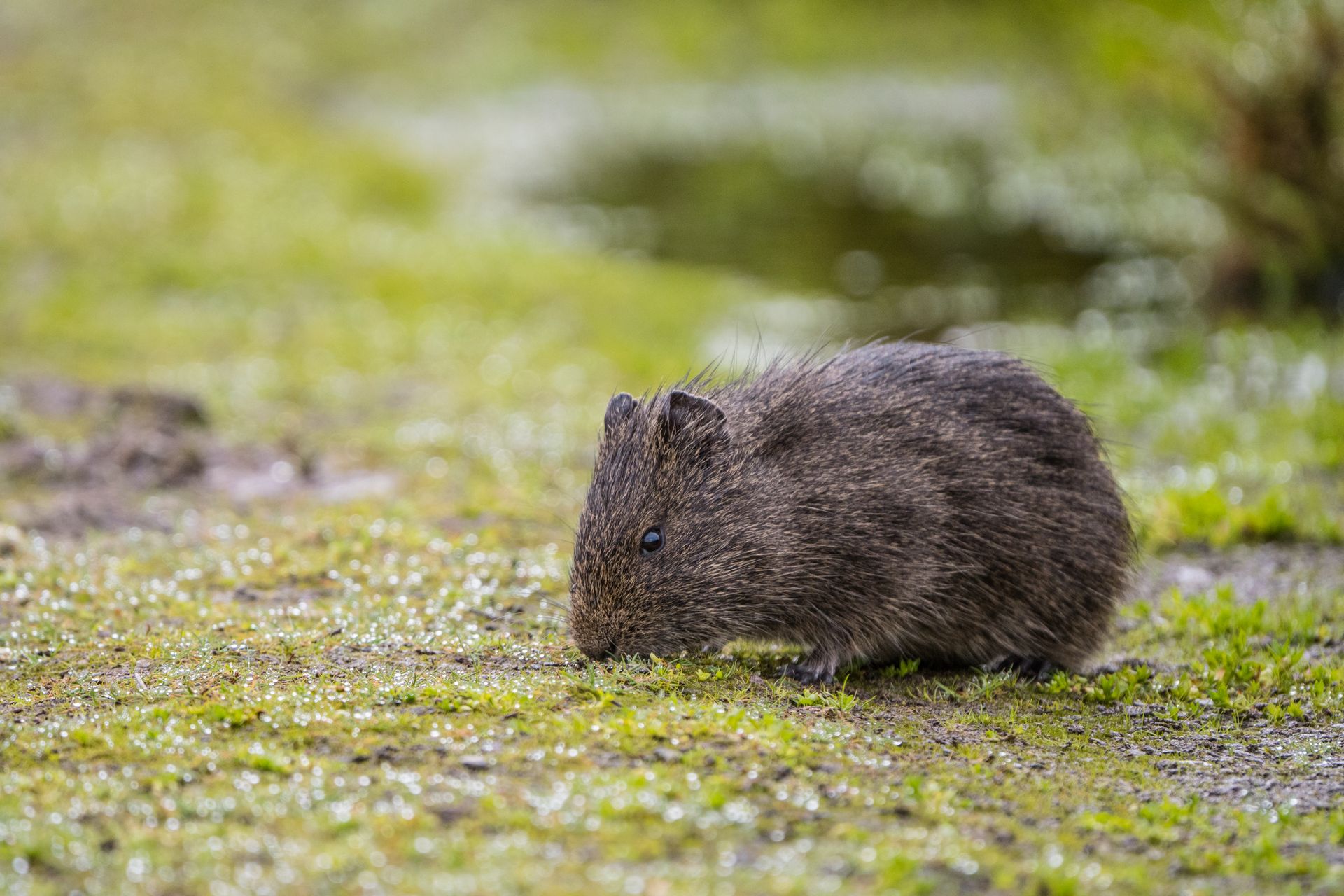
Azara's Agouti, a shy and elusive rodent, is a rare sight in the Brazilian wilderness. They weigh no more than 3 kg and scurry around the forest floor, often burying nuts and seeds that can grow into new trees.
The Yacare caiman, a species of crocodile-like reptile, is abundant in the Brazilian Pantanal. With a population of over 10 million individuals, they're not a rare sight in the region's rivers and streams.
Recommended read: Central American Jaguar
Tanagers
Tanagers are some of the most brilliantly coloured birds in Brazil, coming in a wide range of colours including red, blue, and turquoise.
They are the second-largest family of birds, representing about 4% of all bird species in the world and 12% of all Neotropical birds.
Most tanagers are omnivorous, feeding on fruit, nectar, and insects.
They live in pairs or in small family groups of three to five individuals consisting of the mating pair and their offspring.
You can spot tanagers almost anywhere, but one of the best places to see a variety of species is the Atlantic forest near the coastal town of Parati.
What Animal?
The jaguar is the national animal of Brazil, a country known for its incredible diversity of wildlife.
In Brazil, you can find these charismatic cats roaming freely, making it the best place in the world to see them.
The jaguar is a magnificent creature, and Brazil is its home.
Capybara
The capybara is a pretty unique-looking animal, with its barrel-shaped body and close relation to the Guinea pig. It's also the largest rodent in the world.
Capybaras are highly social animals, often found in groups of 20-30 animals, and some groups can even contain up to 100 individuals.
They're also excellent swimmers, able to hold their breath for up to 5 minutes.
What are the Big Five?

Brazil has its own 'Big Five', which are the giants of the Brazilian jungle. They are the jaguar, Brazilian tapir, giant anteater, maned wolf, and giant river otter.
These incredible animals can be encountered on your travels in Brazil. They are truly a sight to behold.
The jaguar is one of the most iconic of the Big Five, known for its powerful build and distinctive spots.
Jaguar - National Animal
The jaguar is the national animal of Brazil, and it's an incredible creature. It's the largest wild cat in the Americas and the third-largest big cat in the world.
Jaguars have the most powerful bite among big cats, capable of crushing the skull of a fully-grown caiman. They're solitary and elusive, making them a thrill to spot in the wild.
The Brazilian Pantanal is home to the second-largest population of jaguars in the world, making it the best place to see these majestic animals in their natural habitat. The Pantanal's open landscape and network of streams and ox-bow lakes provide the perfect stage for spotting jaguars.
For your interest: World Wildlife Foundation Charity Rating
Jaguars are not just solitary animals, but they also have a unique collective noun - a "shadow" of jaguars. This refers to a group of jaguars, and it's a fascinating fact that shows just how special these animals are.
In Brazil, you can find jaguars in the Amazon rainforest, the Pantanal, and even in the Atlantic forests. They're an adaptable species, capable of living in a variety of environments.
Jaguars are also known for their distinctive yellow golden coat with black spots, and each one has its own unique pattern. Even black jaguars have these spots, although they might be harder to see in the sun.
Maned Wolf
The maned wolf is a unique and fascinating animal that's native to South America, specifically Brazil. It's the only canid of its kind, and its impressive size is due to its exceptionally long legs, which are thought to have evolved for life in the tall grasslands.
They stand 90 centimetres tall at the shoulder, making them quite a sight to behold. The maned wolf is also a shy creature that's rarely encountered in the wild.
In Brazil, you can spot a wild maned wolf on night safaris at Fazenda San Francisco in the Southern Pantanal, although sightings are rare and brief. For a more guaranteed encounter, head to Santuário do Caraça in Minas Gerais, where a wild maned wolf visits the monastery for its evening meal.
Maned wolves have a varied diet that includes small vertebrates, fruits, and arthropods. They play an important role in the conservation and propagation of plant species by eating fruits and excreting the seeds.
In the wild, maned wolves are solitary hunters, but during the breeding season, they may be accompanied by a mate. They're very territorial and live in territories ranging from 7.7 to 44.4 square miles, depending on food availability.
The females give birth to up to five pups after a gestation period of maximum 65 days.
For more insights, see: Wolves in Great Britain
Crab Eating Fox
The Crab-eating Fox is an attractive canid that is not closely related to true foxes.
They form monogamous pairs and congregate in small hunting packs that prey mainly on rodents, birds, reptiles, and insects.
During the wet season, they often search for crabs and other crustaceans on the muddy floodplains, which gives them their name.
Their distribution is widespread across central and southern Brazil, making it a common sight in most forested areas.
The Pantanal is one of the best places to see the Crab-eating Fox, and spotting one in the wild is a thrilling experience.
Worth a look: Peruvian Desert Fox
Giant Anteater
The giant anteater is an impressive creature, reaching a length of 7.9 feet (2.4 meters) from snout to tail.
They have distinctive gray-brown fur, with white front paws, black stripes on their chest and back, and a long, hairy tail.
These animals are toothless, but their long tongues allow them to catch up to 35,000 ants and termites a day.
They scrape the walls of insect burrows and tongue 150 times per minute to quickly catch their prey.
Giant anteaters are found throughout South and Central America, but their population in Central America has declined sharply.
They roam large areas and are generally found in tropical dry forests, savannas, and open grasslands.
Giant anteaters are solitary animals, with females giving birth to a single cub once a year.
The cubs leave their mother after two years, when they are fully grown.
In the wild, giant anteaters are not aggressive, but when cornered, they stand on their hind legs and attack with their front paws.
Their claws are about 3.94 inches (10 centimeters) long, and they can even fight with a puma or jaguar.
The giant anteater is listed as "Vulnerable" on the IUCN Red List of Threatened Species, with approximately 5000 individuals left in the wild.
They are threatened by habitat destruction and modification, which has led to a decline in their population.
In the wild, giant anteaters feed on up to 30,000 insects a day, using their long tongue to shoot out up to 150 times every minute.
They only take a small number of insects from each nest before moving to the next one to avoid overexploiting the food sources within their home ranges.
The Southern Pantanal in Brazil is the best place to see giant anteaters in the wild, with their preferred habitat type being open savannah.
The abundance of termite mounds in the Pantanal guarantees a renewable food supply for the giant anteaters.
In Brazil, giant anteaters live in the Pantanal wetlands, open grasslands, and the savannah (Cerrado), where they hunt on the ground and can climb trees.
Their thick coat of fur and bushy tail help them blend in with their surroundings, making them harder to spot.
Broaden your view: American Bald Eagle Food Chain
Golden Lion Tamarin
The Golden Lion Tamarin is a stunning species of primate that's native to Brazil's Atlantic coastal rainforests. They have impressive manes that remind us of Africa's big cats.
These tiny primates are social creatures and live in groups in the wild. They're known to change their nests every night to stay safe from predators.
The Golden Lion Tamarin is a small species, growing up to 26 cm or 10 inches in length and weighing just over 500 grams or 1 lb. They have reddish-orange hair with longer strands around their face.
They're very aware of their surroundings and spend up to 12 hours sleeping in their nests before starting their day. They roam their area in search of fruits, insects, and small vertebrates.
Golden Lion Tamarins typically give birth to twins, and their babies are nursed and carried for four weeks. They usually live in groups of two to eight family members.
Recommended read: Lion vs Rhodesian Ridgeback
Three Toed Sloth
The three-toed sloth is a tree-dwelling animal about the size of a small dog. It's well-adapted to the arboreal lifestyle.
They spend their entire lives in the canopy, hanging upside-down, and never move far from their food supply. This unique lifestyle has led to some fascinating adaptations.
Their fur is parted along the stomach and falls from belly to back, allowing rainwater to drip off easily. The shafts of their hair have special grooves that house algae.
The algae grow well in their fur because they're never in a hurry, giving it a greenish tint that serves as camouflage against predators. This remarkable adaptation helps them blend in with their surroundings.
Yellow Armadillo
The Yellow armadillo is a small species that can be found at Fazenda San Francisco in the Southern Pantanal.
They are nocturnal animals, but occasionally wander to the lodge during the daylight hours, attracted by the corn seed overflowing from the bird feeders.
The Yellow armadillo is relatively rare to see in the wild, unlike the smaller Pink fairy armadillo, which is only 15 centimetres long.
Armadillos have a unique body covered in hard and bony keratin plates, the same material found in human hair and nails.
The Yellow armadillo's diet consists mainly of ants, termites, and larvae, but they also enjoy ripe fruit from time to time.
Their poor eyesight is compensated by an excellent sense of smell, which helps them navigate and find food in the wild.
Curious to learn more? Check out: Nine Banded Armadillo
Tapir
The Brazilian tapir is one of the five tapir species in the world and is sadly in decline due to poaching and habitat destruction.
It's a gentle herbivore that uses its long snout to grab leaves, shoots, and fruit as it roams through the forest.
These tapirs are mostly active at night, which means spotting them in the wild can be a challenge.
In Brazil, the Pantanal is the best place to see them, particularly at the Pouso Alegre eco-lodge where you can watch them emerge from the forest at sundown.
The tapir's unique behavior makes it a fascinating creature to observe, especially when it wades into a watering hole for a leisurely drink.
The capybara, on the other hand, is one of the most common Brazilian animals, and you can even spot them on a taxi ride from Sao Paulo airport to the city.
In fact, the largest capybara ever recorded was from Sao Paulo and weighed a whopping 81 kg (178 lb).
Azara's Agouti
Azara's Agouti is a shy and elusive rodent, closely related to guinea pigs, that weighs no more than 3 kg.
They have a unique way of foraging for food, sitting on their haunches and holding their food between their forefeet, much like a squirrel.
Azara's Agoutis are accidental gardeners, burying nuts and seeds and then forgetting where they put them, allowing the seeds to germinate and grow into new trees.
You can spot them in the Pantanal region, particularly at Pousada Piuval lodge, or in the Atlantic forest, including Iguazu Falls.
Red Brocket Deer
The Red Brocket Deer is a family of small to medium-sized deer native to Latin America. They grow to around 67 to 80 centimetres at the shoulder.
Their wide distribution range in Brazil makes them a good target for predators like jaguars and pumas. This has led to the Red Brocket Deer being quite shy and retreating at the slightest disturbance.
You can spot them in the wild in areas like the Pantanal, where they are less likely to be seen in heavily trafficked areas.
For your interest: Blood Tracking Dog Breeds
Caiman
The Yacare caiman is a common sight in the Brazilian Pantanal, with hundreds of them basking on riverbanks and lurking in muddy waters. They are not dangerous to humans, unlike some other crocodile species.
These caimans feed mainly on aquatic invertebrates, like snails, and fish. They can grow up to 40 years old, which is quite impressive for a reptile.
The Yacare caiman has brown coloured skin with dark brown spots or blotches, making them quite distinctive. They are found in rivers, lakes, and waters in the Pantanal and the Amazon rainforest.
About 10 million of these caimans live in the wetlands of the Pantanal alone. That's a staggering number!
Take a look at this: Rio Apaporis Caiman
Green Anaconda
The Green Anaconda is a behemoth of the Brazilian animal kingdom, one of the most dangerous creatures you'll find. It's the largest snake in the world, with females growing significantly larger than males.
The Green Anaconda can live in swamps, marshes, and slow-moving rivers, where it ambushes its prey like a crocodile. Its eyes and nostrils are positioned on top of its head, allowing it to stay mostly submerged in the water.
These giant reptiles can grow up to 5.21 meters long and weigh as much as 97.5 kilograms, the heaviest female on record. They're not just long, they're also incredibly heavy.
To spot a Green Anaconda in the wild, head to the Amazon rainforest, where they're most commonly found. It's the perfect place to catch a glimpse of these incredible creatures.
Here's an interesting read: Giant Northern Green Anaconda
Fer de Lance
The Fer-de-Lance is one of the most venomous pit-viper species in South America. It's a snake that you definitely want to steer clear of.
This snake is known to cause the most snake-bite-related mortalities in South America. It's a serious animal that demands respect.
Fer-de-Lance is a nocturnal snake, which means it's active at night and sleeps during the day. It spends its days basking in the sun, waiting for nightfall.
Its perfect camouflage and defensive temperament make it a formidable opponent. It's not a snake to mess with.
Fer-de-Lance tends to live near human settlements, which is a major reason for conflicts with people. Its proximity to humans makes it a danger to communities.
It waits in ambush, perfectly camouflaged among the leaf litter, for its prey to approach within striking range. This stealthy behavior makes it a master hunter.
Recommended read: Rio De Janeiro Brazil Animals
Morpho
The Morpho butterfly is a stunning sight to behold. These brilliant blue butterflies have a wingspan of 10 centimetres (4 in).
You can spot them flapping lazily along open corridors through forests or along riverbanks on sunny days. Iguazu Falls is quite a good spot for them.
The underside of their wings is speckled brown with a pattern of eye-like circles and zigzag lines to help them camouflage while at rest.
Wandering Spider
The wandering spider is a formidable creature. It's also known as a banana spider, and that's because it sometimes travels in banana crates as a stowaway.
This spider is not to be trifled with, as its bites are poisonous and it's aggressive. It doesn't like to lose, and that's a trait you don't want to test.
If you're bitten by a wandering spider, you'll need to act fast. The poison can destroy tissue and cause respiratory paralysis, which is a serious condition.
Wildlife Watching and Tours
Brazil is a paradise for wildlife enthusiasts, with its lush rainforests, vast savannas, and diverse ecosystems hosting an incredible array of animals. You can spot 35 Amazing Brazilian Animals and Best Places to See Wildlife in Brazil, from the majestic jaguars to the colorful macaws.
The Pantanal region is a hotspot for wildlife watching, with its wide open spaces and low vegetation making it easier to spot animals like jaguars, tapirs, and maned wolves. Specially trained local guides accompany safari tours to ensure the protection of both humans and animals.

The Amazon Rainforest is another must-visit destination for wildlife enthusiasts, with its unique jungle lodges offering safari tours to experience the nature of the Amazon in all its facets. However, due to the dense vegetation and high treetops, the chances of sighting many animals are somewhat lower.
The Uakari Lodge in Tefé offers special jaguar expeditions, where tourists can accompany research work in the Mamirauá Reserve for several days. This is a unique opportunity to see jaguars in their natural habitat and contribute to conservation efforts.
Here's a list of some of the most iconic Brazilian animals and where to see them:
- Macaws: All 17 Types of Macaws and Where to See Them in the Wild
- Jaguars: On the Trail of Wild Jaguars in the Pantanal, Brazil
- Tapirs: Thirsty Tapirs and Flamboyant Birds at Pouso Alegre Lodge, Brazil
- Maned wolves: On the Trail of Wild Jaguars in the Pantanal, Brazil
- Anteaters, giant otters, tapirs, maned wolves, and jaguars: On Safari Tour - Wildlife Watching in Brazil
Whether you're a seasoned wildlife enthusiast or just starting to explore the world of Brazilian animals, there's something for everyone in this incredible country.
Frequently Asked Questions
Which animal is only found in Brazil?
There is no animal that is exclusively found in Brazil, as the mentioned species are also found in other countries. However, the Jaguarundi is a unique wild cat species found in Brazil's Amazon basins.
What is the biggest predator in Brazil?
In Brazil, the jaguar is the largest land predator, reigning at the top of the food chain. Its dominance depends on preserving large, high-quality habitats and prey areas.
Featured Images: pexels.com