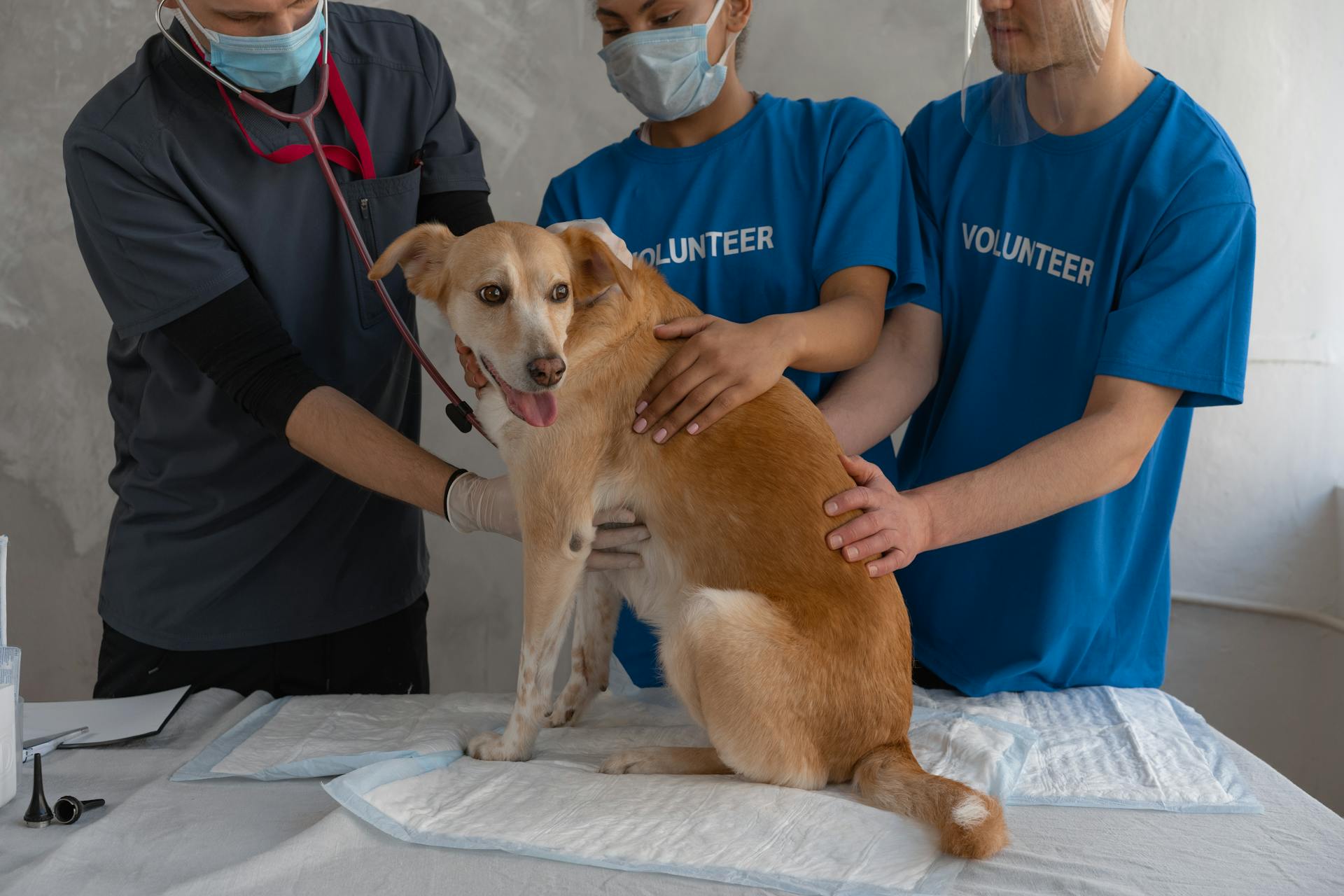
As a zoo veterinary technician, you can expect a rewarding career working with a variety of animals, from mammals and birds to reptiles and amphibians.
To become a zoo veterinary technician, you'll typically need to earn an associate's degree in a veterinary technology program accredited by the American Veterinary Medical Association (AVMA). These programs usually take two years to complete.
You'll also need to gain hands-on experience by completing an internship or externship at a zoo or wildlife rehabilitation center. This will give you the skills and confidence to work with animals in a fast-paced and dynamic environment.
The salary for a zoo veterinary technician can vary depending on factors like location, experience, and specific job duties. On average, zoo veterinary technicians earn around $40,000 to $60,000 per year.
You might like: Vetcheck Pet Urgent Care Center - Fishers in
Education Requirements
To become a zoo veterinary technician, you'll need to meet some specific education requirements. To start, you must graduate from a veterinary technology program that's approved by the American Veterinary Medical Association (AVMA). This is a crucial step, as it ensures you've received the necessary training to work with animals in a zoo setting.
Additional reading: How to Become a Zoo Veterinary Technician
You'll also need to complete at least 10,000 hours (around five years) of work experience in the field of zoo medicine. This hands-on experience will help you develop the skills and knowledge you need to succeed in this role.
In addition to work experience, you'll need to complete at least 40 hours of continuing education (CE) in fields relevant to zoo veterinary technology. This CE must be completed within five years of applying to take the AVZMT exam.
To prepare for the exam, you'll also need to complete at least 40 case logs, including five detailed case studies that cover mammal, avian, and reptile/amphibian categories. These case studies must be approved by a qualified supervisor.
Here are the specific education requirements outlined by the Association of Zoo Veterinary Technicians (AZVT):
- Graduate from a veterinary technology program approved by the AVMA
- Complete at least 10,000 hours (around five years) of work experience in zoo medicine
- Complete at least 40 hours of CE in relevant fields
- Complete 40 case logs, including five detailed case studies
- Obtain two letters of recommendation from qualified individuals
Specialization and Career Advancement
There are over 10,000 zoos worldwide, offering a wide range of specialization opportunities for aspiring zoo vet techs. With zoos dedicated to reptiles, big cats, birds, or insects, techs can choose a specific area of interest.
The Association of Zoos and Aquariums (AZA) has accredited over 439 zoos in the U.S., providing a significant number of potential job opportunities for zoo vet techs. This means aspiring techs can find work in nearly every U.S. state.
Zoo vet techs can specialize in caring for threatened or endangered species, with the AZA reporting that approximately 1,000 of the 800,000 animals kept in captivity are considered threatened or endangered.
Work Environment and Wellbeing
As a zoo veterinary technician, you'll be working in a fast-paced and physically demanding environment. You'll be required to work a rotating schedule including weekends, holidays, and some after work shifts, which can be challenging.
Physical demands of the job include being able to lift up to 50 pounds, walk, stand, and see animals and exhibits for observation and safety. You'll also need to have good hearing and vision to respond to animal sounds, radio communication, and emergency situations.
Check this out: Veterinary Technician Relief Work
To thrive in this role, you'll need to be physically agile and strong, with good overall health and well-being. You may be required to work in extreme weather conditions and challenging physical environments, such as animal enclosures.
Here are some key physical requirements for zoo vet techs:
By understanding the physical demands of the job, you can prepare yourself for the challenges and rewards of working as a zoo veterinary technician.
Clinical Environment & Procedures
Working in a zoo can be a challenging and unpredictable environment. You'll be exposed to heat, humidity, and cold temperatures on a regular basis, and may even encounter extreme conditions when tending to animals in their enclosures.
Regular exposure to heat and humidity is the norm for zoo vet techs. You may also be exposed to potentially hazardous chemical substances like cleaning agents used for animal enclosures.
Zoo vet techs may experience minor physical trauma like cuts, bruises, and minor burns even when handling animals properly. This is why many zoos require their employees to be vaccinated for rabies and other zoonotic diseases.
Suggestion: Feline Lymphoma When to Euthanize
To work in a zoo, you'll need to be physically fit and able to perform physically demanding labor. This includes lifting up to 50 pounds, walking, standing, and seeing and hearing animals and their enclosures.
Some zoos have state-of-the-art facilities with advanced equipment, while others may have more basic facilities. Either way, you'll need to be flexible and able to adapt to different situations.
Here are some typical daily procedures you might perform as a zoo vet tech:
- Submitting or processing specimen samples for lab testing
- Entering medical records to transmit vital information to supervisors
- Maintaining the hospital and animal holding spaces and inventory clinic supplies
- Assisting with the creation of balanced and nutritious feeding plans for animals
- Performing routine pharmacy-related tasks
- Participating in gross necropsies and sample preparation as needed
- Preparing specimens and performing diagnostic laboratory tests
- Training veterinary technician interns/externs or other volunteers on procedures and protocols
- Following all safety guidelines and modeling safe work practices
- Performing husbandry tasks such as cleaning, feeding, and maintenance
Physical & Emotional Wellbeing
Physical demands of being a zoo vet tech are high, requiring strength, overall health, and well-being to handle animals of varying sizes and species.
Working as a zoo vet tech can be physically demanding, requiring long periods of standing, walking, bending, and lifting heavy objects.
Zoo vet techs may be required to work in various environments, including outdoors, which can be challenging, especially during extreme weather conditions.
The job posting for a zoo vet tech at the AZA mentions the need for "coordinated gross motor movements in response to changing external stimuli within moderately demanding tolerances."
This means zoo vet techs need to be able to adapt quickly to changing situations, which can be mentally and physically exhausting.
Protecting endangered species can be a gratifying aspect of this profession, but it also requires zoo vet techs to work beyond scheduled hours, including weekends and holidays.
Working in this field can take a toll on a zoo vet tech's physical and emotional wellbeing, but many find it rewarding to contribute to the conservation of endangered species.
Animal Care and Handling
As a zoo veterinary technician, you'll work with a diverse range of animals, from familiar species like rabbits and goats to more exotic and even dangerous creatures like scorpions and venomous snakes.
The animals you'll encounter can be unpredictable, and some may even pose a threat to humans if not handled correctly.
In zoos, you'll often work with animals that are not as well understood or as predictable as those found in small animal clinics, where care is focused on domesticated animals like cats and dogs.
Check this out: How Is a Veterinary Technician Work Environment
You'll need to be prepared to handle animals that can range from gentle to potentially deadly, such as lions and bears.
Zoo veterinary technicians must undergo rigorous and specialized education and training to prepare for the unique challenges of this role.
In this role, you'll work with animals that require specialized care, such as rare and endangered species that are not commonly seen in veterinary clinics.
Career Development and Resources
As a zoo veterinary technician, you'll have opportunities to work with a variety of animals, from mammals to birds to reptiles.
To get started, consider earning a degree in a field like biology, chemistry, or veterinary technology. This will provide a solid foundation for your future career.
You can also gain hands-on experience by volunteering or interning at a zoo or wildlife rehabilitation center. This will not only give you practical skills but also help you build a network of contacts in the industry.
Many zoos and wildlife organizations require their veterinary technicians to be certified or registered, so be sure to research the specific requirements for your desired role.
Professional Organizations
Becoming a zoo vet tech requires a great deal of commitment and hard work that continues once hired by a zoo. The Association of Zoo Veterinary Technicians (AZVT) is an essential resource for current zoo vet techs or those considering joining this unique professional field.
The AZVT was formed in 1981 with 29 members worldwide, and now has over 400 members globally. Membership costs $40 per year for active members and associates, and $22 per year for students and non-technical personnel.
Being part of AZVT provides access to a members-only forum, quarterly newsletter, and networking opportunities with AZVT members. This organization promotes education and professional standards, and contributes to conservation efforts.
AZVT holds annual conferences focused on laboratory techniques that support individual and institutional research, offering discounted rates for members. By joining AZVT, you can stay up-to-date with the latest developments in zoo animal medicine and connect with like-minded professionals.
Key Takeaways
If you're considering a career as a zoo veterinary technician, here are some key takeaways to keep in mind.
Zoo veterinary technicians are specially trained to provide support to veterinarians as they care for animals of many different species at a zoo.
To become a zoo vet tech, you'll typically need to complete at least a two-year degree in veterinary technology.
To become specially certified in zoological medicine, however, requires more extensive training and passing a certification exam.
Here's a summary of the education and training requirements for zoo vet techs:
- 2-year degree in veterinary technology: This is the minimum education required to become a zoo vet tech.
- Extensive training and certification: To become specially certified in zoological medicine, zoo vet techs need to complete additional training and pass a certification exam.
Salary and Career Information
As a zoo veterinary technician, you can expect a competitive salary, with the average annual salary in the United States being $57,577, according to ZipRecruiter (2025).
The salary range for zoo vet techs can vary, but most can expect to earn between $43,000 and $76,500 per year. Opportunities for advancement that may lead to an increase in salary vary by region and existing experience level.
The cost of living in certain areas, such as Alaska and California, can significantly impact your purchasing power, with these states being among the most expensive in the country.
Here are some key salary statistics for zoo veterinary technicians:
It's worth noting that zoo veterinarians, on the other hand, earn a considerably higher salary, with an average annual salary of $189,657, according to ZipRecruiter (2025).
Frequently Asked Questions
Can a vet tech work in a zoo?
Yes, vet techs can work in zoos, caring for animals and promoting conservation and education alongside veterinarians. They require specialized skills and knowledge to work with a variety of species in a zoo or wildlife setting.
Do zoo vets get paid more than regular vets?
Zoo veterinarians tend to earn higher salaries compared to regular veterinarians, with a significant difference in annual income. On average, a zoo vet's salary is around $170,517 per year, outpacing the national average by a notable margin.
Featured Images: pexels.com