Thoroughbred horses have a rich history that dates back to the 17th century in England. They were bred specifically for speed and endurance, with the goal of creating a horse that could run long distances without getting tired.
One of the earliest recorded Thoroughbred horses was the Godolphin Arabian, a stallion that was imported from the Middle East in 1729. He went on to become a foundation sire for many other Thoroughbred horses.
Thoroughbred horses were originally bred for racing, and their speed and agility made them well-suited for this purpose. They were often used for racing on the English countryside, where they could run for miles without getting tired.
The Thoroughbred breed was developed through selective breeding, with breeders focusing on horses that had the desired traits of speed, endurance, and agility. This selective breeding process helped to establish the Thoroughbred breed as we know it today.
If this caught your attention, see: Horse Breed
History and Origins
The Thoroughbred breed has a rich history that dates back to the late 17th century in Great Britain.
Thoroughbreds can trace their origin back to three foundation stallions: the Byerly Turk, the Darley Arabian, and the Godolphin Arabian, who were imported to England in the late 1600s and early 1700s.
The Byerly Turk arrived in England in 1689, the Darley Arabian in 1705, and the Godolphin Arabian in 1728.
The first Thoroughbred to arrive in America was a stallion named Bulle Rock, by the Darley Arabian, who was imported to Virginia in 1730.
Breeders crossed these stallions with English mares to produce offspring that could maintain high speeds over long distances.
The term "thro-bred" first emerged in 1713 to describe the resulting cross.
Genetic studies show that most Thoroughbreds alive today descend from just 27 stallions from the 18th and 19th centuries.
The first breed registry for Thoroughbred horses emerged with the original volume of the General Stud Book, published by James Weatherby in 1791.
The Jockey Club serves as the registry for Thoroughbreds in the U.S. and Canada.
The Jockey Club maintains the American Stud Book, which records every Thoroughbred imported to or born in the United States, Canada, and Puerto Rico.
The breed standard for the Thoroughbred is primarily based on racing ability.
The art of line breeding has resulted in an astonishing statistic: an estimated ninety percent of present-day racehorses can trace their lineage back to these three influential sires.
The echoes of their genetic legacy resonate through generations, creating a lineage characterized by speed, stamina, and an unwavering spirit.
The three foundation stallions, Darley Arabian, Byerly Turk, and Godolphin Arabian, have had a profound impact on the Thoroughbred breed.
Their genetic legacy continues to shape the breed, with most Thoroughbreds tracing back to just 27 stallions from the 18th and 19th centuries.
These stallions were the foundation of the Thoroughbred breed, and their influence can still be seen today.
The Jockey Club's database contains pedigree information of more than 1.8 million horses dating back to the late 1800s.
The club's database is a valuable resource for breeders and owners, providing a wealth of information on Thoroughbred lineage and breeding history.
If this caught your attention, see: Best Breed of Horse
Breed Characteristics
Thoroughbred horses are bred for their athletic ability and refined appearance, making them well-suited for racing and other equine sports.
Selective breeding has resulted in characteristics like soundness, speed, and endurance, which contribute to their success in various arenas.
Their deep chest, lean build, and powerful hindquarters are key features of the breed, allowing them to reach speeds of around 40 miles per hour.
In terms of behavior, many Thoroughbreds are too spirited and energetic for beginning equestrians, but they are highly intelligent and have a strong work ethic.
A confident, experienced handler can often train this horse to excel in various equine sports, but former racehorses can be especially difficult to retrain for other purposes.
Breed Characteristics
Thoroughbreds are known for their athletic build, with a deep chest and lean physique.
Their height range is quite impressive, typically measuring between 15 and 17 hands, or 60 to 68 inches.
These horses are bred for speed and endurance, which is evident in their powerful hindquarters.
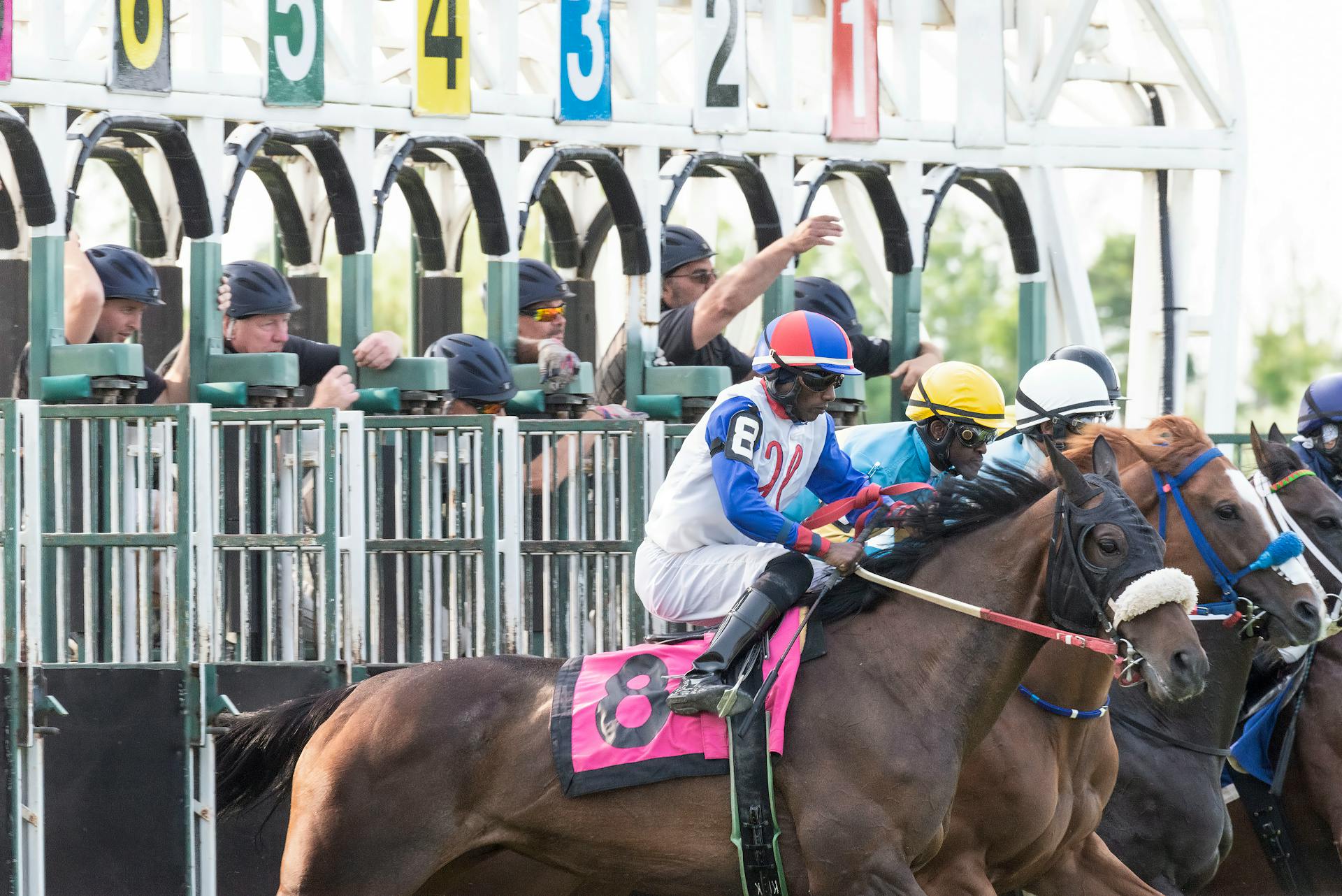
In fact, they can reach speeds of around 40 miles per hour, making them a force to be reckoned with on the track.
Their athleticism is further enhanced by their long neck and powerful hindquarters, allowing them to move with both speed and agility.
However, their spirited and energetic nature can make them challenging for beginning equestrians to handle.
Despite this, Thoroughbreds are highly intelligent and have a strong work ethic, making them a pleasure to work with for experienced handlers.
A confident and experienced handler can often train a Thoroughbred to excel in various equine sports.
Stallions and Fortunes: From Racetrack Triumphs to Stud Success
The Thoroughbred breed is known for its exceptional racing prowess, and a significant factor contributing to this is the stud fees commanded by top-winning horses. Northern Dancer commanded a staggering 1 million dollars as his stud fee.
The stud fees of top-winning horses like Northern Dancer reflect their exceptional racing pedigree. The variability in stud fees underscores the correlation between the horse's level of success on the track and the economic value placed upon their genetic contribution.
American Pharaoh, in his first year as a sire, demanded a formidable $200,000 for each breeding. This figure is a testament to the inherent value associated with his racing achievements.
The breeding ritual of Thoroughbreds adheres to the traditional live cover method, eschewing artificial insemination. This traditional method helps preserve the authenticity of the Thoroughbred bloodline.
For your interest: Breeding Thoroughbred Horses
Hot-Blooded Dynamism
Thoroughbreds are known for their hot-blooded nature, which is deeply intertwined with their origins and exceptional attributes. This classification is pivotal for trainers and handlers, offering valuable insights into a horse's limits and temperament.
Their hot-blooded heritage draws from Arab and Middle Eastern roots, endowing them with characteristics that set them apart in the realm of equine athleticism. This heritage is a key factor in their exceptional speed and agility.
Thoroughbreds' lightning-quick reflexes are a defining feature of their hot-blooded nature, clocking in at less than 0.3 seconds for a reaction. This rapid response time is a crucial asset in racing competitions and eventing.
Their spirited, high-energy personalities can make them challenging mounts for beginner riders. However, every horse is an individual, and those with personalities ill-suited for the race track often find a better fit in a second career.
Thoroughbreds are generally intelligent and sensitive, making them highly trainable with a confident, experienced handler. They have a strong work ethic and can excel in various equine sports with proper training.
Colors and Markings
Thoroughbreds come in every solid equine coat color. Most often they are bay, brown, chestnut, black, or gray. Many breed registries don't recognize coat patterns that include more than one color.
Bay is a very common color among Thoroughbreds. Brown and chestnut are also popular colors.
Black and gray are also seen in the breed.
Related reading: Gray Thoroughbred Horses
Care and Ownership
As an OTTB owner, you can expect your horse to be highly energetic and in need of regular exercise and turnout to thrive.
Providing a safe outlet for excess energy is crucial to preventing behavioral problems.
If possible, keeping your Thoroughbred turned out on pasture is ideal for meeting his needs for forage and freedom of movement.
Unlike some breeds, Thoroughbreds have a low risk of metabolic conditions associated with grazing, making pasture a great option.
Care
If you're bringing home an OTTB, remember that his new life likely varies significantly from his life at the track. Try to make transitions gradually to limit stress.
Regular exercise is a must for OTTBs, who are usually highly energetic. They do best with daily physical activity and turnout.
Keeping your Thoroughbred turned out on pasture is ideal, as it meets his needs for forage and freedom of movement. This is especially beneficial because Thoroughbreds have a low risk of metabolic conditions associated with grazing.
Minimizing exposure to mud and dirty bedding is crucial, as excess environmental moisture can compromise hoof wall integrity. This is particularly important if your Thoroughbred struggles with hoof problems.
Significant retraining is usually needed before an OTTB is ready to start his new career. It's a good idea to seek guidance from a qualified trainer if you don't have experience working with off-track Thoroughbreds.
How to Adopt or Buy
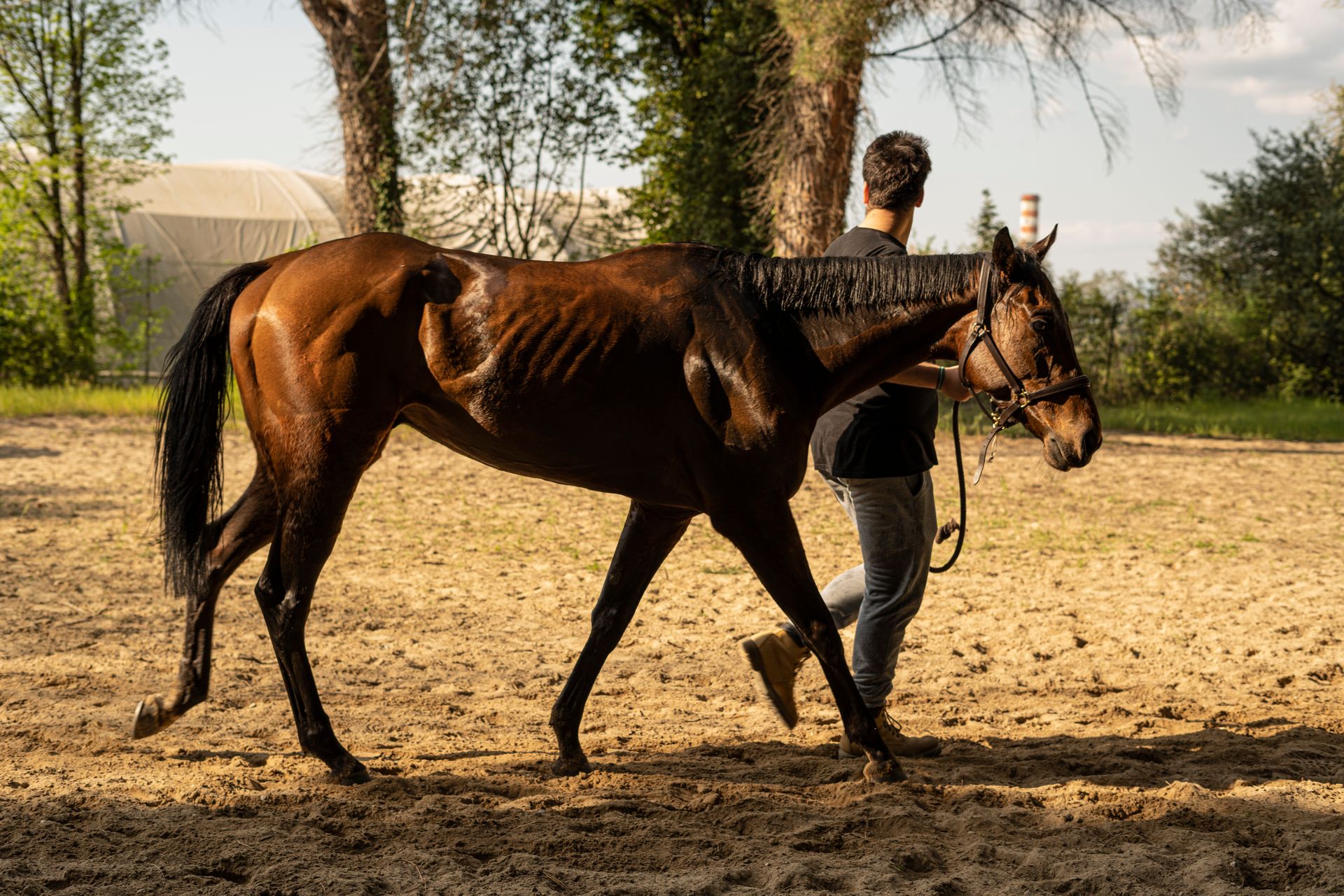
Adopting or buying a thoroughbred can be a thrilling experience, but it's essential to approach it with caution. Thoroughbreds are fairly easy to find around the world, thanks to their popularity.
Their price varies greatly, depending on the horse's age, pedigree, training, and health. Thoroughbreds from champion bloodlines can easily cost more than $100,000.
It's crucial to visit with a potential horse before committing to adoption or purchase. This will give you a chance to assess the horse's temperament and training.
Ask the seller about the horse's history, health, and training. A former racehorse might lack training or have lingering injuries.
Consider having your veterinarian perform a pre-purchase examination before buying or adopting. This will help determine the horse's health and suitability for its desired use.
A fresh viewpoint: Horse Health
Right Horse for You?
If you're new to horse ownership, you may want to start with a breed that's a bit more laid back, but if you're an intermediate or advanced rider, a Thoroughbred can be a great choice.
Thoroughbreds are bred to be athletic and spirited, so they're not ideal for beginners.
Their energetic nature makes them perfect for those who want to compete in equestrian events.
For riders who can channel their vigor, Thoroughbreds offer a powerful and smooth gait.
Some people may find Thoroughbreds too much to handle, but for the right owner, they can be a fantastic ride.
Racing and Performance
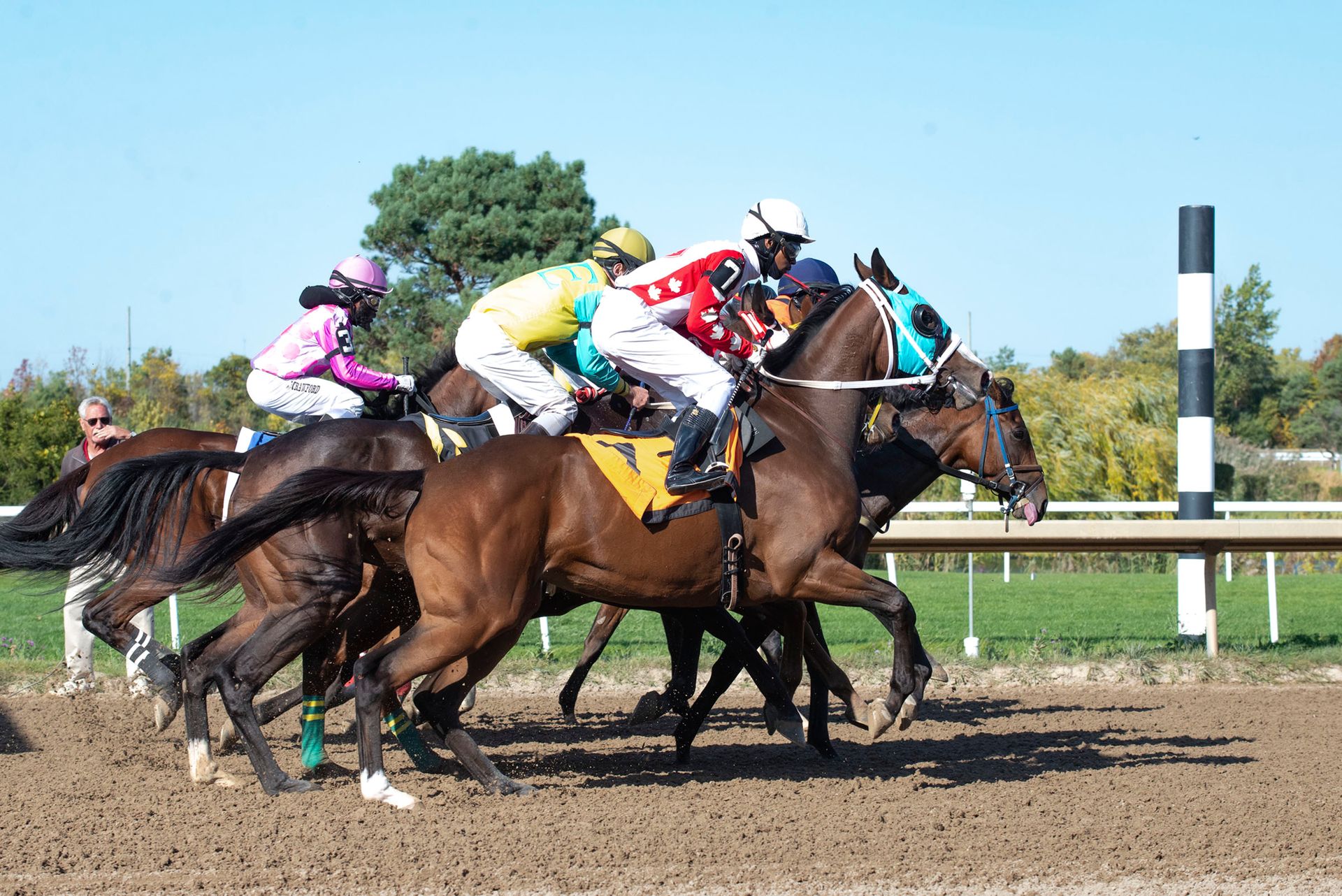
Thoroughbreds are known for their speed, agility, and grace, making them a dominant force in horse racing.
They can reach speeds of up to 35 mph, as seen in long-distance races where their endurance and ability to maintain a swift pace set them apart.
Only half of the total racehorses participating in high-grade competitions have a shot at claiming victory, making their racing careers a challenging and intense experience.
Their hot-blooded nature aligns seamlessly with their dominance in racing competitions, allowing them to channel their inherent vigor into bursts of speed.
In fact, one Thoroughbred, Winning Brew, etched her name in the Guinness World Records by covering two furlongs at a speed just under 44 mph.
Thoroughbreds are considered to have reached past their prime by the age of 4, marking the end of their racing careers and the beginning of a new phase in their lives.
Their rigorous training and discipline during their racing years pave the way for successful transitions into various equine sports, showcasing their versatility and adaptability.
Breed Development and History
Thoroughbred horses have a rich history that spans over 300 years, dating back to the late 17th century in Great Britain.
The breed was developed from three foundation stallions: the Byerly Turk, the Darley Arabian, and the Godolphin Arabian, who were imported to England in the late 1600s and early 1700s.
These stallions were bred to English mares to produce offspring with strength, speed, and stamina, characteristics that would make them ideal for racing.
The term "thro-bred" first emerged in 1713 to describe the resulting cross between these stallions and English mares.
Genetic studies show that most Thoroughbreds alive today descend from just 27 stallions from the 18th and 19th centuries.
The first breed registry for Thoroughbred horses emerged with the original volume of the General Stud Book, published by James Weatherby in 1791.
The breed standard for the Thoroughbred is primarily based on racing ability, with horses demonstrating their breeding value through their track performance.
The Jockey Club serves as the registry for Thoroughbreds in the U.S. and Canada, maintaining the American Stud Book, which records every Thoroughbred imported to or born in these countries.
The American Stud Book is the North American version of Britain's General Stud Book, first published in 1873.
Today, the club's database contains pedigree information of more than 1.8 million horses dating back to the late 1800s.
The closed studbook of the Thoroughbred breed means that only foals resulting from live cover of the mare by the stallion are eligible for registration.
Discover more: Saddlebreds
The breed's origins can be traced back to the Arabian and Turkmenian breeds, with the foundation stallions being bred to domestic mares, likely Scottish Galloways.
The first Thoroughbred to arrive in America was a stallion named Bulle Rock, imported to Virginia in 1730 by Samuel Gist.
The Thoroughbred breed has had a significant influence on the development of other horse breeds, including the American Quarter Horse, Standardbred, and Morgan.
Thoroughbred racing gained popularity in the U.S. during the 1800s, with Kentucky and Tennessee becoming centers for breeding and racing.
The Royal Mares, serving as the foundation mares, collaborated in a genetic symphony, birthing a generation of remarkable racehorses that would go on to define the sport.
The breed's racing prowess can be attributed to the genetic contributions of the three foundational sire stallions, Darley Arabian, Byerley Turk, and the Godolphin Arabian.
For more insights, see: Different Breeds of Draft Horses
Unique Traits and Characteristics
Thoroughbreds are known for their athleticism and refined appearance, which allows them to reach speeds of around 40 miles per hour.
Their hindquarters are particularly muscled, amplifying thrust as they gallop. This, combined with their agility, makes them powerful and muscular horses that can move with ease.
Thoroughbreds are highly intelligent and have a strong work ethic, but they can be too spirited and energetic for beginning equestrians.
Unique Characteristics
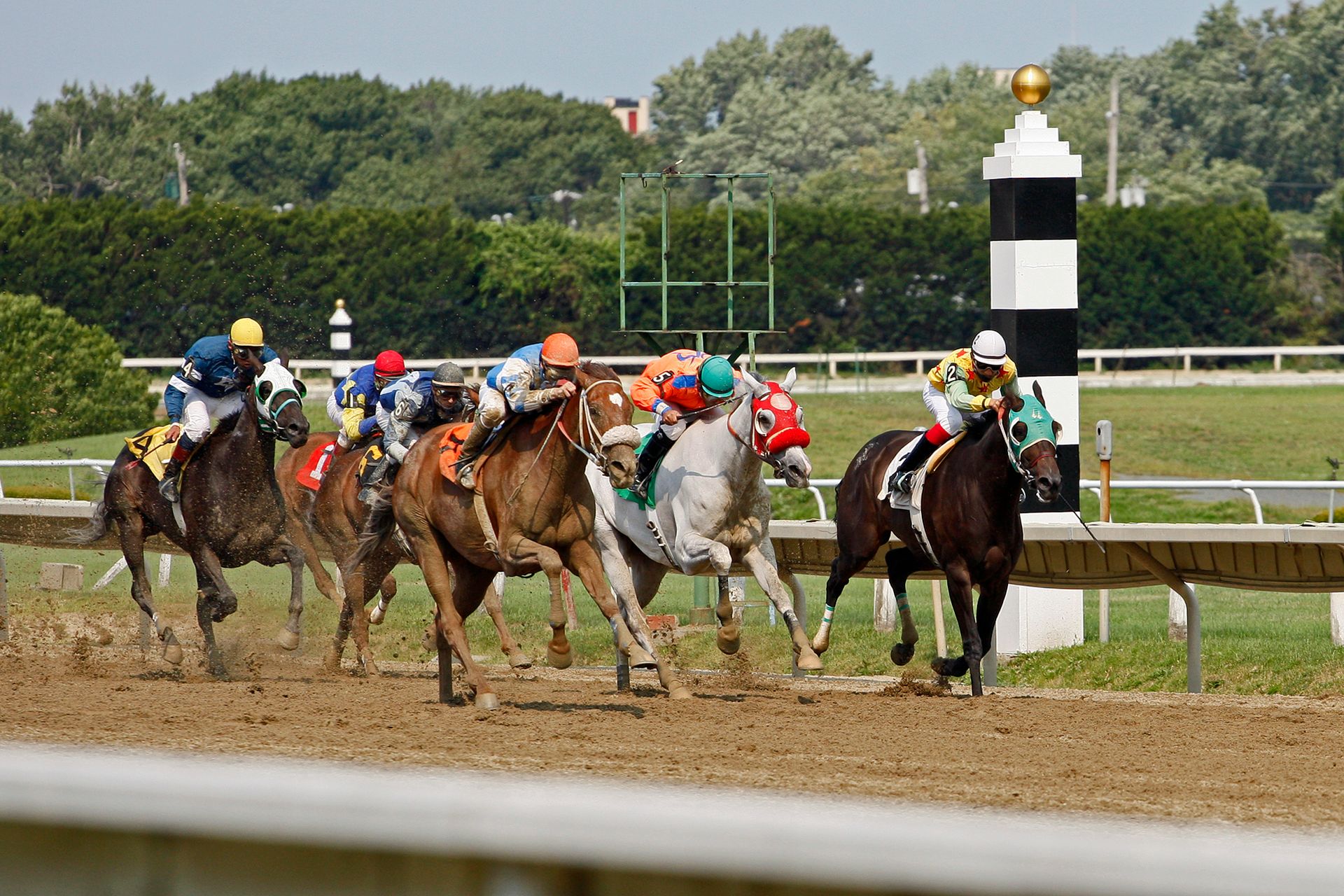
Thoroughbreds can reach speeds of around 40 miles per hour, making them incredibly fast and agile horses.
Their hindquarters are particularly muscled, which amplifies thrust as they gallop. This unique characteristic is a result of selective breeding for speed and endurance.
Many Thoroughbreds are highly intelligent and have a strong work ethic, but they can be too spirited and energetic for beginning equestrians. A confident, experienced handler can often train this horse to excel in various equine sports.
Thoroughbreds possess distinctive physical characteristics, such as the ability to move their ears up to 180 degrees and have heightened olfactory senses. This unique ability allows them to detect subtle changes in their surroundings.
Their nearly 360-degree vision due to wide spacing between their eyes also showcases their adaptability. This feature is a result of centuries of evolution and selective breeding.
Thoroughbreds can sleep on their feet, finding positions of comfort through the assistance of tendons and ligaments. This unique adaptation allows them to rest for extended periods without the need to lie down.
Beauty, Brains, and Bonds
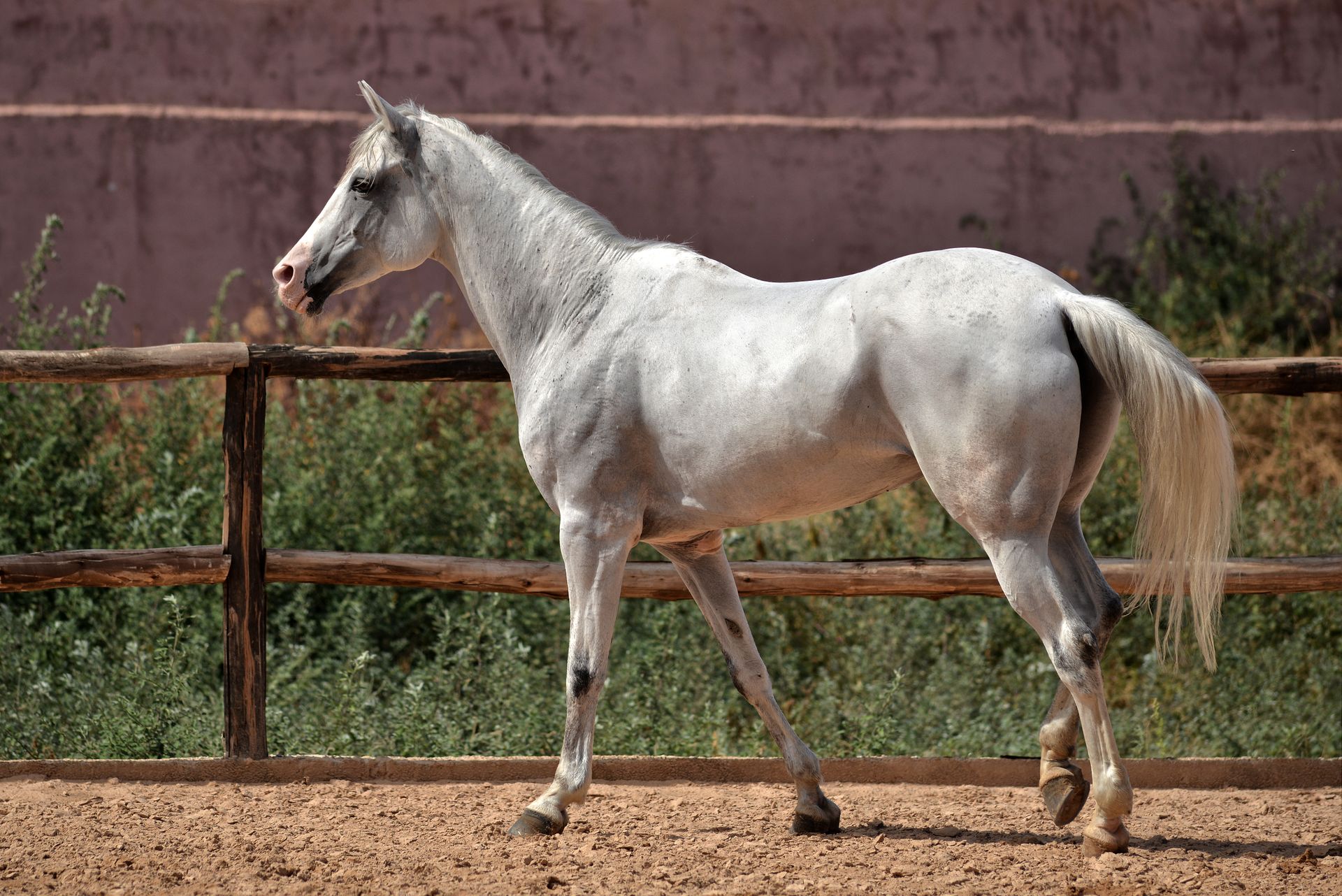
Thoroughbreds are not just speed and strength; they also exhibit intelligence and a remarkable sensitivity.
Their capacity to form deep bonds with their owners is rooted in their understanding of expressions, touch, emotions, and even names.
Thoroughbreds showcase a gentle and perceptive side, forging connections that extend beyond the rider-horse dynamic.
Their intelligence and sensitivity allow them to understand and respond to their owners' emotions, creating a strong and lasting bond.
Physical and Mental Attributes
Thoroughbred horses are known for their refined heads with widely spaced eyes, a trait they share with their Arabian ancestors. Their lean bodies are designed for speed, making them significantly lighter than horses from stockier breeds.
Most Thoroughbreds range in height from 15.2 to 17 hands, with a typical height of 16 hands. Their average weight is lower than that of horses from other breeds.
Thoroughbreds have slightly longer and lighter necks than other breeds, which aids their running ability. Their deep chest and sloped, well-muscled shoulder also contribute to their speed and agility.
For another approach, see: Draft Breed Horses
Conformation

Thoroughbreds are known for their refined heads with widely spaced eyes, a trait inherited from their Arabian blood.
Their lean bodies are perfectly suited for speed, allowing them to reach heights of 15.2 to 17 hands.
Most Thoroughbreds have slightly longer and lighter necks than other breeds, making them agile and nimble.
A deep chest and sloped, well-muscled shoulder aid running ability, giving Thoroughbreds a significant advantage on the track.
Their heart girth is usually deep and relatively narrow, allowing for efficient blood flow and oxygenation.
Long legs with clean, pronounced tendons promote soundness and stride length, making Thoroughbreds well-suited for long-distance racing.
The upper hind leg should have long, strong muscling with a long thigh bone and wide hip angle for power, enabling Thoroughbreds to accelerate quickly and maintain top speed.
Their refined conformation is a testament to their athletic prowess and ability to perform at high levels.
Temperament
Thoroughbreds are generally intelligent and sensitive horses, which can make them challenging to ride for beginners.

Their spirited and high-energy personalities are a result of their hot-blooded nature, inherited from their Arab and Middle Eastern roots.
As hot-blooded horses, Thoroughbreds are known for their lightning-quick reflexes, clocking in at less than 0.3 seconds for a reaction, making them ideal for racing and eventing.
This rapid response time is a crucial asset in competitions, where split-second decisions can make all the difference between victory and defeat.
Their hot-blooded heritage also means that Thoroughbreds may not be the best fit for all riders, as they can be unpredictable and require experienced handling.
Size
Thoroughbreds range in height from around 15 hands (60 inches) to 17 hands (68 inches). Most stand at roughly 16 hands (64 inches) tall.
They typically weigh between 1,000 and 1,200 pounds.
Health and Welfare
Thoroughbred horses can be prone to health problems due to selective breeding for speed, which may have increased the risk of cardiac and skeletal issues.
Inbreeding, a result of the closed studbook, can exacerbate these health problems.
Retired racehorses often come to their new owners with health challenges.
Their racing career can leave them with musculoskeletal injuries, making unique management necessary for them to thrive in their second careers.
Frequently Asked Questions
What's the difference between a Thoroughbred and a regular horse?
A Thoroughbred is a specific breed of horse known for its endurance and distinct physical characteristics, such as a slim body and broad chest. Unlike regular horses, Thoroughbreds are bred for speed and agility, with the ability to run long distances.
What are the disadvantages of thoroughbred horses?
Thoroughbred horses are prone to health complications and accidents due to their high-energy nature and physical demands. They can be challenging for inexperienced riders due to their spirited behavior.
Featured Images: pexels.com