
If you're interested in becoming a veterinary technician in California, you'll need to find a program that's accredited by the American Veterinary Medical Association (AVMA).
There are several AVMA-accredited veterinary technology programs in California, with the University of California, Davis, and San Diego State University being two of the most well-known options.
In California, you'll need to complete an associate's degree program in veterinary technology, which typically takes two years to complete.
These programs will provide you with hands-on experience and the knowledge you need to pass the Veterinary Technician National Examination (VTNE) and become a certified veterinary technician.
Becoming a Veterinary Technician
To become a veterinary technician in California, you'll need to start by enrolling in an AVMA-accredited veterinary technician program. There are currently 22 fully accredited programs in the state, ranging from two to four years.
You'll want to choose a program that suits your goals and schedule. A four-year degree may qualify you to become a veterinary technologist, which involves more advanced training, increased responsibilities, and possibly higher pay.
You might enjoy: How to Become a Veterinary Technician in California
To get into these programs, you'll typically need a high school diploma or equivalent, and may need to pay an application fee up to $100. Some programs may waive this fee under certain California assistance programs.
Most programs require an entrance exam and an interview with a counselor. Some may also ask for a written essay and at least one letter of recommendation. A few programs require taking the Wonderlic test, which assesses your aptitude for learning and problem-solving skills.
Here are the typical steps to become a registered veterinary technician (RVT) in California:
- Graduate from an AVMA-accredited veterinary technician program
- Pass the Veterinary Technician National Exam (VTNE)
- Pass the California Registered Veterinary Technician Exam within 60 months of passing the VTNE
- Apply for licensure as an RVT and renew every two years with 20 hours of continued education (CE) credits
Career and Salary Information
California offers a promising career path for aspiring veterinary technicians, with a strong outlook for job growth and higher salaries compared to the national average. According to the Bureau of Labor Statistics, there will be approximately 24,300 new jobs for veterinary technicians across the country between 2023 and 2033, with a predicted growth rate of 19 percent.
Veterinary technicians in California can expect to earn higher salaries than their national counterparts, with an average annual salary of $55,740. This is significantly higher than the national average of $44,040, making California an attractive option for those looking to pursue a career in veterinary technology.
Here's a breakdown of the average salaries for veterinary technicians in California, compared to the national average:
Job Outlook
The job outlook for veterinary technicians is looking bright, especially in California. According to the Bureau of Labor Statistics, there will be approximately 24,300 new jobs for veterinary technicians across the country between 2023 and 2033, with a predicted growth rate of 19 percent.
This growth rate is several times the anticipated growth rate for all occupations during that time period. In California, the vet tech role is anticipated to be the 7th fastest growing occupation for professionals with an associate degree, with a growth rate of 22 percent.
To put this in perspective, the California Registered Veterinary Technicians Association (CaRVTA) offers a range of resources and organizations for these professionals, including an online career center, a mentor program, and continued education opportunities. This can help you stay ahead of the curve and take advantage of the growing demand for veterinary technicians.
The CaRVTA also hosts a job board with opportunities at places like VCA Community Companion Animal Hospital, Sacramento Zoo, and San Diego Humane Society. If you're looking to start or advance your career in veterinary technology, California is definitely a state worth considering.
Here are some key statistics on the job outlook for veterinary technicians in California:
Overall, the job outlook for veterinary technicians is strong, with a growing demand for professionals in this field. If you're considering a career in veterinary technology, California is a great place to start or advance your career.
Consider reading: Is Veterinary Technician a Good Career
Salaries
As a future vet tech, you're probably wondering what kind of salary you can expect. The national average for vet techs is around $44,040 per year, but in California, the average salary is significantly higher at $55,740 per year.
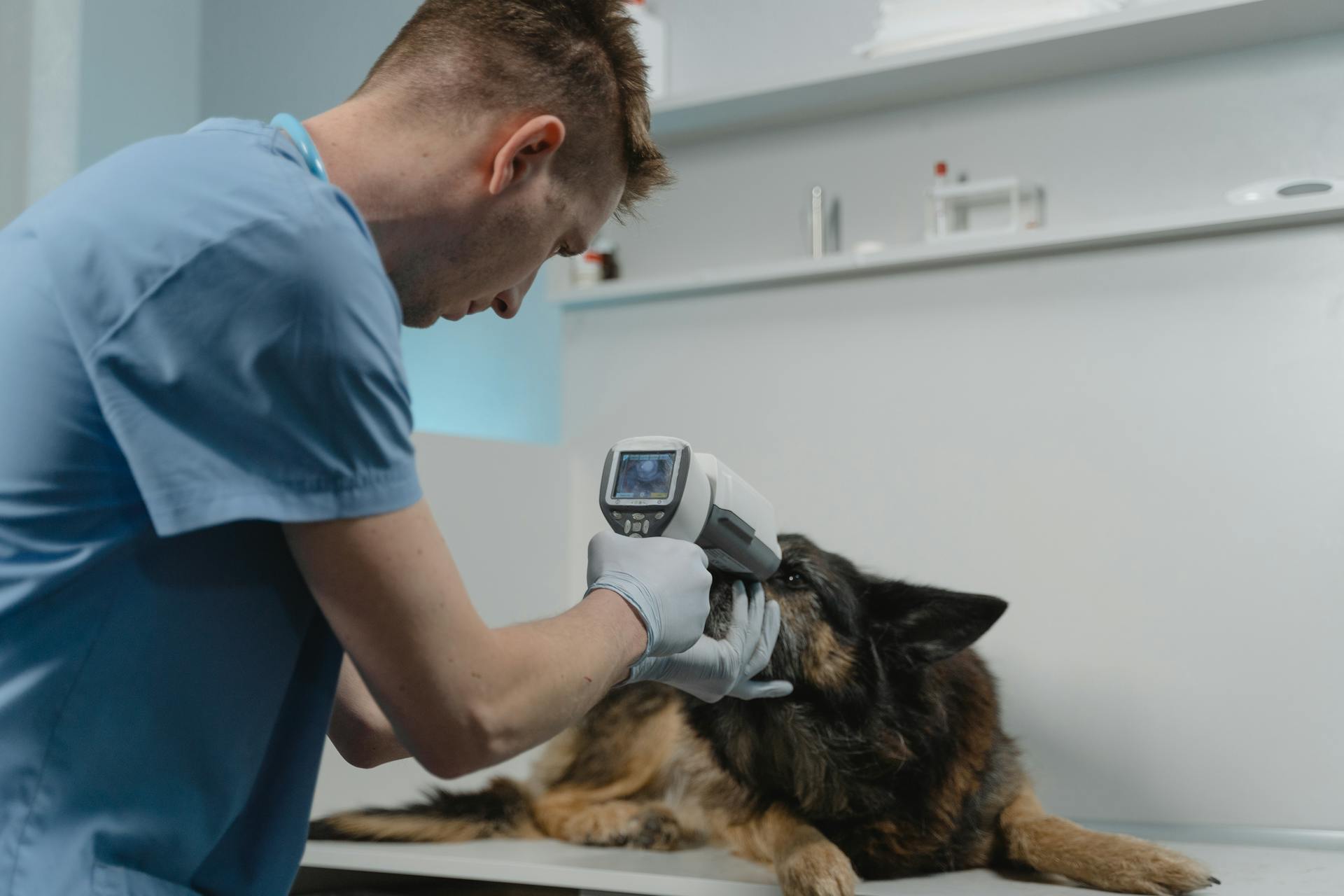
With over 9,300 vet techs employed in California, this field is definitely growing. In fact, the Bureau of Labor Statistics predicts a 30% growth in job opportunities for veterinary technicians through 2022. California vet tech salaries are also higher than the national average, with the 10th percentile starting at $39,280 and the 90th percentile reaching as high as $73,330.
The cost of living in California is notoriously high, so it's essential to consider this when deciding whether to pursue a career as a vet tech in the state. According to the Missouri Economic Research and Information Center, California is the second most expensive region in the United States.
Here's a breakdown of the average salaries for vet techs and vet assistants in California, based on the Bureau of Labor Statistics May 2023 data:
Some areas in California have higher average salaries for vet techs than others. For example, the San Jose-Sunnyvale-Santa Clara area has an average salary of $43,650, while the Salinas area has an average salary of $41,540.
Education and Accreditation
To become a veterinary technician in California, you'll need to attend an accredited program. There are currently 22 fully accredited programs in the state, which can range from two to four years. These programs are accredited by the American Veterinary Medical Association (AVMA).
Passing the Veterinary Technician National Exam (VTNE) is also a requirement for licensure. This computer-based exam is offered during three one-month testing windows annually. To qualify for the exam, you'll need to graduate from an AVMA-accredited program.
Here are the requirements for accreditation from the AVMA: Quality of courseworkFaculty qualificationsFacilities and equipmentProgram outcomes By ensuring your program meets these standards, you can be confident you're receiving a high-quality education.
On a similar theme: Veterinary Technician National Exam Vtne
Required Course Work
To become a Registered Veterinary Technician, you'll need to complete some required course work. This typically includes introductory courses in math, communications, biology, chemistry, humanities, or physical science, which you may not have taken in high school.
Most veterinary technology programs require these basic courses, and it may take a semester or two to fulfill them before you can apply for admission. This is why it's essential to research the specific requirements for each program you're interested in.
The course work for veterinary technology programs is surprisingly similar, with only minor differences in focus. For example, some programs might focus on companion animals, while others focus on large animals.
Some typical course work you can expect to encounter includes veterinary math, chemistry, terminology, surgical nursing, anatomy and physiology, restraint, animal behavior, nutrition, nursing, veterinary economics, anesthesia, parasitology, animal psychology, radiology, office practice, and animal management.
Every program requires hands-on contact with animals, and you'll also need to complete an externship of between 200 to 400 hours. This hands-on experience will give you the skills and confidence you need to succeed in this rewarding career.
Here's a list of typical course work you can expect to encounter in a veterinary technology program:
- Veterinary math
- Chemistry
- Terminology
- Surgical nursing
- Anatomy and physiology
- Restraint
- Animal behavior
- Nutrition
- Nursing
- Veterinary economics
- Anesthesia
- Parasitology
- Animal psychology
- Radiology
- Office practice
- Animal management
It will take you between 18 and 36 months to complete the Associate of Science degree in Registered Veterinary Technology, depending on the program you choose.
Associations and Organizations
If you're interested in staying current with the latest developments in veterinary technology, there are several associations and organizations you can join. The Central Coast Registered Veterinary Technicians Association and the Silicon Valley Registered Veterinary Technicians Association are two examples of professional groups that can provide valuable networking opportunities and continuing education resources.
In California, there are also various veterinary associations, including the California Veterinary Medical Association. This organization offers a range of benefits, including access to industry publications and participation in conferences and workshops. Additionally, the California Veterinary Health Care Resources website provides a wealth of information on veterinary care and health issues.
If you're looking for online resources, there are several websites that can help you stay up-to-date on veterinary technology. The California Vet Tech website is a great place to start, with information on veterinary technician careers, salaries, and schools. You can also find resources on veterinary healthcare field careers, veterinarian careers, and veterinary technician careers on the Vet Tech Resources website.
Here are some of the key organizations and websites to consider:
* Central Coast Registered Veterinary Technicians AssociationSilicon Valley Registered Veterinary Technicians AssociationCalifornia Veterinary Medical AssociationCalifornia Veterinary Health Care ResourcesCalifornia Vet TechVet Tech Resources
Intriguing read: What Is a Registered Veterinary Technician
Accreditation and Licensing
The American Veterinary Medical Association (AVMA) is the main accreditation agency for vet tech schools in California, ensuring program quality by weighing factors like coursework, faculty, facilities, and outcomes.
To practice as a veterinary technician in California, you must become a registered veterinary technician (RVT) with the California Veterinary Medical Board (CAVMB). The application requirements include passing the Veterinary Technician National Examination (VTNE) and the California Veterinary Technician Examination (CVTE).
The California RVT licenses are valid for two years and require 20 hours of continued education (CE) for renewal. You can also qualify for licensure by being a licensed, certified, or registered veterinary technician in another state (or Canada) and passing an exam qualified by the CAVMB, or by completing at least 4,416 hours of supervised clinical practice over no less than 24 months and 300 hours of approved educational credits.
Here are the steps to become a registered veterinary technician in California:
- Pass the VTNE exam
- Pass the CVTE exam
- Submit a live scan of your fingerprints and a copy of your diploma
- Complete at least 4,416 hours of supervised clinical practice over no less than 24 months and 300 hours of approved educational credits (if not already licensed in another state)
- Apply for licensure and complete 20 hours of continuing education credits every two years for renewal
Certifications and Requirements
To become a licensed veterinary technician in California, you'll need to pass the California Veterinary Technician Exam within 60 months of passing the VTNE exam.
The California Veterinary Medical Board certifies and licenses veterinary technicians in California. Once you pass the VTNE exam, you'll need to sit for the CaRVT exam administered by the board.
Candidates must pass the CaRVT exam to be eligible for licensure. You can take the exam three times a year.
To keep your license current, you'll need to renew it every two years through 20 hours of continuing education credits. This is more than just a one-and-done process.
The California Veterinary Medical Board administers the state veterinary technician examination, licensure, and continuing education. Exams are computer-based and administered throughout the state.
Twenty hours of continuing education (CE) annually are required to keep your license current. Sixteen of these must be taken from approved CE providers; four hours can be accomplished through self-study.
You'll need to pass both the Veterinary Technician National Examination (VTNE) and the California Veterinary Technician Examination to become eligible for licensure. The VTNE is an exam administered by the American Association of Veterinary State Boards.
On a similar theme: Ce for Veterinary Technicians
Schools and Programs
Platt College offers a distance-based associate degree in veterinary technology that can be completed in as little as 18 months. However, students should check with Platt College to ensure the online program is accredited by the AVMA.
Some of the most notable CVTEA-accredited programs in California include State Polytechnic University's 4-year program in Pomona, which emphasizes real-world experience and requires 120 credits to complete.
Foothill College's program for aspiring veterinary technicians lasts two years and contains 90 units, covering topics such as veterinary medical terminologies, comparative anatomy, and small animal nursing.
Other Schools
If you're exploring your options for vet tech schools in California, you may want to consider Modesto Junior College, which offers a veterinary technician program as an AS degree or certificate.
Modesto Junior College's program is located in Modesto, CA, and is accredited by the Accrediting Commission for Community and Junior Colleges, Western Association of Schools and Colleges.
The program consists of 30 units and can be completed in 12 to 24 months. You can choose from a small animal science or large animal science option, and courses cover topics such as veterinary laboratory procedures and veterinary anatomy, physiology, and terminology.

At Santa Rosa Junior College, located in Santa Rosa, CA, you can earn a two-year veterinary technician program that may lead to becoming a registered veterinary technician in the state of California.
The program is offered through SRJC's Agriculture and Natural Resources Department and covers courses such as veterinary anatomy and terminology, small animal disease recognition and transmission control, and veterinary surgical and dental assistance.
Here are some notable vet tech programs in California:
- Modesto Junior College: 30 units, 12-24 months, small animal science or large animal science option
- Santa Rosa Junior College: 4 semesters, veterinary anatomy and terminology, small animal disease recognition and transmission control
Online Programs for Students
For students who can't attend campus regularly, there are online options available. Platt College offers a distance-based associate degree in veterinary technology that can be earned in as little as 18 months.
Students should check with Platt College to ensure the online program is accredited by the AVMA, as this program is not listed on the AVMA site.
The online program at Platt College covers a range of topics, including veterinary medical terminology and clinical pathology.
Students can also expect to learn about parasitology, veterinary economics, anesthesia, animal nutrition, and exotic animal care.
Here's an interesting read: Veterinary Technician School Online
Schools

Platt College offers a distance-based associate degree in veterinary technology that can be earned in as little as 18 months.
Students can take courses such as introduction to veterinary technology, veterinary medical terminology, clinical pathology, and parasitology.
The program at State Polytechnic University in Pomona, California, is a 4-year veterinary technology program that emphasizes real-world empirical experience and consists of 120 credits.
The program at College of the Central Coast in Salinas, California, is an associate of applied sciences degree that can be completed within two years and comprises 96.8 credits.
Cosumnes River College offers a certificate of achievement for veterinary technology students who already have three years of experience working as unregistered vet assistants and can complete the program in a year.
Foothill College's program for aspiring veterinary technicians lasts two years and contains 90 units, covering topics such as veterinary medical terminologies and small animal nursing.
There are several other notable programs for aspiring veterinary technicians in California, including Los Angeles Pierce College, Mt. San Antonio College, Santa Rosa Junior College, San Diego Mesa College, Modesto Junior College, San Joaquin Valley College, Yuba College, and Pima Medical Institute.
Check this out: Pima Medical Institute Veterinary Technician
Frequently Asked Questions
How long does it take to become a vet tech in California?
To become a vet tech in California, it typically takes 2-5 years of education and training after high school. Registration with the California Veterinary Medical Board is also required.
Which is better, vet tech or vet assistant?
Vet tech programs offer higher earning potential and career advancement opportunities, while vet assistant programs provide a quicker entry point into the field
How much does it cost to go to vet tech school in California?
The total cost to attend vet tech school in California is approximately $5,500, which includes tuition, fees, and a scrub fee. This estimate is based on 92 units of coursework as a state resident.
How to make 6 figures as a vet tech?
To earn a six-figure salary as a vet tech, consider specializing in a high-demand area of veterinary medicine, such as dentistry or emergency and critical care. With additional training and certification, you can significantly boost your earning potential and achieve a lucrative career.
Featured Images: pexels.com