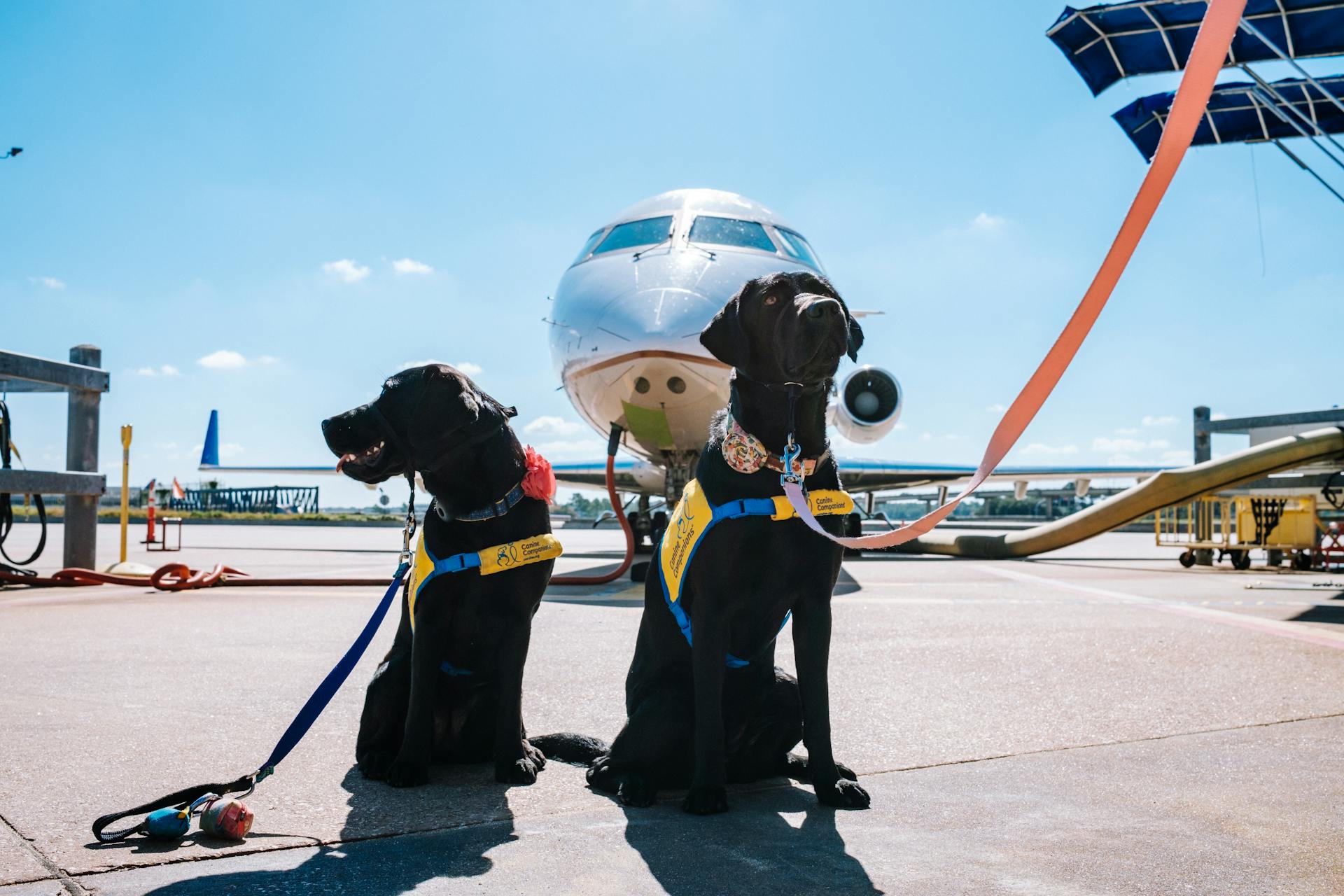
A Registered Veterinary Technician (RVT) is a highly skilled professional who plays a vital role in animal care.
To become an RVT, you'll need to complete a veterinary technology program accredited by the American Veterinary Medical Association (AVMA).
These programs typically take two years to complete and include classroom and clinical instruction.
You'll study subjects like animal behavior, anatomy, and pharmacology, and gain hands-on experience in veterinary clinics and hospitals.
Upon completion, you'll be eligible to take the Veterinary Technician National Examination (VTNE) to become a certified RVT.
Discover more: How to Become an Exotic Animal Veterinarian
What is a Registered Veterinary Technician?
A registered veterinary technician, also known as a vet tech or vet nurse, is a vital part of any veterinary team.
They are educated professionals who assist veterinarians in providing care for animals in various settings, including animal hospitals, clinics, and research facilities.
Vet techs handle similar responsibilities in animal healthcare as registered nurses do in human medicine, including patient care and medical procedures.
They also perform laboratory and diagnostic work, making them an essential part of the veterinary team.
Vet techs often face angry clients who don't believe they should have to pay for their vet care, but owning a pet is a life-long emotional and financial commitment.
A fresh viewpoint: Animal Health Technician
Roles and Responsibilities
As a registered veterinary technician, your role is multifaceted and vital to the well-being of pets and the smooth operation of veterinary practices. You're the backbone of veterinary medicine, allowing veterinarians to focus on diagnosing disease and prescribing treatment protocols.
Your day is filled with a diverse range of tasks, including conducting initial physical examinations, obtaining patient history, and drawing blood for testing. You also interact directly with pet owners, explaining procedures and discussing pet health and care.
You play a vital role in providing a comforting presence for animals and their owners, and are instrumental in educating pet owners about preventive care, nutrition, and proper training of their pets.
For your interest: Banfield Pet Hospital Client Service Coordinator
Daily Tasks
As a veterinary technician, your day is filled with a diverse range of tasks that require attention to detail and a passion for animal care.
Conducting initial physical examinations is a core responsibility of a vet tech, allowing them to assess the overall health of an animal and identify any potential issues.
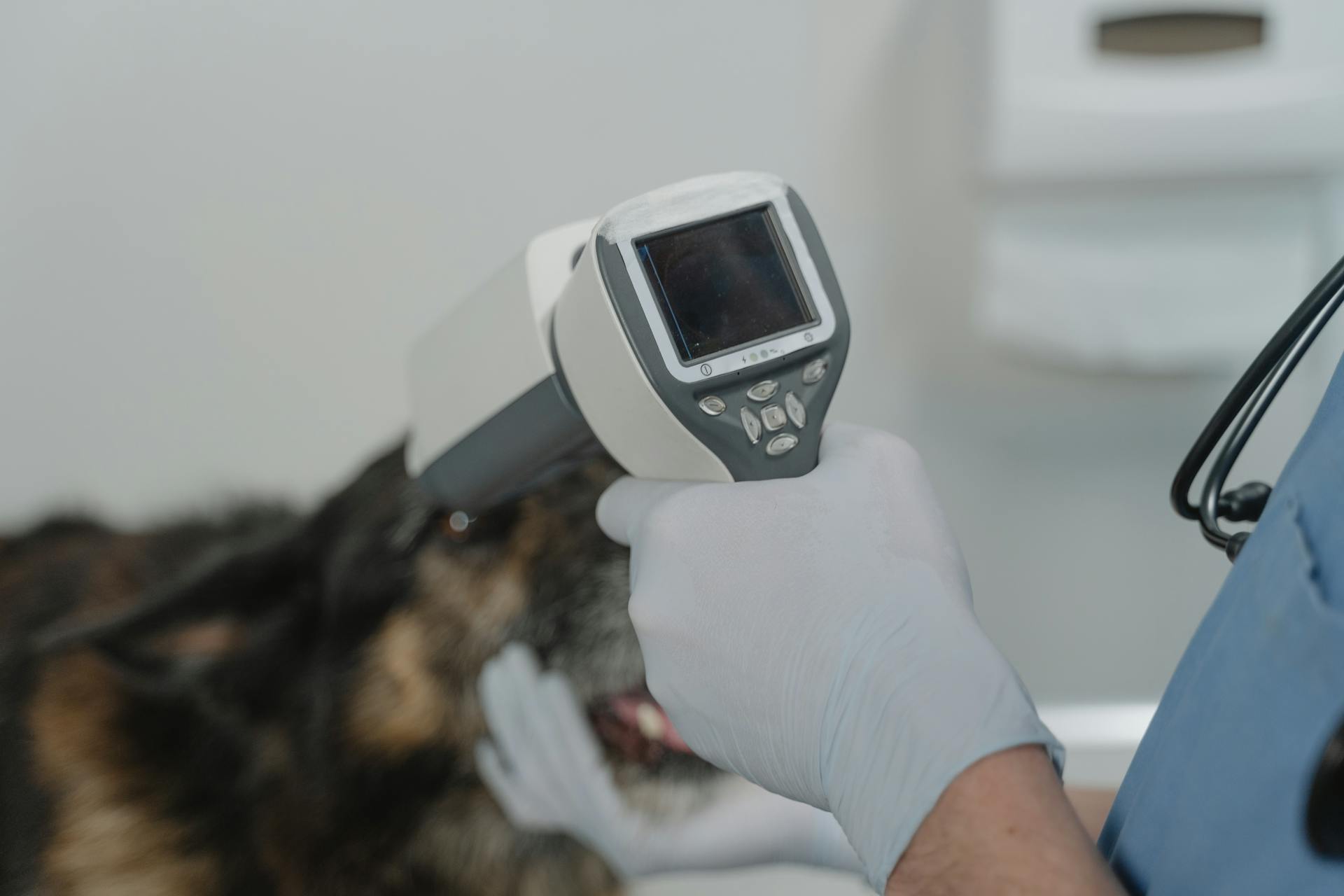
Vet techs also obtain patient history, which is crucial in understanding an animal's medical background and making informed decisions about their care.
Drawing blood and other sample collection for testing is a vital task, as it helps veterinarians diagnose diseases and develop treatment plans.
Placing catheters and administering medications and vaccinations are also key responsibilities, ensuring animals receive the care they need to recover from illnesses or injuries.
Diagnostic tests such as urinalysis, blood counts, and parasitology tests are also performed by vet techs, providing valuable insights into an animal's health.
Interacting directly with pet owners is an essential part of a vet tech's job, as they explain procedures, discuss pet health and care, and provide guidance on topics like dental disease, flea and tick prevention, and dietary needs.
Core Skills and Traits
To be a successful vet tech, you'll need to possess a specific set of skills and attributes. Strong interpersonal skills are crucial for dealing with pet owners and collaborating with a veterinary team.
Explore further: Veterinary Assistant Skills
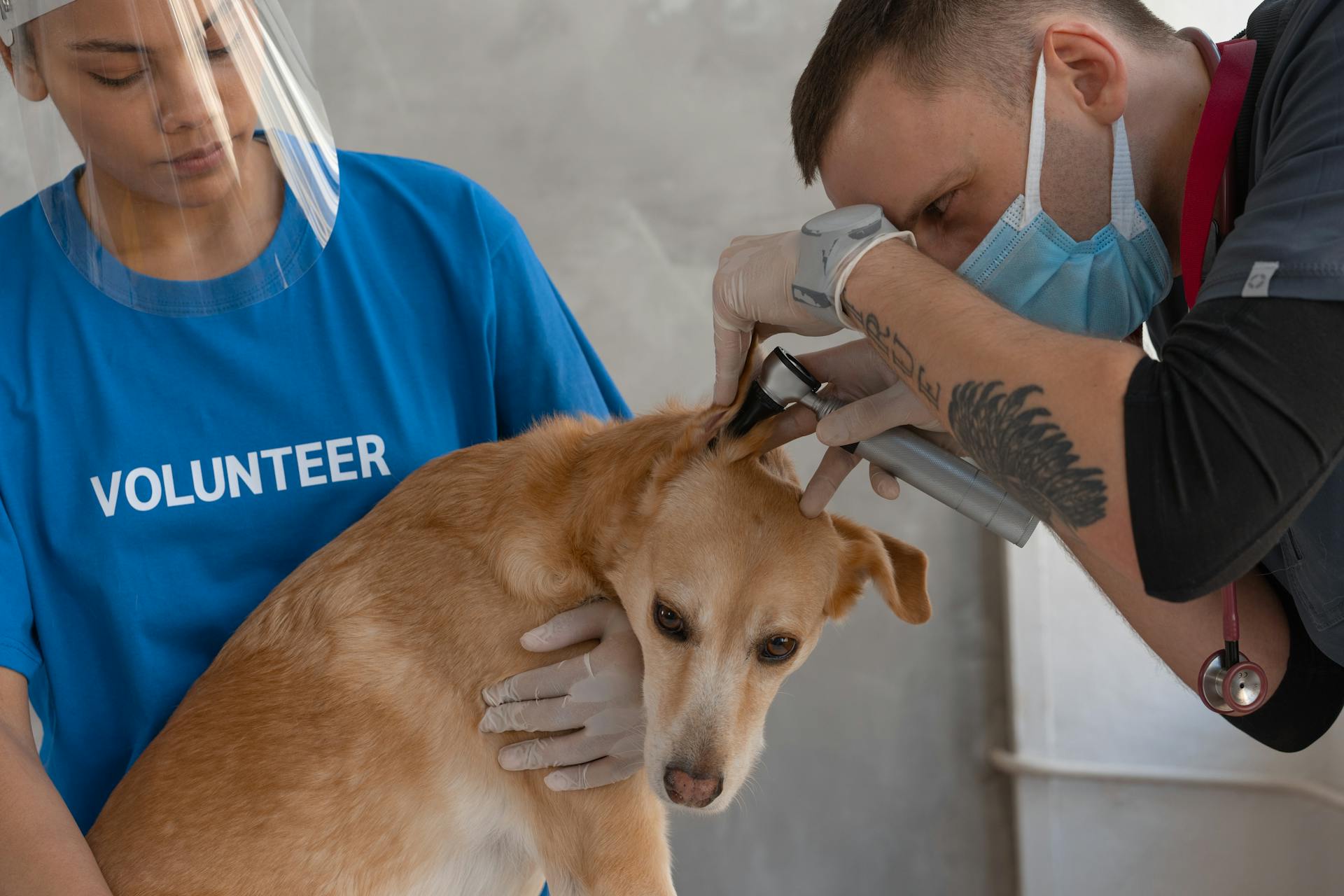
Good technical skills are also essential to perform various procedures and use specialized equipment. This includes being able to handle medical equipment and instruments with care.
Problem-solving skills, attention to detail, and the ability to work under pressure are also vital for a vet tech. These skills will help you stay calm and focused, even in high-stress situations.
Here are some key skills and attributes that vet techs need to succeed:
- Strong interpersonal skills
- Good technical skills
- Problem-solving skills
- Attention to detail
- Ability to work under pressure
Becoming a Registered Veterinary Technician
To become a Registered Veterinary Technician (RVT), you'll need to complete a formal education program accredited by the Canadian Veterinary Medical Association (CVMA) or the Ontario Association of Veterinary Technicians (OAVT). This typically takes two to three years of college education.
You'll also need to successfully complete the Veterinary Technician National Examination and meet all the requirements identified by your provincial professional association. The title of technician versus technologist is dependent on the province of registration, but the term RVT is recognized across Canada.
For more insights, see: Veterinary Education
Here are the typical educational requirements and steps to become a RVT:
- Complete a two to three year college education in a CVMA or OAVT-accredited veterinary technician/technologist program
- Graduate from a Canadian Veterinary Medical Association (CVMA) or an Ontario Association of Veterinary Technicians (OAVT) accredited program
- Successfully complete the Veterinary Technician National Examination
- Meet all the requirements identified by your provincial professional association
By following these steps, you'll be well on your way to becoming a Registered Veterinary Technician and joining the veterinary healthcare team.
Is It Right for Me?
If you're considering a career as a Registered Veterinary Technician (RVT), you're probably wondering if it's the right fit for you.
To become an RVT, you'll need to complete a two to three year college education at a Canadian Veterinary Medical Association (CVMA) or Ontario Association of Veterinary Technicians (OAVT) accredited program.
As an RVT, you'll have the opportunity to work in a variety of settings, including private veterinary practices, zoos, wildlife rehabilitation, government and research laboratories, and industry.
You'll need to be passionate about working with animals and have excellent communication skills, as you'll often work closely with pet owners, veterinarians, and other members of the veterinary healthcare team.
To succeed as an RVT, you'll need to be physically fit and able to lift heavy animals, as well as be comfortable working with a variety of species, including dogs, cats, birds, and exotic animals.
On a similar theme: Do You Need a Degree to Be a Veterinary Assistant
Some of the key skills required for an RVT include attention to detail, good organizational skills, and the ability to multitask, as you'll often work in fast-paced and high-stress environments.
Here are some of the key responsibilities of an RVT:
- Obtaining and processing diagnostic radiographs and ultrasound
- Administration and dispensation of medications and treatments as prescribed by the attending veterinarian
- Providing optimum husbandry, restraint and handling
- Anaesthetic delivery and monitoring
- Prevention and control of zoonotic diseases
- Nutrition management
- Animal behaviour and welfare
- Breeding, reproduction, and neonatal care
- Professional practice administration, veterinary hospital management and client relations
- Diagnostic laboratory tests (hematology, clinical chemistry, cytology, and urinalysis)
- Emergency and first aid
- Professionalism and ethics training
- Routine, intensive and emergency care of animals
- Public education
- Exotic animal medicine
- Extensive anatomy and physiology training
- Sanitation, sterilization and disinfection controls and procedures
- In depth knowledge of dental structures, conditions and lesions, causes and stages of diseases
- Surgical preparation and assistance
- Microbiology, immunology, bacteriology, parasitology, zoonoses, and virology
- Training in best practices surrounding biosecurity
If you're still unsure, consider the following: many people believe that pet care should be free, but owning a pet is a life-long emotional and financial commitment.
Education Requirements: High School and College
To become a registered veterinary technician, you'll want to start by excelling in science-based subjects like biology and chemistry in high school. A strong grasp of algebra is also crucial for understanding medication calculations.
In high school, focus on taking challenging courses that prepare you for the rigors of a veterinary technology program. This will give you a solid foundation for the more advanced studies you'll encounter in college.
After high school, you'll need to earn a degree from an American Veterinary Medical Association (AVMA) accredited veterinary technology or veterinary nursing program. These programs provide both classroom education and hands-on clinical experience.
You'll study a range of subjects, including animal physiology, veterinary pharmacology, nursing, parasitology, and anesthesiology. This comprehensive education will prepare you for the demands of working in a veterinary clinic or hospital.
Check this out: Pima Veterinary Technician Program
Teen Continuing Education
As a future vet tech, you'll need to stay on top of your game by completing continuing education (CE) courses. Most states require vet techs to do this to maintain their credentials.
Continuing education is a great way to learn new skills and stay up-to-date on industry developments. CE programs can include attending workshops, seminars, and conferences, or completing online courses.
You'll have the opportunity to engage with the veterinary community at a local, state, or national level through CE. This can be a fantastic way to network and learn from other professionals in the field.
By completing CE courses, you'll be able to update your current knowledge and skills, making you a more valuable asset to your future employer.
Intriguing read: Veterinary Technician Skills
Career and Job Opportunities
As a registered veterinary technician, you'll have a wide range of career and job opportunities to choose from. You can work in veterinary hospitals, clinics, or practices, or in research facilities, animal shelters, and zoos.
Your role will involve assisting veterinarians with routine tasks, such as collecting samples, conducting basic lab tests, administering medication, managing records, and interacting with pet owners. This hands-on experience will help you gain practical skills and knowledge.
With additional training and experience, you can advance to supervisory or management roles, or pursue careers in teaching or research. You can also choose to specialize in a particular area of veterinary medicine, such as anesthesia or dentistry, by obtaining additional certifications or pursuing further education.
The job outlook for vet techs is generally positive, with a growth rate of 16% projected from 2019 to 2029, much faster than the average for all occupations. This growth is expected due to the ongoing demand for veterinary services, advancements in veterinary medicine, and an increasing emphasis on pet care and welfare.
You can expect to earn a competitive salary, reflecting the rewarding work you'll be doing to care for animals. With a positive job growth projection, the demand for skilled and dedicated vet techs is expected to remain high in the foreseeable future.
If this caught your attention, see: Veterinary Technologist Job Description
Licensure and Certification
To become a Registered Veterinary Technician, you'll need to meet specific requirements, including passing a standardized test. The Veterinary Technician National Examination (VTNE) is a key part of this process.
The VTNE is administered by the American Association of Veterinary State Boards (AAVSB) and is recognized across North America. It ensures that vet techs have the necessary knowledge and skills to perform their roles effectively.
To find certified and registered vet techs, you can check the official Registry of Ontario's Registered Veterinary Technicians.
Credentialing: VTNE Overview
To become a certified vet tech, you'll need to pass the Veterinary Technician National Examination, or VTNE. The VTNE is administered by the American Association of Veterinary State Boards and is recognized across North America.
The VTNE ensures that vet techs have the necessary knowledge and skills to perform their roles effectively. This standardized test is a crucial step in becoming a certified vet tech.
The VTNE is the exam that vet techs must pass to become certified, registered, or licensed, depending on the state's terminology. This is a requirement for all vet techs, regardless of their location.
Rvt Registry
The RVT Registry is a valuable resource for anyone looking to verify the credentials of a Registered Veterinary Technician in Ontario. All RVTs in good standing can be found in this searchable Registry.
You can access the Registry and search for specific RVTs by name, which makes it easy to find the right professional for your needs.
Frequently Asked Questions
What's the difference between RVT and VT?
In Canada, the terms Registered Veterinary Technician (RVT) and Registered Veterinary Technologist (VT) are used interchangeably, with "technician" used in Eastern Canada and "technologist" in Western Canada. There is no difference in job duties or qualifications between the two titles.
Featured Images: pexels.com