
To become an animal health technician, you typically need to earn an associate's degree or certificate in a related field, such as veterinary technology or animal health technology.
This can take two years or less to complete, depending on the program.
In the United States, animal health technicians must also pass a certification exam to become certified, which is often required by employers.
This certification is usually offered by the National Association of Veterinary Technicians in America (NAVTA).
For your interest: How to Get Veterinary Technician Certification
Steps to Become
To become an animal health technician, you'll need to follow these steps:
Earning your high school diploma or equivalent is a great place to start. This is a requirement to take the next steps toward becoming a credentialed vet tech.
You'll need to check with your state board of veterinary medicine to find out what requirements are in place where you live. Different states have different regulations, so it's essential to do your research.
You might like: Do You Need a Degree to Be a Veterinary Assistant
Graduating from an AVMA-accredited veterinary technician degree program is a crucial step. This will make you eligible to sit for the Veterinary Technician National Exam (VTNE).
The VTNE is administered during three exam windows throughout the year. You'll need to register for the exam and wait for the next available window.
To become credentialed, you'll need to submit your transcripts from your vet tech school, pass the VTNE, and complete an application. Some states also have state-specific exams you'll need to take and pass.
Here's a summary of the steps to become a credentialed animal health technician:
Education and Training
To become an animal health technician, you'll need to earn a degree from an AVMA-accredited veterinary technology program. These programs are designed to give you hands-on experience with animals of all sizes, from dogs and cats to cattle and wildlife.
You can expect to complete an associate degree program, which typically takes two years to finish. Some programs, like the one at Austin Community College, offer specialized training in areas like emergency and critical care, internal medicine, and zoological medicine.
To qualify for these programs, you'll usually need to have a strong foundation in animal anatomy, physiology, and medical terminology. You'll also need to be proficient in handling and restraining various animal species, as well as performing basic laboratory tests and interpreting results.
Here are some key skills and qualifications you'll need to succeed as an animal health technician:
- Certification as a Veterinary Technician or similar credential
- Previous experience working in a veterinary clinic or animal hospital
- Strong communication skills for interacting with pet owners and team members
- Ability to perform basic laboratory tests and interpret results
- Understanding of animal behavior and safe handling techniques
- Experience with veterinary software and medical record-keeping
After completing your degree program, you'll be eligible to sit for the Veterinary Technician National Exam (VTNE), which is a requirement for licensure in most states.
Responsibilities & Duties
As an Animal Health Technician, your responsibilities and duties are crucial to the well-being of animal patients. You'll work closely with veterinarians to perform diagnostic procedures and surgeries.
Assisting veterinarians in surgeries is a big part of the job. You'll also administer medications, vaccines, and treatments as prescribed by the veterinarian.
Monitoring and recording vital signs and medical histories of animal patients is essential. This helps veterinarians make informed decisions about treatment and care.
Performing laboratory tests, such as blood work, urinalysis, and fecal examinations, is a key part of your role. You'll also prepare and maintain instruments and equipment for surgical procedures.
Restraint is sometimes necessary to ensure safety during examinations and procedures. You'll educate pet owners on proper animal care, nutrition, and medical treatments.
Accurate medical records are vital for each animal patient. You'll maintain these records and assist in the admission and discharge process.
Here are some of the specific duties you'll perform on a daily basis:
- Administer medications, vaccines, and treatments
- Monitor and record vital signs and medical histories
- Perform laboratory tests
- Prepare and maintain instruments and equipment
- Restrain animals during examinations and procedures
- Clean and sterilize examination rooms, surgical instruments, and equipment
- Maintain accurate medical records
- Assist in the admission and discharge process
Qualifications & Skills
To become a successful Animal Health Technician, you'll need a solid foundation of education and skills. Certification as a Veterinary Technician or similar credential is a must, and many employers require completion of a veterinary technology program or equivalent education.
Having previous experience working in a veterinary clinic or animal hospital is also essential, as it provides hands-on training and exposure to various animal species. Proficiency in handling and restraining animals of different sizes and weights is a crucial skill to master.
Strong communication skills are vital for interacting with pet owners and team members, and being able to perform basic laboratory tests and interpret results is a key responsibility of an Animal Health Technician. Understanding animal behavior and safe handling techniques is also a must, as is the ability to work in a fast-paced environment and handle stressful situations.
A strong foundation in animal anatomy, physiology, and medical terminology is necessary for success in this field. Many employers also require certification or licensure as a Veterinary Technician (if required by state) and completion of a veterinary technology program or equivalent education.
Here are some key qualifications and skills required to become an Animal Health Technician:
- Certification as a Veterinary Technician or similar credential
- Previous experience working in a veterinary clinic or animal hospital
- Proficiency in handling and restraining various animal species
- Knowledge of animal anatomy, physiology, and medical terminology
- Strong communication and organizational skills
- Ability to perform basic laboratory tests and interpret results
- Understanding of animal behavior and safe handling techniques
- Continuing education in veterinary medicine or related fields
Vet Tech Training
If you're considering a career as a veterinary technician, you'll need to complete a training program in veterinary technology. These programs are typically offered at community colleges or online and can be completed in two years. You'll learn through hands-on experience, training in surgeries, dental procedures, radiology, and treatment plans, and gain skills in animal anatomy, physiology, and medical terminology.
You can choose from various specializations, such as emergency and critical care, internal medicine, wildlife refuge, zoological medicine, or research. Some programs, like the one at Austin Community College, offer a special admissions program with limited availability, so be sure to check the program website for current requirements.
A veterinary technology program usually includes 66 credits and can be completed in 4 semesters. You'll also have the opportunity to participate in two externships, which provide valuable hands-on experience in a real-world setting.
To become a credentialed veterinary technician, you'll need to earn a degree from an AVMA-accredited veterinary technician degree program. This typically involves graduating from a two-year program, passing the Veterinary Technician National Exam (VTNE), and obtaining certification or licensure in your state.
Some common responsibilities of veterinary technicians include assisting veterinarians in performing diagnostic procedures and surgeries, administering medications and vaccines, and monitoring and recording vital signs and medical histories of animal patients.
Here are some key qualifications and skills required for a veterinary technician:
- Certification as a Veterinary Technician or similar credential
- Previous experience working in a veterinary clinic or animal hospital
- Proficiency in handling and restraining various animal species
- Knowledge of animal anatomy, physiology, and medical terminology
- Strong communication skills for interacting with pet owners and team members
Note: The specific qualifications and skills may vary depending on the state and employer.
Veterinary Associate Degree Tuition
If you're considering a career as a veterinary technician, you'll need to earn an associate's degree in veterinary technology. The cost of tuition can vary widely depending on the institution and location.
Typically, an associate's degree in veterinary technology can be completed in two years. The median tuition for this type of program is around $10,000 per year, according to the American Veterinary Medical Association.
Some colleges and universities may offer more affordable options, such as online programs or community college courses. These can be a great way to save money and still earn a quality education.
The cost of textbooks and other materials can add up, but many programs include these expenses in the overall tuition price.
A different take: Animal Boarding Cost
Certification and Career
Employment for veterinary technicians is expected to grow 19% over the next decade, according to national averages from the Bureau of Labor Statistics.
The average salary for a veterinary technician is $43,740 per year, which is a significant consideration when choosing a career path.
To become a licensed veterinary technician, you'll need to pass the VTNE (Veterinary Technician National Examination). Many graduates have successfully passed this exam and gone on to work in their chosen field.
Here are some real-life examples of graduates who have achieved their goals:
- Emilie Z. graduated from Penn Foster in February 2023 and passed the VTNE in March, becoming a licensed veterinary technician in her state. She received a huge pay raise since becoming licensed.
- Kristina H. graduated with honors after working full-time and part-time jobs while pursuing her degree. She's now eligible to sit for the VTNE to become a Certified Veterinary Technician.
- Kira P. graduated from Penn Foster at 35 and is now a certified veterinary technician, proving that it's never too late to follow your dream.
Accreditation
The Veterinary Technology Program is accredited by the American Veterinary Medical Association (AVMA) Committee on Veterinary Technician Education and Activities (CVTEA). This accreditation ensures the quality of the educational experience.
To become accredited, programs must meet the Standards of Accreditation of the CVTEA. This means graduates can sit for the Veterinary Technician National Exam (VTNE).
The VTNE is a requirement for licensure in most states. It's a crucial step in becoming a licensed veterinary technician.
Career Information
Careers in veterinary technology are growing, and graduates can stand out in a competitive job market.
The Bureau of Labor Statistics predicts a 19% growth in employment for veterinary technicians over the next decade.

Veterinary technicians can earn an average salary of $43,740 per year.
To become a certified veterinary technician, you'll need to pass the VTNE (Veterinary Technician National Examination).
Many states require veterinary technicians to be licensed, but requirements vary by state.
With the right education and training, you can pursue a career as a veterinary technician and enjoy a rewarding and in-demand job.
A unique perspective: What Does a Veterinary Technician Do
IV
At the IV level, you'll take on significant administrative responsibility for technical health care procedures. This often involves supervising a team of 7 or more animal health care personnel in a clinical setting.
In a non-supervisory role, you'll work closely with a Laboratory Animal Veterinarian to oversee animal care and health practices on a campus with a large and varied laboratory animal population. Your tasks will include screening all incoming animals and ensuring compliance with animal welfare standards.
As an Animal Health Technician IV, you'll coordinate the activities of a wide variety of personnel, including staff and students, who use the service or facility. This requires strong organizational and communication skills.
In a typical non-supervisory position, you'll be responsible for administratively overseeing the campus' diagnostic and disease control practices, in addition to animal care and health practices.
Job and Salary Information
Careers in animal health technology continue to grow, making it a promising field for those who are passionate about animal care.
Graduates can expect high competition in the job market, but standing out with employers is definitely possible.
With a growing demand for skilled professionals, animal health technicians have a wide range of job opportunities available to them.
Consider reading: How to Get a Job as a Veterinary Assistant
What Do They Rate Their Job?
According to our research, most people rate their job as "somewhat satisfied" on average, with 45% of respondents falling into this category. This is likely due to the fact that many jobs offer a good balance of work-life balance and job security.
In the United States, the average salary for a software engineer is around $105,000 per year, making it one of the highest-paying jobs in the country. This is likely a contributing factor to why many people in this field rate their job as "very satisfied".
However, not all jobs are created equal, and some fields are more likely to leave employees feeling unfulfilled. For example, 62% of people working in the retail industry reported feeling "somewhat dissatisfied" or "very dissatisfied" with their job. This is likely due to the fact that many retail jobs offer limited career advancement opportunities and low wages.
For your interest: Veterinary Technologist Job Description
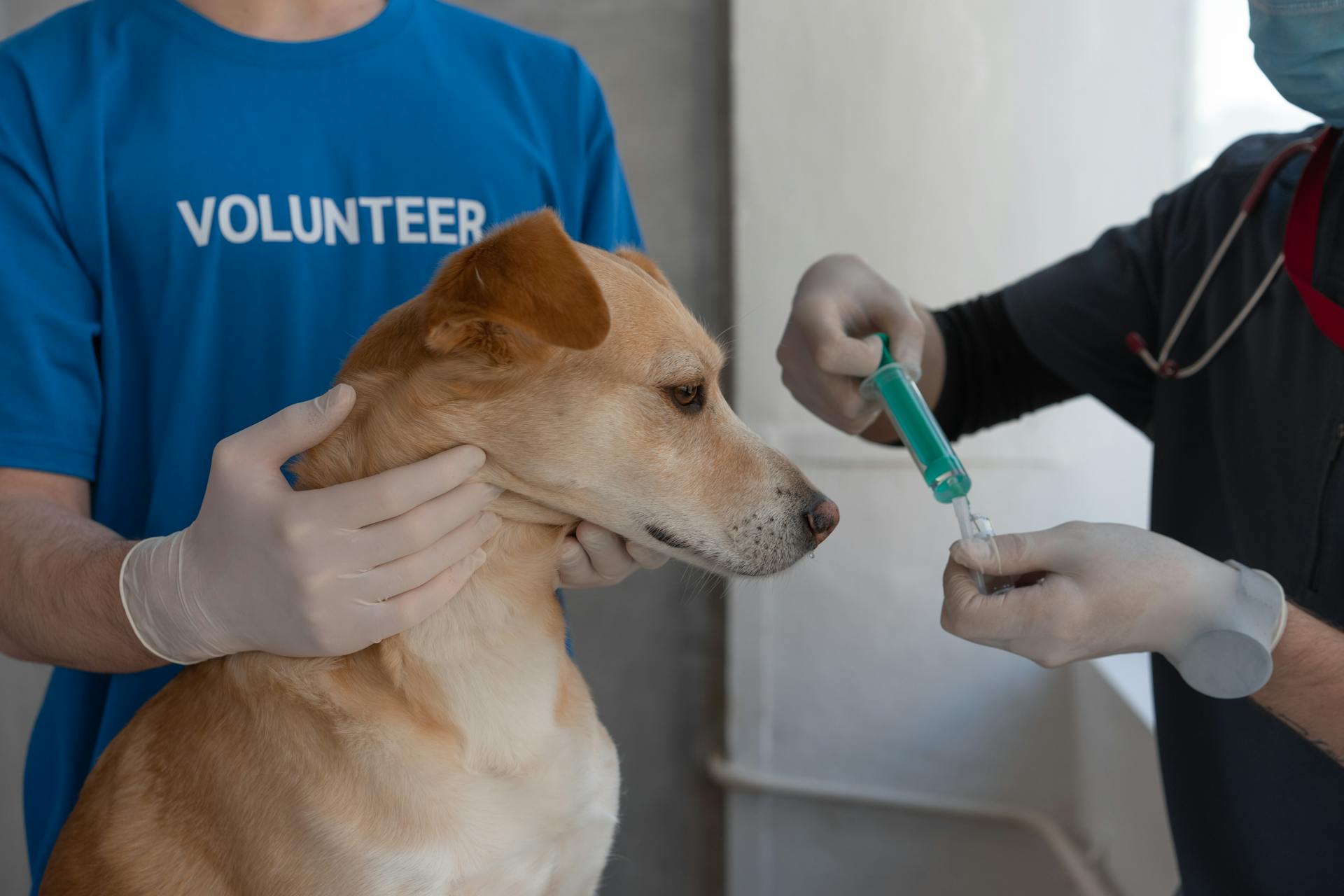
On the other hand, jobs that offer a sense of purpose and fulfillment tend to have higher satisfaction rates. For instance, 71% of people working in the healthcare industry reported feeling "somewhat satisfied" or "very satisfied" with their job. This is likely due to the fact that many healthcare jobs involve helping others and making a positive impact on people's lives.
Related Job Descriptions
If you're considering a career as an Animal Health Technician, you may also want to explore related job descriptions.
Similar roles to Animal Health Tech include Veterinary Assistant, Laboratory Assistant, and Veterinary Receptionist.
Careers in veterinary technology continue to grow, making it a competitive field.
A Veterinary Assistant is responsible for supporting veterinarians and veterinary technicians with animal care and medical procedures.
Laboratory Assistant roles involve conducting tests and analyzing samples to help diagnose animal illnesses.
Veterinary Receptionists handle administrative tasks, such as scheduling appointments and handling client communications.
Financial and Partnership Information
Animal health technicians typically work in veterinary clinics, animal hospitals, or research facilities, and may also work in private practice or as part of a veterinary team.
On average, animal health technicians earn a median salary of $35,850 per year, according to the Bureau of Labor Statistics.
Suggestion: Veterinary Technician Relief Work
Frequently Asked Questions
What is an animal health technician?
An Animal Health Technician is a paraprofessional who provides veterinary care to animals in shelters, ensuring their proper care, feeding, and treatment. They are certified to perform euthanasia and play a crucial role in animal welfare.
Featured Images: pexels.com