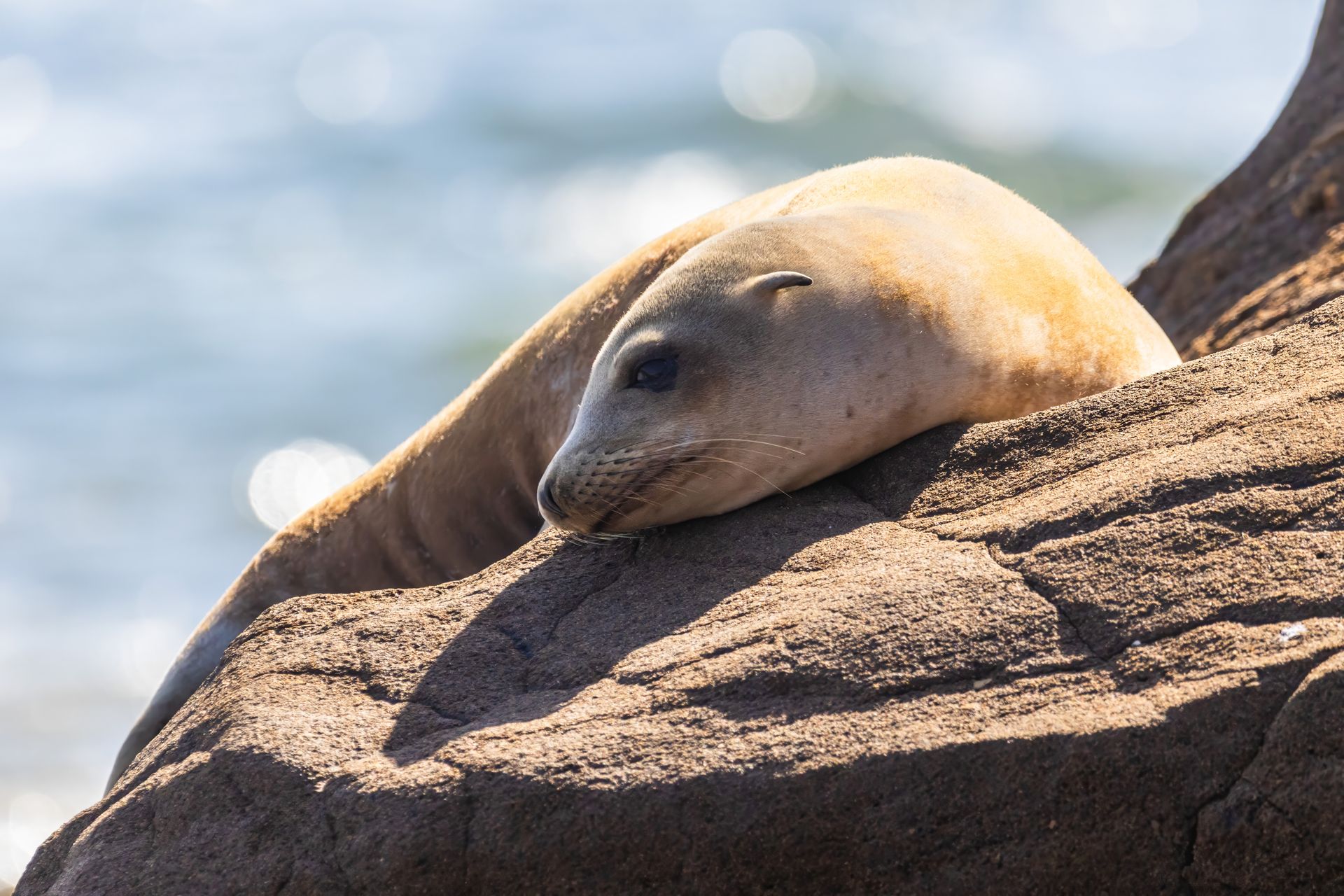
California sea lions are found in the coastal waters of the United States and Mexico, specifically in the Pacific Ocean from Alaska to Mexico.
They inhabit rocky shores, islands, and kelp forests, often hauling out on rocks, reefs, and man-made structures.
Sea lions are highly social creatures, often gathering in large colonies called rookeries, which can number in the tens of thousands.
They are skilled swimmers and divers, able to dive to depths of up to 2,000 feet in search of food.
Taxonomy and Classification
The California sea lion was first described by French naturalist René Primevère Lesson in 1828. It's grouped with other sea lions and fur seals in the family Otariidae.
Otariids, also known as eared seals, have some distinct features that set them apart from true seals. They have external ear flaps, and proportionately larger foreflippers and pectoral muscles.
The California sea lion belongs to the genus Zalophus, which comes from the Greek words za, meaning "intensive", and lophus, meaning "crest". This refers to the protruding sagittal crest of the males, a distinguishing feature of the genus.
Scientific Classification
The California sea lion's scientific classification is a fascinating topic. It belongs to the family Otariidae, which includes other sea lions and fur seals.
Otariids are distinct from true seals due to their external ear flaps and larger foreflippers and pectoral muscles.
The genus Zalophus includes the California sea lion, the Galapagos sea lion, and the extinct Japanese sea lion. It's derived from the Greek words "za" and "lophus", referring to the males' protruding sagittal crest.
The California sea lion and the Japanese sea lion split off as separate lineages 2.2 million years ago during the Pliocene.
The California sea lion has greater sexual dimorphism compared to the Galapagos sea lion.
The Steller sea lion is the closest extant relative of the Zalophus sea lions, being a sister taxon.
About the Species
California sea lions are known as "eared seals" and are native to the West Coast of North America.
They live in coastal waters and on beaches, docks, buoys, and jetties.
These intelligent animals are easily trained, which is why you often see them in zoos and aquariums.
California sea lions are very vocal, making sounds that resemble barking dogs.
Their population has been increasing since at least 1975, thanks to protections put in place under the Marine Mammal Protection Act.
As marine mammals, they are protected under this act to ensure their conservation.
Meet Our!
Meet our California sea lions, which are a type of pinniped that belongs to the order Carnivora.
California sea lions are known for their up-close encounter experiences, which allow us to get to know them better.
They are found in the Pacific Ocean, from British Columbia to Mexico, and are a popular attraction at many marine parks and aquariums.
Explore a variety of experiences with our California sea lions, and discover the unique characteristics that make them so fascinating.
Appearance, Physiology, and Behavior
California sea lions are quite the sight to behold, with males growing up to 2.5-2.7 meters long and weighing around 350 kg.
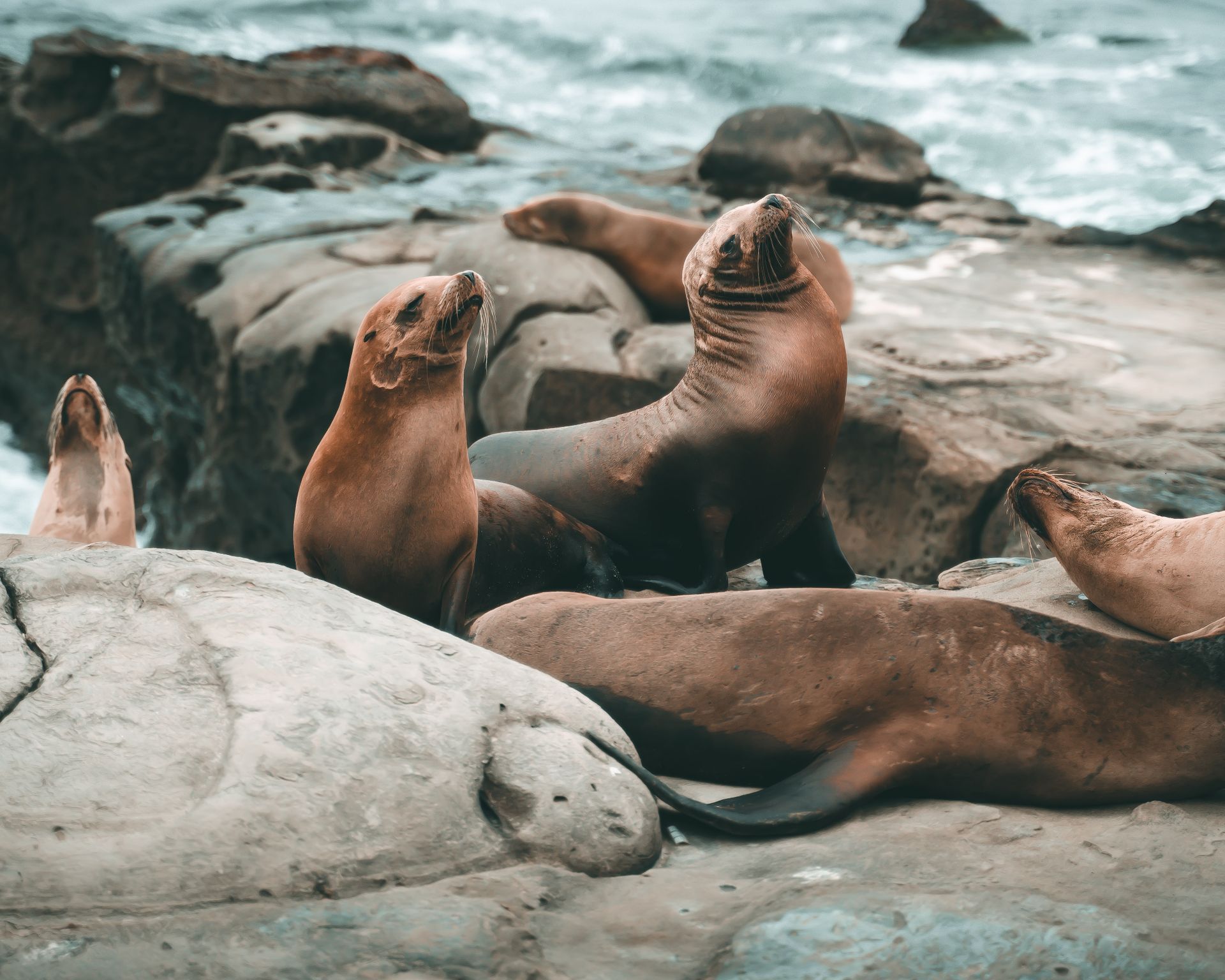
Females and juveniles have a tawny brown pelage, although they may be temporarily light gray or silver after molting.
Adult males have a more robust build, with robust necks, chests, and shoulders, and a distinctive protruding crest on their forehead.
Their pelage can range from light brown to black, with a light tan face in some areas.
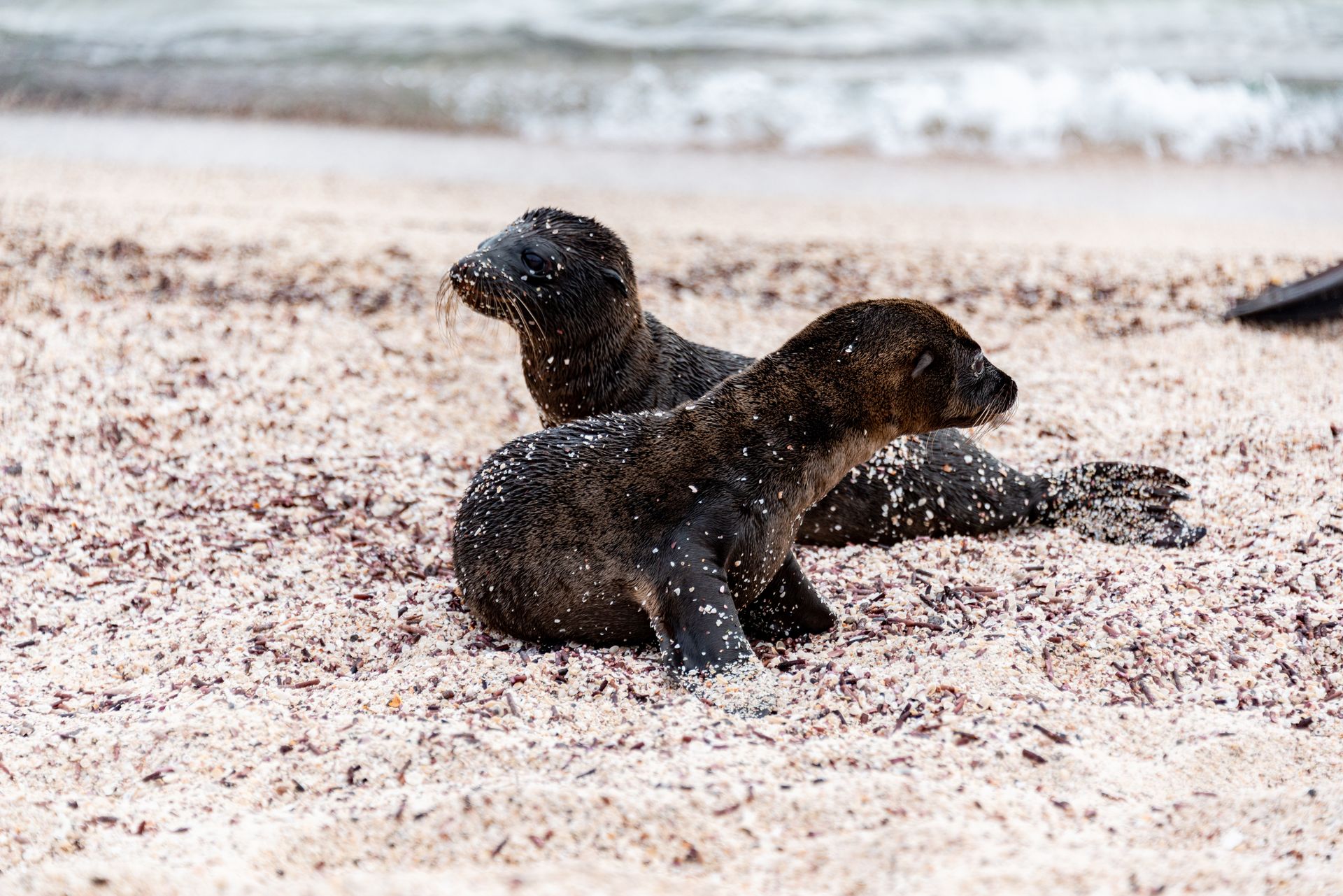
Pups are born with a black or dark brown pelage, which will likely change as they mature.
Adult males also sport manes, although they're less developed than those of other sea lion species.
California sea lions use their foreflippers to propel themselves through the water, reducing drag with their streamlined bodies.
Their flexibility allows them to bend their neck backwards, making dorsal turns and maintaining a streamlined posture.
On land, they're able to turn their hindflippers forward and walk on all fours.
They move their foreflippers in a transverse fashion, relying more on head and neck movements for terrestrial locomotion.
They can travel at speeds of around 10.8 km/h and dive at depths of up to 274 meters.
Here's an interesting read: California Brown Pelican
Habitat and Distribution
California sea lions can be found along the western coast and islands of North America, from southeast Alaska to central Mexico. They have a wide range that includes the western coast of the United States, Mexico, and the Galápagos Islands.
Their habitat varies greatly, from shallow waters in the Gulf of California to the rocky shores of Channel Islands in California. They can also be found on sandy beaches, tidal islands, and even navigational buoys.
In fact, California sea lions have been spotted in fresh water, such as near Bonneville Dam nearly 150 miles up the Columbia River.
Consider reading: Fish and Wildlife Western Pond Turtle
Range and Habitat
California sea lions can be found along the western coast and islands of North America, from southeast Alaska to central Mexico. They have a vast range, with five distinct populations identified through mitochondrial DNA sequences in 2009.
The U.S. or Pacific Temperate stock breeds mainly in the Channel Islands, although some breeding sites may be established in northern California. Females are now commonly found in northern California, and this has become a notable change in their behavior.
A different take: Northern California Bird Identification
Vagrants can reach as far as the north-western Pacific, with sightings on the Commander Islands. Their exact origins in the Japanese archipelago are unclear, but it's a fascinating example of their adaptability.
During the breeding season, California sea lions gather on both sandy and rocky shores. They often lie closer to the water on warm days, but travel farther inland or to higher elevations at night or in cool weather.
California sea lions can live in fresh water for periods of time, such as near Bonneville Dam, nearly 150 miles up the Columbia River. In 2004, a healthy individual was even found sitting on a road in Merced County, California, almost a hundred miles upstream from the San Francisco Bay.
Meet Our Lions
The lion is the second-largest cat species in the world, after the Siberian tiger.
They are known for their distinctive mane, which is a thick growth of hair around the head, neck, and shoulders of males.
Lions can weigh up to 550 pounds and reach speeds of up to 50 miles per hour.
Males typically live for 12-16 years in the wild, while females can live up to 18 years.
Their social structure is complex, with prides consisting of several females, their cubs, and one or more males.
Lions are carnivores and primarily feed on large ungulates like zebras and antelopes.
They are skilled hunters, using coordinated attacks to bring down their prey.
In the wild, lions can be found in savannas, grasslands, and open woodlands of sub-Saharan Africa and a small portion of northern India.
Intriguing read: Are Lions the Only Cats That Live in Groups?
Diet and Predation
California sea lions are opportunistic feeders, preying on a wide variety of seafood, mainly squid and fish. They commonly eat salmon, hake, Pacific whiting, anchovy, herring, rockfish, lamprey, dogfish, and market squid.
They mostly forage near mainland coastlines, the continental shelf, and seamounts. They may also search along the ocean bottom.
California sea lions may eat alone or in small to large groups, depending on the amount of food available. They sometimes cooperate with other predators, such as dolphins, porpoises, and seabirds, when hunting large schools of fish.
Additional reading: Rarest Fish
Adult females feed between 10–100 km (6.2–62.1 mi) from shore. Adult males may forage as far as 450 km (280 mi) from shore when water temperatures rise.
They have learned to feed on steelhead and salmon below fish ladders at Bonneville Dam and at other locations where fish must queue in order to pass through dams and locks that block their passage.
California sea lions are preyed on by orcas and large sharks. At Monterey Bay, California sea lions appear to be the more common food items for transient mammal-eating orca pods.
Sharks attack California sea lions by ambushing them while they are resting at the surface.
Recommended read: Fillet Fish
Behavior and Communication
California sea lions are incredibly social animals, often resting closely packed together at favorite haul-out sites on land or floating together on the ocean's surface in groups called "rafts".
They communicate with a range of vocalizations, with territorial males being the loudest and most continuous callers, producing a characteristic bark that sounds deeper than that of non-territorial males.
Female California sea lions are less vocal, but will bark in aggressive situations, and also produce a "pup-attraction call" to call their pups, which sounds "loud" and "brawling".
Lifespan Reproduction
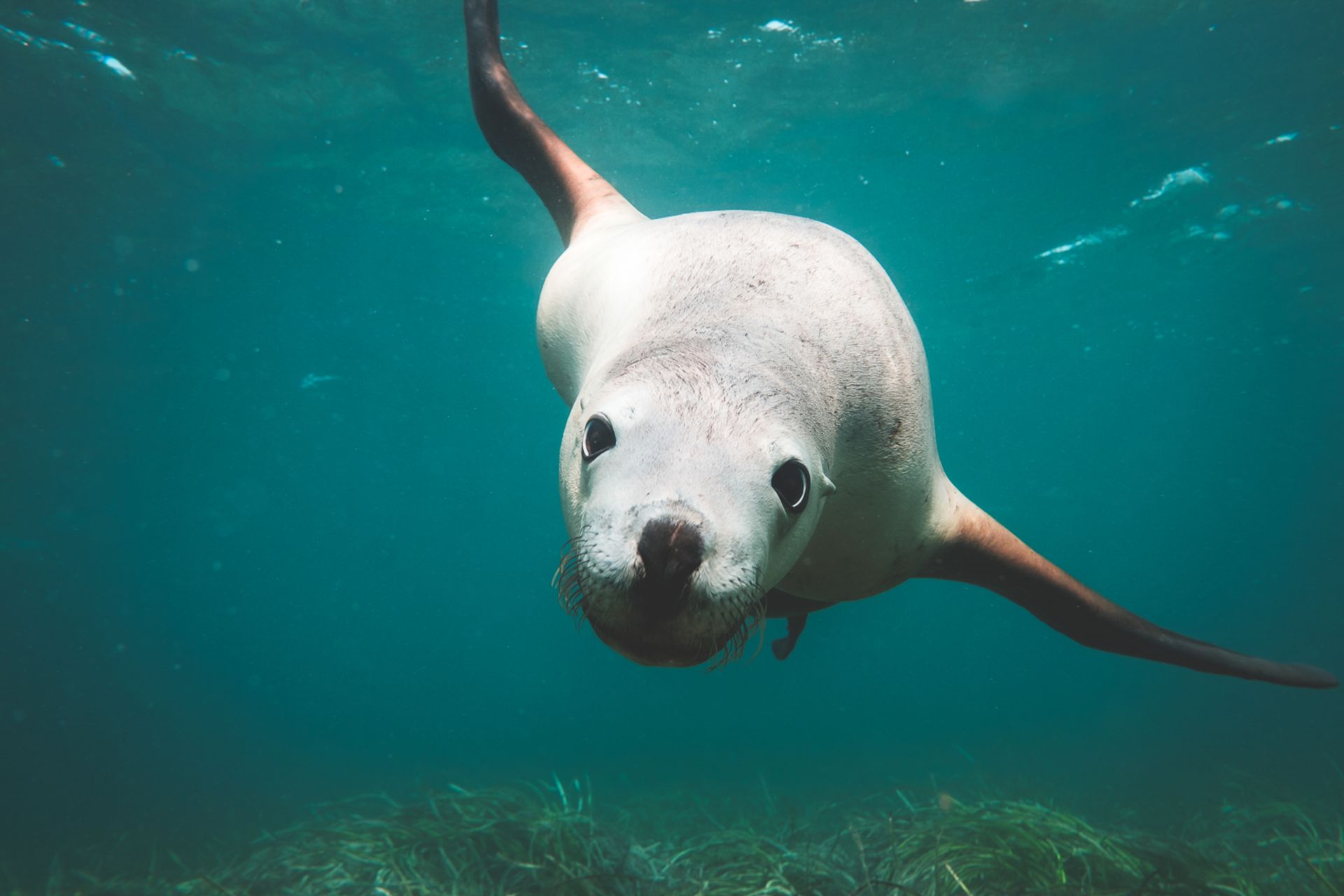
California sea lions can live up to 20-30 years in the wild. That's a pretty impressive lifespan for an animal that spends most of its time in the ocean.
Males establish breeding territories that can include up to 14 females, which they aggressively defend with physical displays and vocalizations. This behavior is a key part of their social dynamics and mating habits.
Females are ready to mate again just a few weeks after giving birth, which is a testament to their high reproductive rate. This means that sea lions can quickly rebound from population declines.
Newborn sea lions stay with their mothers for about a year, learning important survival skills like how to swim and find food on their own. During this time, mothers nurse their pups for 1-2 days before leaving them to feed for several days.
If you're lucky enough to see a sea lion pup on the shore, it's essential to leave it be and not intervene. If it looks distressed, call your local marine mammal stranding network member for assistance.
Behavior and Diet
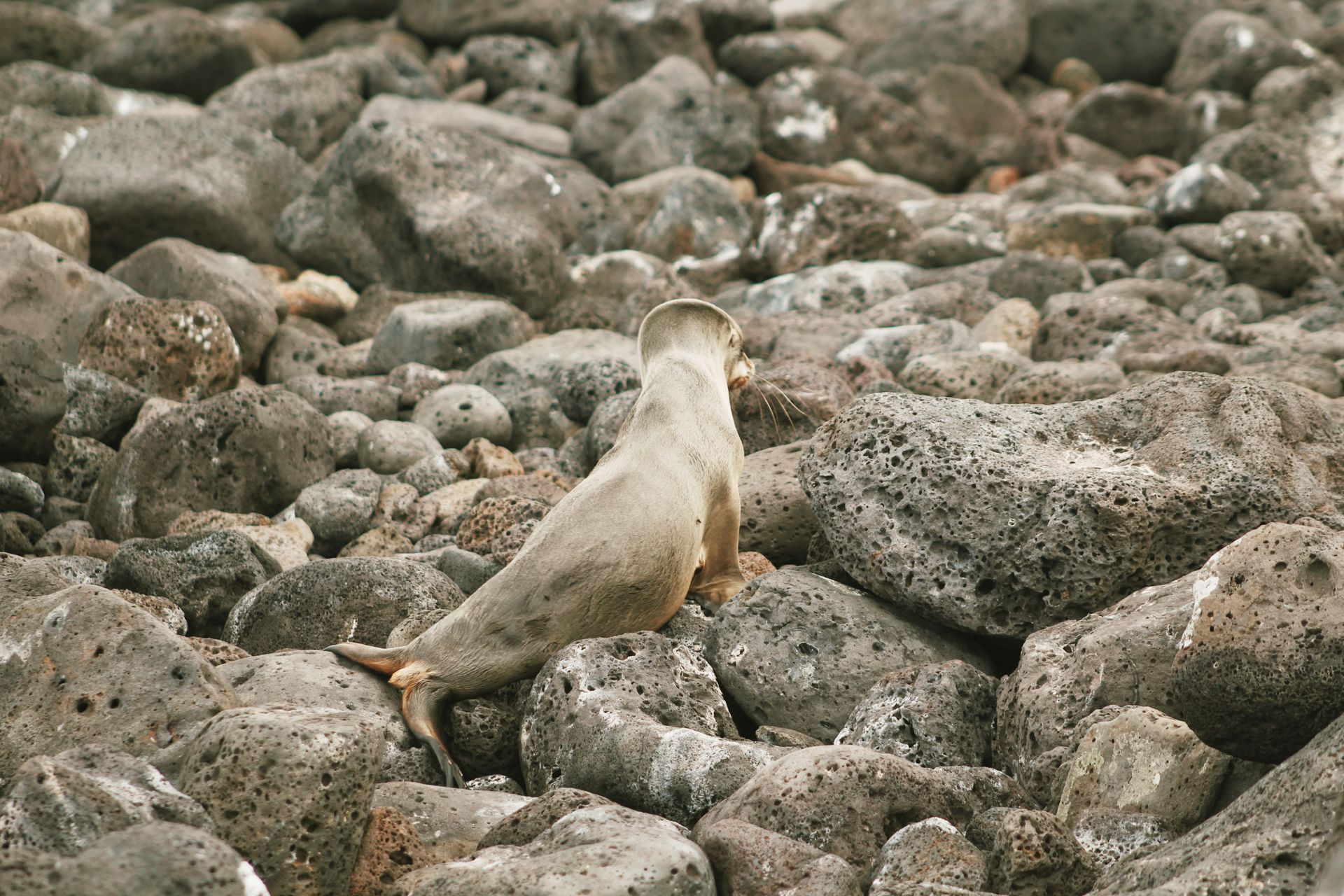
California sea lions are very social creatures, both on land and in the water. They live in large groups and communicate with each other using a variety of vocalizations and scents.
Males bark like dogs to communicate with other males and females, while females and pups use unique vocalizations that identify them. Each pup and female has a unique scent that helps them recognize each other.
On breeding islands, California sea lions are very skittish around humans and will run into the water if they see or smell people. This is likely due to the aggressive behavior of males defending their territories and females fighting to protect their pups.
California sea lions also have a unique way of resting called "rafting", where they hold their flippers above the water for a long time, motionless, to regulate their body temperature. If you see a sea lion doing this, it's probably just resting and not caught in a net.
They mostly forage for food near mainland coastlines, the continental shelf, and seamounts, eating a variety of seafood including squid, fish, and clams. They may also search along the ocean bottom and sometimes cooperate with other predators like dolphins and seabirds to hunt large schools of fish.
Communication
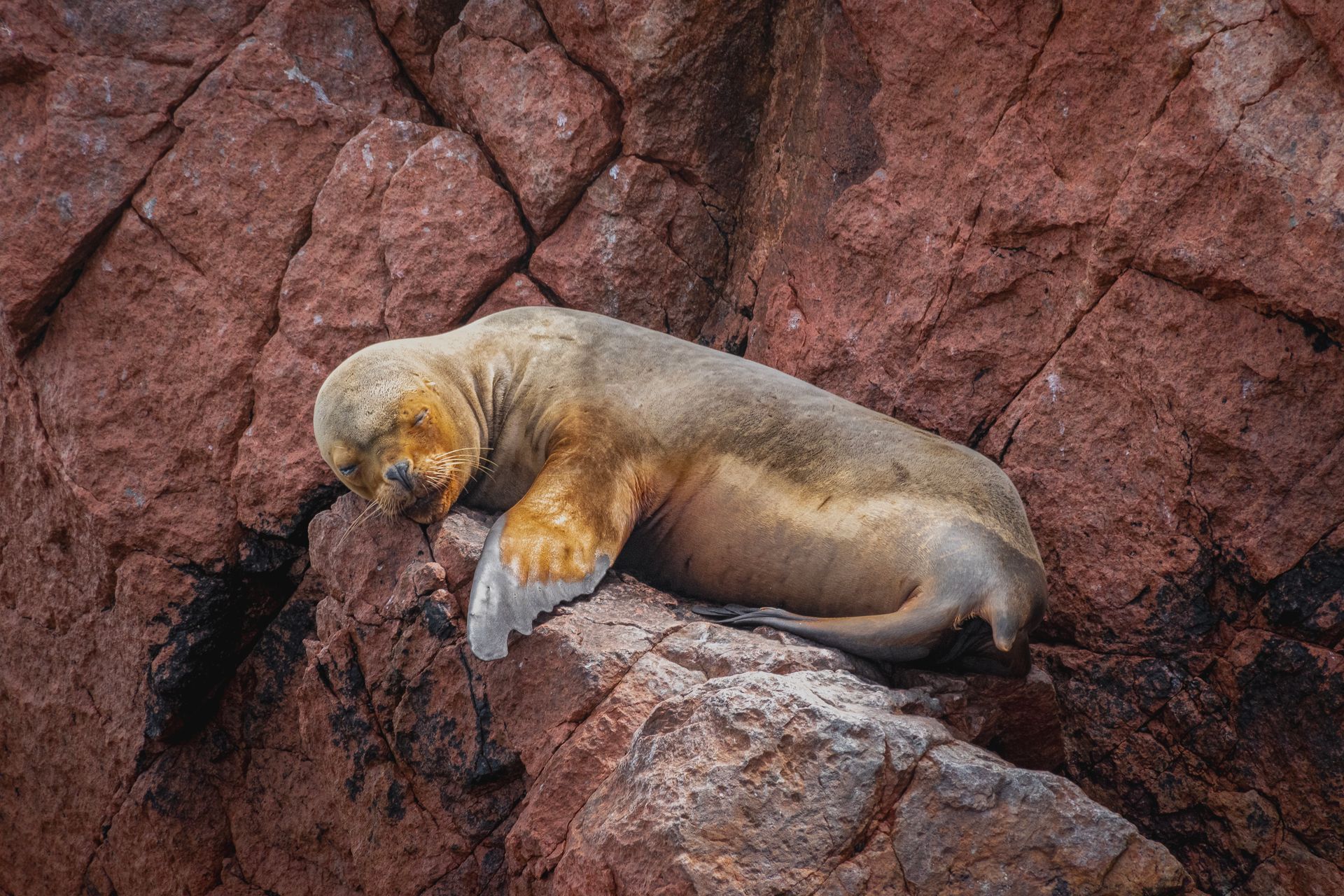
California sea lions communicate with a range of vocalizations. Their characteristic bark is the most commonly used, and territorial males are the loudest and most continuous callers.
Territorial males bark constantly during the peak of the breeding season, and their barks are especially rapid when they're excited. Males may also bark when threatening other males or during courtship.
The barks of territorial and non-territorial males sound similar, although those of the former are deeper. Female California sea lions, on the other hand, are less vocal and use high-pitched, shorter barks in aggressive situations.
Females also use a "squeal", "belch", and "growl" in aggressive situations. They give a "pup-attraction call" when calling their pups, described as "loud" and "brawling".
Pups respond with a "mother-response call", which is similar in structure. They'll also bleat or bark when playing or in distress.
California sea lions can even produce vocalizations underwater, including "whinny" sounds, barks, buzzings, and clicks.
Marine Theater
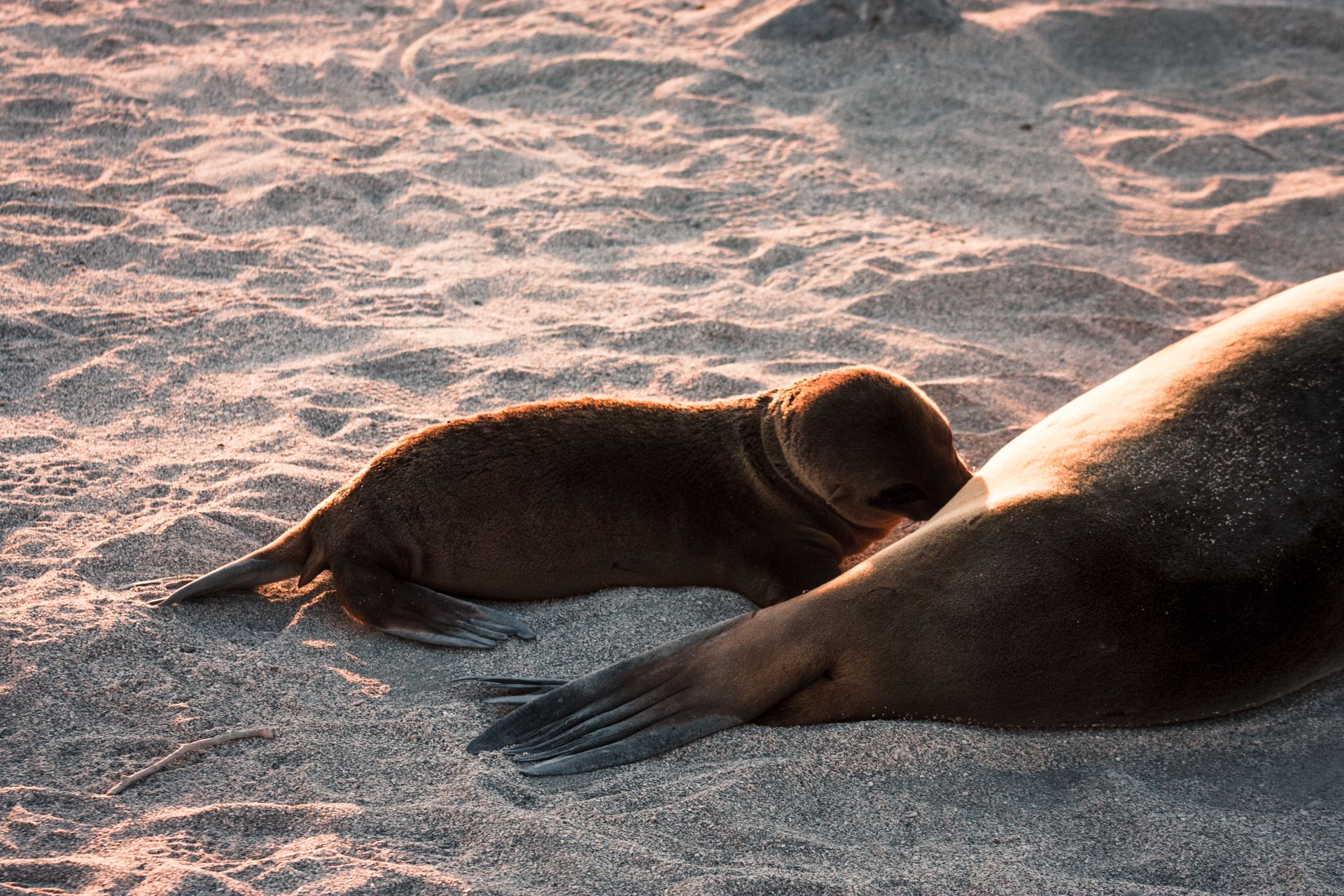
Observing California sea lions in their natural habitat can be a fascinating experience. They are known to thrive in groups, often forming large colonies on rocky coastlines.
Their vocalizations can be quite loud and varied, with different sounds used for different purposes. In fact, sea lions are able to produce a wide range of clicks, whistles, and grunts.
A show in the Marine Theater is a great way to see these amazing animals up close. Come see our California sea lions for yourself during a show in the Marine Theater!
Conservation Management
Conservation Management is crucial for protecting California sea lions. All California sea lions are protected under the MMPA.
Reducing interactions with commercial fishing gear is one of the key conservation efforts. This helps prevent sea lions from getting entangled in fishing nets and lines.
Minimizing harassment and illegal feeding of sea lions is also essential. This includes not feeding them in the wild, as it can make them dependent on humans and alter their natural behavior.
Responding to dead, injured, or entangled sea lions is a vital part of conservation management. This ensures that any sea lions in distress receive the help they need.
Here are some ways to minimize the effects of human impacts on California sea lions:
- Responsible viewing of wild sea lions is encouraged.
- Vessel disturbance should be minimized.
By working together, we can help protect California sea lions and their habitats.
Research
Research on California sea lions is ongoing, and it's helping us understand their biology, behavior, and ecology. Our team assesses the population status of marine mammals in the California Current, including California sea lions in California, Oregon, and Alaska.
We're also studying the impact of hookworms on northern fur seal and California sea lion health, which is crucial for their well-being. Hookworms can have serious effects on these marine mammals.
Our research includes assessing abundance, survival, and birth rates of California sea lions, as well as monitoring their food habits and foraging ecology. This helps us understand their role in the coastal and offshore marine ecosystem.
We're working to describe disease ecology and human sources of death in California sea lion populations, which is essential for their health. This research will inform conservation and management efforts.
Here are some specific areas of research we're exploring:
- Loss of Neuron Connectors in the Brains of Sea Lions with Epilepsy
- Using Tooth Layers to Determine California Sea Lion Age
- New Technique for Diagnosing Lung Parasite Infections in Sea Lions
- Establishing Dosing Requirements for an Anti-Fungal Medication in Young Sea Lions
These studies will help us better understand and protect California sea lions and their habitats.
Interesting Facts and Fun
California sea lions are known for their intelligence, playfulness and noisy barking.
Males can grow up to 850 lbs (390kg) and 7 ft (2.1m) in length, while females reach 220 lbs (110kg) and up to 6 ft (1.8m) in length.
You can distinguish males from females by a bump or "crest" on their heads, which develops at four or five years of age.
Sea lions have external ear flaps, which is a key characteristic that sets them apart from seals.
In the wild, sea lions may live up to 25 years, which is a remarkable lifespan for such a large animal.
Male sea lions dominate the population at PIER 39, with a majority being male.
Sea lions are protected by the Marine Mammal Protection Act, which prohibits unauthorized persons from feeding, handling, or harassing them.
One of the biggest dangers to sea lions today is becoming entangled in plastic pollution, which is a serious threat to their survival.
Here are some key facts about sea lion migration:
- Sea lions migrate to areas across the Pacific Coast, from Vancouver to the southern tip of Baja.
- Most pups are born on the Channel Islands, located off Southern California, in June.
California Sea Lion Crisis
In 2015, a crisis hit the California coast, with 1450 malnourished or sick California sea lion pups found along the shoreline.
The pups were struggling to find food due to unprecedentedly warm Pacific coastal waters, which reduced the abundance of anchovies, sardines, and mackerel in their diet.
These warm waters were caused by the Pacific decadal oscillation and El Niño events, leading to a devastating impact on the sea lions.
As a result, many California sea lion pups starved to death, while others died when they took to open waters in search of food at too early an age.
Related reading: Portland Sea Dogs Food
In fact, this wasn't the only incident of its kind, as a large number of Cassin's auklet chicks died in the summer of 2014 due to similar circumstances.
The main threats to California sea lions in the wild are human interaction injuries, including entanglement, harassment, and pollution, often caused by their presence at marinas, boat docks, and jetties.
What Threats Exist in the Wild?
In the wild, California sea lions face a range of threats that can have a significant impact on their populations.
Human interaction injuries are a major concern, as they can occur due to entanglement, harassment, and pollution. Entanglement in fishing nets and other marine debris can cause serious harm or even death.
Pollution is another significant threat, as it can contaminate the sea lions' food sources and harm their overall health.
2015 Shore Lions Pups Crisis
In January and February 2015, a crisis hit the California coast as 1450 malnourished or sick California sea lion pups were found along the shoreline.
The likely cause of this crisis was unprecedentedly warm Pacific coastal waters, which were linked to the Pacific decadal oscillation and El Niño events.
This led to a significant reduction in the abundance of anchovies, sardines, and mackerel, which are the primary food sources for California sea lion pups during their nursery season.
As a result, many pups starved, while others took to open waters in search of food at too early an age and died.
The California sea lion population was severely impacted by this crisis, highlighting the importance of monitoring ocean temperatures and marine life populations to prevent such events in the future.
Here's a brief summary of the crisis:
Where to See Sea Lions
If you're looking to spot sea lions in California, you're in luck - they can be found along the state's coastlines and in its coastal waters.
The California sea lion is one of the most common species found in California, with a large population residing in the state.
Some of the best places to see sea lions include Pier 39 in San Francisco, where a large colony can be found, and the Channel Islands, which are home to a large population of California sea lions.
Discover more: Black Bear Population in California
At Mystic Aquarium
At Mystic Aquarium, you can catch a show with California sea lions in the Marine Theater.
They have an underwater viewing area in the Main Gallery where you can observe the sea lions up close.
The sea lions' training is all about positive reinforcement, so they never get punished if they don't do something right.
You can see the sea lions performing tricks and behaviors they would normally do in the wild.
Their trainers also teach them behaviors that help with health checks, like opening their mouths wide for a vet exam.
Live Webcam
If you're eager to catch a glimpse of these charismatic creatures, you're in luck - PIER 39 offers a live webcam where you can watch the sea lions in their natural habitat.
The webcam provides a real-time view of K-Dock, where the sea lions have made their home since the 1989 Loma Prieta earthquake.
You can observe the sea lions as they haul out, bask in the sun, and interact with each other, often in large groups.
In fact, the number of sea lions at K-Dock can swell to over 2,100, as it did in May-June 2024, making for a thrilling spectacle.
The webcam is a great way to learn about the sea lions' behavior, social dynamics, and daily routines, all from the comfort of your own home.
By checking in on the live webcam, you can get a sense of the sea lions' adaptability and resilience, as they've thrived in their unexpected home at PIER 39.
Frequently Asked Questions
How many California sea lions are left?
There are approximately 300,000 California sea lions living on the Pacific coast. This large population is a testament to the species' resilience and adaptability.
Why are the sea lions heading for Monterey Bay, California?
California sea lions head to Monterey Bay in the summer to give birth and raise their young, often returning from southern California breeding grounds
How did the California sea lion get its name?
The California sea lion got its name because of the distinctive sound made by males, which is reminiscent of a lion's roar. This unique vocalization earned them their regal-sounding name.
Featured Images: pexels.com