The Puerto Rican Amazon Parrot is a critically endangered species native to the island of Puerto Rico.
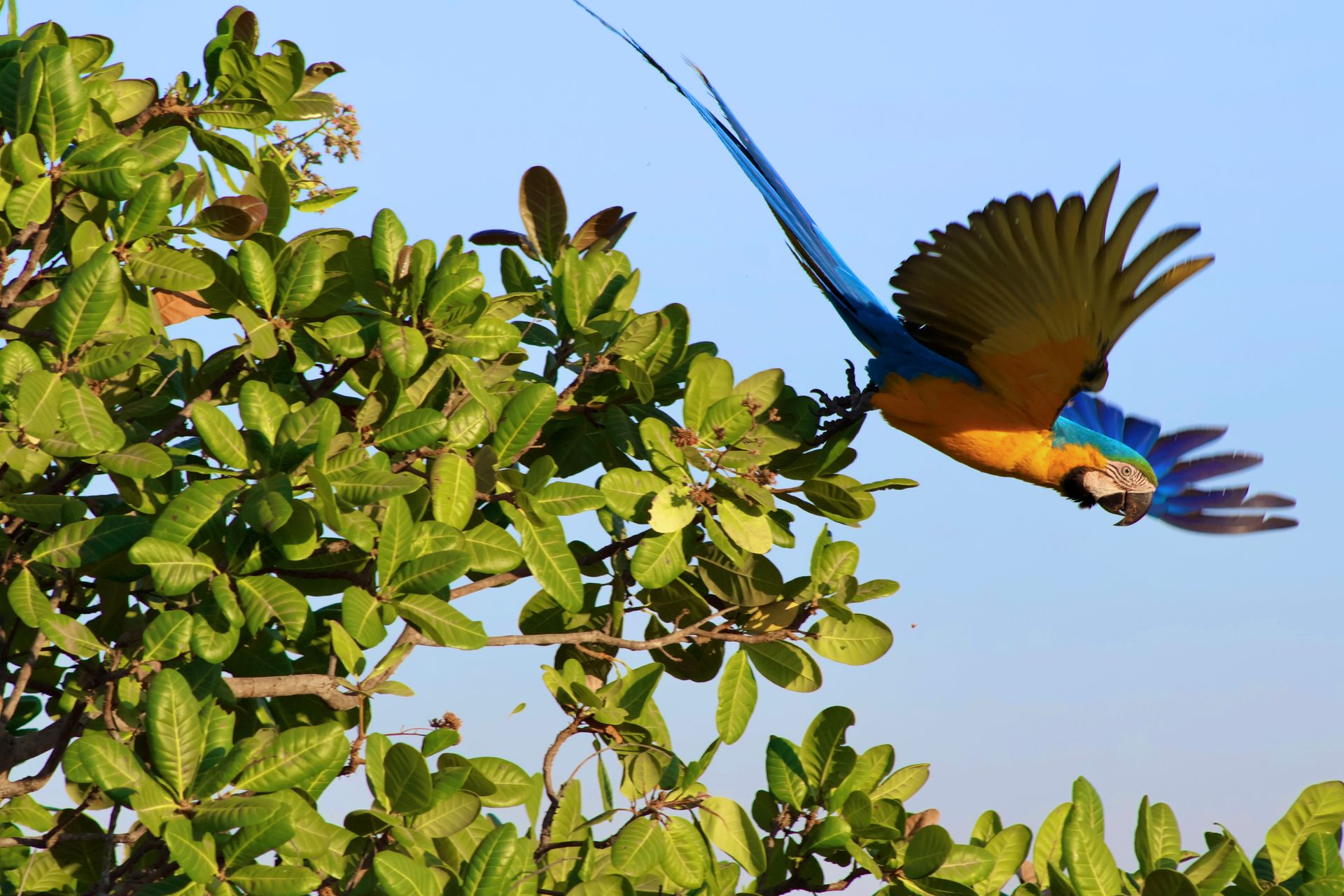
These birds are known for their vibrant green plumage and bright blue and yellow accents.
One of the most distinctive features of the Puerto Rican Amazon Parrot is its size, with adults reaching lengths of up to 17 inches.
Their diet consists mainly of fruits, seeds, and leaves, which they forage for in the island's remaining forests.
Additional reading: Costa Rican Monkeys
Taxonomy and Evolution
The Puerto Rican amazon parrot has a fascinating history, and understanding its taxonomy and evolution is key to appreciating this incredible bird. The species was first described by Georges-Louis Leclerc, Comte de Buffon in 1780 in his Histoire Naturelle des Oiseaux.
Buffon mistakenly believed that his specimen had been collected in the French colony of Saint-Domingue (modern Haiti), rather than in Puerto Rico. The bird was also illustrated in a hand-coloured plate engraved by François-Nicolas Martinet in the Planches Enluminées D'Histoire Naturelle.
Recommended read: State Bird
The Puerto Rican amazon parrot is now placed in the large Neotropical genus Amazona, introduced by the French naturalist René Lesson in 1830. The specific epithet vittatus is Latin for "banded".
Here are the recognized subspecies of the Puerto Rican amazon parrot:
- A. v. vittata: the nominate and only extant subspecies, inhabiting Puerto Rico and formerly nearby Vieques Island and Mona Island.
- A. v. gracilipes: inhabited Culebra Island and is now extinct.
Classification
The Puerto Rican amazon has been classified in various ways over the years. The scientific name Psittacus vittatus was coined by Pieter Boddaert in 1783, which is still recognized today.
The genus Amazona was introduced by René Lesson in 1830, and the Puerto Rican amazon is now placed within it. This genus includes birds commonly known as amazons.
The specific epithet vittatus is Latin for "banded". This refers to the bird's distinctive markings.
There are two recognized subspecies of the Puerto Rican amazon. Here are the details:
- A. v. vittata is the nominate subspecies, inhabiting Puerto Rico and formerly nearby islands.
- A. v. gracilipes is an extinct subspecies that once inhabited Culebra Island.
Amazona Vittata
The Puerto Rican amazon, Amazona vittata, is a vibrant and predominantly green parrot that graces the skies of Puerto Rico.
This bird is characterized by a striking red forehead and white rings encircling its eyes, standing at a length of 28–30 cm (11.0–11.8 in).
You might like: Puerto Rico Health Certificate Dog
The Puerto Rican amazon has a rich history, described by French polymath Georges-Louis Leclerc, Comte de Buffon in 1780 in his Histoire Naturelle des Oiseaux.
In fact, the bird was also illustrated in a hand-coloured plate engraved by François-Nicolas Martinet in the Planches Enluminées D'Histoire Naturelle.
The specific epithet vittatus is Latin for "banded", a fitting description for this beautiful parrot.
There are two recognized subspecies of Amazona vittata: A. v. vittata, the nominate and only extant subspecies, and A. v. gracilipes, which is now extinct and inhabited Culebra Island.
Here's a breakdown of the two subspecies:
The Puerto Rican amazon is an important part of Puerto Rican culture, with the indigenous Taíno people calling it the iguaca, an onomatopoeic name that resembled the parrots' flight call.
Description and Habitat
The Puerto Rican Amazon parrot is a remarkable bird, measuring 28-30 cm in length and weighing around 250-300 grams. It's relatively small compared to other Amazon parrots, but its unique features make it a standout.
Its plumage is predominantly green, with blue edges on its feathers, and dark blue primary flight feathers on its wings. The underside of its wings is a bright blue, while its tail feathers have a yellow-green tone. Its underparts are paler and yellow-tinged, with a distinctive red forehead and white ovals around its eyes.
This parrot favors mature or old-growth forests in Puerto Rico, where it nests in tree trunk cavities. It's not found in dwarf or secondary forests due to its specific nesting requirements.
Worth a look: Blue Throated Macaw
Physical Description
The Puerto Rican amazon is a relatively small bird, measuring 28-30 cm in length and weighing between 250-300 grams.
Their plumage is predominantly green, with blue edges on their feathers.
The primary flight feathers of the wings and main covert feathers are dark blue.
The underside of the wings has bright blue feathers, while the tail feathers have a yellow-green tone.
Their underparts are paler and have a yellow-tinge, and their foreheads are a distinctive red.
They also have white ovals around their eyes and brown irises.
The bill is a horn color, and their legs are a yellow-tan shade.
Immature birds have plumage similar to adults, making it difficult to distinguish them from adults.
On a similar theme: Green Cheeked Amazon
Habitat and Distribution
This parrot favors mature or old-growth forests within Puerto Rico. It's no surprise, given its specific nesting requirements.
Mature or old-growth forests are the perfect fit for this bird. The tree trunk cavities provide the perfect space for them to nest.
You won't find this parrot in dwarf or secondary forests, unfortunately. They just don't meet its nesting needs.
Conservation and Threats
The Puerto Rican amazon parrot is a critically endangered species, and its population has fluctuated greatly due to habitat loss, hunting, and natural disasters.
In 1967, the species was listed as endangered with only 70 individuals remaining. By 1972, the population had dropped to just 16 individuals.
Human activity is a major contributor to the population decline of the Puerto Rican amazon. Early settlers hunted the parrots for food, but later activities such as habitat destruction, capture for the pet trade, and hunting led to a sharp decline.
The clearing of mature forests for agricultural development is the main reason for the decline of the population. This has resulted in a loss of nesting sites and food sources for the parrots.
Related reading: American White Ibis Habitat
Natural predators, such as the red-tailed hawk and pearly-eyed thrasher, also pose a threat to the parrot population. To combat this, specially designed deep nests were prepared for the parrots in subsequent years to prevent competition from the invaders.
Here is a list of threats to the Puerto Rican amazon parrot:
- Habitat loss
- Hunting
- Human activity (capture for pet trade)
- Natural predators (red-tailed hawk, pearly-eyed thrasher)
- Natural disasters (hurricanes)
Conservation efforts, including captive breeding and release programs, are ongoing to save this species from extinction. In 2006, 22 birds were released in the Rio Abajo State Forest to initiate a second wild population, and a further 19 were released at the same site on December 27, 2008.
Breeding and Similar Species
Puerto Rican amazons typically mate for life, with breeding occurring once a year.
The female incubates 2-4 eggs for 24 to 28 days, and both parents feed the chicks. Chicks fledge after 60 to 65 days, though they remain dependent for some time.
The Puerto Rican amazon is closely related to the Cuban amazon and the Hispaniolan amazon, which share similar color patterns and white eye rings.
Breeding Habits
Puerto Rican amazons form long-lasting pair bonds, mating for life. This is a remarkable display of commitment.
Breeding occurs once a year for these birds. The female takes on the responsibility of incubating 2-4 eggs for 24 to 28 days.
Both parents work together to feed their chicks, ensuring they receive the necessary care. This cooperative parenting helps the young birds grow strong and healthy.
After 60 to 65 days, the chicks are ready to leave the nest, but they remain dependent on their parents for some time.
A fresh viewpoint: Endangered Birds in the Amazon Rainforest
Similar Species
The Puerto Rican amazon is closely related to the Cuban amazon and the Hispaniolan amazon, which share similar color patterns and white eye rings. These species are often confused with one another due to their similarities. The Cuban amazon, in particular, has a similar plumage to the Puerto Rican amazon, with a predominantly green body and blue flight feathers.
Amazon Parrot Facts
The Puerto Rican Amazon Parrot is a truly special bird. It's only about 11 inches long, but it packs a big punch with its striking red forehead and white rings around its eyes.
You can find these vibrant parrots gracing the skies of Puerto Rico, and they're a beloved symbol of the island. In fact, the municipal of Rio Grande even boasts statues of Puerto Rican Parrots at the entry and exit of the town off of Hwy 3.
Did you know that there are only about 295 Puerto Rican Amazons left in the wild and in captivity? That's a sad statistic, but it's also a reminder of the importance of conservation efforts.
The El Yunque Rainforest, just a few miles from the Wyndham Rio Mar hotel, offers a conservation program for the Puerto Rican Amazon Parrot. This program includes a nursery where the parrots can grow and thrive.
If you're a parrot owner, here are some simple ways to enrich your parrot's life:
- Encourage and Promote Parrot Foraging and Enrichment Opportunities
- A Bird Stand is an essential item for parrot happiness
- Allow Your Parrot To Fly.
- Feed Your Parrot Healthy Bird Food
Frequently Asked Questions
What makes the Puerto Rican parrot special?
The Puerto Rican parrot is special due to its unique role as a seed disperser in its native habitat and its remarkable monogamous relationship with its partner. This remarkable bird was once on the brink of extinction, with only 13 individuals remaining in 1975.
Featured Images: pexels.com