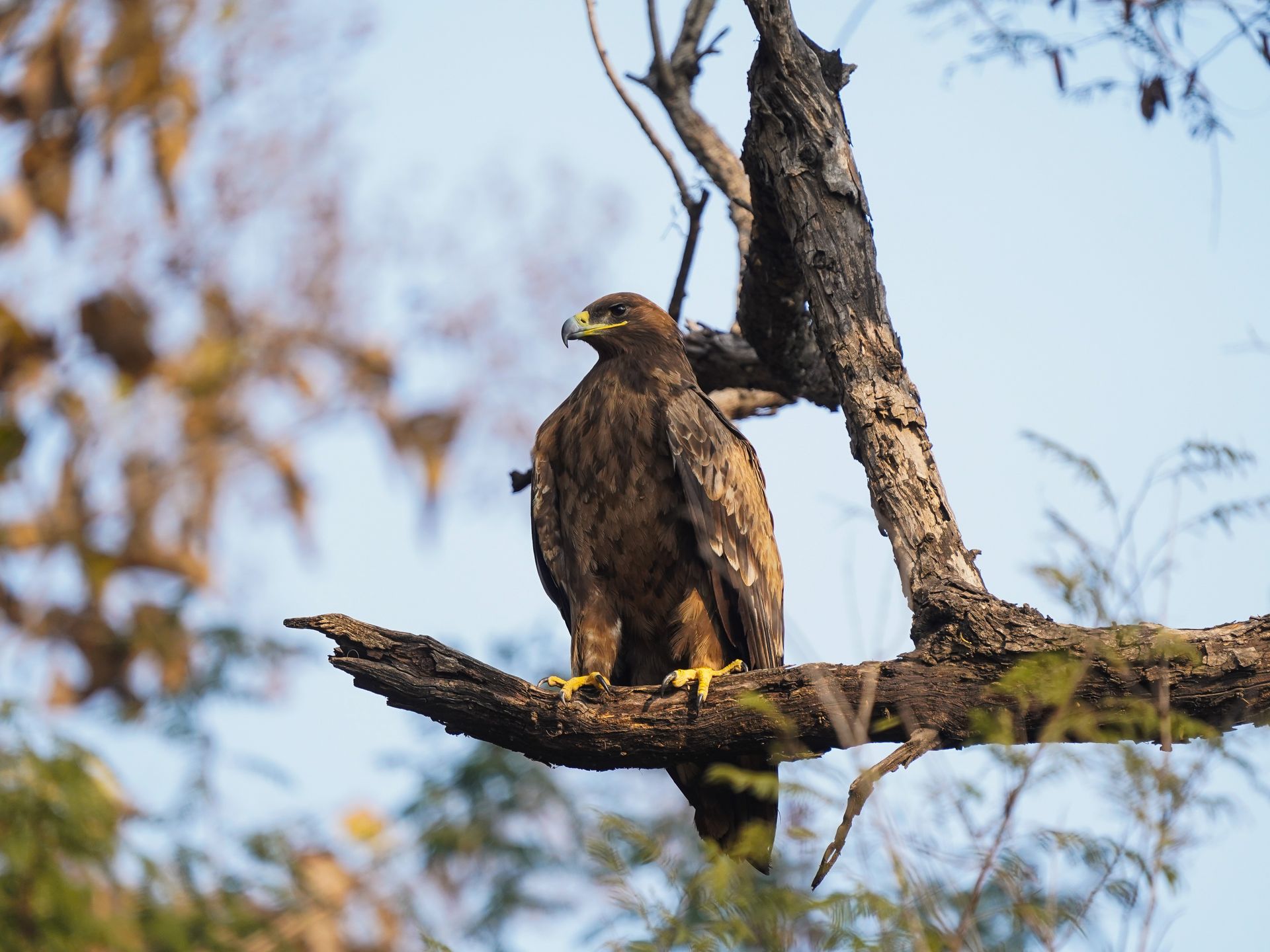
The Philippine Eagle Owl is a majestic bird species found in the Philippines. It's a large owl, with a wingspan of up to 1.5 meters.
These birds are nocturnal, meaning they're active at night and rest during the day. Their large size and broad wings allow them to fly silently and catch prey in the dark.
In terms of habitat, the Philippine Eagle Owl can be found in forests and woodlands, where they roost in tree cavities or rocky outcrops. They're also known to inhabit mountainous regions.
Their diet consists mainly of small mammals, birds, and reptiles, which they hunt using their acute hearing and exceptional night vision.
Consider reading: New Zealand Birds Also Known as Owl Parrots
Physical Characteristics
The Philippine Eagle-Owl is an impressive bird with some remarkable physical traits. It's one of the largest owl species, reaching up to 60 cm (about 24 inches) in height.
Its wingspan is truly impressive, ranging from 130 to 150 cm (approximately 51 to 59 inches). This allows for silent flight during nocturnal hunting, making it a stealthy predator.
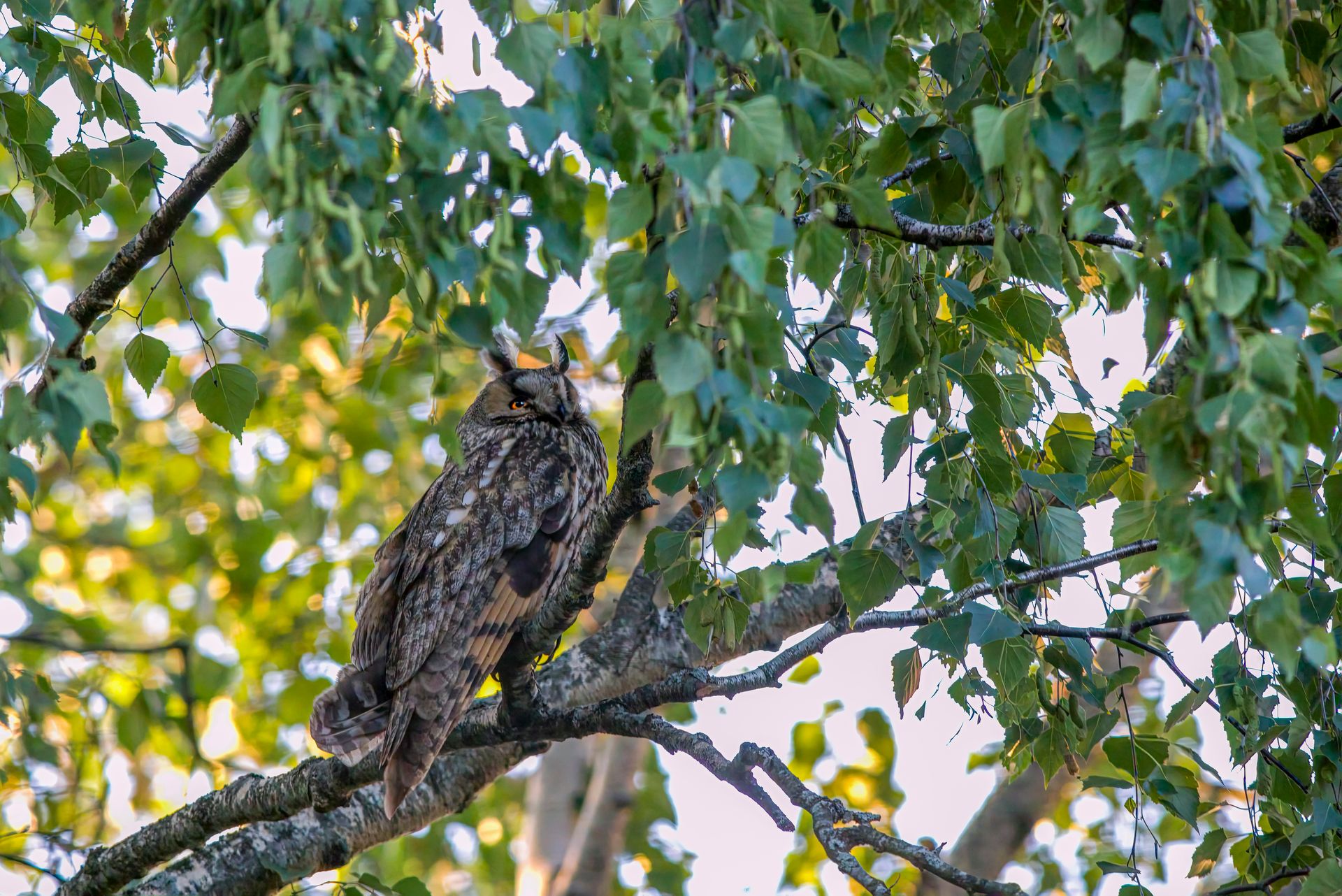
The owl's plumage is a beautiful mix of brown, golden, and white feathers, perfectly camouflaging it against tree bark.
Its vibrant yellow-orange eyes are striking, providing excellent night vision to hunt its prey.
The owl has ear tufts or crests that can be raised or lowered, giving it a distinctive silhouette.
Habitat and Distribution
The Philippine eagle-owl is found in forest edges near streams.
It prefers to rest in a tree during the day, likely to conserve energy for its nocturnal hunting habits.
At dusk, these owls hunt for small vertebrates, taking advantage of the cover provided by the forest edges.
The native forests of the Philippines are essential for the Philippine eagle-owl's survival, providing cover, nesting sites, and abundant food sources.
The Philippine eagle-owl is the largest owl in the country, making its habitat preferences crucial for its survival and success.
A different take: Philippine Forest Dog
Breeding and Behavior
The Philippine eagle-owl is a secretive species, and little is known about its behavior. Its powerful feet suggest it feeds on small mammals and birds.
This eagle-owl lays one egg per clutch and has an incubation period of 35 days.
In captivity, the Philippine eagle-owl has shown remarkable adaptability. The first breeding pair in captivity, Hinahon and Suplada, successfully raised an owlet named Bubo, who was about three days old when discovered in the nest.
Breeding in Captivity
Breeding in captivity is a remarkable achievement, and it's a testament to the dedication of conservationists and wildlife experts.
The Negros Forests and Ecological Foundation (NFEFI) in Bacolod City was the first conservation center in the world to successfully hatch a Philippine eagle-owl in captivity.
In December 2002, NFEFI secured the first-ever captive breeding loan between DENR-accredited institutions in the Philippines, consisting of three pairs of eagle-owls from the Avilon Montalban Zoological Park in Montalban, Rizal.
Two pairs of eagle-owls showed attraction, and the couple Hinahon and Suplada made courtship.
On November 21, 2005, an owlet was discovered in the nest, about three days old, and named Bubo.
You might like: Do Owls Attack Small Dogs
Bubo's mother, Suplada, taught it how to tear pieces of mouse meat, thus rearing it.
In 2006, Suplada laid one egg and another owlet was hatched through the aid of the World Owl Trust, Flora and Fauna International-Philippine Biodiversity Conservation program and the Avilon Zoological Park in Montalban Rizal.
The Philippine eagle-owl is also protected in areas through the Conservation of Priority Protected Areas Project (CPPAP) in Luzon, Mts Kitanglad and Apo on MIndanao.
Hunting of the Philippine eagle-owl is illegal in the Philippines, but lacks proper enforcement because many local people are able to resist strict control attempts.
You might enjoy: Burrowing Owl Florida Protected
Behavior
This eagle-owl lays one egg per clutch.
The incubation period is a significant 35 days, which is a crucial time for the female to care for her egg.
Its powerful feet suggest that it feeds on small mammals and birds.
Identification and Traits
The Philippine Eagle Owl is a striking bird, and identifying it is relatively straightforward. Its large size, about 50-65 cm in length, makes it a noticeable presence in the forest.
Its dark brown plumage with white spots and streaks, giving it a mottled appearance, helps it blend in with its surroundings. The prominent and rounded facial disk, often with a white border, is a distinctive feature of this owl.
The owl's large, yellow eyes provide a striking contrast against its dark plumage, making it a beautiful sight to behold. The variable tufted feather tufts on its head, often resembling ears, can be less prominent in some individuals.
Here are some key traits to note when observing the Philippine Eagle Owl:
- Facial Disc: A well-defined facial disc with light and dark coloration that enhances sound reception.
- Beak: A large, curved beak positioned for powerful tearing of prey.
- Leg Feathers: The feathers on its legs provide insulation and camouflage.
Bubo Philippensis
The Philippine eagle-owl is one of the largest owls in the world, with a wingspan of about 48 inches (120 centimeters). It's a mystery what they eat, but a related species in Malaysia feeds on fish, so it's possible they do too.
Most observations of the Philippine eagle-owl have been made in lowland forest near or beside rivers. This is a crucial part of their habitat, and it's bad news for the owls because old-growth forest along rivers is now especially rare.
The Philippine eagle-owl is in a worse shape than some other owl species because it lives only in lowland forest, and its large size requires large tracts of forest to maintain populations.
Ketupa Philippensis Mindanensis
Ketupa philippensis mindanensis is a subspecies found in eastern and southeastern Philippines, specifically in Samar, Leyte, Mindanao, and recently in Bohol.
This subspecies is larger than the nominal form, with a wing length of 341-360 mm.
It's also distinguished by its darker upper parts and more striated underside.
The wing length of the nominal form is slightly shorter, measuring 341-343 mm.
The larger size and distinctive markings make it a notable variation of the Ketupa philippensis species.
Identifiable Traits
The Philippine Eagle-Owl is a large owl, measuring about 50-65 cm in length. Its dark brown plumage is mottled with white spots and streaks, giving it a distinctive appearance.
One of the most striking features of this owl is its facial disc, which is well-defined and has light and dark coloration that enhances sound reception.
Its beak is large and curved, perfectly positioned for powerful tearing of prey. This is a key trait to look out for when trying to identify the Philippine Eagle-Owl.

The feathers on its legs provide insulation and camouflage, allowing the owl to blend in with its surroundings. This is a clever adaptation that helps the owl survive in its environment.
Here are some key identifiable traits of the Philippine Eagle-Owl:
- Facial disc: well-defined with light and dark coloration
- Beak: large and curved, positioned for powerful tearing of prey
- Leg feathers: provide insulation and camouflage
Conservation and Threats
The Philippine Eagle-Owl is classified as Near Threatened on the IUCN Red List.
Deforestation, habitat loss, and hunting pressures are the main threats to its population. Conservation programs have been initiated to raise awareness, protect habitats, and ensure the survival of this magnificent species.
Habitat loss is a significant concern, as rapid urbanization and deforestation destroy their natural habitats.
Conservation Status
The Philippine Eagle-Owl is classified as "Near Threatened" on the IUCN Red List.
Deforestation is a major threat to its population, with rapid urbanization and habitat loss further exacerbating the problem.
Habitat loss and hunting pressures are the principal threats to the Philippine Eagle-Owl's population.
Conservation programs have been initiated to raise awareness and protect habitats.
These efforts aim to ensure the survival of this magnificent species.
Natural Predators
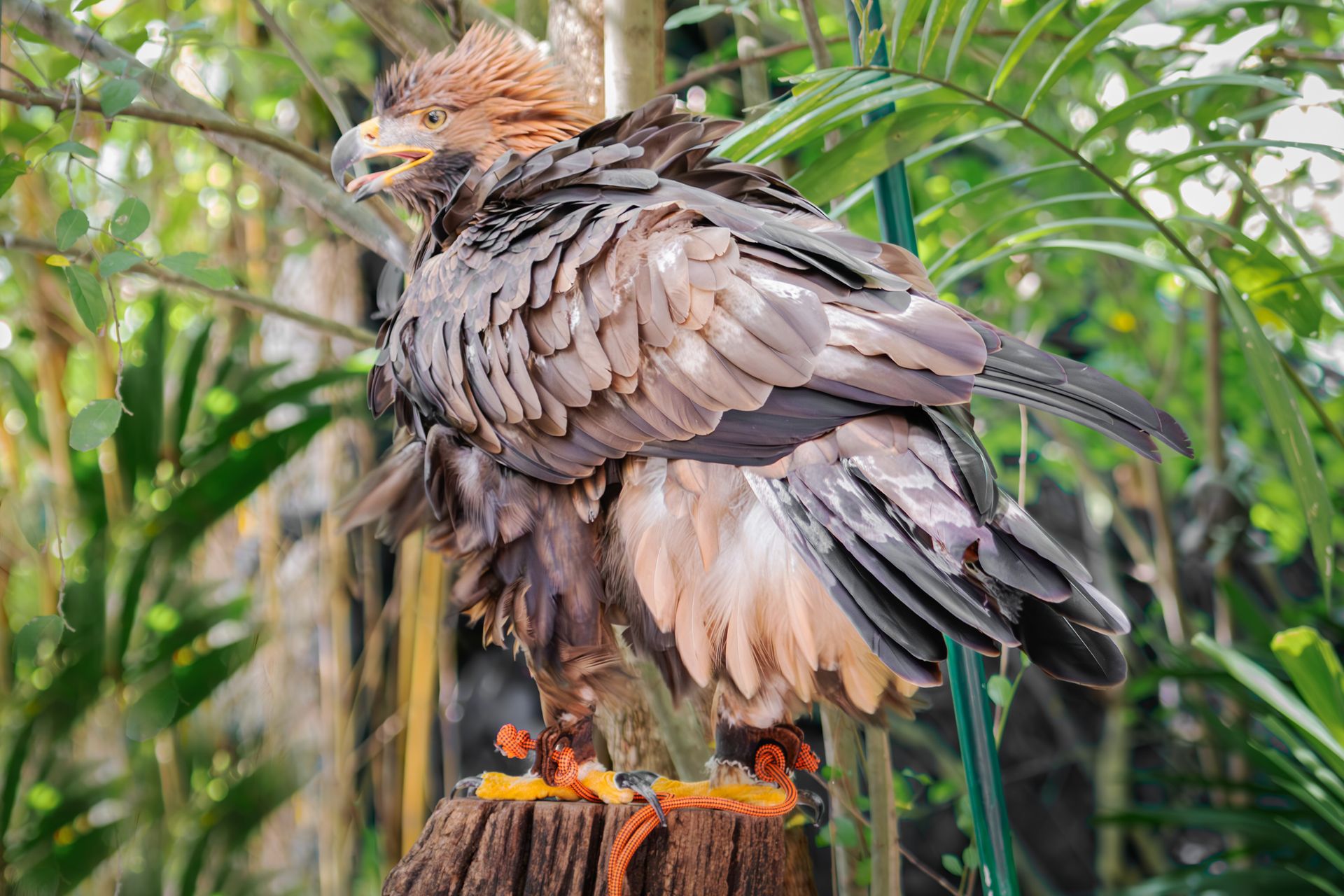
The Philippine Eagle-Owl faces threats from larger birds, which are a significant concern for these magnificent creatures.
Young owlets are particularly vulnerable to predation until they develop their flight skills.
Interesting Facts and Significance
The Philippine Eagle-Owl is primarily nocturnal, but it can also be seen active during the day in low-light conditions.
This species is known for its distinctive, resonant calls, which echo through the forests at night.
The Philippine Eagle-Owl has a more developed sense of eyesight compared to hearing, which aids its hunting prowess. This is a notable difference from many other owl species.
Here are some key facts about the Philippine Eagle-Owl's behavior and characteristics:
- It's primarily nocturnal but can be active during the day in low-light conditions.
- It has distinctive, resonant calls that echo through the forests at night.
- It has a more developed sense of eyesight compared to hearing.
Ecological Significance
The Philippine Eagle-Owl plays a vital role in its ecosystem, primarily as a top predator. By controlling populations of small mammals, birds, and insects, it helps maintain a healthy balance within its habitat.
This predator-prey relationship is crucial for preventing overpopulation of any species, which can lead to habitat degradation.
In this delicate balance, the Philippine Eagle-Owl's presence is essential for keeping the ecosystem in check.
Interesting Facts
The Philippine Eagle-Owl is a fascinating creature, and here are some interesting facts about it.
It's a nocturnal bird, but it can also be seen active during the day in low-light conditions.
This species is known for its distinctive, resonant calls, which echo through the forests at night.
The Philippine Eagle-Owl has a more developed sense of eyesight compared to hearing, aiding its hunting prowess.
Its diet consists of rodents and amphibians.
This owl is a keystone species vital for ecological balance in the Philippines.
Its reliance on large lowland forests makes forest conservation crucial to maintain its populations.
The Philippine Eagle-Owl is endemic to the Philippines, found in lowland forests on several islands, including Catanduanes, Samar, Bohol, Mindanao, Luzon, Leyte, and possibly Sibuyan.
Frequently Asked Questions
How many Philippine Eagle owls are left?
There are approximately 2,500 to 10,000 mature Philippine Eagle owls remaining in the wild, but their population is declining due to habitat loss and other threats.
Featured Images: pexels.com