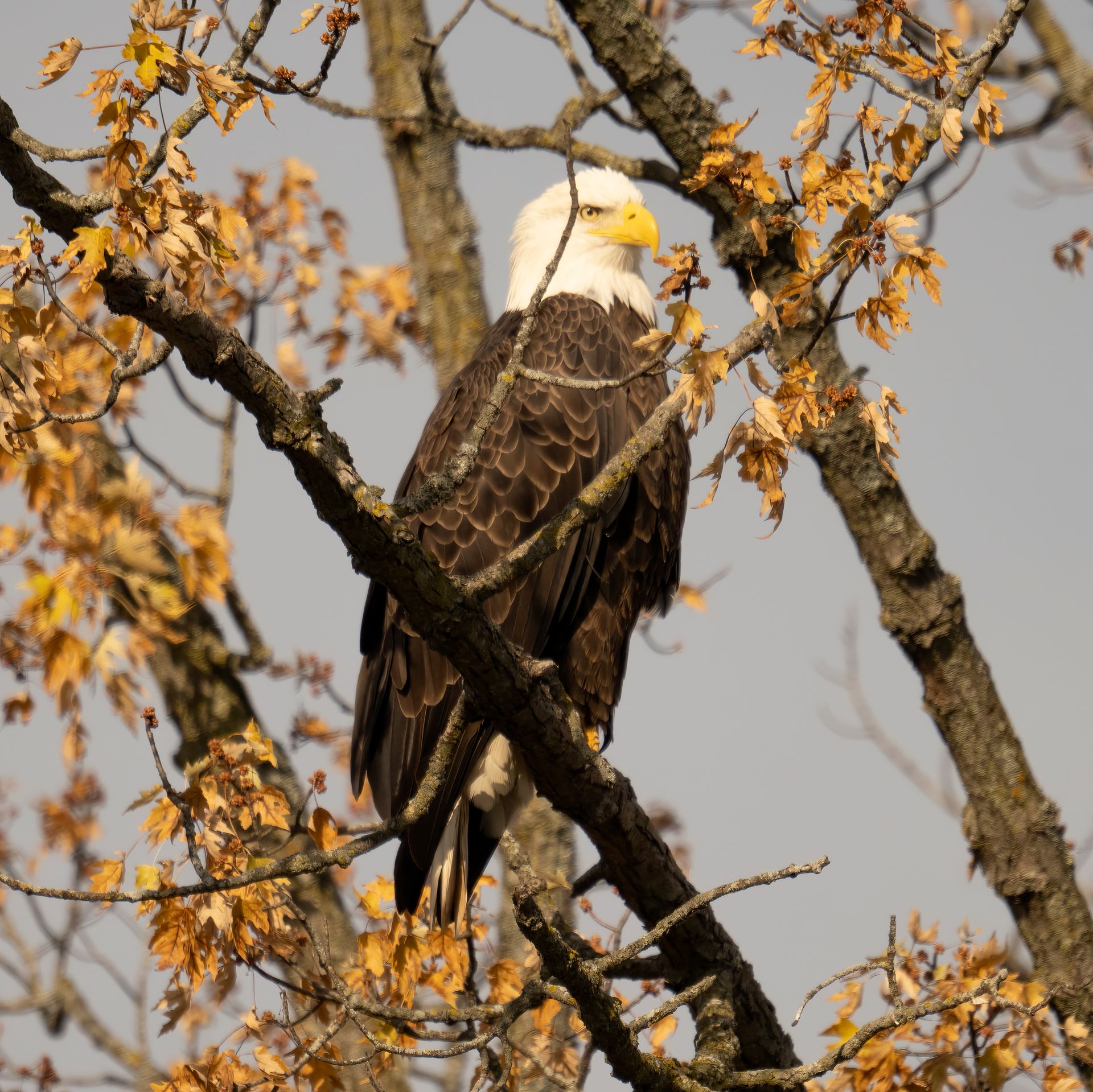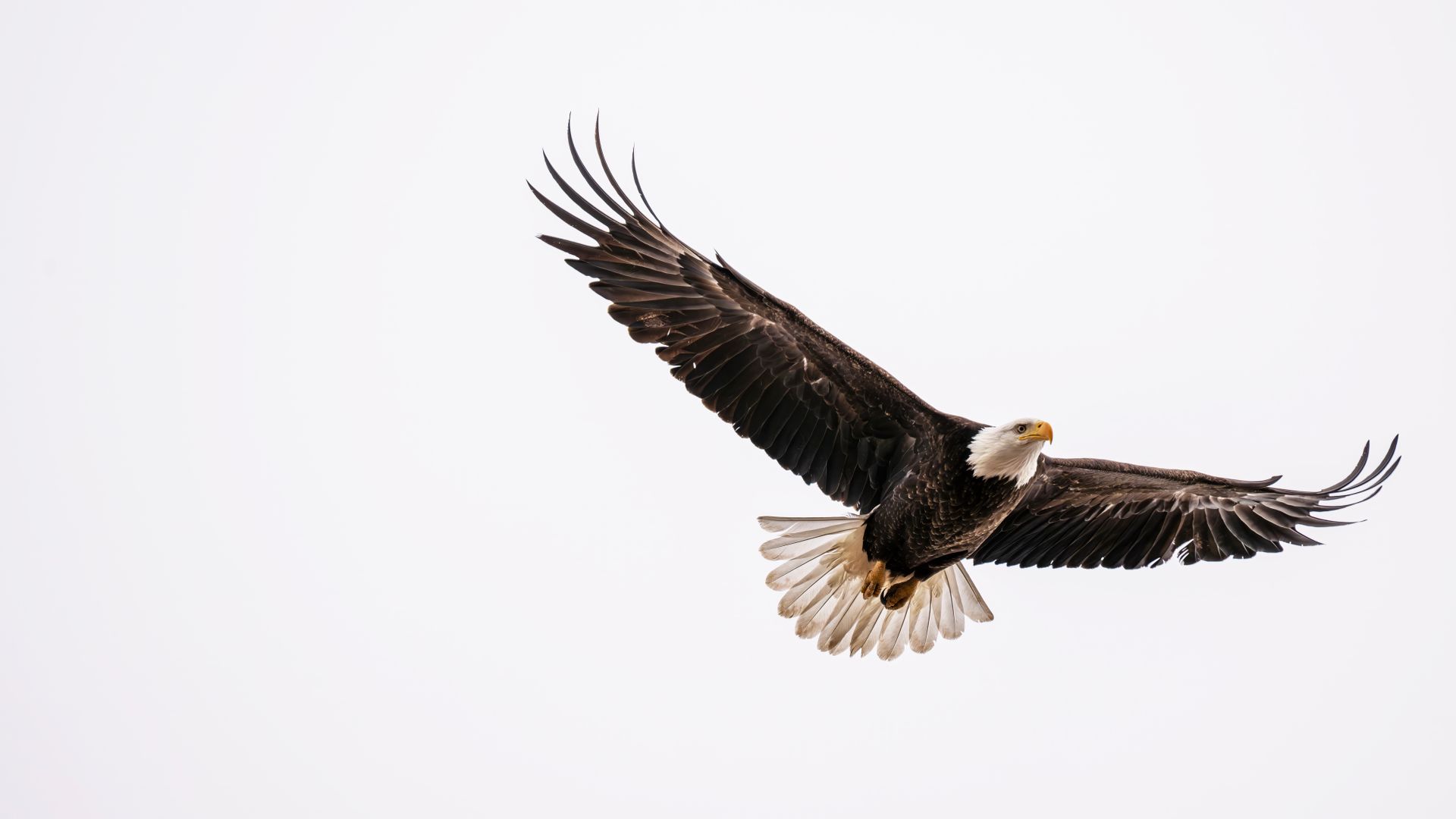
The Southern Bald Eagle is an iconic bird of prey that commands respect and admiration. They are a majestic sight to behold, with their snowy-white heads and tail feathers contrasting with their dark brown body.
Their impressive wingspan can reach up to 7.5 feet, making them a formidable hunter in the skies.
Their sharp talons and hooked beak are designed for grasping and tearing flesh, allowing them to take down prey with ease.
In the Southern United States, these eagles are a rare sight, with only a few scattered populations remaining.
Biology and Habitat
Bald eagles build their nests in tall trees along coasts or on the banks of rivers and lakes, choosing sites based on proximity to water, vantage point, and height of the tree.
In South Carolina, suitable nest sites are often found in tall, live pines with a higher canopy than surrounding trees, and are typically close to large bodies of water.
Recommended read: Malayan Water Monitor Lizard
Bald eagles mate for life, and eggs are laid in late December to early January, with both male and female taking turns incubating the eggs that are laid in clutches of one to three.
Eaglets hatch after approximately 35 days, and in the spring and summer, juveniles and adults migrate north, with some eagles banded in South Carolina reported to migrate as far north as Canada.
Bald eagles primarily feed on fish, snatching them out of the water with their talons or stealing them from ospreys, but also eat coots, injured ducks, and occasionally, rabbits and other small mammals during the winter.
Southern Bald Eagle
The Southern Bald Eagle is a majestic bird that has made a remarkable comeback in South Louisiana. In the 1970s, there were only six or seven nesting territories remaining in the region.
The Bald Eagle was removed from the Endangered Species list in 2007, but it continues to be protected by state and federal laws. Possession of a Bald Eagle, alive or dead, can result in a fine of up to $20,000 and a two-year jail term.
Bald Eagles nest in South Louisiana during the winter months, with most egg laying completed in late November. The eggs hatch around year's end, and by March, most young have left the nest.
The eagles add to their large nests each year, which can reach weights of several hundred pounds and diameters of 10 to 12 feet. These nests are typically located in large cypress trees, which provide a safe and stable platform for the birds.
The Bald Eagle population has grown significantly in South Louisiana, with about 150 active nests existing today. Most of these nests are located between the Mississippi River and Vermilion Bay, with Terrebonne Parish topping the list with 54 known nesting sites.
However, the future of the Bald Eagle in Louisiana is uncertain due to the loss of vital wetlands, saltwater intrusion, and sea level rise. These stressors can negatively impact the ecosystem and potentially limit the population growth of the Bald Eagle.
Restoration projects, such as freshwater and sediment diversions, can help create more land and healthy habitat for the eagle to nest and forage. Downstream restoration projects like barrier reef construction can also provide benefits to the Bald Eagle by creating storm surge protection and buffers to keep saltwater from impacting habitat upstream.
A fresh viewpoint: Eastern Gray Squirrel Population Distribution Pattern
Eagle (Haliaeetus Leucocephalus)
Bald eagles build their nests in tall trees along coasts or on the banks of rivers and lakes, choosing sites based on proximity to water, vantage point, and height of the tree.
In South Carolina, eagle nests are often found in tall, live pines with a higher canopy than surrounding trees, and are usually close to large bodies of water such as impounded marshes.
Each year during the breeding season, new branches are added to the original nest, which can measure 3 meters (10 feet) across and weigh more than 1 ton.
Bald eagles mate for life, and in South Carolina, eggs are laid in late December to early January.
Male and female bald eagles take turns incubating the eggs that are laid in clutches of one to three, and eaglets hatch after approximately 35 days.
Bald eagles feed mainly on fish, which are snatched out of the water with the eagles' talons or stolen from ospreys.
However, during winter, eagles also feed on coots, injured ducks, and occasionally, rabbits and other small mammals.
Carrion, usually dead fish, is a regular part of their diet.
In South Louisiana, bald eagles nest in tall cypress trees, adding to their large nests each year, which can reach weights of several hundred pounds and diameters of 10 to 12 feet.
Most bald eagles in South Louisiana nest between the Mississippi River and Vermilion Bay, with Terrebonne Parish topping the list with 54 known nesting sites.
The eagles nest in South Louisiana during the winter, when pair activities include readying the nest and laying eggs, with most egg laying completed in late November.
A 1,500-foot radius around each nest protects the birds from human activities between October 15 and May 15.
Discover more: American Bald Eagle Nest
Habitat and Biology
Bald eagles are found in tall trees along coasts or on the banks of rivers and lakes, and they choose their nesting sites based on proximity to water, vantage point, and height of the tree.
In South Carolina, eagle nests are often found in tall, live pines with a higher canopy than surrounding trees, and they're usually close to large bodies of water like impounded marshes.
Bald eagles build massive nests, with some measuring 3 meters (10 feet) across and weighing over 1 ton.
Each year, new branches are added to the original nest, and nesting in South Carolina occurs along the major river drainages of the Lower Coastal Plain.
The ACE Basin is the most important nesting area in South Carolina, with 40% of nesting eagles living within its boundaries.
Bald eagles mate for life, and in South Carolina, eggs are laid in late December to early January.
Eaglets hatch after approximately 35 days, and both male and female eagles take turns incubating the eggs.
In the spring and summer, juveniles and adults migrate north, with some eagles banded in South Carolina reported to migrate as far north as Canada.
However, the Chesapeake Bay area appears to be a favored location for South Carolina eagles during the non-nesting season.
Bald eagles primarily feed on fish, which they snatch out of the water with their talons or steal from ospreys.
You might like: American Bald Eagle Nesting Habits
During winter, eagles also feed on coots, injured ducks, and occasionally, rabbits and other small mammals.
Carrion, usually dead fish, is a regular part of their diet.
The future of bald eagles in coastal Louisiana is uncertain due to loss of vital wetlands, saltwater intrusion, and sea level rise.
Bald eagles in coastal Louisiana may face negative impacts from changes to their coastal wetlands, like the loss of forested wetland habitat.
Coastal restoration projects, such as freshwater and sediment diversions, can help create more land and healthy habitat for bald eagles to nest and forage.
Downstream restoration projects like barrier reef construction can also provide benefits to bald eagles by creating storm surge protection and buffers to keep saltwater from impacting habitat upstream.
See what others are reading: Southern Leopard Frog Habitat
Behavior and Diet
The southern bald eagle's behavior is quite fascinating. It's a powerful flier that soars on thermal convection currents.
In flight, the bald eagle can reach speeds of 56-70 km/h (35-43 mph) when gliding and flapping, and about 48 km/h (30 mph) while carrying fish. Its dive speed is between 120-160 km/h (75-99 mph), though it seldom dives vertically.
Bald eagles are surprisingly maneuverable in flight, and have been recorded catching up to and then swooping under geese in flight, turning over and thrusting their talons into the other bird's breast.
Bald Eagles Return
Bald eagles are making a comeback in South Louisiana, thanks to law enforcement and decreased use of DDT.
Their population was once dwindling, but now they're thriving, with about 150 active nests existing in the region.
The eagles nest in South Louisiana during the winter, when pair activities include readying the nest and laying eggs.
Most egg laying is completed in late November, and the eggs hatch around year's end.
By March, most young have left the nest and soon thereafter most of the eagles will leave the state.
October signals the population's return to the state.
The eagles spend the summer in northern states, and scientists believe they will expand their range into parts of the Atchafalaya Basin and marginal habitats along the coast.
A 1,500-foot radius around each nest protects the birds from human activities between October 15 and May 15.
Anyone who anticipates being within 1,500 feet of a bald eagle nest during this period must contact the Department of Wildlife and Fisheries or the U.S. Fish and Wildlife Service.
Their nests can reach weights of several hundred pounds and diameters of 10 to 12 feet, and are often located in large cypress trees.
Behavior

The bald eagle is a powerful flier, soaring on thermal convection currents and reaching speeds of 56-70 km/h when gliding and flapping.
It's impressive to note that despite being less well adapted to faster flight than golden eagles, the bald eagle is surprisingly maneuverable in flight.
Bald eagles have been recorded catching up to and then swooping under geese in flight, turning over and thrusting their talons into the other bird's breast.
They are partially migratory, depending on location, and will remain in their territory year-round if it has access to open water.
However, if the body of water freezes during winter, making it impossible to obtain food, they will migrate to the south or to the coast.
Bald eagles select migration routes that take advantage of thermals, updrafts, and food resources, often ascending in thermals and then gliding down.
During migration, they usually take place during the daytime, between 8:00 a.m. and 6:00 p.m., when thermals are produced by the sun.
For your interest: American Bald Eagle Food Chain
Diet and Feeding

In the wild, these animals primarily feed on a diet of fish, crustaceans, and other aquatic animals.
They have been observed to eat up to 2-3% of their body weight in food daily.
Their diet consists mainly of small fish, which they catch using their speed and agility in the water.
A study has shown that they can go without food for up to 2 weeks in captivity.
They have been known to store food in their cheeks and then swallow it whole.
Their digestive system is designed to handle a diet high in protein and fat.
In the wild, they have been observed to eat in short intervals throughout the day.
They have a unique way of eating, using their tongue to manipulate food before swallowing.
Their diet plays a crucial role in their overall health and well-being.
Expand your knowledge: American Bald Eagle Diet
Conservation Status
The southern bald eagle's conservation status is a story of recovery.
Historically, habitat loss and hunting led to a drastic decline in their population, with only around 400 breeding pairs remaining in the southeastern United States by the 1960s.
Conservation efforts, including the banning of DDT and the protection of their habitat, have helped the species make a remarkable comeback.
Their population has steadily increased over the years, with an estimated 1,500 breeding pairs in the southeastern United States in 2020.
Identification and Outlook
The southern bald eagle is a majestic bird, and identifying it is relatively straightforward. The plumage differences between the bald eagle and white-tailed eagle in juveniles have been described by Grant, Peter J. in 1988.
One way to confirm the identity of a southern bald eagle is to look at its taxonomy. The scientific name for the bald eagle is Haliaeetus leucocephalus, which can be found in taxon identifiers.
The southern bald eagle is a species of least concern according to the IUCN Red List, and it's also listed as a bird of prey of North America.
Identification
Identification can be a crucial step in recognizing a bald eagle, especially in juvenile birds. The plumage differences between bald eagles and white-tailed eagles in juveniles are described in Peter J. Grant's 1988 article, "The Co. Kerry Bald Eagle".
Bald eagles have distinctive physical characteristics that can help with identification. A photo field guide on Flickr can be a helpful resource for learning more about these characteristics.
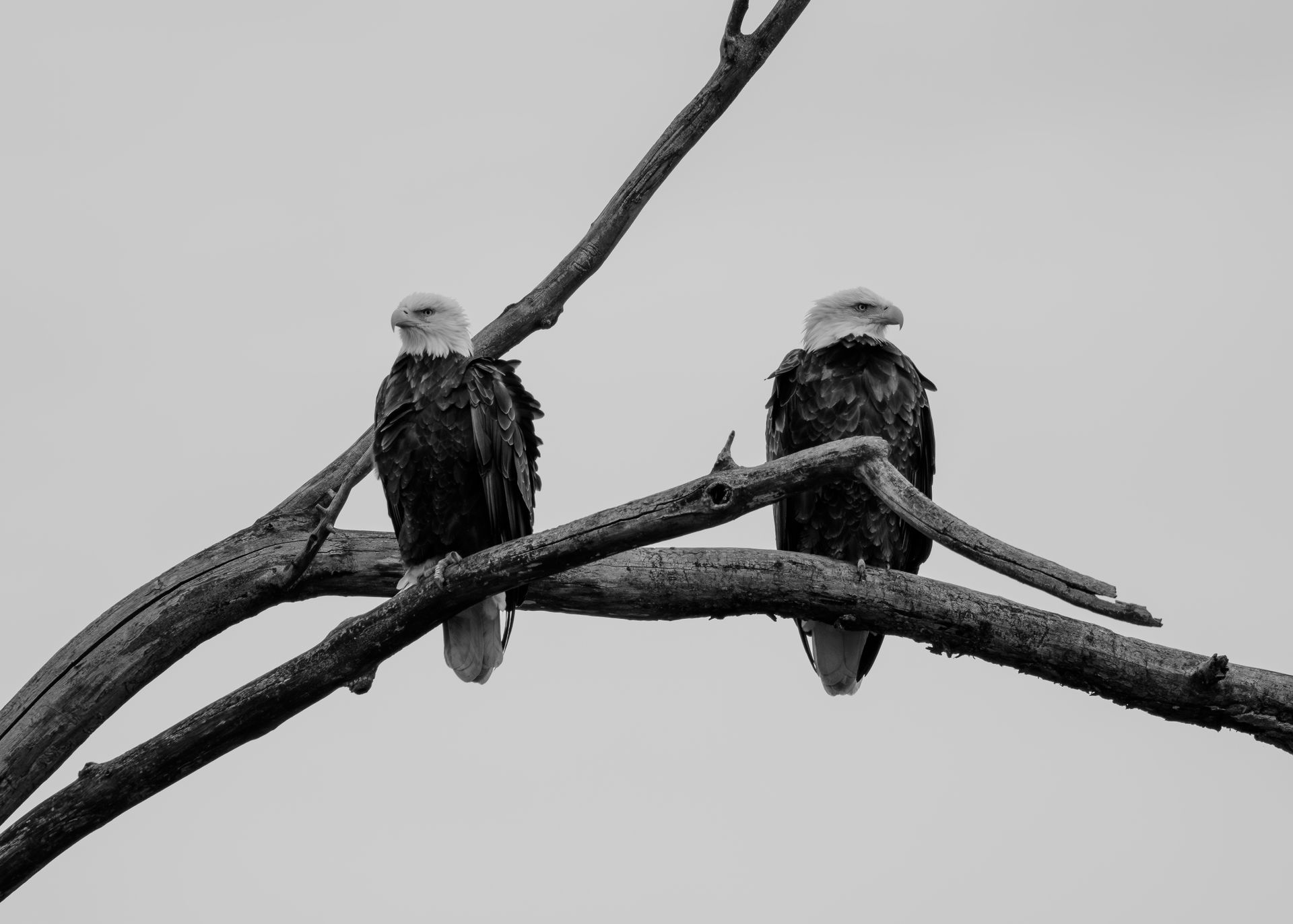
If you're trying to identify a bald eagle, you can start by looking for its taxonomic classification. The species is classified as Haliaeetus leucocephalus.
Here's a list of some key characteristics to look for when trying to identify a bald eagle:
- Plumage differences between bald eagles and white-tailed eagles in juveniles
- Taxonomic classification: Haliaeetus leucocephalus
Bald Eagles in Louisiana: Future Outlook
The future of Bald Eagles in coastal Louisiana is uncertain due to loss of vital wetlands, saltwater intrusion, and sea level rise.
Bald Eagles rely on coastal wetlands for nesting and foraging, and the loss of forested wetland habitat may have a noticeable negative impact on their populations.
The Habitat Suitability Index model shows that coastal restoration projects can help create more land and healthy habitat for the eagles.
In fact, freshwater and sediment diversions upstream can create more land for the eagles to nest and forage, while barrier reef construction downstream can provide storm surge protection and buffers to keep saltwater from impacting habitat upstream.
The Bald Eagle population in South Louisiana has made a significant comeback since the 1970s, with the number of active nests increasing from 6 or 7 to over 150 today.
Most Bald Eagle nests in South Louisiana are located between the Mississippi River and Vermilion Bay, with Terrebonne Parish having the most known nesting sites.
Bald Eagles in South Louisiana typically nest during the winter, and most young have left the nest by March, after which the eagles will leave the state until October.
The 1,500-foot radius around each nest protects the birds from human activities between October 15 and May 15, and anyone anticipating being within this radius must contact the Department of Wildlife and Fisheries or the U.S. Fish and Wildlife Service.
As the Bald Eagle population grows, scientists believe the birds will expand their range into parts of the Atchafalaya Basin and marginal habitats along the coast.
Featured Images: pexels.com