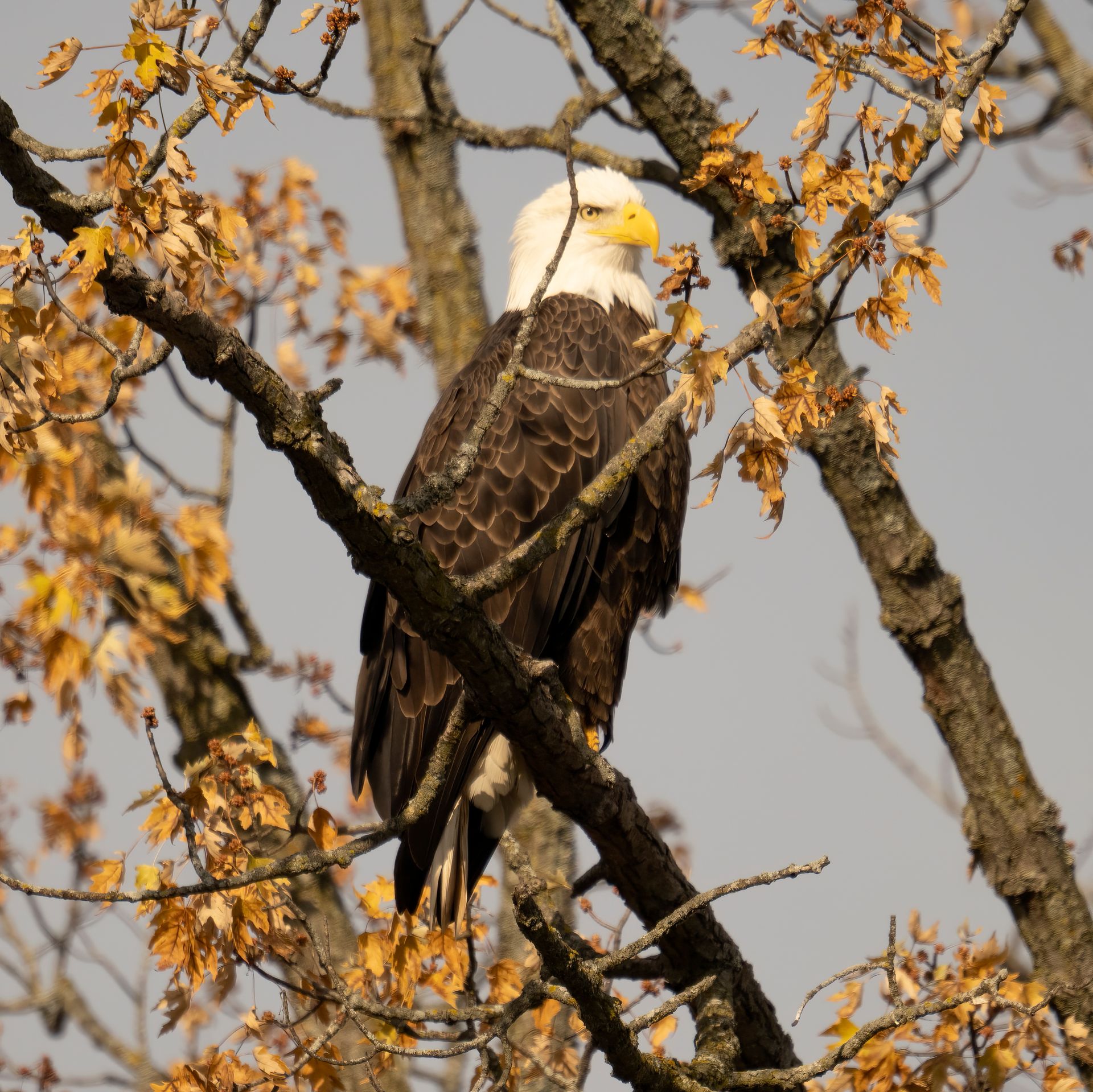
The American Bald Eagle is a true marvel of nature. Once on the brink of extinction, this majestic bird has made an incredible comeback.
In the 1960s, there were only around 417 breeding pairs left in the lower 48 states, due to habitat loss, hunting, and pesticide poisoning.
The Bald Eagle population started to decline drastically in the mid-20th century, with numbers dwindling from an estimated 300,000 to just 417 breeding pairs.
Conservation efforts, including the banning of DDT in 1972, have been instrumental in the Bald Eagle's recovery.
Bald Eagle Facts
Bald eagles are known to live a long life, with a span of over 30 years in the wild.
They mate for life and return to nest in the same general area, usually within 250 miles, from where they fledged.
Their aerial courtship is a breathtaking display of aerial abilities, involving a high-flying dive and interlocking talons while descending in somersaults.
Bald eagles typically produce only one or two offspring per year, and their young fledge by mid to late summer at around 12 weeks of age.
They become largely independent by 20 weeks of age.
A bald eagle nest is a massive structure, often located high up in a tall, live white pine tree near water, and can weigh hundreds of pounds.
It's reused and added to each year, sometimes becoming eight or more feet deep and six feet across.
Conservation Status
The American bald eagle population has faced significant threats to its survival, particularly with the reproductive impairment caused by pesticides and heavy metals in the last century.
Destruction of habitat through logging and development along watercourses has been a major contributor to this decline, with extensive human activity disturbing important nest areas.
The 1972 ban on DDT has led to a significant recovery in eagle populations, with eagles once again producing young.
However, this progress has been offset by the continued destruction of habitat, resulting in reproductive failure and nest abandonment.
In fact, even recently, human activity within preferred eagle habitats has disrupted nest areas, further threatening the species' survival.
Expand your knowledge: American Bald Eagles Nest
Additional reading: American Bald Eagle Status
Interesting Facts
The American Bald Eagle is an incredible bird, and here are some interesting facts about it.
The American Bald Eagle can live up to 20-30 years in the wild, which is impressive considering its habitat and prey availability.
One of the most distinctive features of the American Bald Eagle is its white head and tail feathers, which are a striking contrast to its dark brown body.
Related reading: American Bald Eagle Fun Facts
Distribution and Habitat
Bald eagles are found in every state except Hawaii, as well as throughout Canada.
They prefer undisturbed areas near large lakes and reservoirs, marshes and swamps, or stretches along rivers where they can find open water and their primary food, fish.
Historically, they nested in forests along the shorelines of oceans, lakes or rivers throughout most of North America, often moving south in winter to areas where water remained open.
Prior to the 1900s, they used as many as 80 nest sites in New York, primarily in the northern and western parts of the state.
For another approach, see: What Is the State Bird of Colorado

Bald eagles have been known to winter in southern Canada, along major river systems, in intermountain regions, and in the Great Plains.
Many hydroelectric plants, including some in New York, provide suitable wintering habitat for bald eagles.
Bounties were once offered for killing them, due to their perceived competition with humans for wild food sources and threats to farm animals.
What Animal's Tongue Is Most Like a Tongue?
A bald eagle's tongue is most like a human's tongue, being pinkish, narrow, and flexible. It's also shorter than ours, but still helps them lift, pull, and swallow food.
The tongue of a bald eagle fits nicely in their beak, and is short enough that they can't easily bite it. This unique feature allows them to eat with ease.
A bald eagle's tongue is quite versatile, helping them to swallow food just like we do. It's an amazing adaptation that's essential to their survival.
Here's an interesting read: American Bald Eagle Food Chain
Bald Eagle Population Soars
The Bald Eagle population has made a remarkable recovery, thanks to conservation efforts.
According to the article, the Bald Eagle population soared from just 417 breeding pairs in 1963 to over 70,000 individuals today.
The Bald Eagle's impressive recovery is a testament to the effectiveness of the Endangered Species Act, which was passed in 1973.
The Bald Eagle's habitat is primarily found near large bodies of water, such as lakes, rivers, and coastlines, where they can hunt for fish.
Bald Eagles are skilled hunters, with a success rate of up to 50% when diving for fish.
Their sharp talons and powerful beaks make them well-suited for catching prey.
National Symbol
The bald eagle is a national symbol that holds a special place in American culture. It's featured on the flag and seal of the U.S. president.
An image of the bald eagle is also on the seal of the U.S. Supreme Court. This is a testament to its importance in American society.
The bald eagle is a common sight in the United States, and Americans have a personal relationship with the bird.
Featured Images: pexels.com