Horse foot diseases can be a real challenge to diagnose and treat, but with the right knowledge, you can help keep your horse's hooves healthy.
A horse's hooves are made of a protein called keratin, which is also found in human hair and nails.
Regular trimming and shoeing can help prevent some common hoof problems, such as abscesses and thrush.
It's essential to recognize the signs of hoof disease, including lameness, swelling, and a foul odor.
Discover more: How to Trim a Horse's Mane?
Sole and Abscess Issues
Bruising on the sole of the foot is usually caused by direct injury from stones, irregular ground, or other trauma. Poor shoeing, especially in horses with flat feet or dropped soles, can increase the risk of bruising.
A corn is a type of bruise that appears in the sole at the buttress, most common in the forefeet on the inner buttress. It arises from pressure applied to the sole by the heel of a shoe improperly placed or left on too long.
Bruising may or may not be associated with lameness, depending on the severity. Severe bruising can cause the formation of a 'haematoma', which is like a blood blister and can be extremely uncomfortable for the horse.
Foot abscesses, also called 'sole abscesses' or 'subsolar abscesses', are the most common cause of lameness in horses. They occur when bacteria get trapped between the laminae and hoof wall causing a localized infection.
An abscess can take varying lengths to heal depending on its severity. The vet or farrier will likely drain the area, relieving the pressure.
Sole Bruises and Abscesses
Sole Bruises and Abscesses are common issues that can cause lameness and discomfort in horses. A bruise on the sole of the foot is usually caused by direct injury from stones, irregular ground, or other trauma.
Poor shoeing, especially in horses with flat feet or dropped soles, can increase the risk of bruising, usually around the outside edge of the sole or at the toe. Bruising may or may not be associated with lameness, depending on the severity.
The sole may appear normal or may appear reddened or feel swollen or moist. If untreated, the affected area can become infected (a subsolar abscess). A corn is a type of bruise that appears in the sole at the buttress, most common in the forefeet on the inner buttress.
Corns may arise from pressure applied to the sole by the heel of a shoe improperly placed or left on too long. Shoes that have been fitted too closely at the quarters or that are too small can also cause corns.
A hoof abscess is an infection inside the hoof, often causing sudden and severe lameness. Horses suffering from an abscess will often be suddenly and severely lame, and some horses may have lameness that seems to “come and go.”
Foot abscesses, also called “sole abscesses” or “subsolar abscesses,” are the most common cause of lameness in horses. Because horse’s hooves are exposed to mud, manure, and have tiny cracks from constant use, these areas of bacterial infection do occur.
Lameness is often severe until the abscess ruptures or is opened to drain. Changes in weather can cause the hoof to become dry and as a result can crack allowing bacteria into the hoof wall. Poor management can lead to abscesses if the hoof isn’t regularly trimmed, or if your horse suffers a penetration injury.
Causes of Sole Bruises and Abscesses:
- Direct injury from stones, irregular ground, or other trauma
- Poor shoeing, especially in horses with flat feet or dropped soles
- Pressure from improperly placed or fitted shoes
- Changes in weather causing hoof dryness and cracking
- Poor management, including infrequent trimming or penetration injuries
Quittor
Quittor is a longterm inflammation of the cartilage of the coffin bone.
It's characterized by death of the cartilage and one or more sinus tracts extending from the diseased cartilage through the skin. Quittor is seldom encountered today but was once common in working draft horses.
In most cases, injury to the coronet or pastern introduces infection into the deep tissues, forming a pus-filled sore called an abscess.
The first sign of quittor is an inflammatory swelling over the cartilage, followed by the formation of draining tracts. During the inflammatory stage, lameness occurs.
Surgery to remove the diseased tissue and cartilage is usually successful.
Thrush
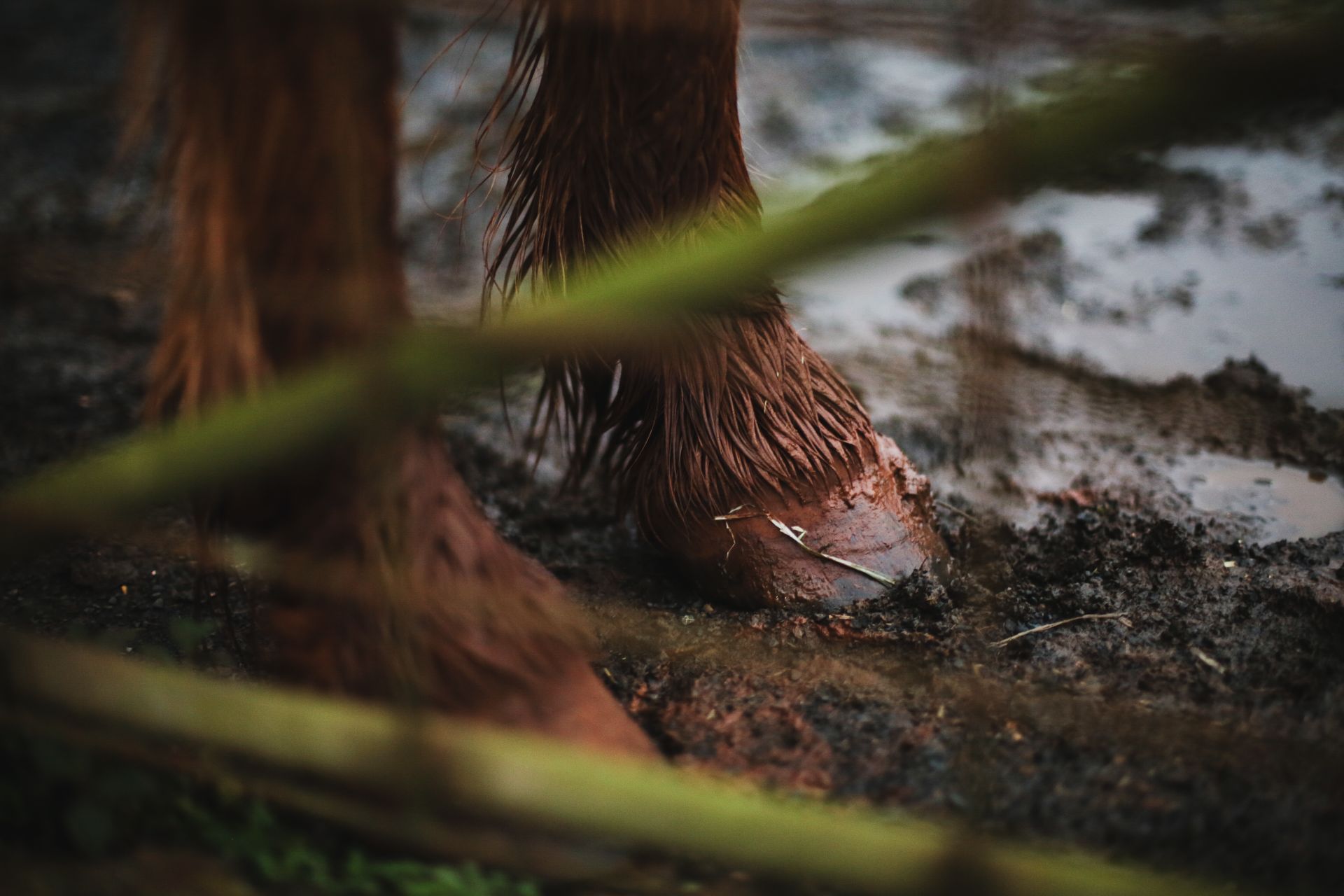
Thrush is a common bacterial infection affecting the horse's hoof, more specifically the soft frog tissues and sometimes the heel of the foot. It usually starts in the frog clefts and can produce black smelly discharge.
You'll notice thrush in horses hooves by its distinctive black discharge and strong, unpleasant odor. This discharge is usually found on and around the frog, in the sulci (grooves) on either side of the frog, and in the central section.
Thrush can affect one hoof or all four at a time, so it's essential to monitor your horse's hooves regularly for any signs of infection. Working closely with your veterinarian and farrier is crucial to treating thrush and preventing it from coming back.
You might enjoy: How to Build Your Horse's Topline?
Cankers and Infections
Cankers and Infections can be a real challenge for horse owners. Cankers are essentially open sores that can appear on a horse's hooves or legs, often due to poor hoof care or environmental factors.
Danvers Child, a farrier and SmartPak Equine's Hoof Health Consultant, explains that thrush is a type of fungal infection that can cause cankers in horses. Thrush is a common issue that can be prevented with regular hoof care.
Cankers can be painful for horses and may require treatment to prevent infection.
Discover more: Essential Foot Care for Horses
Canker
Canker is an overgrowth and infection of the horn-producing tissues in a horse's foot, typically involving the frog and the sole. It's characterized by a thick, foul-smelling discharge and pus.
Canker can occur in both front and hind feet, often starting at the back of the frog and appearing as fronds or cauliflower-like growth. The affected tissues are usually covered by a thick, foul-smelling discharge.
Treatment for canker must be intensive, involving the removal of all loose horn and affected tissue, followed by daily application of an antiseptic or antibiotic dressing. A clean, dry wound environment is crucial for healing.
Canker can extend to the sole and even the wall of the hoof, showing no tendency to heal on its own.
Signs and Diagnosis
Laminitis is a serious condition that can be acute, subacute, or chronic. Acute laminitis is the first few days of founder before any displacement of the coffin bone occurs.
In acute laminitis, horses exhibit depression, loss of appetite, and reluctance to stand or move. They may resist exercise and attempt to shift weight off the affected feet.
Heat is apparent in the whole hoof, especially near the coronary band, and pain can cause muscle trembling. Pressure on the feet reveals tenderness.
Lameness is usually moderate to severe at this stage, and X-ray evidence of rotation can be present as early as the third day. Horses with laminitis typically have elevated vital signs, such as increased body temperature, heart rate, and respiration.
In subacute cases, horses may exhibit mild signs of laminitis, such as a mild change in stance and increased sensitivity in the soles of the affected feet. Episodes of acute or subacute laminitis tend to come back at varying intervals.
Horses with chronic laminitis are usually extremely lame and may spend a lot of time lying down. Long-term cases of chronic laminitis are characterized by changes in the shape of the hoof, such as laminitic rings and narrowing.
To diagnose laminitis, a medical history is taken, noting possible contributing factors, such as a grain overload in the diet. X-rays are necessary to determine whether the coffin bone is displaced.
Bone and Joint Issues
Fractures of the coffin bone can be a serious issue, causing sudden lameness in horses. This type of fracture often occurs at high speed or from kicking a firm object.
The lameness is usually severe if the fracture extends up into the adjacent joint. Compressing the foot with hoof testers causes pain, and lightly tapping the hoof with a hammer may also cause pain.
A horse that fractures its coffin bone may improve after 48 hours of stall rest, unless the fracture extends into the joint. Diagnosis is confirmed by regional analgesia and x-rays, but x-ray confirmation may be difficult immediately after the injury.
Conservative treatment of 6 to 9 months' rest is usually sufficient for fractures that don't involve the joint. Young horses under three years old may also recover from joint fractures with a 12-month rest period.
Coffin Bone Fracture
Coffin bone fractures can occur at high speed, such as during a race, or from kicking a firm object like a stall wall.
The jarring injury from a coffin bone fracture produces a sudden onset of lameness, which can be severe if the fracture extends into the adjacent joint.
Compressing the foot with hoof testers causes pain in a horse that fractures its coffin bone, and lightly tapping the hoof with a hammer may also cause pain.
Turning the horse or making it pivot on the affected leg worsens the lameness, and it may improve considerably after 48 hours of stall rest, unless the fracture extends into the joint.
A diagnosis of a coffin bone fracture is confirmed by regional analgesia and x-rays, but x-ray confirmation may be difficult immediately after the injury.
Conservative treatment of 6 to 9 months' rest is usually all that is required for fractures that don't involve the joint, and the horse should return to soundness.
However, the fracture will remain visible on x-rays, so a straight bar shoe with a clip well back on each quarter is fitted to limit expansion and contraction of the heels.
Young horses (less than 3 years old) that fracture their coffin bone into the joint usually heal satisfactorily with a 12-month rest period, but horses older than 3 years have a much less favorable outlook for recovery.
Founder
Founder is a serious condition that can affect a horse's hooves, causing inflammation of the laminae, the tissue layers that support the coffin bone.
It's essential to understand that laminitis can develop in one or all four feet, and it's more common in ponies and overweight horses.
The sensitive laminae are attached to the coffin bone, while the insensitive laminae are the tissue layers just inside the hard exterior of the hoof.
Acute laminitis is a medical emergency that requires immediate veterinary attention, as it can lead to catastrophic displacement of the coffin bone.
The heavy weight of the horse and the pull of the flexor tendons can contribute to the displacement, causing the coffin bone to rotate, sink, or tilt within the hoof.
If left untreated, acute laminitis can lead to a hole forming through the sole of the foot.
The most common causes of laminitis are ingestion of too much grain, grazing of lush pastures, especially in ponies or overweight horses, and excessive exercise or repetitive trauma.
The risk of laminitis is higher in ponies and in horses that are overweight and unfit, and the number of cases tends to increase whenever there is a flush of new grass.
Sidebone
Sidebone is the hardening (calcification) of the cartilage of the coffin bone.
It's most common in the forefeets of heavy horses working on hard surfaces.
Sidebone is also frequent in hunters and jumpers, but rare in racing Thoroughbreds.
Repeated jarring injuries to the quarters of the feet are probably the most basic cause.
Improper shoeing that stops normal movement of the quarters may also lead to sidebone.
Other cases arise from direct trauma.
Sidebone rarely causes lameness and is generally an incidental finding on xrays taken of the foot for another reason.
What Is Line?
White line disease is a real concern for horse owners, causing a progressive separation of the layers of the hoof wall.
This separation can lead to structural unsoundness and lameness.
Treatments for Syndrome
Working closely with your vet and farrier is crucial when it comes to treating bone and joint issues in horses. This is especially true for conditions like white line disease, laminitis, and navicular syndrome.
Acute laminitis is a medical emergency that requires immediate attention from your veterinarian. You should contact your vet right away if you suspect your horse is suffering from this condition.
Managing a horse with laminitis is complex and requires a close working relationship with both your vet and farrier. This is because the condition can lead to serious complications if not treated properly.
Treatment options for white line disease in horses depend on the disease's severity. Working closely with your vet and farrier will help you determine the best course of action for your horse.
Working with your vet and hoof care professional is essential to understanding the root cause of navicular syndrome. This will help you decide on a plan of action to manage the condition.
A fresh viewpoint: Vestibular Disease
Foot Puncture and Cracks
Puncture wounds can occur when a horse steps on a penetrating foreign object, causing severe pain and lameness. A puncture wound can introduce microorganisms that can cause infection, leading to a pocket of infection and pus (called a subsolar abscess) that forms readily.
Prompt treatment with disinfectants and poultices is crucial for puncture wounds, and ensuring adequate wound drainage helps prevent the formation of abscesses. The infected area should be pared with a hoof knife to allow adequate drainage.
If an abscess has formed, your veterinarian may also flush the wound every 1 to 2 days for several treatments. The foot should be protected (for example, kept in a rubber or plastic boot) until there is full healing of the puncture site.
Grass cracks tend to start at the bottom of the hoof or on the sole, whereas sand cracks originate at the top of the hoof at the coronet band. Grass cracks usually occur when the hoof becomes overgrown, and the pressure causes the horn to split or break off.
You might like: What Do Horses Do When They Are Scared?
Here are some key differences between grass cracks and sand cracks:
Quarter cracks are full-thickness hoof wall defects located in the quarter between the toe and the heel, usually originating at the coronary band and extending at an angle down the weight-bearing surface.
Foot Puncture Wounds
Puncture wounds can occur when a horse steps on a penetrating foreign object. Nail bind implies that a nail has been driven close to the sensitive structures of the foot, causing severe pain and lameness.
Puncture wounds in the foot can introduce microorganisms that cause infection. A pocket of infection and pus, called a subsolar abscess, can form readily.
The horse may stand and point the affected foot, showing increased pain and warmth to the touch. The infection can progress to the coronary band, which can swell and rupture.
Any foreign object must be found and removed, and the infected area pared with a hoof knife to allow adequate drainage. Ensuring adequate wound drainage helps prevent the formation of abscesses.
Healing tends to be much more rapid and is easier to treat if the infection entered through the wall instead of the sole.
Discover more: Foot Sore Horse
Cracks
Cracks in a horse's hooves can be a real issue. A quarter crack is a vertical split that occurs in the side (quarter) of the hoof, usually between the widest part of the hoof and the heel.
These cracks can be caused by trauma to the coronary band, damage to underlying tissue from infection, conformation issues, abnormal landing pattern, or disproportionate forces on one side of the hoof. Grass cracks, on the other hand, tend to start at the bottom of the hoof or on the sole.
Grass cracks are often caused by overgrown hooves, which can lead to pressure that causes the horn to split or break off. This type of crack rarely causes severe lameness, but it can lead to infections such as abscesses.
Treatment for quarter cracks varies according to their severity. Minor cracks may be resolved with increased maintenance and attention to balance, while serious separations may require stabilization with screws or wires. It's essential to work with your vet and hoof care professional to determine the severity and treatment.
Here are some key differences between grass cracks and quarter cracks:
It's worth noting that full-thickness hoof wall defects, such as quarter cracks, usually require more extensive treatment, including stabilizing the crack with wires or acrylic composite bonding, and trimming properly to correct the landing pattern.
Bruises and Injuries
Bruising on the sole of the foot is usually caused by direct injury from stones, irregular ground, or other trauma.
Poor shoeing, especially in horses with flat feet or dropped soles, can increase the risk of bruising, usually around the outside edge of the sole or at the toe.
Bruising may or may not be associated with lameness, depending on the severity.
A horse with a hoof bruise may be sensitive or even lame.
Bruises can have a variety of causes, from acute trauma to concussive exercise to improper trimming/shoeing.
Severe bruising can cause the formation of a 'haematoma', which is like a blood blister and can be extremely uncomfortable for the horse.
The area of pain can be located by the vet or farrier using a pair of hoof testers.
Protective hoof pads may also be placed under the horse's shoe to help prevent further bruising from occurring.
If left untreated, a bruised area can become infected, forming a subsolar abscess.
Foot abscesses, also called 'sole abscesses' or 'subsolar abscesses', are the most common cause of lameness in horses.
Lameness is often severe until the abscess ruptures or is opened to drain.
It can sometimes take several days or, in the worst cases, weeks for the infection to be cleared.
General Information
Horse foot diseases are a common problem that can be caused by a variety of factors, including poor hoof care, inadequate nutrition, and exposure to certain environmental conditions.
One of the most common causes of horse foot diseases is thrush, a fungal infection that can lead to painful abscesses and lameness.
The average lifespan of a horse's hoof is about 6-12 months, meaning regular trimming and maintenance are crucial to prevent problems.
Treatment and Outlook

Acute laminitis is considered a medical emergency because coffin bone displacement can occur quickly.
If laminitis is suspected, contact your veterinarian immediately. Your veterinarian may prescribe nonsteroidal anti-inflammatory medications to lessen inflammation and pain.
Cooling the affected foot by placing it directly in ice water may protect the laminae early on in horses at risk for developing septic laminitis.
During the first 2 to 3 weeks, remove standard shoes because they place stress on the hoof wall and laminae. The feet and soles should be padded with a soft, resilient substance that is angled to reduce pressure on the front of the hoof.
Treatments for chronic laminitis aim to restore the normal alignment of the rotated coffin bone. This requires corrective hoof trimming and shoeing with an appropriate shoe, such as a heart-bar shoe or egg bar shoe.
Despite prompt treatment, the outlook for recovery is guarded until recovery is complete and it's evident that the hoof structure is not altered.
What Is Syndrome?
Navicular syndrome is a type of caudal heel pain in the hoof.
Horses suffering from navicular pain often exhibit lameness, especially under certain conditions such as working in tight, small circles or on hard surfaces.
Navicular syndrome is broadly used to describe any type of caudal heel pain in the hoof.
Anatomy
Laminitis is a serious condition that affects the sensitive tissues in a horse's hoof, specifically the laminae.
The laminae are delicate structures that connect the hoof wall to the coffin bone, and they play a crucial role in supporting the horse's weight.
Danvers warns that you shouldn't wait to call your vet or hoof care professional if you suspect your horse is experiencing a laminitic episode.
In fact, prompt veterinary attention can make a big difference in the outcome for your horse.
You might like: What Is Zorro's Horse's Name?
Syndrome
Syndrome refers to a collection of symptoms that occur together, often caused by a specific underlying condition or disease.
A syndrome can be a medical condition, a psychological disorder, or a combination of both.
For example, Down syndrome is a genetic disorder that occurs when an individual has an extra copy of chromosome 21.
It's essential to note that a syndrome is not a disease itself, but rather a pattern of symptoms that can be caused by various factors.
A unique perspective: What Is Cat Scratch Fever Disease
Frequently Asked Questions
What is the most common hoof disease in horses?
Laminitis is the most common hoof disease in horses, affecting the tissues connecting the hoof to the bone and causing severe pain and mobility issues. If left untreated, it can lead to long-term damage and chronic lameness.
What do laminitic hooves look like?
Laminitic hooves often feature unevenly spaced rings, with those near the toe being closer together than those near the heel
What are the symptoms of navicular disease in horses?
Navicular disease in horses causes symptoms such as head bobbing, shortened stride, and lameness, often accompanied by heel pain and hoof pointing. If left untreated, these symptoms can worsen with long hoof growth or underrun heels.
Featured Images: pexels.com