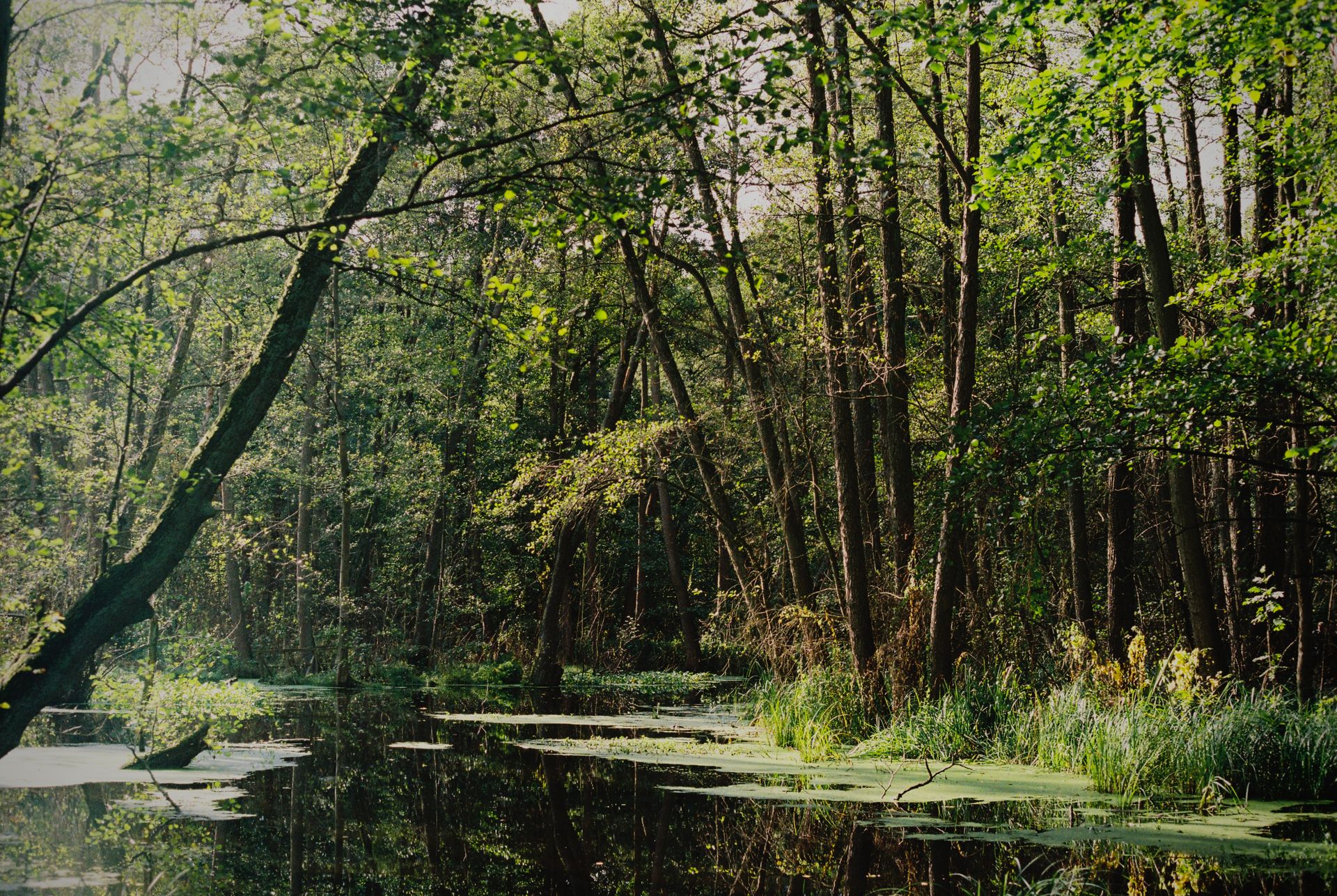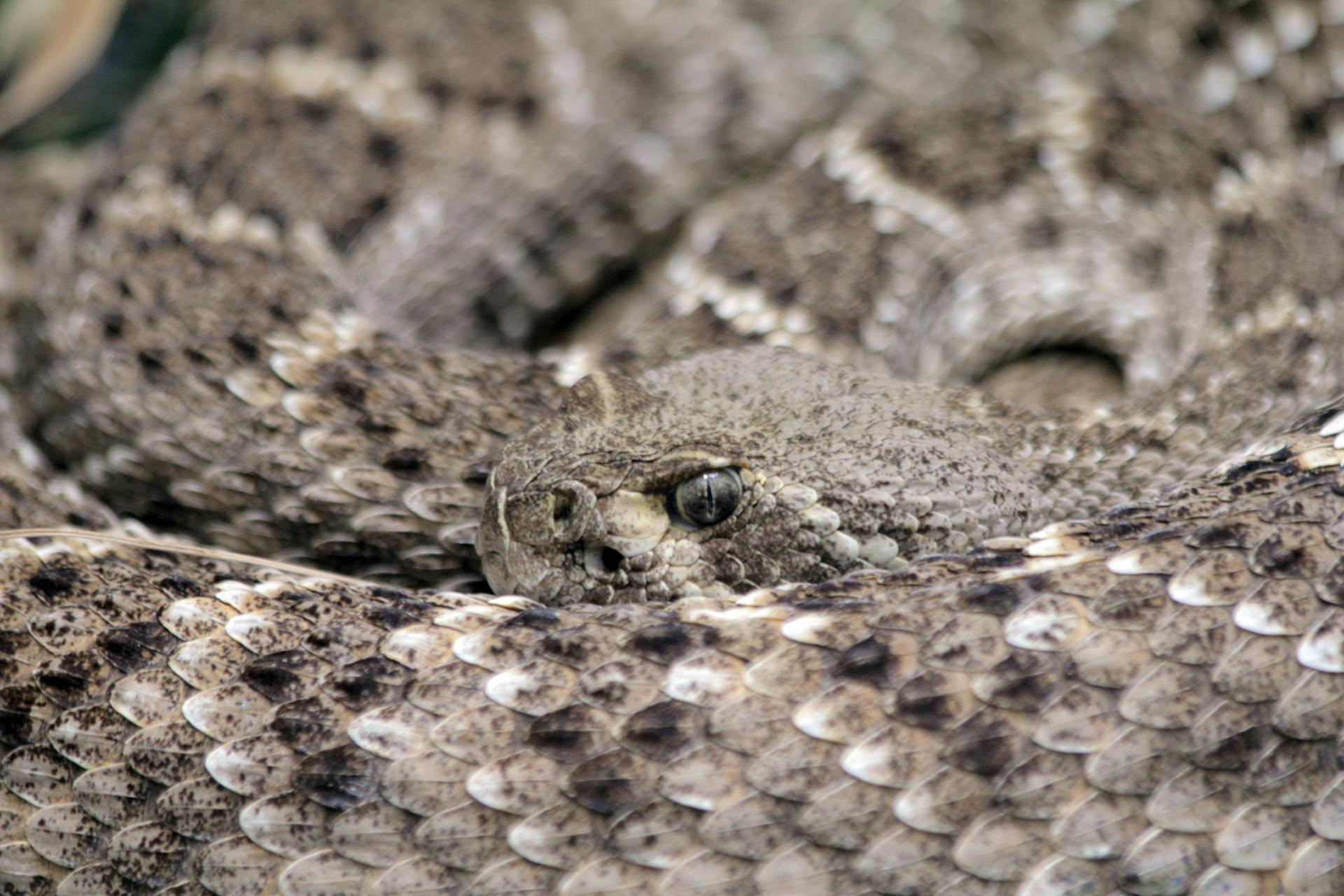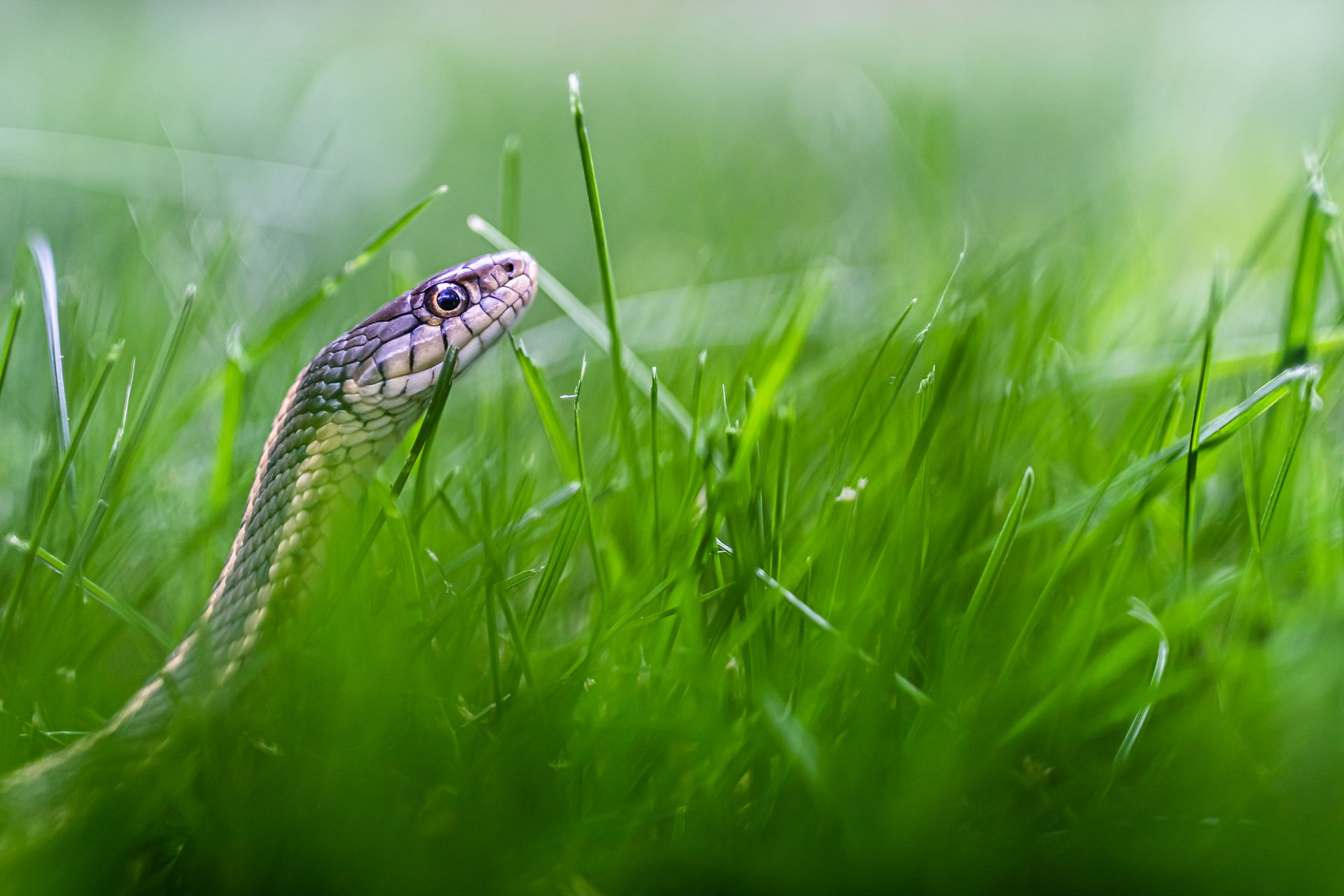
Florida cottonmouths are found in a variety of habitats, including swamps, marshes, and forests. They are semi-aquatic snakes, which means they spend a lot of time in or near water.
These snakes are excellent swimmers and can often be seen swimming in the water or basking in the sun on logs or rocks at the water's edge. They are also skilled climbers and have been known to climb trees to escape danger or to hunt for prey.
Florida cottonmouths are generally solitary animals and only come together for mating. They are nocturnal, meaning they are most active at night, and have poor eyesight, relying on their sense of smell and heat-sensing pits to detect prey.
Worth a look: Eastern Water Dragon Habitat
Florida Cottonmouth Habitat
Florida's warm and humid subtropical climate makes it an ideal place for cottonmouths to thrive. Average temperatures range from the 60s°F in winter to over 90°F in summer, with rainfall averaging 50 to 60 inches annually.
Central Florida's landscape is dotted with abundant freshwater habitats, including cypress swamps, marshes, lakes, streams, drainage canals, and ditches. These permanent, slow-moving water sources are perfect for cottonmouths to live and hunt.
Cottonmouths are often found in developed areas, especially if there are waterways or retention ponds nearby. They may even take refuge under debris in yards, parks, and gardens.
The Florida cottonmouth is a water-loving snake that prefers shallow, slow-moving water. They can be found in lowland swamps, lakes, rivers, and even irrigation ditches and canals.
Cottonmouths can also live in brackish water, a mix of fresh and salt water, and have been known to swim in salt water. They've even been successful at living on coastal barrier islands.
The Florida cottonmouth ranges throughout the Florida peninsula, including many barrier islands and keys, and into southern Georgia. They can be found as far south as the Florida Keys, at least as far as Key Vaca.
If this caught your attention, see: Where Do Pocket Gophers Live
Safety Precautions and Human Interactions
Cottonmouth snakes generally prefer to avoid encounters with humans and will only display aggressive behavior if they feel threatened or cornered.
To coexist peacefully with these fascinating reptiles, it's essential to understand their behavior toward humans and take necessary precautions.
Cottonmouths can strike if they feel threatened, and their striking distance can be up to half of their body length, so it's crucial to keep a safe distance.
Never try to handle, capture, or provoke the snake in any way, as cottonmouths are venomous and their bites can be dangerous.
To minimize risks, maintain a safe distance of at least six feet away from the snake.
If you encounter a cottonmouth, give it plenty of space and allow it to retreat without feeling threatened.
Signs like musky odor, shed skins, or droppings indicate recurrent snake activity at a site and the need for exclusion and habitat modification.
Here are some preventive measures to reduce the likelihood of encountering cottonmouths:
- Avoid reaching under brush, logs, and debris near waterways.
- Check before stepping over fallen logs crossing paths.
- Don’t swim or wade in vegetation-choked water.
- Keep hands and feet out of hollow stumps and logs.
- Wear snake gaiters and thick boots in wilderness areas.
- Carefully inspect yards and keep grass short.
- Seal foundations, vents, cracks in homes to exclude snakes.
- Remove snake-attracting habitat like wood piles and debris.
If you encounter a venomous snake and you need assistance, always contact a wildlife professional.
Conservation and Identification
The Florida cottonmouth is a venomous snake found in freshwater habitats throughout the state.
These snakes are excellent swimmers and can often be seen basking in the sun on logs or rocks at the water's edge.
They prefer areas with still or slow-moving water, such as swamps, marshes, and lakes.
Their habitat ranges from brackish to freshwater environments, including mangrove swamps and cypress swamps.
It's worth noting that they are also found in areas with abundant vegetation, such as sawgrass marshes and pine flatwoods.
You might like: Freshwater Angelfish Habitat
Conservation and Protection
Conservation and protection of cottonmouth snake populations is vital for maintaining the ecological balance in Jacksonville's wetland habitats.
Local initiatives and conservation organizations in the area actively work to protect these reptiles and their habitats.
Habitat preservation is a key effort in conserving cottonmouth snake populations.
Research and monitoring are also essential for understanding and protecting these unique creatures.
Public education campaigns contribute to raising awareness about the importance of preserving cottonmouth snakes.
Individuals can contribute to conservation efforts by supporting local initiatives and spreading awareness about the importance of preserving these creatures.
Learning about local regulations is also crucial for protecting cottonmouth snakes and their habitats.
Take a look at this: Northern Cottonmouth
Distinguishing Cottonmouths from Similar Species
Jacksonville is home to a variety of snake species, making it essential to differentiate cottonmouth snakes from non-venomous counterparts.
Cottonmouths have a distinctive triangular head shape that sets them apart from other snakes. Their dark coloration is also a key characteristic to look out for.
To safely identify cottonmouths in the wild, it's crucial to be aware of their distinguishing features. Consulting local field guides or experts can provide further guidance on correctly identifying these reptiles.
Additional reading: Florida Snakes List
Ecological Role
Cottonmouth snakes play a crucial role in their local ecosystem as top predators, controlling prey populations and regulating the delicate dynamics of the food web.
Their presence in wetland ecosystems provides numerous ecological benefits, such as nutrient cycling and the promotion of biodiversity.
By keeping populations in check, cottonmouth snakes help maintain the overall balance of their habitat, which is essential for preserving the overall health of Jacksonville's wetlands.
Understanding the ecological role of cottonmouth snakes is vital for preserving the overall health of their ecosystems.
You might enjoy: Water Moccasin in Florida
Cottonmouth Appearance and Behavior
The Florida cottonmouth is a snake you don't want to mess with. Its dark brown or black color with a distinctive white or yellowish color on the inside of its mouth is a warning sign.
Florida cottonmouths have a broad, triangular head that's distinct from the rest of their body. This is a key characteristic to look for when identifying them.
They have a stocky build and are generally shorter than other venomous snakes in Florida, typically growing to an average length of 20-30 inches.
Their eyes are a bright copper color, which can be a giveaway if you're trying to identify them from a distance.
Florida cottonmouths are generally shy and prefer to avoid confrontations, but they will defend themselves if cornered or threatened.
Featured Images: pexels.com