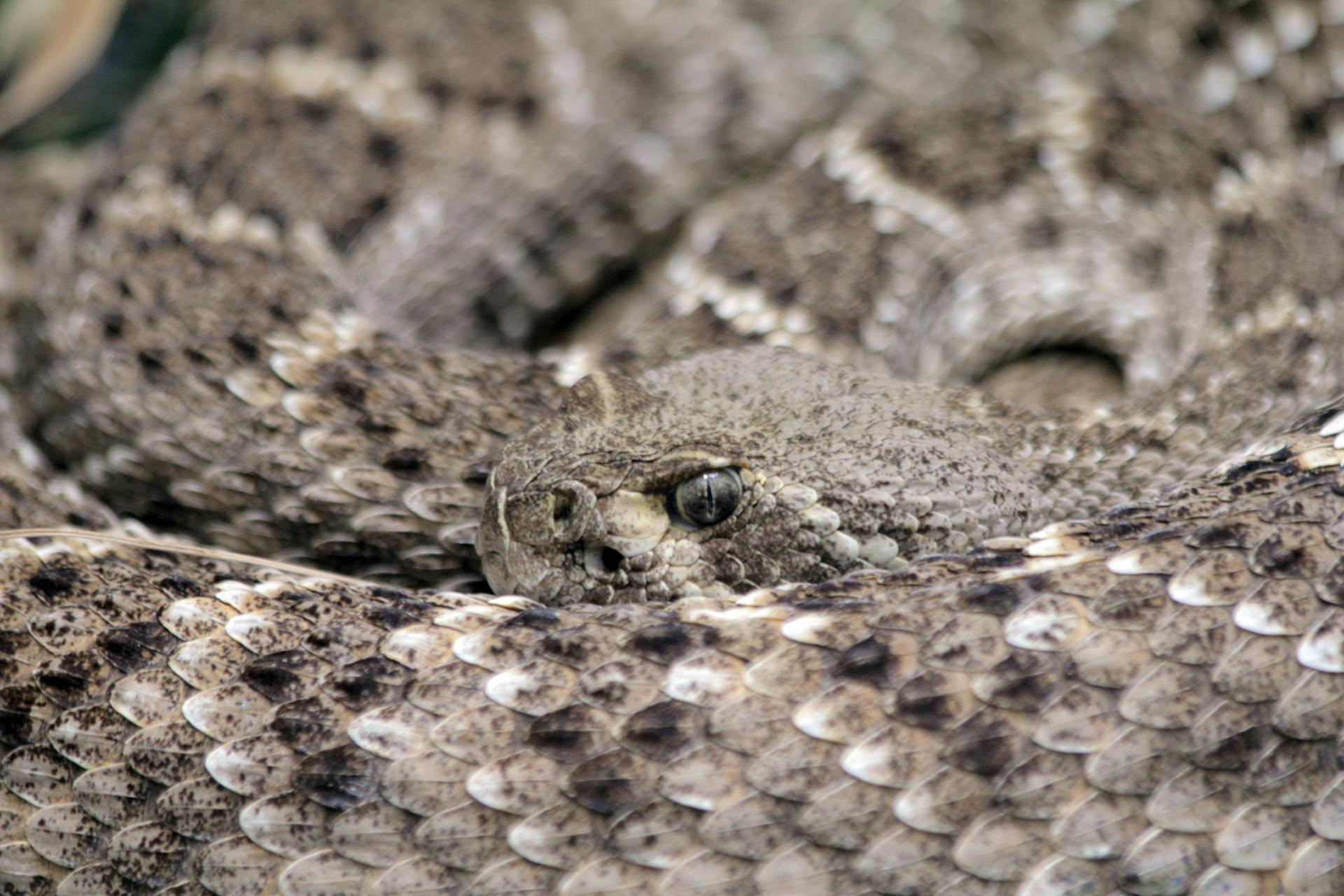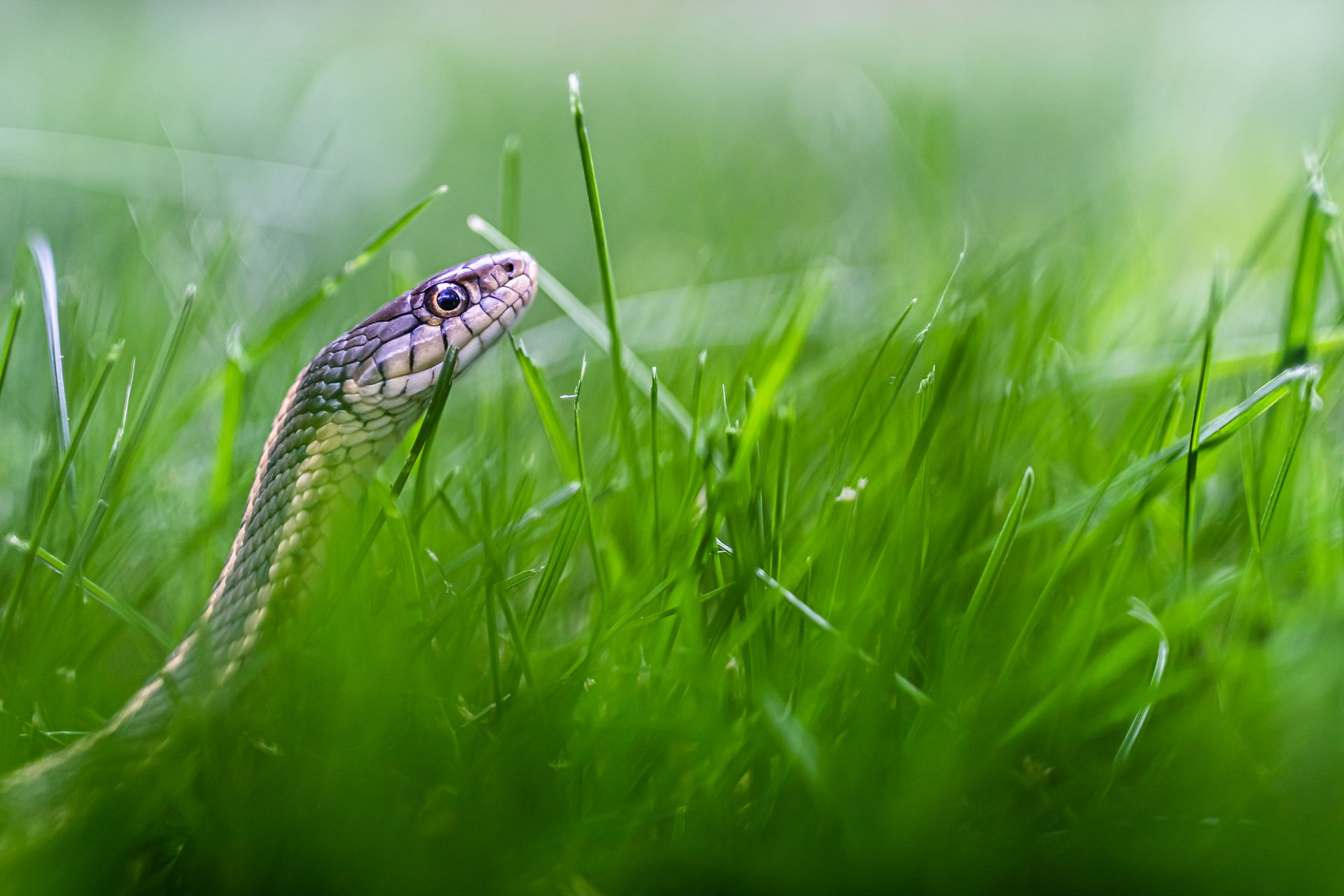
The northern cottonmouth, also known as the water moccasin, is a venomous snake species native to eastern North America.
Found in a variety of habitats, including wetlands, forests, and rocky areas, northern cottonmouths are semi-aquatic, meaning they spend a significant amount of time in or near water.
These snakes are generally dark brown or black in color, with a distinctive white or yellowish coloration on the inside of their mouth, which they display when threatened.
They can grow up to 4 feet in length and are known for their aggressive behavior when cornered or provoked.
Scientific Name
The scientific name of the northern cottonmouth is Agkistrodon piscivorus. This name is derived from Greek and Latin words, with "Agkistrodon" meaning fishhook and "piscivorus" meaning fish-eater.
The scientific name has undergone some changes over time, with "leucostoma" being an alternative name used by some taxonomists. However, the name Agkistrodon piscivorus is now widely accepted.
The species was first described by Lacapede in 1789, and the name "piscivorus" refers to the snake's diet of fish and other aquatic animals.
Broaden your view: Agkistrodon Piscivorus Leucostoma
Physical Characteristics
Northern cottonmouths have a distinctive appearance that sets them apart from other snakes. Their total length typically ranges from 1 to 4 feet, with most individuals being around 2 to 3 feet long.
Their heavily keeled scales and black triangular-shaped head are notable features. The dark brown to nearly black coloration with indistinct cross markings also helps to identify them.
Description
Northern cottonmouths can be identified by their size, which ranges from 1 to 4 feet in total length.
Heavily keeled scales are another distinctive feature of these snakes.
A black triangular-shaped head is a key characteristic of northern cottonmouths.
Their dark brown to nearly black coloration is often accompanied by indistinct darker cross markings.
Elliptical, catlike pupils in the eyes are a notable feature of northern cottonmouths.
Scales under the tail are complete rather than divided, similar to other pit-vipers.
Juvenile northern cottonmouths can be distinguished from copperheads by the shape of their dorsal cross bands.
The dorsal cross bands of copperheads are narrow along the spine and wider at the bottom of the lateral surface of the body.
In contrast, the bands on juvenile northern cottonmouths are only slightly wider along the bottom of the lateral surface of the body.
The edges of the bands on copperheads are very distinct, whereas those on juvenile northern cottonmouths are jagged.
The ventral surfaces of northern cottonmouths and copperheads both contain rectangular dark markings against a lighter background.
However, these markings are in two distinct rows and are black or very dark brown in northern cottonmouths.
A distinct yellow line extends from the top of the eye across the top of the snout in juvenile northern cottonmouths.
Size
Northern cottonmouths are actually quite large, with some adults reaching lengths of over four feet. They can appear even bigger than they are due to their heavy bodies.
Most individuals you'll encounter are between two to three feet long, which is still a significant size.
These snakes are not small by any means, and their size can be quite intimidating.
Take a look at this: Northern Inuit Size
Environment
Northern cottonmouths are good swimmers and are commonly found in large swamps associated with rivers.
They can also be found along small streams, in ponds, and even in lakes.
During the summer, they often wander away from water and can be found on the forest floor.
Their distribution in the United States extends from central southern Oklahoma to North Carolina, and from southeastern Missouri to the tip of Florida.
Life Cycle
Northern cottonmouths are late-maturing, long-lived, and reproduce repeatedly during their lives.
They reach sexual maturity at an age of 4 – 6 years, when they're about 20 inches in snout to vent length.
Females produce litters of 4 – 7 live young in late summer or early fall, with more in eastern United States populations.
Newborn young are about 10 inches in total length.
These snakes can live 20 years or more, which is impressive for a species of snake.
They often aggregate in late fall and enter overwintering “dens,” usually consisting of cavities in the ground at the base of large trees.
Cottonmouths are active from early spring through late fall, with much of their activity occurring at night during summer.
Classification
The northern cottonmouth is a venomous snake found in the eastern United States. Its scientific name is Agkistrodon piscivorus.
They are a member of the pit viper family, which also includes copperheads and rattlesnakes. This family is known for their heat-sensing pits, a unique feature that allows them to detect warm-blooded prey.
Northern cottonmouths are semi-aquatic, meaning they spend a lot of time in or near water. This is likely due to their aquatic prey, such as fish and frogs.
In the wild, they are found in a variety of habitats, including swamps, marshes, and forests. They are most commonly found in areas with still or slow-moving water.
Their diet consists mainly of fish, frogs, and other small aquatic animals. They are skilled hunters and can also eat birds and mammals on occasion.
Intriguing read: Northern River Otter Mustelidae Family
Frequently Asked Questions
Are northern cottonmouths poisonous?
Yes, northern cottonmouths are venomous snakes, and their bites can be fatal if left untreated. Their venom is a serious concern, responsible for a significant percentage of venomous snakebites in the US.
How lethal is a cottonmouth bite?
A cottonmouth bite can be extremely painful and potentially life-threatening, causing tissue and muscle damage, internal bleeding, and even loss of an extremity in severe cases. If bitten, seek medical attention immediately to minimize the risk of serious complications.
Featured Images: pexels.com