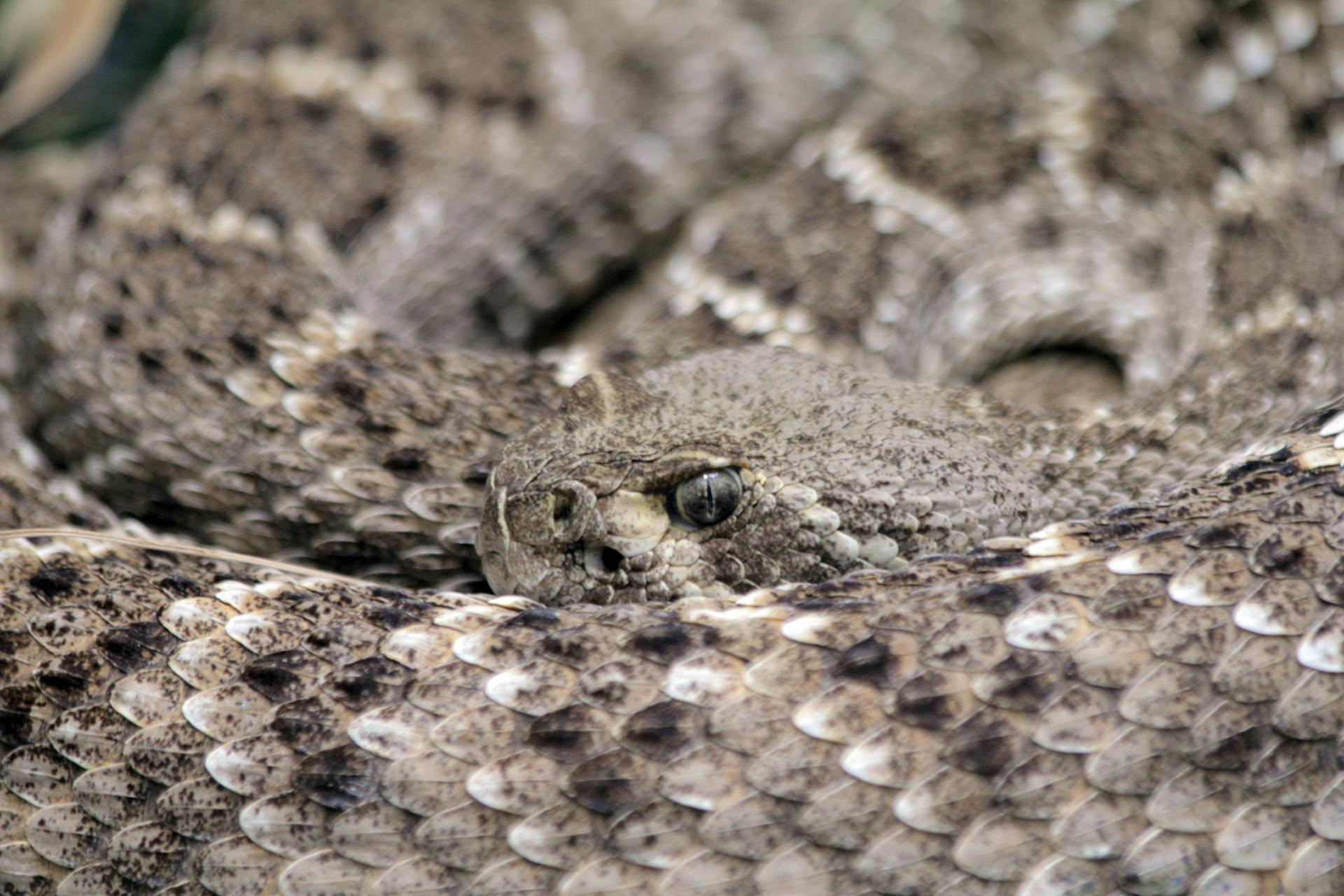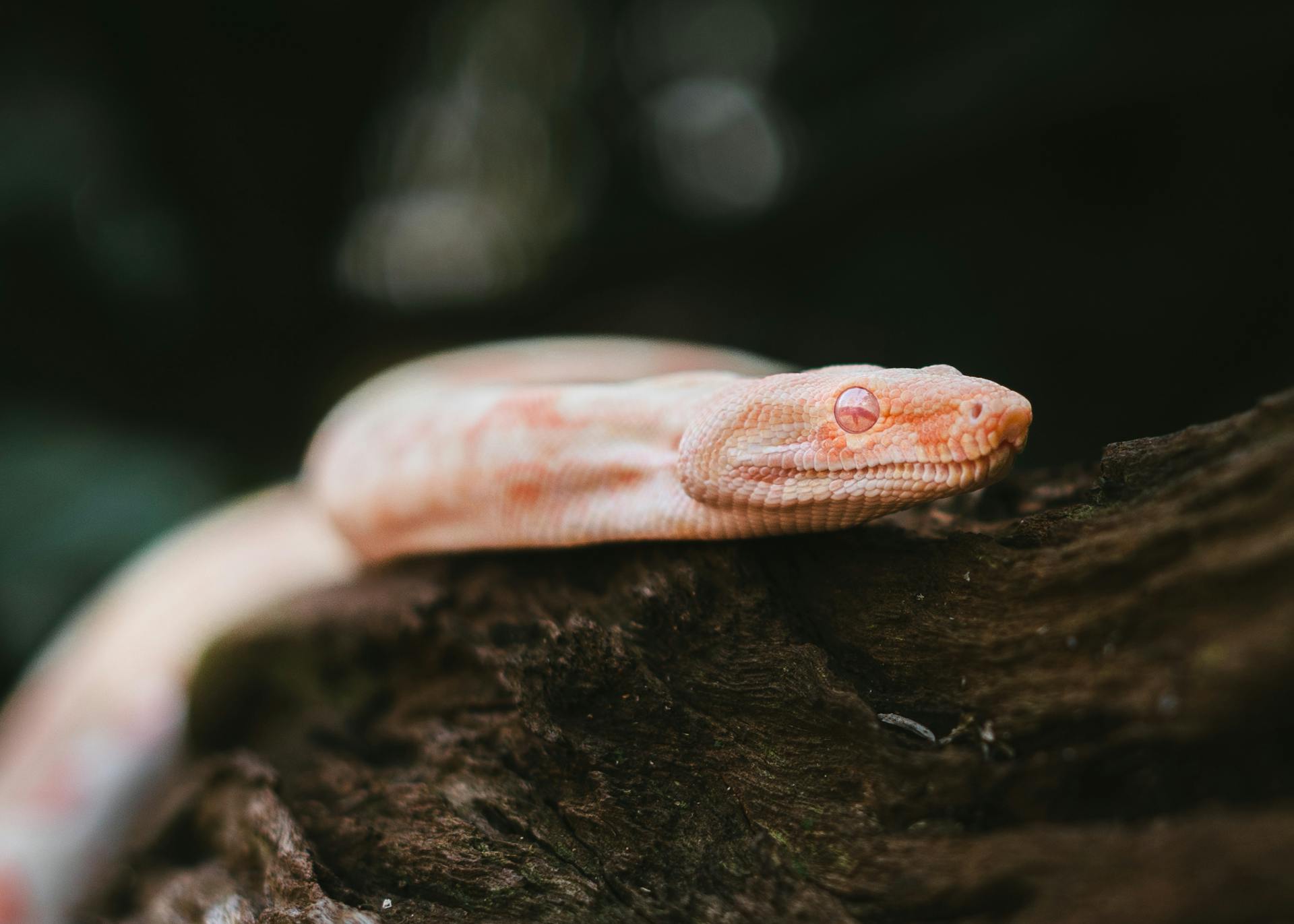
Florida is home to a diverse range of snakes, with over 40 species found throughout the state.
The Eastern Coral Snake is one of the most venomous snakes in Florida, with a distinctive pattern of red, yellow, and black bands.
You're most likely to encounter non-venomous snakes like the Garter Snake, which is common in backyards and gardens.
Non Venomous Snakes
Florida has its fair share of non-venomous snakes, and it's essential to know which ones to look out for.
One snake that's often mistaken for its venomous cousin is the Southern water snake. It has dark spots on light scales, similar to the cottonmouth, and shares the same habitat.
If you're out on a hike or boat tour, keep an eye out for these common non-venomous snakes: the Eastern Corn Snake, Black Rat Snake, Black Racer, Common Kingsnake, and Banded Water Snake.
The Southern water snake is not venomous, but it can still bite and release a foul smell. So, it's best to leave it alone.
Some other harmless snake species in Florida include the Eastern Coachwhip, Florida Water Snake, and Indigo Snake.
Readers also liked: Black Snakes in North America
Venomous Snakes
In Florida, there are several venomous snakes you should be aware of. The Water Moccasin, also known as the Cottonmouth, is one of the most common venomous snakes found in the state.
This snake is often found in bodies of water and can grow up to six feet in length. The average adult stretches between two and four feet. As adults, they tend to be dark brown or black, sometimes with a distinct crossband pattern.
Their venom is highly toxic and can cause severe pain, swelling, necrosis, and impaired blood clotting. Deaths are rare, but it's still essential to take precautions if you encounter one.
Here are some common venomous snakes found in Florida:
- Water Moccasin (Cottonmouth)
- Southern Copperhead (Highland Moccasin)
- Eastern Diamondback Rattlesnake
- Timber Rattlesnake
- Pigmy Rattlesnake
- Eastern Coral Snake
If you're bitten by a venomous snake, it's crucial to know the proper first aid. Remove any jewelry or tight clothing near the bite, and keep the affected limb below heart level. Do not apply a tourniquet or ice, as these can worsen the damage. Clean the wound, but do not cut the skin and suck out the venom. Instead, go to the nearest hospital as soon as possible.
Common Snakes
Florida has a diverse range of snakes, but some species are more common than others. The Eastern Corn Snake is a common non-venomous snake found throughout the state.
Some other non-venomous snakes you might encounter in Florida include the Black Rat Snake, Black Racer, Common Kingsnake, and Banded Water Snake.
If you're looking for a quick reference guide, here are some common non-venomous snakes in Florida:
- Eastern Corn Snake
- Black Rat Snake
- Black Racer
- Common Kingsnake
- Banded Water Snake
- Eastern Coachwhip
- Florida Water Snake
- Indigo Snake
- Black Pine Snake
- Blue Stripe Garter Snake
- Florida Rough Green Snake
Common
Florida is home to many common snake species, some of which are quite harmless. The Eastern Corn Snake is one of the most common snakes in Florida, often found in fields and forests.
Some of these snakes are quite striking in appearance. The Black Racer, for example, has a sleek black body that can grow up to 5 feet in length.
Here are some of the most common non-venomous snakes in Florida:
- Eastern Corn Snake
- Black Rat Snake
- Black Racer
- Common Kingsnake
- Burmese Python
- Banded Water Snake
- Eastern Coachwhip
- Florida Water Snake
- Indigo Snake
- Black Pine Snake
- Blue Stripe Garter Snake
- Florida Rough Green Snake
These snakes can often be found in a variety of habitats, from wetlands to forests. Some, like the Black Racer, are excellent climbers, while others, like the Burmese Python, prefer to stay close to the ground.
Common Non Venomous
The southern water snake is often mistaken for the cottonmouth due to its dark spots on light scales. However, the southern water snake is not venomous and poses no threat to humans.
These snakes share the same habitat as the cottonmouth, which includes the banks of rivers and lakes. They hunt similar prey like frogs, fish, and salamanders.
Some common non-venomous snakes in Florida include the Eastern Corn Snake, Black Rat Snake, and Black Racer.
Here are some common non-venomous Florida snakes:
- Eastern Corn Snake
- Black Rat Snake
- Black Racer
- Common Kingsnake
- Banded Water Snake
- Florida Water Snake
- Indigo Snake
- Black Pine Snake
- Blue Stripe Garter Snake
- Florida Rough Green Snake
These snakes can be found in various parts of Florida, and they're generally harmless to humans.
Common Venomous Animals
In Florida, there are several venomous snakes you should be aware of. The Water Moccasin, also known as the Cottonmouth, is one of the most common and aggressive species found in the state.
The Southern Copperhead, also known as the Highland Moccasin, is another venomous snake you might encounter. Its venom is highly toxic and can cause severe pain and swelling.
The Eastern Diamondback Rattlesnake is the largest venomous snake in North America and is found in Florida. Its venom is highly toxic and can cause respiratory failure.
The Timber Rattlesnake, the Pigmy Rattlesnake, and the Eastern Coral Snake are also venomous snakes found in Florida. They are all pit vipers, which means they have a heat-sensing pit between their eyes and nostrils.
Here are some common venomous snakes found in Florida, listed for your reference:
- Water Moccasin, aka Cottonmouth
- Southern Copperhead, aka Highland Moccasin
- Eastern Diamondback Rattlesnake
- Timber Rattlesnake
- Pigmy Rattlesnake
- Eastern Coral Snake
Specific Species
The Sunshine State is home to a diverse range of snakes, each with its unique characteristics and habits. The Eastern Indigo Snake is one of the largest snakes in Florida, growing up to 8 feet long.
These magnificent creatures are found in a variety of habitats, including pine flatwoods and scrublands. The Eastern Indigo Snake is a non-venomous snake, but it's still a formidable hunter.
The Florida Water Snake is a semi-aquatic snake that's well adapted to life in and around the state's many bodies of water. It's a slender snake with a brown or grayish-brown color, often found basking in the sun on rocks or logs near the water's edge.
Expand your knowledge: Blotched Water Snake
Coachwhips (Masticophis)
Coachwhips (Masticophis) are found in the southwestern United States and northern Mexico.
They are nocturnal snakes that spend most of their time at night hunting for small lizards, snakes, and insects.
Coachwhips are known for their speed, reaching up to 18 miles per hour.
Their slender bodies allow them to navigate through dense vegetation with ease.
These snakes are generally harmless to humans and are not considered venomous.
In the wild, coachwhips can live up to 10 years, which is impressive for a snake of their size.
Kings (Lampropeltis)**
Kings (Lampropeltis) are a fascinating group of snakes, and it's worth taking a closer look at some of their species.
The Florida kingsnake (Lampropeltis getula floridana) is one species of kingsnake found in the region.
These snakes are known for their striking patterns and colors, which can vary depending on the species.
The mole kingsnake (Lampropeltis rhombomaculata) is another species of kingsnake, characterized by its distinctive markings.
Here are some examples of kingsnake species:
- Florida kingsnake (Lampropeltis getula floridana)
- Mole kingsnake (Lampropeltis rhombomaculata)
- Scarlet kingsnake (Lampropeltis elapsoides)
- Short-tailed snake (Lampropeltis extenuata)
- South Florida mole kingsnake (Lampropeltis occipitolineata)
Banded
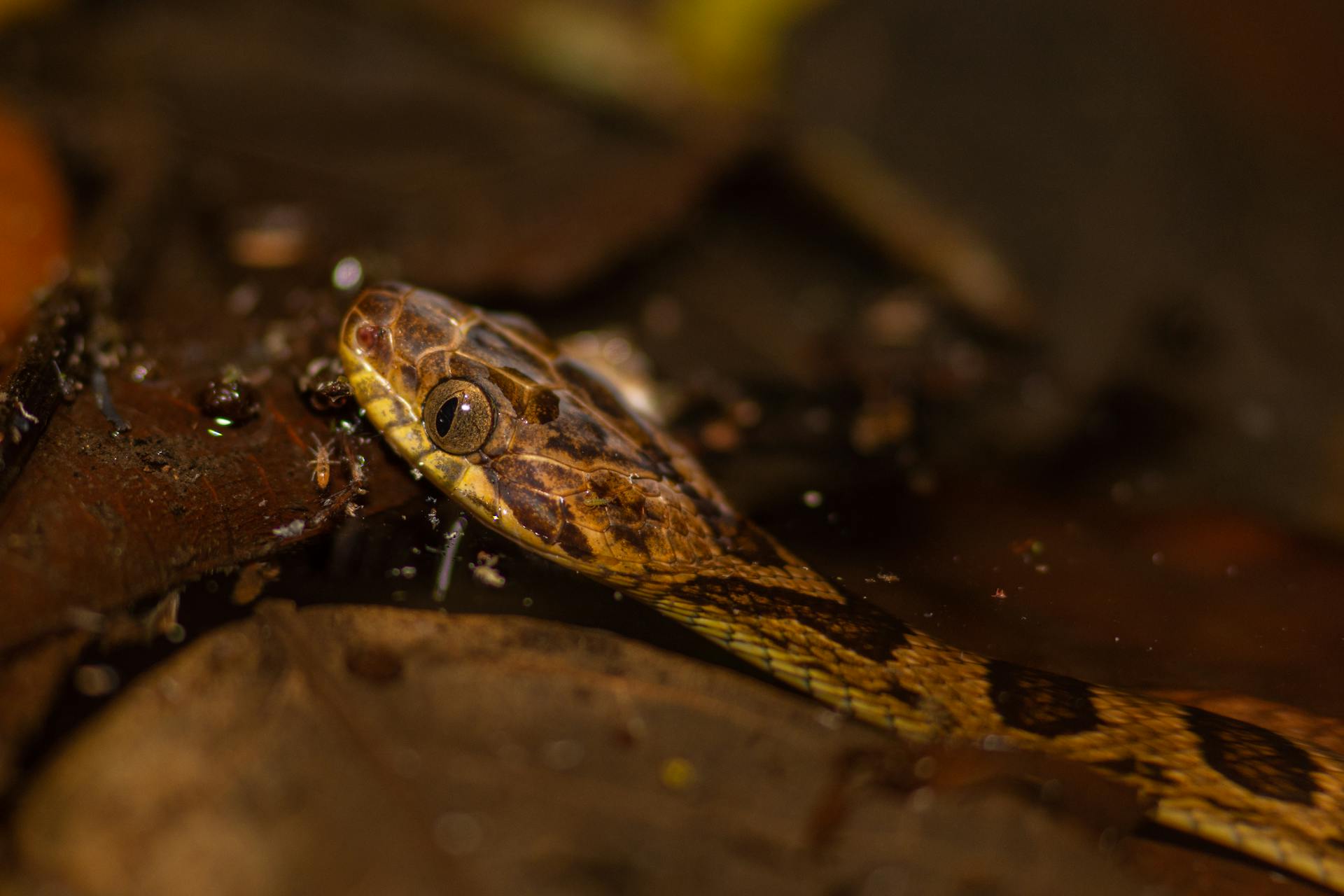
Banded species can be quite tricky to identify, especially when it comes to venomous ones. The Cottonmouth or Water Moccasin (Agkistrodon piscivorous) is a venomous snake that's often mistaken for its look-alike, the Southern or Banded Watersnake (Nerodia fasciata).
If you're in the southeastern United States, keep an eye out for the Coralsnake (Micrurus fulvius), another venomous species that's often mistaken for the Scarlet Kingsnake (Lampropeltis elapsoides).
The Scarlet Kingsnake (Lampropeltis elapsoides) is a non-venomous snake that's often mistaken for the Coralsnake (Micrurus fulvius). It's a great example of how important it is to know your species.
Here's a quick rundown of the banded species we've covered so far:
Eastern Coral Snake
The Eastern Coral Snake is a venomous snake found throughout the State of Florida, with the exception of the southern Florida Keys. They range in size from 1.5 to 2.5 feet.
These snakes are experts at hiding and tend to stay underground or beneath objects like logs. They feed on lizards, snakes, and frogs.
One way to identify a coral snake is by looking at the pattern of its rings: bright red and black rings stretch along the length of their bodies, with thin yellow rings separating the segments. The heads of coral snakes have a blunt black nose.
It's easy to get coral snakes confused with non-venomous snakes like the Scarlet Kingsnake and Scarlet Snake, which have similar colors and patterns. However, if red and yellow are next to each other, it's a coral snake.
If you're bitten by a coral snake, don't try to treat the bite yourself - go to the emergency department immediately. Don't apply tourniquets, ice, or try to suck out the venom.
Here are some key characteristics of the Eastern Coral Snake:
- Size: 1.7–4 ft (found in example 2)
- Characteristics: black-red-yellow bands, slim head with yellow band (found in example 2)
- Habitat: pine and liana forests, swamps, dry bushland (found in example 2)
Pythons
Pythons are a significant concern in the Everglades, with an estimated population of over 100,000.
They're not native to Florida, but many were imported as pets and managed to escape.
These imposing constrictors are originally from the Old World.
Their population has been causing a veritable snake invasion, especially in the Everglades.
The state has even put a bounty on their heads – so far with little success.
Explore further: Burmese Python Population in Florida
Featured Images: pexels.com