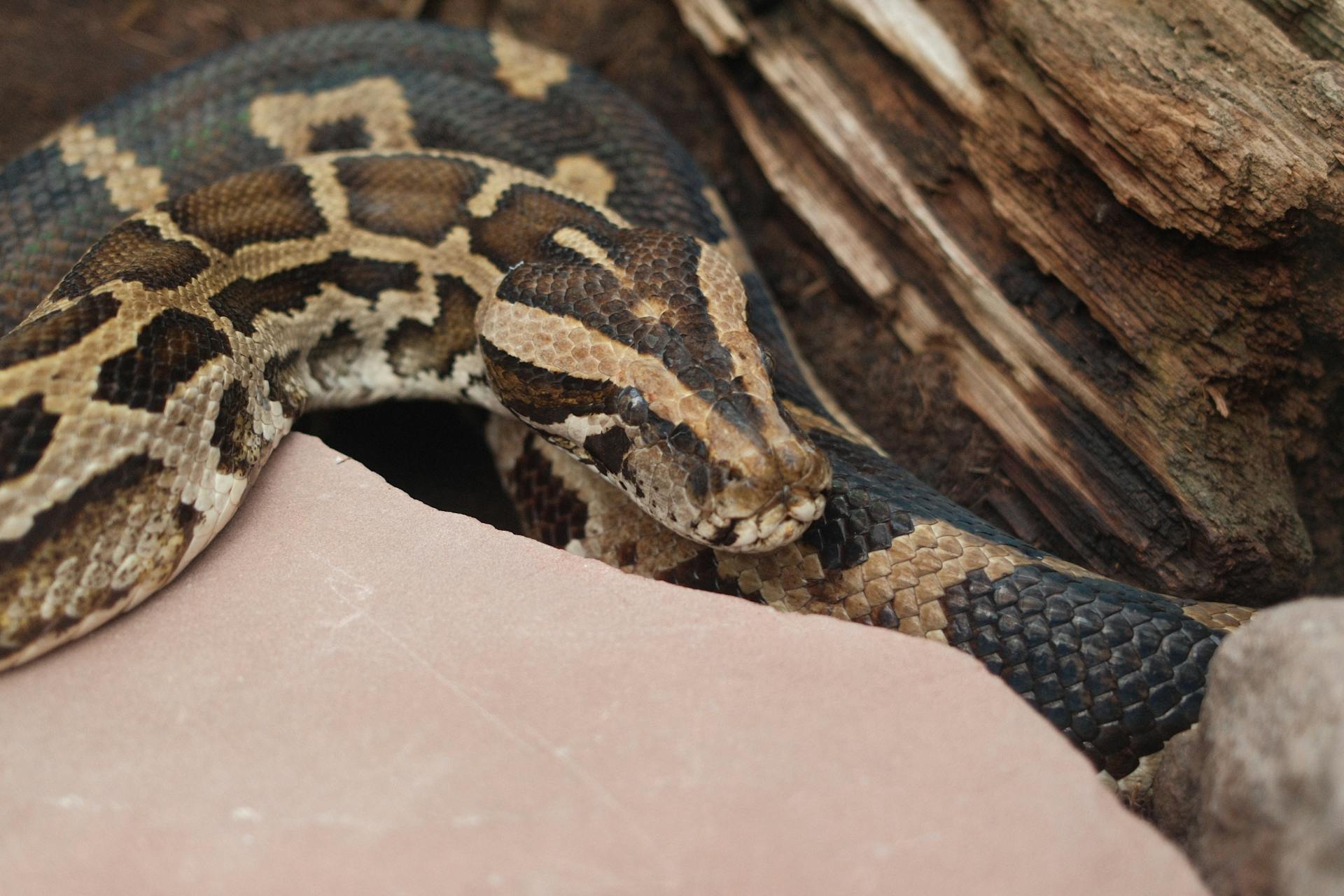
The Burmese python population in Florida is a growing concern. In the Everglades alone, there are estimated to be over 100,000 Burmese pythons.
These invasive snakes have no natural predators in the wild and can grow up to 20 feet in length, making them a formidable force in the ecosystem. They can also live for up to 30 years in the wild.
Their presence in Florida has been linked to the decline of native wildlife, including the endangered Key Largo woodrat. The pythons' diet consists mainly of small mammals, birds, and reptiles, which are vital to the ecosystem's balance.
Burmese Python Population in Florida
Tens of thousands of invasive Burmese pythons are estimated to be present in the Greater Everglades region.
Burmese pythons can grow to be 19 feet long and weigh more than 150 pounds. They have established a wild population in the 1980s and have been wreaking havoc on the natural environment ever since.
The USGS estimates that there are tens of thousands of Burmese pythons living in the Everglades. This has led to a drastic decline in the populations of native species, including raccoons, opossums, and bobcats, which have dropped by 85-99%.
A 2012 study showed that pythons' diets have effectively cut the populations of rabbits and foxes in the Everglades area.
The Burmese python population in Florida is incredibly difficult to estimate due to the variety of habitats they can survive in and the difficulty of accessing these areas.
Urban and Southern Florida
In their native ranges, many python and boa species are often found living in suburban and urban areas. As a result, it's possible that invasive pythons could move into cities in Florida.
Tens of thousands of invasive Burmese pythons are estimated to be present in the Greater Everglades region of southern Florida.
Burmese pythons can survive in and utilize a variety of habitats found in the region, including areas that are difficult to access and survey. This makes it incredibly difficult to estimate the true population numbers of Burmese pythons in South Florida.
The risk of attacks on humans in urban areas is very low, just like with alligators, which also inhabit these regions.
For your interest: Are Reticulated Pythons Invasive
Tracking and Research
Scientists are working together to study the Burmese python population in Florida by inserting tracking devices into the snakes. This is an important step in understanding the behavior and movement patterns of these invasive species.
A team of scientists successfully inserted a tracking device into a 14-foot Burmese python, allowing them to monitor its movements and gather valuable data.
Tracking Device
Scientists have inserted tracking devices into Burmese pythons, which can grow up to 14 feet in length.
These devices help researchers track the snakes' movements and habits in the wild.
What's Killing the Baby?
As researchers tracked the movements of baby pythons in the Big Cyprus National Preserve, they discovered some surprising causes of death.
Five pythons died from alligator attacks.
The researchers used high-frequency radio transmitters with mortality sensors to detect when a snake stopped moving for 24 hours, allowing them to investigate the cause of death.
Three pythons died from carnivorous mammals, such as raccoons or opossums, which are common in the preserve.
Seven deaths were left unattributed, with no signs of the python's remains.
The researchers also found that three pythons died from encounters with Florida cottonmouth snakes.
One python died from eating an animal that was too big for it to handle.
Results
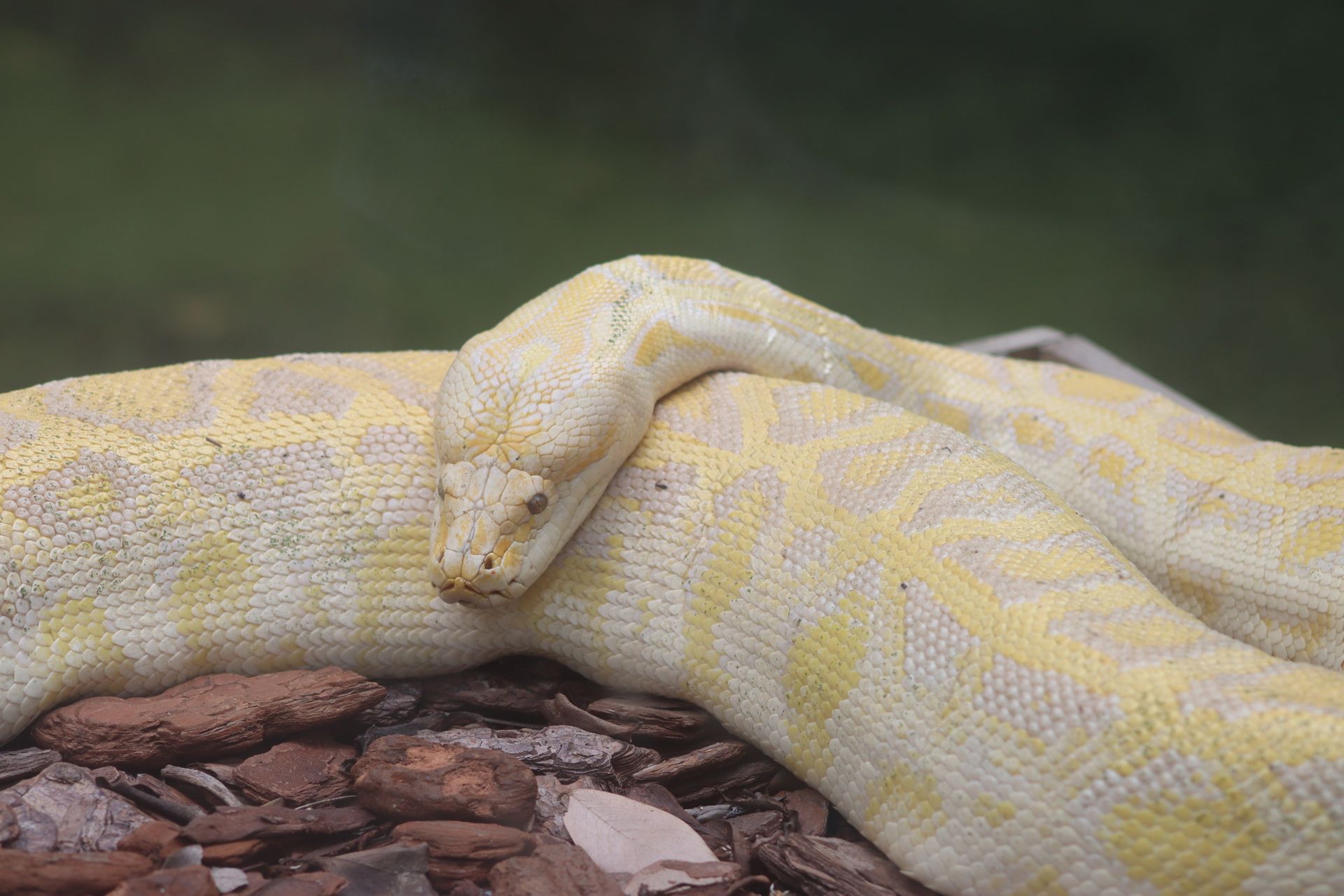
In the invasive python samples, 11 mtDNA haplotypes were identified with high haplotype diversity, corresponding to both P. bivittatus and P. molurus.
These haplotypes were deposited in GenBank with accession numbers MH357840-50, providing a valuable resource for future research.
The nuclear microsatellite markers detected lower diversity in the invasive python samples compared to native range samples, likely due to founding and bottleneck effects.
This reduced diversity is a common phenomenon in newly introduced species, where genetic variation is lost due to small population sizes.
The Bayesian clustering analyses identified two distinct nuclear groups and an admixed group, with no correlation with geographic distribution.
This lack of correlation suggests that the genetic differences between the groups are not related to their geographic origins.
Impact on Ecosystems and Wildlife
The impact of invasive Burmese pythons on Florida's ecosystems is a pressing concern. They compete with native wildlife for food, which includes mammals, birds, and other reptiles, leading to severe declines in mammal populations throughout Everglades National Park.
Burmese pythons have established a breeding population in South Florida, with a distribution spanning over a thousand square miles. This includes Everglades National Park, Biscayne National Park, and several other protected areas.
Their voracious appetite has devastated native populations, with a 2012 study showing that python diets have drastically cut the populations of Everglades-area mammals by 85-99%. This has effectively led to the disappearance of rabbits and foxes in some areas.
How Have Impacted Ecosystems?
Burmese pythons have established a breeding population in South Florida, competing with native wildlife for food. This includes mammals, birds, and other reptiles.
The Burmese python is now distributed across more than a thousand square miles of southern Florida, from coast to coast. This includes several national parks and wildlife refuges.
Severe declines in mammal populations throughout Everglades National Park have been linked to Burmese pythons. The most severe declines are in native mammals such as rabbits and foxes.
Burmese pythons can grow to be 19 feet long and weigh more than 150 pounds. They have eaten everything from rabbits to deer with few species able to check the population.
The USGS estimates there are tens of thousands of Burmese pythons living in the Everglades. A 2012 study showed that pythons' diets have drastically cut the populations of Everglades-area mammals.
Raccoon, opossum, and bobcat populations had dropped 85%-99%, and rabbits and foxes had "effectively disappeared" due to the pythons' diets. This has led to a devastating impact on the ecosystem.
Discussion
The Burmese python's life cycle in Florida is a complex issue that scientists are still trying to understand.
Native species like the cottonmouth snake have learned to adapt to the invasive python population, with some even becoming predators.
A cottonmouth snake, for example, consumed one of the juvenile pythons in a study, showing that native species can be a threat to the invasive population.
Suggestion: Florida Cottonmouth Habitat
Scientists are working to identify the weaknesses of the Burmese python to aid in population mitigation strategies.
The data collected so far is a pleasant surprise, indicating that native species are more resilient than expected.
By understanding the life cycle of the Burmese python, scientists hope to tip the scales in favor of native species and find ways to manage the invasive population.
If this caught your attention, see: Tiger Population in India Endangered Species
Florida's Response and Management
Florida's wildlife agencies have been actively working to manage the Burmese python population.
The Florida Fish and Wildlife Conservation Commission (FWC) has been leading the effort to control the python population, with a focus on removing them from the wild.
In 2017, the FWC launched a python removal incentive program, which paid $50 for each python removed from the wild.
The program has been successful, with over 1,000 pythons removed in the first year alone.
The FWC has also been working with the public to encourage python removals, with a hotline and online reporting system in place.
Readers also liked: Florida Python Challenge Resulted in 195 Invasive Burmese Pythons Removed
The Burmese python has no natural predators in the wild, which has contributed to its rapid population growth.
The python population in the Everglades is estimated to be in the tens of thousands, with some estimates as high as 100,000.
The FWC has been working with other agencies, such as the U.S. Fish and Wildlife Service, to develop a comprehensive plan to manage the python population.
The plan includes a combination of removal efforts, research, and public education to prevent the spread of Burmese pythons in the wild.
The FWC has also been working with the public to raise awareness about the risks associated with invasive species like the Burmese python.
Record-Breaking Population and State Records
A Record-Breaking Invasive Burmese Python was captured in Everglades National Park by USGS researchers in 2012, measuring 17 feet, 7 inches long and containing 87 eggs.
This impressive snake was discovered by following a "Judas snake", a male python with a transmitter, which led researchers to the female python hiding in the bushes.
Burmese pythons have destroyed native populations for decades, wreaking havoc on the natural environment and eating everything from rabbits to deer with few species able to check their population.
They can grow to be 19 feet long and weigh more than 150 pounds, making them a force to be reckoned with in the Everglades ecosystem.
Conservatively, tens of thousands of invasive Burmese pythons are estimated to be present in the Greater Everglades region, making it difficult to estimate the true population numbers.
A Record-Breaking Population
Tens of thousands of invasive Burmese pythons inhabit the Greater Everglades region in southern Florida.
These massive snakes have been wreaking havoc on the natural environment, eating everything from rabbits to deer with few species able to check the population.
Burmese pythons can grow up to 19 feet long and weigh over 150 pounds, making them a formidable force in the Everglades ecosystem.
Their diets have drastically cut the populations of Everglades-area mammals, with raccoon, opossum, and bobcat populations dropping 85-99%, and rabbits and foxes having "effectively disappeared".

The USGS estimates that there are tens of thousands of Burmese pythons living in the Everglades, a staggering number that highlights the severity of the issue.
If you're out in the Everglades and spot a python, it's essential to keep a safe distance and report the sighting to a park ranger or via the "Ive Got 1" reporting system.
Florida Man Sets State Record for Largest Fish
Florida Man, a resident of the Sunshine State, has made headlines with his impressive catch of a 1,500-pound grouper. This massive fish broke the previous state record by 200 pounds.
The fish was caught in the Gulf of Mexico, off the coast of Pensacola, where the waters are known for their rich marine life. The fish was a stunning 12 feet long and had to be lifted onto the boat with a crane.
Florida Man's catch has sparked excitement among fishermen and marine enthusiasts alike. The previous record holder was caught in 2015, and it's clear that Florida Man's catch is a game-changer.
On a similar theme: Dogs That Catch Mice
The Gulf of Mexico is home to a diverse range of fish species, including groupers, snappers, and tarpon. Florida Man's catch is a testament to the region's incredible fishing opportunities.
Florida Man's achievement has been recognized by the Florida Fish and Wildlife Conservation Commission, which has officially certified his catch as the new state record.
Check this out: Fish and Wildlife Western Pond Turtle
DNA Analysis and Sample Prep
DNA analysis is a crucial tool for understanding the Burmese python population in Florida. It helps researchers identify individual snakes and track their movements.
DNA samples are typically collected from snake skin or muscle tissue. This is done by trained professionals who use specialized equipment to minimize harm to the snake.
The DNA analysis process involves several steps, including DNA extraction, PCR (polymerase chain reaction), and sequencing. This allows researchers to identify species, sex, and genetic diversity within the population.
Environmental DNA Research Illuminates Species
USGS scientists are refining eDNA techniques to better detect and track invasive species. This research is shedding light on the presence and spread of these species.
Curious to learn more? Check out: Common Snapping Turtle Species
Environmental DNA, or eDNA, is a game-changer in species detection. It's a non-invasive method that involves collecting DNA from the environment, such as water or soil, to identify the presence of a species.
Invasive species can be difficult to track, but eDNA research is helping to refine these techniques. By analyzing eDNA, scientists can identify the genetic makeup of a species and determine its origin.
A genetic analysis of invasive pythons in South Florida found that they are closely related to one another. This suggests that they may have originated from a small group of individuals.
The genetic analysis also revealed a tangled family tree among the invasive pythons. This is likely due to their ability to breed and produce offspring with similar genetic characteristics.
DNA Sample Prep
DNA Sample Prep is a crucial step in the analysis process. Tail tissue from P. bivittatus samples collected between January 2001 and September 2012 was used for molecular analyses.
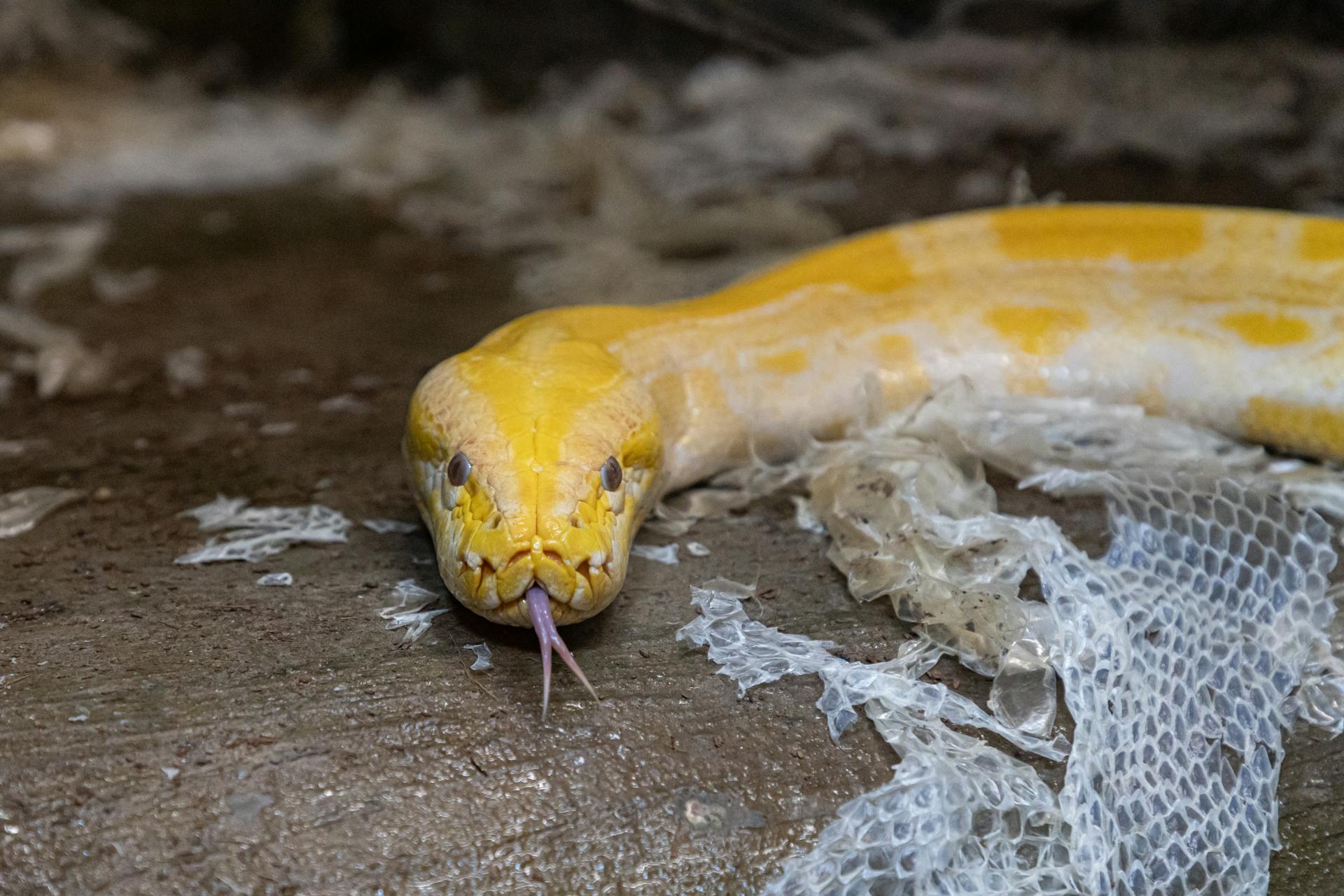
The samples originated in southern Florida, specifically in Everglades National Park, Collier County, southeastern Miami-Dade County, and the Florida Keys. These locations are important to note as they provide a specific context for the samples.
DNA was extracted using QIAGEN DNeasy kits or plate isolation protocols. This method of extraction was effective in obtaining high-quality DNA.
To ensure accurate results, DNA was quantified using a nanophotometer, which measured the DNA concentration. This step is essential in determining the amount of DNA needed for further analysis.
The extracted DNA was then diluted to a concentration of 10 ng/μl. This specific concentration is likely necessary for the molecular analyses being conducted.
You might like: Oakland County Animal Shelter and Pet Adoption Center
Everglades and Key Largo
Everglades and Key Largo are two areas in Florida where Burmese pythons have been spotted.
Burmese pythons have been found on Key Largo, which is a small island in the Florida Keys.
The presence of Burmese pythons in these areas is concerning because they are an invasive species and can cause harm to the local ecosystem.
Burmese python hatchlings have been seen on Key Largo, suggesting that the snakes are breeding and reproducing in the area.
Genetic Analysis and Family Tree
A new genetic analysis of invasive pythons captured across South Florida reveals a tangled family tree, showing that most pythons are closely related to one another.
The study found that the big constrictors are indeed closely related, with most pythons being genetically similar.
This suggests that a small group of pythons may have been the founders of the invasive population in Florida.
Genetic analysis has provided valuable insights into the origins and spread of the Burmese python population in the state.
Frequently Asked Questions
Is there still a bounty on Pythons in Florida?
No, there isn't a traditional bounty system in place for hunting pythons in Florida, but incentives and rewards are offered for successful captures through state programs and events.
Featured Images: pexels.com