Black snakes are a common sight in North America, but did you know that there are several species of black snakes that call this continent home?
The Eastern Blacksnake, also known as the Black Rat Snake, is one of the most widespread black snake species in North America.
Black snakes play a crucial role in controlling pest populations, keeping rodent numbers in check.
Related reading: Common Snapping Turtle Species
Types of Black Snakes
Southern Black Racers are slender, fast-moving snakes with a glossy black coloration, typically measuring between 3 to 5 feet in length. Their bellies are white or gray.
These snakes inhabit the southeastern United States, from Florida to southern Virginia, and prefer open, sunny areas with some cover. They're known for their speed and agility, making them difficult to catch.
The Mexican Black King Snake is a nonvenomous species that can grow up to 6 feet in length, with glossy, jet-black scales. They're constrictors, preying on a variety of animals, including rodents, birds, amphibians, and other snakes.
Southern Racer
The Southern Racer is a sleek and agile snake found in the southeastern United States. It's known for its glossy black coloration and slender build.
These snakes typically measure between 3 to 5 feet in length, with some individuals reaching up to 6 feet. Their bellies are usually white or gray, providing a nice contrast to their dark upper body.
Southern Black Racers are opportunistic feeders, preying on small animals like rodents, birds, lizards, frogs, and insects. They're also known to consume other snakes occasionally.
They prefer open, sunny areas with some cover, such as grasslands, fields, and forest edges. Their speed and agility make them difficult to catch.
As a daytime hunter, the Southern Racer is often seen basking in the sun or actively chasing down its next meal.
Recommended read: Coluber Constrictor Flaviventris
Mexican King
The Mexican King is a nonvenomous species that's native to the southern United States and northern Mexico.
It's known for its glossy, jet-black scales that can grow up to 6 feet in length, although most individuals average between 4 and 5 feet.
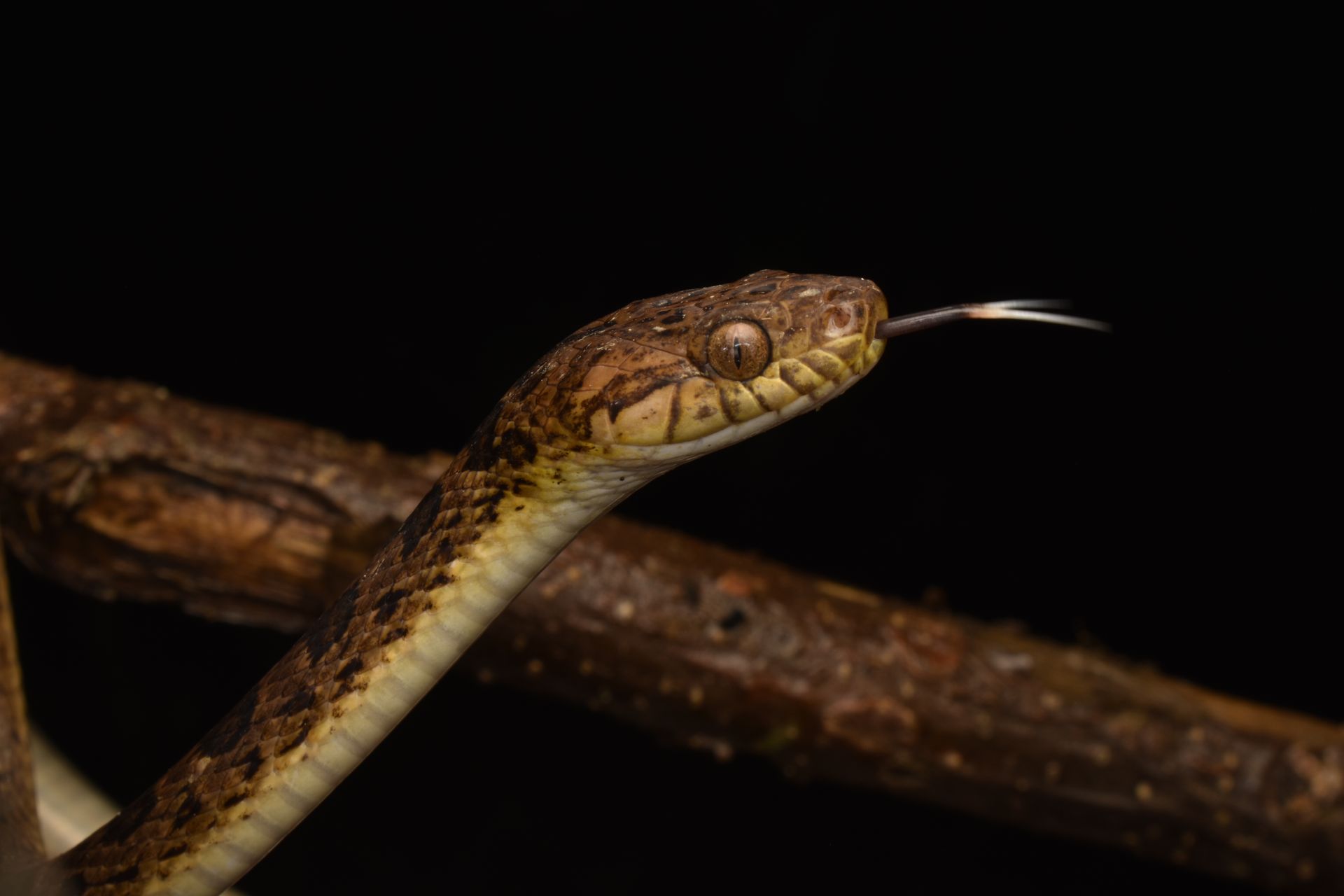
This species is a constrictor, preying on a variety of animals including rodents, birds, and other snakes.
They're even immune to the venom of rattlesnakes, which makes them a valuable species for controlling pest populations.
The Mexican King is a relatively docile species, making it a popular choice in the pet trade.
Their striking appearance, along with their manageable size, makes them a favorite among snake enthusiasts.
Characteristics and Behavior
Black snakes in North America are known for their sleek and slender bodies, often growing up to 6 feet in length. Some species, like the black rat snake, can reach up to 8 feet.
These snakes are generally nonaggressive and would rather slither away than engage in conflict. However, if cornered, they can defend themselves. The southern black racer, for example, may thrash or flee if cornered, but it's harmless to humans.
Black snakes are also known for their speed and agility, with some species able to dart through fields and forests in search of prey. The northern black racer, for instance, is incredibly fast and agile, preferring to flee at the first sign of disturbance.
Here's a comparison of the lengths of some black snake species:
Black snakes are also skilled climbers and hunters, with a diet that includes small mammals, birds, and lizards. The black pine snake, for example, loves to burrow and spend time underground, creating extensive hideaways.
Size and Physical Characteristics
Eastern rat snakes can grow up to 8 feet long, while some individuals of the black rat snake have been known to reach up to 8 feet in length.
The southern black racer typically measures between 3 to 5 feet in length, with a glossy black coloration and a white or gray belly.
Northern black racers are also slender and fast-moving, with lengths typically ranging between 3 to 5 feet. They have a glossy black body with a white or gray belly.
Black rat snakes are the largest snakes found in North America, reaching lengths of up to 6-8 feet on average, with exceptional individuals growing even longer. They have sleek, slender bodies covered in shiny scales, ranging in color from solid black to dark brown.
For your interest: Black and White Basenji Dog

The eastern indigo snake grows up to 8 feet long, making it the longest native snake in the country. Its sleek, glossy, jet-black look from head to tail is quite impressive.
Black kingsnakes are medium-sized snakes, usually measuring between 3 to 4 feet in length, with a sleek, black body and occasional white or yellow speckles.
Black whip snakes can grow between 6 to 8 feet, with some individuals reaching up to 10 feet in length, making them quite impressive in size. Their slender, jet-black body gives them a sleek and striking appearance.
9 Pine
The black pine snake is a bit of a homebody, preferring to burrow and spend time underground. It can dig into sandy soils with ease, creating extensive underground hideaways.
This snake's large size and muscular build make it a skilled hunter, with a diet consisting mainly of small mammals, birds, and lizards. It's a stealthy hunter, often going unnoticed by its prey.
The black pine snake can grow to an impressive 5 to 7 feet in length, making it a formidable sight in the wild. Its jet-black scales and powerful build give it a no-nonsense look.
Behavior
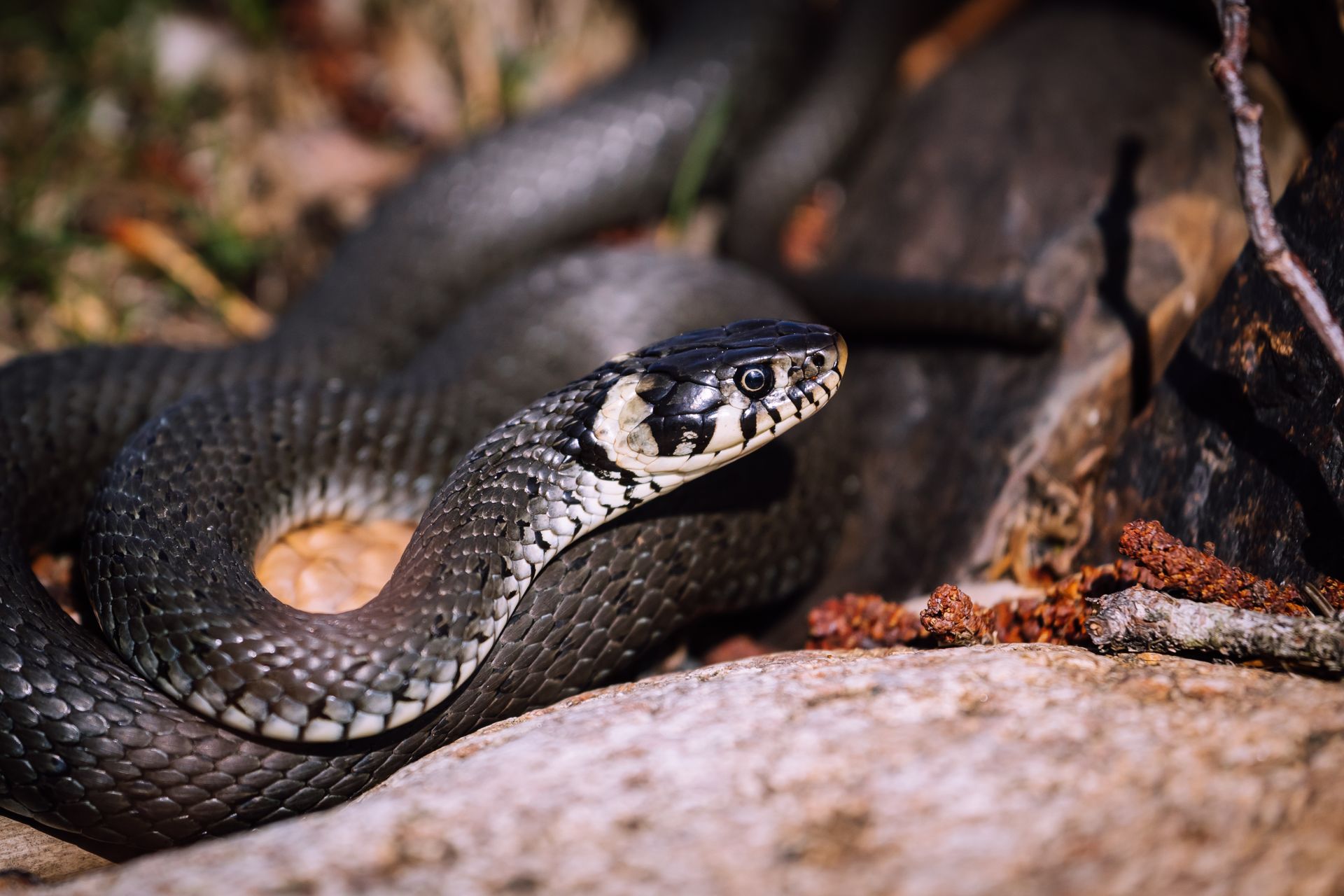
Defensive postures of snakes can be quite striking, like the iconic hood flare of a cobra or the rattling of a rattlesnake's tail.
Some snakes are experts at making themselves look bigger to deter predators, while others may hiss or coil up to appear more intimidating.
Venomous snakes can deliver venom through their fangs, which can cause severe pain, swelling, and potentially life-threatening symptoms.
Non-venomous snake bites are usually less severe, causing only pain and possible infection if not properly treated.
The severity of a snake bite depends on whether the snake is venomous or not, so it's essential to know the difference.
Here are some key defensive behaviors to look out for:
- Hood flare: a distinctive defensive posture of cobras
- Rattling tail: a warning sign from rattlesnakes
- Hissing: a common defensive behavior of many snakes
- Coiling: a way for snakes to prepare for a potential attack
Difference Between Venomous and Non-Venomous Animals
If you're out in the wild and encounter a black snake, it's essential to know the differences between venomous and non-venomous species to ensure your safety.
Venomous snakes often have a more triangular-shaped head, while non-venomous snakes usually have a more rounded head. However, this isn't a foolproof method of identification, as some non-venomous snakes can flatten their heads when threatened.
Some venomous snakes have vertical, elliptical pupils, similar to a cat's eye, while non-venomous snakes have round pupils. But be aware that some venomous snakes may have round pupils as well.
Venomous snakes possess hollow fangs through which they inject venom into their prey, while non-venomous snakes have solid teeth. However, this difference can only be observed up close, which is not recommended.
To help you remember the differences, here's a quick rundown:
Keep in mind that relying solely on coloration or patterns can be misleading, as there may be variation within species or similarities between venomous and non-venomous snakes.
Geographic and Habitat Information
Black snakes in North America can be found in a wide range of habitats, from forests and woodlands to grasslands and swamps.
Their geographic range spans across eastern and central North America, from southern Canada down to Florida and west to the Mississippi River.
In the southeastern United States, you can find a small, semiaquatic species of black snake, the black swamp snake, which spends much of its time in or near water.
These snakes are highly adaptable and can thrive in a variety of habitats, including forests, woodlands, grasslands, swamps, and even suburban areas.
The black swamp snake is primarily found in wetland habitats like swamps, marshes, and slow-moving waters, where it can be difficult to spot during the day due to its secretive nature.
In some parts of their range, black snakes can be found west of the Mississippi River, from eastern and southern Iowa southward through Missouri and Arkansas to western Louisiana, westward to eastern Texas, northward through Oklahoma and eastern Kansas to southeastern Nebraska.
Black snakes are excellent climbers and can often be found sunning themselves on tree limbs or hiding in rock crevices, making them a common sight in many areas.
Importance and Conservation
Black rat snakes play a vital ecological role in controlling rodent populations, making them valuable assets in natural pest control. They help keep ecosystems balanced by preventing rodents from overpopulating and causing damage to crops and infrastructure.
Habitat loss is a significant threat to black rat snake populations, as they rely on specific environments to survive. Human persecution also poses a threat, as many people view snakes as pests.
Conservation efforts focus on preserving their habitats, which can be achieved through sustainable land-use practices and protecting natural areas. Reducing human-snake conflicts is also crucial, which can be done by educating people about the importance of these snakes and how to peacefully coexist with them.
Frequently Asked Questions
What should I do if I see a black snake in my yard?
If you spot a black snake in your yard, stay calm and keep a safe distance to avoid startling it, then follow the steps to safely encourage it to leave. Start by observing from a distance and following the recommended protocol to safely coexist with the snake.
Featured Images: pexels.com