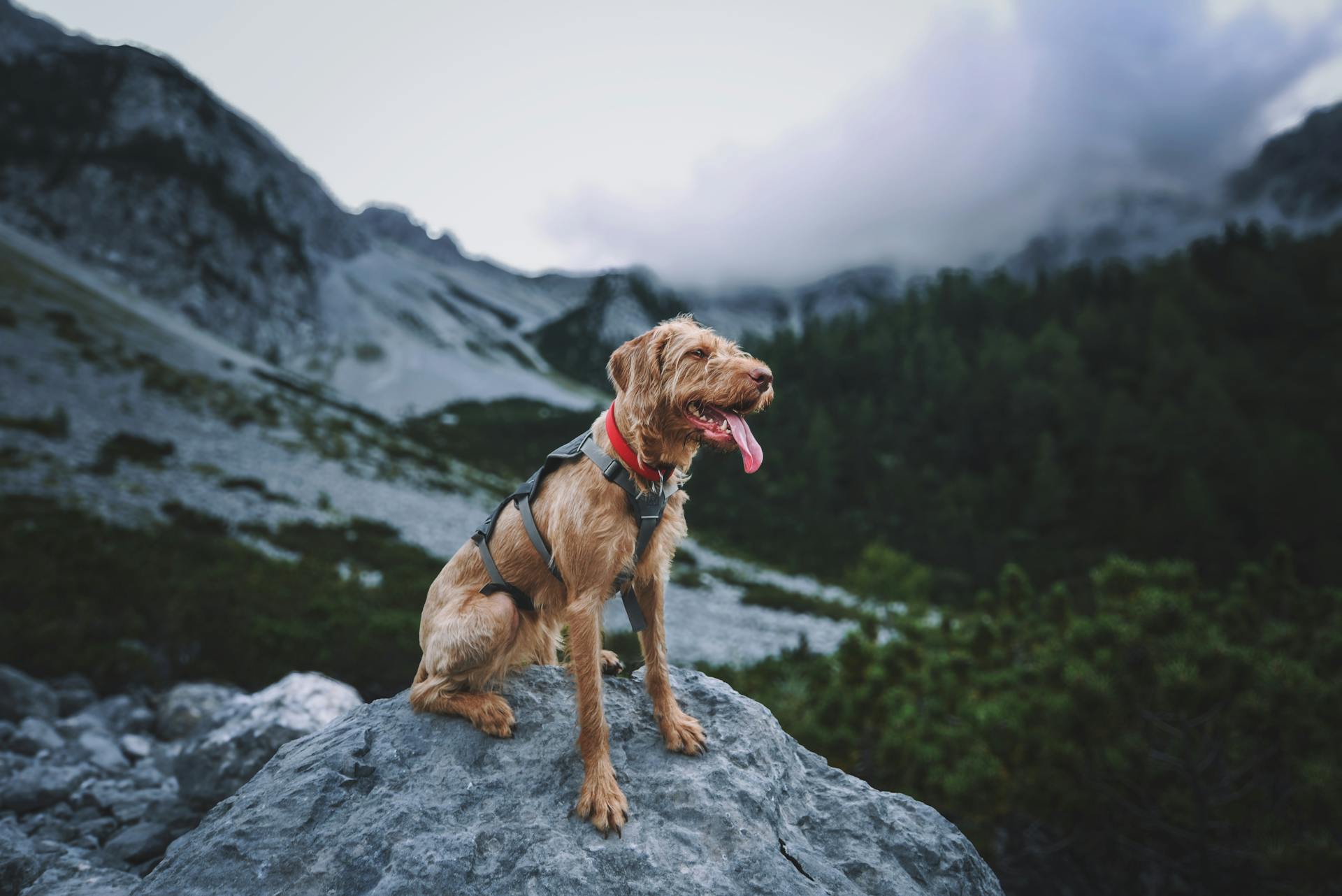
Feral dogs can be incredibly resourceful, often thriving in environments where domestic dogs would struggle to survive.
Feral dogs have a strong instinct to roam and hunt in groups, which is why they're often found in packs.
Their highly developed sense of smell and hearing allows them to detect and respond to potential threats from great distances.
In some cases, feral dogs have been known to form close bonds with humans, particularly those who provide them with regular food and care.
To help feral dogs thrive, it's essential to provide them with access to clean water and nutritious food sources, such as scraps from local restaurants or farms.
Feral Dog Behavior
Feral dogs can be incredibly challenging to work with, but with patience and the right approach, you can build trust with them. One of the most effective ways to do this is by using a long drag leash, which allows you to move them around safely and comfortably.
Avoid making any sudden movements or gestures that could be perceived as threatening, such as staring or making loud noises. This can help create a sense of calm and safety for the dog.
Approaching a feral dog on a curve rather than in a straight line can also help them feel more at ease. This is because it allows them to see you coming and prepare themselves for your presence.
Turning sideways and bending down when approaching a feral dog can also help reduce their stress levels. By not towering over them, you're creating a more equal and less intimidating dynamic.
It's essential to allow feral dogs to approach people on their own terms, rather than forcing them to interact. This can help them feel more in control and build trust at their own pace.
Here are some additional tips for building trust with feral dogs:
- Leave a long drag leash on the dog if you need to be able to move them from room to room or take them outside.
- Avoid making any gestures toward the dog that could be considered threatening, such as staring or sudden movements.
- Approach the dog by walking on a curve rather than in a straight line toward them.
- Turn sideways and bend down rather than towering over the dog.
- Allow the dog to approach people on their own, rather than forcing the dog to tolerate someone.
- If you have a yard, refrain from taking walks with your dogs until they are more comfortable. Once they begin to warm up to you, practice walking in your backyard first, so they can get acclimated to that in a quieter, more comfortable environment.
Training and Care
Training a feral dog requires patience and understanding of their unique needs. Building trust with these animals takes time, and forcing them into obedience can lead to fear and aggression.
Feral dogs are accustomed to surviving on their own, so they may exhibit behaviors that are more challenging to modify than those of domesticated dogs. Exposing them to various environments, people, and other animals through gradual introductions and positive reinforcement can significantly contribute to their ability to thrive in a domestic setting.
Socialization is a crucial aspect of feral dog training, and seeking the assistance of certified dog trainers or behaviorists with experience in rehabilitating feral dogs can be immensely beneficial. These experts usually possess the knowledge and skills to tailor training methods to the unique needs of feral dogs.
You can still train a feral dog without professional assistance, but seeking guidance from experienced trainers or behaviorists can enhance your safety and the success and efficiency of the training process. Working with a feral or extremely shy dog can be an ongoing process, and building trust between the dog and people may take a long time.
To manage feral dogs, it's essential to leave a long drag leash on the dog if you need to move them from room to room or take them outside. You should also avoid making any gestures toward the dog that could be considered threatening, such as staring or sudden movements.
Here are some tips for continuing to build trust between the dog and people:
- Approach the dog by walking on a curve rather than in a straight line toward them.
- Turn sideways and bend down rather than towering over the dog.
- Allow the dog to approach people on their own, rather than forcing the dog to tolerate someone.
- If you have a yard, refrain from taking walks with your dogs until they are more comfortable. Once they begin to warm up to you, practice walking in your backyard first, so they can get acclimated to that in a quieter, more comfortable environment.
Before embarking on your rescue mission, make sure to talk to your vet to ensure they are willing to receive and treat a feral dog. You should also fence your yard to prevent your feral dog from escaping, and make sure you are ready for a long-term commitment to training and caring for the dog.
Featured Images: pexels.com