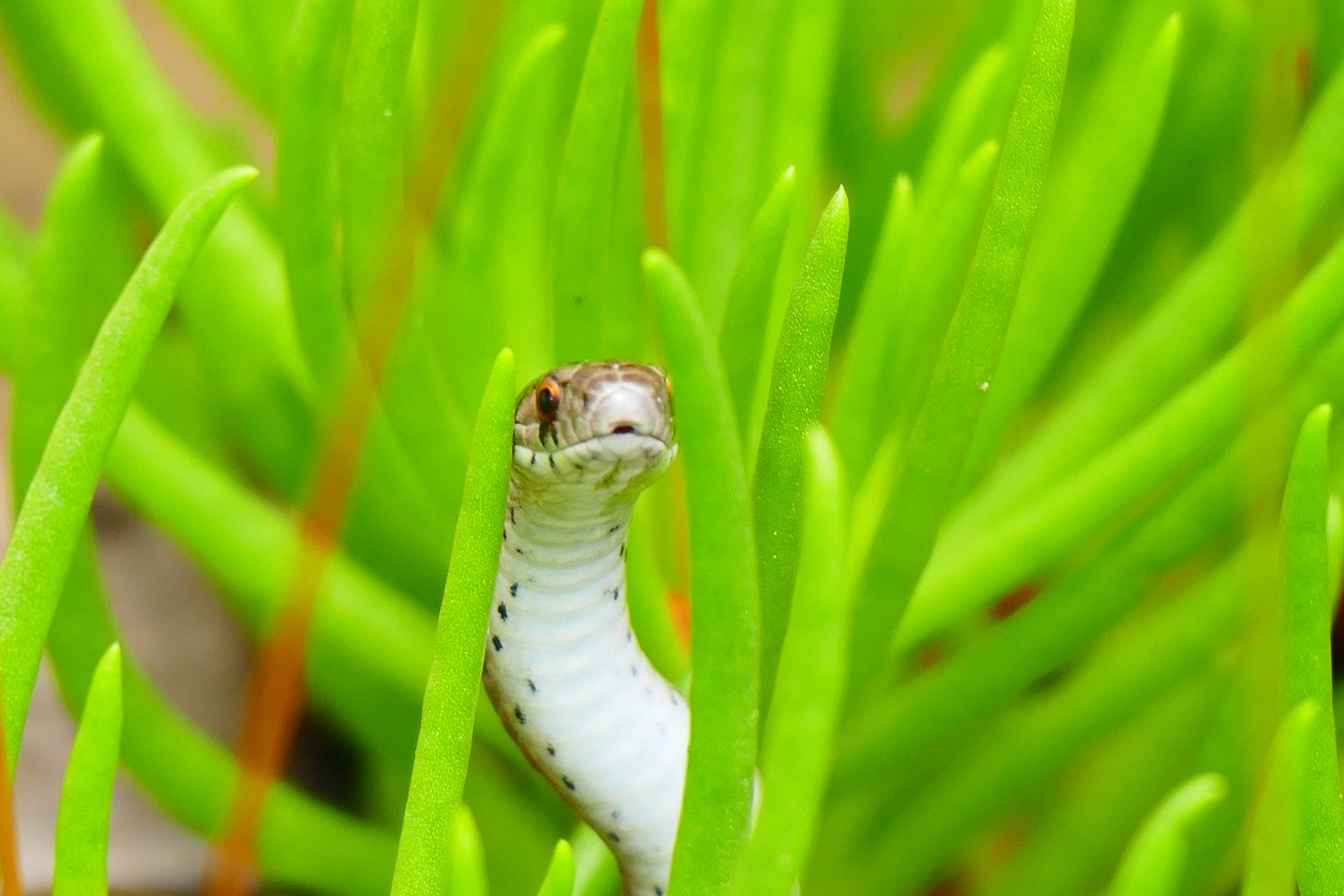
The Eastern Massasauga Rattlesnake is a unique and fascinating species found in Pennsylvania. Native to the state, it's a vital part of the ecosystem.
Habitat loss and fragmentation are significant threats to the Eastern Massasauga Rattlesnake in Pennsylvania. Human activities like agriculture and urbanization have led to the destruction of its natural habitats.
Conservation efforts are underway to protect the Eastern Massasauga Rattlesnake in Pennsylvania. The Pennsylvania Game Commission and other organizations are working together to preserve its habitats and reduce human-snake conflicts.
Intriguing read: Human Wildlife Conflict Examples
Species at Risk
The eastern massasauga rattlesnake is a species at risk, and it's essential to understand its unique characteristics.
This snake averages 20 to 30 inches in length, with a light gray color pattern featuring large dark brown and black blotches.
Young rattlesnakes measure approximately nine inches long and have a distinctive yellow-tipped tail with a "button" rattle.
The eastern massasauga's rattle is barely audible beyond five feet, often mistaken for the buzz of an insect.
This mild-mannered snake rarely strikes unless handled, relying on its camouflage to remain quiet and still when approached.
Habitat and Behavior
The eastern massasauga rattlesnake in PA is a fascinating creature. They utilize low-lying, poorly drained open habitats in the spring, fall, and winter.
In these habitats, they rely on crayfish burrows and other fissures to access groundwater that remains unfrozen throughout the winter for hibernation. This allows them to find refuge from the freezing Pennsylvania winters and retreat from predators in the spring and fall.
As the weather warms up in April, massasaugas begin feeding on small rodents and sunning in lowland areas for about a month. They move to these areas to take advantage of the warmer temperatures and abundant food sources.
In late spring and summer, they move upland to nearby drier fields, prairies, or meadows. This is where males and non-pregnant females spend the summer foraging for food.
The average seasonal home range for the massasauga in Western Pennsylvania is 3.8 acres. This means they don't travel far from their usual spots, but they do have a consistent area where they forage and rest.
Females reach breeding age at four years and give birth to an average of six or seven young every other year. This reproductive strategy helps the species survive in a challenging environment.
Consider reading: American Bald Eagle Food Chain
Threats and Conservation
The eastern massasauga rattlesnake in PA is facing a dramatic decline due to habitat destruction caused by damming, road building, surface mining, and urbanization since the early 1900s.
Habitat loss is a major threat to the massasauga's survival, as it requires open space to thrive. What's more, the remaining habitat is often overgrown by trees and shrubs, making it difficult for the snakes to survive.
To combat this issue, the Pennsylvania Fish and Boat Commission has worked with the Western Pennsylvania Conservancy (WPC) to develop a comprehensive conservation plan for the eastern massasauga. This plan includes habitat management recommendations to protect the massasauga and its preferred habitat.
WPC has successfully implemented habitat management recommendations on private lands, restoring approximately 70 acres of habitat with the support of private landowners and foundations.
Threats
The eastern massasauga's habitat is facing a huge threat. Since the early 1900s, human activities like damming, road building, surface mining, and urbanization have destroyed a significant portion of its habitat in Pennsylvania.
These activities have led to a dramatic decline in the eastern massasauga population. The remaining habitat is under threat of becoming overgrown by trees and shrubs, which is a major concern for the species' survival.
To give you an idea of the extent of the problem, here are some of the main human activities that have contributed to the eastern massasauga's decline:
- Damming
- Road building
- Surface mining
- Urbanization
Conservation and Management
The eastern massasauga is a species in great jeopardy, and its conservation is crucial to prevent its loss. The Western Pennsylvania Conservancy (WPC) has been working to protect this species and its habitat.
The WPC has implemented a comprehensive conservation and management plan for the eastern massasauga, which includes habitat management recommendations. This plan was submitted to the Pennsylvania Fish and Boat Commission, the jurisdictional agency for the species.
To manage and restore habitat, the WPC has worked with private landowners and private foundations to manage and restore approximately 70 acres of habitat. This effort has been successful in protecting the massasauga and its preferred habitat from woody vegetation succession.
On a similar theme: Wild Life Conservation
Sustainable land uses can coexist with massasauga habitat conservation. For example, grasslands or meadows can be planned to provide a colorful and vibrant backdrop for landowners to enjoy. These areas may contain beautiful wildflowers that attract songbirds in the spring and summer.
Agricultural activities can also be conducted in a sustainable manner that does not negatively affect the massasauga and its critical habitat. This can be achieved by following a soil conservation plan that minimizes adverse effects on wildlife.
Here are some examples of sustainable land uses that can coexist with massasauga habitat conservation:
- Floral: Grasslands or meadows can be planned to provide a colorful and vibrant backdrop for landowners to enjoy.
- Agricultural: Sustainable agricultural activities can be conducted in accordance with a soil conservation plan that minimizes adverse effects on wildlife.
- Hunting: Massasauga habitat is utilized by many game species, such as deer, turkey, grouse, woodcock, and rabbits.
The WPC continues to work with federal, state, and private partners to monitor the remaining populations of the massasauga in Western Pennsylvania. This includes surveying the populations, PIT tagging individual snakes, and monitoring their use of newly managed habitats.
Population and Habitat
The eastern massasauga rattlesnake in Pennsylvania has a unique habitat preference, utilizing low-lying, poorly drained open areas in the spring, fall, and winter to escape freezing temperatures and predators.
In the spring, they emerge from hibernation in April and begin feeding on small rodents and sunning in lowland areas for about a month.
Their average seasonal home range in Western Pennsylvania is a relatively small 3.8 acres, which is a crucial factor in their conservation.
Males and non-pregnant females spend the summer foraging in drier fields, prairies, or meadows, while pregnant females choose sparsely vegetated dry areas to bask until they give birth to their young in August or early September.
Females reach breeding age at four years and give birth to an average of six or seven young every other year.
Conservation efforts are underway to protect the massasauga and its habitat, including monitoring populations, PIT tagging individual snakes, and managing and restoring habitats on private lands.
Approximately 70 acres of habitat have been managed and restored through the cooperation of private landowners and private foundations.
Discover more: Animal Conservation Organizations
Land Use and Conservation
Conservation efforts are underway to protect the eastern massasauga rattlesnake in Pennsylvania, including a comprehensive conservation and management plan submitted to the Pennsylvania Fish and Boat Commission.
The plan includes habitat management recommendations, which have been implemented on private lands to restore approximately 70 acres of habitat.
Private landowners and foundations have played a crucial role in supporting these efforts, demonstrating the importance of collaboration in conservation work.
Agricultural activities can be conducted in a sustainable manner that minimizes adverse effects on wildlife, and can even be done in accordance with a soil conservation plan.
Sustainable land uses, such as grasslands or meadows, can be planned to provide a colorful backdrop while protecting massasauga habitat.
These grasslands and meadows may contain beautiful wildflowers that attract songbirds in the spring and summer.
Massasauga habitat is utilized by many game species, including deer, turkey, grouse, woodcock, and rabbits.
For more information on sustainable land uses and massasauga conservation, download the brochure "A Landowner's Guide to the Eastern Massasauga in Pennsylvania: Management & Protection."
Worth a look: Galapagos Land Iguanas
Pennsylvania Snakes
Pennsylvania has a diverse range of snakes, including the eastern massasauga rattlesnake.
The eastern massasauga rattlesnake is one of the 47 species of snakes found in Pennsylvania.
Pennsylvania's climate and geography support a wide variety of snake habitats, from forests to wetlands.
Snakes are an important part of Pennsylvania's ecosystem, helping to control rodent populations.
The eastern massasauga rattlesnake is listed as threatened under the Endangered Species Act.
On a similar theme: Common Snapping Turtle Species
Featured Images: pexels.com