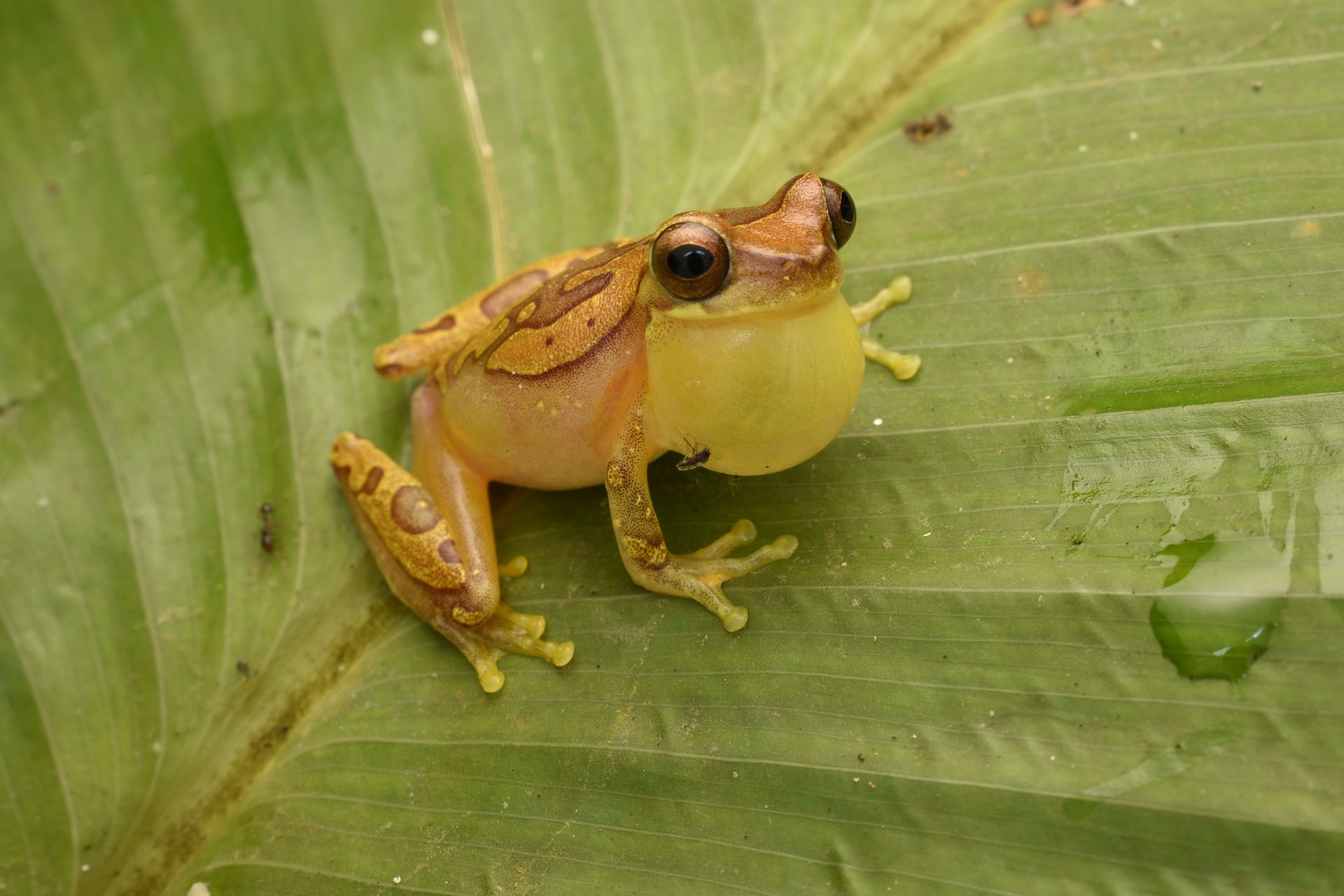
The eastern gray treefrog is a fascinating creature, and one of its most distinctive features is its physical appearance. It's typically gray or brown in color, with a white underside.
One of its most notable characteristics is its ability to change color, which helps it blend in with its surroundings. This is especially useful for hunting and avoiding predators.
These frogs are relatively small, usually growing to about 1-2 inches in length. They have a rounded body shape and a short, stout snout.
Their webbed feet are well-suited for jumping and climbing, and are a key adaptation for their arboreal lifestyle.
Physical Characteristics
The eastern gray treefrog is a pretty small creature, measuring between 1.18 to 1.97 inches in length.
They have a rough dorsal surface with warts, which is more than most frogs but less than the average toad.
The eastern gray treefrog's colors vary with the colors of its background and environmental factors, but shades of gray are most common with black blotches on the back.
A notable characteristic of these frogs is the large toepads that produce mucous to adhere to smooth bark or man-made structures near light sources.
Here are some key physical characteristics of the eastern gray treefrog:
- Length: 1.18 to 1.97 inches
- Mass: 0.25 oz (7.175 g)
- Basal metabolic rate: 0.00433 W
Habitat and Distribution
The eastern gray treefrog is a versatile creature that can be found in a wide range of habitats. They inhabit all elevations of wooded areas near temporary and permanent waters in diverse surroundings such as swamps, ponds, lakes, old fields, and mixed or deciduous forests.
In the summer months, they can be found in damp rotten logs or hollow trees, while in winter, they hibernate on land under woody debris such as logs, roots, and leaf litter. This adaptability allows them to thrive in various environments.
Their geographic range spans from southern Ontario and Maine, westward to central Texas, northwest to Manitoba, and northern Florida, with an isolated colony noted in New Brunswick. They can be found in both terrestrial and freshwater habitats, including temperate and subtropical regions.
Here are the different types of habitats where eastern gray treefrogs can be found:
- Habitat Regions: temperate, terrestrial, freshwater
- Terrestrial Biomes: forest
- Wetlands: swamp
- Other Habitat Features: suburban, agricultural, riparian
Geographic Range
The gray treefrog species, Hyla versicolor and Hyla chrysoscelis, have a wide range that spans from southern Ontario and Maine to central Texas and northern Florida. They can also be found in Manitoba.
These two species are extremely variable in their distribution pattern, which makes it challenging to determine where they overlap. In some areas, like Wisconsin and northern Michigan, both species share the same breeding ponds.
The eastern gray treefrog (H. versicolor) is generally found to the north and northeast of the range, but its distribution is not consistent. For example, it's common in the eastern Great Lakes region, including southern Michigan.
Here's a breakdown of their geographic range:
- Biogeographic Regions: Nearctic
- Range: Southern Ontario, Maine, central Texas, Manitoba, northern Florida, and an isolated colony in New Brunswick.
Habitat
The eastern gray treefrog is quite the adaptable creature when it comes to its habitat. They can be found in a wide range of environments, from swamps to suburban neighborhoods.
One thing that's consistent across all these habitats is the presence of water. Whether it's a pond, lake, or even a damp rotten log, the eastern gray treefrog needs access to moisture to survive.
In the summer months, you can spot them in hollow trees or damp logs. It's not uncommon to see them hiding out in these cozy spots, especially during the hottest parts of the day.
In the winter, they hibernate on land, often under woody debris like logs, roots, and leaf litter. This helps them conserve energy and stay warm until spring arrives.
Some of the specific types of habitats where you can find eastern gray treefrogs include:
- Temperate regions
- Terrestrial biomes, such as forests
- Wetlands, including swamps
- Other habitat features, like suburban areas and agricultural land
These diverse habitats allow the eastern gray treefrog to thrive in a variety of environments.
Home Range
The home range of the eastern gray treefrog is quite fascinating. It varies widely depending on the suitability of the habitat and the available food supply.
In areas with a sufficient food supply, several frogs may inhabit one tree, making the most of the available resources. This is especially true for trees with a high concentration of insects, which are a staple in the eastern gray treefrog's diet.
The eastern gray treefrog's small size allows them to thrive in close quarters, often with multiple individuals sharing the same tree. This adaptability is a testament to their resourcefulness in the wild.
Behavior and Movement
Eastern gray treefrogs are nocturnal, which means they're most active at night, hunting for insects and staying hidden in the bark of trees during the day.
They're expert climbers, thanks to their sticky toe pads that secrete a mucus-like glue to help them grip onto vertical surfaces like tree trunks and shrubs.
Male eastern gray treefrogs are territorial during the breeding season, and they'll aggressively defend their territories and call for potential mates.
In the wild, eastern gray treefrogs can live up to nine years, which is impressive considering their small size.
Here are some key behaviors of eastern gray treefrogs:
- arboreal (tree-dwelling)
- scansorial (climbing)
- saltatorial (jumping)
- nocturnal (active at night)
- crepuscular (active at dawn and dusk)
- motile (able to move)
- hibernation (able to survive freezing temperatures)
- solitary (often found alone)
- territorial (defend their territory during breeding season)
They're also opportunistic cannibals, which means they'll eat other gray treefrogs if they're small enough to catch and swallow.
Development and Communication
The eastern gray treefrog is a remarkable creature, and its development and communication are just as fascinating. They undergo a unique transformation from egg to tadpole to adult, with the eggs hatching into tadpoles that breathe through gills and develop limbs over time.
One of the most interesting aspects of their development is their ability to undergo metamorphosis, a process where they transform from a aquatic tadpole to a terrestrial adult. This transformation takes several weeks to complete and requires a significant amount of energy.
In terms of communication, eastern gray treefrogs are known to use a variety of vocalizations, including a distinctive "quacking" sound, to attract mates and warn off predators.
Development
Tadpoles of the eastern gray treefrogs metamorphosize into froglets in six to eight weeks.
The young frogs are approximately 0.6 in. (1.5 cm) snout to vent length.
The rate of growth for larval and adult amphibians is dependent on the availability of food and stress of predators.
Sex determination in amphibians is genetic, and Hyla versicolor follow the XX/XY pattern of heterogamety.
If larvae are treated with estrogen, then hormonal sex reversal is possible after metamorphosis.
See what others are reading: Amphibians of Australia
Communication and Perception
The eastern gray treefrog's advertisement call is a key trait that sets it apart from Cope's gray treefrog, with a slower trill compared to its faster and higher-pitched counterpart.
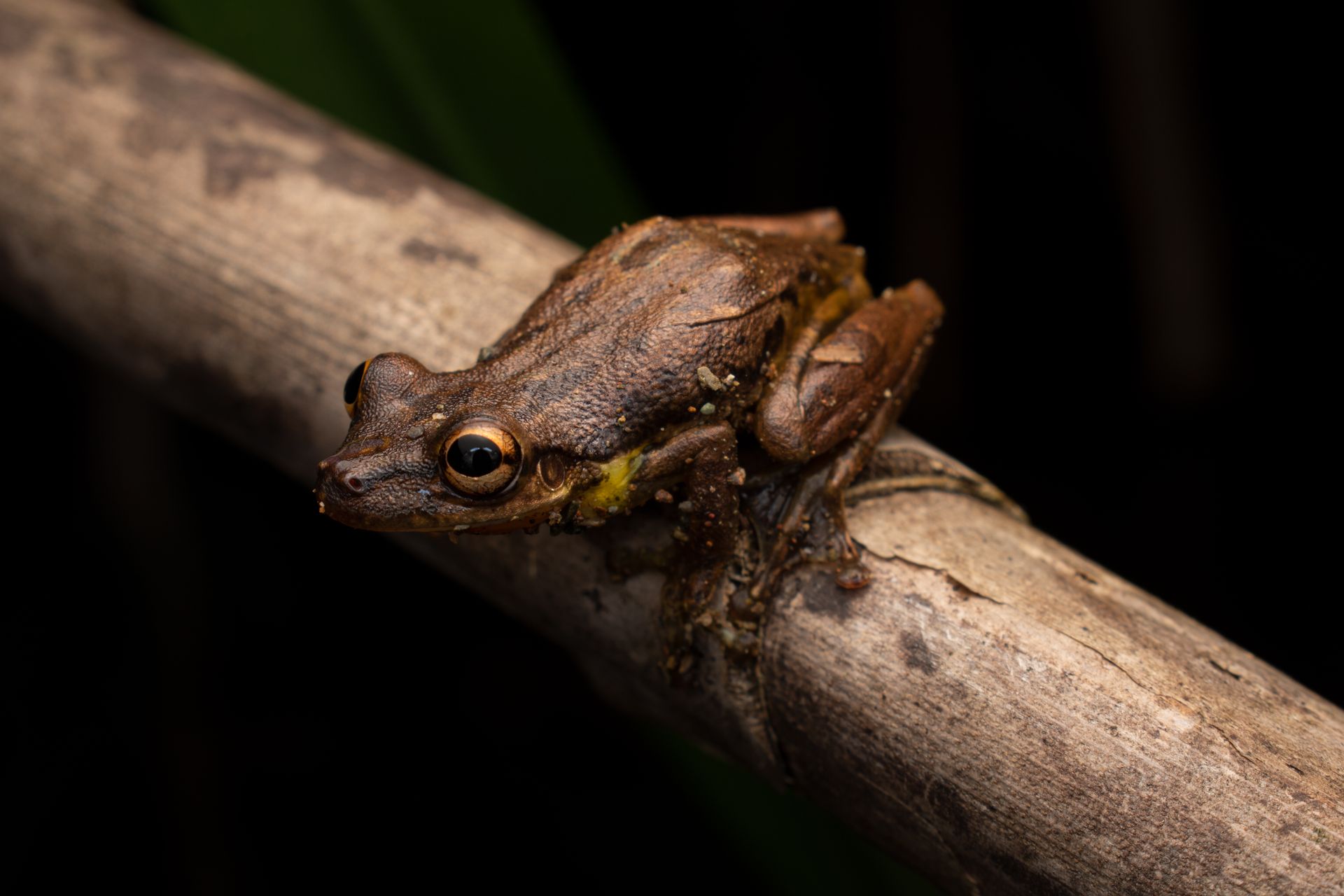
The call is a resonant musical trill that can be heard for 0.5 to 3 seconds, which is shorter than other frog species in the range. The American toad's call is similar in duration, but the gray treefrogs' call is distinct in its musical quality.
In the larval stage, the gray treefrog uses chemoreception as its primary method of communication and defense against predators, detecting predatory fish and salamander larvae through chemical signals.
Adult gray treefrogs are highly sensitive to ground vibrations and possess excellent hearing, but during hibernation, they become unresponsive to most external stimuli.
Gray treefrogs use a variety of communication channels, including visual, acoustic, and chemical signals. The different channels are used for different purposes, and understanding these channels can help us better appreciate the complexity of their communication.
Here are the different communication and perception channels used by gray treefrogs:
- Communication Channels
- visual
- acoustic
- chemical
And here are the different perception channels used by gray treefrogs:
- Perception Channels
- visual
- tactile
- acoustic
- vibrations
- chemical
Unique Traits
The eastern gray treefrog has some truly unique traits that set it apart from other species.
They have a mottled gray and brown coloration that helps them blend in with their surroundings, making them expert hunters.
One of the most distinctive features of the eastern gray treefrog is its ability to change color.
Their skin secretes a toxin that deters predators, giving them a natural defense mechanism.
They are also nocturnal, which means they do their hunting and exploring at night.
Conservation
The eastern gray treefrog plays a vital role in maintaining the balance of its ecosystem.
These tiny frogs help control insect populations, which in turn protects plants and other animals from damage.
Their diet consists mainly of insects, including mosquitoes, flies, and moths.
The eastern gray treefrog also serves as a food source for other animals, such as birds, snakes, and other small predators.
By controlling insect populations, the eastern gray treefrog helps to reduce the spread of disease and promotes a healthier environment.
In addition to their ecological importance, eastern gray treefrogs also face threats such as habitat loss and climate change.
Their populations are declining due to the destruction of their natural habitats, which are often fragmented and isolated.
Frequently Asked Questions
Are Eastern gray treefrogs poisonous?
Eastern gray treefrogs have a defensive toxin that can irritate human skin and mucous membranes, but it is not poisonous to humans. However, handling them requires caution and proper hygiene to avoid discomfort.
Can you keep an eastern Gray Treefrog as a pet?
Yes, you can keep an Eastern Gray Tree Frog as a pet, but it requires proper care and attention to ensure a long and healthy life of around 10 years in captivity. If you're interested in learning more about their care and needs, we'd be happy to provide you with detailed information.
How rare are gray tree frogs?
Gray tree frogs are not considered rare, with a presumed large population, but regional populations are threatened by various factors. Their widespread distribution suggests they are a relatively common species.
Featured Images: pexels.com