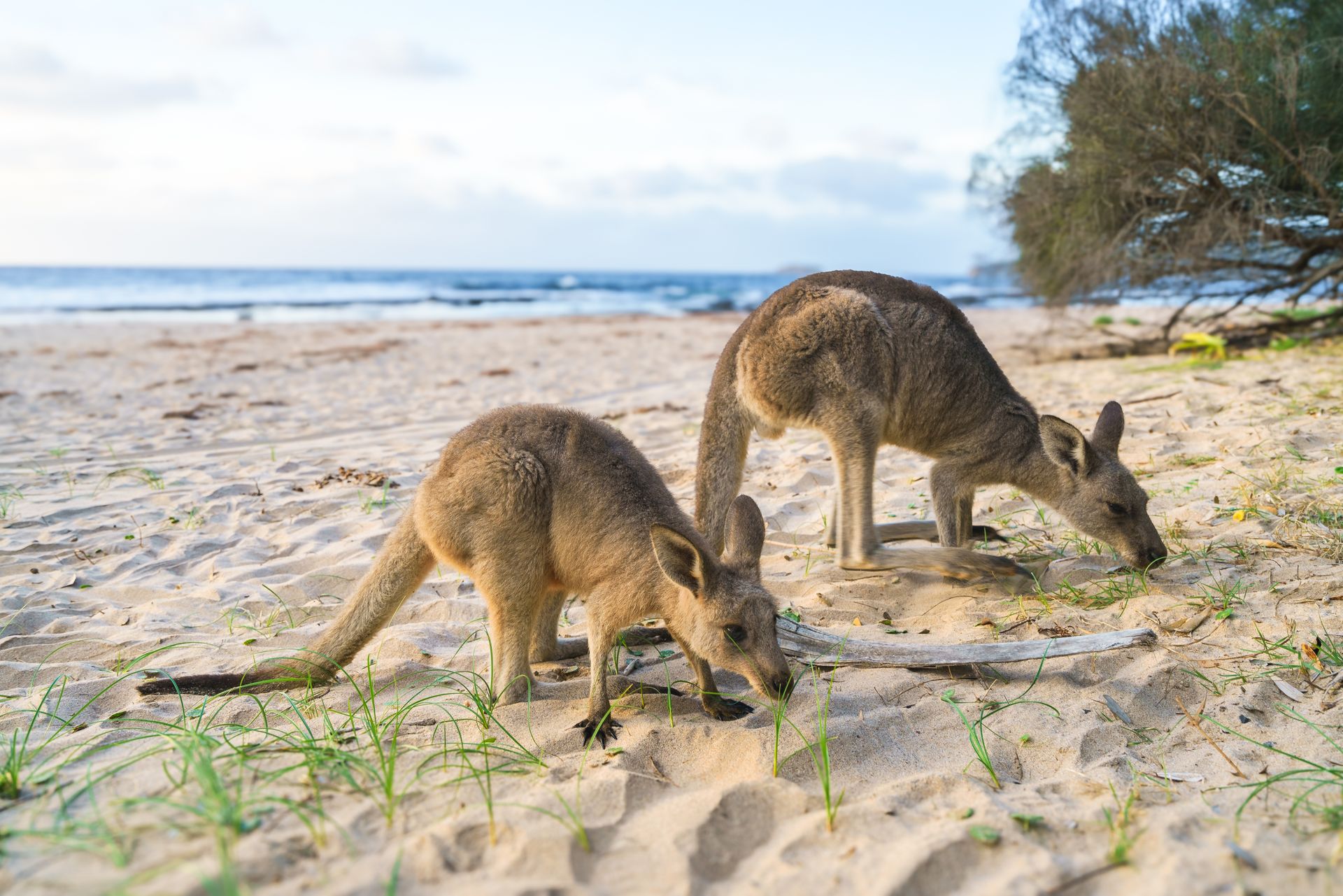
The eastern grey kangaroo is a common sight in the Australian outback, and it's easy to see why they're so successful - they can grow up to 1.8 meters tall and weigh as much as 85 kilograms.
These impressive animals are herbivores, which means they only eat plants, and their diet consists mainly of grasses, leaves, and shrubs.
Eastern grey kangaroos are also known for their impressive jumping ability, with some individuals able to leap as far as 8 meters in a single bound.
Their powerful hind legs and specialized feet make them well-suited for their unique lifestyle.
Physical Characteristics
The eastern grey kangaroo is a remarkable creature, and its physical characteristics are just as impressive. They have a soft grey coat that's distinctive and easy to recognize.
One of the most notable features of the eastern grey kangaroo is its size. Males can weigh up to 90 kg, while females typically weigh between 17 and 40 kg. This size difference is quite striking, and it's not uncommon to see males that are twice as heavy as females.
Eastern grey kangaroos have a powerful tail that's over 1 m long in adult males. This tail is not only impressive in length but also serves as a vital balance aid when the kangaroo is hopping.
The face of the eastern grey kangaroo is also quite unique. They have a light-coloured grey or brownish-grey coat, with a lighter silver or cream belly. In contrast, the western grey kangaroo has a darker dusty brown colour, with more contrast around the head.
Here are some key physical characteristics of the eastern grey kangaroo:
- Weight: 3.5 to 90 kg (7.71 to 198.24 lb)
- Length: 1.5 to 1.8 m (4.92 to 5.91 ft)
The eastern grey kangaroo's physical characteristics are just one aspect of what makes this animal so fascinating. Their unique appearance and impressive size make them a joy to behold.
Habitat and Distribution
The eastern grey kangaroo is a common sight in Australia, particularly in the southern and eastern coastal regions. This is because it's highly adaptable and can thrive in a variety of habitats.
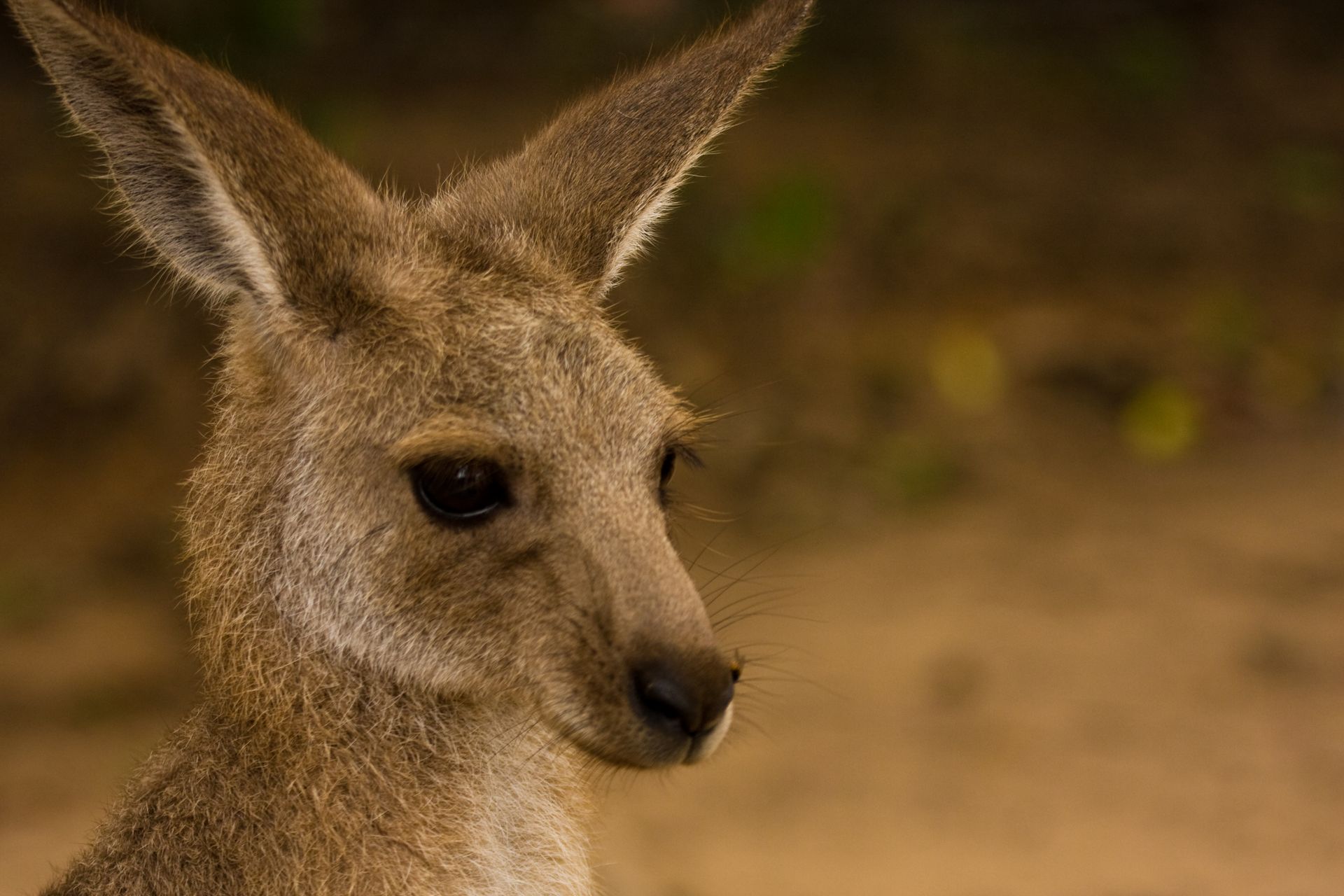
The eastern grey kangaroo can be found in open grasslands with areas of bush for daytime shelter, as well as in coastal areas, woodlands, sub-tropical forests, mountain forests, and inland scrubs.
They tend to favour denser scrubs and forests, and can be found in habitats ranging from semi-arid mallee scrub through to woodlands, some farmland areas with remnant vegetation and forest.
Here's a breakdown of the types of habitats where you can spot an eastern grey kangaroo:
- Habitat Regions: temperate, terrestrial
- Terrestrial Biomes: savanna or grassland, forest, mountains
- Sexual Dimorphism: males are larger than females
Distribution and Habitat
The eastern grey kangaroo is a common sight in Australia, particularly in the southern and eastern coastal regions. This is due to its adaptability and ability to thrive in various habitats.
These kangaroos prefer open grasslands with areas of bush for daytime shelter. You can often find them in the wetter parts of Australia, including coastal areas, woodlands, sub-tropical forests, mountain forests, and inland scrubs.
Their adaptability allows them to inhabit a wide range of habitats, from semi-arid mallee scrub to woodlands, farmland areas with remnant vegetation, and forest. They tend to favour denser scrubs and forests.
Eastern grey kangaroos can be found in various habitats, including open woodlands, grasslands, and mountains with extensive forest cover. They can also thrive in areas with high rainfall, as well as semi-arid regions.
Here are some specific habitats where eastern grey kangaroos can be found:
- Temperate regions
- Terrestrial biomes: savanna or grassland, forest, mountains
In terms of geographic range, eastern grey kangaroos can be found on the eastern coastlines of Australia, all of Queensland (except for western Cape York), South Wales, and parts of Tasmania, particularly the north eastern portion.
2.1. Sampling Site and Population
The Look At Me Now (LAMN) Headland in Moonee Beach Nature Reserve is located on the north coast of New South Wales, Australia.
This region has a humid subtropical climate with hot wet summers and mild winters.
The 24-hectare headland is mostly open and grassy, bordered by coastline and suburbia.
The site is home to a high number of resident free-ranging macropods, including eastern grey kangaroos and red-necked wallabies.
The kangaroo population density at LAMN Headland is estimated to be 5.4 individuals per hectare.
This is one of the highest reported peri-urban kangaroo population densities.
The kangaroo population has been subject to several repeated population surveys and health assessments.
The site has been identified as having demonstrably poor health, with high levels of parasitism, anaemia, and nutritional deficiencies.
Farming in the region is predominantly horticulture, with no known direct contact between kangaroos and domestic livestock.
Despite this, a previous study found a high seroprevalence of C. burnetii in the kangaroo population, with an estimated true seroprevalence of 81%.
Behavior and Adaptations
Eastern grey kangaroos are mainly nocturnal and crepuscular, which means they're most active at dawn and dusk. They're often seen grazing in the early morning or late evening, and rest in the cover of woodlands during the hottest part of the day.
These kangaroos are gregarious and form open-membership groups, which can contain an average of three individuals. Smaller groups join together to graze in preferred areas and rest in larger groups during the middle of the day.
They communicate with each other through a series of clucking sounds, and aggressive males and alarmed individuals give a guttural cough. The tendons in their legs act like sprung ropes, allowing them to hop at high speeds with minimal effort, reaching speeds of up to 64km/hr.
Their legs are designed to expend less energy the faster they're moving, which can reach speeds of up to 30 miles per hour. They spend most of their day under the shade, then move out at dusk to feed until dawn.
Their average territory size is around 429 km^2.
Other Behaviors and Adaptations
Eastern grey kangaroos are social creatures that live in small groups called 'mobs'. These mobs typically consist of one dominant male, 2-3 females with their young, and 2-3 young males.
They communicate with each other through a series of clucking sounds, and when feeling threatened or aggressive, they give out a guttural cough. This unique form of communication helps them navigate their social hierarchy.
As kangaroos are designed for speed, their legs act like sprung ropes, allowing them to propel themselves at fast speeds with minimal effort. In fact, the highest recorded speed of an Eastern Grey Kangaroo was 64km/hr.
They usually rest in the shade or shelter of trees or scrubs, moving out to graze from late afternoon to early morning when it's cooler. This behavior helps them avoid the hottest part of the day.
Here are some key behaviors of Eastern Grey Kangaroos:
- terricolous (living on land)
- saltatorial (hopping)
- nocturnal (active at night)
- motile (able to move)
- social (living in groups)
- dominance hierarchies (social structure)
Speed & Hopping
Kangaroos are incredibly fast, with the top recorded speed for a female Eastern Grey Kangaroo reaching 64 km/hr.
Their speed is almost on par with a racehorse, and some publications even claim speeds of up to 71 km/hr.
A single hop by a very large male kangaroo can cover an impressive 9 metres in length and 3 metres in height.
Hopping is a very efficient way for kangaroos to move at high speeds, but it can be quite energy-intensive when they're moving slowly.
Predation
Eastern grey kangaroos have few natural predators, which is likely due to their robust size and powerful hind legs. They have been hunted for thousands of years by Australian aborigines for fur and meat.
Dingos are one of the few species of animals that prey on eastern grey kangaroos, but their impact is considered minimal.
In the wild, there is no other species of animal that truly preys upon eastern grey kangaroos.
Feeding and Reproduction
Eastern grey kangaroos are seasonal breeders, which means they only breed during specific times of the year. This usually occurs in the spring and early summer.
A female eastern grey kangaroo's estrous period lasts about 46 days, which is longer than her gestation period of 36 days. This is a unique characteristic of eastern grey kangaroos.
The dominant male is the most likely to mate with a female in estrus, and he will approach her by sniffing various parts of her body, including her pouch and urogenital area.
Here are some key facts about eastern grey kangaroo reproduction:
- Seasonal breeding: they breed in the spring and early summer.
- Gestation period: 34.8 to 38 days.
- Average number of offspring: 1.
- Average time to independence: 11 months.
A joey, or baby kangaroo, usually stays in the pouch for 11 months, feeding from its mother's milk. The mother's milk changes nutritional content depending on the joey's needs, and females with semi-independent joeys tend to stay away from large groups to avoid predation.
Feeding and Diet
The Eastern Grey Kangaroo is a grazing animal with specific food preferences. They are herbivorous, favouring grasses but will eat a range of plants, including in some cases, fungi.
Their diet is quite particular, with a strong preference for young green shoots high in protein. This is likely because they are able to digest them more easily.
They have a hard time digesting dry grass, which makes sense given their preference for fresh, protein-rich food.
Suggestion: Zignature Dog Food Kangaroo
Breeding & Reproduction
Eastern grey kangaroos are seasonal breeders, which means they have a specific time of year when they reproduce. This usually occurs in the spring and early summer.
The dominant male in a group will often exhibit aggressive behavior to establish dominance and increase his chances of mating with a female in estrus. He'll approach her, sniff various parts of her body, and make clucking noises.
A female eastern grey kangaroo's estrous period lasts about 46 days, which is longer than her 36-day gestation period. This means that she can become pregnant again soon after giving birth.
Male eastern grey kangaroos reach sexual maturity at around 20 months, while females reach it at 17 months. This is a relatively young age compared to some other mammals.
Here are some key reproductive features of eastern grey kangaroos:
- Seasonal breeding
- Embryonic diapause
- Viviparous (giving birth to live young)
- Gonochoric (sexes separate)
- Sexual
A joey, or baby kangaroo, typically stays in its mother's pouch for about 11 months, where it feeds on her milk. After leaving the pouch, it will continue to nurse for an additional 9 months on average.
Conservation and Classification
The Eastern Grey Kangaroo is protected by law in Australia, and its population is thriving. There are almost 2 million eastern grey kangaroos in Australia and the surrounding areas.
The kangaroo population has been regulated by the Australian government to ensure sustainability, and the number of kangaroos killed each year is strictly monitored. In fact, the Eastern Grey Kangaroo is among 4 abundant species that can be commercially harvested for export, but only by licensed hunters.
The conservation status of the Eastern Grey Kangaroo is currently classified as "Least Concern" on the IUCN Red List, and it has no special status on the US Federal List or under CITES.
Age & Longevity
Eastern Grey Kangaroos have a relatively short lifespan in the wild, with an average of about 6 to 8 years.
To put this into perspective, that's roughly the same lifespan as a well-cared-for domestic cat. It's a sobering thought, especially when you consider the many threats these amazing animals face in the wild.
Lucky kangaroos that live in areas far from busy roads and through good seasons without droughts can live up to 20 years in the wild, although this is becoming increasingly rare.
In captivity, however, Eastern Grey Kangaroos have been known to live up to 25 years, which is a testament to the great care and dedication of wildlife carers and sanctuaries.
On a similar theme: Eastern Gray Squirrel Lifespan
Conservation Status
The Eastern Grey Kangaroo is not considered to be in any immediate danger of extinction, with a population of almost 2 million in Australia and surrounding areas.
They were once hunted for food and skins by indigenous peoples and Europeans, but now have rules in place to protect them in all Australian states and territories.
The kangaroo population declined sharply in the late 1990s, especially in Tasmania, but has since increased and continues to grow due to protection by law and management of their range on private property.
The Australian government regulates the number of kangaroos killed each year, ensuring a sustainable industry.
Here's a summary of the Eastern Grey Kangaroo's conservation status:
- IUCN Red List: Least Concern
- IUCN Red List: Least Concern
- US Federal List: No special status
- CITES: No special status
Classification
Classification is a crucial step in understanding the eastern gray kangaroo's place in the natural world. It helps us identify its relationships with other animals and informs conservation efforts.
The eastern gray kangaroo belongs to the kingdom Animalia, which is home to a vast array of animals, with over 22,000 pictures and 7,100 specimens available for study.
If this caught your attention, see: Australian Native Animals List
Within Animalia, the eastern gray kangaroo is further classified as a chordate, a group characterized by the presence of a notochord, a flexible rod-like structure that provides support and stability. Chordates make up a significant portion of the animal kingdom, with over 15,000 pictures and 6,800 specimens documented.
As a chordate, the eastern gray kangaroo is also a vertebrate, meaning it has a backbone. Vertebrates are a diverse group, with over 15,000 pictures and 6,800 specimens available for study.
At the class level, the eastern gray kangaroo is classified as a mammalia, which is a group of warm-blooded animals that produce milk to feed their young. Mammals are a relatively small group, with only 13 sounds available for study.
Within the mammalia class, the eastern gray kangaroo is part of the order Diprotodontia, which includes kangaroos, possums, wallabies, and their relatives. Diprotodontia is a relatively small order, with only 54 specimens available for study.
The eastern gray kangaroo is further classified as a member of the family Macropodidae, which includes kangaroos, wallabies, and their relatives. Macropodidae is a relatively small family, with only 8 specimens available for study.
Finally, the eastern gray kangaroo is classified as a member of the genus Macropus, which includes kangaroos, wallabies, and wallaroos. The genus Macropus is home to a relatively small number of species, with only 73 pictures available for study.
Here is a summary of the eastern gray kangaroo's classification:
Abstract
Macropods, specifically eastern grey kangaroos, are often associated with Coxiella burnetii, the bacteria responsible for Q fever.
These kangaroos are found in high densities in certain areas, such as a peri-urban coastal nature reserve in New South Wales, Australia.
A study was conducted to investigate the epidemiology of C. burnetii in this population.
The researchers collected blood, faeces, and swabs from 40 kangaroos, as well as frozen and formalin-fixed tissues from 12 kangaroos that were euthanized.
Specimens were tested for C. burnetii using various methods, including PCR, serology, histopathology, and immunohistochemistry.
A total of 33 out of 40 kangaroos were found to be seropositive for C. burnetii, indicating that they had been exposed to the bacteria at some point.
The estimated true seroprevalence was around 84%, with a 95% confidence interval of 69% to 93%.
Identification and Measurement
The Eastern Grey Kangaroo is a large marsupial with distinctive physical characteristics. They belong to the macropod family, which is a small group of animals with larger hind legs than forelimbs.
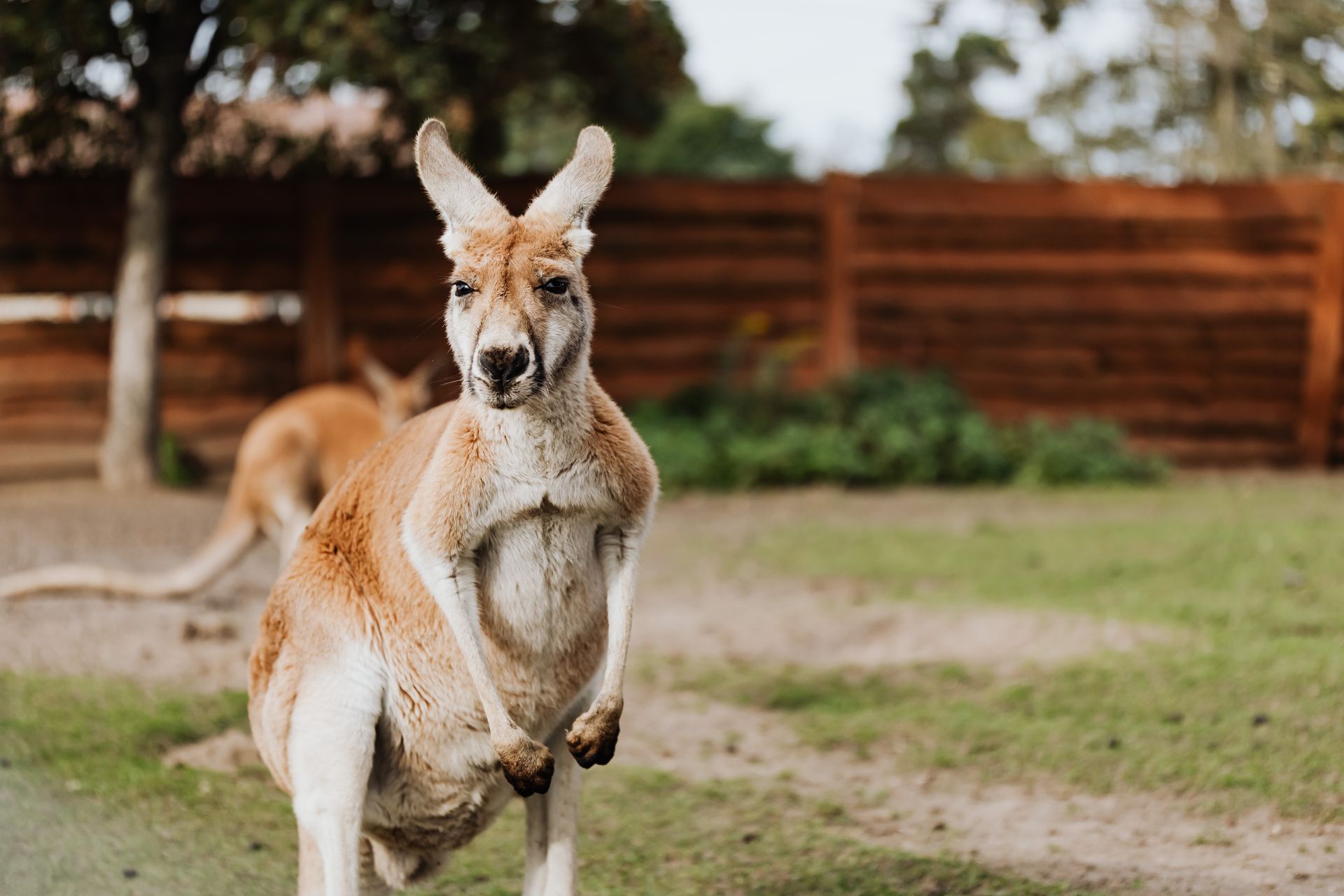
Their hind feet are large and powerful, and their long muscular tail is used for balance when hopping and as a fifth limb when movements are slow. The fur is a light grey woolly colour except for the face, which is darker.
Males can grow up to 1.3m in body length and 1m in tail length. Females are slightly smaller, reaching 1m in body length and 0.84m in tail length.
The maximum recorded length of an Eastern Grey Kangaroo is 2.9m, with some males standing at a height of around 1.7m when standing normally.
Size
The Eastern Grey Kangaroo's size is quite impressive. They can grow up to 2.9m in length, which is quite a stretch.
Their height can vary, but a large male can stand at around 1.7m when standing normally. When they high-stand, which is a behaviour where they draw themselves up onto their tip toes, they can reach a height of around 2m.
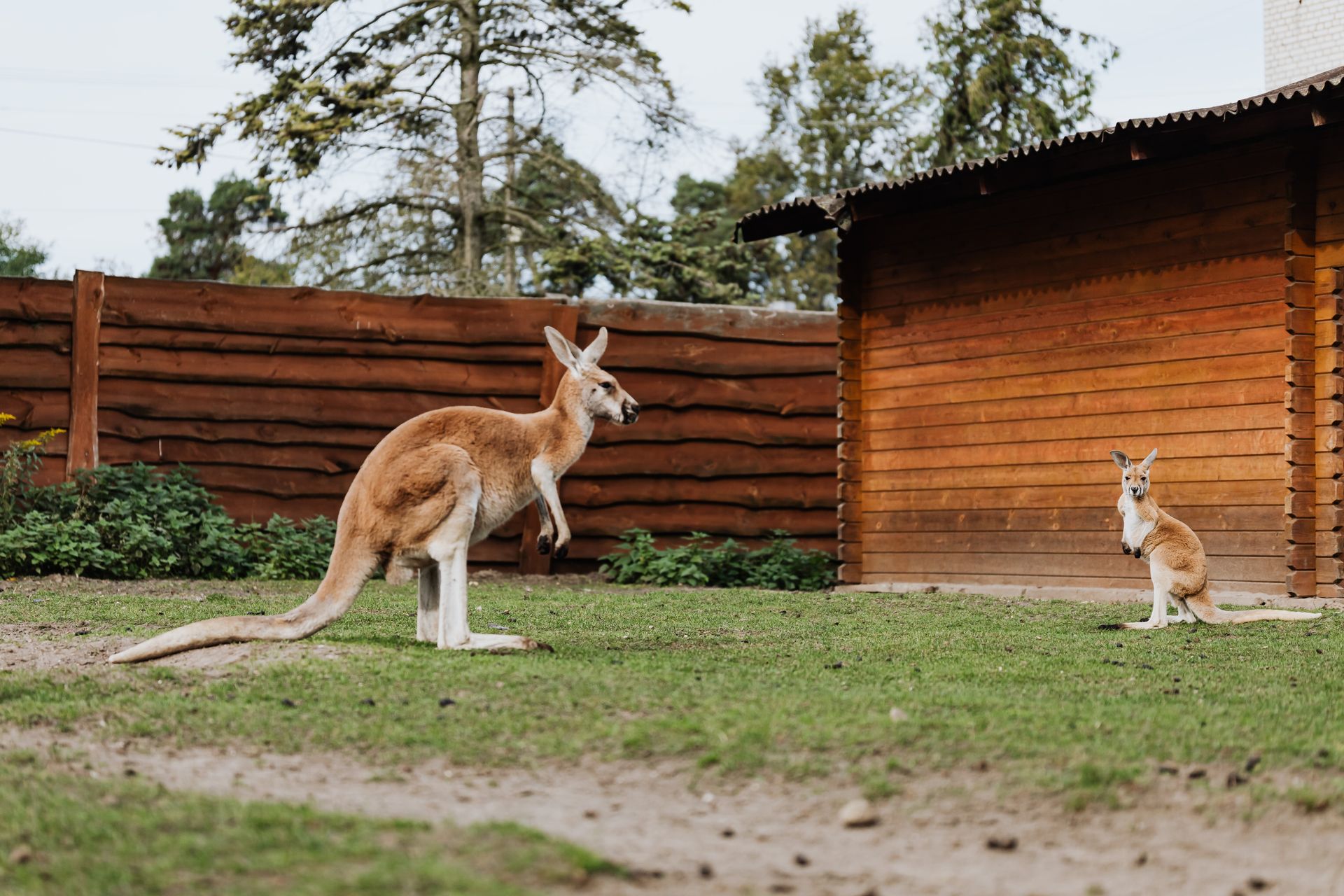
Males can weigh anywhere from 66kg to 91kg, with the maximum recorded weight being 91kg. Females, on the other hand, are much smaller and can weigh up to 37kg.
In terms of body length, males can reach up to 1.3m, while females reach up to 1m. The tail length also varies between males and females, with males having a tail length of up to 1m and females up to 0.84m.
Sampled
In this study, 40 kangaroos were sampled from the Look At Me Now Headland in Moonee Beach Nature Reserve. They were captured and sampled as part of this study.
The kangaroos were divided into different age and sex groups, with 13 adult and 8 subadult females, and 9 adult and 10 subadult males. Blood, serum, and swabs were collected from all 40 kangaroos, while faeces were only available from 35 animals.
Milk was obtained from three lactating females with young at foot. Twelve animals were euthanised on welfare grounds and underwent post-mortem examinations and sampling.
You might like: Animals Smarter than Dogs
The most frequently positive specimen was faeces, with half of all PCR-positive kangaroos testing positive on this sample type, followed by urogenital swabs.
Here's a breakdown of the number of kangaroos that tested positive for C. burnetii by PCR on different sample types:
Figure 1
Figure 1 is a ranked bar plot showing the percentage likelihood of a sample type being positive for C. burnetii in PCR-positive eastern grey kangaroos.
The plot is divided into ante-mortem specimens and post-mortem specimens, with error bars representing the 95% confidence intervals.
The gastrointestinal tract, or GIT, is one of the sample types shown in the plot.
For the three targets IS1111, htpAB, and com1, Ct values were generally high.
The multicopy insertion sequence IS1111 was most frequently positive, with 69 specimens testing positive.
IS1111 amplified earlier than the other two targets, with a Ct range of 28.0-38.2.
Only 16 of the 69 positive specimens amplified all three targets.
Concentrating the DNA generally led to a reduction of the Ct value by 1-2 cycles.
Frequently Asked Questions
What is unique about Eastern Grey Kangaroo?
The Eastern Grey Kangaroo stands out with its distinctive physical characteristics, including larger hind legs and a more placid nature compared to other kangaroo species. This unique combination makes them one of Australia's most fascinating native land mammals.
What is the difference between a Red Kangaroo and an Eastern Grey Kangaroo?
Eastern Grey Kangaroos have smaller ears, pointier snouts, and more evenly coloured fur compared to Red Kangaroos, which have distinctive white markings on their faces and underparts. This physical difference helps distinguish the two species of kangaroos.
Do Eastern Grey kangaroos have predators?
Eastern Grey kangaroos have a few natural predators, including dingoes, humans, and wedge-tailed eagles, while introduced species like wild dogs and foxes also pose a threat to their young.
Featured Images: pexels.com