Australia is home to a staggering array of unique and fascinating native animals. From the smallest marsupials to the largest birds of prey, the country's diverse wildlife is a true wonder to behold.
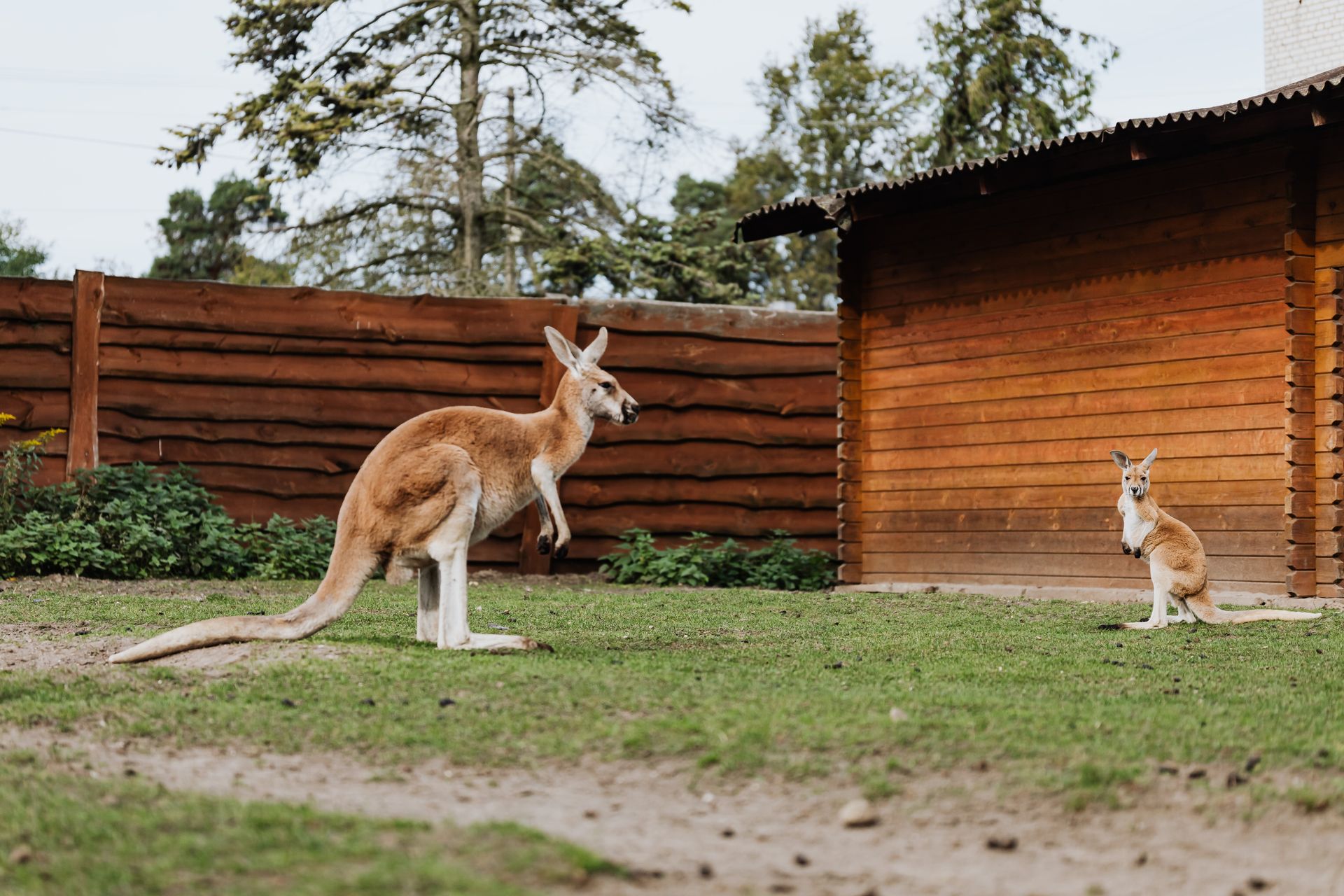
The kangaroo is one of Australia's most iconic native animals, with its powerful hind legs and impressive jumping ability allowing it to cover great distances.
The platypus, on the other hand, is a bit of an oddball - it's one of the few venomous mammals in the world, and its duck-billed snout and webbed feet make it a truly one-of-a-kind creature.
The platypus is also an excellent swimmer, able to dive to depths of up to 4.6 meters in search of food.
Australia's Iconic Animals
Australia's iconic animals are a must-see for any visitor. Wombats, the second largest marsupial, can be found in grasslands and forests, reaching speeds of up to 40 kilometres per hour.
Koalas are known for their laziness, sleeping up to 18-22 hours a day, and eating massive amounts of eucalyptus leaves, consuming up to one kilogram every day. They're a iconic experience for many tourists.
The kangaroo is the world's largest marsupial, and there are about 50 different types, including two that live in trees. They're surprisingly great swimmers and you have a good chance of spotting them on your visit.
Echidnas, one of the world's two monotremes, look like a hedgehog crossed with an anteater, and their babies are adorably known as puggles. They can be found in forests and grasslands.
Quokkas, dubbed the "world's happiest animal", are only found on Rottnest Island, near Perth, and their friendly nature has made them an internet sensation. They're a must-see for any visitor.
Saltwater crocodiles, the largest living reptile in the world, can be found across northern Australia and are known for attacking from underwater. They need to bring their prey above water to eat.
Australia is home to over 40 species of kangaroo and wallaby, from the mighty red kangaroo to the teeny musky rat-kangaroo.
Wildlife Viewing Locations
If you're looking to spot some of Australia's incredible wildlife, I've got just the places for you. Pebbly Beach in Murramarang National Park, New South Wales, is a must-visit for kangaroo sightings.
Forests and grasslands are home to many of Australia's best-loved animals, including kangaroos, wallabies, koalas, wombats, echidnas, and even platypuses. You can find these habitats just a short distance from our major cities.
Cape Range National Park is a great spot to see euros, the desert kangaroo. The black-footed rock wallaby can also be spotted in this area.
The Great Barrier Reef is home to an astonishing 1,625 known fish species and six of the world's seven types of sea turtle. You can also find whales, harmless reef sharks, rays, dugongs, and more.
Fraser Island has dingoes roaming its beaches, while kangaroos can be seen sunning themselves on Pebbly Beach south of Sydney, and Lucky Bay near Esperance.
Experiencing Wildlife Responsibly
Australia has stringent animal welfare guidelines in place for all tour operators, ensuring a positive experience for both you and the animals.
By choosing a reputable tour operator, you can have a rewarding and immersive experience that focuses on conservation activities.
Small group sizes and expert interpretive guiding are key to making your experience meaningful.
Learning about native wildlife through the lens of an Aboriginal guide adds a layer of understanding that's unobtainable in any other way.
Discovering the cultural connection to nature is a unique aspect of Aboriginal Experiences' wildlife tours.
By supporting conservation activities, you're contributing to protecting Australia's unique fauna.
Endangered Animals
Australia is home to many unique and fascinating animals, but sadly, many of them are threatened or endangered.
The koala is one of the most iconic Australian animals and is also endangered due to habitat loss and climate change.
The Tasmanian devil, the world's largest carnivorous marsupial, is particularly vulnerable due to the devastating Devil Facial Tumor Disease (DFTD).
The northern quoll, a small but fierce predator, struggles against habitat loss and invasive species like the cane toad.
The bilby, a small nocturnal marsupial, is also endangered due to habitat loss and degradation.
Intriguing read: Small Animal Boarding
Some of the most threatened bird species in Australia include several species of albatross and parrot, the Cape Barren Goose, and the grey falcon.
Habitat destruction, invasive species, and climate change are all significant threats to Australia's native animals.
The Australian government has implemented laws and policies aimed at preventing further extinctions and protecting the country's precious wildlife.
Conservation programs, captive breeding, and habitat restoration are all part of the concerted effort to save Australia's native animals.
Marsupials
Marsupials are one of the most fascinating groups of animals in Australia, and they come in all shapes and sizes. The Tasmanian devil is the world's largest carnivorous marsupial, found exclusively on the island of Tasmania.
Some marsupials are built for speed, like the kangaroo, which can hop at speeds of up to 56 km/h (35 mph). Others, like the pademelon, are solitary and nocturnal, with a compact body and a diet that consists mainly of plants and grass.
Here are some key facts about the marsupials mentioned earlier:
The tiger quoll, also known as the spotted-tail quoll, is a carnivorous marsupial that is usually silent but communicates with specific calls. They are polygynous, meaning the male mates with multiple females.
Kangaroo
The kangaroo is probably the best known of the native Australian animals, and it might be even Australia's national symbol.
Kangaroos are the world's largest marsupial, with various species like the red kangaroo, eastern grey kangaroo, and western grey kangaroo roaming the continent.
They can hop at speeds of up to 56 km/h (35 mph).
Found in diverse habitats, from grasslands to deserts, kangaroos are a vital part of the Australian ecosystem.
Marsupials
Marsupials are a unique and fascinating group of animals that can be found in Australia. Many species of marsupials are native to Australia, including the koala, which is found in eucalyptus forests in the eastern and southeastern states.
These animals are known for their distinctive pouches, where they carry their young. Koalas, for example, are often spotted resting in trees, as they spend up to 20 hours a day sleeping.
Some marsupials, like the pademelon, are herbivores and live in dense rainforests and shrublands. They have soft, dark brown fur on their backs and reddish-brown fur on their stomachs.
Pademelons are also known for their unique behavior, as they are polyamorous and have multiple mates. They are harmless and curious, often approaching humans for a picture and then hopping away.
Marsupials come in a range of sizes, from the small pademelon to the larger wallabies. Wallabies are found in remote areas surrounded by trees across Australia.
Here are some key facts about marsupials:
- Koalas spend up to 20 hours a day sleeping.
- Pademelons are herbivores and live in dense rainforests and shrublands.
- Wallabies are found in remote areas surrounded by trees across Australia.
- Tammar wallabies have a lifespan of 10-14 years.
- Tasmanian devils are the world's largest carnivorous marsupial.
These animals play a vital role in the Australian ecosystem, and conservation efforts are necessary to protect them.
Wombat
Wombats are the smartest of marsupials, with relatively large brains that help them navigate their surroundings. They're herbivores, which means they primarily eat plants, and their diet consists of native grasses, tree bark, and roots.
Wombats are nocturnal grazers, meaning they do most of their eating at night. They can live for about 15 years, which is a decent lifespan for an animal of their size.
Wombats come in two main types: common (bare-nosed) and hairy-nosed. The hairy-nosed wombats are further divided into northern and southern subspecies.
Here are the scientific names of the different types of wombats:
- Common wombat: Vombatus ursinus
- Northern hairy-nosed wombat: Lasiorhinus krefftii
- Southern hairy-nosed wombat: Lasiorhinus latifrons
Wombats are known for their unique cube-shaped poop, which they use to mark their territory. They'll often leave their "scat" outside their burrow to help them remember where they live in the dark.
Yellow-Bellied Glider
The yellow-bellied glider is a remarkable creature. They are the largest gliding possums in Australia, found in eastern Australia from northern Queensland down to Victoria in open foothill forests, woodland, and wet eucalypt forests.
These gliders are active, social, and vocal animals. They can glide up to 114 metres, which is quite impressive considering their size.
Yellow-bellied gliders have a distinctive appearance. They have grey-brown fur on their back and an off-white to orange or yellow belly.
They typically weigh between 435-710 grams and measure 27-30 cm in length. That's quite small compared to some of the other marsupials out there.
Their diet consists of a variety of food sources, including nectar, pollen, eucalypt sap, insects, grubs, arachnids, and small vertebrates.
Emu
Emus are the tallest and fastest land birds in Australia, growing up to 2 metres in length and weighing up to 60 kg. They have a shaggy grey, brown to black plumage and a striking blue and black coloured naked skin around their face and neck.
These amazing birds are found in open plains and forests, where they thrive on a diet of plants and animals, including insects they can swallow whole. They're good swimmers and love flicking in ponds and lakes.
In the wild, emus can live for 10 to 20 years, but in captivity, they can live up to 35 years. They're not aggressive, but can hurt badly if provoked.
Here are some key facts about emus:
- The tallest and fastest land Australian bird.
- Good swimmers and love flicking in ponds and lakes.
- Can jump as high as it is tall.
Malleefowl
Malleefowl are native Australian animals that are rarely seen due to their shy nature. They have distinctive grey heads, cream-white breasts, and mottled wings in shades of white, grey, brown, and black.
Their length is around 60 cm, and they weigh about 2.5 kg. These unique-looking creatures live in the arid and semi-arid regions of inland Western Australia, South Australia, Victoria, and central NSW.
Malleefowl are monogamous species that mate for life. This means they form long-term pair bonds with their partners.
Their diet consists of omnivorous food sources, including wattle seeds, flowers, and insects.
Birds of Australia
Australia is home to a diverse range of bird species, with over 800 different types found across the country.
The sulfur-crested cockatoo is one of the most common birds in Australia, known for its distinctive call and ability to mimic human speech.
Many Australian birds are adapted to life in the outback, with features such as large beaks and strong legs that help them survive in the harsh desert environment.
The kookaburra, a large kingfisher species, is a common sight in Australian backyards, known for its loud call and distinctive laugh-like sound.
Birds of Australia
Australia is home to a staggering 830 native bird species.
Some of the most iconic birds in Australia include the Kookaburra, known for its distinctive laugh-like call, and the Cockatoo, recognized by its vibrant plumage.
The Kookaburra is a large kingfisher that can grow up to 45 cm in length and weigh up to 1.2 kg.
The Cockatoo is a large parrot with a distinctive curved beak and a loud, screeching call.
The Sulphur-crested Cockatoo is one of the most common Cockatoo species found in Australia.
The Australian Magpie is a black and white bird known for its intelligence and complex social behavior.
It's not uncommon to see Magpies following humans in search of food, and they have even been observed using tools to obtain food.
The Rainbow Lorikeet is a colorful parrot found in eastern Australia, known for its bright plumage and distinctive call.
These birds are just a few examples of the incredible diversity of bird species found in Australia.
Worth a look: Australian Bird Cassowary
Rufous Owl
The Rufous Owl is a fascinating bird species found in northern Australia's rainforests and woodlands.
They belong to the Strigidae family of typical owls and are known by their scientific name, Ninox Rufa.
These birds are quite large, weighing between 700 to 1,700 grams and measuring 6–57 cm in length.
Their distinctive plumage features a dark reddish-brown forehead, neck, back, and upper wings with light brown barring.
The Rufous Owl's face is a dark brown color, while its neck, breast, and underparts are a beautiful rufous hue with thin cream bars.
Their underside is light brown with thick cream bars, and they have a light grey hooked bill with black bristles at its base.
The Rufous Owl is a solitary bird that maintains a distance from humans, making it a rare sight in the wild.
Their diet consists of a variety of carnivorous items, including birds, mammals, and insects.
Take a look at this: Brown Australian Shepard
Inland Dotterel
The inland dotterel is a unique and beautiful bird with a rich, sandy buff plumage and brown marks on its upper parts. It's a shorebird that can be found in arid southeast and southwest Australia.
These birds have a distinctive appearance with black and white bands and marks on different spots. They grow to a length of 19-23 cm (7.5-9 in) and weigh 80-90 g (2.8-3.2 oz).
Inland dotterels can live up to 10 to 32 years, which is impressive for a bird of its size. They have a scientific name, Peltohyas australis.
These native Australian animals can tolerate high temperatures up to 40 C (104 F), which is quite remarkable. They run rather than fly when approached.
During the day, inland dotterels feed on the fleshy part of shrubs, while at night, they munch on insects like spiders and grasshoppers.
Rainbow Lorikeet
The Rainbow Lorikeet is a burst of colour in the Australian landscape, even in the cities where you can see them like pigeons in Europe. They have vibrant and colourful plumage of red, blue, green, and yellow.
They are found in rainforests, woodlands, and urban areas. Their specialized brush-tipped tongues allow them to feed on nectar, pollen, and fruits.
Their playful antics and loud calls make them a delight to watch, especially during flowering seasons.
Reptiles
Reptiles are a fascinating group of animals that call Australia home.
The Bearded Dragon, a common Australian reptile, can grow up to 24 inches in length.
These scaly creatures are ectothermic, meaning they regulate their body temperature using external sources, like the sun.
Some species of snakes, like the Inland Taipan, are venomous and can be found in the arid regions of central Australia.
The Saltwater Crocodile, the largest reptile in Australia, can grow up to 23 feet in length and weigh over a ton.
Reptiles
Reptiles are incredibly diverse, with over 10,000 known species, ranging from the tiny gecko to the massive saltwater crocodile.
Some reptiles are oviparous, meaning they lay eggs, while others are ovoviviparous, meaning they produce live young that develop inside eggs.
The largest reptile is the saltwater crocodile, which can grow up to 23 feet in length and weigh over 1,000 pounds.
Many reptiles have specialized scales that help them regulate their body temperature, such as the scaly skin of a snake that allows it to warm up quickly in the sun.
Turtles have a hard shell that protects them from predators, and some species can live up to 80 years in the wild.
Perentie
Perentie are the largest monitor lizards, reaching lengths of up to 2.5 meters.
They can be found in arid desert areas of Western Australia, Northern Territory, Queensland, and South Australia.
Perentie are brown in colour with large cream or yellow rosettes.
These creatures are carnivores, eating a wide variety of prey including insects, birds, small to mid-sized dogs, wombats, and kangaroos.
Their throats swell and they hiss when feeling threatened.
Perentie can live for up to 20 years.
Here are some interesting facts about Perentie:
- They belong to the carnivores group.
- Their lifespan is between 15-20 years.
- Humans and dingos can eat Perentie.
- Their bites can cause damage due to bacteria in their mouth.
Green Tree Python
The Green Tree Python is one of those animals that you don’t believe it actually exists when you see it for the first time.
Found in the rainforests of northern Queensland, these snakes are perfectly adapted to their environment.
Its vivid green coloration provides excellent camouflage among the trees, while its prehensile tail aids in climbing.
Non-venomous and generally docile, these snakes are a favorite among wildlife photographers.
Amphibians
Amphibians are a diverse group of animals that can be found in Australia, with over 200 species native to the country.
The Green Tree Frog, for example, is a common species found in eastern Australia, known for its bright green color and ability to change its skin color to blend in with its surroundings.
Some amphibians, like the Eastern Barred Bandicoot's predator, the Green Tree Frog, are found in urban areas, while others, like the Peron's Tree Frog, inhabit more remote regions.
The Green Tree Frog's diet consists mainly of insects, which it catches using its long tongue.
The Peron's Tree Frog is a carnivorous species that feeds on small insects and other invertebrates.
Waterbirds
Australia's wetlands and coastal areas are teeming with life, particularly when it comes to waterbirds. From the majestic Australian pelican with its enormous bill to the elegant black swan gliding across serene lakes, these birds are a sight to behold.
The sulphur-crested cockatoo adds a splash of color and sound to the landscape with its vibrant plumage and raucous calls. They help control aquatic pest populations, playing a significant role in maintaining water quality.
These waterbirds are vital to the ecosystem, making conservation efforts to protect their habitats all the more critical. Many of these species are migratory, embarking on incredible journeys across continents to breed and feed.
A Guide to Australian Wildlife
Australia is home to some of the most iconic and unique animals on Earth, with over 80% of its mammals, mainly unique marsupials, reptiles, and amphibians existing exclusively in the country.
The country's biodiversity is a testament to nature's creativity and adaptability. You could stay for an entire month and not see 5% of the country, which just goes to show how vast and diverse it is.
The country's ecosystems range from rainforests and arid deserts to coastal reefs and rugged mountains, shaping the fascinating creatures that call it home. This diversity is what makes Australia such a hotspot for endemic species.
Australia's native animals, such as kangaroos and koalas, are a testament to the country's rich wildlife. These animals are a big part of what makes Australia so special, and it's essential to learn more about them to appreciate their ecological significance.
The country has been severely degraded since European colonization, but it's still possible to see these amazing animals in their natural habitats.
Frequently Asked Questions
What is the biggest native Australian animal?
The largest native Australian land mammal is the Red Kangaroo. It's a massive animal that roams the Australian outback.
What are Australia's national animals?
Australia's national animals are the kangaroo and the emu, chosen for their unique ability to move forward, symbolizing the nation's progress. These iconic animals proudly represent Australia on the Commonwealth Coat of Arms.
Featured Images: pexels.com