The Australian Bird Cassowary is an incredible creature that calls the tropical rainforests of northern Australia home.
Found in the wild, they inhabit areas with dense vegetation, near water sources, and on the edges of mangrove forests.
Their large size, up to 2 meters tall, allows them to navigate through the dense undergrowth with ease.
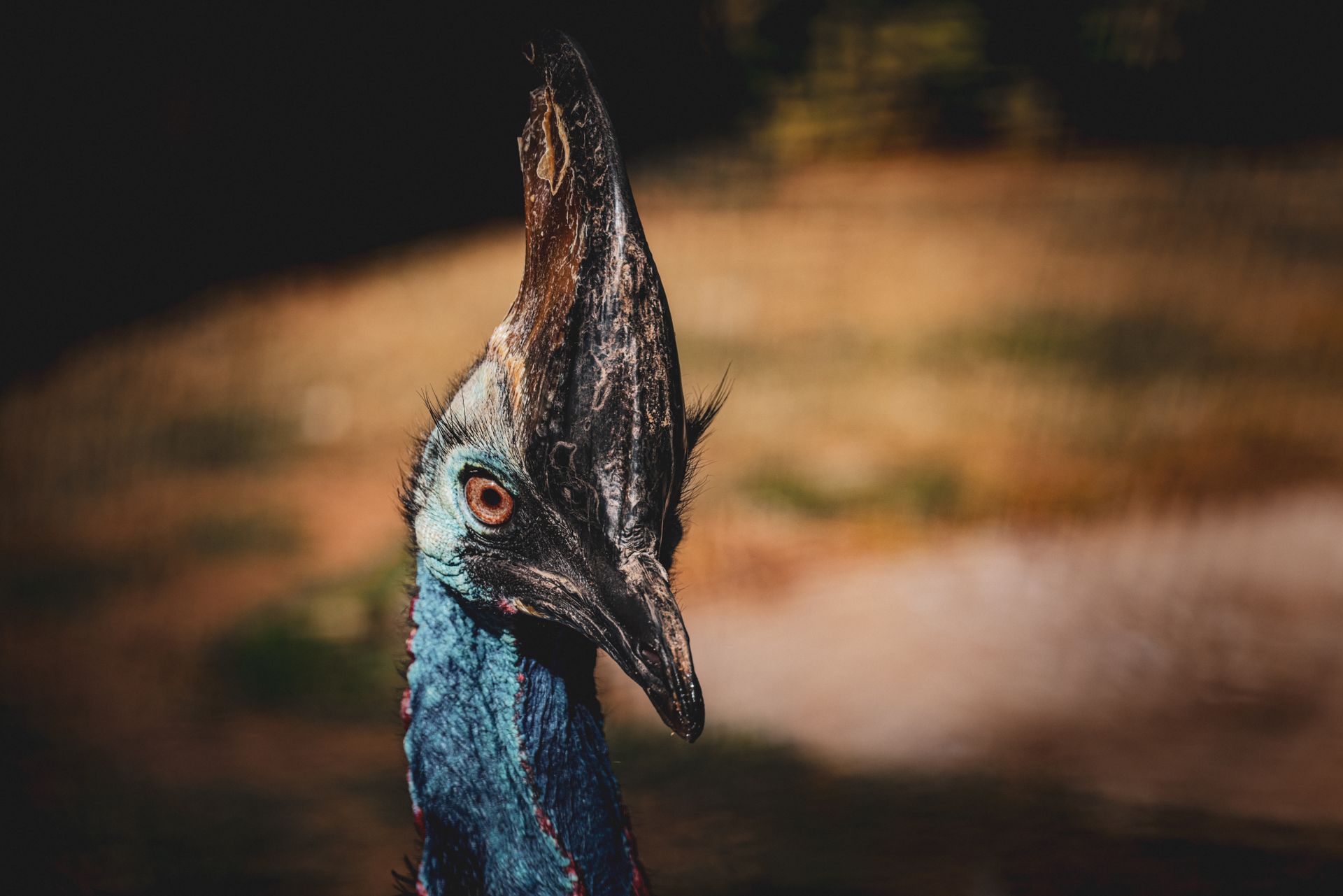
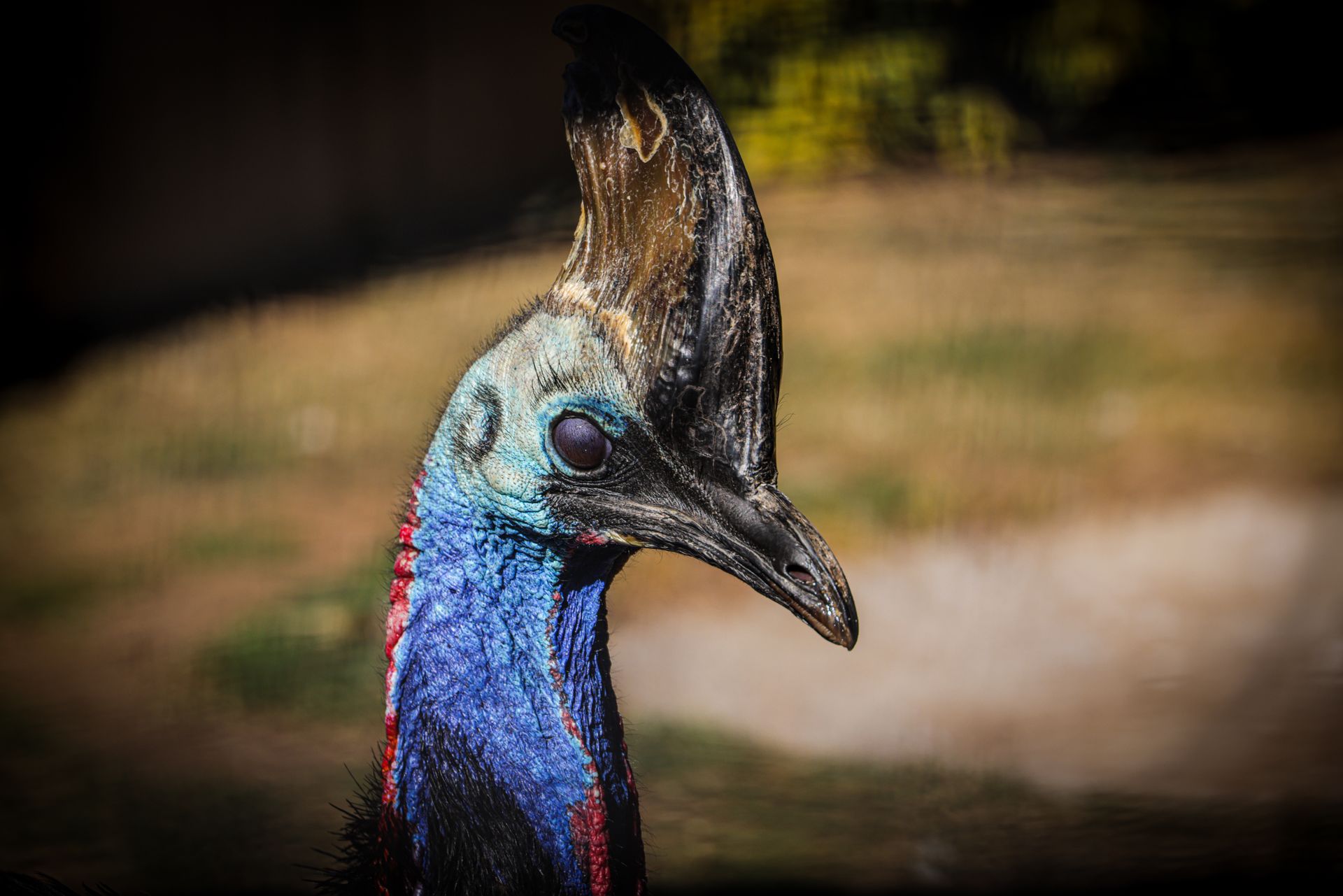
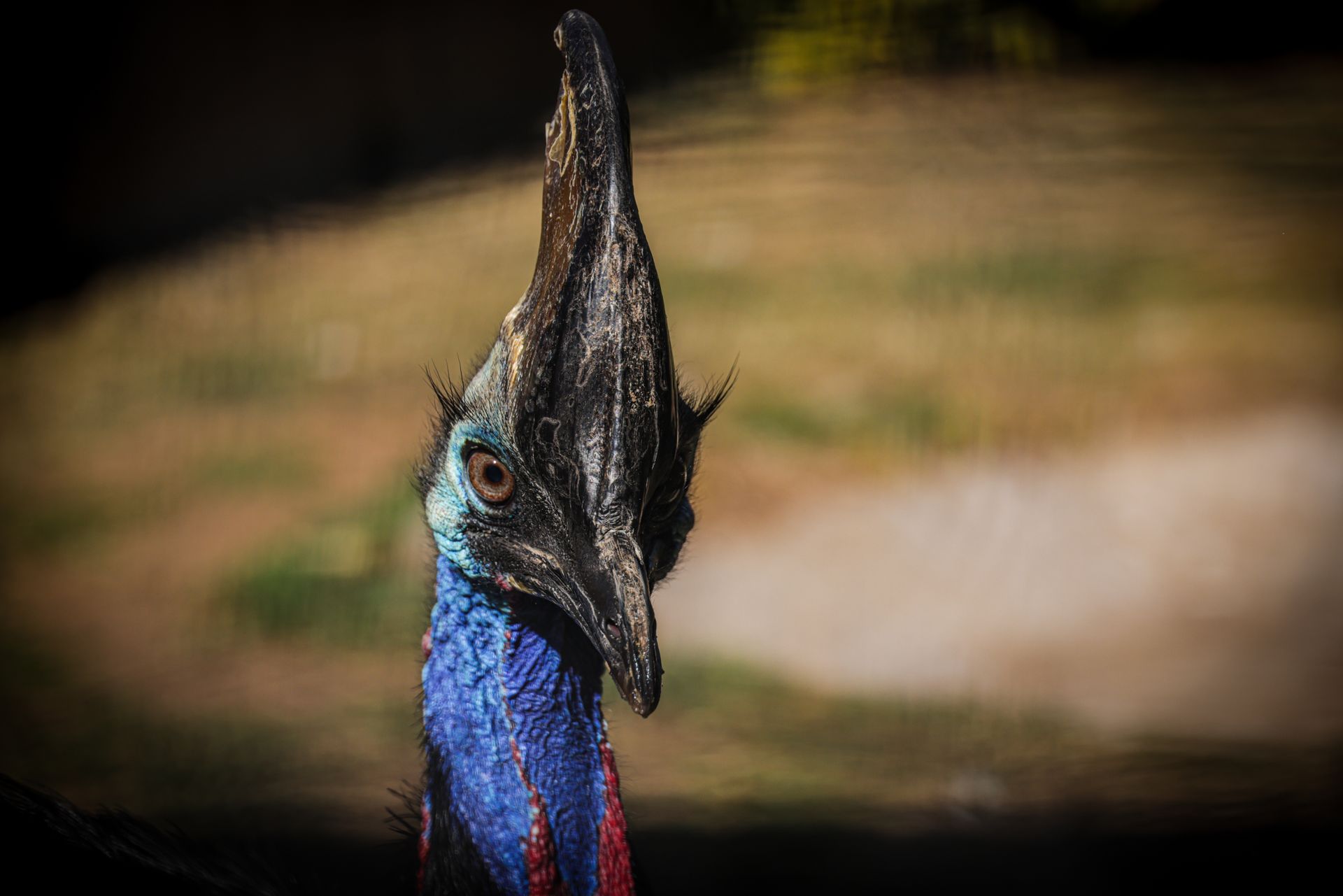
Cassowaries are known for their distinctive casque, a fleshy growth on their heads that can be up to 15 centimeters tall.
These birds are primarily solitary animals, only coming together during breeding season.
In the wild, they play a crucial role in dispersing seeds and maintaining the balance of their ecosystem.
A unique perspective: Australian Wild Dog
Physical Characteristics
The southern cassowary has stiff, bristly black plumage, a blue face, and a long neck, with red on the cape and two red wattles hanging down around its throat.
These wattles can measure up to 17.8 cm (7.0 in) in length, and the horn-like brown casque on its head can be up to 16.9 cm (6.7 in) high.
Consider reading: Red Australian Shepard
The bill of the southern cassowary can range from 9.8 to 19 cm (3.9 to 7.5 in) in length, and the three-toed feet are thick and powerful, equipped with a lethal dagger-like claw up to 12 cm (4.7 in) on the inner toe.
Adult cassowaries can weigh between 17 and 70 kg (37 and 154 lb), with females averaging 58.5 kg (129 lb) and males averaging 29 to 34 kg (64–75 lb).
Cassowaries are the third tallest bird in the world, with an adult standing up to six feet tall, and they're heavy, with females weighing as much as 167 pounds (76 kilograms).
Range and Habitat
The southern cassowary is a unique bird species found in various parts of the world, including Indonesia, Papua New Guinea, and northeastern Australia. Its preferred habitat is tropical rainforests, but it can also be found in nearby savannah forests or mangroves.
In Australia, the southern cassowary prefers elevations below 1,100 meters, while in New Guinea, it's found at elevations below 500 meters. This bird is capable of adapting to different environments, which is essential for its survival.
The southern cassowary's home range can be quite large, covering up to 2.35 square kilometers. They're also known to be territorial, which means they fiercely defend their territory from other cassowaries.
Here's a breakdown of the breeding populations of southern cassowaries in different locations:
Behavior and Social Structure
Cassowaries are solitary animals, only coming together to mate during the breeding season from May or June to October. They don't form permanent bonds or mate for life, and females may mate with several male cassowaries in a breeding season.
Cassowaries have a unique social structure, where females will lay clutches of eggs for different fathers, and males will incubate and raise the chicks. This means that a single female can have multiple nests and chicks with different fathers.
Cassowaries are most often found in rainforest, but also use woodlands, melaleuca swamps, mangroves, and even beaches as food sources and connecting habitat. Their home territories can be quite large, with some birds having ranges of up to 7km².
Behaviour
Cassowaries are frugivores, eating the fruits from 238 plant species. This unique diet makes them a crucial part of their ecosystem.
They play a vital role in seed dispersal and germination, earning them the title of 'keystone' species. Many species rely on them for this purpose.
Cassowaries also occasionally eat small vertebrates, invertebrates, fungi, and carrion. This varied diet helps them survive in their environment.
In the wild, cassowaries can live up to 40 years. This impressive lifespan is a testament to their adaptability and resilience.
Male cassowaries incubate the eggs for 50 days, while the female leaves after laying her clutch. This unique parental arrangement is a fascinating aspect of cassowary behavior.
Cassowaries make deep booming and rumbling noises, and hiss when threatened. These distinctive sounds serve as a warning to potential predators.
Their large feet have three toes, with a long claw up to 12 cm in length. This impressive claw is used for scratching and fighting, but can also inflict serious injuries if used against humans.
Solitary, Except When Mating
Cassowaries are generally solitary birds, only coming together to mate during the breeding season which runs from around May or June to October.
They don't form permanent bonds or mate for life, and the females may mate with several male cassowaries in a breeding season.
Female cassowaries will produce several nests, laying clutches of three to five eggs by different fathers.
The Secret Lives
Cassowaries are solitary animals, and once they've established their home range, they move regularly through that area.
Their home territories average around 0.52km² to 2.35km², but can be much larger in certain areas like the rainforests of the Atherton Tableland or the Daintree.
Females tend to have overlapping ranges with several males, which is a pretty unique setup in the animal world.
Cassowaries can be found in a variety of habitats, including rainforest, woodlands, melaleuca swamps, mangroves, and even beaches.
They seem to prefer a mix of these environments, especially in coastal areas like around Mission Beach.
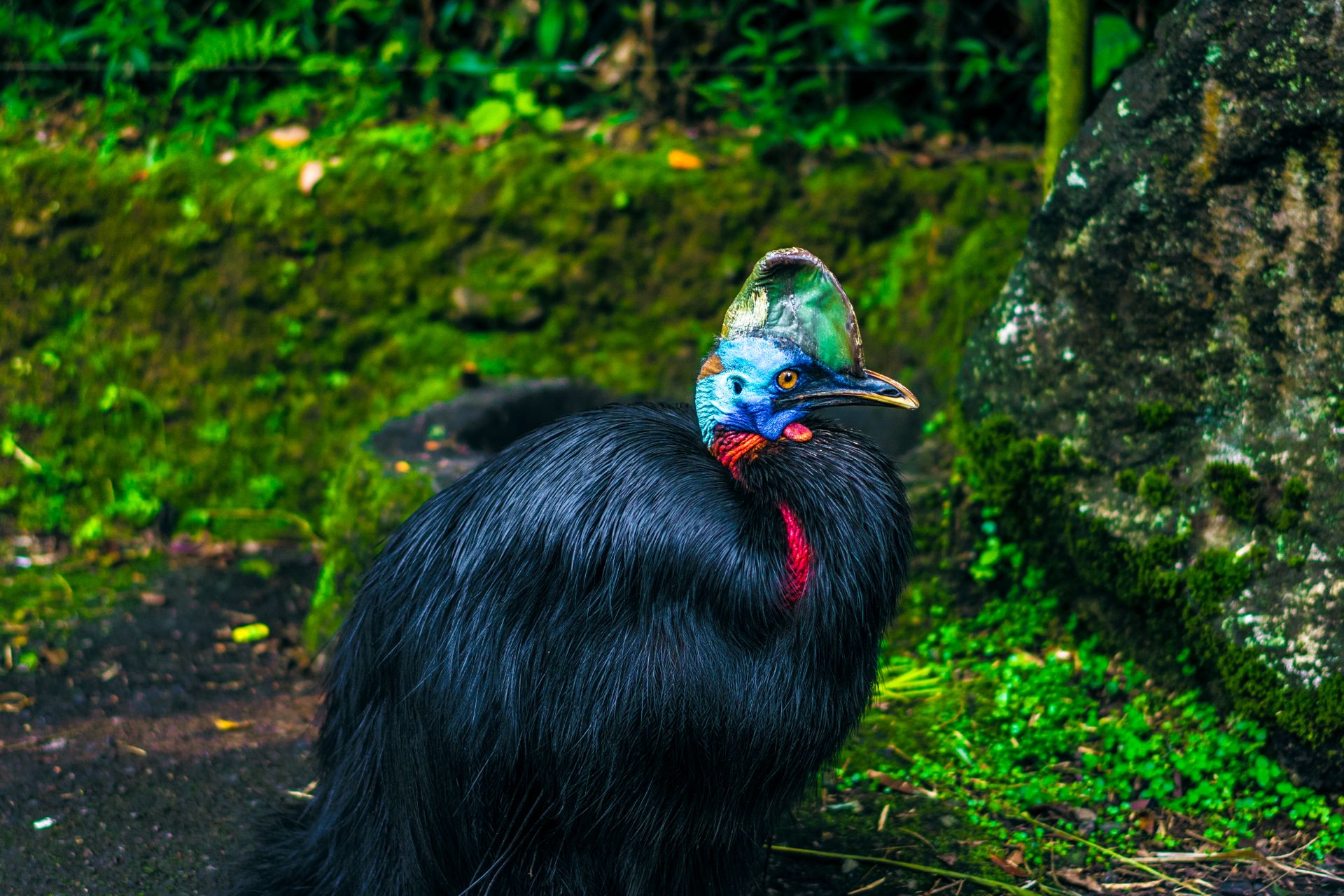
Males play a crucial role in raising the young, incubating eggs and caring for chicks until they're able to fend for themselves.
This is a vulnerable time for young cassowaries, as they're more likely to get chased by dogs, hit by vehicles, or attacked by adult cassowaries.
It's a challenging time for them to find food and navigate their new surroundings, making it a critical period in their development.
The Purpose of the Cassowary’s Casque Is Unknown
The purpose of the cassowary's casque is still unknown.
Some researchers believe the casque may indicate dominance and age as it continues to grow throughout the bird's life.
It's also thought to help cassowaries "hear" the low vibrating sound made by other cassowaries.
The casque may also act as a shock-absorber that protects the bird's head as it pushes through dense rainforest and scrub thickets.
Conservation and Threats
The southern cassowary is facing several threats, including habitat loss, overhunting, and roadkill. The International Union for Conservation of Nature (IUCN) evaluated it as Least concern in 2018, but the Australian population is listed as Endangered under federal law.
Feral animals, such as pigs, are also eating their eggs, and road-building is a significant threat. In fact, roadkill is the number one cause of adult cassowary deaths. The Australian population is estimated to be between 1,500 and 2,500 individuals.
The southern cassowary has been bred in zoos around the world, including White Oak Conservation in Yulee, Florida, United States. A draft recovery plan to save the species was published by the federal government in June 2023, at which time there were estimated to be around 5,000 individuals in Australia.
Here are some of the main threats to cassowaries in the Wet Tropics:
- land clearing, particularly in the coastal lowlands and Atherton Tableland
- fragmented habitat (especially from roads and subdivisions)
- vehicle traffic (road kills are the number one cause of adult cassowary deaths)
- dogs (which are especially aggressive to chicks and juveniles)
- feral pigs (impact on their habitat)
- cyclones
Conservation
The southern cassowary is facing several threats to its survival, including habitat loss, overhunting, and roadkill. These threats have led to the species being listed as Endangered under the Australian federal government's EPBC Act.
The Australian population of southern cassowaries is estimated to be between 1,500 and 2,500 individuals, and a draft recovery plan was published by the federal government in June 2023 to help save the species.
Feral animals are another significant threat to southern cassowaries, as they eat their eggs and compete with them for food. A study published in Biological Conservation in March 2023 found that the species no longer meets the criteria for being threatened under the EPBC Act.
The southern cassowary has been bred in zoos around the world, including the White Oak Conservation in Yulee, Florida, United States. This breeding program helps to increase the population of the species and reduce the risk of extinction.
The IUCN Red List has evaluated the southern cassowary as Least Concern, but the Australian population is still listed as Endangered. The Nature Conservation (Animals) Regulation 2020 in Queensland lists the northern population as Vulnerable, while the southern population remains Endangered.
Here is a summary of the conservation status of the southern cassowary:
- IUCN Red List: Least Concern
- EPBC Act: Endangered
- Nature Conservation (Animals) Regulation 2020 (Queensland): Vulnerable (northern population), Endangered (southern population)
Threats
Habitat destruction and fragmentation are the main causes of the cassowary's dramatic decline. Land clearing for farming and urban development has greatly reduced their habitat, with over 80% of coastal lowland rainforest cleared over the past century.
Cyclones in 2006 and 2011 also depleted their food sources, leading to starvation. This makes them more vulnerable to existing threats, especially dog attacks and collisions with vehicles.
Road accidents are a large source of mortality, with vehicle traffic being the number one cause of adult cassowary deaths. In rare cases, it may be necessary to relocate a problem bird, which is upsetting for both the cassowary and the local community.
Feeding native animals can lead to changes in health and behavior that aren't immediately obvious. The best way to avoid this is to be cass-o-wary and not feed them.
Here are the main areas in the Wet Tropics that are 'hot spots' for cassowaries:
Breeding
The southern cassowary is a solitary bird, but it's a romantic at heart, pairing up only in breeding season, which usually falls in late winter or spring.
A male southern cassowary takes on the role of a devoted dad, building a nest on the ground that's up to 100 centimetres wide and 5 to 10 centimetres thick with herbaceous plant material.
The male carefully lays out this nest to ensure moisture drains away from the eggs, which is crucial for their development.
A clutch of three or four eggs are laid, measuring 138 by 95 millimetres, and have a distinctive granulated surface and bright pea-green colour that fades with age.
During mating season, the male southern cassowary lets out a thunderous call that's sure to be heard for miles.
The male also takes on the responsibility of incubating the eggs and raising the chicks alone, a remarkable display of dedication and care.
Chicks make frequent high-pitched contact whistles and chirps to call the male, a sweet sound that's music to the ears of any cassowary parent.
Safety and Interactions
People who live in cassowary territory have a healthy respect of the big bird, and you should too. Their heavy, muscular legs have three toes and each toe bears a large claw up to 0.79 inches long, shaped like a dagger and used for fighting and scratching.
Never feed cassowaries, as it can make them bold and aggressive towards people. Fines apply for feeding them intentionally or unintentionally.
Here are some key things to keep in mind:
- Never feed cassowaries, fines apply.
- Never allow the cassowary to access your food.
- A cassowary that has been fed by the roadside begins to associate cars with food, increasing the risk of the bird being hit and killed by a car.
- Always keep food, cooking and cleaning items secure.
Give cassowaries space, as they're wild animals and can be unpredictable. Never approach an adult cassowary or a cassowary chick, and always keep a safe distance while taking photos.
They Can Cause Harm
Cassowaries are not to be underestimated - their heavy, muscular legs can do serious damage to people and other birds. Their sharp claws, up to 0.79 inches long, are shaped like daggers and used for fighting and scratching.
Male cassowaries can be aggressive when defending their chicks, so it's best to admire them from a safe distance. This is especially true if you see a cassowary chick or get between a chick and its dad - the dad will defend his young fiercely.
Never approach an adult cassowary, as they're wild animals and can be unpredictable. If you see one, keep a safe distance and don't try to take a photo - it's not worth the risk.
Broaden your view: Humidifiers Safe
If you live in cassowary territory, you may have seen signs warning not to feed them. It's not just a suggestion - fines apply for feeding cassowaries. This is because fed cassowaries can become bold and aggressive towards people, and may even associate cars with food, increasing their risk of being hit and killed.
What to Do If
If you're in a situation where you're being followed or harassed, try to stay calm and trust your instincts. If you feel uncomfortable or threatened, trust your gut and get to a safe place as quickly as possible.
If you're being approached by a stranger, ask yourself if they're being overly friendly or pushy. If they're making you feel uneasy, politely but firmly tell them you're not interested in talking.
If you're being asked for personal info or money, don't give in to pressure or threats. Remember, scammers often use high-pressure tactics to get what they want.
If you're in a situation where you're being physically threatened, prioritize your safety above all else. Get to a safe place, call for help, and don't try to handle the situation on your own.
If you've been a victim of online harassment, report it to the platform or website immediately. Most online platforms have strict policies against harassment and will take action to protect you.
Species Information
The Southern Cassowary is a unique and fascinating bird species. It's found in the tropical regions of northern Australia and southern New Guinea.
This bird is known for its impressive size, reaching heights of up to 2 meters and weighing up to 66 kilograms. It's also recognized by its distinctive casque, or crest, on its head.
The Southern Cassowary is a herbivore, feeding on a variety of fruits, leaves, and seeds.
The Dinosaur Bird
The cassowary is often referred to as the dinosaur bird due to its unique characteristics.
Cassowaries are one of the earliest types of birds to have developed, with some species still existing today.
The cassowary's distinctive casque, or helmet, is unique to every individual and may help them feel low vibrating sounds made by other cassowaries over long distances.
Cassowaries have a long, glossy black plumage that is coarse and hair-like, unlike other birds.
Their feathers have a quill that splits in two and lack the barbules that normally hold birds' feathers together.
The cassowary's unusual sense is shared by a few modern animals, including elephants.
Species Information
The Southern Cassowary is a species that's been around for a while, with some estimates suggesting it's been on our planet for over 100,000 years.
This bird is native to the tropical regions of Australia and New Guinea, where it inhabits areas with dense rainforests and mangrove swamps.
It's a large bird, reaching heights of up to 6 feet and weighing as much as 120 pounds.
The Southern Cassowary is known for its distinctive black plumage and casque, a fleshy growth on its head that's thought to be an indicator of age and sex.
Unfortunately, the Southern Cassowary is listed as vulnerable due to habitat loss and hunting.
Conservation efforts are underway to protect the Southern Cassowary and its habitat, including the creation of protected areas and education programs to raise awareness about the species' plight.
You can help by supporting organizations that work to protect the Southern Cassowary and its habitat, and by spreading the word about the importance of conservation.
Suggestion: Protect Plants
Frequently Asked Questions
Why are cassowaries so special?
Cassowaries are special due to their unique role as rainforest gardeners, dispersing seeds and maintaining the diversity of the Wet Tropics rainforest ecosystem. They play a vital part in shaping the rainforest's landscape and plant life.
Featured Images: pexels.com