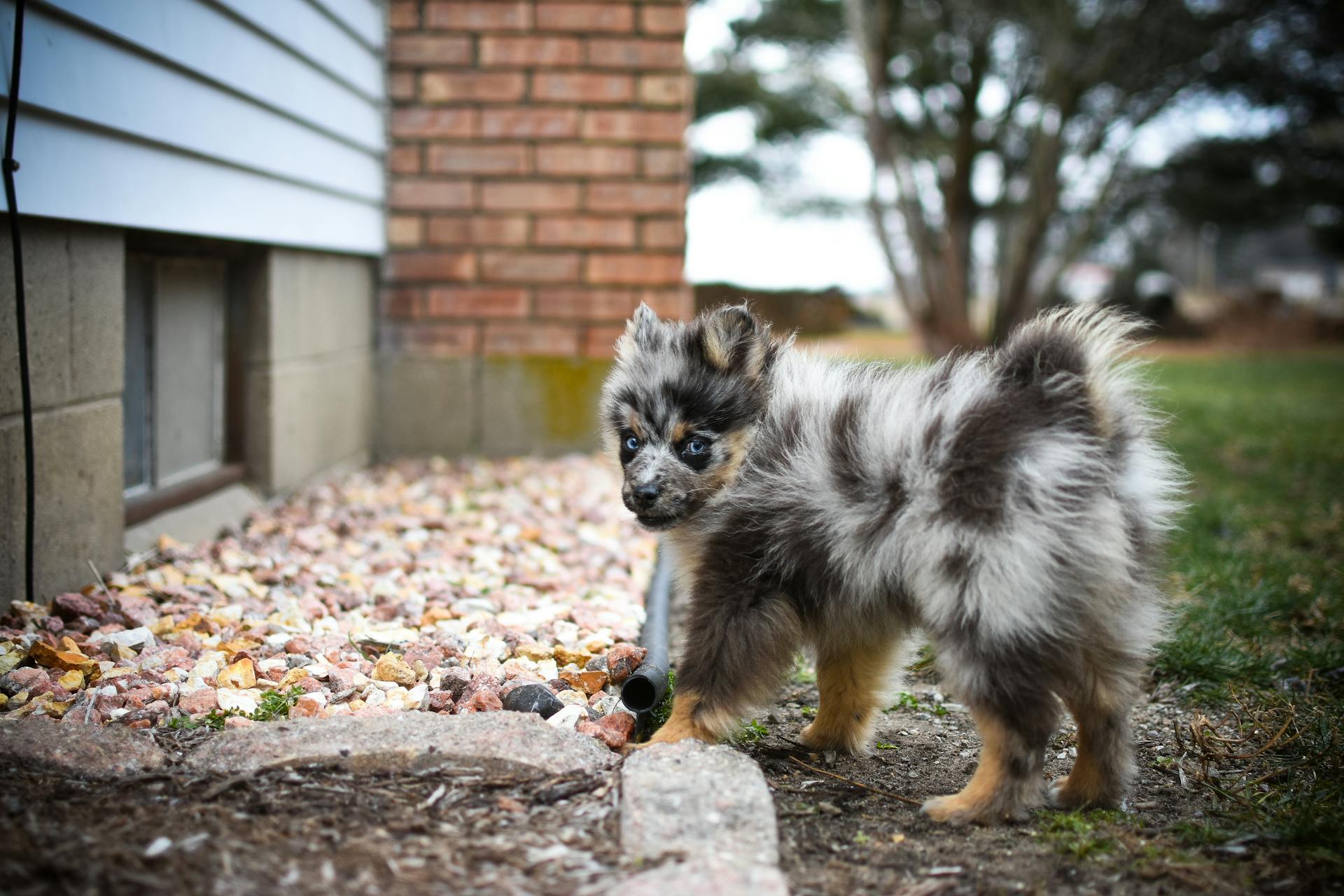
The Australian Heeler is an energetic and intelligent breed that thrives on physical and mental stimulation. They're known for their distinctive blue or red speckled coats and piercing eyes.
Australian Heelers were originally bred in Australia in the 19th century to herd cattle and sheep, and their strong work ethic and herding instincts remain strong today.
They're a medium-sized breed, typically weighing between 25-35 kg and standing between 43-51 cm tall at the shoulder.
Characteristics
Australian heelers are known for their unwavering work ethic, making them a great companion for outdoor activities like running or hiking. They'll happily become your next buddy for a workout.
Their distinct coat is a trademark of the breed, but surprisingly, blue heeler puppies are born with white fur that turns blue or red over their first few months of life, often with speckles or a mottled pattern.
Here's a breakdown of their characteristics:
Appearance
The Australian Cattle Dog is a sturdy, muscular, compact dog that gives the impression of agility and strength.
Its broad skull flattens to a definite stop between the eyes, with muscular cheeks and a medium-length, deep, powerful muzzle.
The ears are pricked, small to medium in size and set wide apart, with a covering of hair on the inside.
The eyes are oval and dark, with an alert, keen expression.
The neck and shoulders are strong and muscular; the forelegs are straight and parallel; and the feet round and arched, with small, sturdy toes and nails.
The breed standard emphasizes the importance of well-conditioned muscles, even in companion or show dogs.
Its appearance should be symmetrical and balanced, with no individual part of the dog exaggerated.
The Australian Cattle Dog should not look delicate or cumbersome, as this would limit its agility and endurance.
Curious to learn more? Check out: Small Dog Boarding
Coat and Colour
The Australian Cattle Dog's coat is a beautiful combination of red and blue colours. Both colours are accepted and have distinct characteristics.
The red coat is evenly speckled with solid red markings. Red dogs can also have a brown (red) patch "mask" on one or both sides of the head.
Related reading: Shiba Inu Coat
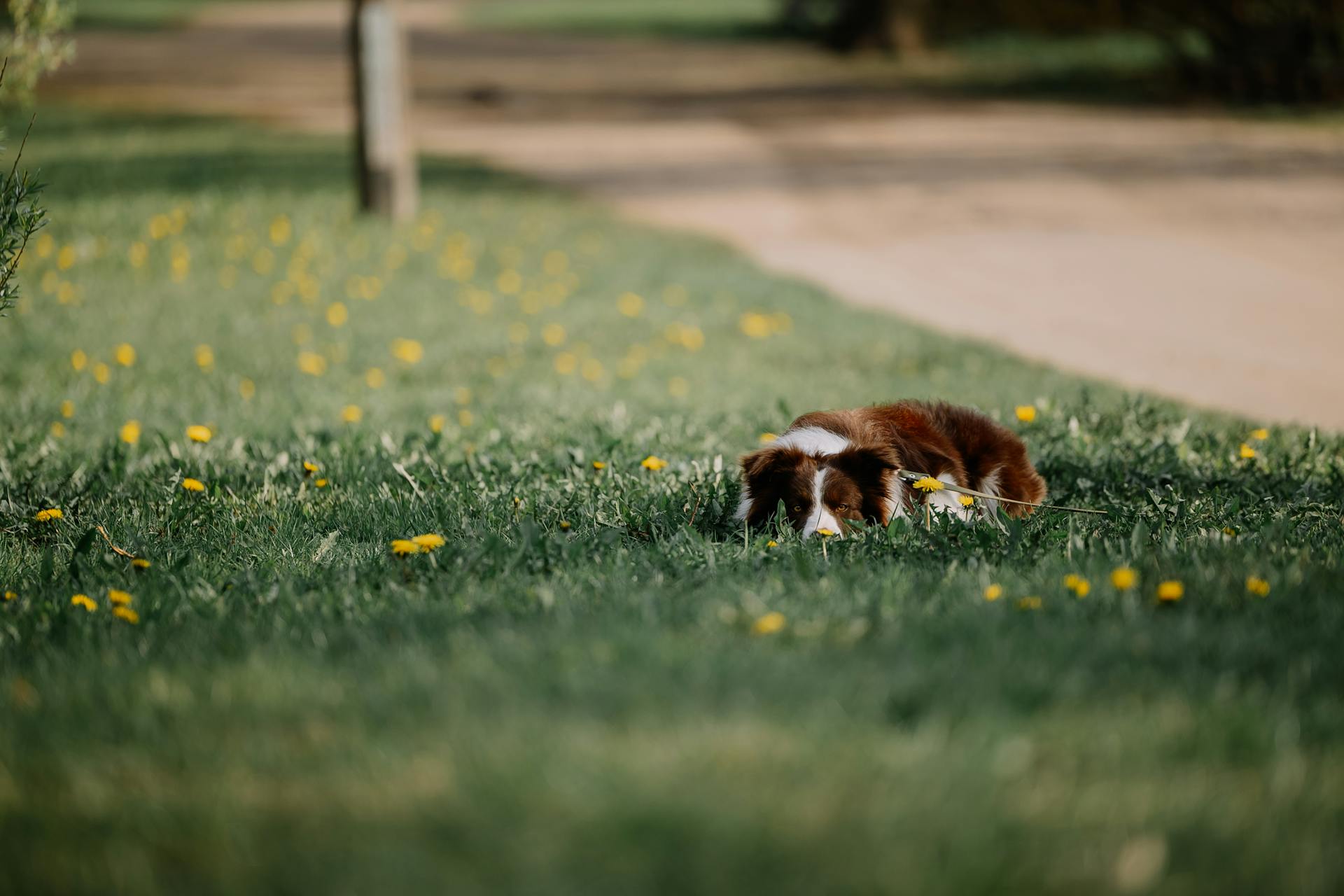
Blue dogs, on the other hand, can be blue, blue mottled, or blue speckled with tan on the legs and chest. They often have white markings and a black patch or "mask" on one or both sides of the head.
Both red and blue dogs are born white, with the red or black hairs showing from around four weeks of age as they grow and mature. This distinctive adult colouration is the result of black or red hairs closely interspersed through a predominantly white coat.
The ticking gene is responsible for this effect, which is not the same as merle colouration. A number of breeds show ticking, but the overall effect depends on other genes that modify the size, shape, and density of the ticking.
In addition to the primary colouration, Australian Cattle Dogs display some patches of solid or near-solid colour. These can include masks over one or both eyes, a white tip to the tail, and sometimes solid spots on the body.
The mask is a distinctive feature of the breed, consisting of a black patch over one or both eyes for blue-coated dogs or a red patch for red-coated dogs. Dogs without a mask are called plain-faced.
21 Breeds for Outdoor Adventures
If you're looking for a dog breed that can keep up with your outdoor adventures, you'll want to consider a sturdy breed that can handle the demands of hiking, camping, and more.
Some of the most adventurous dog breeds include the Blue Heeler, a mix of Australian Cattle Dog and Dingo that's known for its intelligence, agility, and endurance.
The price of a Blue Heeler puppy can vary depending on the location and breeder, but you can find them for as low as $100 in some areas.
Here are some prices for Blue Heeler puppies in different locations:
These prices are just a few examples of what you might find, and the actual cost of a Blue Heeler puppy will depend on many factors, including the breeder's reputation, the puppy's health and temperament, and more.
If you're looking for a dog that can keep up with your active lifestyle, a Blue Heeler might be a great choice – just be prepared to invest some time and money in training and caring for your new furry friend.
History of the Australian Heeler
The Australian Heeler has a rich history that dates back to the 19th century. Australian settlers bred the blue heeler to help ranchers on the ever-expanding cattle ranches in the Australian grasslands.
Ranchers needed a strong canine to handle Australia's harsh climate, and they developed the breed through many breedings and cross-breedings. Dogs brought to Australia from England were bred with the native Australian dingo to create the ancestors of the blue heeler.
In May 1980, the Australian cattle dog was accepted for registration by the American Kennel Club. The breed became eligible for show in the Working Group in September of that year.
A fresh viewpoint: Staffordshire Bull Terrier Australia
Care and Health
Blue Heelers are a high-energy breed that needs regular exercise and mental stimulation to prevent boredom and destructive behavior. They thrive in homes with fenced yards or safe outdoor spaces.
If left alone for too long, especially in small spaces, Blue Heelers can become anxious and develop behavioral issues. Bringing them along on walks, hikes, or swims is a great way to keep them happy and exercised.
Regular veterinary visits are crucial for detecting health problems early on. A health survey found that orthopedic issues, cancer, deafness, eye disorders, and progressive rod-cone degeneration are common concerns in the breed.
Intriguing read: Dental Health Diets for Dogs
Caring for Your Puppy
Blue Heelers need regular exercise to stay happy and healthy, so make sure to bring your pup along on walks, hikes, and swims.
A fenced yard or safe property is a must-have for this energetic breed, as they love to run around and play.
If you live in a small space, be prepared to spend quality time with your Blue Heeler, as they don't like to be left alone for long periods.
Regular veterinary visits are crucial to screen for health problems and provide personalized recommendations for keeping your pup healthy.
Orthopedic issues, such as elbow and hip dysplasia, are a concern for 83% of Blue Heeler owners, so be sure to keep an eye out for any signs of discomfort or pain.
Deafness is another potential issue, affecting 77.4% of owners, so be mindful of your pup's hearing and adjust your communication accordingly.
You might enjoy: A Guide to Managing Healthy Weight in Your Dog This Summer
Veterinary Costs
Australian Cattle Dogs are prone to hip dysplasia, a condition that can leave a dog in significant pain and even lame if left untreated.
Hip dysplasia surgery can cost anywhere from $3,500 to $7,000 per hip, and if both hips are affected, the total cost can reach up to $14,000.
Enrolling in a pet insurance plan can provide a financial safety net for unexpected veterinary expenses, including hospitalizations, surgery, and diagnostic tests.
Pet insurance can reimburse you up to 100% for covered veterinary costs, giving you peace of mind knowing your pup will have access to gold-standard care.
Enrolling in a pet insurance plan can help you save thousands of dollars on veterinary expenses, making it a smart investment for any Australian Cattle Dog owner.
A fresh viewpoint: Best Soft Food for Dogs after Dental Surgery
Training and Behavior
The Australian Heeler is a highly intelligent breed that excels in training. They are responsive to a structured and varied training program, but may develop unwanted behaviors if training is inconsistent or repetitive.
Early socialization and training are crucial to teach them what behaviors are unacceptable, such as nipping at running kids or play too rough with other animals. This will help prevent unwanted outcomes like nipping at heels.
Australian Heelers need plenty of exercise, companionship, and mental stimulation to prevent boredom and frustration, which can lead to barking or destructive behavior. They are naturally active and require regular physical and mental activity to stay happy and healthy.
Readers also liked: Training a Dog to Protect
Temperament
The Australian Cattle Dog has high energy levels and an active mind, making them a great fit for dog sports and activities that challenge their body and mind.
This breed is highly intelligent and ranks 10th in Stanley Coren's The Intelligence of Dogs, making them one of the most trainable breeds around.
As a working dog, the Cattle Dog needs plenty of exercise and companionship to stay happy and healthy. They also need a job to do, which is why training and engaging activities are essential for their well-being.
The Cattle Dog is reserved with people they don't know and can be naturally cautious in new situations, making socialization from an early age crucial for them to become confident and friendly family pets.
They can be excellent guard dogs when trained for this task, but they will also herd people by nipping at their heels, particularly younger children who run and squeal, if they're not taught otherwise.
Explore further: Australian Stumpy Tail Cattle Dog vs Blue Heeler
By the time puppies are weaned, they should have learned that the company of people is pleasurable and that responding to cues from a person is rewarding, which can lead to a strong and loving bond between the dog and their owner.
The Australian Cattle Dog is quick to respond to the emotions of its owners and may defend them without waiting for a command, making them fiercely loyal and protective companions.
However, if unwanted behaviors are left unchecked, the Cattle Dog's protective nature and tendency to nip at heels can be dangerous as they grow into an adult.
It's essential to establish clear rules and boundaries with your Cattle Dog from an early age to ensure they grow into a well-behaved and loving companion.
Mix
A Blue Heeler Mix is a cross between a Blue Heeler and another dog breed. They're known to be energetic and loving to their family.
Their ancestors can be traced back to Australia and Europe, but one interesting fact is that they originated in the United States. This mix likely inherits this trait.
Their working dog background means they have a strong instinct to please their owners. They're smart and can learn quickly.
Expecting a Blue Heeler Mix to be similar to a Blue Heeler is a good starting point, but every dog is unique. Their individual personalities will shine through.
Their ability to learn and please their owners makes them a great candidate for positive reinforcement training. It's a win-win for both you and your furry friend.
Curious to learn more? Check out: Shiba Inu with Owner
Adopt or Buy
If you're looking to bring an Australian Heeler into your family, there are a few options to consider.
First, check your local animal shelter to see if they have any blue heelers in need of a home. I've heard that shelters often have a wide range of ages and breeds, so you might be surprised at what you find.
If you're looking for a specific breed, you can also try contacting rescue groups. A number of nationwide rescue groups for blue heelers provide online resources to find a dog.
Here are a few organizations to consider:
- Australian Cattle Dog Rescue Association
- Australian Cattle Dog Rescue, Inc.
- Australian Cattle Dog Club of America
If you're adopting an older blue heeler into a family with children, it's a good idea to check if the dog was trained or socialized.
Size and Growth
At six months old, your Australian Heeler should weigh between 23 and 27 pounds. Males tend to be slightly larger than females, so keep that in mind when tracking your pup's growth.
A healthy adult Australian Heeler typically weighs between 35 and 50 pounds, with males measuring 46-51 centimeters at the withers and females measuring 43-48 centimeters.
As for predicting your Heeler's adult size, consider their age, paw size, and genetics. If your pup is under a year old, they're likely still growing and gaining muscle. You can also check their paw size – oversized paws are a classic puppy feature, indicating they're still filling out. If you purchased your Heeler through a breeder, you can reach out to them for a more exact height and weight estimate based on their parents and previous litters.
Here's a breakdown of your Heeler's growth by age:
Size Chart: Weight & Age
As your Australian Cattle Dog grows, it's essential to monitor its weight and age to ensure it's developing at a healthy pace. The Blue Heeler size chart is a great tool to track your pup's growth.
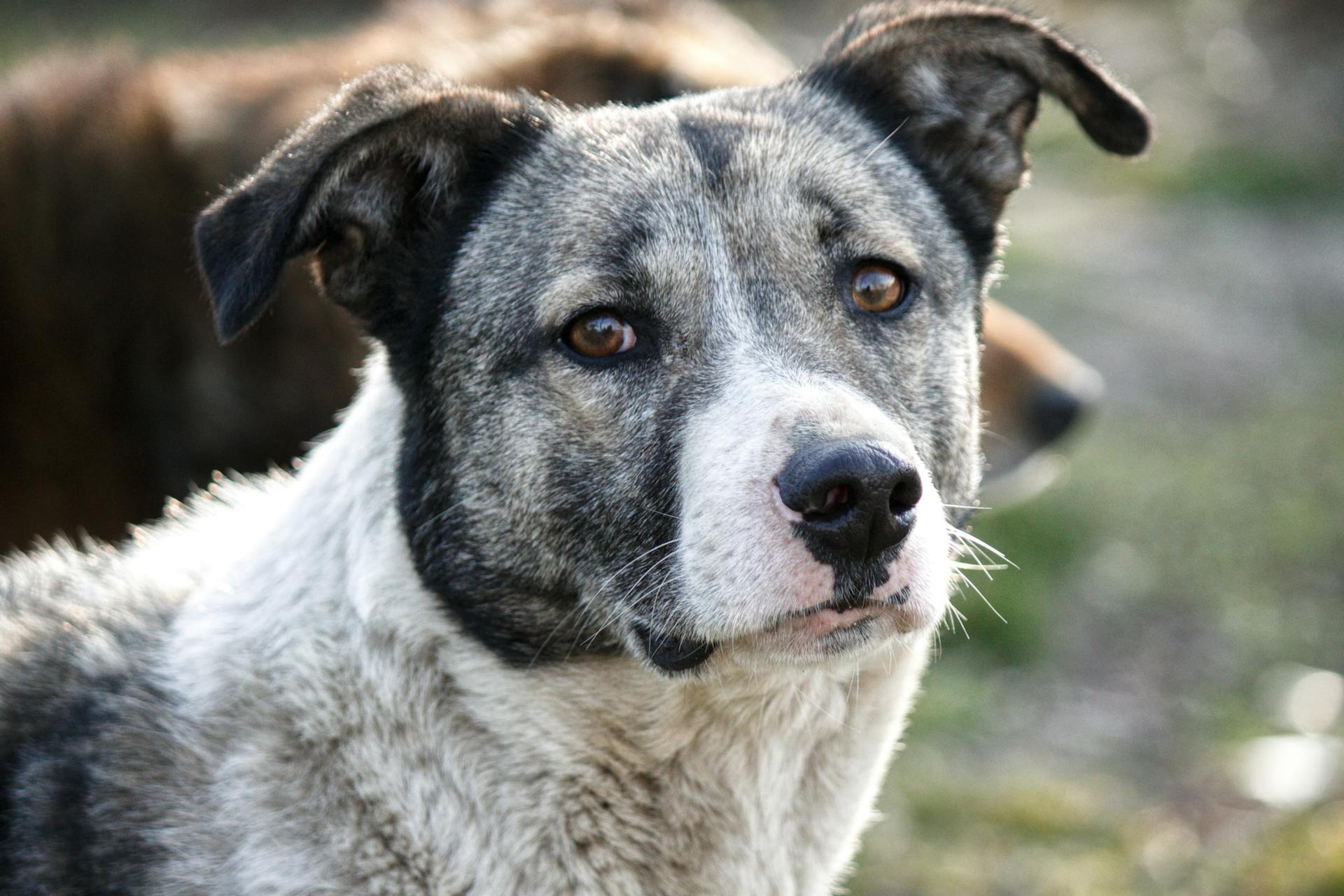
Most Blue Heelers weigh between 23 and 27 pounds at six months old. This is a general estimate, and your pup may weigh more or less, depending on its individual growth rate.
At one month, Blue Heelers typically weigh between 3 and 5 pounds. By two months, they've more than doubled in weight, ranging from 5 to 11 pounds. This rapid growth continues throughout the first year, with most Blue Heelers reaching their full weight by around 12 months.
Here's a breakdown of the average weight of Blue Heelers at different ages:
Keep in mind that these are just estimates, and your Blue Heeler's weight may vary.
When Puppies Get Their Color
As your furry friend grows, you might wonder when they'll start showing their true colors. Blue Heeler puppies get their color around four-weeks of age.
Their coat will start to change and they'll begin to look more like their adult selves. This is a significant milestone in their development, and it's exciting to see them transform.
At four weeks, their color change is just the beginning of their growth journey. They'll continue to fill out and develop their adult features over the next few weeks.
Discover more: Adult Red Heeler
Pros and Cons
Australian Heelers are a loyal breed, but they're not for every family. They require intense mental and physical stimulation or they may become bored and destructive.
Blue heelers need plenty of space to run around, both inside and outside. An apartment will feel too confining to such an energetic breed.
They don't like being left behind and want to be with their owner at all times. This means they thrive on attention and exercise.
Here are some breeds that are similar to Australian Heelers:
- Border collie
- Australian shepherd
- Texas heeler
- Miniature American shepherd
The difference between a blue heeler and a red heeler is just a coloring variation. Both breeds have the same characteristics, but the blue heeler has black hair mixing in with white, while the red heeler has reddish-brown coloring.
Overall, Australian Heelers are faithful friends and great family dogs. They get along well with other dogs and dog-friendly cats as long as they're well socialized while still young.
General Information
Australian Heelers are ready to make sure all is well. They are muscular and intelligent dogs, bred to herd and think independently, making great watchdogs.
Australian Heelers are dedicated to their families but can outwit an unsuspecting owner. Strong and agile, they need a lot of exercise to keep them mentally and physically stimulated.
They make excellent running partners, but also excel in canine sports and training exercises. If not regularly challenged, they can get into mischief.
Here's a quick rundown of their exercise needs:
- Need a lot of exercise to keep them mentally and physically stimulated
- Make excellent running partners
- Excel in canine sports and training exercises
8 Facts About
Australian Cattle Dogs, also known as Blue Heelers, are a hardworking and loving breed.
They were bred to herd and think independently, making them great watchdogs. Their muscular and intelligent nature requires a lot of exercise to keep them mentally and physically stimulated.
These dogs need a high-quality diet that meets their energy output, so it's essential to discuss their feeding needs with your veterinarian. Clean, fresh water should be available at all times.
A Blue Heeler's smooth double-layer coat protects them from the elements, but they still need regular grooming. A quick brushing once a week and the occasional bath should keep them in good shape most of the year.
Here are some key grooming tips:
Blue Heelers are highly intelligent and energetic, requiring regular training and mental stimulation to prevent boredom and destructive behavior. They excel in canine sports and training exercises, and it's essential to commit to ongoing training and socialization throughout their lifetime.
On a similar theme: Medical Dog Training
Information
The Australian Cattle Dog, also known as a Blue Heeler, is a hardworking breed that loves their family. They're perfect for outdoor enthusiasts.
Blue Heelers are sturdy dogs, with prices ranging from $100 to $650, depending on the location and breeder. You can find them in various parts of the country, including New York and Pennsylvania.
Some Blue Heeler puppies can be quite affordable, with prices starting at $100, while others may cost upwards of $650. If you're on a budget, you can find a Blue Heeler puppy for less than $200.
Discover more: In Home Dog Boarding Rates
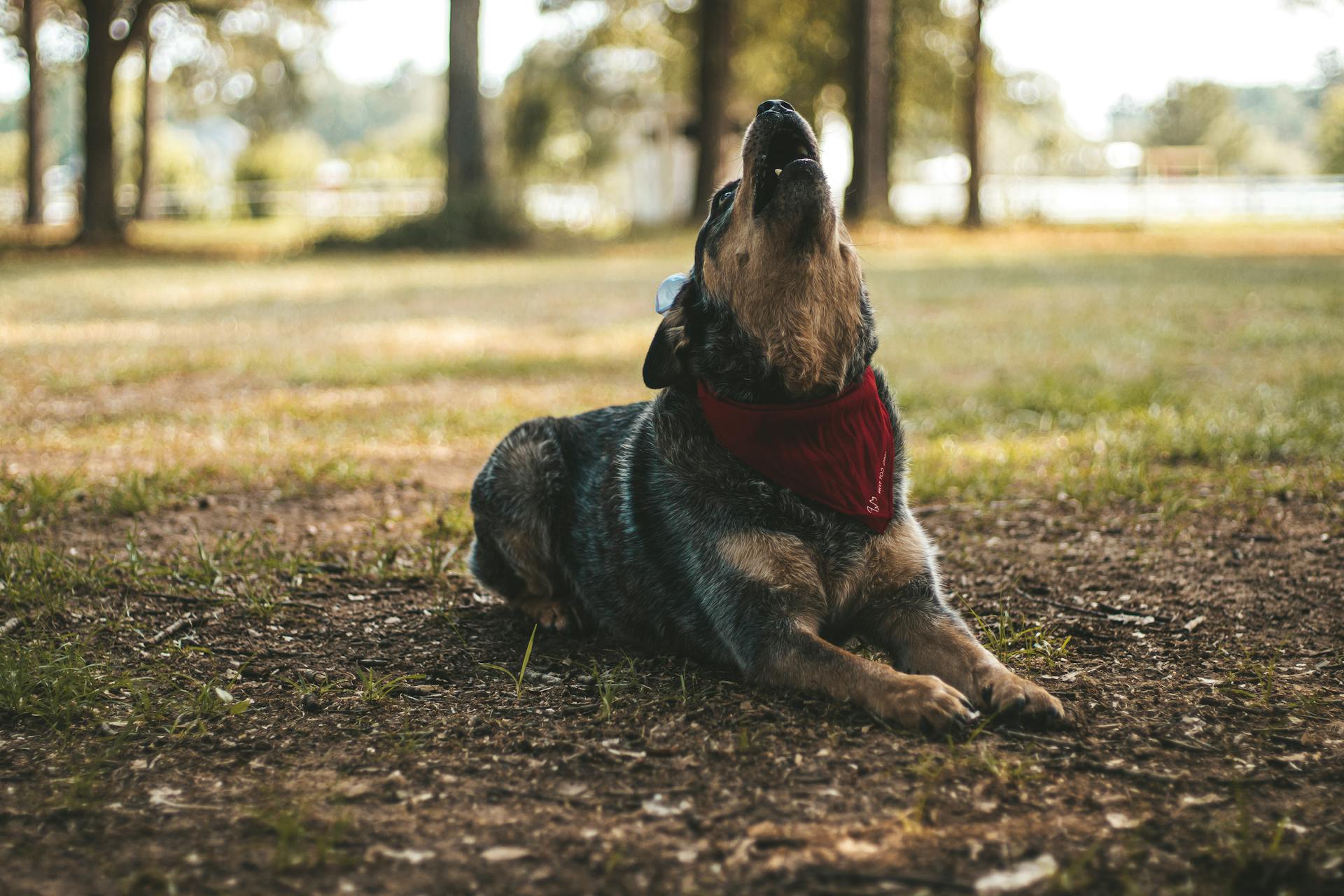
Here's a breakdown of the price range for Blue Heeler puppies:
Blue Heelers are available in various locations, including Fort Plain, New York, and East Earl, Pennsylvania. If you're looking for a specific breeder or location, be sure to check the listings carefully.
Frequently Asked Questions
Are Australian heelers good family dogs?
Australian Heelers make great family pets due to their friendly nature, making them a solid addition to many households. They thrive in a variety of living situations, from rural to urban homes.
What is the difference between a blue heeler and an Australian heeler?
There is no difference between a Blue Heeler and an Australian Heeler, as they are the same breed. However, the term "Blue Heeler" specifically refers to the blue-colored variation of the Australian Heeler.
What not to do with a blue heeler?
Don't nip or punish your Blue Heeler, and ensure they get enough exercise and space to burn off their high energy
What two dogs make a heeler?
The Australian Cattle Dog, also known as a Heeler, is a cross between blue-speckled Highland Collies and dingoes. This unique combination of breeds was first developed by Thomas Hall in Australia.
Are Queensland heelers part Dingo?
Yes, Queensland Heelers are part Dingo, as they descended from Dingoes brought to Australia around 4000 years ago. Their Dingo heritage is a key part of their unique history and characteristics.
Featured Images: pexels.com