The Eastern Diamondback Rattlesnake is a force to be reckoned with in the wild.
These snakes are found in the southeastern United States, specifically in a range that spans from North Carolina to Florida and as far west as Louisiana.
They are the largest venomous snakes in North America, growing up to 8 feet in length and weighing up to 4 pounds.
Their distinctive rattle is a warning sign that they're not to be messed with, and it's a sound that's unmistakable in the wild.
Take a look at this: Pygmy Rattlesnake North Carolina
Physical Characteristics
The eastern diamondback rattlesnake is a massive snake, with adults reaching lengths of 33-72 inches, and some individuals even growing up to 99 inches long.
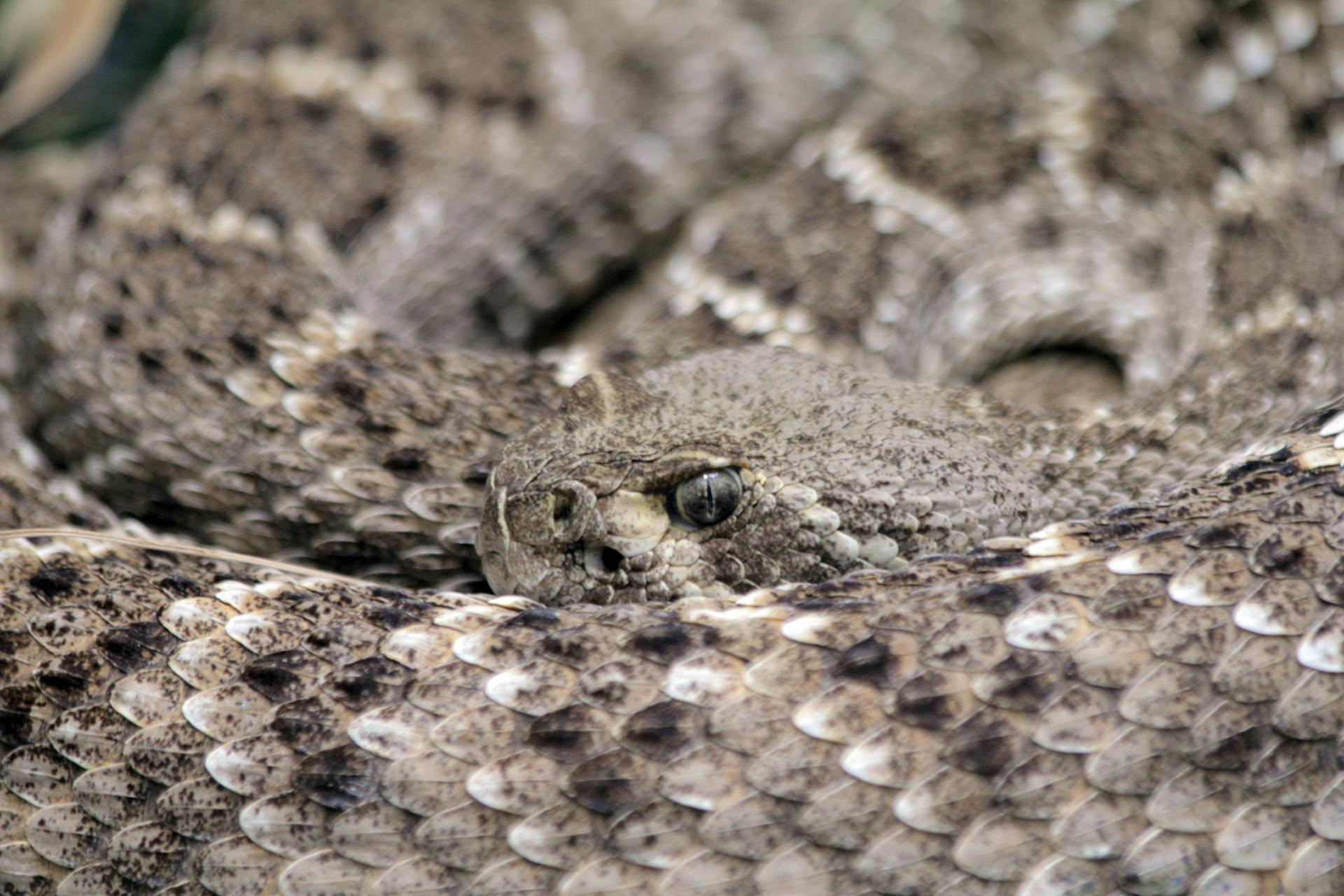
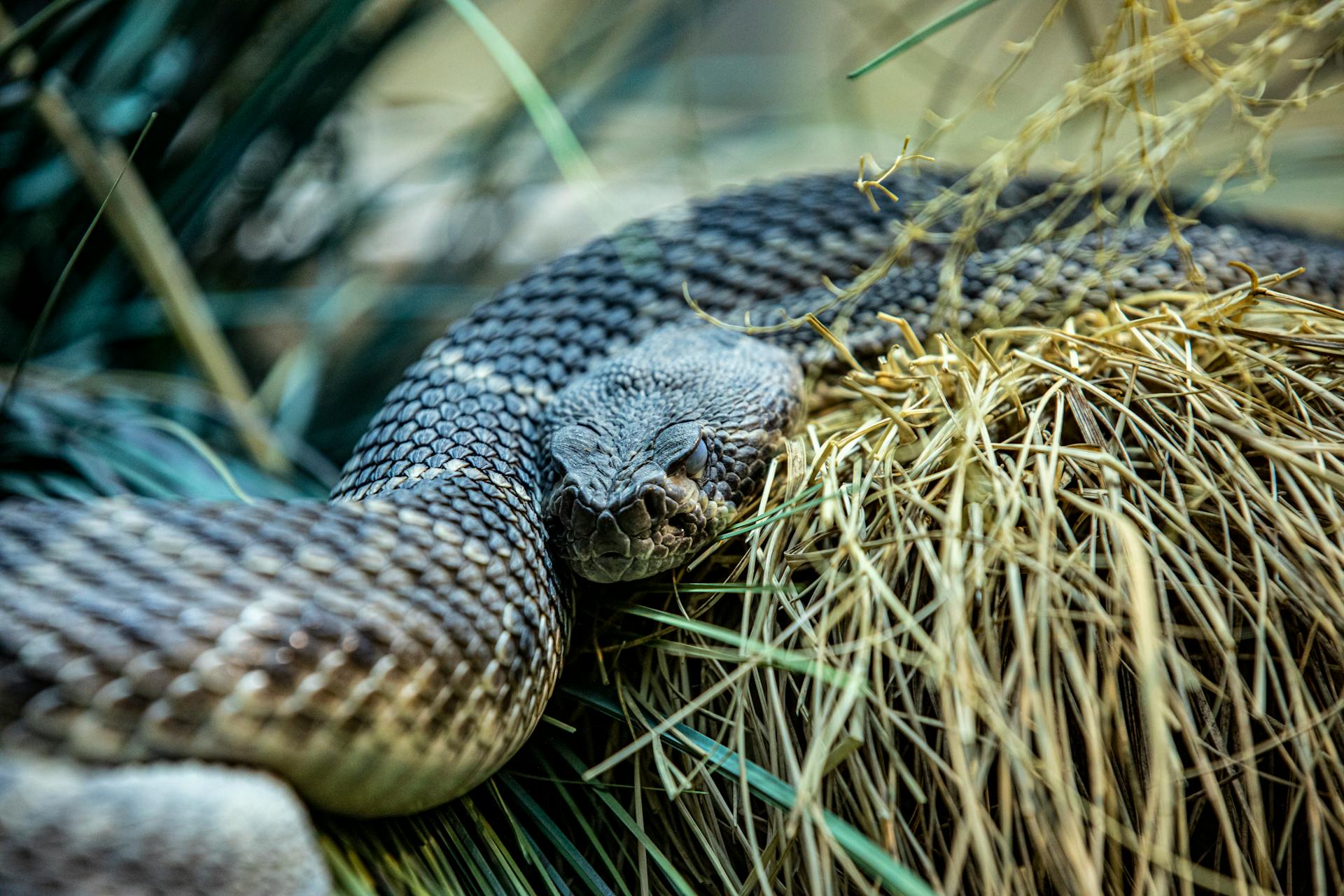
Their bodies are heavy and broad, with a distinctive row of large dark diamonds featuring brown centers and cream borders running down their backs. The ground color of their bodies is a brownish hue.
The tail of an eastern diamondback rattlesnake is a different shade of brown or gray, and as it nears the end, the diamond pattern either fades out or changes into dark bands. The tail is topped off with a rattle, which is often held above the ground.
Recommended read: Eastern Screech Owl Brown Owl North Carolina
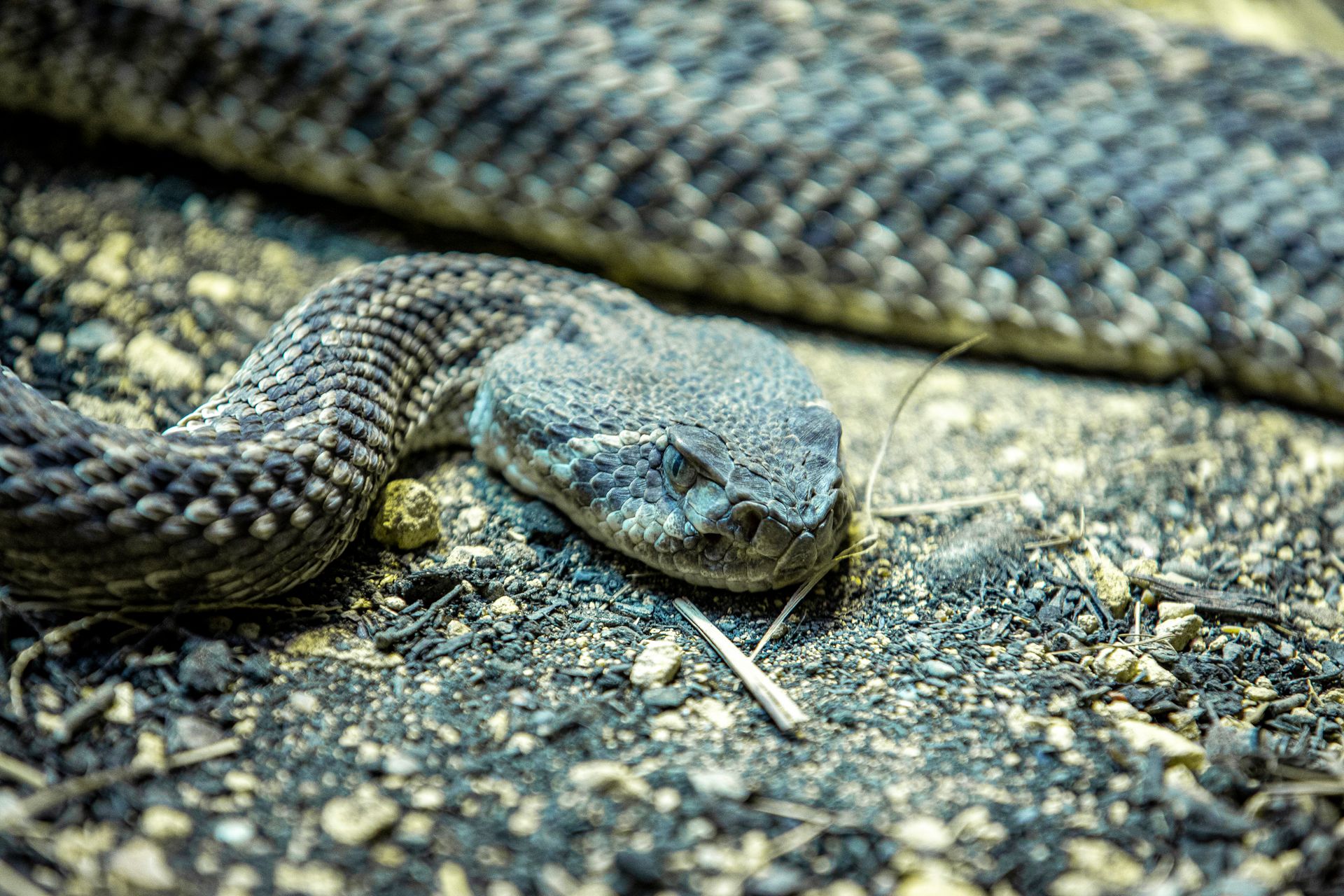
Their dorsal scales are keeled, meaning each scale has a prominent raised ridge. The large and thick head is easily distinguishable from the neck and features a light bordered dark stripe running diagonally through each eye.
The pupil of an eastern diamondback rattlesnake is vertically elliptical, similar to a cat's eye. A deep facial pit organ is located between the nostril and the eye, allowing the snake to sense heat in its environment.
Newborn eastern diamondback rattlesnakes, also known as neonates, are approximately 15 inches long when they're born, and their coloration and patterning resemble that of adults.
Geographic and Habitat Information
The eastern diamondback rattlesnake is found throughout the southeastern United States, including eastern Louisiana, southern Mississippi, Alabama, Georgia, eastern South Carolina, southern North Carolina, and all of Florida.
These snakes are highly adaptable and can inhabit a wide range of habitats, including pine flatwoods, longleaf pine and turkey oak hammocks, sand pine scrub areas, and coastal barrier islands. Their primary habitat is longleaf pine savannas.
Eastern diamondbacks are capable of swimming and can be found on most barrier islands around Florida. They often rely on prescribed fires in their habitat, which help to prevent the growth of oaks and other hardwood trees and promote the germination of pine trees and plants.
In many areas, eastern diamondbacks use burrows made by gophers and gopher tortoises during the summer and winter.
Behavior
The eastern diamondback rattlesnake is a terrestrial snake that spends most of its time on the ground, but it can occasionally be found in bushes and trees, sometimes as high as 10 m (33 ft) above the ground.
It's also a skilled swimmer, often crossing stretches of water between barrier islands and the mainland. Specimens have been spotted swimming miles from land.
Individual disposition varies, with some snakes allowing close approach while remaining silent, and others starting to rattle at a distance of 6–9 m (20–30 ft).
Venom and Threats
The eastern diamondback rattlesnake's venom is one of the most studied snake venoms, with around 40 toxins characterized. It's highly necrotizing, mildly proteolytic, and contains a large phosphodiesterase fraction.
The venom can cause severe pain, as well as profound, transient hypotension. It stimulates the release of bradykinin, which can lead to severe pain. The estimated human lethal dose is 100-150 mg.
The venom contains a thrombin-like enzyme called "crotalase" that can clot fibrinogen, leading to a reduced platelet count. Even with this defibrination, clinically significant bleeding is uncommon.
See what others are reading: Western Diamondback Rattlesnake Venom
Venom
The eastern diamondback rattlesnake's venom is a complex and potent mixture of over 100 different toxins. It's one of the most studied snake venoms, with around 40 toxins characterized.
This venom is highly necrotizing, mildly proteolytic, and contains a large phosphodiesterase fraction. It stimulates the release of bradykinin, which can result in severe pain and profound, transient hypotension.
The eastern diamondback rattlesnake's venom yield is impressive, with an average of 400-450 mg and a maximum of 858-1,000 mg. For comparison, a 1.5-meter specimen had fangs measuring 17 mm in length, while a 2.4-meter specimen would have fangs with a total length of over 25 mm.

The venom's high hemorrhagic activity can lead to reduced platelet counts and hemolysis of red blood cells. Even with defibrination, clinically significant bleeding is uncommon.
CroFab, Anavip, and Wyeth's ACP are effective antivenins against bites from this species. However, massive doses may be needed to manage severe cases of envenomation.
The estimated human lethal dose is 100-150 mg, which is a sobering reminder of the potential danger posed by this venom.
Risk Assessment for People and Pets
The Eastern Diamond-backed Rattlesnake is a large and impressive snake, and bites can be very dangerous to people and pets. Bites from this snake can be fatal if not treated promptly.
The victim should seek immediate medical care from a physician or hospital experienced in treating snakebites. This is crucial for effective treatment and minimizing damage.
Eastern Diamond-backed Rattlesnakes are not aggressive and avoid direct contact with people and pets. They generally only bite when they feel threatened or cornered.
Most bites occur when the snakes are intentionally molested or accidentally stepped on. This is often a result of humans not giving them enough space.
This is a snake that should be simply left alone and not bothered.
Conservation and Management
The eastern diamondback rattlesnake is in decline throughout its range, including in Florida. However, there's hope on the horizon.
Historically, rattlesnake roundups were a major threat to this species, but many of these events have been converted into conservation festivals. These festivals help educate communities about the importance of these snakes.
Proper habitat management and restoration is crucial for the eastern diamondback's survival. Restoring their habitat through prescribed fires will provide a safe space for them to live, reproduce, and forage.
The species' slow life history, high habitat specificity, and minimal dispersal ability make it difficult for them to adapt to habitat loss and fragmentation.
Diet and Feeding
Eastern diamondback rattlesnakes are skilled hunters, and their diet reflects their adaptability to their environment. They primarily feed on mammals, which they can ambush or actively pursue by following scent trails.
Rabbits, cotton rats, and mice are common prey for adult eastern diamondback rattlesnakes. These snakes are also known to eat squirrels and birds, although this is less frequent.
Juvenile eastern diamondback rattlesnakes tend to prefer smaller prey, such as mice and rats. This preference likely helps them develop hunting skills and build up their strength.
These snakes have a unique hunting style, often sitting and waiting for unsuspecting prey to come close.
Broaden your view: What Do Western Rattlesnakes Eat
Comparison and General Information
The Eastern Diamond-backed Rattlesnake is a unique creature, but it's not the only one of its kind.
It's worth noting that the Timber Rattlesnake, found in other parts of the country, has a similar appearance.
The Eastern Diamond-backed Rattlesnake has a distinctive pattern of diamond-shaped markings on its back, which helps to identify it.
Its venom is potent, but it's not the only venomous snake in its range.
The Timber Rattlesnake is the only other rattlesnake with which an Eastern Diamond-backed Rattlesnake might be confused in Florida.
For another approach, see: Eastern Timber Wolf
Frequently Asked Questions
What is the difference between eastern diamondback and western diamondback rattlesnakes?
The main difference between eastern and western diamondback rattlesnakes is their behavior, with the western species being more confrontational and quicker to rattle. This distinction highlights unique characteristics of each species.
Featured Images: pexels.com