The diamondback watersnake is a fascinating species, and learning about it can be a thrilling experience. This snake is found in North America, specifically in the southeastern United States.
They inhabit areas with still or slow-moving water, such as lakes, ponds, and swamps.
Their diamond-shaped markings on their back are a distinctive feature, helping to identify them easily.
Diamondback watersnakes are generally non-venomous, but they can be quite aggressive when threatened or cornered.
Nerodia Rhombifer
The diamondback watersnake, Nerodia rhombifer, has an interesting history. It was first described by Edward Hallowell in 1852.
The scientific name for the diamondback watersnake is Nerodia rhombifer, but it was initially classified as Tropidonotus rhombifer.
The species is not currently considered threatened, as it is listed as a least concern species by the IUCN Red List.
Here are some of the classifications and categorizations for the diamondback watersnake:
- Nerodia
- Reptiles of Mexico
- Reptiles of the United States
- Extant Cenozoic first appearances
- Reptiles described in 1852
- Taxa named by Edward Hallowell (herpetologist)
Physical Characteristics
The diamondback watersnake is a large and heavy-bodied snake, typically ranging from 30-60 inches in total length, with some specimens reaching up to 69 inches.
These stout-bodied snakes have a distinctive pattern of dark blotches running down the middle of the back, connected to alternating rows of dark blotches on the sides by short diagonal lines. The belly is yellowish with dark half-moons.
The scales of the diamondback watersnake are strongly keeled, meaning each scale has a prominent raised ridge. This gives the snake a rough texture. The dorsal scales are arranged in 25-31 rows at midbody.
Newly born young are 9-13 inches in total length, and are often lighter in color, making their patterns more pronounced. As they age, they darken.
Here are some key physical characteristics of the diamondback watersnake:
- Total length: 30-48 inches (76-122 cm), with a record length of 69 inches (175.3 cm)
- Background color: dark gray to olive or yellow-brown
- Pattern: chain-like pattern of dark blotches
- Belly color: yellow or off-white with half moon-shaped brown or black markings
- Scales: heavily keeled, with 25-31 rows at midbody
Habitat and Distribution
The diamondback watersnake is a common sight near slow-moving bodies of water, such as streams, rivers, and ponds. They prefer these areas because they provide the perfect environment for hunting and basking.
In other parts of their range, these snakes can be found in a wide variety of freshwater habitats, including swamps and oxbow lakes. They tend to favor areas with overhanging vegetation, which provides them with shelter and ambush points.
Northern diamond-backed watersnakes are primarily aquatic, but they can be found relatively far from obvious bodies of water during heavy rain storms. They often bask on limbs that overhang water, dropping off into the water when disturbed.
The diamondback watersnake's range extends from the central United States to northern Mexico, covering a vast area of over 1,000 miles. They can be found in the states of Texas, Oklahoma, Kansas, and many others, including parts of California.
These snakes have been introduced to Lafayette Reservoir in California, where they reached high densities in the early 1990s. Unfortunately, the population was significantly reduced due to an unknown cause, possibly related to an El Niño weather system.
Intriguing read: Diamondback Water Snake Range Map
Behavior and Diet
Diamond-backed Watersnakes are primarily nocturnal, but they can become more active during the day in the spring and fall.
Their diet consists almost exclusively of freshwater fishes and frogs, which they overpower by grabbing with their jaws and hauling to shore.
These snakes swallow their prey after it has been subdued, indicating they are not constrictors.
How to Observe
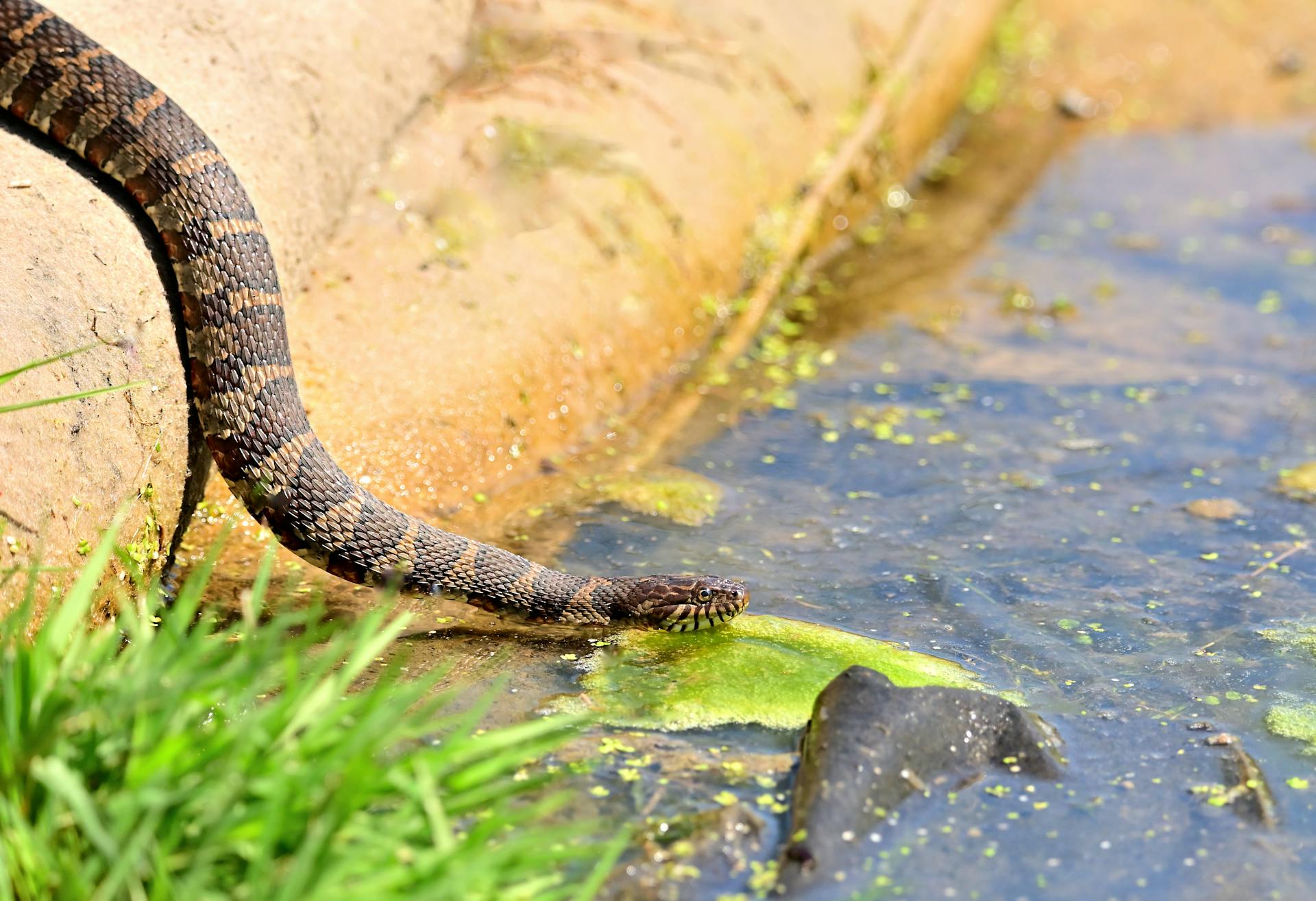
Observing these snakes can be a fun and rewarding experience. They are often found basking in the sun on top of branches that overhang water.
You can easily spot them by walking along shorelines and searching tree branches and shrubs. They frequently drop into the water when approached.
Clear rivers and streams are also great places to look for them. Simply walk just off shore in the water and search along the bank.
If the bank has cavities just under water, these snakes often occupy them.
For another approach, see: Blotched Water Snake
Behavior
Diamond-backed Watersnakes are quite skilled at finding food, often hanging from branches suspended over the water, dipping their heads under the surface until they encounter a fish or other prey.
They're frequently found basking on branches over water, and if approached, they'll quickly drop into the water and swim away.
These snakes are not typically aggressive, but will hiss and flatten their head and body to appear larger if cornered.
If physically harassed or handled, they may bite, and their bite is known to be quite painful due to their sharp teeth and slight hemotoxin in their saliva.
This defensive behavior is often misinterpreted as aggression, which is why they're sometimes mistaken for the venomous cottonmouth.
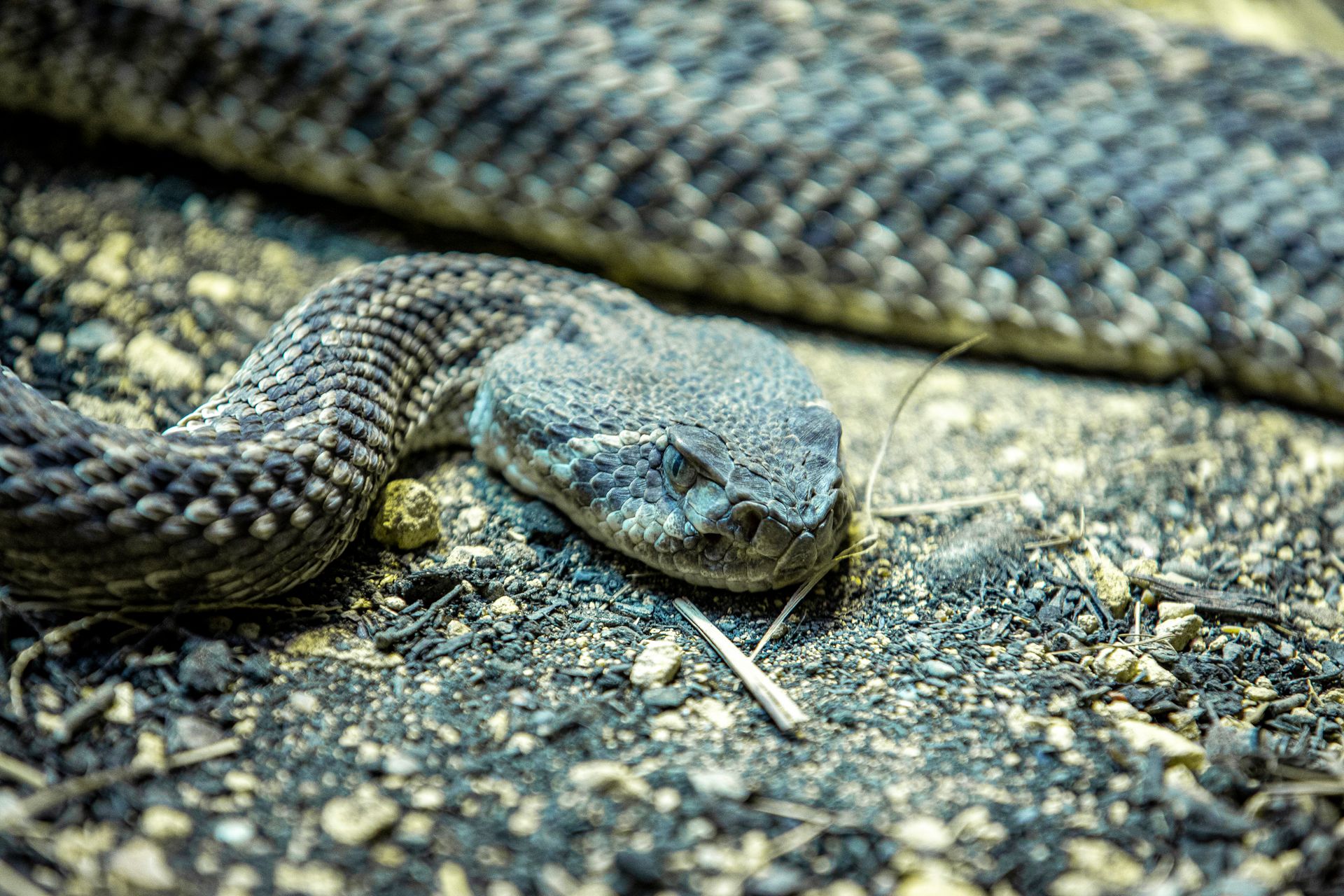
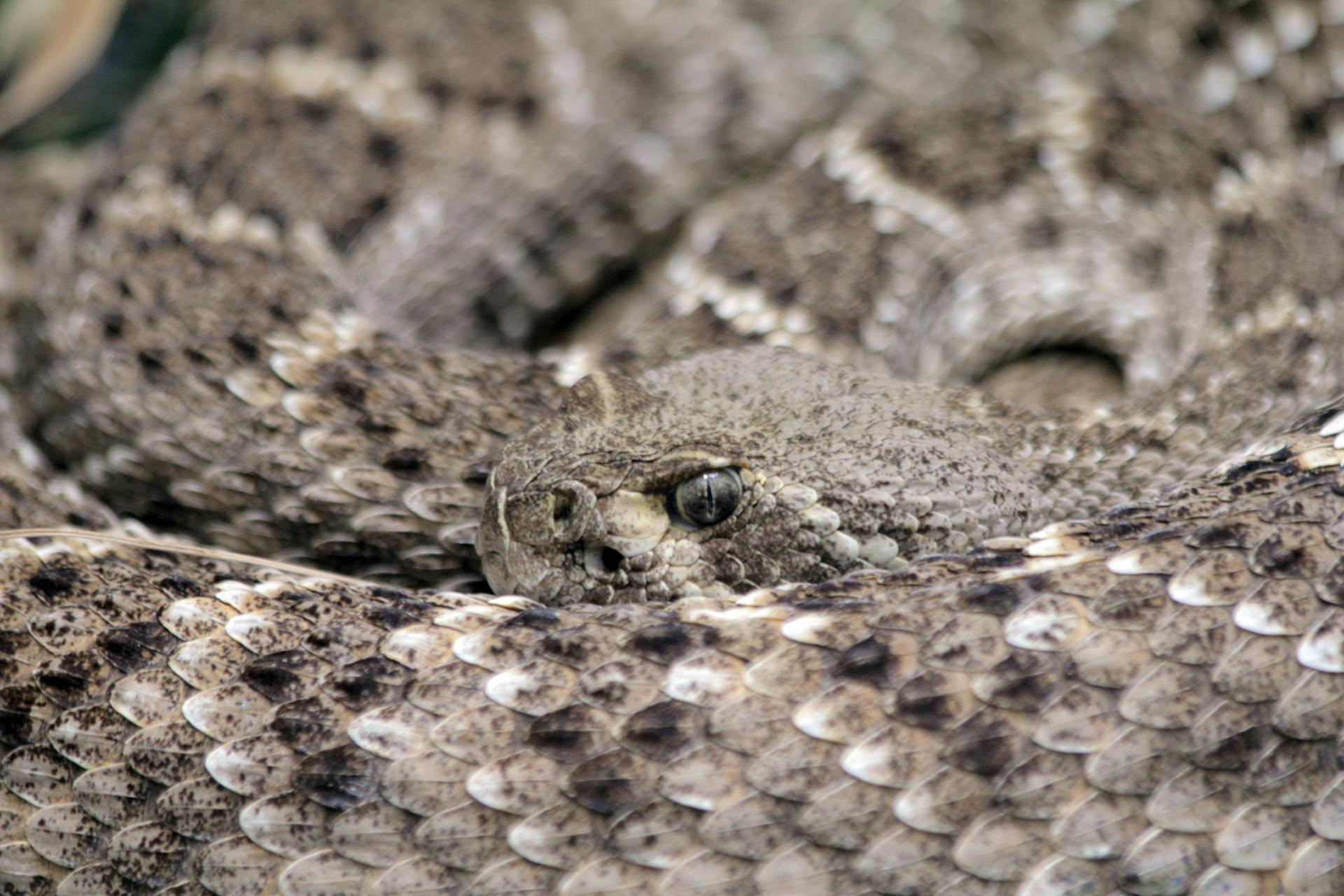
Their brown/tan coloration and diamond-shaped pattern can also lead to mistaken identity with rattlesnakes, especially when encountered on land by those unfamiliar with snakes.
Conservation and Safety
The diamondback water snake is often mistaken for other, more venomous snakes, which can lead to its demise. This is due to human ignorance about the species.
In areas frequented by humans, the diamondback water snake is actually more common than venomous snakes.
To avoid harming this snake, it's essential to learn about its appearance and habits.
The diamondback water snake is not endangered or threatened, but it still faces a significant threat from human error.
In Captivity
The diamondback water snake can be found in captivity in states where it's legal to keep native reptiles.
It's not a popular pet due to its common status, but some people still keep them.
Captive specimens can bite when first handled but become more docile with regular handling.
One thing to note is that they can defecate when handled, which can be quite smelly.
This is likely due to their diet of mostly fish.
Frequently Asked Questions
Do diamondback water snake bites hurt?
Yes, diamondback water snake bites can be very painful due to their sharp teeth. Their bites are designed to grip and hold onto slippery fish, making them quite effective at inflicting pain.
Are Diamondback water snakes good pets?
While not typically considered the best pet snakes, Diamondback water snakes can make wonderful captives with proper care, but they do require some extra maintenance due to their diet.
Featured Images: pexels.com