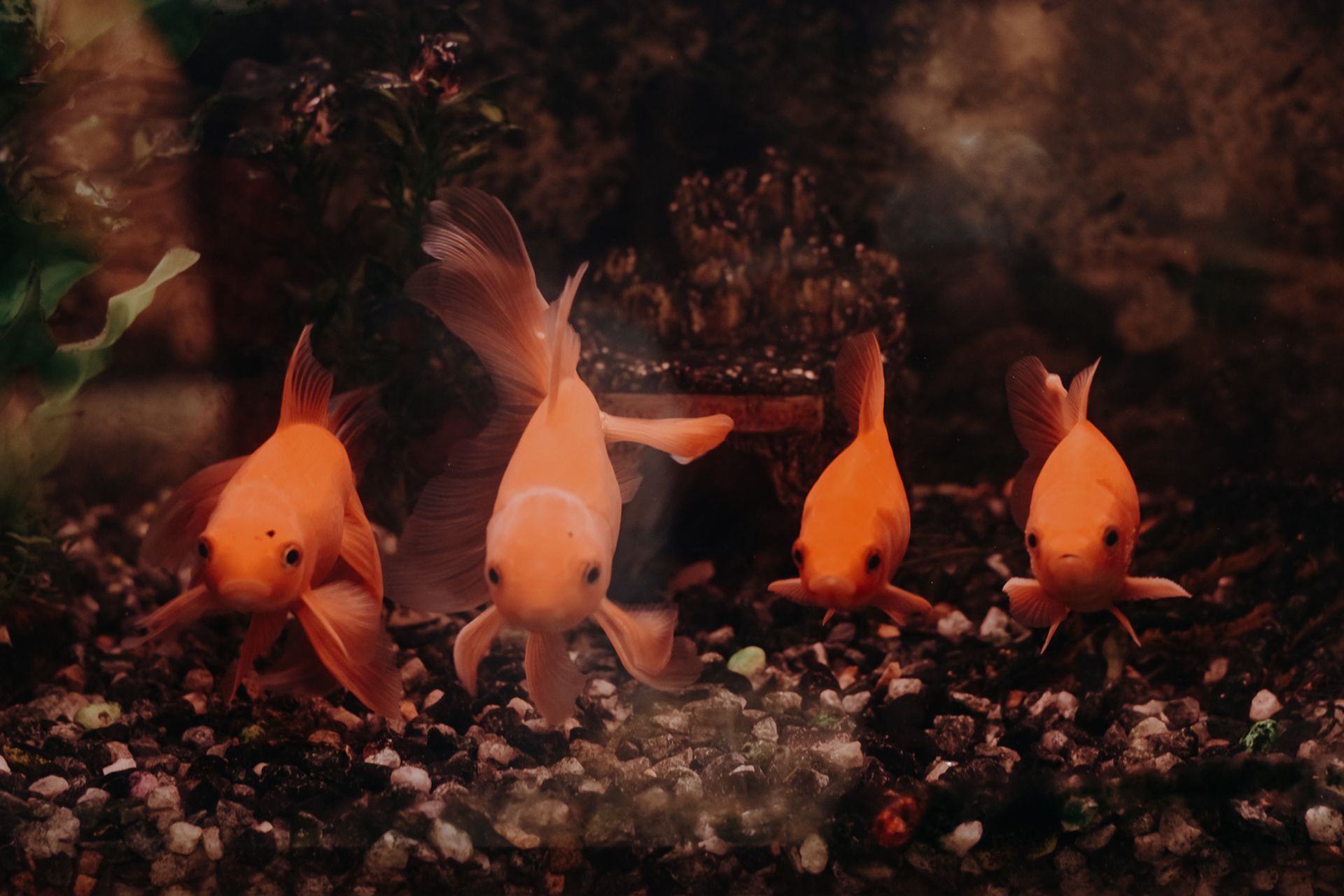
Building a DIY goldfish pond can be a fun and rewarding project, but it requires some planning and preparation. The first step is to choose a suitable location for your pond, considering factors such as sunlight, wind direction, and proximity to a water source.
A good rule of thumb is to place your pond in a spot that receives at least 6 hours of direct sunlight per day, as this will help to keep the water warm and promote healthy plant growth.
When selecting a location, also consider the wind direction to avoid creating a "pond-swept" area that can lead to water loss and mess.
The size of your pond will also depend on the number of goldfish you plan to keep, with a general rule of thumb being 10 gallons of water per fish.
For more insights, see: How to Keep Cats Out of Pond?
Planning and Preparation
Before you start building your DIY goldfish pond, it's essential to plan and prepare properly. Decide whether you want an in-ground or above ground pond, and consider your area's climate to determine the ideal depth for supporting aquatic life in the winter.
In-ground ponds are relatively simple to install, but they need to be dug at least one foot below the frost line to work well during winter. Above ground ponds, on the other hand, don't require much digging, but you'll need to build up the sides well to support the pond.
A larger pond, ranging from 2 to 4 feet deep, is generally healthier and requires less maintenance. The size makes them more chemically and thermally stable. If you're planning to keep koi, your pond should be at least 4 feet deep, with a shallow area or pond shelf having water 2 feet deep.
Here's a quick rundown of the minimum pond depths for different types of fish:
Choose a Site
Choosing a site for your pond is a crucial step in the planning process. You'll want to select a location that's close enough to your home so you can enjoy the view.
First, check with your local authorities to see if there are any specific requirements for fish ponds in your area. This may include how far the pond must be from property lines or if you need a permit to build one.
Make sure to avoid digging in areas with buried cables and power lines. It's easy to forget that these lines are there, but calling 811 to request a utilities worker to mark their location can save you a lot of trouble.
You'll also want to build your pond near a GFCI electrical outlet, which should be about 10 feet away from the pond. This will make it easy to power your pond's accessories.
Don't place your pond at the bottom of a slope, as water runoff can bring in pesticides and chemicals that can harm your pond life.
Here are some specific things to consider when choosing a site for your pond:
- Distance from property lines
- Availability of a GFCI electrical outlet
- Presence of buried cables and power lines
- Water runoff and slope
- Proximity to a water source
- Distance from trees
Considerations for Planning
Before starting your pond project, it's essential to consider a few things. You'll need to decide whether you want an in-ground or above ground pond. In-ground ponds are relatively simple to install, but they require digging a hole at least one foot below the frost line to work well during winter.
Above ground ponds, on the other hand, don't require much digging, but you'll need to build up the sides well to support the pond. Some above ground ponds come as pre-made kits, which may not have the capacity for fish, but work well as an attractive water garden or simple water feature.
A larger pond is generally healthier and requires less maintenance. A size of at least 10 square feet of deep-water space is recommended for fish to live in during freezing temperatures. This can be achieved with a pond depth of 2 to 3 feet or 1 foot below the frost line.
Related reading: Fish and Wildlife Western Pond Turtle
Pond depths should range from 2 to 4 feet deep, depending on your fish. Fish need space to swim, so deeper is better. Koi ponds should be at least 4 feet deep, with a shallow area or pond shelf having water 2 feet deep.
Here's a quick reference guide to pond depths for different types of fish:
When choosing a location for your pond, make sure it's close enough to your home that you can enjoy the view. Also, avoid digging in areas with buried cables and power lines, and build the pond near a GFCI electrical outlet.
Materials and Equipment
To build a goldfish pond, you'll need to gather the right materials and equipment. A pond liner or tote is a must-have, as it will hold the water and keep it secure.
You'll also need to choose a waterproof and non-toxic material for the pond's structural integrity, such as bricks and cement. Sand or sandbags can be used to level the ground and provide a stable base.
Some other essentials include wooden decking for a comfortable viewing area, piping for the water circulation system, and a pump and filter to keep the water clean. Don't forget to add some decorative rocks and substrate to create a visually appealing environment for your goldfish.
Here's a list of the materials you'll need:
- Pond liner or tote
- Bricks and cement
- Wooden decking
- Sand or sandbags
- Decor (rocks, substrate, etc.)
- Piping
- Pump and filter
- Tools (spade or shovel) to dig out a clearing
What Do You Need?
To build a goldfish pond, you'll need to gather some essential materials. A pond liner or tote is a must-have to keep your water contained.
You can choose between bricks and cement for the pond's structure, but make sure they're secure and waterproof. I've seen ponds built with bricks that have held up beautifully over time.
Wooden decking can add a nice touch to your pond's design, but it's not necessary. If you do decide to use it, be sure to seal it properly to prevent water damage.
Sand and sandbags can be used to level the ground and create a stable base for your pond. I've used sandbags to create a makeshift dam in a small pond and it worked like a charm.
Consider reading: Diy Water Fountain for Dogs
Decorative rocks, substrate, and other materials can be used to create a visually appealing pond. Just be sure to choose materials that are non-toxic and won't harm your goldfish.
You'll also need piping to connect the pump and filter to the pond, and a pump and filter to keep the water clean and circulating. Tools like spades and shovels are necessary for digging out a clearing for your pond.
Here's a list of the materials you'll need to build a goldfish pond:
- Pond liner or tote
- Bricks and or cement
- Wooden decking
- Sand / sandbags
- Decor (rocks, substrate etc.)
- Piping
- Pump and or filter
- Tools to dig out a clearing with (spade / shovel)
Utility Pumps
Utility pumps are the most common style of pump on the market, suitable for DIY ponds up to 40 gallons.
They can be suction cupped to the side wall of the pond or sit on the bottom pointed upward. If you need to pump water up to a waterfall or filter reservoir, you can use tubing to connect to the pump output.
Pond size- 10-20 gallons = 50-100 gal/hr, and pond size- 20-50 gallons = 200-500 gal/hr are general guidelines for flow rates.
The 250 gallons per hour adjustable flow pump is a great option for ponds in the 10-20 gallon range, capable of pumping 3.3 ft vertically and lasting several years.
Broaden your view: Good Algae Eaters for Ponds
Design and Construction
When planning your DIY goldfish pond, consider the size of the pond. A 12-gallon planter pot deck pond is a great option.
For a more realistic look, you can choose an all-in-one pond kit like the Aquascapes Patio Pond kit. These kits feature a stone-like finish and a built-in filter chamber.
If you prefer to piece together the items yourself, make sure to include a solar powered pump to keep your aquatic ecosystem running smoothly.
Mini Pond DIY Guide
For a mini pond, a solar pump is a great option, especially for small ponds like my 12-gallon pond with no fish and only plants.
You can start with a small solar pump like the 8W version, which I've ordered to test its performance in a mini fish pond.
If you're not into DIY, consider the Aquascapes Patio Pond kit, which features a built-in filter chamber and a realistic stone-like finish.
A 12-gallon planter pot can make a great mini pond, and adding a solar powered pump will bring it to life.
Suggestion: Goldfish Pond Pump
You can choose from various sizes of all-in-one pond kits like Aquascapes, but be aware that they don't come with a small pump.
For a more affordable option, consider piecing together the items for a custom small pond, like I did with my 12-gallon pond.
If you're looking for a more expensive option, there are solar pumps on Amazon with higher flow rates, but be prepared to spend over $100.
Curious to learn more? Check out: Small Goldfish Breeds
How to Use Preformed Moulds
Using preformed moulds can be a convenient way to create a fish pond, especially for those who want a quick and easy solution. Place the pre-formed pond into the hole, making any necessary adjustments to fit it snugly. The hole should be prepared in advance to accommodate the mould.
Habitat and Aquatic Life
To create a thriving environment for your goldfish, you'll want to strike a balance between open water and plant cover. Aim for one-third open water and two-thirds plant cover to provide adequate shade for your fish.
Goldfish are best suited for home ponds, and they need plenty of space to thrive. A single goldfish can live in 100 gallons of water, so make sure your pond is big enough to accommodate them.
To ensure your goldfish have enough oxygen, install an air pump if you notice them gulping for air at the surface. You should also keep a hole cut in the ice during winter to allow oxygen to enter the pond.
Here are some plants that thrive in ponds and can help create a natural habitat for your goldfish:
- Water lilies
- Lotuses
- Irises
- Water hyacinth
- Water lettuce
Remember to regularly check the water pH to monitor the toxicity level of ammonia and nitrates, and try to match the natural habitat for your goldfish by adding plants they're attracted to.
Aquarium Powerheads
Aquarium powerheads can make for great mini pond pumps, featuring most of the same attributes as EcoPlus pumps.
They're a great option to consider, especially if you already have one in your aquarium gear stash.
Suggestion: Fancy Goldfish Aquarium
Create a Habitat
To create a thriving habitat for your aquatic life, consider your location and the climate you live in. This will help you choose the right pond plants and fish for your environment.
The ideal balance of open water and plant cover is one-third open water and two-thirds plant cover, providing adequate shade for your fish.
Goldfish and koi are well-suited for home ponds, but don't overstock your pond. A good rule of thumb is to provide one square foot of space for each inch of fish.
A single koi needs 400 gallons of water, while a goldfish can live in 100 gallons of water. This highlights the importance of providing enough space for your aquatic life.
Here's a rough guide to help you plan your pond's aquatic life:
Regularly checking the water pH is crucial to monitor the toxicity level of ammonia and nitrates. This will help you keep your aquatic life healthy and thriving.
By matching the natural habitat for your fish and adding plants they're attracted to, you can create a thriving ecosystem.
Water Lettuce
Water Lettuce is a great medium to large sized floating plant that will actively detoxify and clean your pond water. It's a fast growing plant that can thrive in a variety of aquatic environments.
With its ability to purify the water, Water Lettuce is a great addition to any pond. This plant is easy to care for and can help maintain a healthy ecosystem.
Water Lettuce is also a beautiful addition to any pond, with its delicate leaves floating on the surface of the water. It's a great choice for creating a visually appealing mini pond.
You can find Water Lettuce at a local garden center or online, although online options may be smaller in size.
Feed Planter Tub
I'm excited to share with you my favorite choice for small outdoor fish ponds: the feed or planter tub. These tubs are a great option for housing aquatic plants and small fish, and they're often used by aquarium keepers to store fish temporarily.
Related reading: Food for Pond Goldfish
You can find feed or planter tubs in a variety of sizes, but my go-to choice is a galvanized steel planter tub. A great 16-gallon tub is available on Amazon, and I love the rustic vibe of the steel finish.
These tubs are a great option for just about everyone due to their size and price. If you want something bigger, you can look around locally to find a larger tub.
One thing to keep in mind is that while these tubs are a great option, they may not be the most stylish choice. However, they're sturdy and can be a great addition to your outdoor space.
I've actually used kids' swimming pools as a plant grow-out apparatus in the summer months, but they can be flimsy and don't have a nice pond shape. For a more polished look, consider a galvanized steel planter tub or a strong LDPE plastic feed tub.
The Tuff Stuff brand offers a range of LDPE plastic feed tubs, from 15 to 25 gallons. You can find these tubs on Amazon, and larger options can be picked up locally.
A fresh viewpoint: Diy Dog Grooming Tub
How to Maintain
Maintaining a healthy and thriving DIY goldfish pond requires some regular upkeep. The key is to keep the ecosystem balanced, and that starts with feeding your fish at the right time - during non-winter months only.
You'll also want to add bacteria to your pond to maintain a healthy bacterial colony, which is especially important if leaves and debris collect in your pond. This will help keep the water clean and clear.
Cleaning the water filters is another crucial task to keep your pond healthy. Make sure to drain pond water in cold climates (1/4 or 1/3 of the water) at the start of winter to prevent freezing.
Remove decaying leaves and surface debris regularly to keep your pond looking its best. Test the water for excessive amounts of ammonia or nitrites to ensure it's safe for your fish.
As the warm season approaches, turn on the pump and filter when temperatures are consistently above freezing. This will help keep the water circulating and clean.
Here's a quick rundown of the maintenance tasks to keep in mind:
- Feed fish during non-winter months only
- Add bacteria to maintain a healthy bacterial colony
- Clean water filters
- Drain pond water in cold climates (1/4 or 1/3 of the water) at the start of winter
- Remove decaying leaves and surface debris
- Test the water for excessive amounts of ammonia or nitrites
- Turn on the pump and filter at the start of the warm season
Remember to fertilize your aquatic plants once per month or as needed to keep them thriving.
Related Guides
If you're planning a DIY goldfish pond, you'll want to check out our Backyard Landscape Ideas to get inspiration for the perfect spot in your yard.
A pond pump is essential for keeping your goldfish pond clean and healthy, so be sure to choose one of the Best Pond Pumps for Your Garden.
You'll also want to consider the different Types of Fountains that can add visual interest to your pond.
To get started on building your pond, consult our step-by-step guide on How to Build a Pond.
Need Help? Don't worry, we've got you covered with our expert advice and resources!
Ideas Solicited
To make your DIY goldfish pond safer for the fish, consider design decisions that discourage raccoons from visiting. A cage or fence is a good start, but you can also add rocks or a rocky shoreline to deter them.
You can also take a cue from your existing wildlife pond, which has minnows that the raccoons seem to leave alone. However, don't assume that goldfish will be safe just because the minnows are; raccoons may view a fat goldfish as a different sort of prey.
If you're looking to connect your new pond to the existing one, you can consider running a pipe or even a small stream between the two. However, you may want to explore other ideas that give you the benefits of two separate ponds.
To create a natural-looking bog filter, look for inspiration in pictures of raised bogs that empty into ponds. These often feature a more natural, rounded shape rather than a boxy design. You can also use rocks to create a natural-looking edge for your pond, but be mindful of not overdoing it – too many rocks can look unnatural.
When it comes to sizing your pump, a good rule of thumb is to match the pump size to the pond size. So, if you have a 3,000 gallon pond, you may want to consider a 3,000 gallon pump to run through the bog.
Here's an interesting read: Algae Eaters for Outdoor Ponds
Landscaping and Decoration
Landscaping around your pond is a crucial step in creating a visually appealing and functional space. Adding a waterfall can make a big impact, but remember to seal the stones to prevent runoff and encourage the water to cycle back through the pond.
A rock wall not only provides a finished look, but also helps lessen pond erosion. Using large landscape rocks of various shapes and sizes along the outside edge of the pond gives it a finished look.
To warm up the landscaping, add plants like perennials and grasses that add color and movement. They also provide a hiding place for pond creatures who shelter among the leaves.
Here are some decoration ideas to consider:
- Add a waterfall: This can be a beautiful addition to your pond, but be sure to seal the stones to prevent runoff.
- Use large landscape rocks: These can provide a finished look and help lessen pond erosion.
- Try driftwood: This can add a softer texture and enliven stone structures.
- Line with paving stones: These can be used to decorate a small reflecting pond.
- Make a path with stepping stones: This can add a touch of whimsy and a short path across the water.
Landscaping Around Your Property
Landscaping around your property is a great way to enhance its beauty and functionality. It's amazing how a few well-placed elements can elevate the entire space.
Adding a waterfall to your property can make a big impact. Waterfalls make a beautiful addition to your landscaping, but be sure to seal the stones to prevent runoff around the edges.
Using large landscape rocks along the outside edge of your property gives it a finished look. This also provides a place to sit and watch the water, for humans and reptiles alike.
Plants can add color and movement to your landscaping, and provide a hiding place for creatures. Perennials and grasses are great options, and they're low maintenance too.
Driftwood can add a softer texture to your stone structures and enliven the space. Use twisted pieces of driftwood to accent waterfalls or special stonework.
Here are some ideas for incorporating hardscaping and landscaping into your property:
- Add a waterfall: Waterfalls make a beautiful addition to your pond landscaping.
- Set some stones: Using large landscape rocks of various shapes and sizes along the outside edge of the pond gives it a finished look.
- Invigorate with plants: Using only stone may look cold, but adding plants warms up the landscaping.
- Try driftwood: Driftwood adds a softer texture and enlivens stone structures.
- Line with paving stones: Elegant large paving stones can decorate a small reflecting pond.
- Make a path with stepping stones: Stepping stones add a touch of whimsy and a short path across the water.
Regular maintenance is key to keeping your landscaping looking its best. Be sure to service any air pump equipment and renew permits as needed, depending on your county or state.
A Raised Garden
A Raised Garden is a great way to add some visual interest to your outdoor space, and it's also a great way to grow plants that need better drainage. Raised beds can be made from a variety of materials, including wood and composite materials.
You can build a raised garden yourself with some basic tools and materials, or you can purchase a pre-made kit. Consider the size and shape of your space when deciding on the design.
Raised gardens can be built to any height, but most are between 6 and 12 inches tall. This allows for easy access to the plants without straining your back.
The soil in a raised garden should be well-draining and rich in organic matter. This will help your plants grow strong and healthy.
Planter Pot
For a mini pond, you'll want a planter pot that's at least 8 gallons to give your fish enough room to swim. Don't worry if you can't find one right away, you can always seal holes in the bottom with silicone.
Planter pots come in all shapes and sizes, but it's essential to choose one that's large enough for your fish. Notice that the recommended mini fish ponds on Amazon are no smaller than 10 gallons.
If you're not interested in leaving the house for this build, you can find great options online. The planter pots I've found on Amazon are a great starting point for your mini pond.
Remember, the goal is to keep live fish in your mini pond, so make sure to choose a planter pot that meets their needs.
Featured Images: pexels.com