Crocodiles in Australia are a force to be reckoned with. They've been here for over 200 million years, and their presence has shaped the country's unique wildlife and culture.
Saltwater crocodiles, in particular, are the largest reptiles on earth, growing up to 7 meters long and weighing over 1,000 kilograms. They're found in the northern regions of Australia, including the Northern Territory, Western Australia, and Queensland.
In these areas, crocodiles are an integral part of the ecosystem, playing a crucial role in maintaining the balance of nature. However, their presence also creates conflict with humans, particularly in terms of land use and safety.
Crocodile Facts and Fun
Crocodiles in Australia are truly fascinating creatures. Saltwater crocodiles, in particular, are the largest living reptile species, growing up to 6m long, which is roughly twice as long as a Mini Cooper.
These incredible animals can slow their heart rate to just two beats per minute, allowing them to stay underwater for up to an hour. I can only imagine how eerie it must be to see a crocodile submerged for that long.
A transparent eyelid is one of the key features that enables crocodiles to have perfect vision even when they're completely underwater. This is especially useful for hunting in murky or low-light conditions.
Crocodiles have a secret weapon in their solid muscle tail, which allows them to move faster than a human in short bursts. It's not something you'd want to be on the receiving end of!
With exceptional senses of smell, hearing, and sight, crocodiles can detect and track prey even in challenging conditions. Their jaws can generate enormous power when snapped shut, making them formidable predators.
Here are some key features of a crocodile's senses:
- Exceptional sense of smell
- Exceptional sense of hearing
- Exceptional sense of sight
Breeding season for crocodiles in Australia typically occurs during the warmer months between October and May. If you're planning to visit the country during this time, be sure to keep a safe distance from these incredible animals.
Prominent scales on the tail of a crocodile act like a solar panel, helping to transport heat into their body. This is why you'll often see them basking in the sun, soaking up the warmth.
Crocodile Viewing and Adventure
If you're looking to get up close and personal with Australia's iconic saltwater crocodiles, the Northern Territory is the place to be. You can even feed or hold a crocodile in the NT, as it's one of the few places in the world where owning a crocodile as a pet is legal.
There are several spots to feed or hold a crocodile, including Crocosaurus Cove and Crocodylus Park. These places offer a unique opportunity to interact with these incredible creatures and take home some bragging rights photos.
If you're looking to see crocodiles in their natural habitat, the NT is home to numerous waterways, creeks, and wetlands where they can be spotted. The Mary River wetlands are a great place to see wildlife and birdlife, and there's a high chance of seeing crocodiles in the wild.
Some popular spots to see crocodiles in the wild include the Spectacular Jumping Crocodile Cruise, Adelaide River Queen Original Jumping Crocodile Cruise, and Croc Spot Tours - Jumping Crocodile Encounters. You can also take a Mary River Wetlands Cruise or visit the Territory Wildlife Park.
For your interest: Australia Wild Horses
In Kakadu National Park, there are an estimated 10,000 saltwater crocodiles, giving you a very good chance of seeing them in their natural habitat. Take a Yellow Waters Cruise or Guluyambi Cultural Cruise on the East Alligator River for a chance to spot these incredible creatures.
If you're looking for a more adrenaline-pumping experience, head to Crocosaurus Cove and take a swim in the Cage of Death. This purpose-built acrylic cage allows you to come face-to-face with saltwater crocodiles in a safe and controlled environment.
Here are some popular spots to see crocodiles in the NT:
- Crocosaurus Cove
- Crocodylus Park
- Spectacular Jumping Crocodile Cruise
- Adelaide River Queen Original Jumping Crocodile Cruise
- Croc Spot Tours - Jumping Crocodile Encounters
- Mary River Wetlands Cruise
- Yellow Waters Cruise
- Guluyambi Cultural Cruise on the East Alligator River
- Territory Wildlife Park
- Tiwi Island Retreat
- Finniss River Lodge
- Top End Safari Camp
Whether you're looking for a relaxing boat tour or an adrenaline-pumping experience, the NT has something for everyone when it comes to crocodile viewing and adventure.
Crocodile Habitat and Distribution
Estuarine Crocodiles can be found in a wide range of habitats, including rivers, estuaries, creeks, swamps, lagoons, and billabongs.
They can tolerate salinities ranging from 0% (freshwater) to 35% in full strength sea water, and have even been recorded in water twice as saline (70%) as sea water.
Readers also liked: Sea Turtles Australia
Their upstream movement is limited by physical barriers such as escarpments and other types of rapidly rising ground.
In northeastern Queensland, they do not occur above 250m.
Historically, Estuarine Crocodiles occurred from southwestern India and Sri Lanka east through southeastern Asia, the Philippines, the Indonesia Archipelago, and northern Australia to the Solomon Islands.
They are able to cross large stretches of open ocean, with records of individuals being found on remote islands in the Indian Ocean and the western Pacific Ocean, such as Fiji.
In Australia, they are found in northern coastal areas and drainages, from Broome in northwestern Western Australia to the Gladstone area in southeastern Queensland.
They also occur on a number of islands off the Northern Territory and Queensland coasts, which may be as far as 96km from the nearest point on the mainland.
Crocodile Diet and Behaviours
Estuarine Crocodiles are mostly nocturnal, but they'll hunt during the day if they get the chance. They're opportunistic feeders, eating just about anything they can catch and overpower.
Small crocodiles feed frequently on small prey like insects and crustaceans, while larger individuals feed less often on bigger prey like water birds, sea turtles, and mammals up to the size of water buffalo. They're also known to be cannibalistic.
Juvenile crocodiles tend to "sit and wait" in shallow water for prey to come within striking distance, while larger crocodiles actively hunt and are attracted to any movement that may represent a potential meal. They're stealthy hunters, making a stealthy approach underwater before lunging rapidly and slamming their jaws shut on the victim.
Expand your knowledge: Largest Salt Water Crocodile
NT Feed/Hold
You can feed or hold a crocodile in the NT, which is one of the few places in the world where owning a crocodile as a pet is legal.
Crocodiles are powerful predators that thrive in the NT, where more than half of the Australian crocodile population is found.
Your NT holiday isn't complete until you've handled or fed a crocodile and captured bragging rights photos to take home.
To feed or hold a crocodile, head to one of the following places:
- Crocosaurus Cove
- Crocodylus Park
Remember, these places offer a unique opportunity to interact with these incredible animals in a safe and controlled environment.
Feeding and Diet
Estuarine Crocodiles are mostly nocturnal, but they'll also hunt during the day if the opportunity arises.
They're opportunistic feeders and will eat just about any animal they can catch and overpower.
Small crocodiles feed frequently on small prey like insects and crustaceans, while larger individuals feed less often on bigger prey.
Larger crocodiles actively hunt and are attracted to any movement that may represent a potential meal.
They can leap from the water to snare overhanging prey, and will drag larger prey to deeper water before dismembering and eating it.
If the meal is too big to be swallowed whole, the crocodile will grab hold with its jaws and shake violently or roll to tear off a manageable piece.
Food is tossed around in the mouth to manipulate it into a position for swallowing, due to the crocodile's relatively immovable tongue and skull bones.
After eating its fill, the crocodile may store the remains in mangroves or underwater to feed on again at a later time.
Estuarine crocodiles are also scavengers and will come onto land to feed on carrion or unattended catch.
Behaviours and Adaptations
Estuarine Crocodiles have an impressive homing ability, allowing them to find their way back to their territory after being displaced.
They can cover long distances, with some individuals returning to their original capture site at a mean distance of 25.6km, or 65.0 km if they take a coastal route.
In one study, some crocodiles returned to their original territory in as short as 10 days, while others took up to 3.7 years to make the journey.
This ability to find their way home is a testament to their strong sense of spatial memory and navigation.
Breeding Behaviours
In northern Australia, the buildup to the wet season stimulates courtship and mating behavior in crocodiles.
Males advertise themselves in conspicuous displays to drive off rival males and stimulate receptive females, which can lead to full-blown combat.
Females also become intolerant of other females and will jostle for dominance.
Courtship in captive animals involves snout contact, rubbing, body-riding, vocalizing, bubbling, and circling, with both partners constantly submerging and resurfacing.
Copulation lasts up to 15 minutes and may take place while totally submerged.
Females reach sexual maturity at a snout-vent length of about 110 cm, while males reach maturity at about 160 cm.
However, at that size, they may be prevented from reproducing by larger dominant animals.
In Arnhem Land, females are estimated to reach sexual maturity at a snout-vent length of about 110 cm and males at about 160 cm.
The preferred temperature for incubation is around 31-32°C, which is relatively stable despite fluctuating external conditions.
If the temperature in the central part of the nest rises above about 33-34°C or goes below 26-28°C for very long, the embryos can be killed or experience deformities.
Crocodile Conservation and Safety
In Australia, crocodile conservation efforts have shifted focus from removal to education, with a decade-long emphasis on teaching people how to coexist with these incredible creatures.
The Australian state governments have been actively removing wild crocodiles to minimize the risk of attacks, but this approach has proven to be less effective than education in mitigating crocodile-human conflict.
Crocodiles are a vital part of Australia's ecosystem, and their habitats are mostly limited to the northern half of the continent, where they inhabit warmer environments.
Both saltwater and freshwater crocodiles can be found in these areas, with saltwater crocodiles preferring coastal areas and freshwater crocs inhabiting inland environments.
To safely observe crocodiles, it's essential to join a guided wildlife and nature tour or visit a wildlife park, as tour operators and park rangers are highly trained in crocodile management.
Don't attempt to feed any wild crocodiles, and never swim in areas where crocodile hazard signs are posted, as these animals can travel up to a kilometre on land and remain concealed for long periods.
On a similar theme: Are Crocodiles Freshwater or Saltwater
Conservation Status
Crocodiles are listed as vulnerable or endangered in many parts of the world, with 23 species out of 24 considered threatened.
The main reason for this decline is habitat loss and degradation, which has reduced their natural habitats by over 90% in some areas.
Many crocodile species are also hunted for their meat, skin, and body parts, which are used in traditional medicine.
The American crocodile, for example, is listed as endangered due to habitat loss and hunting.
Crocodiles are also vulnerable to climate change, which affects their food supply and nesting sites.
The Nile crocodile, on the other hand, is listed as least concern, but its population is still declining due to habitat loss and hunting.
Conservation efforts are underway to protect crocodile habitats and reduce hunting, but more needs to be done to ensure their survival.
How to Be Safe Around Animals
Safety around crocodiles is crucial, and it's essential to understand their behavior and habitat. In Australia, saltwater crocodiles can travel up to a kilometre on land and remain concealed for long periods inland.
Crocodiles are apex predators and can be found in both fresh and saltwater environments. They inhabit the northern half of the Australian continent, and their numbers have increased since receiving protection in the 1970s. In fact, encounters with humans have become more frequent.
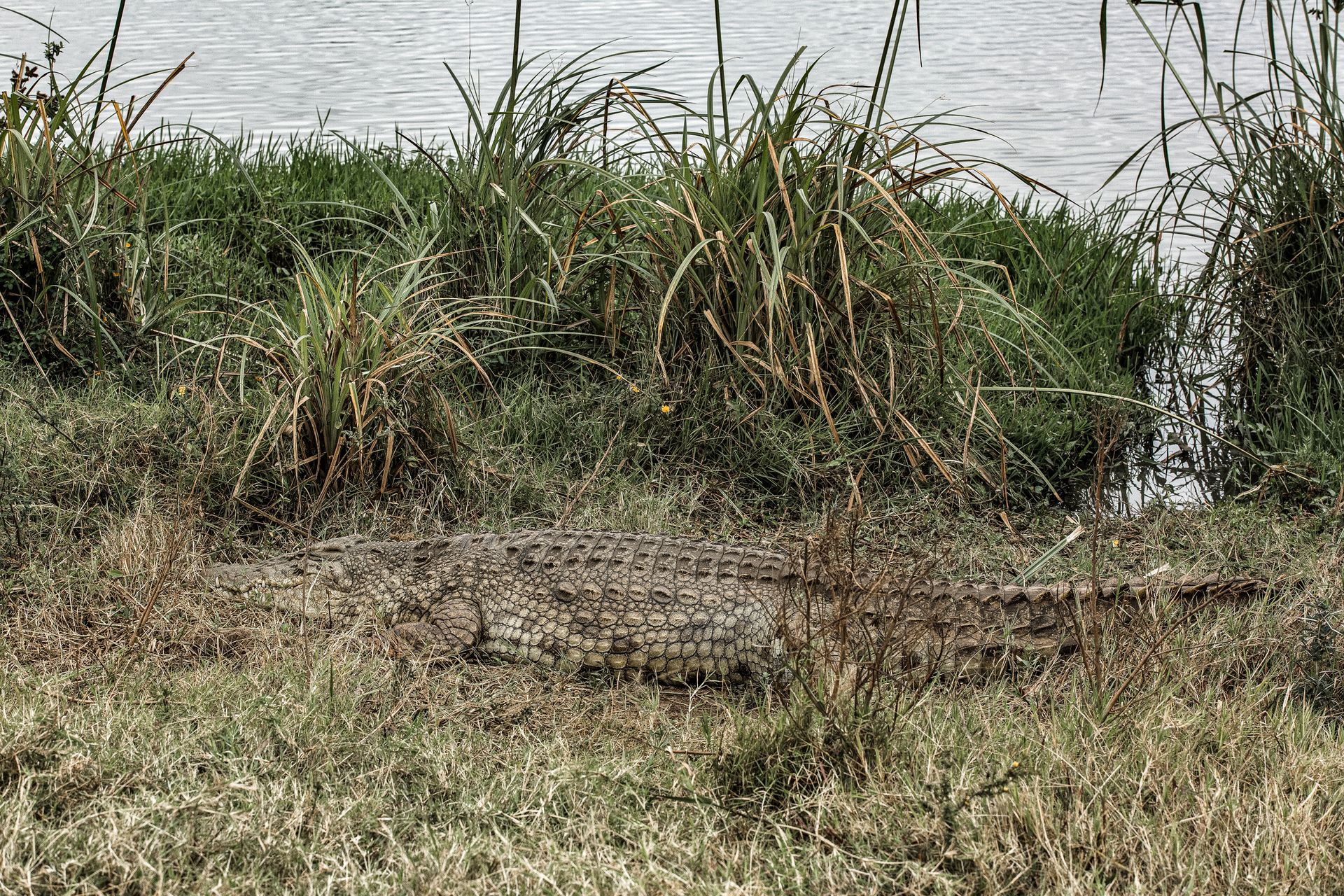
To be safe around crocodiles, it's essential to obey all warning signs and assume that any body of water, no matter how shallow, can be home to a crocodile. Don't assume that a shallow pool, drainage canal, or ditch is safe, especially if the water is muddy.
When camping or fishing near water, choose a site well away from the water's edge, preferably on high ground. If camping on a beach, be aware that estuarine crocodiles sometimes come ashore at night. Always supervise children and pets, and never leave animal carcasses or fish guts near where people swim, fish, or moor boats.
Here are some essential safety tips to remember:
- Obey all crocodile warning signs
- Don't assume shallow water is safe
- Supervise children and pets
- Choose a safe camping site
- Be aware of your surroundings when fishing or canoeing
By following these simple tips, you can minimize the risk of a crocodile encounter and enjoy the beauty of these incredible creatures from a safe distance.
Crocodile History and Culture
Crocodiles play an important role in Aboriginal culture, representing the spirit of important people and signifying strength and skill.
In the Daly River region, a legendary fisherman was believed to have been killed by jealous men, leading to the Crocodile Dreaming story. This story links Aboriginal culture with crocodiles, highlighting their significance in the region's folklore.
The Crocodile Dreaming story tells of a fisherman whose skin became marked with a net pattern, which is said to be the scale pattern of the crocodile.
History of the NT
The Northern Territory (NT) has a rich history when it comes to crocodile conservation. Unregulated hunting of crocodiles in the NT ceased, allowing for a world-renowned conservation effort to take place.
Crocodile numbers are thriving in the NT, with more than half of the Australian crocodile population found there. This is a direct result of the conservation efforts that have been put in place.
Animals in Aboriginal Culture
In Aboriginal culture, crocodiles represent the spirit of important people and signify strength and skill.
Crocodiles play a significant role in many Aboriginal Dreamtime stories, which are an integral part of their culture and history.
The Crocodile Dreaming story from the Daly River region is one of power and jealousy, where a legendary fisherman was believed to have been killed by jealous men.
This story highlights the importance of crocodiles in Aboriginal culture, where they are often associated with powerful and symbolic meanings.
In this story, the fisherman's transformation into a crocodile is a testament to the deep connection between Aboriginal people and the natural world.
Crocodile Identification and Conflict
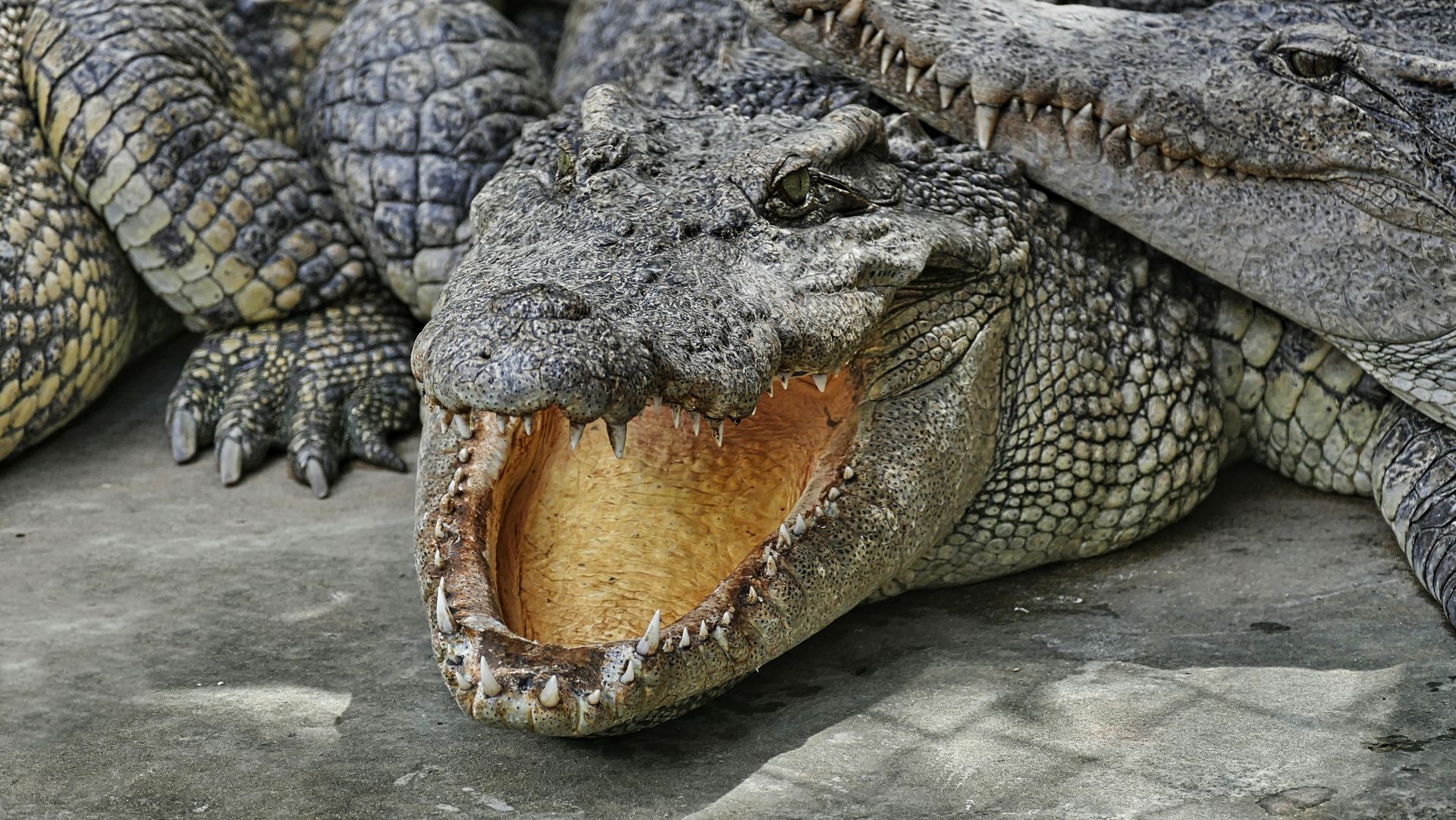
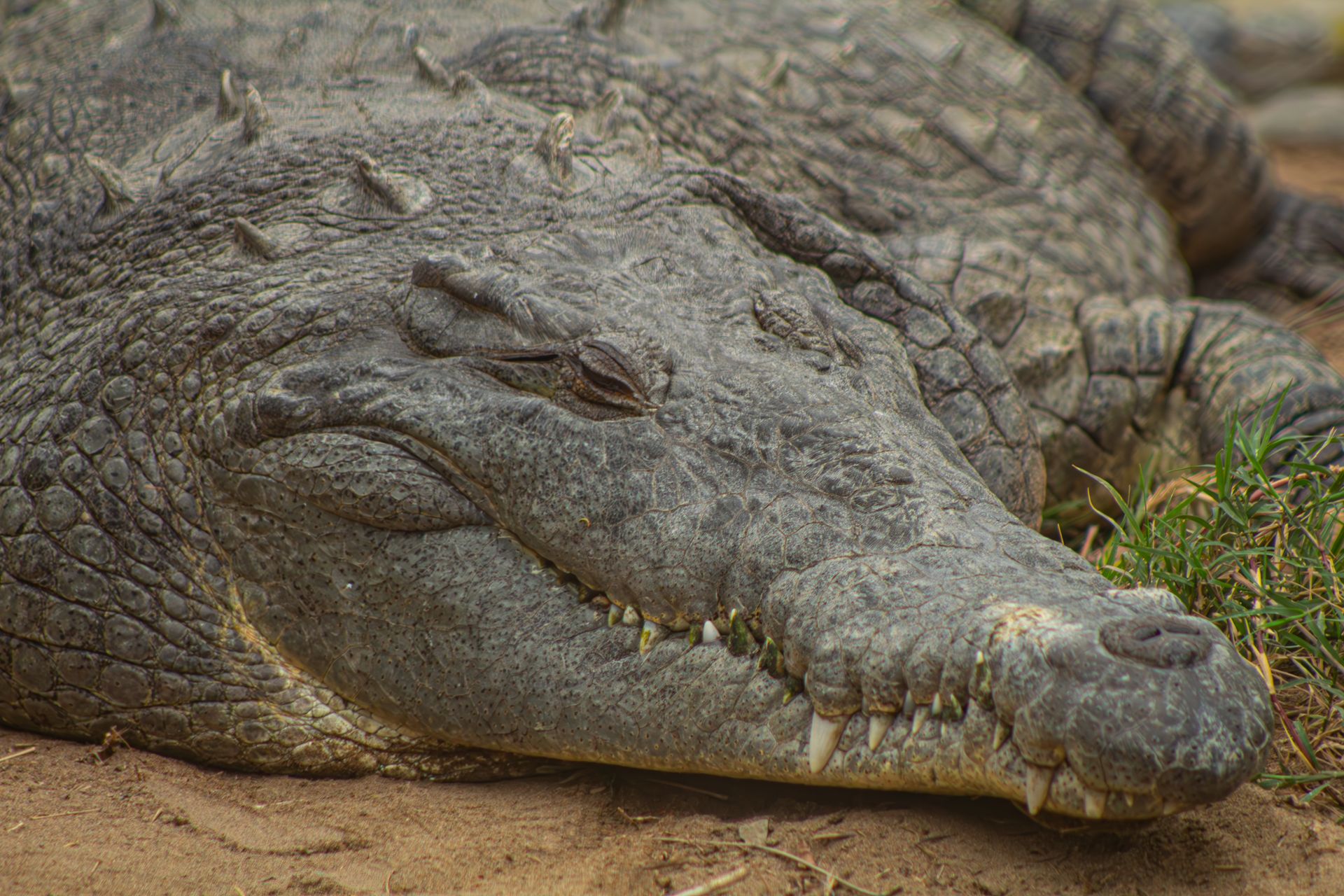
Crocodiles in Australia have a distinctive appearance, with a long, well-toothed snout, eyes and nostrils set atop the head, and a thick skin covered in bony plates called osteoderms.
Adult Estuarine Crocodiles typically have a broad snout that's less than twice as long as the width of their head, and they range in color from golden tan to grey to black, with irregular darker mottling.
Their belly is cream-colored, and juveniles have a brightly patterned body and tail with dark spots or bands that fade with age.
Adult Estuarine Crocodiles can grow up to 3-5m in length, with males often being much larger than females.
For more insights, see: Estuarine Crocodile
Identification
The Estuarine Crocodile has a distinctive appearance, with a broad snout that's less than twice as long as the width of the head. Its body is streamlined, with short limbs and clawed webbed feet.
Adult Estuarine Crocodiles have a heavy build and come in a range of colours, from golden tan to grey to black, with darker mottling. The belly is cream-coloured.
Juveniles are easily identifiable by their bright patterns of dark spots and bands on the body and tail, which fade as they mature. These patterns are a key characteristic of young Estuarine Crocodiles.
On average, adult Estuarine Crocodiles are 3-5m long, with males growing significantly larger than females. The largest recorded Estuarine Crocodile measured 615cm, although there's evidence to suggest it may have been even larger.
Crocodile Human Conflict
In Australia, saltwater crocodiles are the only species that could threaten a person's life, but they're generally not a problem due to the low number of fatal attacks per year.
The Australian state governments have been proactively removing wild crocodiles to lessen the risk of an attack, but a more significant focus on crocodile education has proven to be the best way to mitigate crocodile-human conflict.
Crocodiles in Australia prefer warmer habitats and inhabit the northern half of the continent, with saltwater crocodiles found in coastal areas and freshwater crocodiles in inland environments.
One of the best places to see saltwater crocodiles in Queensland is along the famous Daintree River, where you can take a boat cruise and spot these incredible creatures in their natural habitat.
To reduce the risk of encounter with crocodiles, it's essential to obey all crocodile warning signs, as they are there for a reason.
Here are some specific precautions to take in crocodile-inhabited areas:
- Obey all crocodile warning signs
- Do not assume a shallow pool, drainage canal, or ditch is safe, especially if the water is muddy
- Do not allow pet dogs to roam near the water
- Do not walk around at night without a torch if fishing or camping near water
- When camping, choose a site well away from the water, preferably on high ground
- When fishing, stand at least 3m back from the water's edge and cut the line if it becomes entangled rather than wade in
- Never leave animal carcasses, fish guts, etc. near where people swim, fish, or moor boats
- If boating, do not allow arms or legs to dangle over the sides
Most attacks have occurred on swimmers or on people canoeing or bending down at the water's edge, which seems to elicit a greater predatory response from crocodiles.
Frequently Asked Questions
Why are crocodiles so big in Australia?
In Australia, optimal climate conditions allow crocodiles to grow larger, with males often reaching impressive sizes due to their age and genetic predisposition.
Featured Images: pexels.com